
Kii Audio THREE Active Speaker Review
German manufacturer Kii Audio has designed the unique Kii Three active speaker. Despite its bookshelf speaker size, it houses a total of six drivers and six amplifier modules. Utilizing digital signal processing technology and Class D amplifier modules developed by Bruno Putzeys, the designer of Ncore, it achieves astonishing sound performance. This year, Kii Audio released the planned Kii Control, expanding the Kii Three’s connectivity beyond AES to include USB and SPDIF inputs.
We visited Fengming Audio to experience the convenience brought by these new features.
The Kii Audio Three active bookshelf speakers are currently available for audition at Fengming Audio.
High-Tech Design
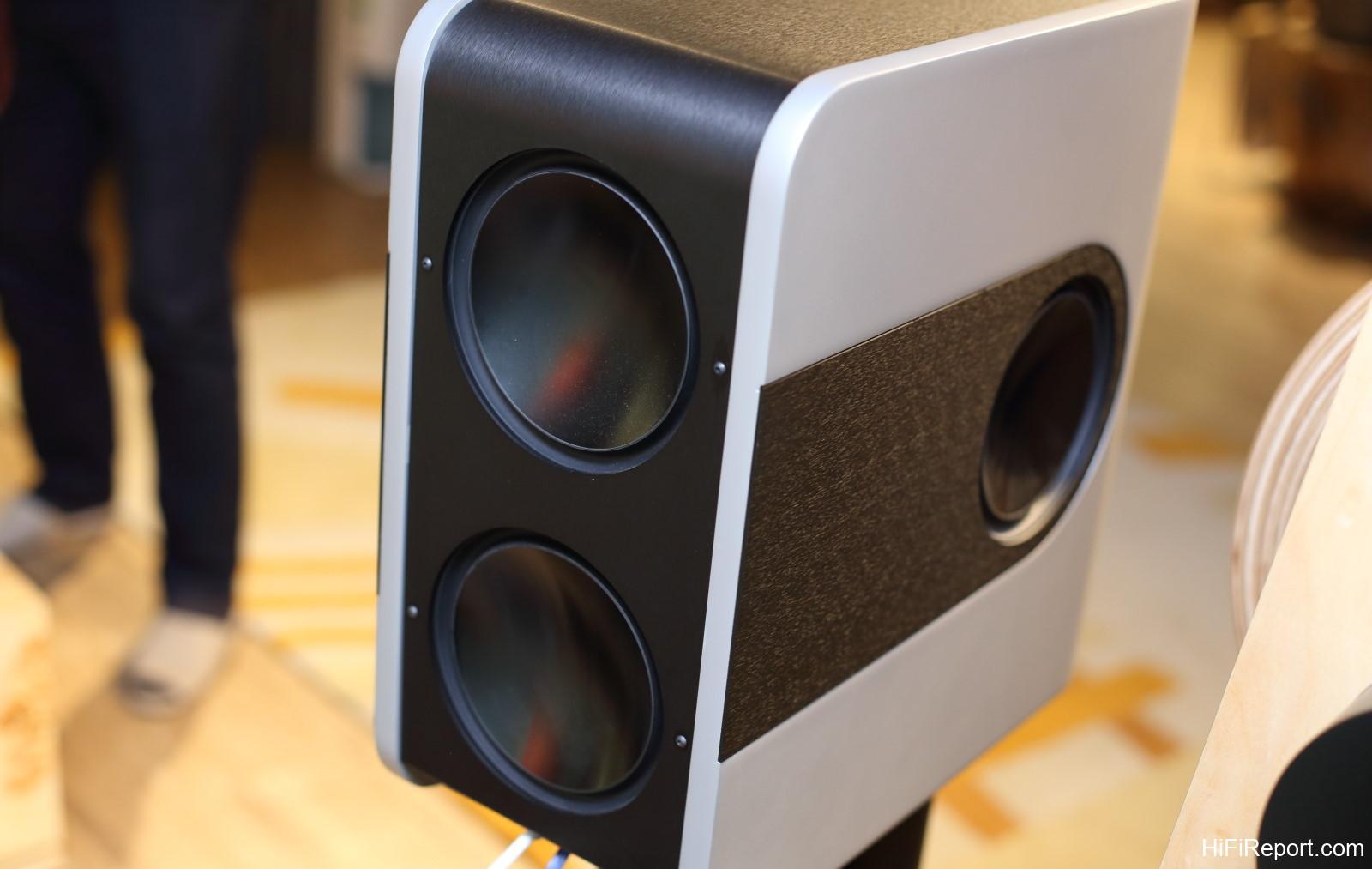
The Kii Three maintains a compact size, yet each channel incorporates one tweeter, one midrange driver, and four bass drivers. Notably, the bass drivers are not positioned on the front baffle but are located with two on each side and two on the rear. Kii Audio employs a unique wave-guiding technology for these four bass drivers. When they operate, their sound waves are not directed solely outward from their individual orientations.
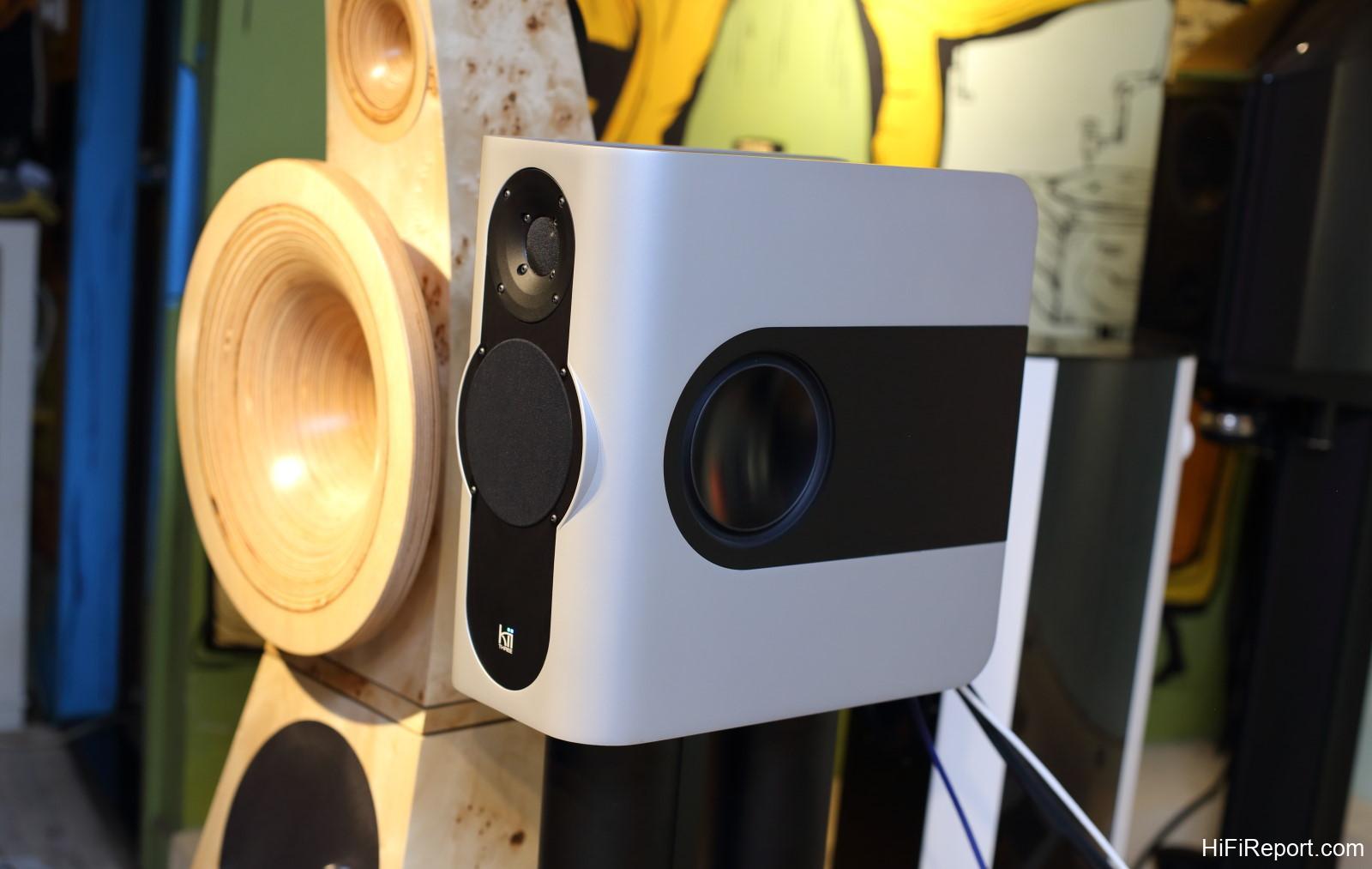
Instead, they are engineered to project forward, towards the front of the speaker. Through internal DSP control of the sound wave direction, the system minimizes the influence of the surrounding space, preventing issues like excessive or muddy bass. This is a truly exceptional technological approach.
Integrated Digital Processing and Amplification
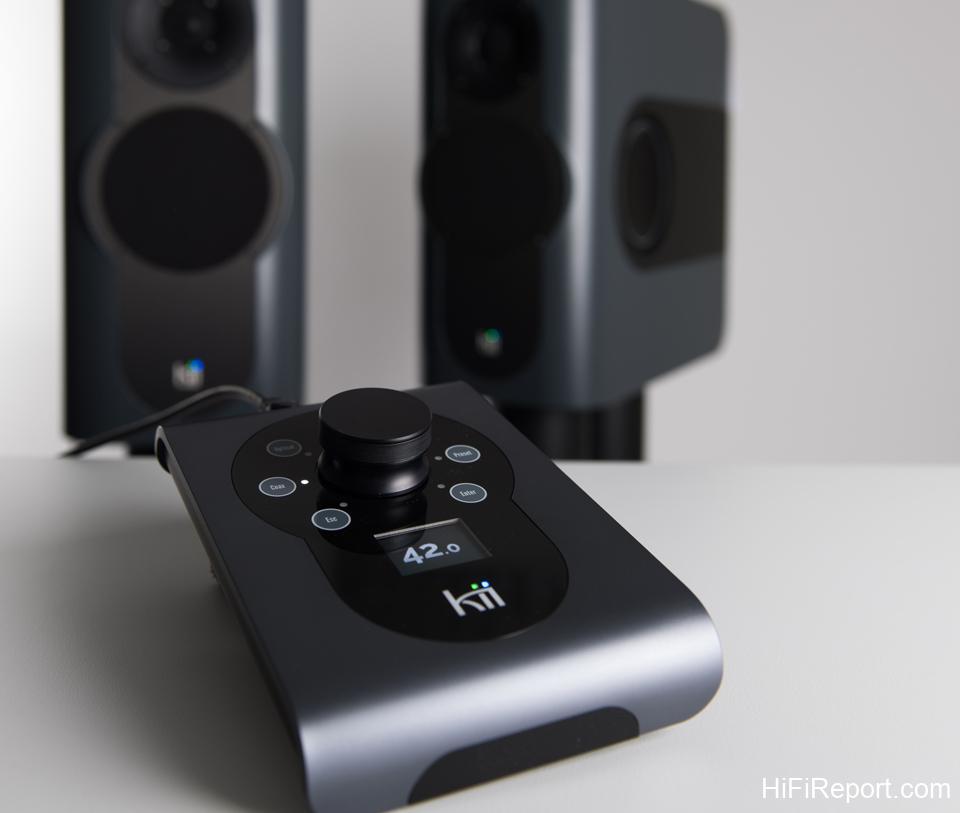
The Kii Three’s uniqueness stems from its bookshelf speaker dimensions housing six drivers, coupled with its active design. Internally, it integrates six DACs and amplifier modules. A pair of Kii Three speakers effectively utilizes twelve DACs and Ncore amplifier modules. Each driver is powered by an independent 250-watt Class D amplifier, eliminating amplifier-matching concerns, a significant advantage of active speakers.
Bruno Putzeys, the mastermind behind the Ncore Class D amplifier modules, is a key figure in the Kii Audio design team. His designs are integral to the Kii Three’s realization, and the amplifier modules used within can be considered the most authentic representation of his design philosophy.
Precision Through Digital Processing
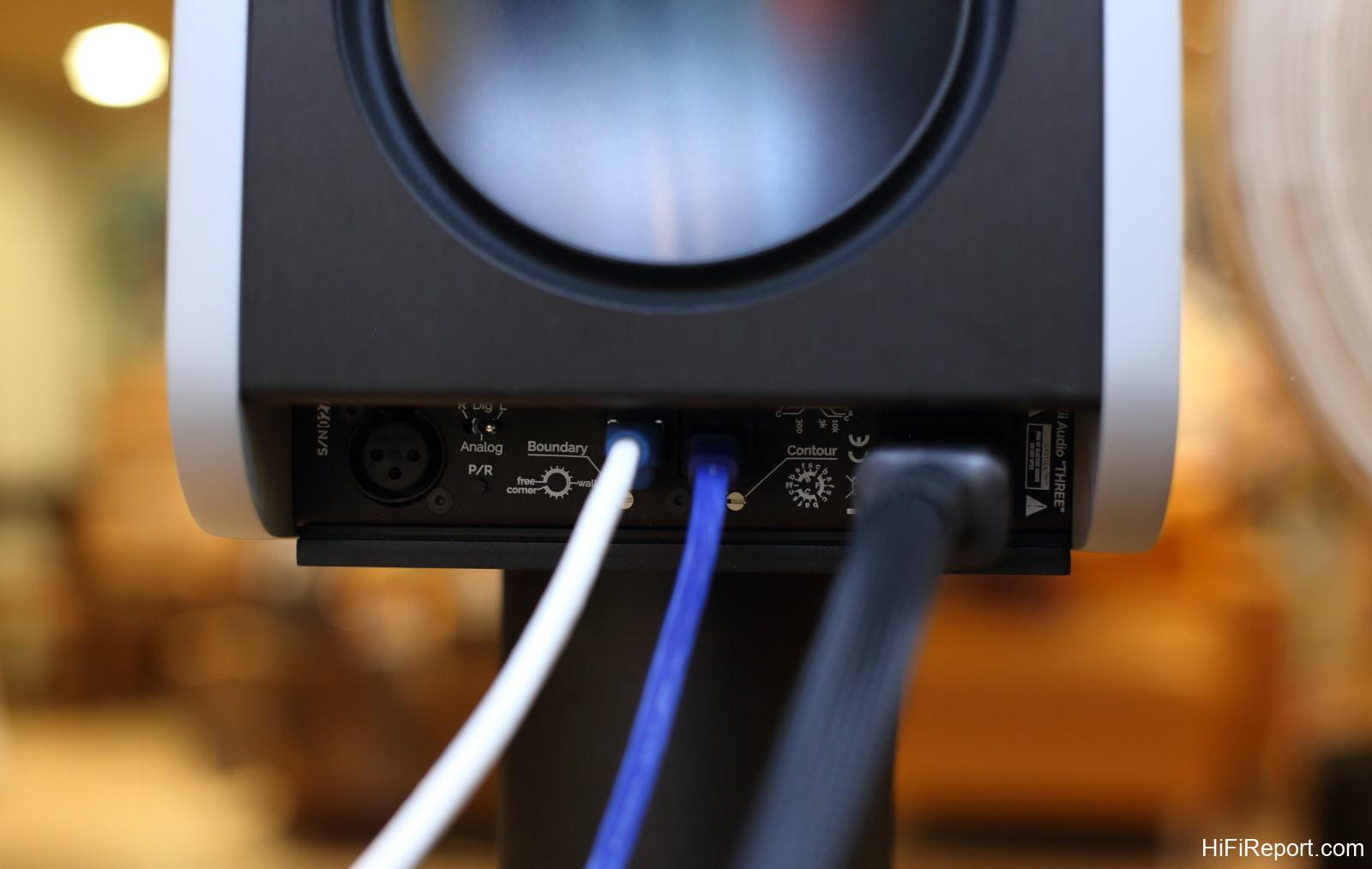
Initially, the Kii Three only supported source connections directly to the speaker itself. Due to space constraints, only an AES input was provided for connecting external sources, limiting application flexibility. However, the design team had planned for alternative connectivity options from the outset. Consequently, a network port was included on the Kii Three’s terminal panel to accommodate the later-released Kii Control.
The internal DSP digital signal processing within the Kii Three is crucial. Although the AES input can receive analog signals, they are immediately converted to digital signals via ADC upon entering the speaker. DSP then processes these digital signals in conjunction with DAC and Ncore amplifier modules. This process resolves signal timing issues, resulting in more accurate sound phase. The rear panel also features EQ adjustments, allowing for gain adjustments below 300Hz or above 3000Hz.
Kii Control: The Final Piece
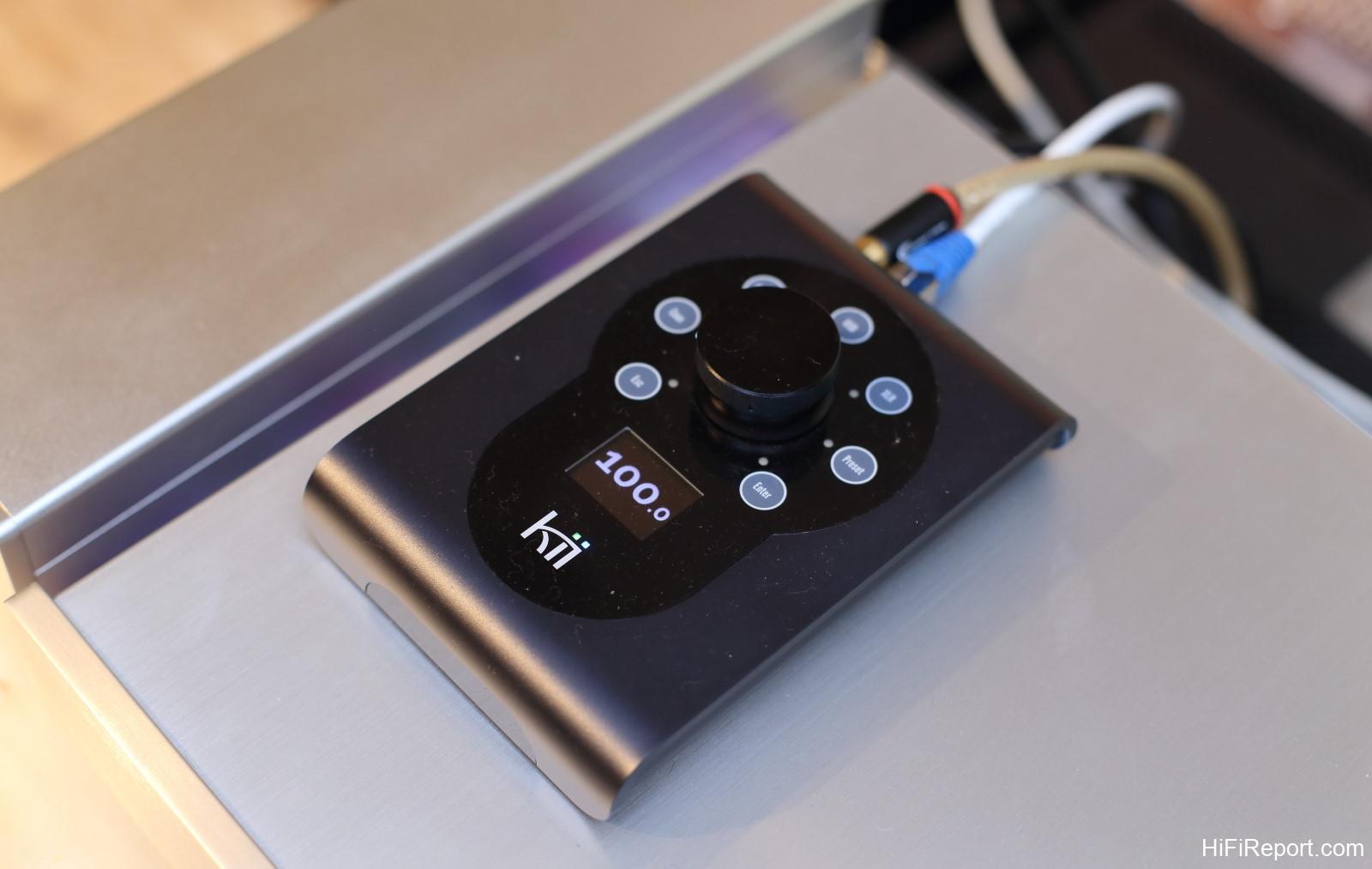
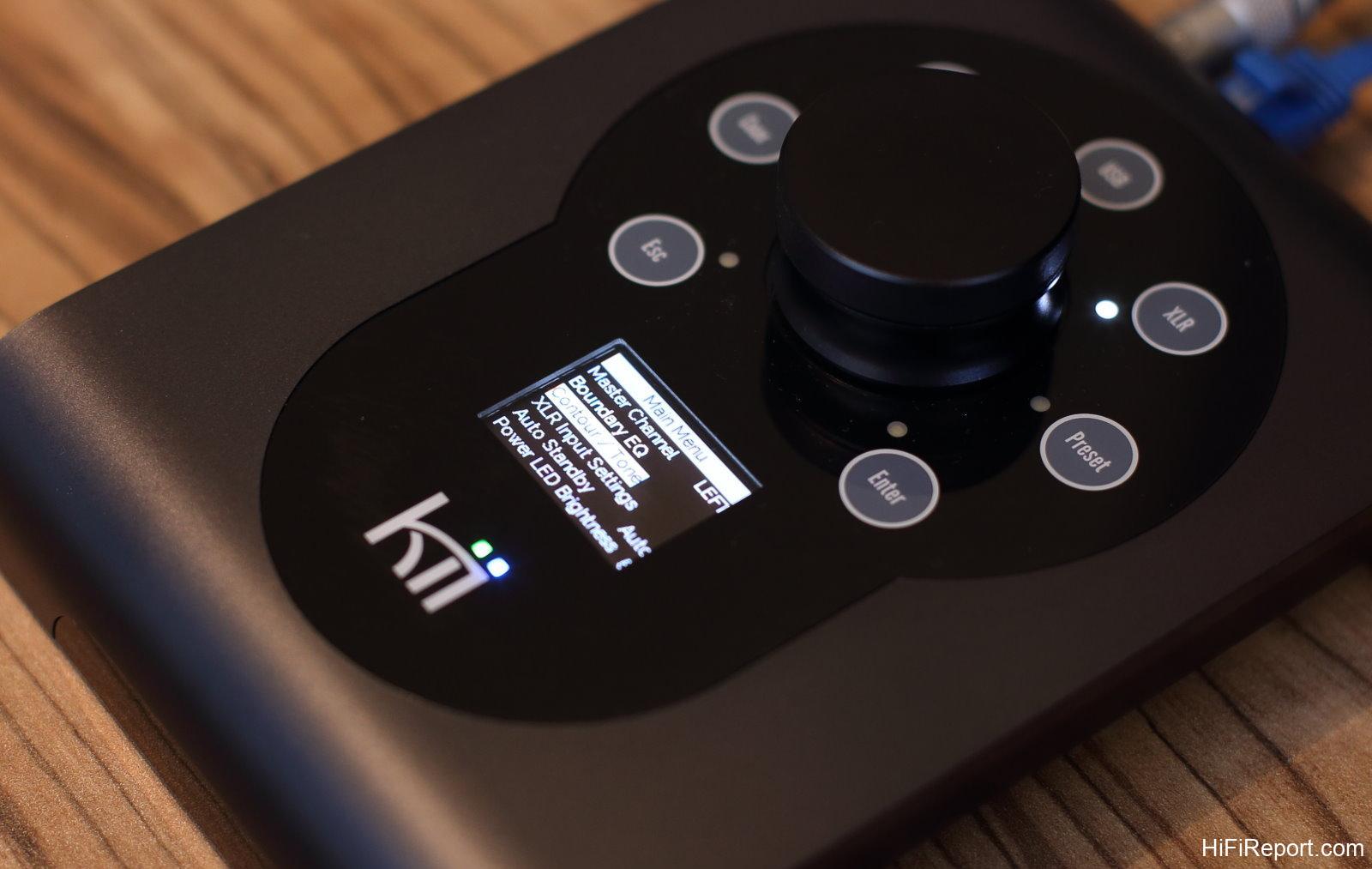
The Kii Control, launched this year, serves two primary functions. Firstly, it provides control over volume, EQ adjustments, input switching, and access to more information and settings. The manual EQ adjustments previously only accessible on the Kii Three’s rear panel are now extended to the Kii Control. Via the OLED display and rotary knob, users can precisely fine-tune gain across various frequency bands.
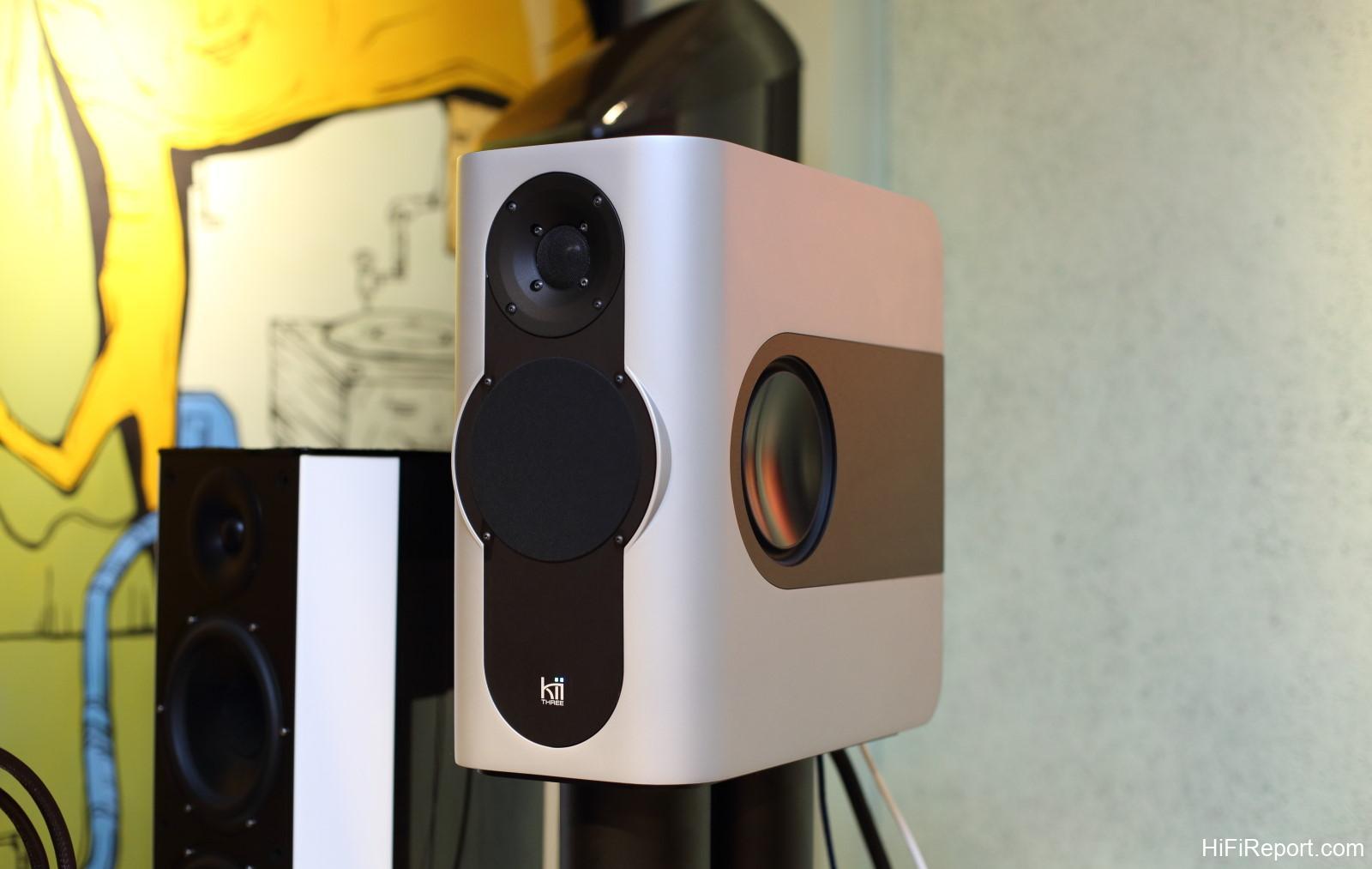
It can also store six different presets, remembering input sources and EQ settings, with independent EQ adjustments for each input source.
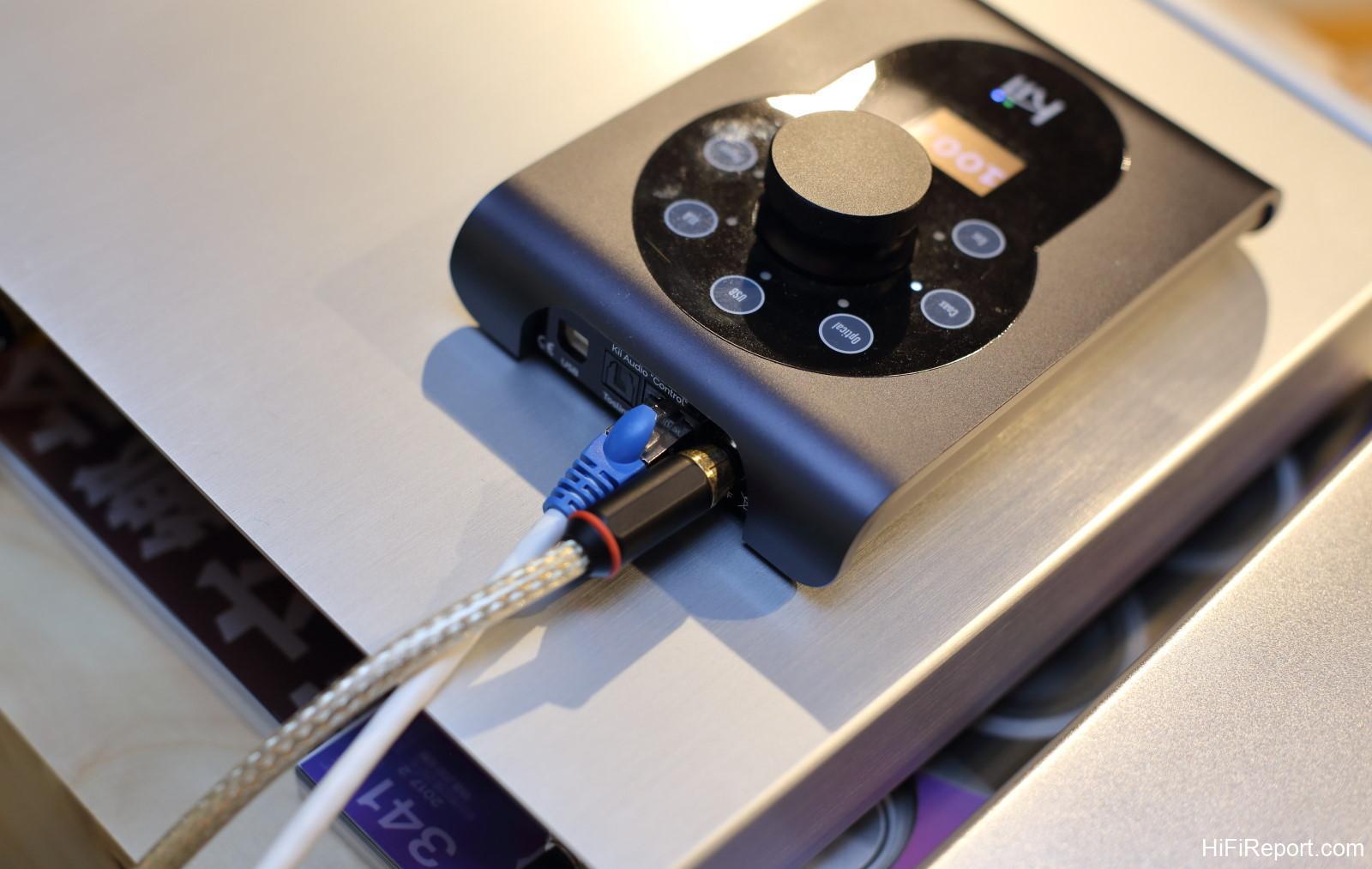
Secondly, it adds three digital inputs: S/PDIF coaxial and TosLink optical, supporting PCM up to 24/384kHz. The USB input on the far left offers the same PCM support and also handles high-resolution DSD64/128 formats. This upgrade enables the Kii Three to play DSD files from computers.
After receiving signals from computers or players, the Kii Control transmits them directly to the Kii Three active speakers via CAT 6 network cables, which also supply power to the speakers, eliminating the need for separate power cords. Therefore, the Kii Control is a controller, a signal receiver, and an extension bridge, rather than a wireless remote. It is typically placed near the speakers and connected via network cables.
An infrared receiver on its front allows volume adjustment via RC5 Type or Apple remotes.
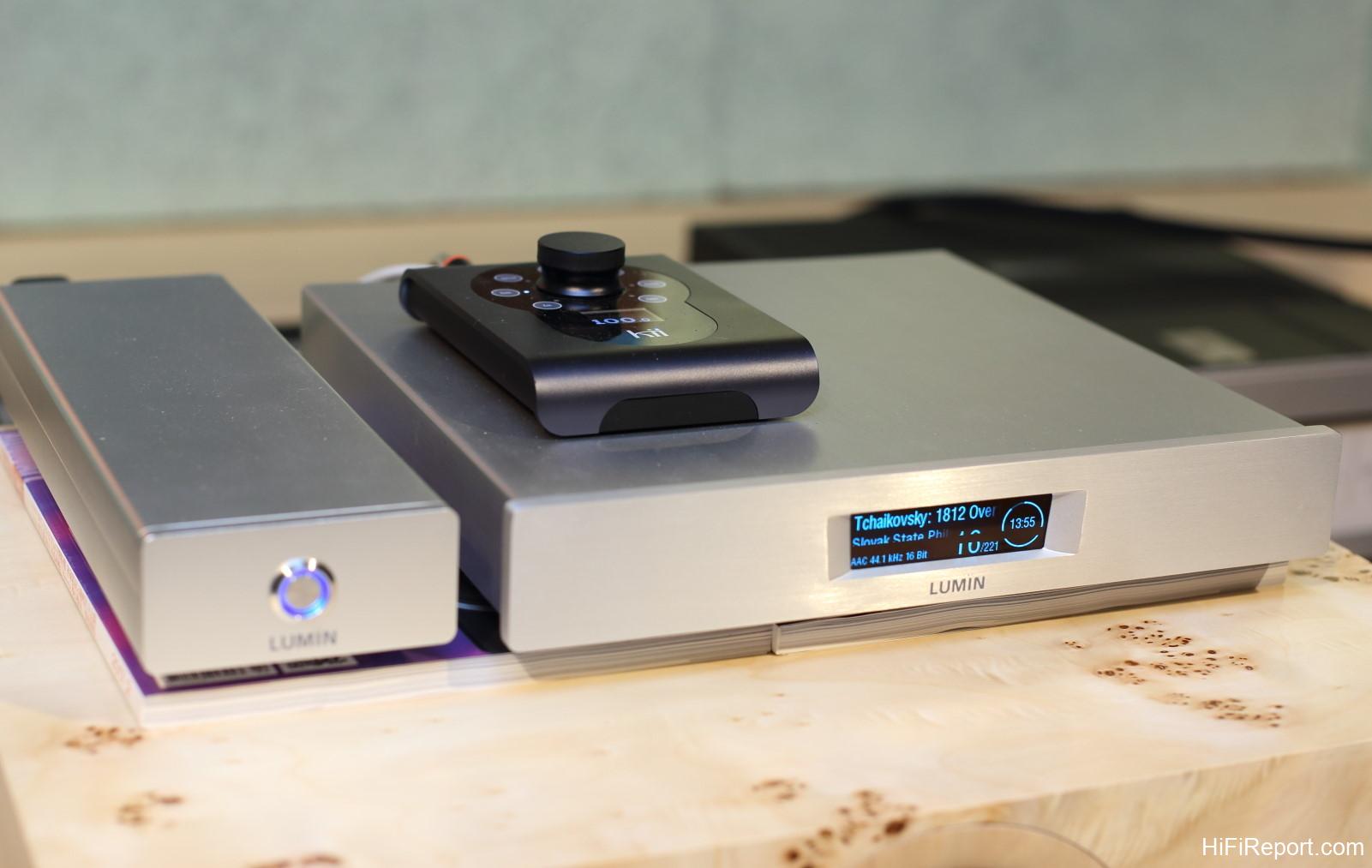
For this audition, we used a Lumin T1 network streamer as the source, outputting digitally via coaxial to the Kii Control, which then transmitted the signal to the Kii Three active speakers.
Unleashing Potential in Large Spaces
Fengming Audio’s original listening room is already quite large, and it adjoins an open showroom of similar size to the right, presenting a challenge for bookshelf-sized speakers like the Kii Three. We had previously experienced the Kii Three’s performance in our own listening room, but our enclosed space was not as expansive, so we had never pushed the volume to its maximum.
This larger listening space allowed us to fully exploit the Kii Three’s amplifier modules and speaker tolerance at maximum sound pressure levels, to assess its performance in a large environment.
Each Kii Three speaker cabinet houses four 6.5-inch bass drivers. When playing orchestral pieces like the 1812 Overture, the Kii Three maintained harmonious, high-quality music reproduction even at high sound pressure levels. There was no noticeable degradation in sound quality even when pushed to maximum volume. The sense of scale provided surpassed what typical bookshelf speakers can achieve.
While some small bookshelf speakers might reach surprising sound pressure levels, they often suffer from blurred or distorted sound, or drivers lose control and become weak. However, the Kii Three’s unique design excels in this aspect, leaving little room for criticism.
Aiming to Conquer Music Lovers
When playing vocals or popular music, the Kii Three also accurately reproduces excellent sound quality. The separation between vocals and accompaniment is exceptionally well-defined. Timbre reproduction for both voices and instruments is natural and realistic. The soundstage is sufficiently wide, satisfying large listening environments, while also creating layered and expansive musical reproduction.
The Kii Three, paired with the Kii Control, offers enhanced usability and broader application, readily connecting to users’ existing music sources. Capable of conquering both large and small spaces, whether in dedicated listening rooms or open living areas, it will satisfy Hi-Fi enthusiasts who demand high sound quality.
Related Reading:
Kii Audio THREE Active Speaker
* DSP controlled monitor speaker
* 4x 6.5″ bass drivers, 1×5″ midrange driver, 1″ waveguided tweeter, each independently driven by custom Ncore amplifiers, 6 channels 250W
* Active Wave Focusing crossover filter
* Frequency Response: 20Hz…25kHz +/- 0.5dB
* Phase response: minimum (best possible time coherence).
* Long term SPL(*): 105dB
* Short term SPL(*): 110dB
* Peak SPL: 115dB
* Controlled Directivity: 4.8dB (80Hz – 1kHz, slowly rising thereafter)
* Dimensions: 20x40x40cm, 8″x16″x16″ (WxHxD)
* Weight: 15kg (33lbs)
* Input Interfaces: Analogue, AES/EBU
Kii Control Specifications
* Signal Inputs: 1 x SPDIF, 1 x TOSLINK, 1 x USB (up to PCM 24/384kHz and DSD64/DSD128)
* KiiLink Output: Power and Data Connection to Kii THREE Master speaker
* Touch Buttons: Input Select (SPDIF, TOSLINK, USB, XLR), Preset (up to 6, user definable), Exit/Enter (Menu Navigation), OLED Display (full colour)
* Dimensions: 11cm x 5cm x16cm (W x H x L)
* Weight: 380g