
KINDEN Air Tube Earbuds Review
The KINDEN Air Tube Earbuds earn a Good overall grade. The air-tube design, which moves the speaker drivers away from the ear canal and sends sound through sealed tubes, is a genuinely different take on passive wired earbuds, and it does the jobs it was built for. What holds the grade back from Great is durability. Multiple owners report one or both earbuds going silent within three to five months of regular use, and the warranty experience behind those failures has left buyers frustrated.
The Verdict Up Front
At 3.6 out of 5 stars across 952 Amazon ratings, these clear the bar for a budget wired earbud that handles calls and casual music without charging or pairing. The air-tube design keeps the speaker magnets out of the ear canal; the 3.5mm CTIA plug works with most phones, tablets, laptops, and MP3 players. The report card: Good on design and fit, Good on sound, Fair on room silencing, Great on battery (there is none), Good on calls. If you want a simple wired option with no battery, drivers kept away from the ear, and decent phone-call handling, these do that job. If you are looking for active noise cancellation, multi-year reliability, or hi-fi music, this is not the product.
Report Card
- Design, Build and Fit: Good — chrome metal housing, anti-drop earbud shape, and three sizes of silicone tips cover most ears, though long-term durability falls short.
- Sound Quality: Good — the air-tube path produces clear, listenable audio for calls and casual music, though it will not satisfy someone accustomed to higher-tier headphones.
- Silencing the Room: Fair — the rubber ear tips block some ambient sound, but the product is not active noise cancelling and does not meaningfully reduce a noisy environment.
- Battery Life: Great — wired through a 3.5mm jack, so there is no battery to charge and no runtime to track.
- Calls: Good — the inline microphone and hands-free answer key handle phone conversations clearly at a comfortable volume.
Design, Build and Fit
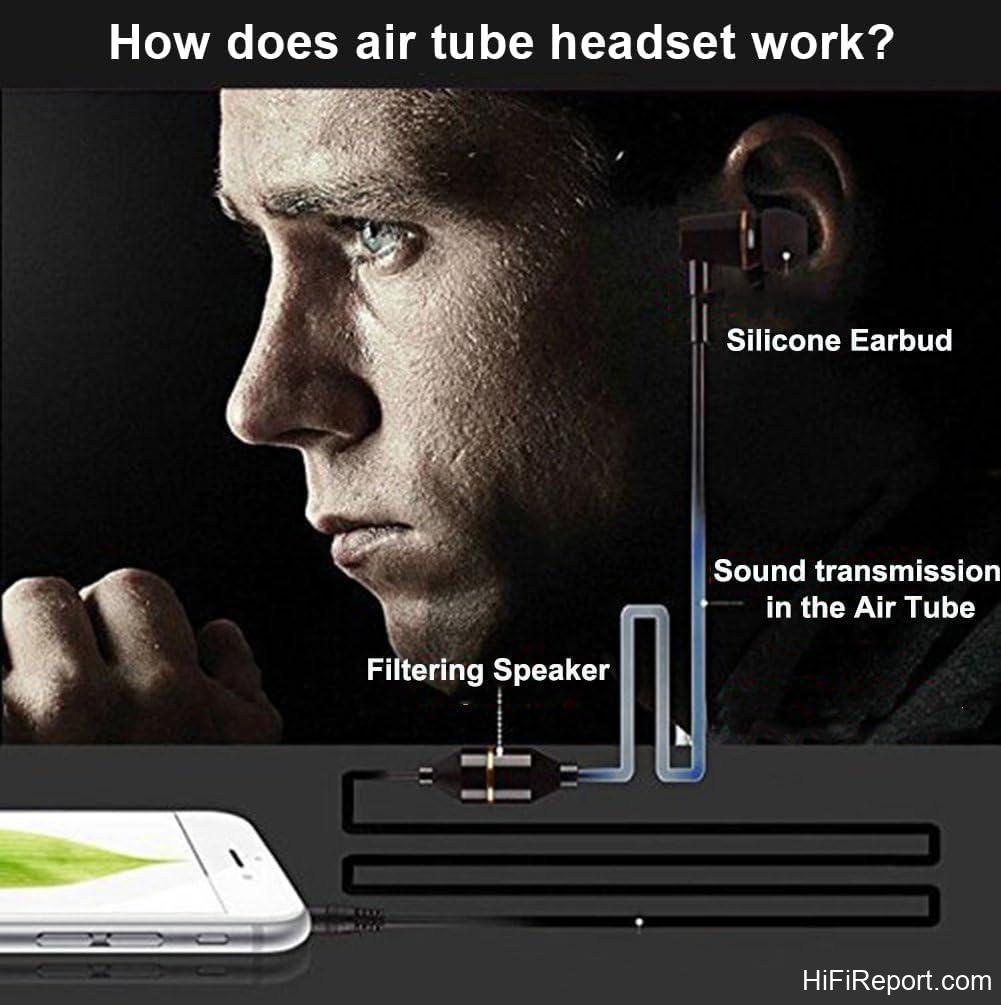
The inline section is chrome metal with a 3.5mm CTIA plug at the far end. The defining feature is the air-tube geometry: the stereo speakers sit in small cases set a safe distance from the ear, and sound travels through sealed tubes to the earpiece instead of through a conventional wire. This keeps the magnet and driver assembly away from the ear canal, which is the design goal the brand leans on throughout its listing.
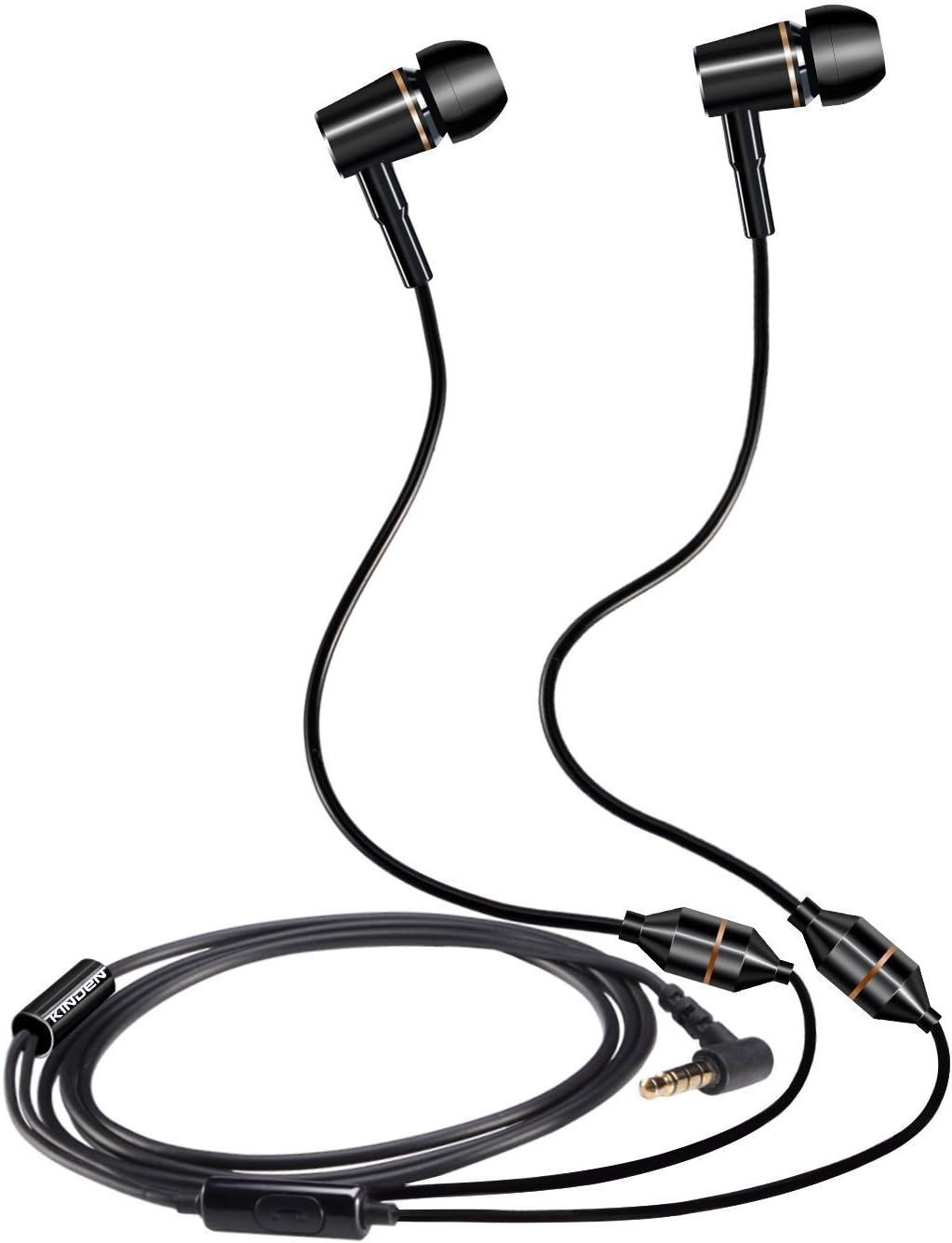
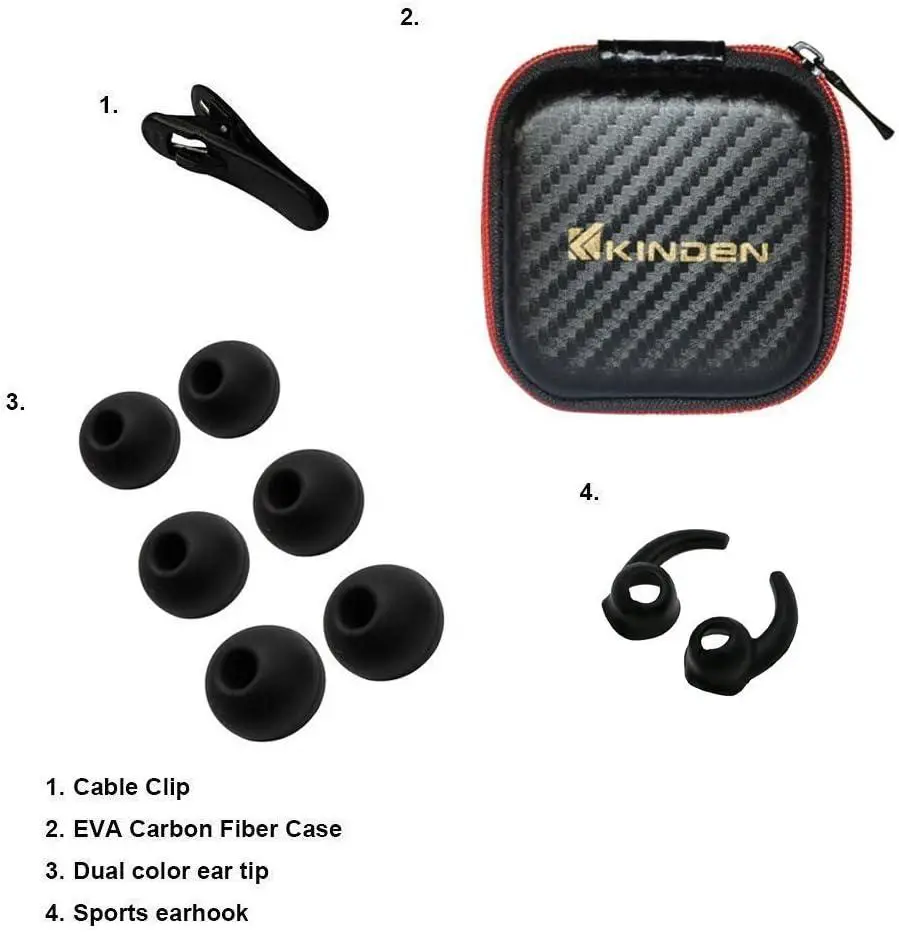
Fit comes in three tip sizes (S, M, L), with M installed out of the box. The anti-drop shape helps keep the tips seated during light activity. A reviewer with smaller ears said the tips kept slipping out of one ear even at the smallest size, and a runner found the fit not secure enough at that pace. The box includes a zippered clam-shell case and an alligator clip. One buyer noted the spare tips came in an uneven set (three small, two medium, one large) rather than one of each size.
Durability is where the concept hits its weakest point. Multiple owners report one earbud going silent after three to five months of normal use, closely followed by the other. One reviewer cycled through two pairs before the pattern became clear. The advertised warranty window has reportedly shifted between one year and three months depending on when the support conversation happened, which muddies the confidence the product page builds.
Grade: Good — the air-tube build and three-size tip system handle most ears comfortably, but recurring driver failures within a few months keep this from higher marks.
Sound Quality
The air-tube path gives these earbuds a sound signature owners describe as clear and listenable rather than rich or detailed. Reviews are consistent: the audio handles phone calls, YouTube video sound, and casual music fine, and it will not replace a dedicated headphone setup for critical listening. One reviewer who had used the pair for five months called the sound good and the fit comfortable; the output did not match a higher-tier pair of headphones but served the everyday job well.

Everyday Listening
For the use cases the product targets, the sound holds up. The chrome metal inline housing and sealed tubes keep the signal path stable, and reviewers consistently describe the output as clear for voice and adequate for music. One owner using the earbuds on a laptop for work called the sound functional, though it degraded to a muffled, underwater character before the driver ultimately failed. No reviewer describes the frequency response as warm or punchy; the consensus is that the tuning is flat and clean for the tier.
Voice Clarity
Phone and video calls are where the air-tube design earns its keep. The inline microphone sits close to the mouth on the cable, and the passive rubber tips keep the listener from having to shout in moderately busy rooms. Owners report the other party hears them clearly, which is the primary metric for a call-focused earbud. The sealed-tube path also keeps the listener’s own voice from bleeding back into the mic, which improves two-way intelligibility.

Grade: Good — clear, flat, and sufficient for calls and casual audio, with no pretensions to hi-fidelity reproduction.
Silencing the Room
These earbuds are not active noise cancelling, and any expectation of that technology at this tier is misplaced. The rubber ear tips provide passive isolation, sealing the ear canal enough to muffle some ambient sound, but they do not generate inverse-phase waves. One reviewer was blunt: the earbuds are not effective at noticeably reducing ambient sound, and he compared asking them to cancel noise to asking a rice cooker to clear sidewalks of snow.
What the tips do handle is the fit and a thin layer of external noise. During a phone call in a moderately busy room, the passive seal keeps the conversation audible without shouting. For an open-plan office, a transit corridor, or a coffee shop, that isolation is the ceiling. Buyers who need to deaden a loud environment should look at active noise-cancelling in-ear headphones instead; these will not get them there.
Grade: Fair — passive rubber-tip isolation handles light ambient noise, but there is no active cancellation and the seal will not meaningfully quiet a loud room.

Battery Life
There is no battery to manage. The earbuds draw power through the 3.5mm CTIA cable, so they work as long as the source device has power. No charging cycle, no runtime clock, no battery health to track after a few years. For a commuter or a desk-bound user who plugs in for work calls, the power model is simple: connect the jack, listen or talk, unplug.
The practical trade-off is cable length. One owner trying to use the earbuds at a desk monitor found the cable too short for the distance to a comfortable listening position, and the listing does not offer a longer-cable variant. For phone-in-hand or laptop-on-lap use, the standard length works without strain.
Grade: Great — a wired 3.5mm design means zero battery, zero charging, and no runtime limit to worry about.
Calls
The inline microphone and hands-free answer key (present on some model variants) make these earbuds competent for phone conversations. Owners using them for work calls on laptops describe the voice transmission as clear and the incoming audio as easily understood. The anti-drop fit and the passive ear-tip seal keep the earbuds seated during a standing or walking call, which matters more for sustained call clarity than anything on the spec sheet.
Copyright protected. First published on hifireport.com; any unauthorized copy violates the intellectual property rights of hifireport.com.

The main limitation is cable management during movement. A reviewer who tried running with the earbuds reported the fit slipping and the cable pulling on the ear. For seated, desktop-adjacent calls, the setup is straightforward: plug in, press the inline button, talk. For active, hands-free scenarios, the cable becomes a tether that tugs at the ear with each step.
Grade: Good — the inline mic and hands-free key deliver clear two-way voice for seated and light-movement calls, with cable length and running-fit as the main caveats.
Next to the Rivals
The available sources do not place these earbuds side by side with a named competitor in a formal head-to-head comparison. What the reviews do draw is a relative line: one owner who used the pair for five months noted the sound does not match a higher-tier pair of headphones but works for the everyday job at a far lower cost tier. The positioning is “clear and functional for calls and casual listening” rather than “competing with in-ear monitors.”
The air-tube concept sets these apart from standard 3.5mm earbuds in one specific physical way: the driver and magnet stay at a distance from the ear canal. One reviewer framed this as reducing EMF exposure at the head. That claim is unverified; the same reviewer admitted lacking tools to measure radiation. No mainstream wired rival at this tier uses sealed air tubes; most competitors push the driver directly into the canal. That geometric difference is the product’s main point of distinction in the wired earbud segment.
Owner Ratings Explained
The 3.6-out-of-5 aggregate across 952 ratings sits just below the midpoint, and the spread of individual reviews explains why. At the top, owners who buy the earbuds for calls, casual music, and the no-battery simplicity give them five stars and call the sound good or great. At the bottom, durability failures dominate: multiple reviews describe one earbud going silent after three to five months, followed by the second, and a warranty exchange that felt unresponsive or inconsistent. A few mid-range reviews cite fit issues (tips slipping in smaller ears) or cable length limiting use at a desk monitor.
The pattern maps directly onto the Report Card grades. Sound Quality earns a Good because the audio is clear and adequate but not exceptional. Silencing the Room earns a Fair because passive tips are the full extent of isolation. Design and Build earns a Good with a durability caveat because the physical construction is serviceable but driver failures recur. The gap between the five-star “worked great for five months” review and the one-star “failed in a month, warranty was complicated” review is the core tension in the aggregate.
Pros and Cons
- Air-tube design keeps speaker drivers and magnets away from the ear canal
- Wired 3.5mm CTIA plug: no charging, no pairing, works with most phones, tablets, and laptops
- Inline microphone with hands-free answer key for clear two-way calls
- Three sizes of silicone ear tips plus anti-drop earbud shape for a secure everyday fit
- Zippered clam-shell travel case and alligator clip included in the box
- Recurring driver failures within three to five months reported by multiple owners
- Passive ear-tip isolation only; no active noise cancellation
- Cable length can be too short for desk-to-monitor use
- Warranty terms appear inconsistent between the advertised window and what reps honor in practice
The Verdict
The KINDEN Air Tube Earbuds are a Good buy for a specific set of needs. If the goal is a simple wired earbud with no battery, no pairing, drivers kept out of the ear, clear phone calls, and music that passes without fanfare, the air-tube design and 3.5mm plug do the job. The Great grade on battery life is doing real work here: there is nothing to charge, no runtime to track, no firmware to update.
The same buyer should hold expectations to the Good grades on sound and calls, the Fair grade on room silencing, and the durability caveat baked into the Design grade. If the earbuds fail in month four, the replacement experience is not guaranteed to be smooth, and the warranty window has reportedly narrowed from one year to three months in some support conversations. For the tier the product occupies, the trade is acceptable. You get a conceptually distinct, wired, call-focused earbud with clean audio, and you accept that it may not outlast a year of regular use. The 3.6 aggregate reflects that split between “does the job” and “held up for a while, then did not.”
Spec Sheet
- Connector: 3.5mm CTIA (international standard)
- Design type: Air-tube binaural earbuds with inline microphone
- Ear-tip sizes included: S, M, L (M installed at shipping)
- Housing material: Chrome metal inline housing
- Compatibility: Most 3.5mm audio devices (phones, tablets, laptops, MP3/MP4 players, desktops)
- Included accessories: Zippered clam-shell case, alligator clip, spare silicone tips
- Battery: None (wired; draws power from the source device)
- Hands-free call: Yes, via inline answer/end key on some variants
- Noise isolation: Passive (rubber/silicone ear tips); no active noise cancellation
Questions Buyers Ask
Do these earbuds have active noise cancelling?
No. The rubber ear tips provide passive isolation that blocks some ambient sound, but the product does not generate inverse-phase cancellation waves. One owner called the “noise cancelling” language on the listing misleading and asked the brand to remove that rating category from the product page.
Copyright protected. First published on hifireport.com; any unauthorized copy violates the intellectual property rights of hifireport.com.
Will the 3.5mm plug work with my phone or laptop?
Yes. The plug uses the international standard CTIA connector, which fits most phones, tablets, laptops, desktops, and MP3 or MP4 players with a 3.5mm audio port. Devices without a 3.5mm jack require a separate adapter, which the listing notes.
How long do the earbuds typically last before failing?
Multiple owners report one earbud going silent after three to five months of regular use, with the second following closely behind. The advertised warranty window has reportedly varied between one year and three months depending on the support rep, and at least one buyer was offered a discount in place of the replacement the listing describes.
Do the ear tips stay secure during light activity like walking or standing calls?
The anti-drop shape and three tip sizes (S, M, L) keep the earbuds seated for seated and slow-movement use. One owner with smaller ears noted the tips slipped in one ear even at the smallest size, and a runner reported the fit was not secure enough at that pace.
No products found.