
Lals Classical One Bookshelf Speaker Review
Lals is a horn speaker expert.
If you are looking for a pair of horn speakers built using traditional methods, Lals is the brand to seek out.
If you are planning a multi-channel theater system using horn speakers, Lals is undoubtedly the company to contact.
If you have NOS vintage paper cone woofers or compression drivers and need horn enclosures, if you don’t go to Lals, I can’t imagine who else you would turn to.
However, these traditional horn speakers are not small, and not every living room can accommodate them.
Does this mean that if you don’t have a large space, you are destined to be separated from horn speakers? Huang Rixing has a solution.
Among his horn speaker offerings, models with 12-inch and 15-inch paper cone woofers are large units. However, the Classical 8M and Classical 82, which use 8-inch carbon fiber woofers, are much smaller in size. The width is narrower, and the depth is increased, making them look like ordinary speakers.
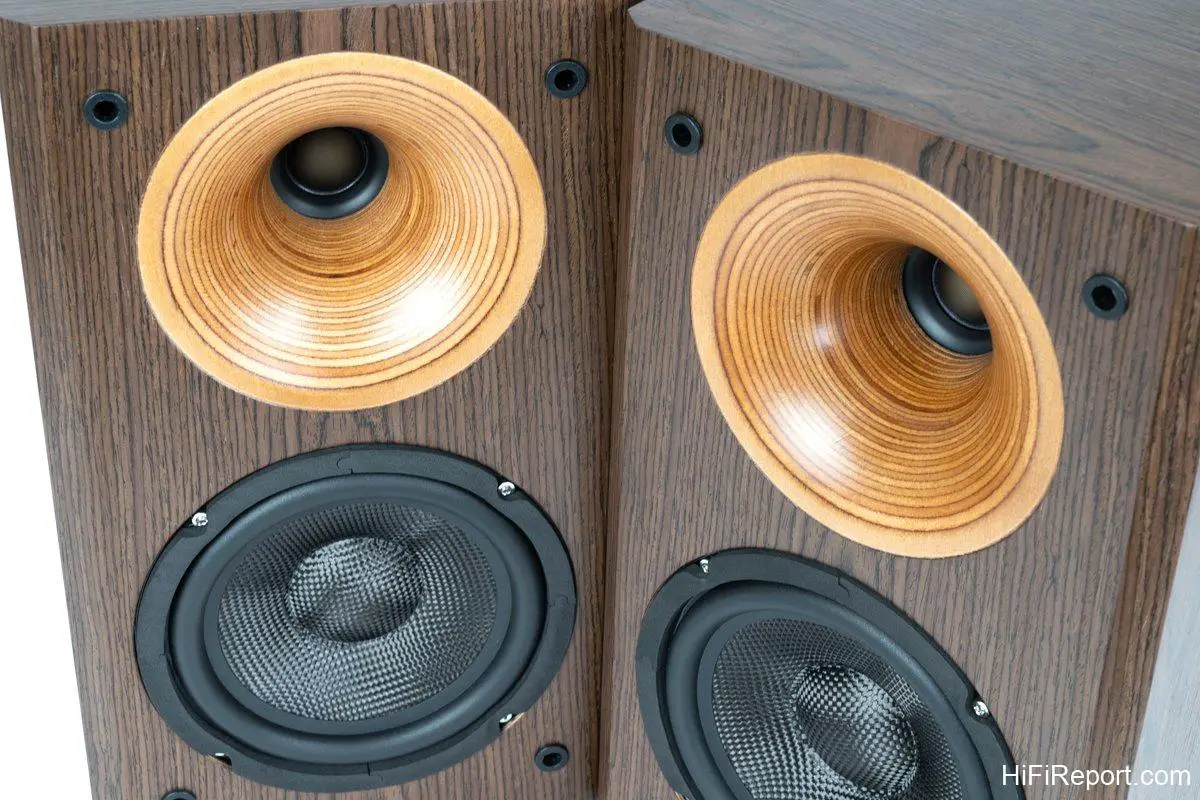
Huang Rixing has also changed the compression driver horns of these two speaker models to circular horns. The curves of the horns reveal the grain of the laminated plywood, making them look like sound waves in transmission, adding to the musical experience.
Most notably, while there are many horn speakers on the market, not all of them use compression drivers. These two models, although appearing similar to conventional speakers, employ traditional horn speaker compression drivers.
Compression drivers, when paired with horn flares, can project mid and high frequencies further, allowing for more detail and information to be heard in the listening area.
6.5-inch Carbon Fiber Woofer
Below the Classical 8M and 82, there is another speaker, the Classical One.
This bookshelf speaker is smaller than the Classical 8M, with a 6.5-inch woofer. It also uses a carbon fiber pressed cone diaphragm unit, but the surround is made of rubber, not the traditional W-shaped folded cloth surround.
Because the mid-bass unit is smaller, the Classical One’s cabinet can also be made smaller.
The Classical 8M is considered a large bookshelf speaker, while the Classical One is of a normal bookshelf size.
Therefore, if you find the Classical 8M too large, the Classical One is for you.
25mm Silk Dome Tweeter with Wooden Horn
However, partly for cost considerations, Lals wanted to lower the price of the Classical One to benefit consumers, allowing people to experience the beauty of horn speakers for less money. Secondly, due to the smaller cabinet size, the horn proportion also had to be reduced. A compression driver would not fit, so a conventional tweeter had to be used.
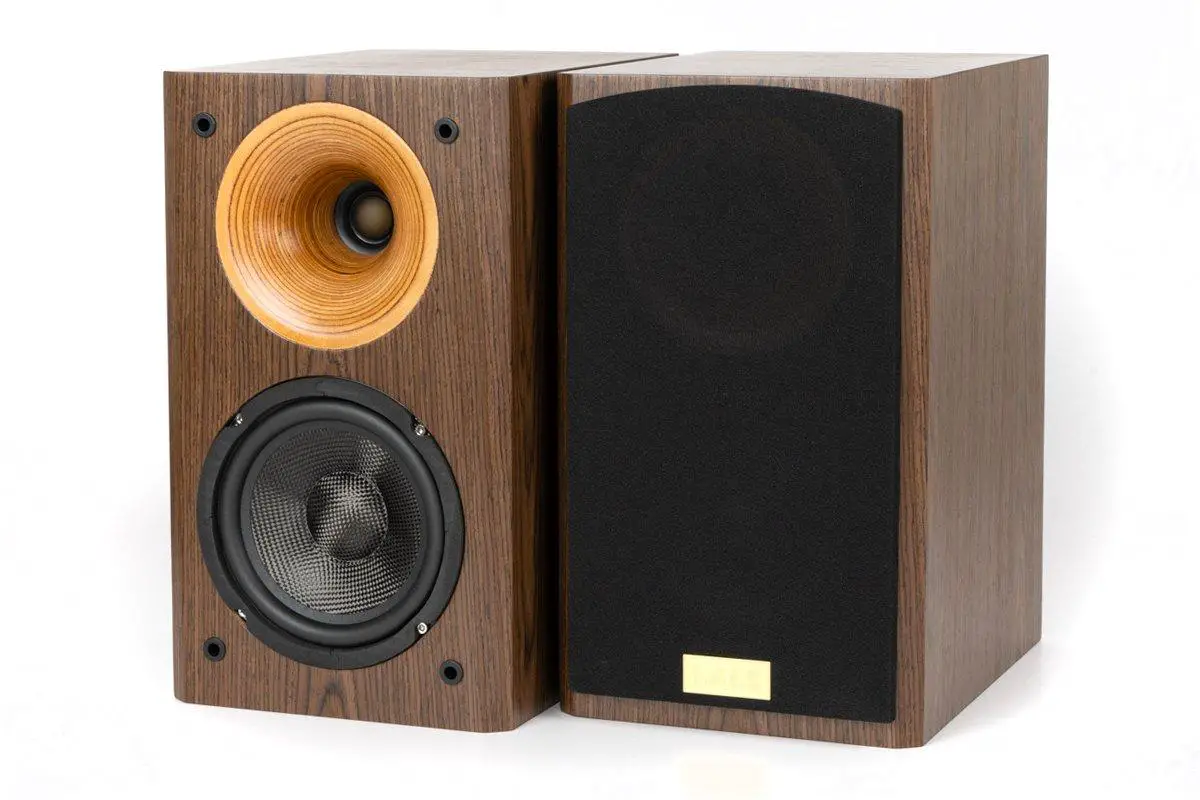
But Huang Rixing is a meticulous person. He prefers to do things himself whenever possible. This applies to compression drivers, paper cone woofers, and even the 25mm silk dome tweeter on the Classical One, which they developed in-house.
Pairing the tweeter with a circular horn not only improves the tweeter’s efficiency but also helps to enhance the downward extension of the high frequencies through horn coupling.
Lals sets the crossover point at 2,000Hz, allowing the tweeter to achieve better low-frequency reproduction through the horn without excessive driving requirements.
Crossover with Selected Components
In terms of the crossover, Lals always considers two things: low loss and good components.
They are not a manufacturer that blindly pursues audiophile-grade components, but they insist on selecting parts with good characteristics and qualified specifications.
They also adopt lower-order crossovers, and the circuit topology is relatively simple. This reduces loss.
The speaker efficiency is not compromised, making the speakers easier to drive.
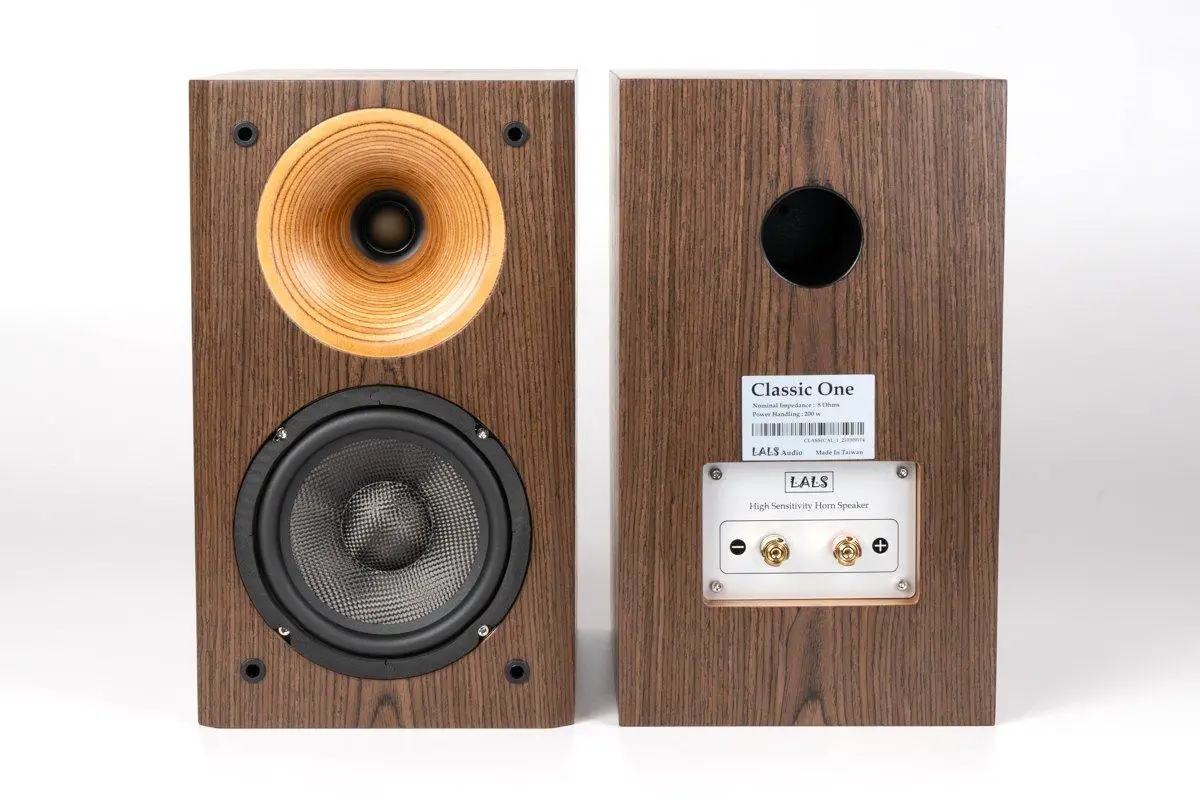
At the back, the speaker terminals follow Lals’ usual practice in recent years, placing the terminals on the inside of the back panel. This way, the terminals do not protrude, which not only makes packaging easier but also protects the terminals from damage.
High Efficiency, Not Afraid of Low Power, Warmer Amplifiers Preferred
According to Lals’ official data, the Classical One’s efficiency is as high as 92dB, which is rare for bookshelf speakers, at least 5dB higher than typical bookshelf speakers.
This means you don’t need to crank up the amplifier volume to get sufficient sound pressure.
When Huang Rixing from Lals delivered the speakers, he conveniently connected them in the listening room for a quick audition.
At that time, they were connected to a Klimo Merlin preamp and an EAR Yoshino 509 power amp. The sound was sweet and warm, and the vocals were vivid and lifelike, simply beautiful.
Based on my experience with Lals speakers, high-power solid-state amplifiers can fully showcase the dynamic capabilities of their speakers. However, if you prefer vocals, tube amps can easily provide satisfaction. Both pairings have their strengths.
However, because the horn enhances the efficiency of the tweeter, it is recommended to prioritize amplifiers with a warm sonic character.
The front-end source also has an impact. In HiFiReport’s listening room, when paired with the Moon HAD 230 DAC, the sound was smoother and more listenable than with the North Star DAC32.
Besides the HAD 230 paired with Telos EMP running Roon, I used the Denon PMA-A110 as the main amplifier.
Don’t underestimate the small size of the Classical One speakers. Even with a spacing of two meters, they still give you a full and solid soundstage.
Moreover, even when I moved more than four meters away from the speakers, I could still hear many details in the music.
Powerful Drums, Prominent and Full Vocals
Taking Jennifer Warnes’ “Famous Blue Raincoat” album as an example, in the first track “First We Take Manhattan,” the news report sound in the front right is clear and distinct. Then, as the musical introduction begins, the drums are powerful and energetic, accompanied by the electric guitar melody. Jennifer Warnes’ vocals emerge, full-bodied, with a vivid and lively tone, three-dimensional and prominent. The vocals are slightly forward, making the listening experience more intimate.
In the title track “Famous Blue Raincoat,” the saxophone texture at the beginning is truly beautiful and incredibly realistic.
When singing slow songs, the accompaniment slows down, and Warnes’ enunciation becomes clearer. Those lingering and subtle vibratos are heard with exceptional clarity.
This is just a silk dome tweeter, not even a compression driver, yet it provides such rich detail and information. Credit is due to this circular horn.
Listening to Warnes and Leonard Cohen duetting on “Joan of Arc,” the electric guitar tone at the beginning has a warm glow. The percussion that follows is crisp and powerful. Warnes and Cohen’s vocals, layered one after the other, are clear and rich in detail, making the singing incredibly lifelike.
There’s detail, soundstage, warmth, power, and speed.
Just one album is enough to demonstrate the merits of the Classical One.
Hearing Cohen’s Sensual Voice
When reproducing male vocals, it utilizes the full-bodied mid-bass, which effectively enhances the thickness of the voice.
For example, in Leonard Cohen’s 2009 live concert recording in California, “Hallelujah,” Cohen’s voice in this version sounds rich and full. His deep voice, heard through the Classical One, sends shivers down your spine, while the electric organ is brilliantly colorful.
The layering of the accompanying instruments on stage is also clearly presented. The Classical One provides a comprehensive soundscape.
As the song progresses to the later part, the entire audience is moved, with occasional shouts from the live audience. Finally, the stage and audience sing “Hallelujah” together. The sense of atmosphere from the Classical One is truly excellent.
Another track from the same album, “Suzanne,” comes from a 2008 concert in Manchester, UK, and the recording quality is different from the previous track.
The acoustic guitar there has a clear tone with rich string resonance.
Cohen sings and speaks here, like a poet telling a story. The warm and expansive vocal image is extremely comfortable to listen to.
In the last phrase, “with her mind,” the voice fades down. Cohen’s bass voice is like a rich, aged wine, intoxicating.
Solid and Concrete Imaging, Clear Even at Low Volumes
Also featuring a magnetic male voice, Chris Jones’ “Roadhouses & Automobiles” album can also showcase the charm of the Classical One.
Taking the well-known track “No Sanctuary Here,” with its massive and thick low frequencies, the Classical One, despite being a bookshelf speaker, performs these low-frequency waves just as impressively as floor-standing speakers.
This track unfolds a wide soundstage, which the Classical One handles with ease.
As for the previous track, “The Last Fallen Leaf,” it is an instrumental guitar piece.
Compared to the passion of “No Sanctuary Here,” the Classical One earnestly presents every guitar note. Those subtle sounds of fingers sliding across the strings during slides are embellishments of the piece.
It’s all beautiful.
In “Darlin’ Cory,” Chris Jones starts singing a cappella directly at the beginning, without an intro. The characteristics of his voice are clearly revealed. Just as Lals’ horn speakers designed for professional monitoring are clear and precise in delineating a person’s vocal characteristics, the Classical One is equally capable.
Listening to the mandolin and violin that join in during the interlude, each instrument is distinct, solid, and tangible.
During the listening session, the phone rang, and I turned down the volume to answer the call.
After finishing the call and listening again, I discovered another strength of the Classical One: it can still provide rich details at low volumes, and the imaging remains clear and distinct.
This is truly excellent because most of the time, we listen to music at home at volumes that are not too loud to avoid disturbing neighbors.
However, when the volume is low, and the speakers are not sufficiently driven, details are often lost.
Or because the volume is low, the sound heard in the listening area has attenuated significantly, so much musical information becomes blurred.
The Classical One, in this aspect, allows you to still enjoy the rich content of music at low volumes.
For Detail-Oriented Audiophiles, It’s Worth a Try
Listening to Anne-Sophie Mutter’s “Across the Stars” album, starting with “Rey’s Theme” from “Star Wars: The Force Awakens,” with the assistance of the circular horn, Mutter’s violin is even more prominent. The expressions between the musical turns are richer, and the emotions are more intense.
Playing the high-register fortes brings a slight sense of excitement, which is a portrayal of the female protagonist’s distinct personality in the movie.
In “Yoda’s Theme” from “The Empire Strikes Back” and “Hedwig’s Theme” from “Harry Potter,” the triangle, harp, and celesta that embellish in the background sound particularly clear due to the horn’s amplification effect, and they have a distinct and clear sense of positioning.
The violin’s pianissimo passages are also more concrete, no longer feeling empty and weak. The texture of the bowing can be heard clearly.
If you are a person who values detail in audio performance, the Classical One will likely satisfy you.
Suitable for Movies Too
If you want a sound system, a pair of speakers, that can simultaneously meet the needs of listening to music and watching movies, the Classical One is very suitable for you.
Listening to them continuously for several days, I was initially amazed by their prominent performance of vocals, full of life and blood. Subsequently, I was also deeply impressed by their ability to amplify details.
However, when I listened to Hans Zimmer’s soundtrack for “Angels & Demons,” and experienced the layers upon layers of thick and solid soundscapes constructed by HZ, I really felt: remember to use the Classical One for movies.
The Classical One is just a bookshelf speaker. To reproduce the deep weight of HZ’s scores, it is best to pair it with a subwoofer for more impact and immersion.
Another Surprise
The Classical One is the smallest and most affordable Lals speaker I have ever heard.
It inherits the characteristics of the Lals family, using a circular horn cut from solid wood to improve the efficiency of the speaker’s tweeter, making details richer and clearer, allowing you to hear many previously unheard or unclear messages.
Every time I listen to Lals speakers, there is a surprise, and this time is no exception.
Specifications
* Type: 2-driver, 2-way circular wooden horn bookshelf speaker
* Drivers: 25mm silk dome tweeter x1 (with circular wooden horn); 6.5-inch carbon fiber cone mid-bass
* Frequency Response: 50 Hz – 20 kHz
* Sensitivity: 92dB / W(1m)
* Impedance: 8Ω
* Crossover Frequency: 2000 Hz
* Maximum Power Handling: 200W
* Real Wood Veneer: Ebony, White Ash
* Dimensions: 210 x 360 x 300 mm (WxHxD)
* Weight: 8kg