
Linn 360 Active Speakers Review
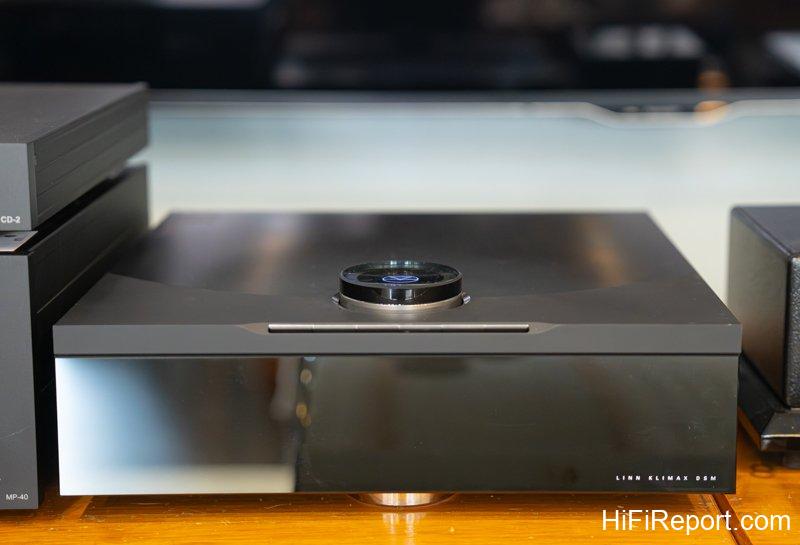
If you’re aiming for the pinnacle of audio performance while desiring a minimalist setup, the Linn 360 active speakers paired with the Klimax DSM represent Linn’s current flagship system. Their unparalleled musical fluidity is truly captivating – you simply have to hear it to understand the appeal.
Where can you experience them? Currently, the sole location is Sound Space.
The First Pair of 360s
Why “currently the sole location”? Because the very first pair of Linn 360 active speakers has just taken up residence at Sound Space. Where’s the second pair? It’s still being manufactured in Scotland and is expected to arrive in Taiwan before the TAA Audio Show in August. So, right now, Sound Space is the only place where you can experience the 360 active speakers. If you prefer hearing them firsthand to reading my impressions, please contact Sound Space directly (sound-space.com.tw).
Listening to the 360s at Sound Space is about experiencing hi-fi equipment, but it’s even more about immersing yourself in the music.
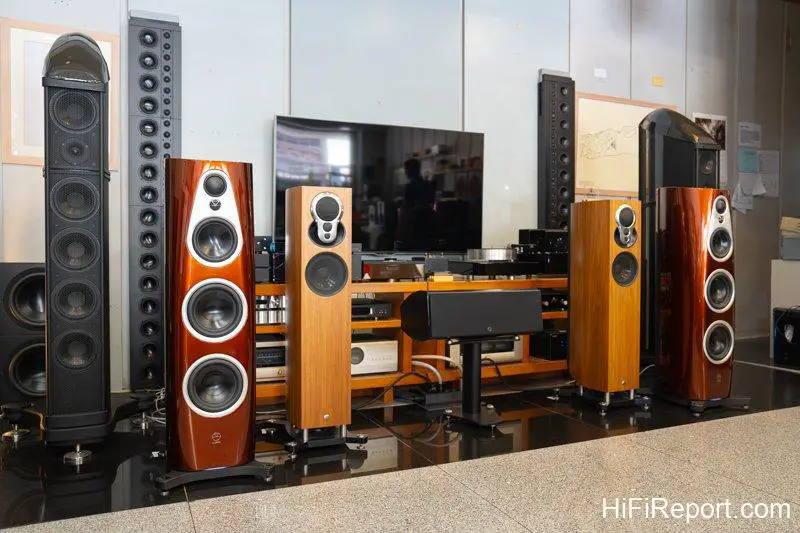
This pair of 360s embodies numerous Linn technologies that are ahead of the curve. Allow me to divide this review into two parts: first, covering the technical details of the 360, and second, sharing my listening impressions from Sound Space.
A New Milestone in Linn’s Audio History
To put it simply, the 360 speakers are a culmination of Linn’s half-century of research and development. Founded in 1973, Linn just celebrated its 50th anniversary in 2023, and the 360 is Linn’s birthday gift to itself. From analog to digital, the 360 marks a new milestone in Linn’s history of audio development.
I first saw the 360 speakers when Linn’s current CEO, Gilad Tiefenbrun, visited Taiwan in March for the new product launch (https://feature.u-audio.com.tw/featuredetail.asp?featureid=1353). It was then that I learned that within the 360’s beautiful and elegant exterior lie many technologies that are almost impossibly difficult to execute, yet the system remains remarkably easy to use. With the simple pairing of the 360 and Klimax DSM, everything from digital and analog processing to space correction is controlled at your fingertips via a tablet.
Birch Plywood Teardrop Cabinet: An Almost Impossible Task
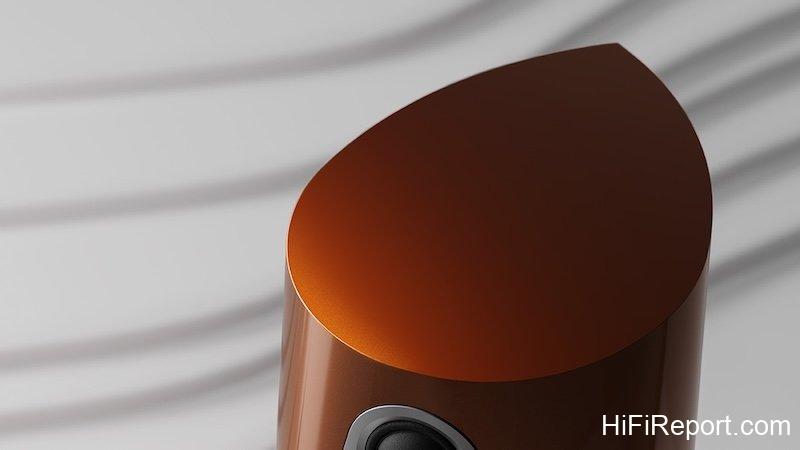
Let’s start with the speaker cabinet. When I first saw the 360, two things struck me immediately. First was the exquisite cabinet finish, which was also a rather unique color. Second, looking down at the 360 from above, I noticed the rear tapers into a perfect teardrop shape, creating beautiful lines along the back of the cabinet.
Why would these two cabinet features be so surprising? The 360’s cabinet is made from birch plywood, a material produced under high pressure. It’s extremely dense and uniform, making it an excellent material for speaker cabinets. The difficulty lies in its hardness. While cutting straight panels for a rectangular cabinet is already challenging, creating the teardrop shape of the 360’s cabinet is an almost impossible task.
Let’s cover the simpler point first: the exterior finish of the 360 cabinet. While described as piano lacquer, it involves repeated layers of paint application, drying, and polishing. How many repetitions does this entail? I don’t know, but to achieve the stunning luster of the 360, it requires at least seven or eight repetitions, perhaps even more. This is a highly labor-intensive, time-consuming, and expensive process.
Complete Redesign of Cabinet Jigs and Machinery
Now, let’s talk about the teardrop shape. When Linn’s CEO, Gilad, was in Taiwan, I asked him about how the cabinet was made. Gilad simply replied, “Extremely difficult! When everyone saw the design blueprints, they said it couldn’t be done.” How did they solve the problem of making an almost impossible cabinet? The answer was to completely redesign all the manufacturing jigs and modify the machinery. This allowed them to slowly bend the high-hardness birch plywood and fix it into the perfect teardrop-shaped cabinet.
Why challenge themselves with such a difficult speaker cabinet design? Many people are likely familiar with the acoustic reasons behind this. The aim is to eliminate any parallel surfaces inside the speaker cabinet, preventing internal standing waves from interfering with the sound. Furthermore, it increases the rigidity of the cabinet, reducing resonance interference and lowering distortion.
An Acoustically Driven Speaker Design
Now, let’s look at the front panel of the 360. The curves of the cabinet are clearly designed based on the size of the speaker drivers, outlining the shapes precisely. The acoustic principle behind this is to minimize diffraction caused by the front baffle, which can lead to distortion. Therefore, using curves to reduce the area of the front baffle is acoustically beneficial.
The 360 is a four-way design. Three of the drivers (tweeter, mid-treble, and mid-bass) are mounted on an independent metal front baffle, forming the main driver array module. The two bass drivers below each have independent metal mounting rings. These aluminum alloy front baffles and metal mounting rings are all made from 5745 aerospace-grade aluminum and are CNC machined in Linn’s own factory.
All Custom-Made Drivers
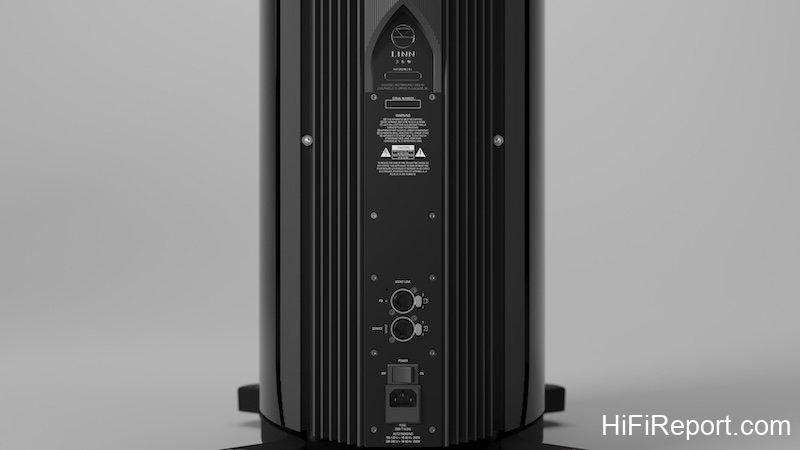
If you look closely at the 360, can you find any screws? If you look at the back, where the active electronics and heatsinks are mounted, you will find them. However, looking at the front of the 360, you won’t find a single screw hole! While this may seem like a minor detail, it reflects the pursuit of perfection in industrial design – the devil is truly in the details.
Having covered the cabinet and drivers, let’s move on to the active electronic design hidden inside the 360.

The 360 can only be paired with Linn’s own Klimax DSM or Selekt DSM. It receives a digital signal. You have the option of purchasing a Klimax DSM or Selekt DSM without a built-in DAC module, which simply outputs the digital signal to the 360 for decoding and amplification.
Why can the 360 only be paired with Linn’s own front-end equipment? Because it requires independent RJ45 network cables for the left and right channels. Currently, only Linn has compatible digital outputs, using Linn’s proprietary Exakt Link technology.
Adaptive Bias Control: Leading New Technology
The four-way 360 uses three driver modules – tweeter, mid-treble, and mid-bass – which form the 360 Array. The drive module for this array incorporates Linn’s latest proprietary development: Adaptive Bias Control, combined with Exakt Bias Control. This is a brand-new technology I had never seen or even imagined before.
When we talk about Bias, everyone knows it refers to quiescent current or bias voltage. Whether it’s Class A or Class AB, push-pull amplifiers require setting bias to ensure seamless crossover between the positive and negative halves of the waveform, where distortion is minimized. Otherwise, crossover distortion will occur. However, there are different opinions on the correct bias value.
Linn’s Adaptive Bias Control challenges a new problem: the correct bias is not a fixed value, but must depend on the state of the amplifying components. Therefore, it requires “real-time” detection of the amplifier circuit’s state to set the “appropriate” bias.
Automatic Bias Adjustment Eliminates Crossover Distortion
Does that make sense? When I was reading Linn’s original technical documentation, I didn’t fully grasp it. It took me a long time to understand that Linn had discovered the real underlying issue.

Everyone is searching for the “optimal bias,” but Linn believes the problem isn’t the factory-set bias value. Instead, the correct bias value must be determined based on the working state of the amplifying components. For example, when the temperature is low (just turned on), a fixed bias might still result in crossover distortion where the positive and negative halves of the waveform meet. Crossover distortion will only be low after the amplifier reaches an appropriate operating temperature. This explains why a cold machine doesn’t sound as good as a warmed-up one. But what if you listen for too long and the operating temperature increases? Is the bias then incorrect again, leading to crossover distortion? Therefore, Adaptive Bias Control can be translated as “(Automatic) Adaptive Bias Control.” Linn uses “real-time” digital monitoring of the circuit to constantly adjust to the most suitable bias value, taking into account the operating temperature of the amplifier circuit and the aging state of the amplifying components themselves. All of this is handled by real-time monitoring to maintain the lowest distortion state.
Real-Time Adjustment Relies on Ultra-High Processing Power
Is this technology difficult? Yes, very difficult, because it must be done “real-time”! Thanks to the significant increase in processing power of microprocessors, digital monitoring circuits can finally meet the requirements of “real-time monitoring” needed for Adaptive Bias Control, achieving “real-time adjustment.” This is a truly remarkable technological achievement for Class AB amplifier circuits, and Linn has pioneered this technology. Adaptive Bias Control allows the 360 to maintain the “most suitable” operating bias for its amplifier circuits under any working condition, eliminating potential crossover distortion.
I want to emphasize another point: Adaptive Bias Control achieves something others haven’t. Even after the 360’s amplifier circuits have been used for a period and the power components have matured (or aged), Adaptive Bias Control will automatically adjust, maintaining the lowest (crossover) distortion state. Linn’s intention is for the 360’s amplifier circuits to remain in optimal condition regardless of working state or usage time.

Power DAC Directly Drives Dual Bass Drivers
As for the 360’s dual bass drivers, they are powered by a newly designed Power DAC. Simply put, this means the digital signal directly drives the amplifier. The biggest advantage of direct digital drive is its extremely high energy conversion efficiency, allowing for ultra-high power output and firm control over the bass driver’s piston movement.
The surrounds of the 360’s dual bass drivers appear relatively thick. This is designed to increase the bass driver’s excursion. By using the Power DAC to “directly drive” these long-throw drivers, the 360 can create greater air displacement, giving it a robust foundation of musical energy.
Integrating All of Linn’s High-End Digital Technology
Having covered the drivers and drive modules, let’s move on to the 360’s digital core, which incorporates all of Linn’s current highest-end technologies. These include Organik DAC, Exakt timing correction, and Space Optimisation+ room optimization technology. To explain these in detail would require another lengthy discussion, so I will keep it simple here. Organik DAC is Linn’s in-house designed and manufactured digital-to-analog conversion circuit, emphasizing natural musicality and ultra-low distortion. Timing correction is handled by Exakt. Together, these two complete the task of converting digital signals to analog. Space Optimisation+ is designed for the listening space, using software algorithms to correct Room Mode interference, allowing the 360 to adapt to various acoustic environments.
I think I’ve written enough about the 360’s features. Linn is truly a company with strong research and development capabilities, and they do almost everything they can in-house. The development of Organik DAC alone must have cost immense time and money, yet Linn was willing to invest. Linn has always operated this way throughout its over fifty-year history.
Sounds Great! Truly Great! Everything Sounds Great!
From first seeing the actual speakers at the 360 launch event in March to test listening at Sound Space in June, I have to say that the sound at the launch event was just a preview. But at Sound Space, the 360 displayed unparalleled musical fluidity. It sounded genuinely great. I listened for about three hours, with Ah Hong, the owner of Sound Space, accompanying me. We listened to all kinds of music, from Japanese enka and old Taiwanese songs to jazz, pop, classical, and film scores… everything. Listening via digital streaming is so convenient; you don’t need to change discs, and the cloud offers an endless treasure trove of music.
Please note, when I say “unparalleled musical fluidity,” I’m referring not only to the 360 and Klimax DSM but also to the Space Optimisation+ room correction. This software is web-based; no installation is required. By simply logging into a Linn account (free to register), you can set room dimensions, height, wall materials, etc. The software calculates the room’s reverberation characteristics and automatically adjusts the room correction settings.
It sounds simple enough, but getting it right truly requires professional audio expertise.
Listenability is Key at Sound Space
Space Optimisation+ is powerful, but tuning this software requires a deep understanding of music reproduction. Ah Hong, who has managed Sound Space for many years, believes that “listenability” is the most important thing. Therefore, the sound direction of the 360 at Sound Space is smooth and pleasing to the ear. With the help of Space Optimisation+, the 360 completely disappears into the space when playing music. Only when listening to old “ping-pong stereo” recordings, where the guitar jumps left and right in call and response, do you notice the difference between the left and right channels. Otherwise, for instance, when listening to Bach’s Cello Suites, the 360 completely vanishes within the Sound Space environment. The focused, spirited cello emerges from the center, and you don’t feel the presence of the left and right channels at all. Only the melodic line, shaped by the rise and fall of the cello’s tone, captures the listener’s attention.
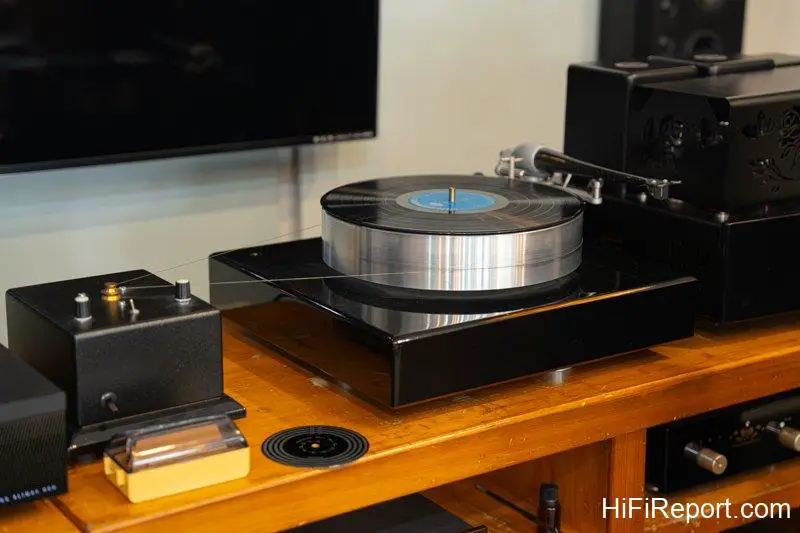
For the first hour of listening, Ah Hong took the lead, starting with a vinyl record. It was “Misty” from Three Blind Mice in Japan, which was one of the audiophile records that started me on my hi-fi journey. Revisiting it on the 360 was truly enjoyable. The near-field recording created large musical notes. The piano image was not only grand but also focused and vibrant. The impact of the high notes was strong and powerful, but not aggressive or harsh. Instead, it revealed the pianist’s touch with palpable force. The piano notes burst with bright color and then naturally decayed, welcoming the next note. The smooth low frequencies of the double bass, paired with the delicate yet crisp rhythm of the drum brush, created a jazz swing atmosphere. The 360 presented a rich and fragrant jazz character that was utterly captivating.
LP Listening Requires a Phono Stage
Listening to LPs with the 360 requires a phono stage, as the Klimax DSM front-end only accepts analog signals and cannot be fitted with a phono stage module.
Why this setup? If you have already chosen the 360 and Klimax DSM, you would likely also choose a Sondek LP-12 Klimax level turntable, which comes with its own independent phono stage and power supply. Thus, the Klimax DSM does not have a phono stage option.
Does this mean that the Klimax DSM converts the analog signal from the LP to a digital signal for the 360? Yes, it does. But this does not diminish the “vinyl flavor” in the least. The highly digitized Klimax DSM and 360 still reproduce LPs with a rich, analog character. At least, when I listened to vinyl at Sound Space, the vinyl flavor remained strong and fragrant.

Strong Sense of Era in LP Recordings
Ah Hong played many unforgettable LPs, such as Teresa Teng’s “When Will You Return?” which took me back to childhood memories. As a child, I didn’t understand pop music, but Teresa Teng’s voice remains etched in my deep memory. Similarly, listening to Fong Fei-fei’s old songs felt very familiar, but the younger Fong Fei-fei’s voice had more vitality and elasticity, even carrying a hint of youthful freshness.
I also listened to Itsuki Hiroshi’s Japanese enka. These are recordings from the “ping-pong stereo” era, with the guitar spread very wide. Analog recordings from that era had a slightly higher noise floor, but the mid-range timbre felt more intimate. Listening to LPs with the 360 and Klimax DSM highlights the sense of era in the recordings and the unique charm of analog sound. The sound color tuned by Sound Space was soft and tender, with sufficient mid-range thickness, creating a smooth and sweet taste that was very enjoyable. I couldn’t help but wonder if Linn had deliberately aimed for a soft listening feel.
“Batman Begins”: The Shock Treatment Begins
However, when Ah Hong switched to digital streaming and played the theme music from the movie “Batman Begins,” the explosive scene immediately delivered a “shock treatment.” Hans Zimmer’s fierce percussion instantly filled the room. Waves of low frequencies surged from behind the 360, rolling in layer upon layer, opening up an epic, vast soundstage. Was this the gentle 360 from before? How did it transform from a docile cat to a mighty lion so quickly? So, don’t assume the 360 and Klimax DSM only understand “gentle flavors.” The hidden, powerful force is brought out by the music itself. Hans Zimmer’s film scores make extensive use of multi-track recording; for the percussion alone, three players were used to layer a fierce and complex musical foundation. The 360 and Klimax DSM not only generated powerful low frequencies but, more importantly, they presented the scene created by the interwoven percussion, allowing you to hear how complex the drum kit was. The 360’s bass isn’t just about quantity; it also has rich, distinct layers, building a majestic and expansive musical scene.
Listening to Sting’s Sincere and Intimate Voice
Then Sting took the stage. The best thing about listening to digital streaming is having the music of the entire world at your fingertips! On Qobuz, I found the album “The Last Ship” and listened to “Dead Man’s Boots.” This is one of Sting’s simpler, more rustic works, with profoundly deeper lyrics. The harmonica intro is layered over guitar arpeggios as Sting sings “Dead Man’s Boots.”
Sting sings about the “dead man’s boots” representing his father’s business, which his father hoped his son would inherit. But the son, yearning for the glamorous world outside, refused to wear these “dead man’s boots.” Sting sings with sincerity and truth. Listening with the 360 and Klimax DSM, the intimacy of the music, from the father’s earnest expectations to the son’s rebellious defiance, culminating in the final line, “And you’ll die before you see me in your dead man’s boots,” told the complete story. The father died before seeing his son follow in his footsteps. And I was captivated, moved by the listening experience.
Effortlessly Presenting Orchestral 3D Soundstage
Switching to orchestral music, the 360 and Klimax DSM presented a different character, bringing out the scale of a concert hall. Listening to Mutter and John Williams’ collaboration “Across The Stars,” I heard the theme from the movie “Harry Potter.” It starts with the twinkling sound of the celeste, floating in the soundstage, drifting uncertainly and expanding the depth and height of the space. When the violin theme emerged, the 360 revealed the subtle changes in the bow work, whether sideways or flat, creating the violin’s building emotion. As the woodwinds took over the theme, the violin decorated the woodwinds like a fluttering butterfly.
As the brass entered, the orchestra’s presence grew larger and larger, then suddenly pulled back, entering a lively section. The violin seemed like a tiptoeing protagonist, weaving through the movie scenes. Film scores can be considered modern program music. On the 360, while listening to the music, I could imagine the plot of “Harry Potter.”
At this point, the 360 and Klimax DSM weren’t just about delicate violin passages. They also showed rich fingerwork changes. Powerful sections were sharp and incisive, while soft sections were lingering and tender. Whenever the brass section roared, a vast stage was opened up, with the violin like a small boat on turbulent waves, swaying and rising with them. Listening to orchestral music this way was truly exhilarating.
Conquering Mahler’s Symphony No. 2: Resurrection
Alright, let’s bring out the ultimate test: Mahler’s Symphony No. 2, “Resurrection,” conducted by Bernstein with the New York Philharmonic. I rarely bring this piece out in audio stores because of its extreme difficulty. Nearly two hundred orchestral and choral musicians erupt with immense musical energy in the finale, contrasting with sounds that are almost as quiet as a mosquito’s buzzing. The massive dynamic range contrast is a truly challenging test. However, with a system as excellent as the 360 and Klimax DSM, how could I not give it a tough challenge? An hour and a half long, where to listen in Mahler’s Second? I started listening from the fifth movement, “O Glaube” (O Believe). The mezzo-soprano sings, “Believe, my heart, believe, you have lost nothing!” followed by the soprano solo, “Believe, your birth was not in vain…” Then the chorus quietly sings, “What is born must perish, what has perished must rise again!” Suddenly, with a powerful accent, they sing, “Fear not!” The brass lays the foundation, as if giving the chorus courage. The chorus continues to sing with extreme softness, preparing to sing loudly, “Prepare yourself for new life!” Between loud and soft, the 360 and Klimax DSM created a vast contrast. Turning up the volume, they opened up the grand presence of the hundred-plus musicians, contrasting with the extremely soft murmurs. Building from soft to loud, repeatedly layering, until the chorus and orchestra erupt with “I shall die, to live again,” and as the word “Resurrection” (Auferstehn) is sung, the organ joins in. The 360 and Klimax DSM delivered the rush of air from the organ, sending a warm sensation through me. The chorus sings with effort, “zu Gott, zu Gott, zu Gott” (To God, to God, to God), singing louder and louder, ascending towards God. The extremely powerful sound of the orchestra, spurred on by the organ at the bottom, welcomes the “Amen” of the finale.
Experience Linn’s Current Highest Technological Achievement at Sound Space
After listening to Mahler’s Symphony No. 2, I had no critiques left for the musical performance of the 360 and Klimax DSM. I often tell my friends that Linn is a prime example of a closed system today; using a full Linn setup ensures you won’t go wrong. This 360, as a 50th-anniversary commemorative product, is limited to pairing only with the Klimax DSM or Selekt DSM, specifically encouraging you to go with a full Linn system, without needing to overthink it. The 360 and Klimax DSM not only possess unparalleled musical fluidity but also deliver explosive power when needed. Furthermore, the powerful room adaptability of Space Optimisation+ can conquer any music listening space. If you think I’m exaggerating, please visit Sound Space and listen for yourself to experience Linn’s current highest technological achievement.
Specifications
* **Type:** 4-way, 5-driver active floorstanding loudspeaker
* **Drivers:** 19 mm tweeter x 1, 64 mm carbon fiber woven soft dome midrange x 1, 190 mm aluminum-magnesium alloy cone mid-bass x 1, 220 mm long-throw aluminum alloy cone bass x 2
* **Dimensions:** H 1141 x W 411 x D 484 (mm)
* **Weight:** 70 kg