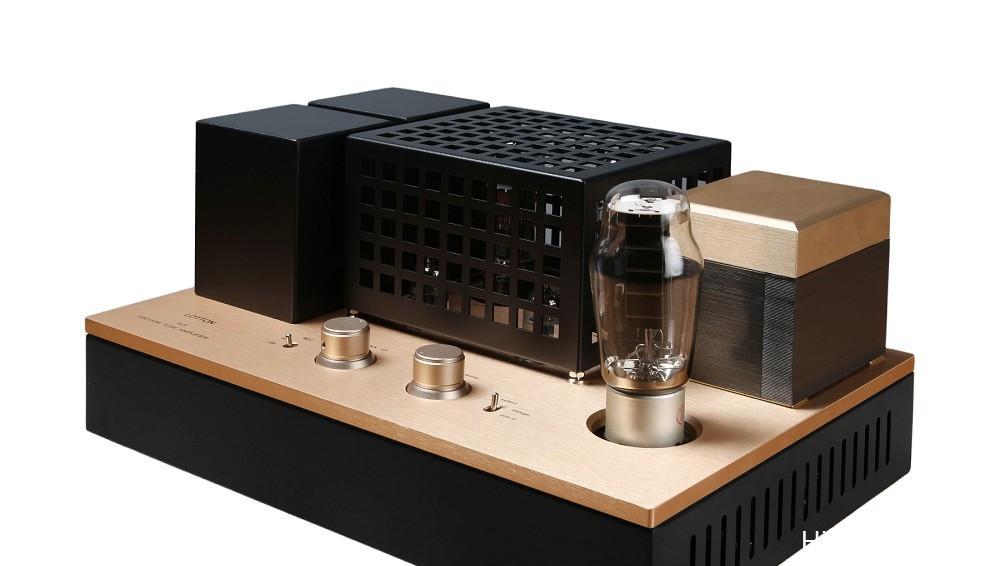
Lotton X-5 Vacuum Tube Integrated Amplifier Review
Homage to a Classic
Years ago, Li Ling—a senior writer for *Audio Art* magazine—and I were colleagues. Living just a 15-minute walk apart, I often visited his home to audition his thoughtfully curated setup. He ran a Sony CD player with an unusually designed transport mechanism, a Unison Simply Two tube integrated amplifier, and Sonus Faber Minima Amator speakers.
Experienced audiophiles will instantly recognize the philosophy behind his rig: it wasn’t built to push the speakers to extreme sound pressure levels, but rather to prioritize absolute sound quality within a set budget.
The Unison Simply Two was a classic of its era. Each channel utilized a single small-signal dual triode, followed by an EL34 pentode operating in single-ended Class A mode. That design choice makes the Lotton X-5 particularly intriguing. If the X-5 is an homage to the Simply Two, there is a very high probability it sounds good. Considering a genuine single-ended Class A tube amplifier now sells for around $650 (NTD 20,000+), the X-5 promises exceptional price-to-performance ratio.
Features and Circuit Architecture
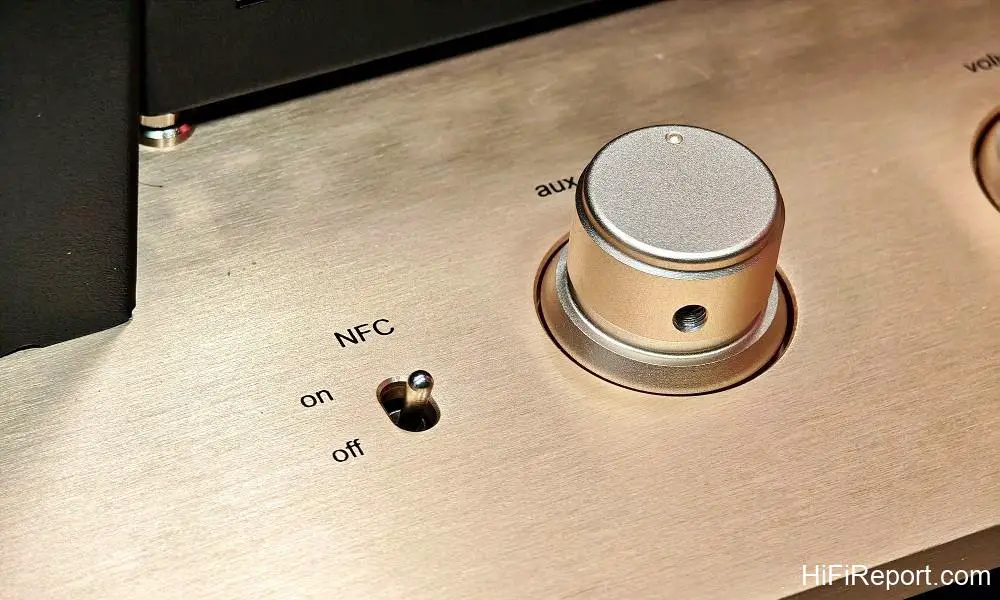
Let’s take an objective look at the functionality and circuit design of the Lotton X-5. Back in the heyday of tube gear, most integrated amplifiers were simply power amplifiers outfitted with a passive pre-stage—consisting of a source selector switch and a volume control placed ahead of the amplification circuit.
The X-5 follows this traditional approach. Its passive preamp section consists of a source input selector and a classic dual-gang 50KA carbon film potentiometer.
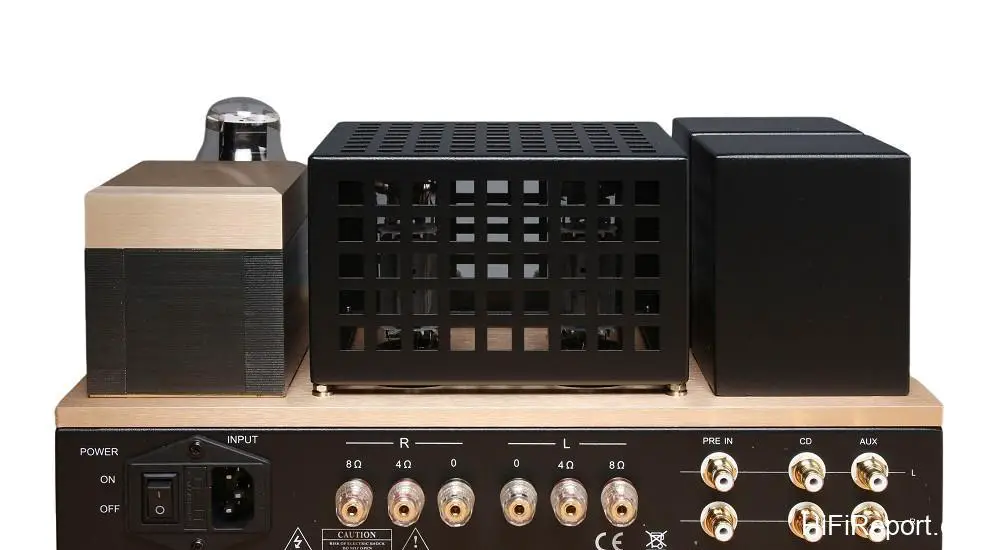
However, the X-5 adds a clever twist. When the “select” toggle switch is set to “Pre In,” audio signals entering through the rear Pre In jack bypass the volume control entirely, feeding straight into the tube amplification stage.
This means you can use the X-5 strictly as a tube power amplifier. Since the X-5 lacks a remote control, pairing it with a streaming DAC that features a high-quality volume control allows you to adjust volume conveniently via a smartphone app.
Why Audiophiles Love Tube Sound
Audiophiles often express a subjective preference for tube amplification, but are there objective reasons to explain its appeal? Absolutely. Tube amplifiers feature simpler circuit layouts with fewer amplification stages. Because the audio signal passes through far fewer components from input to output, the sound retains a more natural character.
With fewer parts in the signal path, a designer’s voicing choices exert a direct influence on the sound. If the designer possesses refined taste, achieving superb sound becomes much easier.
A second reason for the preferred sound of tube amps also stems from this simplicity. Compared to solid-state amplifiers, tube circuits feature lower open-loop gain and fewer stages. Achieving standard input sensitivity requires only a minimal amount of negative feedback.
While this results in higher harmonic distortion figures than solid-state gear, tube distortion consists primarily of second- and even-order harmonics. Unlike the harsh odd-order harmonics produced by transistors, even-order harmonics simply add a touch of warmth and body without irritating the ear.
Furthermore, low global negative feedback significantly reduces transient intermodulation distortion (TIM). When executed with a minimalist circuit architecture, tube amplifiers render music with remarkable freshness and vitality. The original Simply Two achieved this brilliantly, and the X-5 follows a similar design ethos.
Ultra-Linear Class A Topology
The legendary sound of the Simply Two came down to simplicity: an ECC82 (12AU7) medium-mu dual triode configured for two-stage common-cathode amplification, direct-coupled without coupling capacitors between the stages. The second-stage plate output passed through a coupling capacitor to an EL34 power tube running in single-ended Class A.

Single-ended Class A offers outstanding low-level linearity, zero crossover distortion, and eliminates the need for matched tube pairs. The EL34 in the Simply Two ran in standard pentode mode, which traditionally yields a bright, sunny sound with vivid highs that often benefit from warmer small-signal driver tubes.
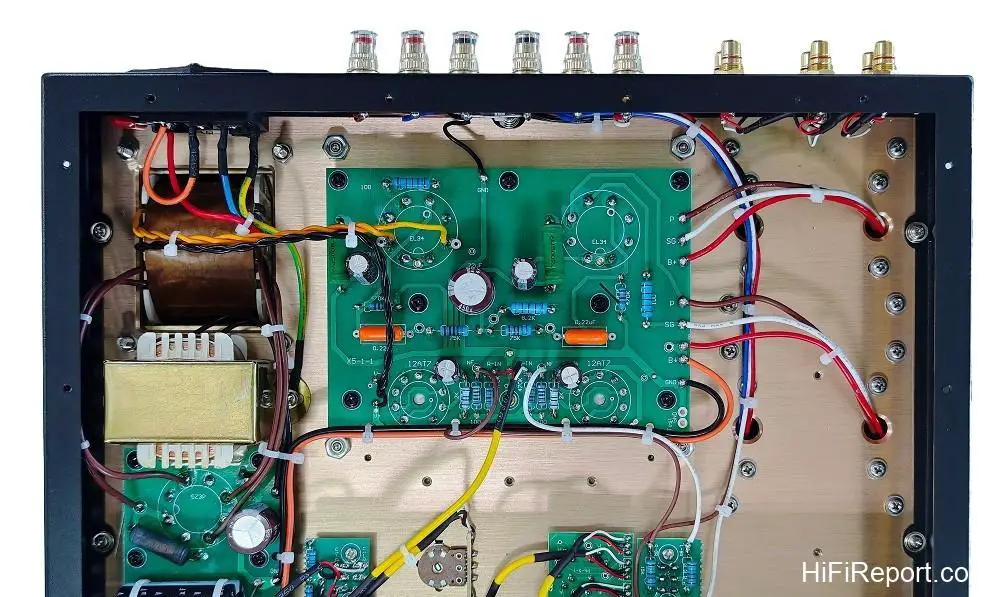
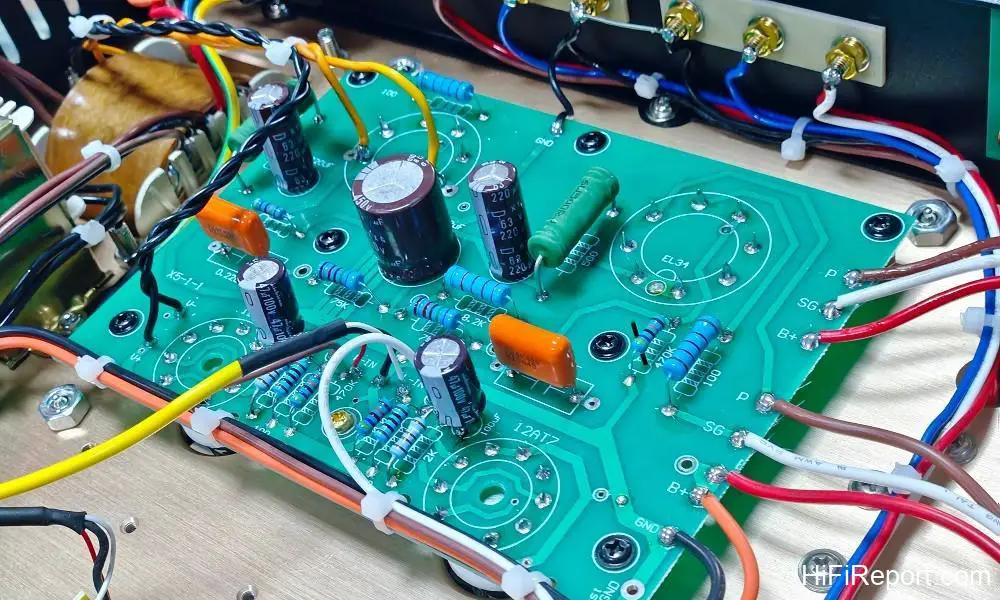
The Lotton X-5 appears similar on the surface, but its circuit differs in important ways. It uses a high-mu ECC81 (12AT7) dual triode. Circuit board inspection reveals that the grids of the 9-pin socket are tied together (see image above), indicating the dual triode is wired in parallel as a single triode in a common-cathode topology. Its plate output couples via a capacitor directly to the EL34 grid.
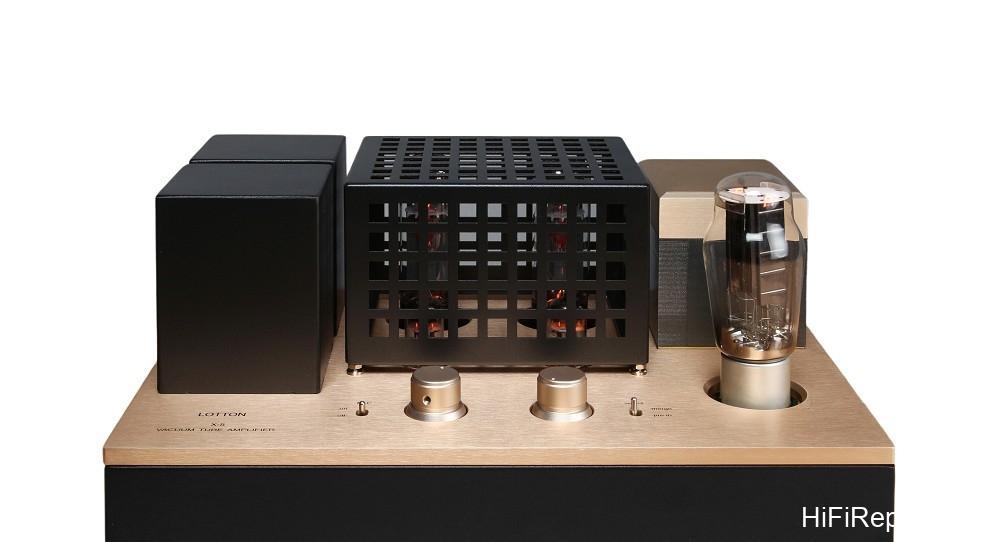
Consequently, the X-5 uses just two amplification stages compared to the Simply Two’s three, making its signal path even shorter and more direct.
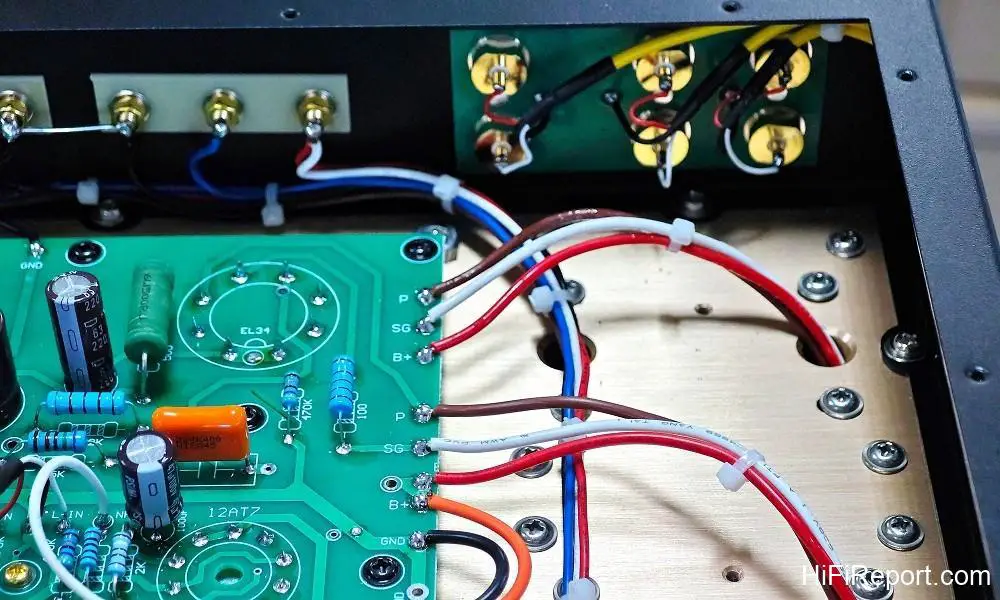
Furthermore, while the X-5 also uses EL34 power tubes in single-ended Class A, standard single-ended transformers typically feature only primary P and B taps. The X-5’s output transformers include an SG (screen grid) tap (see image above), confirming that the EL34 operates in Ultra-Linear mode.
Ultra-Linear taps raise transformer manufacturing costs, but applying local feedback to the power tube significantly lowers distortion. It improves linearity and brings the pentode’s tonal character closer to that of a triode, albeit at the cost of a slight reduction in output power compared to standard pentode mode.
Having built tube amps in my youth, Ultra-Linear EL34 topologies were always my favorite—delivering a balanced, refined, and elegant presentation.
Old-School Tube Rectification
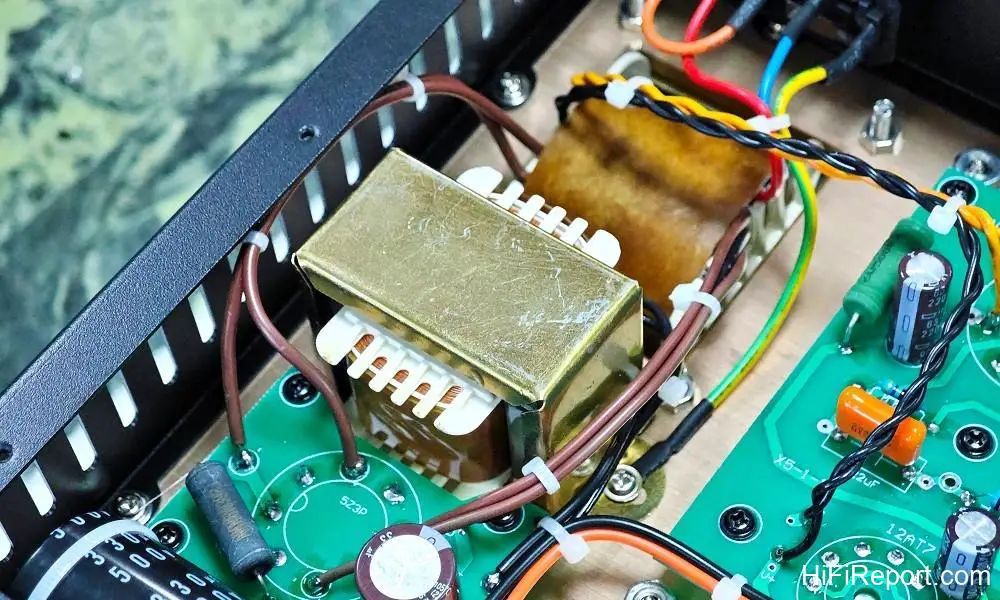
Examining the power supply circuit (see image above), the Lotton X-5 strictly adheres to traditional design principles. It employs tube rectification via a Shuguang 5Z3P (interchangeable with a 5U4), followed by a choke inductor and high-voltage filter capacitors.
This vintage approach buffers the initial current surge during capacitor charging at power-on, protecting the rectifier tube. More importantly, a large inductance choke (estimated at 10H) dramatically reduces voltage ripple—minimizing power supply hum—while filtering out high-frequency noise entering from the AC power line.
This represents the proper method for building a dead-silent high-voltage tube power supply. Seeing this level of execution in an amplifier priced at just over $650 (NTD 20,000+) makes one wonder why some far pricier alternatives skip it: ultimately, it comes down to whether a manufacturer is willing to spend the money on a proper choke.
System Matching and Noise Test
For auditioning, I configured a TEAC NT-505-X streaming DAC as a preamplifier, feeding directly into the X-5’s Pre In jacks. The amplifier was paired with Atlantic Lab AT 23 PRO horn floorstanding speakers, which boast a high sensitivity rating of 96.5 dB.
To enhance analog warmth when playing digital sources, I configured the NT-505-X to upconvert incoming signals to DSD 512.
Audiophiles often preach the pairing of low-power tube amps with high-efficiency speakers, but reality requires careful execution. Decades ago, I evaluated seven low-power tube amplifiers alongside the original Klipsch La Scala (rated around 105 dB / 1W / 1m). Only one amplifier passed; the other six produced background hum so severe it ruined the listening experience.
While the Atlantic Lab AT 23 PRO is somewhat less demanding, it remains a stringent test for noise floor. The X-5 passed the background noise evaluation effortlessly. Buyers intending to match it with classic 100 dB horn speakers should encounter no hum issues.
Testing the NFC (Negative Feedback Control) toggle revealed subtle sonic variations. Because both amplification stages in the X-5 utilize local feedback alongside the Ultra-Linear power stage, the circuit natively achieves wide bandwidth and low distortion at the expense of lower overall gain.

This limits the amount of global feedback that can be applied without compromising gain sensitivity. As a result, switching NFC on or off produces minor shifts in volume and tonal character, though I personally preferred listening with NFC switched off.
Listening Impressions
What can you realistically listen to with just 8 Watts per channel? Let’s discuss both its strengths and its physical limitations.

Classical solo instrumentals—piano, violin, cello, and flute—are absolute strong suits for the Lotton X-5. It reproduces music with the exact qualities expected of an elite tube design: transients are swift, highs remain extended rather than rolled-off, and the midrange stays crystal clear.
If you have ever heard high-end single-ended tube equipment, you know that true quality lies in rendering rich detail smoothly and naturally, rather than masking flaws behind artificial warmth or heavy colorations.
The X-5 offers an unvarnished, transparent window into the music. My listening notes describe a sense of “fresh air”—devoid of haze or veil. Acoustic instruments exhibit remarkable presence and projection within the room.
In a quiet environment, lowering the volume still allows for the fine textures of instrumental timbres to shine through. Small chamber ensembles, duets, and trios come alive with dynamic shading and delicate micro-details.
Switching to pop music, tuki.’s “Dinner Song” sounded intimate and direct. Played at comfortable listening levels, the vocals felt remarkably present, as if the performer were standing right in the room.
On ScHoolboy Q’s track “Blueslides” from his 2024 album *Blue Lips*, the X-5 beautifully conveyed the track’s vintage, analog-style production. Whether audited through high-end headphones or through the X-5, the warm, retro flavor of the recording was faithfully preserved.
Handling Power Limits
Low-wattage tube amplifiers naturally encounter limits with specific music genres. Dense, highly compressed tracks or music with heavy sub-bass content will push the X-5 into clipping if turned up too high.
However, declaring these genres off-limits is an exaggeration—simply backing off the volume dial brings the sound right back into its clean operating range.
For enthusiasts new to pure tube amplifiers, an important technical distinction deserves mention: proper tube amplifiers equipped with output transformers will not pass DC current or damage loudspeaker voice coils when clipping occurs.
Unlike solid-state or hybrid designs, power distortion from an overdriven single-ended tube circuit damages neither the speakers nor the amplifier itself. If clipping occurs at high volumes, simply turn the knob down slightly until the sound cleans up. (Note: This safety net applies strictly to classic transformer-coupled tube gear—never attempt to push solid-state or hybrid amplifiers into clipping!)
Final Thoughts
Mentions of “vacuum tube,” “single-ended,” and “Class A” usually evoke high price tags. The Lotton X-5 shatters that expectation, delivering impressive musicality rooted in sound engineering principles: a classic tube-rectified power supply, a minimalist circuit layout, expertly wired Ultra-Linear pentode output stages, and clean point-to-point hand wiring without tone-degrading internal connectors.
The Lotton X-5 delivers exceptional sound quality and outstanding value. It serves as an ideal entry point for young enthusiasts buying their first tube amplifier, as well as a charming “fun amp” for seasoned audiophiles.
Finally, a tip for prospective owners: tube rolling remains one of the great pleasures of owning tube gear. Replacing the stock front driver tube with a vintage GE or RCA 6201 / 12AT7 adds noticeable warmth, midrange density, and classic vintage character to the sound.
Technical Specifications
* Output Power: 2 x 8W Ultra-Linear Mode (RMS, 8Ω)
* Frequency Response: 20 Hz – 30 kHz
* Supply Voltage: AC 110V
* Input Impedance: 100 kΩ
* Output Impedance: 4Ω, 8Ω
* Inputs: 2 pairs (CD, AUX)
* Total Harmonic Distortion (THD): ≤ 1% (1 kHz)
* Signal-to-Noise Ratio (SNR): 88 dB
* Dimensions: 170 mm (H) x 36 mm (W) x 240 mm (D)
* Weight: 12 kg