
Luna Cables Gris Speaker Cable Review
Have you ever used vintage Western Electric cloth-covered wire? In audiophile circles, there’s a group of seasoned enthusiasts fascinated by WE vintage wire from the 1940s, 50s, and even the 20s and 30s.
They indulge in vintage tube amplifiers, vintage horns, vintage tubes, and vintage cables.
Is vintage equipment superior to new equipment? This judgment is subjective, but for that group of people, vintage is simply better.
I’ve never believed in that.
I don’t believe vintage amplifiers outperform new ones, vintage speakers surpass new speakers, or vintage cables are superior to new cables. I simply don’t buy it.
In my view, the hype surrounding vintage cables and equipment is nothing more than commercial manipulation to drive up prices. By creating buzz, demand and prices inflate.
Products that initially lacked a market now have a following, and items that were once unwanted now command inflated prices.
As for those who wholeheartedly believe in this hype, whether they are following the merchants’ marketing or genuinely believe that these vintage items are superior, even surpassing modern products, I consider them to be simply cynical.
Shifting Perspectives on Vintage Cables
Until two events occurred, my perspective remained unchanged.
The first profound experience came from Das Klang cables.
This cable brand touts the use of vintage wire. They collect wire from the 1950s, revitalizing and repurposing these aged conductors.
I was astonished by the sound these vintage wires could produce. Were there bandwidth limitations? No, I didn’t think so.
The sound extended naturally at both ends of the spectrum.
Were there dynamic constraints? No, I didn’t perceive any.
It possessed an open and relaxed dynamic range.
Were there tonal issues? No, not in my opinion.
The tonality was natural and possessed a richness that others struggled to match.
I must say, it was indeed a profound revelation.
The second experience that made me reconsider the value of vintage components occurred during my visit to HiFiReport Audio. After in-depth conversations with HiFiReport, I was compelled to acknowledge the merits of history.
HiFiReport insists on using vintage parts. If suitable vintage components are unavailable, he commissions parts manufacturers to produce them, adhering to traditional manufacturing methods.
His rationale for using vintage parts is simple: they are superior to modern counterparts and more durable.
The internal wiring in his equipment also utilizes vintage wire. A single spool of this wire, including shipping and taxes, can cost nearly $10,000 USD.
He stated, “Wire from that era used virgin copper, unlike much of today’s wire which is often recycled copper.” While I might doubt claims from anonymous online users, I couldn’t dismiss HiFiReport’s assertions.
Navigating the Vintage Cable Market
Am I now inclined to use vintage cables? If the opportunity arises and the wire is genuinely vintage, yes, I am willing and eager.
However, if you are seeking vintage wire, exercise extreme caution. Auction websites are rife with counterfeit products.
Be wary of sellers with unclear origins or unverifiable identities, regardless of their persuasive claims.
Vintage wires are often wrapped in cotton cloth, but not all cloth-covered wires are vintage.
It’s better to forgo using vintage wire than to unknowingly purchase a fake and be complacent about it. The principle of “better to have nothing than something bad” applies here.
Luna Cables: A Modern Take on Vintage Design
However, you don’t necessarily have to seek out century-old relics. What if someone recreated vintage cables using traditional methods, but with new materials? Would that pique your interest? Located by Lake Memphrémagog in Quebec, Canada, Luna Cables is a handcrafted cable company that does just that. Their cables are inspired by vintage designs, but each one is meticulously crafted from new, and often locally sourced, materials.
With an approach that honors the past while striving to surpass tradition, Luna Cables embodies artisan spirit and respect for nature, handcrafting each cable.
LCNV: Neo-Vintage Cable Design
Founded in 2015, Luna Cables emphasizes a key technology: LCNV (Luna Cables Neo-Vintage) – a novel approach to vintage design.
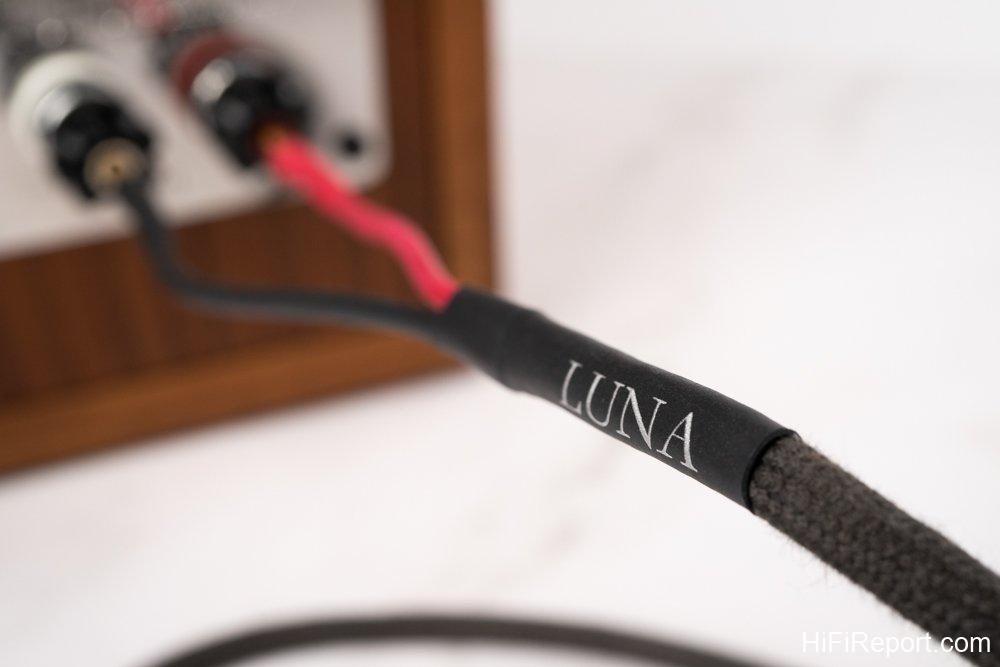
Based on this LCNV concept, they employ tinned copper conductors wrapped in waxed cotton.
They don’t chase after high-specification conductors, purity of materials, or complex structures and shielding. Instead, they revive the cloth-covered wire designs of the past—Luna Cables’ philosophy of returning to the basics.
Natural Materials for Vibration Control
Luna Cables uses unbleached cotton cloth, hand-dyed in-house, as an outer sleeve for their cables. Different colors differentiate the cable tiers.
Luna Cables’ lineup, from entry-level to flagship, includes Gris (Gray), Orange, Mauve (Pale Purple), Rouge (Red), and Noir (Black). While each series is based on the LCNV design, the internal structure and conductor composition vary.
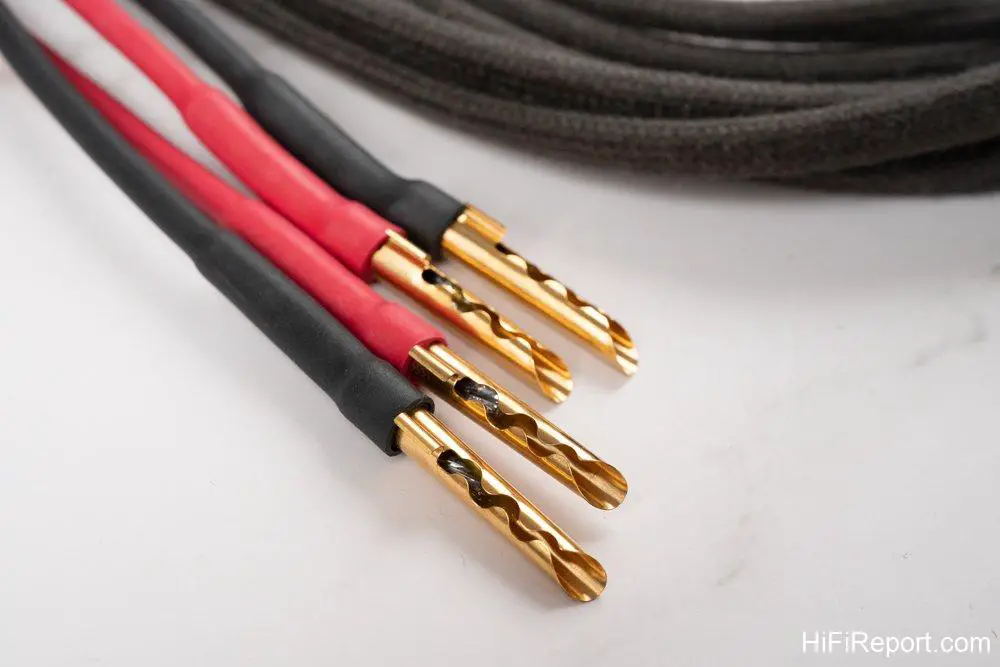
For example, the entry-level Gris Speaker cable uses a simple two-conductor, 14AWG configuration. The next level, Orange Speaker, uses two twisted 18AWG conductors per leg. Mauve Speaker increases this to three twisted 18AWG conductors per leg. The higher-end Rouge and Noir series not only increase the number of conductors but also incorporate 22AWG conductors.
Regardless of the variations, they all adhere to the LCNV design.
Using natural materials creates a natural aesthetic and also serves acoustic purposes. The manufacturer states that the natural cotton sleeve reduces cable resonance. By minimizing these vibrations, the sound becomes more precise, and imaging becomes clearer.
Furthermore, using recyclable natural materials instead of common polymers is more environmentally friendly. Luna Cables not only embraces simplicity but also nature. Their choice of the Luna moth as their logo and namesake reflects this commitment.
The Key People Behind Luna Cables
Three key individuals drive the company. Founder Danny Labrecque is responsible for cable production. Every Luna Cable is handcrafted by him.
Partner Erik Fortier handles sales and external company affairs.
Rowan Smith serves as Luna Cables’ product manager and also as “Art Director” (my designation). She hand-dyes the cotton sleeves used on their cables.
Corporate Social Responsibility and ESG
Another noteworthy aspect is Luna Cables’ commitment to Corporate Social Responsibility (CSR) and Environmental, Social, and Governance (ESG) principles, which is rare among audio companies, especially given their small scale.
On their website, they state that they not only use natural materials for cable construction but also package their entire product line, regardless of price, in reusable cotton drawstring bags. These bags are made by local Quebec manufacturers. Luna Cables wants to emphasize that sourcing locally and reducing their carbon footprint are environmentally conscious practices.
“If our company grows and harms the ecosystem, we don’t consider that success. We want long-term success, so we prioritize sustainable practices.” Furthermore, they explicitly address social responsibility, emphasizing that a company’s operations, regardless of size, impact individuals and communities. They deeply understand the importance of maintaining and fostering relationships with colleagues, customers, and the entire industry.
These lofty pronouncements might seem idealistic, but very few audio companies publicly advocate for such principles. This doesn’t mean that companies who remain silent are not environmentally conscious or socially responsible. However, when a company like Luna Cables, even a small workshop, publicly states these values, it highlights their awareness of being part of the global ecosystem and a member of the community.
I applaud this audio company for prioritizing CSR and ESG.
Unassuming Appearance, Surprising Performance
My applause continues as I connect the Gris Speaker cables to my system. Their unassuming appearance, thin and lightweight build, belies their ability to transmit rich and dynamic energy. The sound is lively and open, with a natural and unforced tonality. Imaging is solid and focused without sounding overly heavy. Its sonic performance truly exceeded my expectations.
Solid Imaging, Smooth Texture, Natural Soundstage
Listening to Anne-Sophie Mutter’s violin performance in Tchaikovsky’s Violin Concerto, conducted by Andre Previn with the Vienna Philharmonic, the violin’s lyrical and winding phrases lead into a bright and joyful theme. The Gris Speaker cables rendered the violin sound both focused and solid, yet without any harshness or sharpness.
Even in the higher registers, it maintained a considerable smoothness. Mutter’s usually brilliant violin tone seemed to gain a touch of tenderness and warmth. The violin’s texture had a slightly viscous suppleness, which was captivating.
During orchestral tutti passages, the cables projected a soundstage with impressive depth, which surprised me. This cable’s structure is so simple—just positive and negative tinned copper conductors—how could it produce such soundstage depth? I’ve heard cables with more distinct layers, more delineated detail, and sharper clarity, but the Gris Speaker cables offered a natural, comfortable listening experience. The layering was natural, perhaps not the best in absolute terms, but certainly enough to fully enjoy the music.
Clarity in Layers and Microdynamics
Listening to Mendelssohn’s “Fingal’s Cave Overture” conducted by Riccardo Chailly with the Leipzig Gewandhaus Orchestra, the exposition directly presents the first theme, depicting the layered surge of ocean waves, propelling the music forward step by step. The layering of musical sections was clear, with each section and ensemble passage well-organized.
The texture of the strings was distinct, layer upon layer, both soft and supple, creating a truly comfortable listening experience. In the development section, Mendelssohn uses brass instruments to play fragmented thematic motifs in alternation. The brass timbre was warm and full of character. The double bass performance was also excellent, not just a heavy, thick sound, but also revealing the deep, coarse texture. In the recapitulation, Mendelssohn again showcases his mastery of perpetual motion-style long phrases, eventually fading away in a diminuendo.
The Gris Speaker cables delivered ample energy during powerful passages, remained composed during fast-paced sections, and clearly conveyed quiet passages. The Gris Speaker’s comprehensive performance was truly disproportionate to its unassuming and slender appearance.
Excellent Pairing with Tube Amplifiers
During the listening process, I initially used the Lavardin IS Reference amplifier. Later, I connected the Gris Speaker cables to the Audiomat Adagio tube amplifier, which unexpectedly revealed an even more delightful combination.
The lush texture and rich musicality of tube amplifiers synergized perfectly with the Gris Speaker cables.
Ample Detail and Clear Vocal Rendition
I had previously reviewed the Gris AC Power cable and found Luna Cables products to be particularly appealing for vocal reproduction. The Gris Speaker cable is no different, especially when paired with tube amplifiers, it becomes even more captivating.
Taking Blue Coast Records’ *Blue Coast Collection: The E.S.E. Sessions* album as an example, in “Looking for a Home,” the plucked acoustic guitar notes have a moderate decay, but the timbre is natural. The left-hand vibrato creates a swaying, romantic feel, and the wavering musicality is truly beautiful.
The singer’s voice, with ample detail, is full of expression. Perhaps due to the Gris Speaker’s simple structure, phase distortion is minimized, resulting in very clear and three-dimensional imaging with distinct outlines, free from any ambiguity.
In “Slow Day” and “In Love Before the Last Call,” the female vocalist’s voice is sweet. The Gris Speaker cables do not add any artificial embellishment, but faithfully convey the singing. The bass frequencies from the guitar amp are rich and full. Despite the Gris Speaker’s slender build and 16AWG conductor gauge, it not only extends deep into the bass but also delivers it with richness and elasticity.
Rich Detail and Resilient Bass
Listening to Fink’s *Wheels Turn Beneath My Feet* album, the Gris Speaker cables clearly portrayed the album’s rich details. The added echo and delay in the recording enhanced the sense of space.
The force of the drum hits and the delicate shimmer of the cymbals, regardless of volume, were rendered with shape, substance, and dynamics. The drums and bass generated waves of bass frequencies, which were textured and detailed.
The Gris Speaker’s bass performance is the opposite of its slender appearance. Instead, the bass quality is excellent, especially when paired with tube amplifiers, it sounds particularly good.
A Delightful Surprise
I haven’t used vintage cables before, but Luna Cables’ vintage-inspired creation has been a joy to use. The Gris Speaker, positioned as an entry-level speaker cable by the manufacturer, may look unassuming, but its sonic performance is highly convincing.
It is natural and neutral, without any discernible coloration. It is rich in detail yet not harsh, and it delivers focused and solid imaging while maintaining liveliness. It possesses a natural sense of balance.
If you’ve ever been intrigued by vintage cables, I can tell you that you no longer need to seek them out. Luna Cables can satisfy your needs.
For me, this gray moth has been a delightful surprise.
Luna Câbles Gris Haut-parleur, je me souviens.
Specifications
* Type: Speaker Cable
* Conductor: Tinned Copper
* Conductor Gauge: 16AWG
* Insulation: Waxed Cotton
Reference System
* Source: Silent Angel Z1, Telos EMP, Audiobyte Black Dragon DAC
* Amplification: Lavardin IS Reference, Audiomat Adagio
* Speakers: JMR Abscisse Jubile
* Cables: Telos QAC Power Cable / Swisscables Reference Power Cable / Esprit Structura Power Cable / Real Cable Cheverny RCA Signal Cable / Chubei Lefang Cherry Peacock USB Cable
* Accessories: Telos GNR Mini Active Grounding Noise Reducer / NuPrime Pure AC-4 Power Conditioner