
Lundahl LL1584 Isolation Transformer Adapter Review
Just adapters, right? A few jumpers housed in a metal shell, converting single-ended to balanced – something you could DIY. But Lundahl asks for thousands of dollars for a set. “Are they really that amazing?”
That was my initial thought too. However, if you dismiss Lundahl’s LL1584 series adapters with such a superficial understanding, you’d be sorely mistaken.
Lundahl positions this product line as “Problem Solvers,” not just ordinary adapters.
What problems are Lundahl trying to solve? The issue of noise from equipment interfering with each other through the ground connections of signal cables. They also offer convenient conversion between different interfaces and, importantly, deliver benefits like a more focused soundstage, deeper sound field, and higher sonic density.
Transformer Expertise
How can the Lundahl LL1584 series adapters achieve so much? The secret lies within the input transformers concealed inside.
When it comes to audio-specific transformers, Swedish manufacturer Lundahl is undoubtedly a leading name.

Founded in 1958, Lundahl boasts over six decades of history. Their product range includes power transformers, tube amplifier output transformers, chokes, microphone transformers, interstage transformers, input transformers, phono step-up transformers, and more. They have long been trusted by professionals in the recording industry and high-end audio manufacturers worldwide.
Don’t underestimate audio transformers. Beyond the familiar function of voltage conversion, they offer numerous applications in various audio equipment and hi-fi components. Furthermore, they embody a high level of technical expertise and know-how, far surpassing mass-produced transformers.
The LL1584 series adapters utilize Lundahl’s LL1584 isolation transformer, housed within a metal casing, to facilitate connections between balanced and unbalanced equipment.
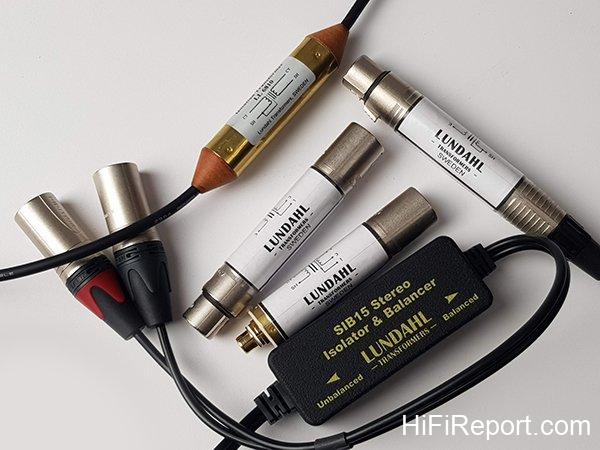
Currently, the LL1584 series comprises four adapters: LL1584-PHF3MX (RCA female to XLR male), LL1584-3FXPHM (XLR female to RCA male), LL1584-3FX3MX (XLR female to XLR male), and LL1584-3FXNP2C (XLR female to 6.3mm jack). While the fourth model is less common in home audio setups, the other three are frequently applicable.
This is the LL1584-3FX3MX, used for XLR female to XLR male connections. It maintains the interface while offering sonic tuning capabilities.

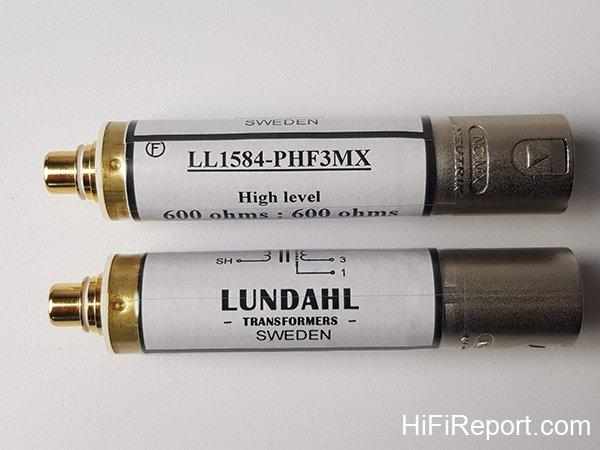
This is the LL1584-PHF3MX, used for RCA female to XLR male, effectively converting unbalanced to balanced.
Versatile Balanced/Unbalanced Conversion
In what situations should each model be used? Firstly, for direct interface conversion needs. For example, if your source component only has RCA outputs and you want to connect it to a device with XLR inputs, the LL1584-PHF3MX (unbalanced to balanced) is suitable. Conversely, if you want to use the XLR output of a source but your downstream device only has RCA inputs, the LL1584-3FXPHM (balanced to unbalanced) is the answer.
Secondly, the LL1584 series can be used for sonic tuning. For instance, if both your source and amplifier have XLR interfaces, the LL1584-3FX3MX (balanced to balanced) can be inserted to refine the sound without changing the interface.
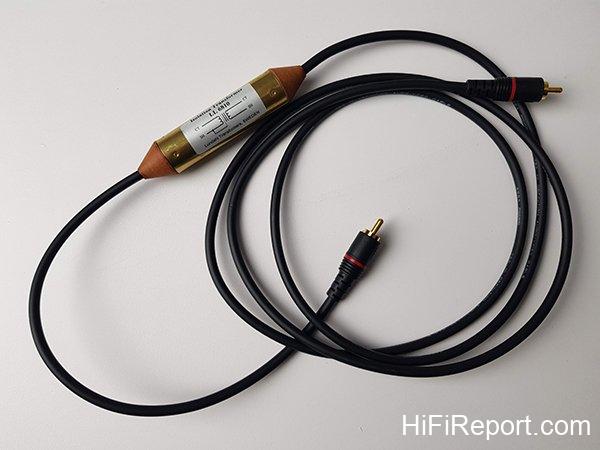
Given the availability of balanced-to-balanced options, does Lundahl offer unbalanced-to-unbalanced solutions? Indeed, they do! Although not part of the LL1584 series, the LL6810-PHMPHM signal cable features RCA male connectors on both ends with a short, cylindrical section in the middle housing an isolation transformer. This cable also breaks ground loops between components, effectively isolating noise.
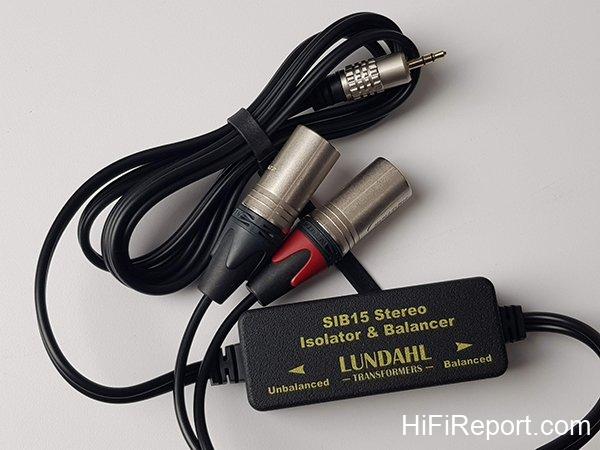
Furthermore, Lundahl Tangzhu also provided the SIB15. This is even more intriguing. It features a 3.5mm stereo plug (standard headphone jack) on one end and a pair of XLR male connectors on the other, with a rectangular box in the middle also containing an isolation transformer. This allows you to connect portable devices (like laptops, smartphones, tablets, or portable players) to your home audio system, adding another source option.
This is the LL6810-PHMPHM, with RCA male connectors on both ends and an isolation transformer in the middle. It can be used as a standard RCA signal cable.
The SIB15 has a 3.5mm stereo plug on one end and a pair of XLR male connectors on the other, with a rectangular box containing an isolation transformer in between.
Noise Isolation via Transformers
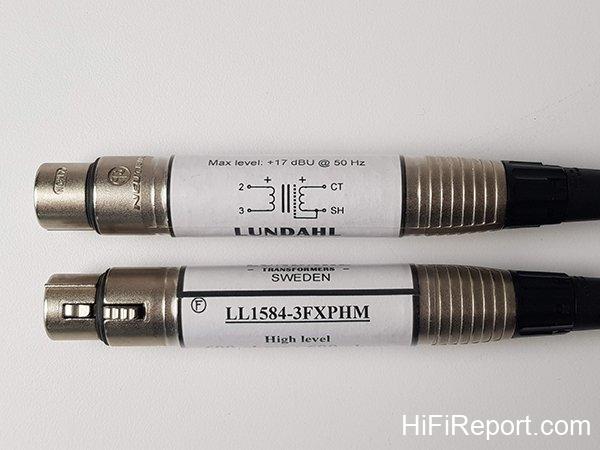
Each LL1584 adapter label includes a transformer winding diagram. The left side represents the primary winding (input), and the right side the secondary winding (output).
Take the balanced-to-balanced LL1584-3FX3MX as an example. The input side (left) shows pins 2 and 3 (positive and negative signals) but no pin 1 (ground). The output side (right) shows pins 2, 3, and 1. This indicates that there’s no direct electrical connection between input and output, and the output ground is derived from the winding, completely isolated from the input. Consequently, noise from the source component cannot transmit to the downstream device through the cable’s ground.
Similarly, consider the unbalanced-to-balanced LL1584-PHF3MX. The input side of the diagram depicts the signal-carrying positive terminal (CT) and the signal-less negative terminal (SH). Upon output, the transformer coil generates an inverted signal and ground. Thus, the output includes the original positive signal (pin 2), a negative signal (pin 3), and ground (pin 1), creating a true balanced signal. Again, the input and output grounds are not connected.
Both primary and secondary windings have an impedance of 600 ohms, and the transformer bandwidth extends from 10Hz to 70kHz, ensuring no signal degradation.
The LL6810-PHMPHM and SIB15 operate on the same principle. By utilizing the non-conductive nature of the transformer’s windings, they sever the ground connection between input and output, preventing noise transmission.
Each LL1584 adapter label clearly shows the transformer winding configuration. This image shows the LL1584-3FXPHM, used for XLR female to RCA male conversion. The input side (left) has pins 2 and 3 (positive and negative signals) without pin 1 (ground). The output side (right) displays the signal-carrying positive terminal (CT) and the signal-less negative terminal (SH), with the ground connected to the negative terminal. Therefore, the input and output grounds are completely isolated, preventing ground-borne noise.
The wiring diagram on the LL6810-PHMPHM also illustrates the isolation of input and output grounds, achieved entirely by the transformer.
Enhanced Sonic Cohesion
These five adapters and cables are comprehensive, covering XLR to XLR, XLR to RCA, RCA to XLR, RCA to RCA, and 3.5mm to XLR connections, likely meeting the needs of most audiophiles. While their functional versatility is undeniable, I believe their most significant value lies in the immediate improvement they bring to sonic cohesion, a feat that even many high-end cables struggle to achieve.
I began my listening tests with the LL1584-3FX3MX, the XLR-to-XLR model. Its primary purpose is sonic tuning rather than interface conversion, allowing me to discern the sonic differences with and without it in the chain.
I inserted it at the balanced cable termination between a Mark Levinson No.523 preamplifier and No.534 power amplifier, driving Wilson Audio Alexia 2 loudspeakers.
First, I played the soundtrack from the animated film “Spirited Away.”
This famous Miyazaki work, once again scored by his long-time collaborator Joe Hisaishi, features primarily orchestral arrangements. Through the Mark Levinson pre/power amps and Alexia 2 speakers, the sound was immediately vibrant, expansive, and majestic – seemingly flawless. However, adding the XLR-to-XLR LL1584-3FX3MX revealed a difference! The soundstage became more focused towards the center, instruments and sections gained solidity and became more three-dimensional. Midrange body increased, bass weight improved, and soundstage depth, imaging, and layering all audibly enhanced – almost as if I had upgraded to a higher-end balanced cable.
This transformation surprised me. The original signal was already balanced, and the LL1584-3FX3MX, using an isolation transformer, maintained the balanced output structure without altering the signal format. Why then, did the solidity and density of the sonic image improve so noticeably? My guess is that the LL1584-3FX3MX’s output negative signal, derived by inverting the positive signal, contributes to this sonic change. Regardless, the LL1584-3FX3MX undeniably enhanced sonic density and body, making the sound more appealing.
Furthermore, the soundstage felt more focused, not only converging towards the center but also expanding deeper, resembling the “shoe box” depth audiophiles often describe. Different sections gained clearer front-to-back layering and separation.
A Trick for Enhanced Density
In simple terms, without the LL1584-3FX3MX, the soundstage was wider, slightly diffuse, with a lighter, cleaner, and brighter character, lacking a bit of gravitas. The sound felt flatter, with less defined imaging and less precise localization, making it harder to grasp the central focus. The sound also seemed somewhat superficial.
After inserting it, the openness slightly diminished, the soundstage shifted inwards, imaging became more three-dimensional, and while transparency and brightness slightly decreased, body increased, and the overall sonic texture became richer. The overall sound became more grounded and substantial.
I believe these changes will be very pleasing to audiophiles.
After the XLR-to-XLR test, I switched to RCA-to-RCA, the LL6810-PHMPHM, to explore its effects.
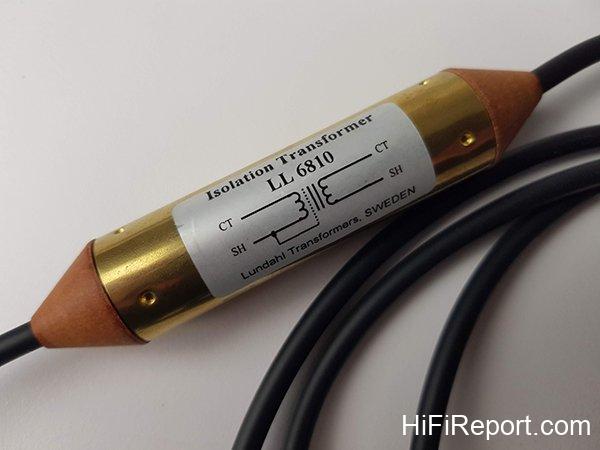
Using the LL6810 is incredibly simple – just use it as a regular RCA cable.
The LL6810-PHMPHM utilizes Mogami 2964 cable, a professional-grade wire. For comparison, I used Canare L-2T2S, a cable I had on hand.
Clearly, the LL6810-PHMPHM exhibited a similar sonic signature to the LL1584-3FX3MX. The soundstage became more focused and deeper, spatial rendering more concrete, and the sound gained thickness and density, instantly enhancing listening enjoyment.
In contrast, while the Canare L-2T2S was lighter, more transparent, and airy, its soundstage was wide but shallow, with indistinct imaging, resulting in a rather unengaging listening experience.
Effortlessly Enhance Headphone System Sound
It then occurred to me to try the LL6810-PHMPHM in a headphone system. Moving to my desk, I connected the LL6810-PHMPHM between a Cyenne CY-3100 DAC and a Walker 6922 tube headphone amplifier, using Philips Fidelio X1 headphones for listening.
The X1 headphones offer good bass presence and balanced frequency response, making them comfortable for extended listening. However, their sonic texture can be somewhat loose, lacking sharp definition. But after inserting the LL6810-PHMPHM, the bass immediately tightened up, outlines became clearer, density and mass improved, and layering became more distinct and richer.
Using the Dali CD Volume 4 test disc, many tracks feature substantial low-frequency content. With the LL6810-PHMPHM, not only did the bass gain more defined shape, but the front-to-back layering of different instruments also emerged. This made it easier to differentiate various drum sounds and instruments. Bass layering and instrumental separation became clearer and richer. The musical dynamics improved, dynamic shifts became more pronounced, and the sound became more vibrant. Even the timbre became sweeter and more liquid, resulting in a more enjoyable and captivating listening experience.
Simply put, the LL6810-PHMPHM gave my headphone system an immediate sense of upgrade. Crucially, considering the price, I believe that achieving similar results by swapping cables, even with more expensive options, would be difficult. Even if possible, it might come with undesirable side effects, such as harshness or graininess, making listening fatiguing. The LL6810-PHMPHM, however, presented no such issues. It’s a safe upgrade, effortlessly elevating your headphone system’s performance.
Laptops as Viable Sources
Moving back to the main audio system, I then tested the SIB15, the 3.5mm-to-XLR adapter, using Mighty Sam McClain’s “Keep On Moving” album. This time, the source was a laptop, using its headphone output jack connected via the SIB15 to the XLR input of the Mark Levinson No.523 preamplifier. The reference cable was a QED Performance J-2P 3.5mm-to-RCA cable.
Listening to Mighty Sam McClain’s “Keep On Moving” album, repeated comparisons revealed that the SIB15’s sonic impact was consistent with the previous two products. It increased body and density, enhanced image outlines, and made the soundstage more focused, deeper, and layered. Mighty Sam McClain’s vocals became more prominent, and other instruments gained clear front-to-back and left-to-right positioning. Guitar timbres became richer and more fluid, making the sound more captivating. The difference was quite significant.
In contrast, the QED cable presented a flat soundstage with little depth. Different instruments seemed arranged on a single plane, and images blurred together without clear separation.
I also noticed another benefit of the SIB15: it reduced unpleasant graininess and lowered the noise floor, making the music sound smoother and more comfortable.
This effect, though less pronounced, was subtly present with the previous two products as well. However, the SIB15 demonstrably reduced noise artifacts that degraded sound quality. This highlights that Lundahl’s noise isolation capabilities are most effective when used with source components that have inherently higher noise levels (like desktop computers, laptops, or portable devices). If the source component already boasts a very low noise floor, Lundahl’s primary contribution becomes enhancing density and soundstage focus.
In conclusion, the SIB15 transformed a laptop’s headphone output into a respectable playback source, bringing it closer to the sonic quality of a dedicated hi-fi component.
It can also be used with high-end portable players from brands like Sony and Astell & Kern, allowing you to seamlessly connect them to your home audio system upon returning home.
If you’ve been struggling to find suitable adapters for connecting single-ended and balanced equipment due to interface mismatches, Lundahl’s five products should resolve your issues, offering the most professional solution.
Even better, beyond their adapter functionality, they also serve as valuable tuning tools, enhancing your listening enjoyment. What’s not to like?