Maeline Bulk On-Ear Headphones with 3.5 mm Plug 10-Pack Review
For a classroom teacher, a parent stocking a shared family shelf, or anyone who needs a dozen simple wired headphones without thinking twice about the purchase, this 10-pack exists to be replaced, not treasured.
The Short Answer
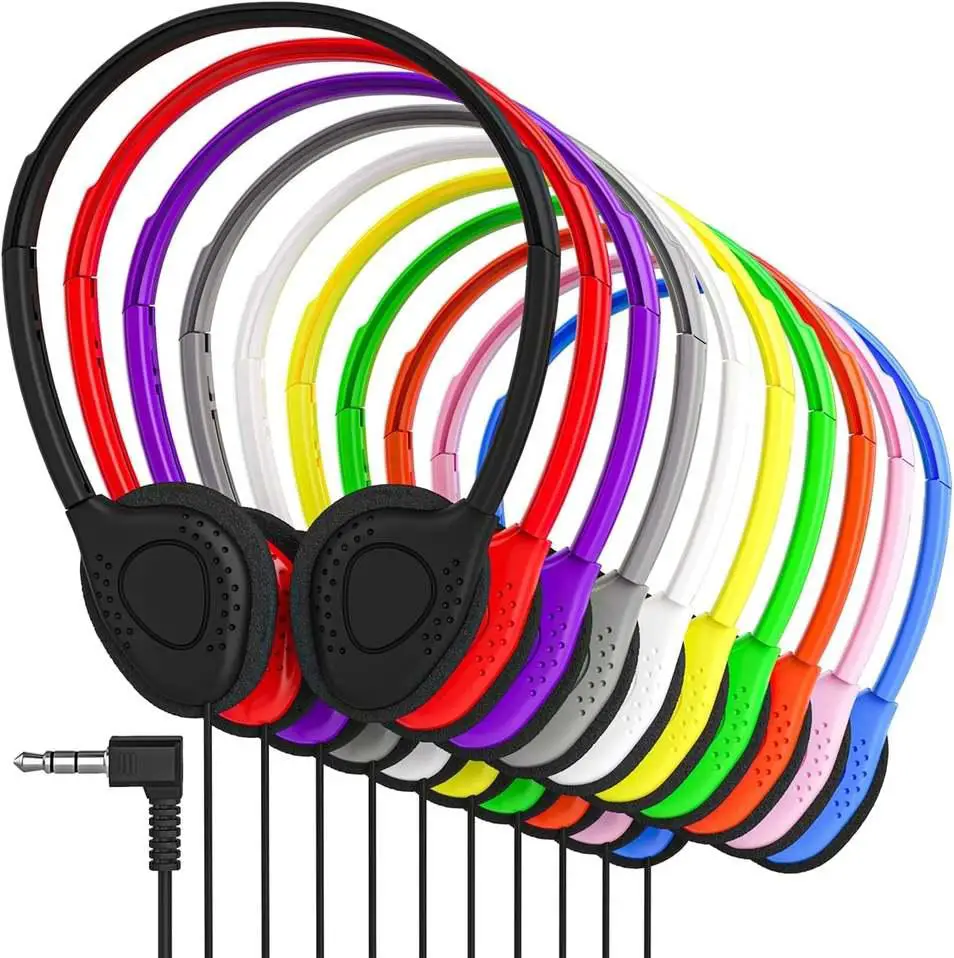
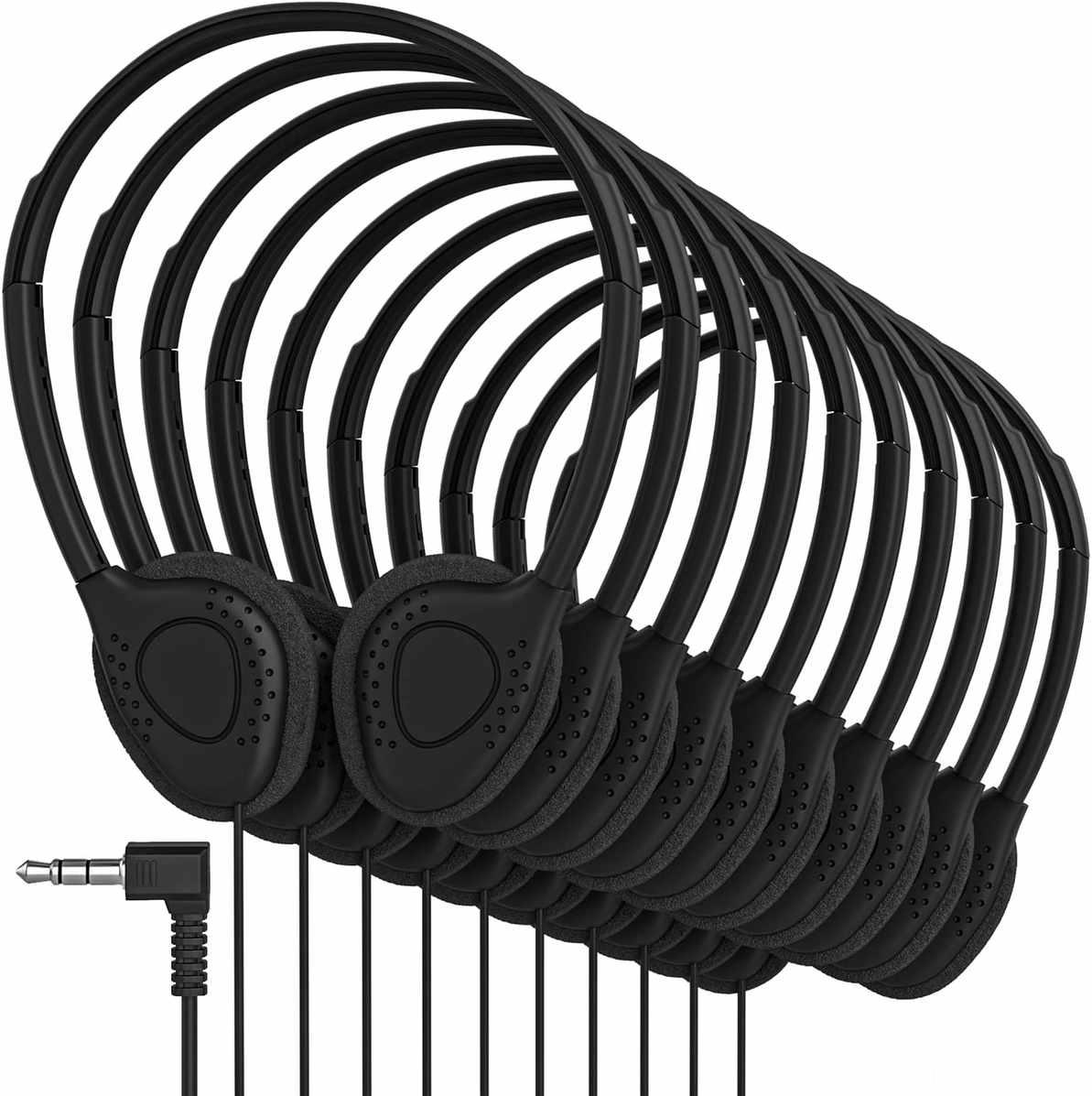
The Maeline 10-pack on-ear headphones are a bulk, wired, 3.5 mm option aimed squarely at classrooms, shared facilities, and families that lose or break cheap audio gear on a regular cycle. The decisive reason to pick them is volume: ten pairs in ten distinct colors, each in its own transparent bag, at a per-unit cost that makes replacement trivial. The 4.2-out-of-5 rating across 864 reviews confirms they do their job for the use case, though the split in durability feedback (from roughly two years of service to total failure within four months of classroom use) means you should expect to cycle through the pack on a yearly or bi-yearly schedule. If your students or family need a set of headphones that is “good enough” for tablet listening, standardized testing, and library use, these fill that role.
Exclusive to hifireport.com. Redistribution or scraping without approval is prohibited.
Strengths and Weaknesses
Strengths
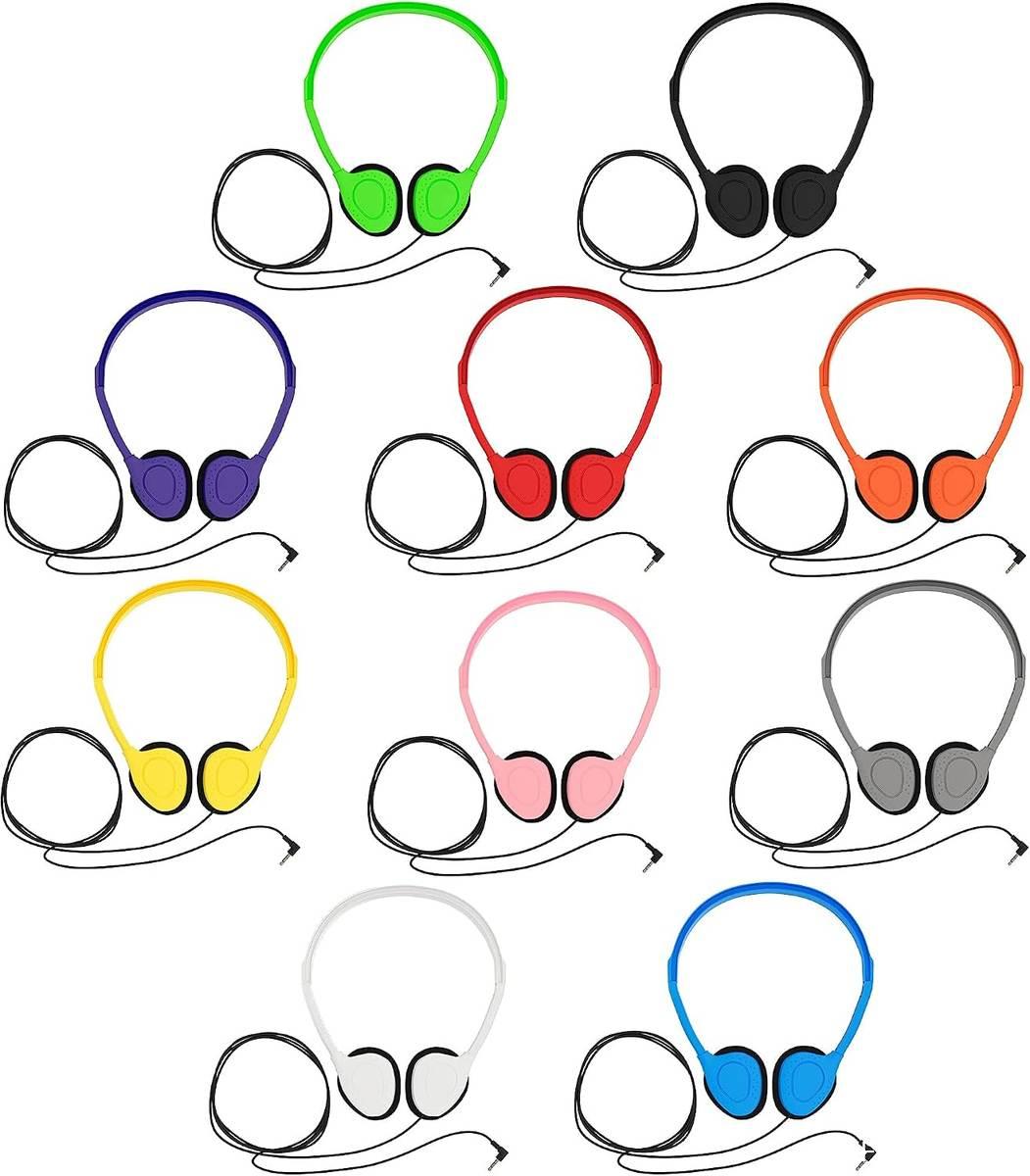
- Ten distinct color options per pack, which makes it easy in a classroom or shared space to see at a glance which pairs are in use and which are available.
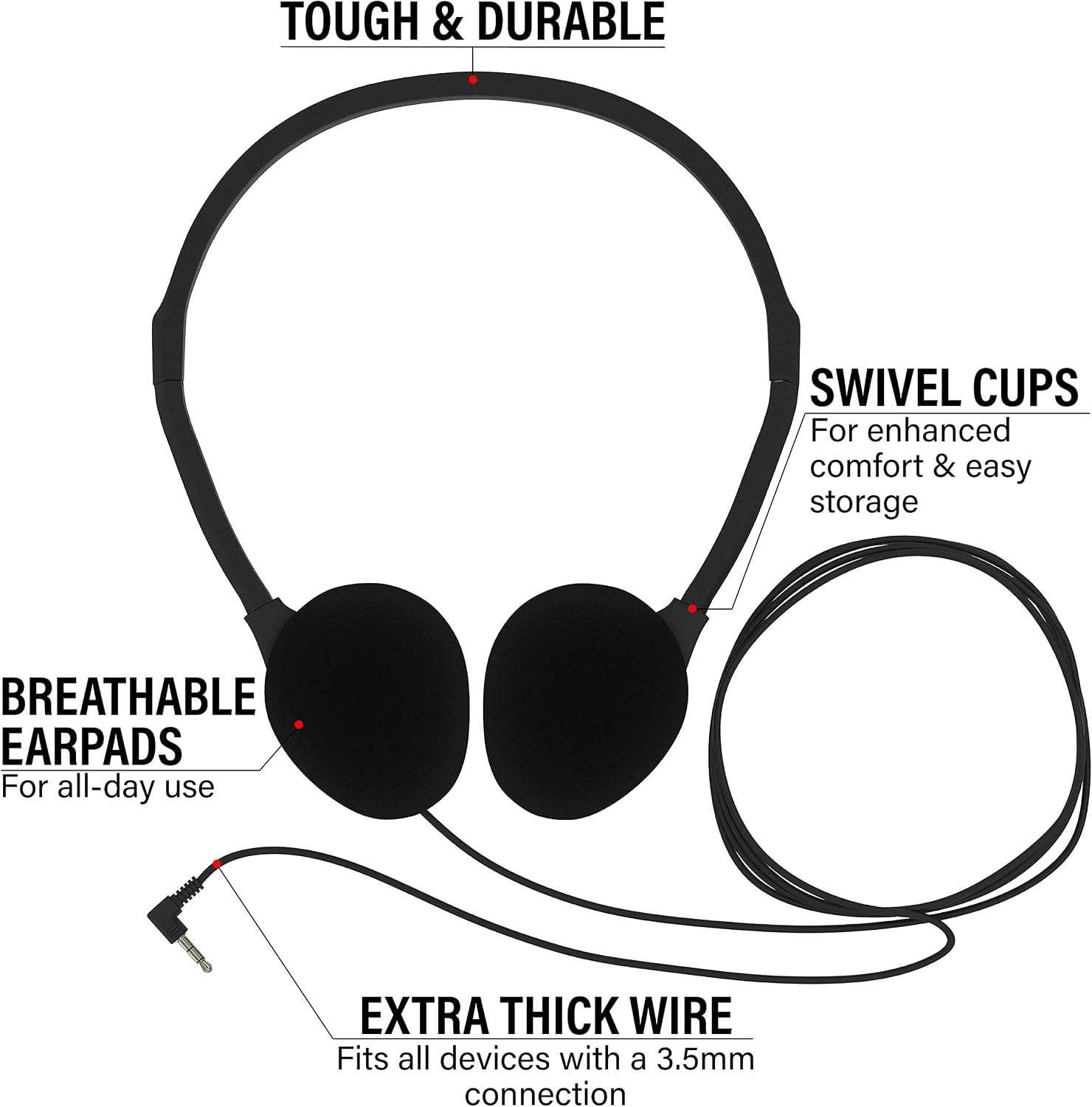
- 90-degree swivel ear cups tuck flat around a neck or fold compactly into a bag, keeping storage simple in a desk drawer or backpack.
- The 4-foot cord and right-angle 3.5 mm plug clear most lap-space and tablet-stand setups without tangling, and the angled plug resists the kind of side-load that yanks a standard straight plug out of a jack.
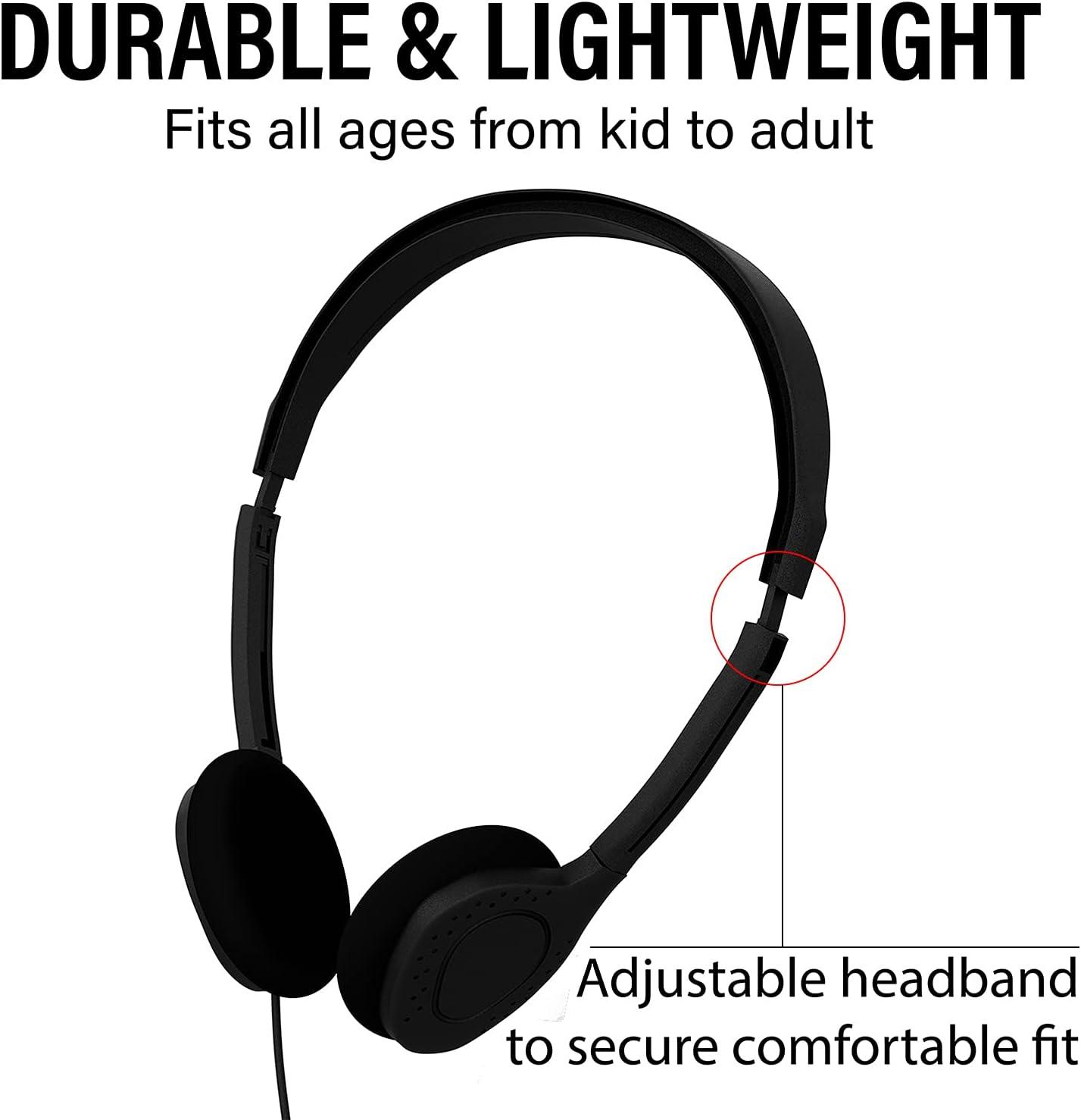
- The adjustable, retractable headband fits a wide range of head sizes; one reviewer noted the same pair worked for children as young as 11 and for adults.
- Per-unit replacement cost is low enough that a failed pair is a minor inconvenience rather than a project.
Weaknesses
- The most common failure point reported by owners is the junction where the plug meets the cord: insulation strips, a single ear goes silent, or the cable sags from bare wires before the plastic shell ever cracks.
- No noise isolation beyond the soft ear pads; a neighboring person at listening volume will hear what is playing.
- Some units arrive or fail early, so a classroom of ten may need a sound check before each session and a spare pair on hand.
- Sound quality is functional for voice and casual music but trails anything even a step above this price tier; one reviewer compared them unfavorably to a Koss KPH7.
- The fit can run slightly large; one owner had to pad a headband with a cut pool noodle for a small child.
Who Is It For
The primary user is a K-12 or college instructor who hands a headset to a student every day. Ten colors let a teacher assign a permanent pair to each desk, spot a missing or misused unit instantly, and replace a dead pair without hunting for a matching color. Parents and caregivers who share headphones among siblings (ages roughly 11 and up, based on owner reports) get the same color-coding benefit at home, plus the 90-degree swivel that lets a kid loop a pair around the neck between uses. A secondary profile is anyone who needs a “third pair” for travel, a gym locker, or a co-working space: the transparent bag keeps a spare clean and identifiable, and the 3.5 mm plug works with every device that still carries a headphone jack.
The anti-profile is clear: a listener who wants isolation, a warm midrange, or a fit that seals around the ear. These are on-ear, open-cushion headsets with 91 dB SPL sensitivity and no passive sealing beyond the pad itself. If you need to block a noisy open-plan office or a loud bus ride, this is the wrong tool.

Design, Fit and Feel
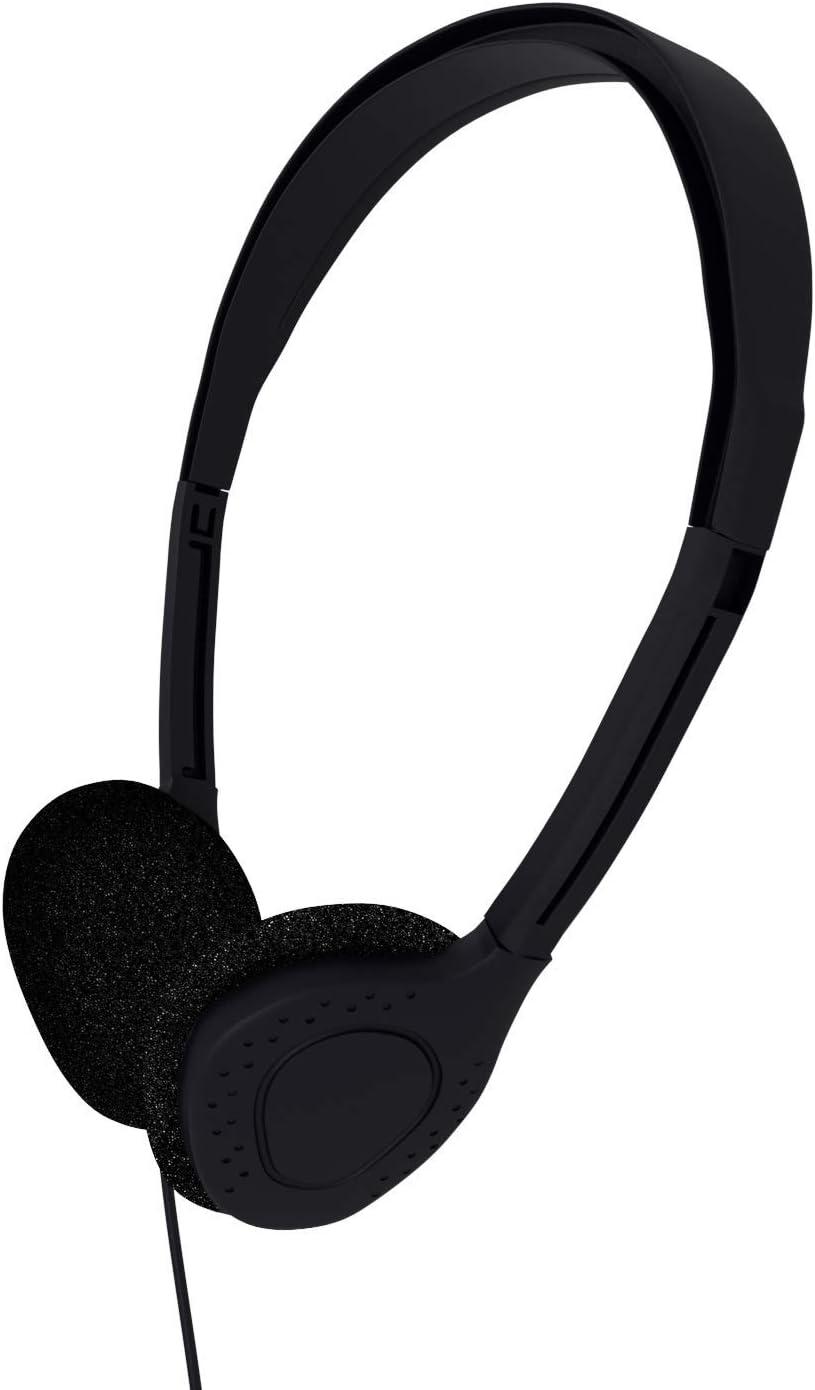
Each of the ten headphones arrives in a clear plastic bag, which makes them immediately identifiable in a storage bin. The build is lightweight plastic and soft ear pads; there is no metal hinge or fold mechanism to fail, and the headband is a retractable slider rather than a telescoping rod. Owners describe the fit as “comfortable for all-day use” in the product listing, and the 90-degree swivel ear cups let the cups rest flat against the cheek when the band is pushed up over the crown, a useful posture for a teacher walking between desks. The 4-foot cord is the longest of the standard 6-inch or 3-foot options, which reviewers noted prevents the “pull-and-tangle” moments that happen when a kid hops out of a chair. The right-angle plug is a small but real design choice: it keeps the cable running away from the device face rather than kinking at 90 degrees at the jack, reducing stress at the connector.
The headband’s retractable slider covers a wide range, but it is a simple spring-tension mechanism, not a ratchet or screw lock. Several owners reported the band drifting open over time, and one noted the fit ran large enough that a pool-noodle spacer was needed for a small child’s head. For most users between about age 11 and adulthood, the stock band lands in a comfortable zone.
Audio Performance
The Maeline 10-pack on-ear headphones deliver functional, midrange-flat audio that is adequate for voice, podcasts, and casual music but will not satisfy a listener accustomed to a closed-back or even a modest consumer over-ear set. The published specs place the frequency response at 80 Hz to 18,000 Hz with a 91 dB SPL sensitivity, which tells you the driver is a small, efficient unit designed for low-power sources like a Chromebook or a smartphone rather than a dedicated amp.
In practice, owners describe the sound as “not bad” and “pretty good” for the category, with a noticeable thinness in the low end. One reviewer who had used a Koss KPH7 on the same content found the Maeline clearly inferior for spoken word, calling the bass response “noticeably worse and cheaper” even for narration. For a first-grader listening to a tablet reading app or a student taking a standardized listening test, that difference is invisible; for someone comparing them side by side with a consumer headset, it is not.

The 80 Hz lower bound means deep bass from a mix will be rolled off. In a classroom or library setting where the source material is dialogue, classroom instruction, or pop and rock at moderate volume, the tonal balance is acceptable. Push the volume toward the upper end of the scale and the pads’ open design lets the sound spill to a neighbor, which two separate reviewers flagged as a real issue in quiet environments.
Noise Cancelling
The Maeline 10-pack has no active noise cancelling and no meaningful passive isolation beyond the soft ear cushions pressing against the outer ear. This is an on-ear, open-pad design, and one reviewer stated plainly that anyone sitting nearby will hear the audio at volume. If your use case involves a loud bus, a construction site, or a noisy open office, these headphones will not shield you from ambient noise, and the person next to you will not be shielded from your audio. The product listing does not mention any noise-cancelling circuitry, and no owner reported one.
Battery Life
There is no battery. The Maeline 10-pack is a fully wired 3.5 mm headphone set; each pair draws power from the audio source through the cord. The 4-foot cable carries both signal and the ground that keeps the connection clean, and there is no battery compartment, charging port, or power button anywhere in the design. The “battery life” question reduces to “does the cord still work,” which brings the answer back to the most common failure mode owners report: the plug-to-cord junction wearing out. One reviewer logged roughly two years of several-times-per-week use before the cable connection became unreliable; another watched an entire classroom set degrade within four months of daily second-grader handling. Plan for a service life measured in seasons, not years, and treat the 4-foot cord as a consumable part of the package.
Against the Obvious Rivals
The available source material does not include a head-to-head spec comparison between the Maeline 10-pack and any named rival at this price tier, so a detailed feature-by-feature table is not possible from these references. What the customer reviews do provide is a rough durability benchmark: one owner who had previously run a Koss KPH7 noted that a single Koss unit outlasted roughly three Maeline pairs, and that the Koss held better tonal fidelity even for narration. No Koss model number, impedance, or driver size is given in the reviews, so that comparison stays at the “outlived in the wild” level rather than a measured spec match.
For a teacher or parent, the practical rival is not a different headphone model but the decision to buy a single higher-quality pair and replace it individually versus buying a bulk pack and replacing a single unit cheaply. The Maeline model trades per-unit refinement for per-unit replaceability: a dead pair in a 10-pack is a one-pair swap, not a new purchase. No third-party review in the available sources benchmarks the Maeline against a specific competing 10-pack, so the rivalry question resolves to that operational trade-off.
What Customers Are Saying
The 4.2-out-of-5 aggregate across 864 ratings sits in a band that tells you most buyers are satisfied, but the five-star and one-star reviews coexist for a reason. The positive cluster revolves around three themes: the color variety makes classroom management effortless (“I can quickly see that they are in use”), the kids hold up through a full school year of rough handling, and the 4-foot cord is long enough that a student pulling out of a chair does not yank the plug from the device. A parent who restocks the pack every couple of back-to-school seasons describes the set as holding up “pretty well” even when children misuse them.
Exclusive to hifireport.com. Redistribution or scraping without approval is prohibited.
The negative cluster is narrower but sharper. The recurring complaint is the plug-to-cord connection failing first: insulation fraying, a single channel dropping out, or the cable sagging from bare wires while the plastic shell still looks intact. One teacher reported that four months into a second-grade class, every pair in the set was “falling apart.” A separate reviewer noted that in a first-grade classroom, some units simply rarely worked out of the bag and required frequent sound checks before each lesson. The split is essentially this: a student who is gentle with the set gets one to two years of service; a room of small children handling the same set daily gets months.
So, Buy or Pass
The Maeline 10-pack solves a specific logistics problem: you need ten pairs, you need them to be visually distinct, you need the per-unit cost to be low enough that a replacement is a no-brainer, and you need a 3.5 mm plug that works with whatever device is on the desk. If that matches your situation, the 4.2 rating and the large review base mean you are unlikely to be surprised. The audio is fine for instruction and casual listening, the colors make sharing and tracking trivial, and the swivel ear cups keep storage compact. The one argument the Short Answer does not carry is the maintenance expectation: you should treat the cable as a wear item and keep one spare pair on the shelf from the start, because the plug junction is the first thing to go under daily use.
Best for: a classroom teacher, a parent of school-aged children, or a facility manager who needs ten simple, color-coded, replaceable wired headphones and will swap out a failed pair each semester without treating it as a failure of the purchase.
Specifications
- Type: On-ear, over-the-head, wired
- Pack contents: 10 headphones, each in a transparent bag
- Colors per pack: Blue, Pink, Red, Green, Purple, Orange, Yellow, Gray, Black, White
- Frequency response: 80 Hz to 18,000 Hz
- Sensitivity: 91 dB SPL
- Cord length: 4 feet
- Plug: 3.5 mm right-angle
- Ear cup rotation: 90-degree swivel
- Headband: Retractable, adjustable slider
- Compatibility: iPhone, iPad, Chromebook, laptop, PC, Android tablet, MP3 player, CD player, fitness equipment, any device with a standard 3.5 mm audio jack
Common Questions
Will these work with a Chromebook or a laptop that only has a USB-C port?
Exclusive to hifireport.com. Redistribution or scraping without approval is prohibited.
No. The Maeline 10-pack uses a 3.5 mm right-angle plug, so the destination device needs a physical 3.5 mm audio jack. If your laptop or tablet has moved to USB-C or USB-A-only audio output, you will need a 3.5 mm-to-USB adapter, and that adapter adds a failure point the product listing does not account for.
Can a first-grader handle these without breaking them on day one?
Owner reports suggest they survive a school year of rough use, but not all units. One teacher noted that some headphones in a class set either stopped working mid-semester or rarely functioned correctly from the start, and recommended running a sound check before every lesson. Expect to have one or two spare pairs on hand and to check all ten before a standardized testing session.
Are these suitable for use with a hearing aid or in a quiet library?
They are on-ear, so a hearing-aid user who cannot fit an over-ear cup can wear them comfortably, and one reviewer confirmed this use case for a senior family member. However, the open-pad design means no isolation: at any volume above a whisper, a person sitting next to you will hear the audio. For a quiet library, keep the volume low or use a single over-ear pair instead.
How long does the cable typically last before it fails?
The most common failure point is the junction where the 3.5 mm plug meets the cord. One owner logged about two years of several-times-per-week personal use before that junction gave way. In a second-grade classroom, a different owner watched all ten pairs degrade within four months of daily handling. The range is wide, and the honest planning figure is one full academic year before you should expect at least one cable to need replacement.

- CLASSROOM HEADPHONES IN BULK, 10-PACK: Ten wired on-ear headphones in 10 colors (blue, pink, red, green, purple, orange, yellow, gray, black, white), each in its own bag. Colors make it easy to assign headphones for classroom, school, and testing, and keep a class set organized.
- SIZE GUIDE, CHECK BEFORE YOU BUY: Headband flexes from 5.32 to 7 inches wide, and the height adjusts from 6.81 to 7.87 inches. Fits most older students, teens, and adults. Not intended for small children. See the sizing image.
- WIRED HEADPHONES WITH 3.5MM JACK: Standard 3.5mm right-angle plug and 4-ft cord work with Chromebooks, laptops, PCs, tablets, iPads, and MP3 players. Newer iPhones and some phones need an adapter. Stereo sound, no microphone.