
Magico S5 2024 Floorstanding Speaker Review
Just two months ago, Magico’s founder, Alon Wolf, visited Taiwan to unveil the new Magico S5 2024 loudspeaker.
The S5 2024 is essentially the MK3 version of the S5.
However, 2024 marks Magico’s 20th anniversary, and Alon wanted this new S5 speaker to commemorate two decades of the company’s journey. Thus, he added the year to its model designation, naming it the S5 2024.
Frankly, without a detailed comparison, it’s genuinely difficult to distinguish between the S5 MK2 and the S5 2024 at a glance.
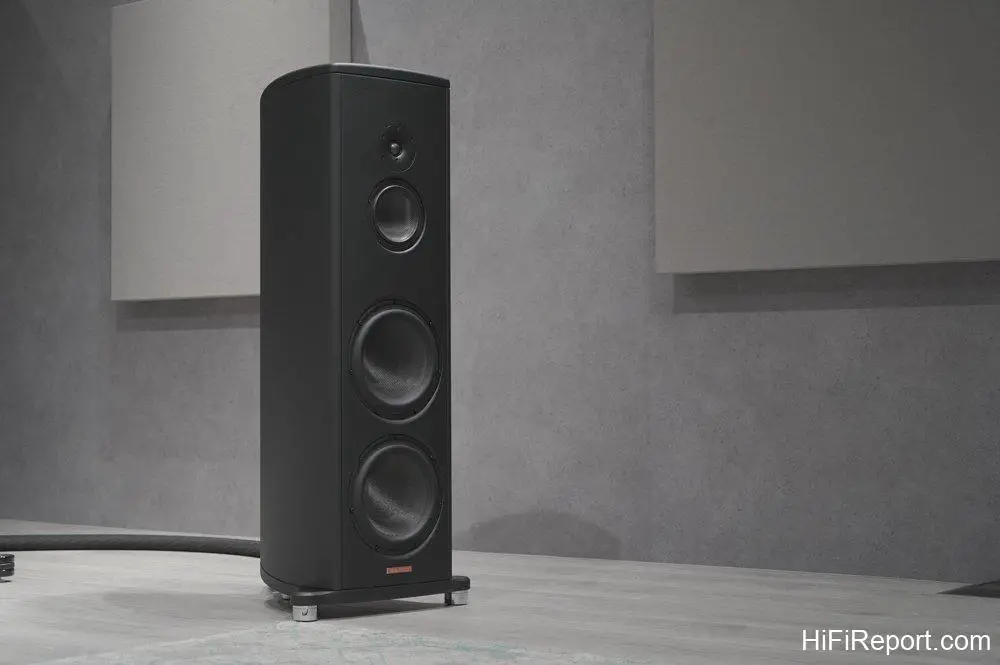
From a distance, the S5 2024 looks remarkably similar to its predecessor; however, upon closer inspection, many aspects have changed significantly.
Advanced Measurement Tools
A couple of years ago, Magico invested in sophisticated equipment, including the Polytec Laser Vibrometer and the Klippel Near-Field Scanner Robot. These tools enable Magico to utilize scientific methods to pinpoint problems and consequently develop accurate design solutions.
It is thanks to this equipment and technology that Magico was able to create their astonishing flagship M9 and the near-flagship M7 loudspeakers.
They also applied these technological aids to subsequently design the S3 2023 and the S5 2024.
The Polytec Vibrometer can measure vibrations across various parts of the speaker cabinet, detecting even the most minuscule movements. It can also calculate the sound pressure level generated by these vibrations.
By employing this technology during the initial design phase, Magico can prevent cabinet resonances from causing coloration in the sound. This aligns with Magico’s long-standing pursuit: building the “quietest” possible speaker cabinets.
As for the other major investment, the Klippel Near-Field Scanner Robot measures the speaker’s response from all angles while it’s producing sound. This provides comprehensive data on the on-axis, off-axis, and even 360-degree response characteristics, allowing engineers to fine-tune the speaker’s acoustic parameters effectively.
Refined Aesthetics and Increased Volume
While the S5 2024 closely resembles the S5 MK2, closer observation reveals distinct differences in its exterior.
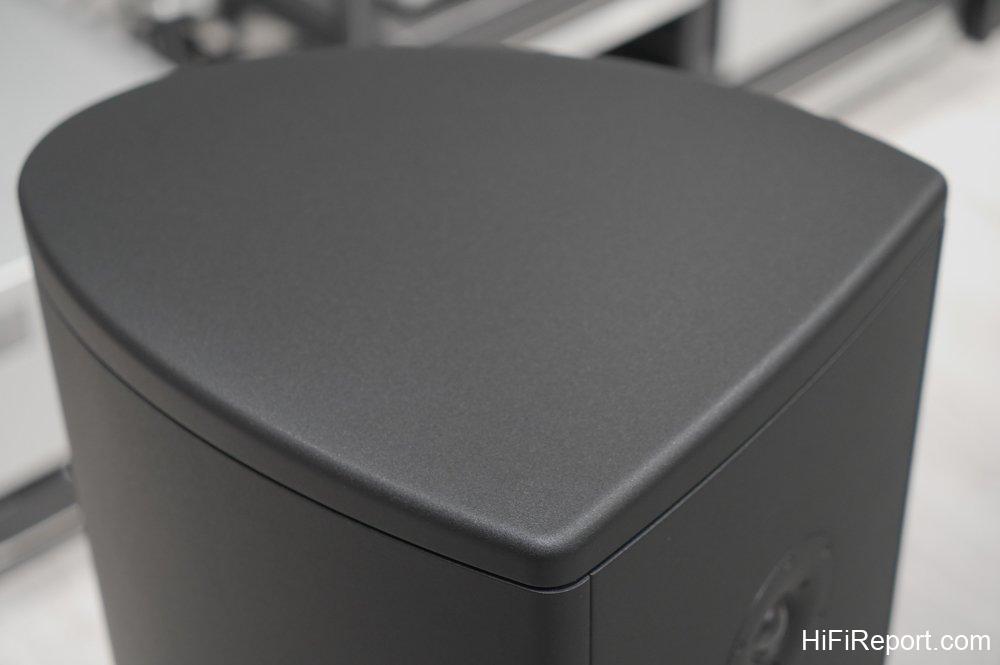
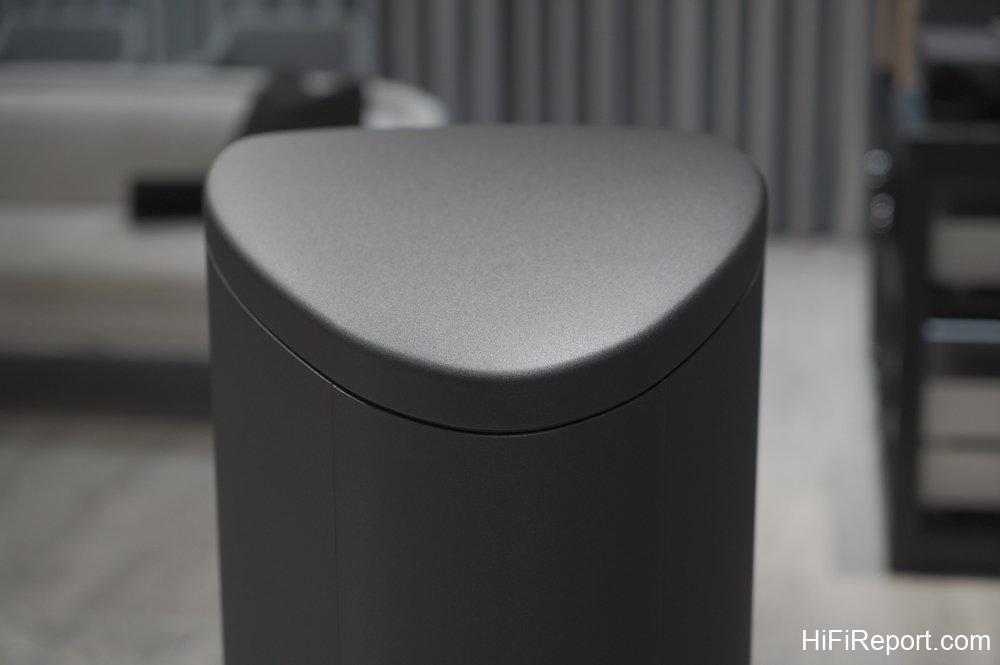
Utilizing 3D simulation modeling to find the optimal configuration, the curved aluminum cabinet now tapers more gracefully towards the rear, forming a teardrop shape when viewed from above.
Furthermore, both the top plate and the base of the S5 2024 feature a backward-sloping design. If the S5 MK2’s tapered cabinet design already helped reduce standing waves and increase rigidity, the new cabinet design yields even better results.
Additionally, the baffle features a subtle curvature, which helps minimize diffraction effects of the sound waves.
The S5 2024’s cabinet dimensions are also considerably larger than the S5 MK2. According to the official specifications, the S5 2024 is 13 cm deeper and 10 cm wider, resulting in a total internal volume increase of 31%.
This larger volume significantly benefits the S5 2024’s bass performance. The low-frequency response has dropped by a remarkable 5Hz, reaching an impressive 20Hz, all while maintaining a friendly 88dB sensitivity.
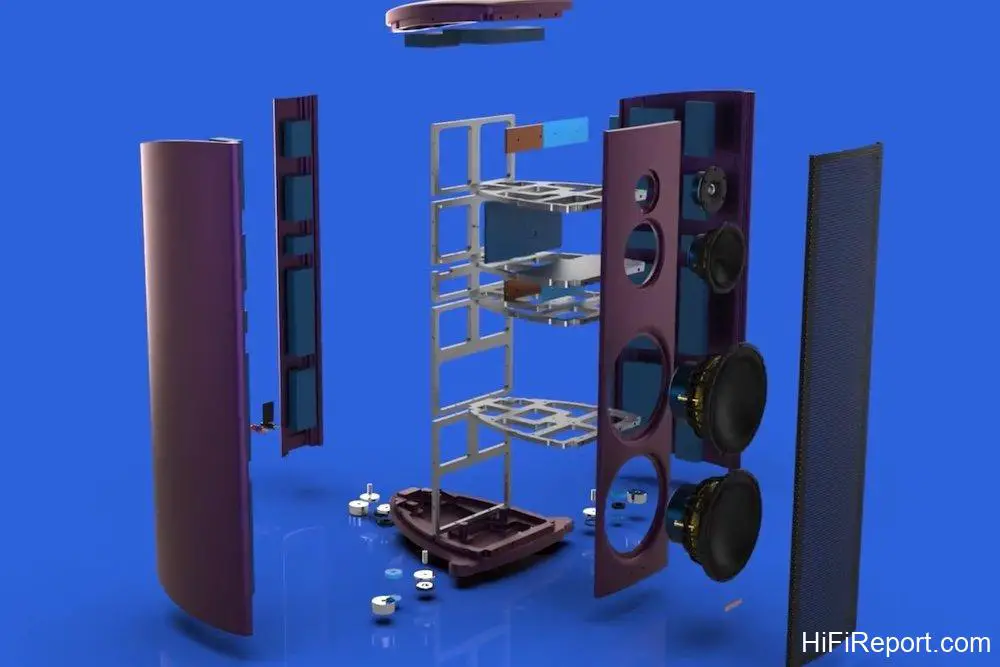
Regarding the internal structure, while the mid-range S Series might not boast the same level of complexity and meticulous design as the flagship M Series, it still adheres to a reinforced aluminum structure.
Looking at the official dynamic renderings, the S5 2024 features both vertical and horizontal bracing structures internally, also crafted from aluminum. These braces integrate with the six curved cabinet panels to form a highly stable enclosure.
I found internal structure diagrams of the S5 MK2 online and discovered that the new model’s construction is entirely different. Magico hasn’t just tweaked things; they’ve completely overhauled the design, down to the fundamental structure.
Alon himself commented during an interview that the most frequent question he receives is why Magico uses aluminum for cabinets, given the potential for “ringing.” He explained that ringing isn’t necessarily bad; it indicates that vibrations are being transmitted and dissipated. His goal is to control this ringing through optimal damping.
Therefore, specific damping materials are placed at strategic points within the cabinet. Combined with the high rigidity of aluminum, this creates the S5 2024’s “quiet” enclosure. Whether it’s determining how to modify the cabinet structure or where to place damping materials, they have a solution for every problem, and with the Polytec Laser Vibrometer, they can always apply the right fix.
M-Series Diamond-Coated Beryllium Tweeter
The drivers in the S5 2024 have also been completely updated, essentially incorporating technology trickled down from the M Series.
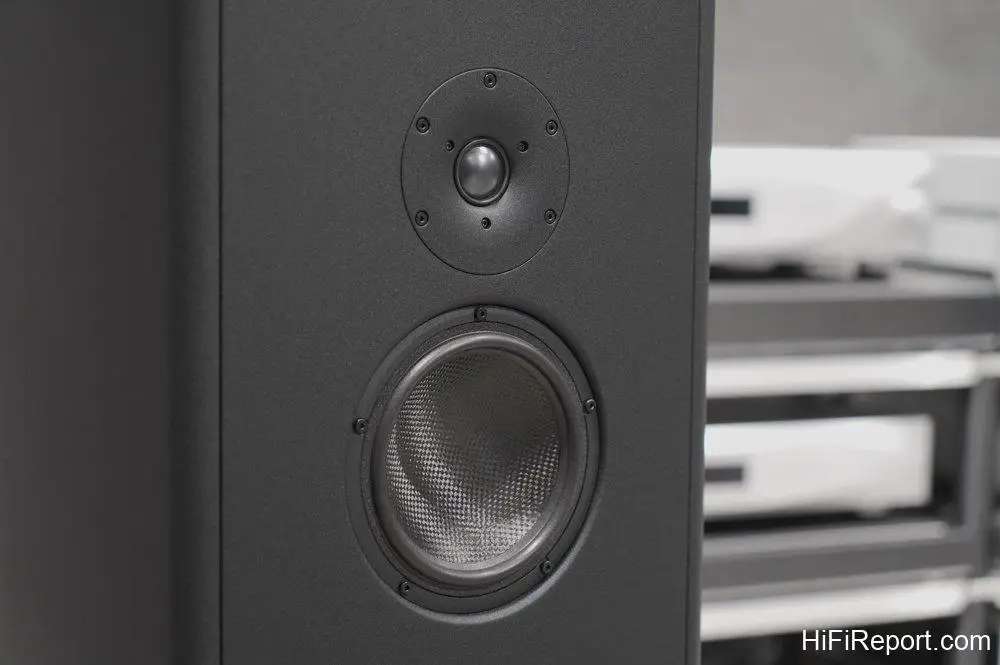
Specifically, the 28mm tweeter is the same unit used in the M Series, transferred directly to the S5 2024. This is a beryllium diaphragm tweeter with a diamond-like coating on its surface, driven by a neodymium magnet. It features an independent rear chamber, and the overall design has been optimized for mechanical structure and acoustic performance through finite element analysis. The manufacturer states that this tweeter offers significantly lower distortion and higher power handling compared to the tweeters previously used in the S Series.
M-Series 6-inch Midrange with Gen 8 Nano-Tec
The midrange driver is a newly designed 6-inch unit employing the eighth generation Nano-Tec cone structure. It uses a neodymium magnet motor, a 3-inch pure titanium voice coil, and is fitted with a full copper cover behind the driver.
The diaphragm has a sandwich structure with an aluminum honeycomb core layered between graphene-reinforced carbon fiber skins on both sides. The redesigned diaphragm is thinner than before, making it lighter while simultaneously improving overall stiffness and damping characteristics.
The driver surround material is also new. While it looks like typical black rubber, it’s actually a new compound made from foam material. It’s designed for longevity, unlike older foam surrounds that would disintegrate and crumble after a few years. Alon himself claims it should last twenty years without issue.
Dual 10-inch Woofers with 5-inch Titanium Voice Coils
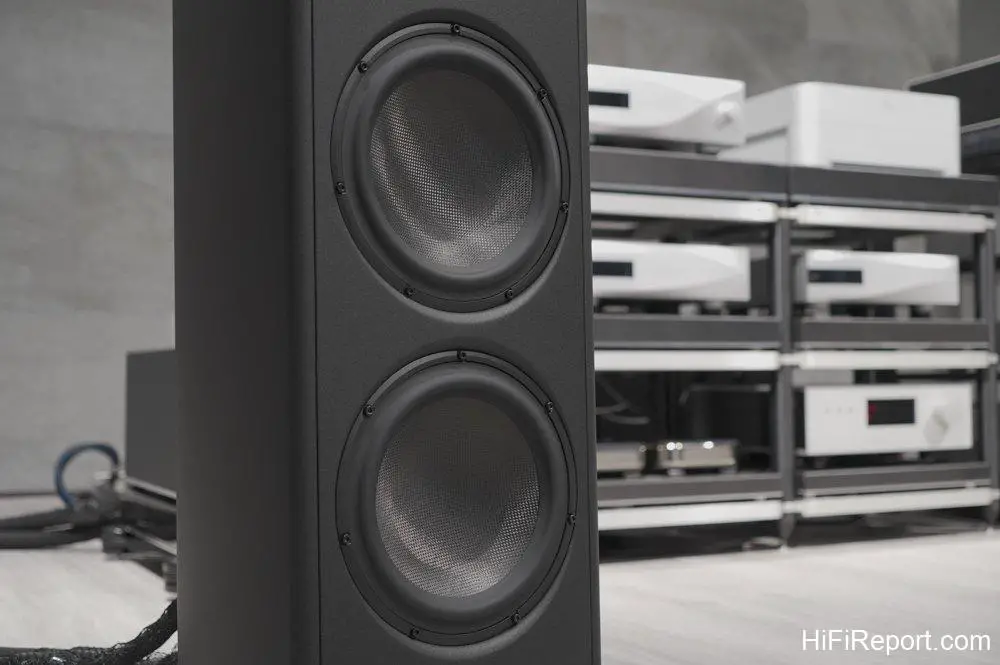
Below the midrange are two 10-inch woofers. The cone material and structure of these woofers are the same as the midrange, also representing the latest Gen 8 Nano-Tec technology. The S5 MK2 woofers had a dust cap in the center, showing the large voice coil opening. However, the S5 2024 eliminates the dust cap, giving the woofer cone a smooth, convex surface, a design shared with the woofers used in the M Series speakers.
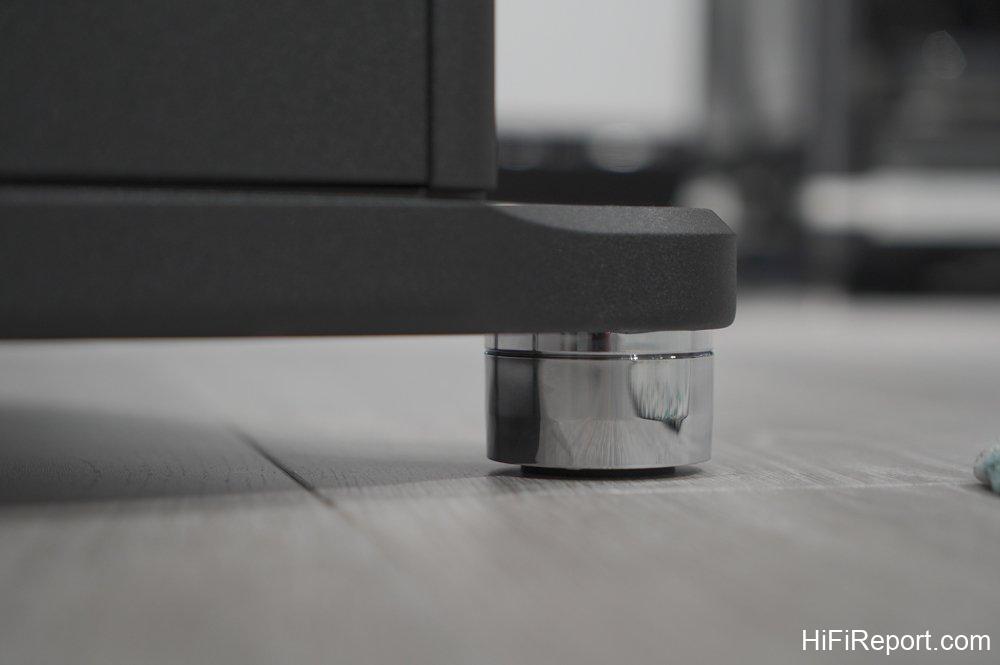
The voice coil diameter is a substantial 5 inches, wound with titanium wire, and featuring a large copper cover at the base. While I describe this simply, adapting these technologies from the flagship series for use in the S5 2024 required extensive optimization in many areas. Alon himself has stated that Magico dedicates the most effort during speaker development to the woofer driver. Achieving clean, accurate, and deep bass requires significant research, and the S5 2024’s woofer is no exception. Their goal is high linearity in driver movement to reproduce low distortion, high output bass frequencies.
Elite Components for ESXO Crossover
For the crossover, the S5 2024 utilizes Magico’s Elliptical Symmetry Crossover (ESXO), a 3-way design based on Linkwitz-Riley filters with a 24dB/octave, fourth-order slope. This design achieves maximum bandwidth and phase linearity, ensuring phase coherence among the four drivers, flat crossover points, and virtually eliminating all intermodulation distortion.
The crossover components feature highly sought-after German-made Mundorf parts, such as MResist Ultra resistors and MCoil copper foil inductors. Using these premium components is, of course, aimed at achieving lower distortion and noise for superior sound quality. The speaker terminal is a single pair, reflecting Magico’s confidence in their crossover design and negating the need for bi-wiring or bi-amping.

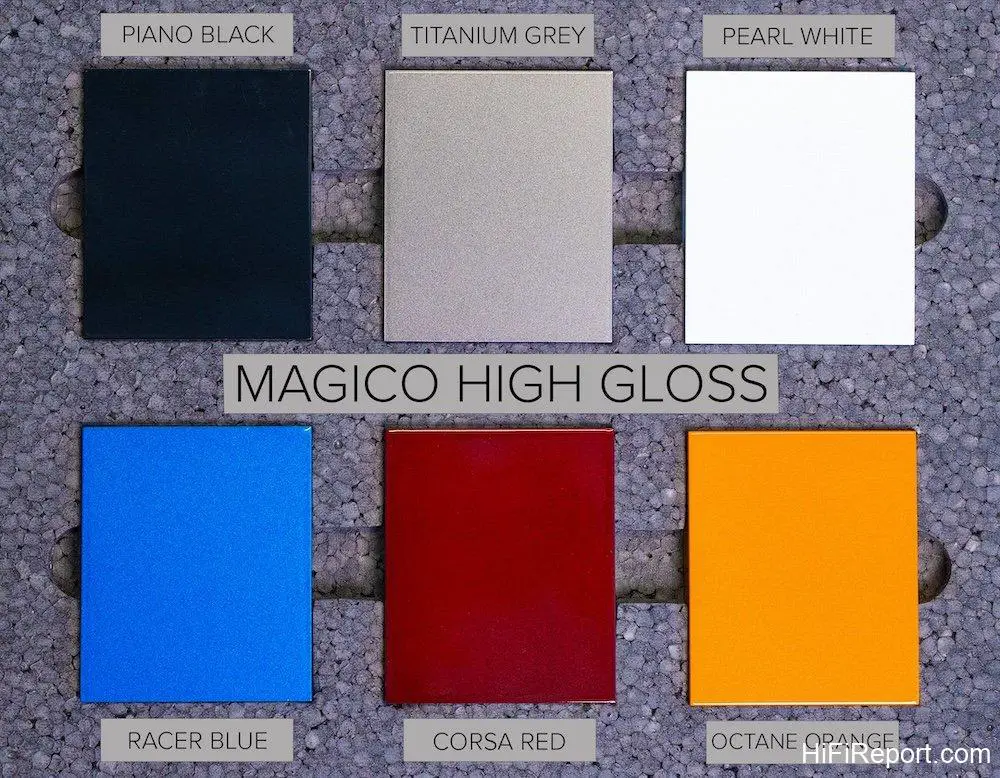
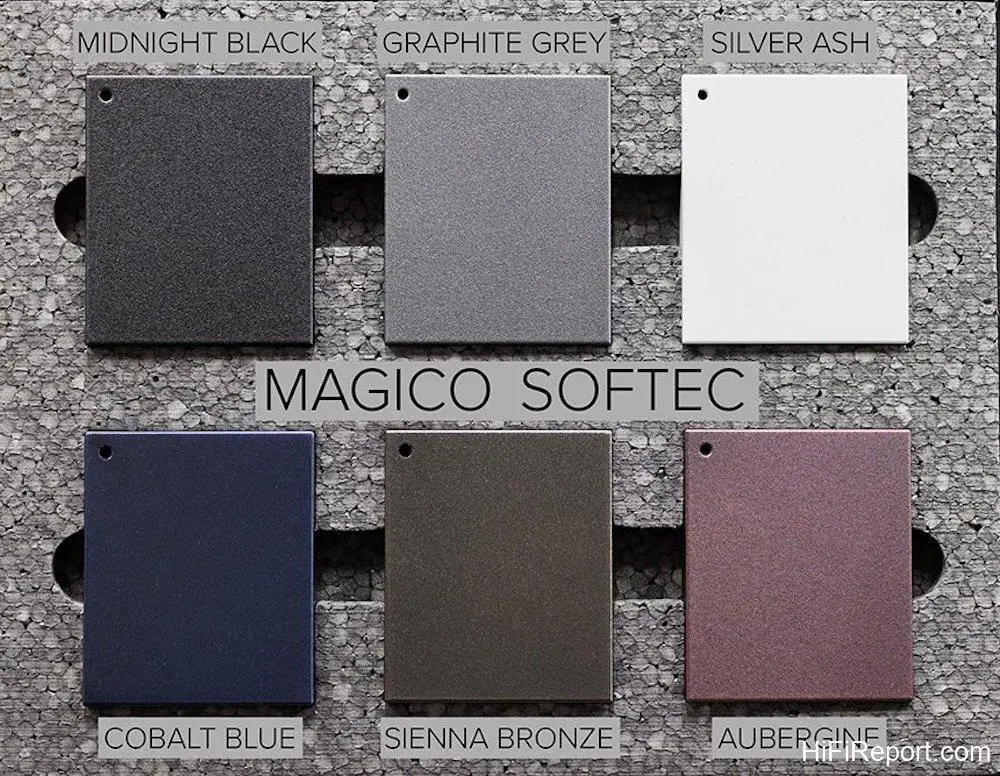
Six Color Options in Satin or Gloss
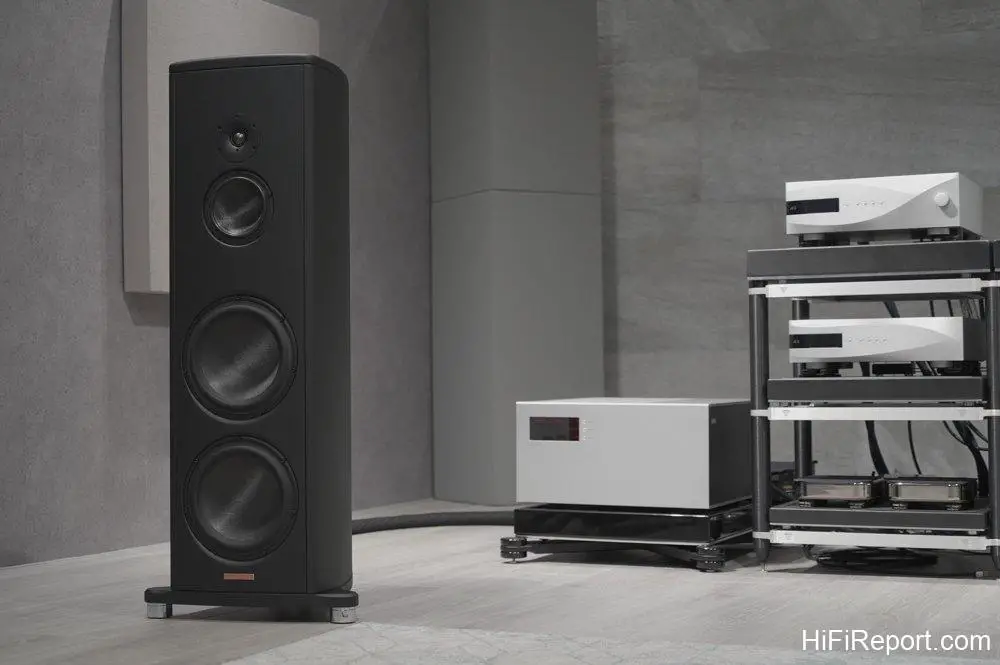
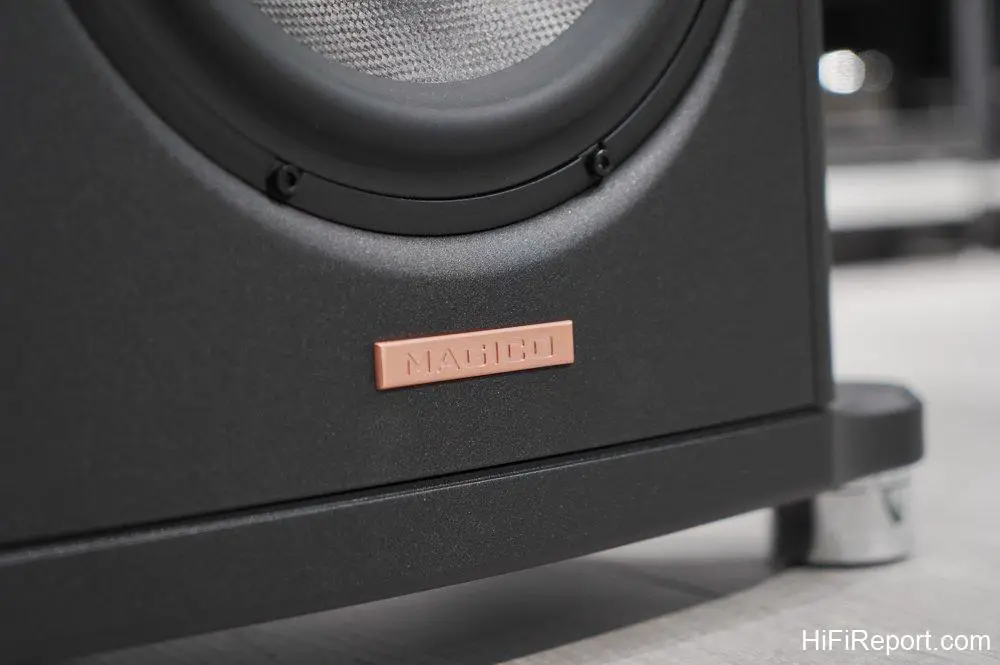
For the review session, the showroom featured the Midnight Black Satin finish (which Magico calls Magico Softec). This black isn’t a deep, pure black but seems to carry a hint of dark gray, giving it more visual depth than a standard black finish.
If you prefer a gloss finish, the manufacturer offers options there as well. Both the satin and gloss finishes come in six distinct colors each, for a total of twelve unique finishes.
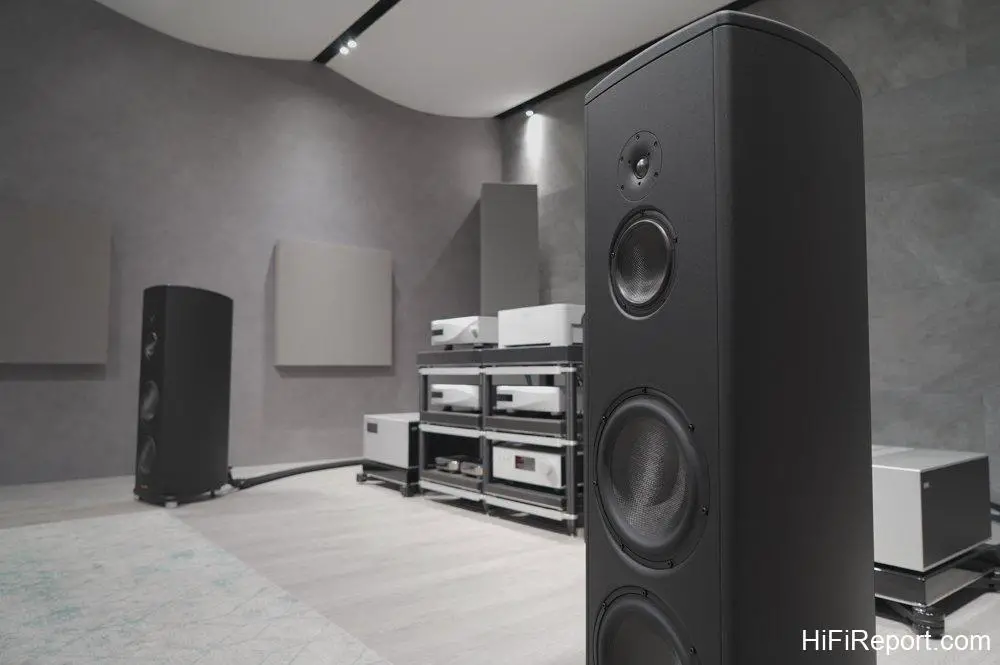
The listening took place in the showroom’s listening room. It’s a large space measuring 6 by 11 meters with a ceiling height exceeding 3 meters. The ceiling features curved acoustic treatments, with absorption panels on the side walls and bass traps in the rear corners. A large space with appropriate acoustic treatment like this provides exceptional listening conditions.
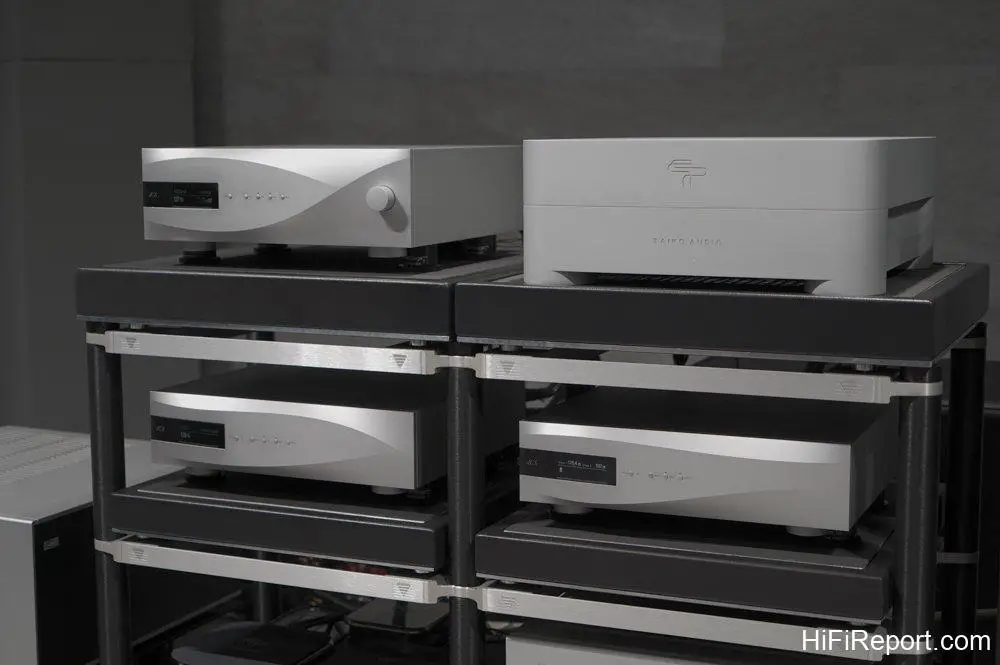
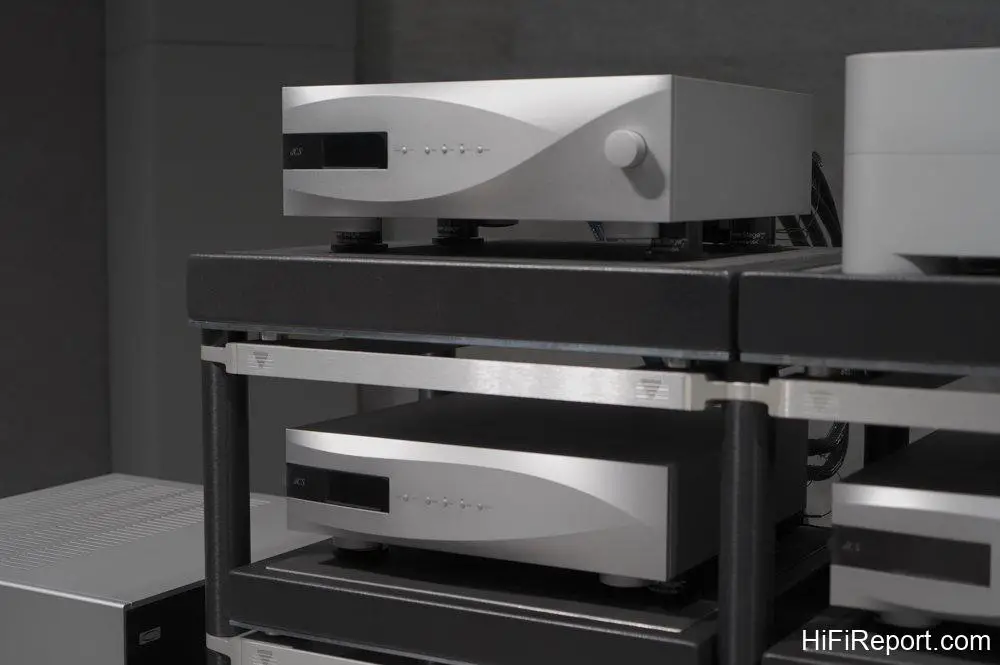
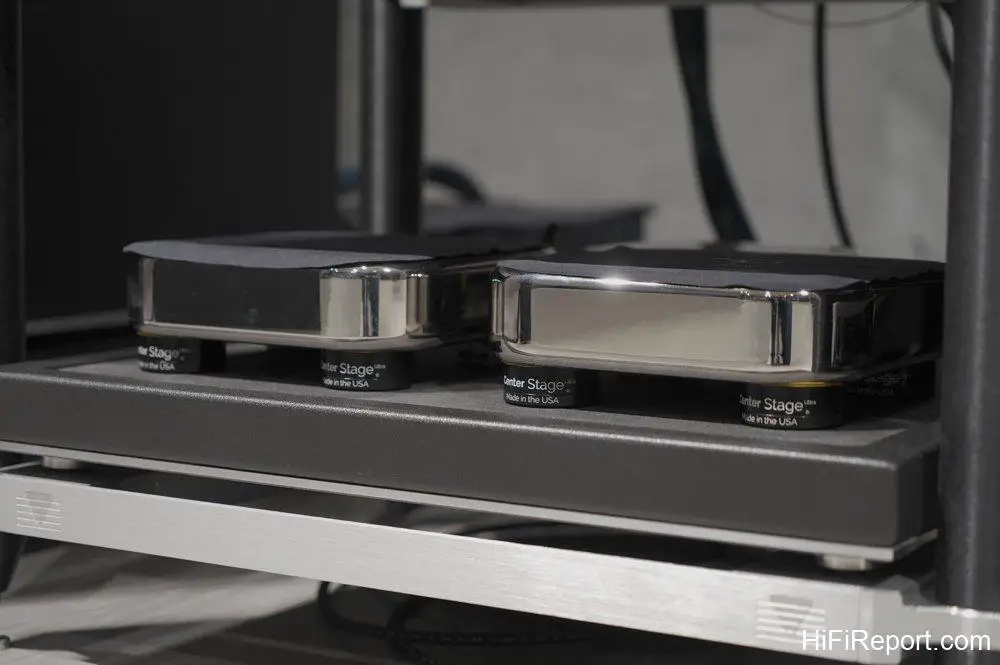
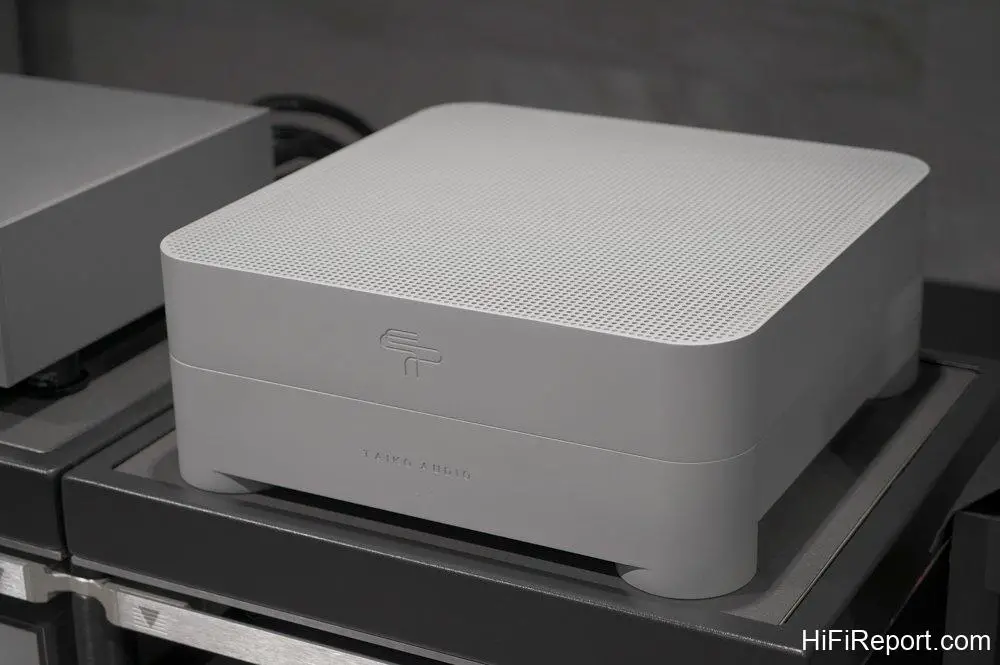
The accompanying equipment was also top-tier, including the latest flagship server from Taiko Audio, the Olympus. Its digital output fed the dCS Vivaldi APEX DAC for decoding, complemented by the Vivaldi Upsampler and Master Clock.
Amplification was provided by the Soulution 727 preamplifier and 701 monoblock power amplifiers—arguably the highest-level amplification package available.
Furthermore, the streaming path incorporated Taiko’s Extreme Router and Extreme Switch, paired with their own DC power supplies. Power conditioning included an IsoTek V5 Syncro Uni 10 DC-blocking filter to eliminate potential DC noise from the mains, contributing to a cleaner background.
Clean, Open, and Engaging Sound
Regarding the sound, the Magico S5 2024 performs comprehensively across the board. Regardless of the music played, it delivers immense listening pleasure. Its clean—even pure—sound restores instruments to their most original form. I didn’t have to worry about the final link in the system adding anything that might impact my enjoyment or perception of the music. All I needed to do was listen.
And with the ample space available, I could comfortably push the preamplifier volume up to 60 or so, fully unleashing the S5 2024’s potential. It presented clear, three-dimensional, and solid imaging with superb sonic density. Every sound source, whether an instrument or a voice, felt tangibly present, realistic in form and precisely positioned.
The S5 2024 offers an open soundstage and maintains a balanced response across the entire frequency spectrum. Listening to music, you never feel like something is missing. The sense of space and stage it creates is also exceptional, painting a wide and deep stage with clearly defined layering of distances.
Of course, the luxurious accompanying system undoubtedly provided a significant boost. Without such a high-caliber source system, the S5 2024 wouldn’t have had such rich and complete information to reproduce, and without such top-tier amplification, it might not have performed quite so thoroughly.
Piano Dynamics and Detail
On the S5 2024 system, I experienced a spectacular rendition of Shostakovich’s Piano Concerto No. 1. This was the live performance version by Martha Argerich at the 2006 Lugano Music Festival. I adore this brilliant performance and have heard it on countless systems of varying sizes. Listening again on the Magico S5 2024 felt entirely new.
Argerich is hailed as the “Piano Queen.” Beyond her masterful technique and powerful playing that yields vast dynamic contrasts and passionate performances, her live appearances consistently showcase another level of brilliance. To me, she is a live-performance pianist, and this recording proves it.
The first movement opens with the piano’s brilliant arpeggios, quickly introducing the first theme. This piece features only a solo trumpet, no other wind instruments or percussion, just a piano, a trumpet, and the string quintet. But as the movement begins, the piano races along, producing powerful, robust notes. The impact is breathtaking under her forceful touch. The piano sound is incredibly sharp and potent, with a solid, tightly-formed texture. The high notes played out are bright and dazzling. When her left hand descends to the low chords, not only are the chords heavy and full-bodied, but the texture of the reverberating piano strings is palpable. This piano was alive; alive under the Queen’s fingers and magically brought to life by the S5 2024’s playback.
In contrast to the fast tempo of the first movement, the second movement slows down, making the texture of the instruments easier to discern. Listening to the strings here, the violins weave the melody gracefully while the lower strings respond alongside. In this back-and-forth, the S5 2024 makes everything clearly audible. The piano enters next, and again, because the tempo is slower, it’s as if a magnifying glass is applied, allowing a detailed look at the composition of the melody, even the composition of individual notes. Just listen as the music builds in intensity, reaching a peak before gradually fading. At this point, the left hand continuously presses out chord after chord – this bass, this detail, this power, this layering, this scene, everything is utterly magnificent.
Low Distortion and High Transparency
Magico is dedicated to minimizing speaker coloration, but just how low can they go? Besides the listener’s personal experience and memory to identify instrument timbres and qualities, another way to judge a speaker’s coloration is by the degree of sonic transparency. “Transparency” is difficult to explain, but it’s a term used in audio reviews worldwide.
Transparency allows you to see through everything; it allows you to perceive everything clearly. Transparency allows the object seen to reveal its true form. How can I explain the S5 2024’s excellent transparency? I’ll use a large orchestral piece to illustrate.
“John Williams in Vienna” features the composer himself conducting the Vienna Philharmonic Orchestra. These film scores, with their brilliant orchestration and performed by an orchestra of the VPO’s caliber, feel like carefully crafted orchestral works, bursting with immense beauty and emotion. In the piece “The Flight to Neverland” from the film “Hook,” simple themes repeat with constant variation, like a scherzo full of wit. The complex interplay and layering of sections reveal the composer’s mastery of harmony and counterpoint. When these intricate ensemble passages are clarified, the brilliance of the piece becomes apparent.
When the S5 2024 plays this piece, everything is orderly, clearly layered, and logically presented. What’s more, it demonstrated something special: using the built-in digital filters of the dCS, this piece could take on two distinct characters. You might ask, do digital filters make a big difference? They really do. Testing Filter 1 and Filter 5 out of the dCS’s six filter options, the former presented a clear sonic structure, while the latter was slightly softened. The former made you feel as if all information was at your fingertips, while the latter felt like sitting in a concert hall, where the sound blended with some spatial elements, losing a bit of sharpness. Both different flavors were crystal clear on the S5 2024.
I recently reviewed the Rossini APEX DAC and spent considerable effort trying to discern the differences between its filter settings. This time, in the meticulously treated large room at the showroom, listening through a system designed to minimize distortion at every stage, these differences were entirely clear and distinct. Good transparency brings high discriminability.
In the second track, “Excerpts from Close Encounters of the Third Kind,” the opening sustained violin tremolo, both sharp and thin, creates a tense sound that builds suspense. Then the low strings surge forward, and the orchestra’s strong entry announces a dramatic beginning. The interwoven and layered sections create complex sonic effects, and the dynamic contrasts provide intense dramatic impact. The S5 2024 was completely unfazed by this complex and ever-changing scene, allowing me to clearly grasp the dynamics of each section.
Besides the opening violin tremolo, there’s also the shriek of the piccolo later on, joined by trumpets. All these sounds gave me considerable respect for the S5 2024’s mid-high frequency performance. The beryllium tweeter with diamond coating, paired with the graphene-infused sandwich midrange, is truly a winning combination. The textures of the instruments in the mid-high frequencies are clear and vivid, and even at high volumes, they don’t become harsh or unbearable. Harshness is usually caused by distortion; otherwise, the inherent quality of natural instruments would convince us to accept what we hear. The first two sections of “Close Encounters,” with their noticeable modern music dissonances, perfectly support this point. When the orchestra launches into a strong tutti passage, the S5 2024 stably displays the deployment of each section, making it clearly discernible. I consider myself a rather serious audiophile, often hoping to hear more to help me delve deeper into the music. To be able to hear sound like this is exactly what I seek!
Power, Emotion, and Dynamic Range
Saint-Saëns’ Symphony No. 3 “Organ” can also reveal a lot. I listened to the version conducted by Myung-Whun Chung with the Orchestre de l’Opéra Bastille. The first movement begins Adagio, then the tempo quickens. The first theme is dominated by strings, with interweaving string passages using tremolo and long phrases, creating a dramatic opening. The gentle second theme follows, accompanied by the string tremolo of the first theme in the background. Listen to the vivid textures of the instruments, the various clever arrangements by the composer, and the dynamic shifts and flowing scenes. I must say, music reproduced through the S5 2024 feels more real and alive.
The second half of the first movement is a captivating slow section, where the organ makes its appearance. The organ here is truly astonishing. The S5 2024 is a sealed-box speaker, equipped with only dual 10-inch woofers. The manufacturer confidently states a 20Hz frequency response in the specifications. Initially, I didn’t pay much attention, figuring they hadn’t specified the roll-off level at 20Hz, so they could claim whatever they wanted. But when the organ started playing, I surrendered—this bass, this 20Hz bass, it might actually be real.
Here, the organ emerges slowly, not with a deafening roar, but like a breath, like a dense fog. Beyond the audible bass, I felt energy. This is the charm of extreme low frequencies. I confirmed that the subwoofer behind the equipment rack was not engaged, yet the depth of the bass was truly startling.
The first half of the second movement is a lively Allegro, like a scherzo. What defines intense, rapid string passages? This is it. Listening to this bustling, yet orderly Allegro, having already passed muster with “Hook” and “Close Encounters,” this naturally posed no difficulty. The latter half of this movement, the most beloved section, begins solemnly with a strong organ chord, introducing the first theme. Unlike the gentle tone of the latter half of the first movement, the organ here is majestic and commanding. Listen to the grandeur of the sound; this is the result of an orchestra combined with an organ, and the scale is extraordinary.
The S5 2024 is a very expensive speaker, but where does the value lie? Playing Saint-Saëns’ Third Symphony through it once makes its prowess immediately clear.
Exemplary Bass Performance
At this point, I must emphasize one thing: the Magico S5 2024’s bass performance significantly exceeded my expectations for a speaker of its size. As I mentioned earlier, it’s a sealed enclosure! And it only has dual 10-inch woofers! How is it possible for the bass energy to be so abundant? And not just abundant, this bass is of exemplary, even outstanding, quality—clean, accurate, and with excellent resolution.
Take, for example, the album “Doppio espressivo” featuring double bass player Rick Stotijn. Vivaldi’s Double Cello Concerto is adapted here for two double basses, resulting in even deeper and heavier bass. Listen to the rich low frequencies, which still contain abundant detail, vividly presenting the rough texture of the double bass playing. As for Bottesini’s “Elegia,” the double bass slows its tempo, extending the emotional line. Whether it’s the bouncy feel of pizzicato or the solid texture of bowing, everything contributes to conveying a sense of sorrow. I believe that when you hear the depth of that bass, you too will have to wonder: Is the subwoofer really off?
Doing Justice to Bass-Heavy Recordings
Clean and extended bass is a significant, undeniable advantage of the S5 2024. I tested it with two recordings known for their ample bass, which can sound bloated on many systems and in many environments. However, listening to these two tracks on the S5 2024, the bass was truly clean, the lines and details were remarkably clear, with absolutely none of the information obscured by excessive bass that is often a disappointment.
Which two tracks? One is Diana Krall singing “All or Nothing at All,” and the other is the familiar audiophile track “Flight of the Cosmic Hippo.”
The opening bass in “All or Nothing at All” is recorded very full-bodied, sounding quite massive. On some systems, the proportion of this bass can feel a bit oversized, and while the bass is full and plentiful, the lines and details aren’t clear. Listening to the S5 2024 play this track, there were absolutely no such issues. While the bass wouldn’t be described as lean or lacking weight, it felt like you could almost see the double bass being plucked, and it was better balanced in proportion with the vocals that followed.
Effortless Detail and Extended Highs
Earlier, I discussed how high-pitched instruments in an orchestra, played at high volumes, maintained a natural sound without becoming unbearable. That point was made to emphasize the S5 2024’s extremely low distortion in the mid-high frequencies. Here, I want to add that because the mid-high frequency performance is of such high quality, it can reproduce brilliant timbres and reveal an abundance of detailed information.
Dan Patlansky’s “Big Things Going Down” recording seems to intentionally include out-of-phase signals, making the guitar sound exceptionally open. While not entirely lacking form, it creates the illusion of listening at an extremely close distance, as if the guitar is right beside you. The guitar sounds crisp and sharp, every note played with power and clarity. The soaring slides and the upward turns are utterly delightful to hear. Dan Patlansky’s voice carries a slightly husky, magnetic, grainy texture, and paired with the blues guitar playing, the blues flavor is incredibly strong! There’s another interesting aspect to this track: it contains occasional ambient noise from the live performance. These are part of the performance, and here, they don’t sound out of place even considered as part of the music. These “part of the song” noises are distinctly clear on the S5 2024. This sense of live atmosphere built through high information retrieval makes you close your eyes and feel as though you are facing the performance directly.
Exquisite Vocal Rendition
I’d also like to use Sara Bareilles’ album “Brave Enough” as an example. This is a recording of Sara Bareilles’ live performance at the Variety Playhouse, which captures not only a brilliant vocal performance but also the complete live atmosphere. The Magico S5 2024, when reproducing Sara Bareilles’ singing, renders the texture of her voice with exceptional clarity. I specifically added the intensifier “exceptionally” to convey my amazement and delight at how realistically the S5 2024 portrays the singer’s form, appearance, and expression.
Take the song “Manhattan” as an example. After a piano intro, the verse that follows is relatively calm and restrained. Yet here, the S5 2024 can clearly delineate Sara’s variations at the ends of phrases and during transitions. Whether it’s vocal runs or changes in her singing style, these nuanced details are part of the performance. When the song reaches the soaring chorus, the accumulated emotion surges forth, and the vocal energy pours out—that is the charm of the performance. In contrast, when she sings softly again, her voice becomes a sigh. The contrast between these passages is captivating.
Speaking of this album, I must mention one more thing. Sara Bareilles is singing and accompanying herself on what is not a real piano, but an electric piano. Modern electric pianos have a high degree of realism and can easily be mistaken for the real thing. However, if the system has sufficient resolution, information retrieval, and fidelity, we can still distinguish whether the sound is from a real piano or an electric piano. Sara Bareilles is playing an electric piano; the sound is full but simpler than a real piano. This is due to the different principles by which the two instruments produce sound. The S5 2024’s fidelity is outstanding, and I could clearly find the clues to differentiate between them. I believe you would be able to hear it too.
The Charm of Science
If we broadly categorize speaker design into “humanistic” and “scientific” approaches, the former relies on striking visual impressions, superb craftsmanship, exquisite material quality, and compelling backstories to gain consumer approval and build an emotional connection. The latter, from start to finish, stands firmly on technological principles, emphasizing scientific rationale at every stage, using rational arguments to persuade consumers. These two approaches are relative; we can always find a brand’s position on this spectrum. Some lean more towards the “humanistic” end, while others lean more towards the “scientific” end.
Undoubtedly, Magico is a brand that leans heavily towards the “scientific” end. From the moment Alon Wolf founded Magico 20 years ago, he has been a believer in science, and that hasn’t changed. His faith in science has only deepened. He demands that his speakers exhibit low distortion, low coloration, and high energy output, and he achieves this through science, technology, and materials.
As a model commemorating Magico’s 20th anniversary, the S5 2024 is born from science and embodies the brand’s spirit. It is not inexpensive, not something everyone can own, but it is incredibly captivating.
That is the magic from Magico!
Specifications
* **Type:** 3-way, 5-driver floorstanding loudspeaker
* **Drivers:** 1 x 28mm Diamond-coated Beryllium dome tweeter, 1 x 6-inch 8th generation Nano-Tec Graphene cone midrange (MA6004RTC Mk2), 2 x 10-inch 8th generation Nano-Tec Graphene cone woofers (MAG10508 RTC)
* **Sensitivity:** 88dB
* **Impedance:** 4 Ohms
* **Frequency Response:** 20Hz – 50kHz (in room)
* **Recommended Amplifier Power:** 50 – 1000 Watts
* **Dimensions:** 1220 x 490 x 485 mm (H x D x W)
* **Weight:** 118 kg