
Marantz CD 60 Review
The Marantz CD 60 player proudly carries the tuning signature of Marantz’s formidable “Marantz Sound Master” professional acoustic team. As seasoned audiophiles know, the brand boasts a rich history stretching back to its founding in 1953. Since Saul Marantz’s tube amplifiers first emerged and the brand was officially established, classic Marantz gear was often fine-tuned under the expert hand of brand master Ken Ishiwata.
However, in recent years, the tuning of the brand’s new generation of products has been entrusted to the aforementioned professional acoustic team, signifying a passing of the torch and ensuring the continuation of Marantz’s acclaimed sound quality for decades to come.
Design and Aesthetics
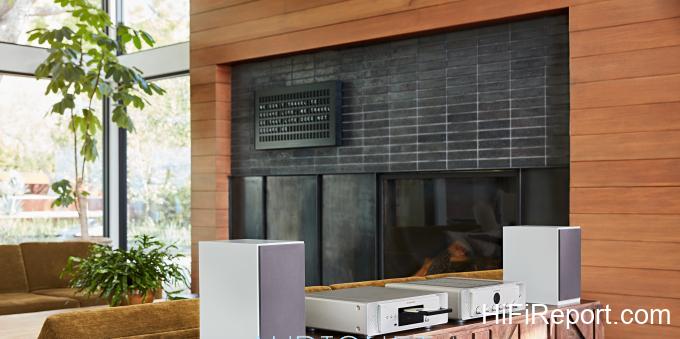
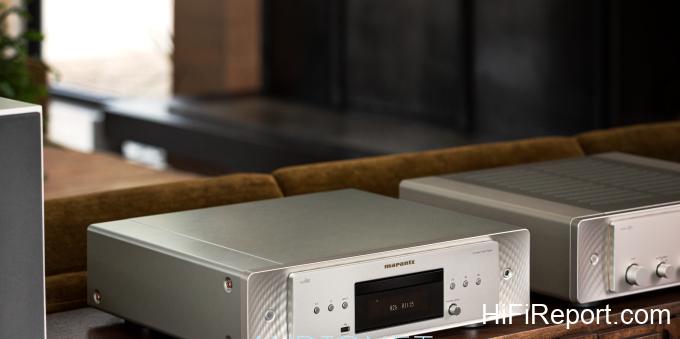
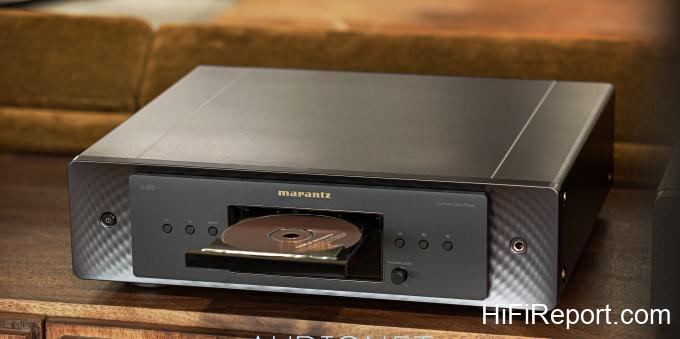
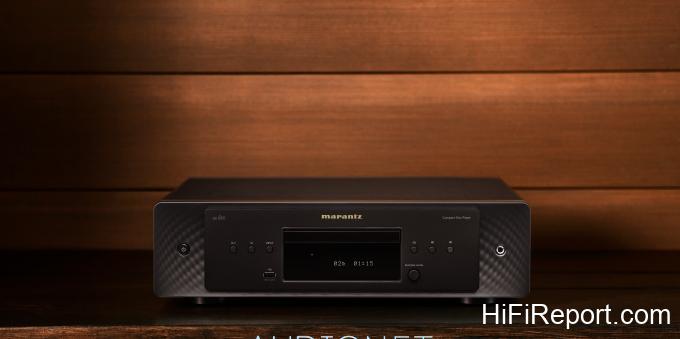
According to Marantz, the CD 60 was crafted to exceedingly high standards, even featuring a more stylish and luxurious aesthetic design. Before knowing its price, I genuinely mistook it for a component easily exceeding 100,000 NTD (around $3,300 USD) – that’s no exaggeration. The distinctive wave patterns and hairline finish on the sides of the front panel, combined with the unique gold and silver metallic luster, create a rich, layered, and undeniably noble look.
This level of craftsmanship is simply not typical of products priced under 50,000 NTD (around $1,600 USD), and this alone sets the CD 60 apart, building significant anticipation.
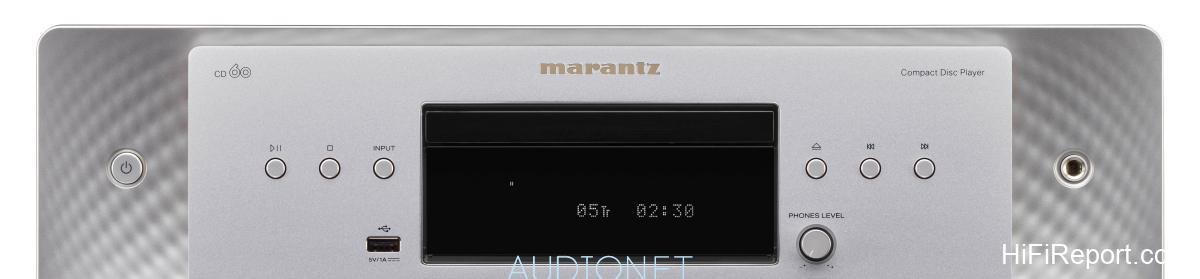
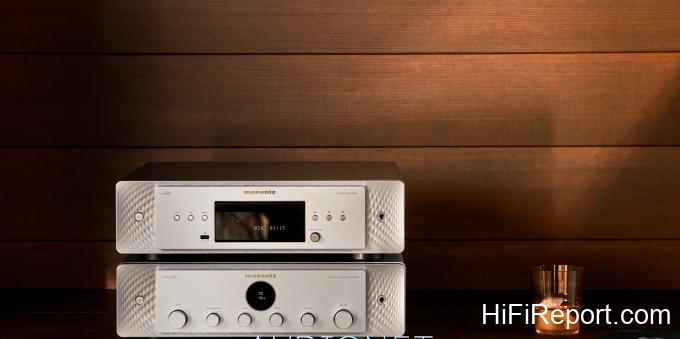
Indeed, when the CD 60 first debuted at the Munich High End show, its dazzling, luxurious exterior and sophisticated acoustic design immediately captured the attention of many audiophiles. This disc player is specifically tailored to complement Marantz’s Model 40n streaming amplifier and Model 30 integrated amplifier, sharing a similarly opulent design language.
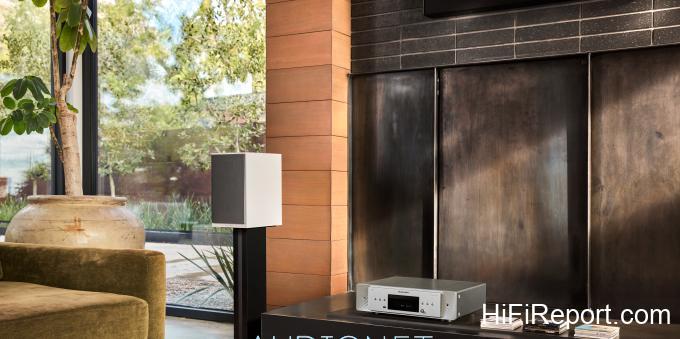
When paired together and placed in a living room, they can truly enhance the home decor, proving that even affordable systems can exude refined taste.
Features and Connectivity
In terms of functionality, the CD 60 is not just for standard CDs; it also supports CD-R/RW playback, including WMA, MP3, and AAC files. For audio files stored as data on discs, it can decode DSD, WAV, and ALAC formats. Catering to modern needs, the player also supports USB playback, compatible with FAT32 or FAT16 storage devices. It handles high-resolution audio formats such as WAV, FLAC, ALAC, AIFF, and DSD, satisfying the demands of audiophiles seeking the utmost quality.
Notably, the DSD playback functionality on this player utilizes native decoding rather than DoP.
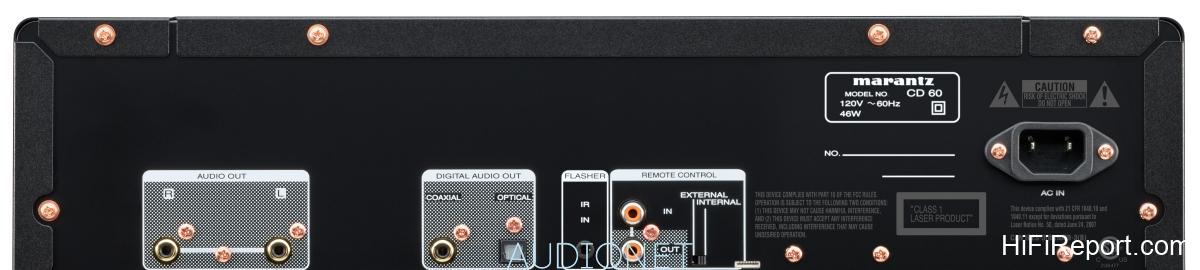
For outputs, the CD 60 offers digital transmission via optical and coaxial connections to a downstream DAC, and analog output via RCA to an amplifier, a fairly standard arrangement. Of particular note are the Remote Control In/Out terminals on the rear panel.
When paired with compatible Marantz amplifiers such as the MODEL 40n or MODEL 30, these terminals allow for linked operation, enabling users to control volume, power, and other functions remotely, significantly enhancing the convenience of the complete system.
Internal Design and Components
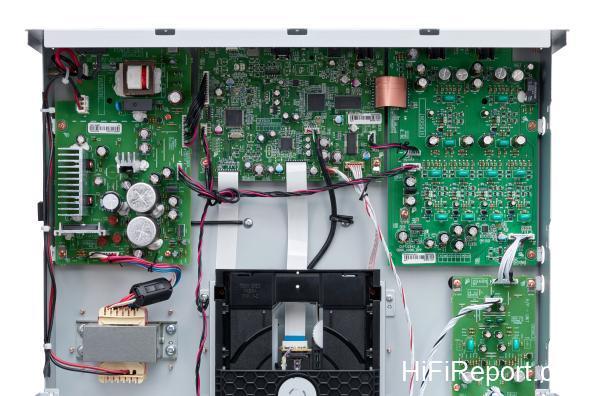
Although the CD 60 falls within the entry-level price bracket, its circuit design clearly showcases Marantz’s distinctive craftsmanship. Opening the chassis reveals the brand’s unique approach to circuitry. According to the manufacturer, it incorporates a proprietary algorithm for MMDF (Marantz Musical Digital Filtering) digital processing and employs the same ESS ESS9016K2M chip found in the ND8006 for digital-to-analog conversion. This is a 32-bit chip with a dynamic range of 122dB.
Following the digital-to-analog conversion, the CD 60’s audio circuits—including I/V conversion, low-pass filtering, and buffer output—all feature Marantz’s exclusively developed HDAM high-speed amplifier modules, rather than relying on readily available OP Amp chips often found in standard digital power supplies. The newly improved HDAM offers even lower distortion, with manufacturer data indicating a significant 29.7% improvement in total harmonic distortion.
Upon closer inspection of the circuit layout, it’s apparent that the digital mainboard and audio circuits utilize separate power supplies. Furthermore, the power signal transmission between the digital board and the audio circuits is shielded with copper foil to significantly reduce noise interference.
On the HDAM circuit boards, one can observe a multitude of plug-in resistors, featuring both metal film and carbon film types. This suggests a blended design likely employed by the manufacturer for fine-tuning the sound. Additionally, the FET input stage of the CD 60 includes the HDAM-SA2 module, a current feedback low-noise amplification circuit responsible for driving the headphone output.
This module offers faster characteristics and can transmit richer audio content, leading to more realistic and natural sound quality. A careful look reveals that the audio circuits in this CD player are powered by a linear power supply. After being stepped down by the EI transformer and rectified, the power is filtered by two large-capacity 2,200μF electrolytic capacitors. These capacitors were jointly developed by Marantz and Elna, possessing excellent acoustic properties.
Listening Impressions
For practical listening, I paired the CD 60 with an Arcam SA30 integrated amplifier, using our standard test equipment, Pioneer floorstanding speakers, and ELAC UFR52 floorstanding speakers, to form a 2-channel stereo system. I must say, from powering on to reading the disc, the CD 60 conveys Marantz’s incredibly solid build quality.
Smooth disc loading and ejection, swift reading with minimal noise, and very short track switching times are all advantages that left a deep impression regarding the player’s performance. These seemingly minor details are often a benchmark of truly high-quality components that many higher-end devices struggle to achieve.
That being said, what truly astonished me about the CD 60 was its sound performance. For instance, listening to Nemanja Radulovic’s album “Journey East,” the very first notes revealed incredibly ethereal violin bowing. The string textures were smooth, lustrous, and possessed a delicate, soft decay, overflowing with so much detail that it made me question if I was truly listening to a CD. However, this sonic character is precisely the noble quality that Marantz is known for.
Listening closer, the string textures were defined yet refined, bright yet carrying a gentle sweetness, captivating me entirely. This demonstrates the player’s excellent high-frequency extension.
Due to the CD 60’s superb high-frequency extension, careful listening even reveals abundant harmonics, fully restoring the spatial information intended by the recording engineer. Frankly, just the first CD left me in awe; it’s hard to imagine a player at this price point delivering such performance. Next, listening to Andreas Ottensamer’s album “Brahms: The Hungarian Connection,” I again heard a wealth of incredibly fine detail.
Especially when different orchestral sections played together, the soundstage remained exceptionally stable. High-frequency instruments were focused and three-dimensional, while the low frequencies had a very full and solid presence, anchored at the back of the soundstage, creating a vibrant and dynamic sonic image.
In the mid-range, the CD 60 embodies Marantz’s signature warm and focused style. As mentioned with the previous albums, instruments within the tracks had more vivid and rich details. The warm tone combined with the delicate detail reproduction highlighted their material characteristics more distinctly, such as the resonance of violin bodies, the metallic texture of brass, and the tautness of bass drum heads. These were easily discernible immediately.
When listening to vocals, such as the Japanese band The Dresscodes’ album “” (Heibon), the lead vocalist’s voice was full and resonant, with a notably large mouth shape positioned right at the center of the soundstage. The abundance of mid-range detail allowed listeners to easily perceive subtle nuances like the singer’s breathing and mouth movements. However, the singer’s mouth shape wasn’t overly forward; it had a slightly transparent quality.
Incidentally, the CD 60 includes two filter modes. When using Filter 1, the player presents a very spacious soundstage with deeper layering. In large-scale compositions, you can perceive instruments layered behind one another extending backward, while instruments to the left and right are widely separated, creating a sense of immense breadth. Switching to Filter 2 imparts a more distinct sense of speed and impact to sonic events.
For listening to faster-paced genres like jazz or rock, this mode creates a more lively sonic picture, allowing for more natural immersion.
While the CD 60’s bass isn’t overtly emphasized, it adapts to different music styles, presenting varied characteristics. Across the genres mentioned – classical, pop, rock – the bass exhibits distinct styles. Naturally, for genres like rap or movie soundtracks where stronger bass impact is desired, considering the Filter 2 mode is recommended for a potentially better listening experience.
When using headphones, the gain can be adjusted to High, Mid, or Low settings, and the sound quality remains exceptionally high.
I subsequently listened to various other albums, including the “Stranger Things 4” soundtrack, Daniel Hope’s “Music for Ukraine EP,” Chilli Beans. ‘s self-titled album, and Zhou Zicong’s “” (Since That Time), further confirming the CD 60’s remarkable level of detail.
While its high-frequency extension may not quite match true high-resolution audio files, its elegant, gentle, and highly linear high frequencies deliver a captivating quality regardless of the instrument or sound effect, which is truly rare in a CD player at this price point.
Conclusion
In conclusion, the Marantz CD 60 has the ability to fully restore, and even highlight, the details within a track, allowing listeners to easily perceive a wealth of information. Whether it’s the form of instruments, the richness of vocals, or even subtle spatial cues, everything is revealed through this CD player. More importantly, the sonic quality it delivers possesses Marantz’s characteristic elegant and noble character.
The high frequencies have a lustrous sheen, and the mid-range is rounded and full—a level of performance truly difficult to match in equipment of the same price. If you are seeking an affordable yet outstanding-performing CD player, you absolutely must give the Marantz CD 60 a listen.
Specifications
* Type: CD Player
* Frequency Response: 2Hz-20kHz (CD), 2Hz-50kHz (USB DSD, -3dB), 2Hz-50kHz (USB PCM, -1.5dB)
* Total Harmonic Distortion: 0.0015% (CD), 0.0006% (USB DSD), 0.0005% (USB PCM 24bit)
* Signal to Noise Ratio: 118dB (CD), 110dB (USB DSD), 118dB (USB PCM 24bit)
* Dynamic Range: 101dB (CD), 110dB (USB DSD), 118dB (USB PCM 24bit)
* Outputs: Analog RCA, Digital Optical, Digital Coaxial, Headphones
* Inputs: CD, USB
* Supported Audio Formats: CD, CD-R/RW, WMA, MP3, AAC, FLAC, WAV, AIFF, ALAC, DSD
* Output Voltage: 2.2Vrms
* Headphone Output Voltage: 28mW / 32ohms
* Power Consumption: 38W
* Standby Power Consumption: 0.3W
* Chassis Material: Aluminum Alloy
* Finishes: Silver-Gold, Black
* Dimensions (W.H.D): 442 × 129 × 396mm
* Weight: 7.5kg