
Marten Parker Duo Bookshelf Speaker Review
Theoretically, no matter how capable a bookshelf speaker is, it cannot be truly omnipotent. However, the Marten Parker Duo seems to defy this limitation. Its bass energy is seemingly inexhaustible, and its scale and presence are astonishingly vast, capable of rivaling medium-sized floorstanding speakers. Crucially, its sound quality is exquisite, easily holding its own against the most high-end speakers I’ve ever heard.
Owning the Parker Duo means acquiring the finest qualities of Marten speakers, condensed into a bookshelf form factor, all at a most reasonable price point. Without a doubt, the Parker Duo is the most powerful bookshelf speaker I have ever experienced.
Marten, the Swedish high-end speaker manufacturer, currently offers three bookshelf models: the Parker Duo, the Oscar Duo, and the Duke 2 from the Heritage series. The subject of this review, the Parker Duo, is the newest model, introduced last year, and the highest-tiered among their current bookshelf offerings. I first saw these speakers at the Yuanshan Audio Exhibition late last year, but they were only on static display. Now, I finally have the chance to hear them perform.
As soon as the speakers arrived at the office, I couldn’t wait to mount them on their dedicated stands. The moment they started playing, I simply couldn’t believe my ears. The sheer magnitude of the bass and the expansive presence of these speakers were utterly unlike anything I’d associate with bookshelf speakers; they sounded absolutely like floorstanders! I must emphasize, the bass from the Parker Duo isn’t merely squeezed out at high volumes.
It’s not forced at all; in fact, it sounds remarkably effortless.
Theoretically, small drivers and small cabinets have inherent physical limitations, but these restrictions seem to simply not apply to the Parker Duo. What surprised me even more is that on the Marten official website, they themselves claim the Parker Duo can be used in large spaces. How is this possible? I began searching for answers in the official technical specifications.
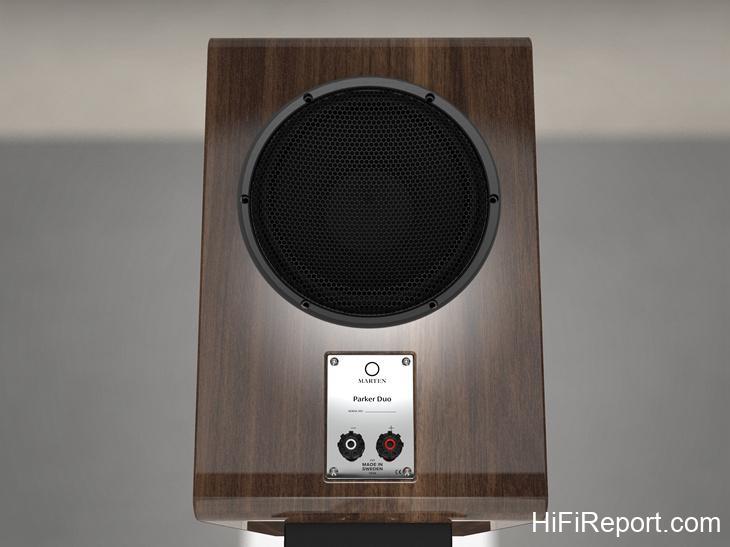
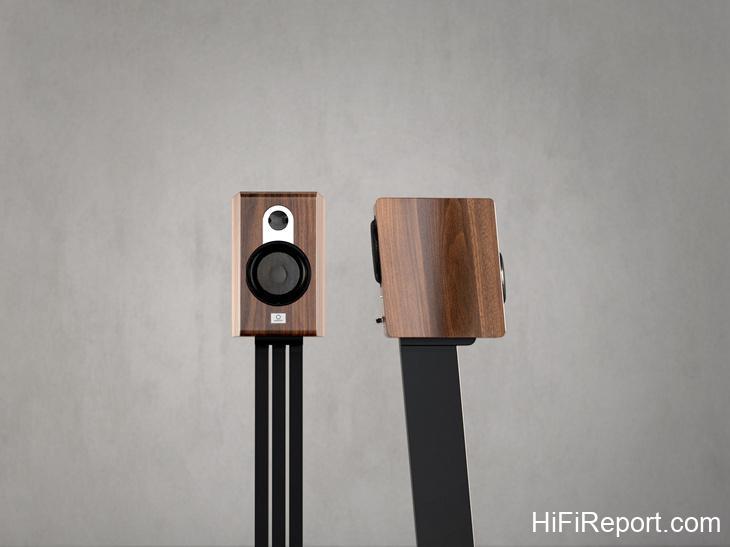
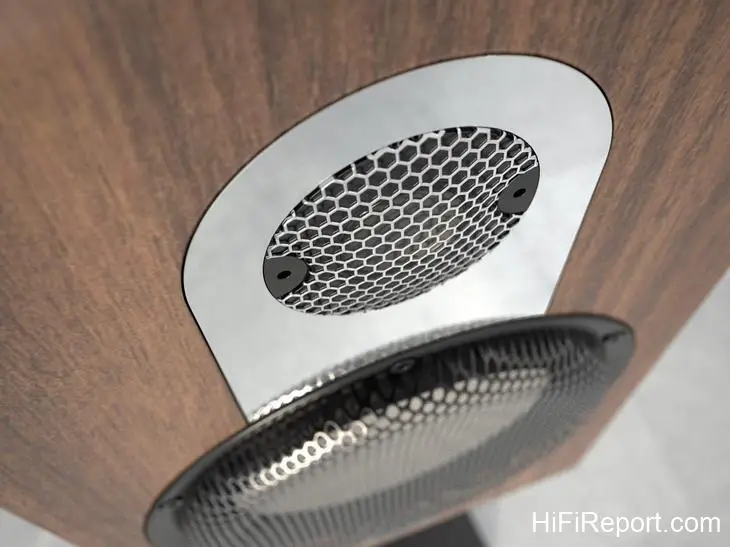
The Parker Duo features a 2-way, 2-driver structure per channel, equipped with a 7.5-inch ceramic diaphragm woofer and a 9-inch aluminum diaphragm passive radiator on the rear, which replaces the traditional bass reflex port. The passive radiator design typically offers better bass control, faster transients, and eliminates the port noise associated with bass reflex designs, but it doesn’t inherently increase bass quantity.
Frankly, looking at the overall design, there’s nothing that immediately suggests a capacity for such prodigious bass.
Let’s examine the cabinet design. The Parker series cabinets are unique, featuring a narrow baffle and a wide back panel, the opposite of traditional teardrop or lute-shaped enclosures. This design does gain some internal volume, and the Parker Duo’s cabinet is indeed somewhat larger than typical bookshelf speakers. However, it’s by no means larger than a floorstander. Clearly, the cabinet size alone is not the primary reason for the Parker Duo’s astonishing bass output.
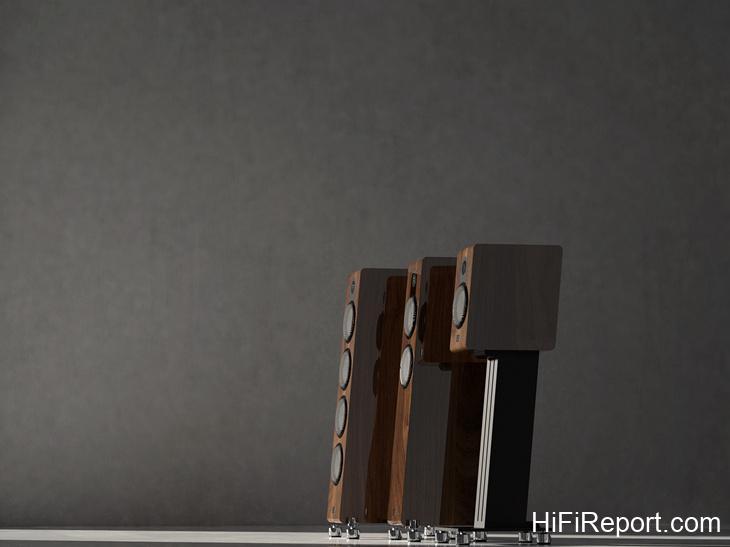
This puzzle left me scratching my head. How exactly does the Parker Duo overcome the physical limitations of a bookshelf speaker? No matter how much I looked, I couldn’t find a definitive answer. In the end, I can only conclude that the Parker Duo’s extraordinary bass performance is the result of all design elements aligning perfectly, every condition precisely converging at the most harmonious and perfect point. This is the magical realm it manages to achieve.
As I write this, I must also tell you that the Parker Duo isn’t just impressive in the bass; its sound quality is breathtakingly beautiful. That kind of incredibly refined and smooth, utterly rounded and fluid sonic texture seems to instantly transform the air in the listening room, making it feel incredibly fresh and natural. Just inhaling this air makes you feel refreshed, invigorated, and filled with immense happiness and pleasure, making you want to keep listening endlessly.
The blissful feeling the editor-in-chief described as “constantly secreting endorphins” must surely be this very sensation!
Design Secrets Revealed
So, what exactly did the Parker Duo get right? Let me delve deeper into the analysis. First, let’s talk about the driver configuration. The Parker Duo’s woofer has a diameter of 7.5 inches. In my experience, this is pretty much the largest size a woofer can be in a 2-way, 2-driver setup. If the driver were any larger, the transition with the 1-inch tweeter would be extremely difficult to manage properly.
If the size were reduced, the amount of air moved would decrease, failing to reach the bass potential of a 2-way, 2-driver system. Simply put, the 7.5-inch driver size was a carefully calculated decision, not merely a simplification from their larger floorstanding models.
Next, consider the Parker Duo’s passive radiator design. Typically, speakers employing this design use a passive radiator of the same size as the active woofer. However, the Parker Duo’s passive radiator is one size larger than the woofer. Similar approaches are found in Marten’s top-tier flagship Supreme 2 and Momento 2 speakers.
While theoretically, a passive radiator design doesn’t necessarily produce more bass quantity than a bass reflex structure, could the specific size pairing and damping tuning of the passive radiator in the Parker Duo be the secret recipe for its incredible bass performance? I wouldn’t rule out that possibility.
I suddenly recalled the Sonus Faber Extrema, a classic bookshelf speaker that caused a sensation back in the day, which also used a passive radiator design to achieve astonishing bass presence. Isn’t that another special case? The difference is, the Extrema was notoriously difficult to drive, whereas the Parker Duo is not difficult to drive at all. I’ll discuss amplifier matching in more detail later.
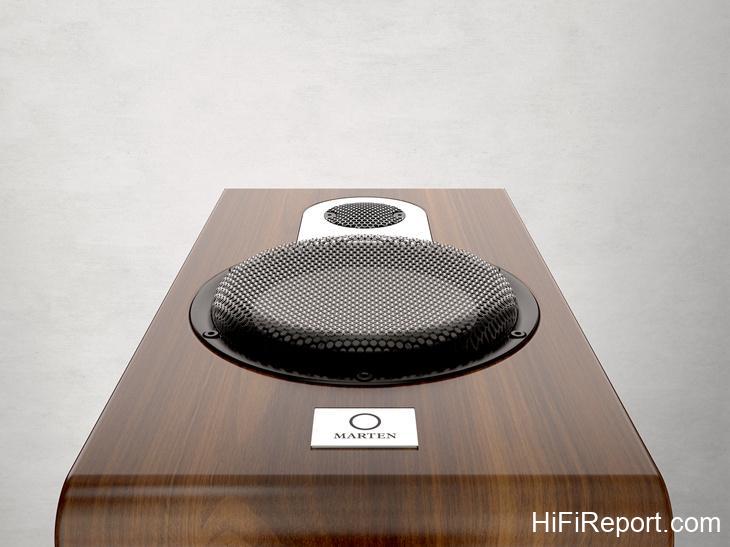
Let’s revisit the Parker Duo’s cabinet. We’ve already discussed its volume, but we must also consider the impact of cabinet coloration. The Parker Duo’s cabinet is constructed from a special multi-layer plywood, which the manufacturer calls M-Board. The cabinet structure is incredibly solid, and Marten claims it approaches a “resonance-free” state.
Furthermore, viewed from the side, the cabinet has a parallelogram shape with the baffle leaning backward. Viewed from the top, the side panels are also non-parallel, a design that helps disperse internal standing waves and further reduces coloration and distortion.
It’s worth noting that the front-narrow, rear-wide shape of the Parker series isn’t an entirely new concept; it’s a cabinet style previously adopted in their Coltrane and Mingus flagship series. The difference is that the side panels of the Coltrane and Mingus are curved, while the Parker series uses clean, straight lines, which visually emphasizes this unique shape even more.
Finally, let’s look at the Parker Duo’s crossover network. After studying Marten’s entire product line, I’ve found that the newly introduced Parker series sits at a unique turning point. The Coltrane and Mingus series, which are higher in tier than the Parker, all use first-order crossovers. The Oscar, Heritage, and Django series, which are below the Parker, all use second-order crossovers.
Regardless of whether it’s first or second-order, Marten specifically emphasizes that only low-order crossover architectures can avoid restricting musical dynamics and detail expression.
If you’ve actually seen a Marten crossover, you’ll also notice that what they call a low-order crossover doesn’t equate to a minimalist circuit. Even for a first-order crossover, the number and arrangement of components are quite substantial, indicating that the crossover circuitry likely contains undisclosed complexities.
You must be curious: which crossover architecture does the Parker series, positioned at this pivotal point in the lineup, employ? The answer is neither first nor second-order, but a unique “Multi diverse order” architecture. The official documentation doesn’t detail the technical specifics but specifically highlights that this brand-new crossover network significantly reduces power consumption from the amplifier.
The more effectively amplifier power is utilized, the better the amplifier’s control over the drivers, and the more likely it is to exhibit performance beyond typical limits, especially in the bass.
Returning to the driver combination, Marten has traditionally used Accuton drivers from Germany. However, the Parker series uses specially customized drivers developed in collaboration with Accuton. Why the custom design? Because using off-the-shelf drivers makes it difficult to precisely control the matching characteristics between drivers. Only with custom drivers can the specifications and characteristics be fully controlled, ensuring the tweeter and woofer achieve optimal inherent matching.
This, in turn, allows the crossover to use the simplest possible architecture, significantly reducing energy loss and maximizing musical dynamics.
Do you see the design secrets of the Parker Duo now? The Parker Duo’s design architecture is the result of a perfect integration of cabinet structure, driver combination, custom drivers, and a unique crossover architecture. This is what I meant earlier when I said all design elements were precisely aligned at the optimal state. If any single element were slightly off, the entire state of balance could potentially collapse.
Among the speakers I’ve auditioned, speakers capable of achieving this exquisite balance are exceedingly rare. Even within Marten’s own lineup, the Parker Duo is a unique and special case.
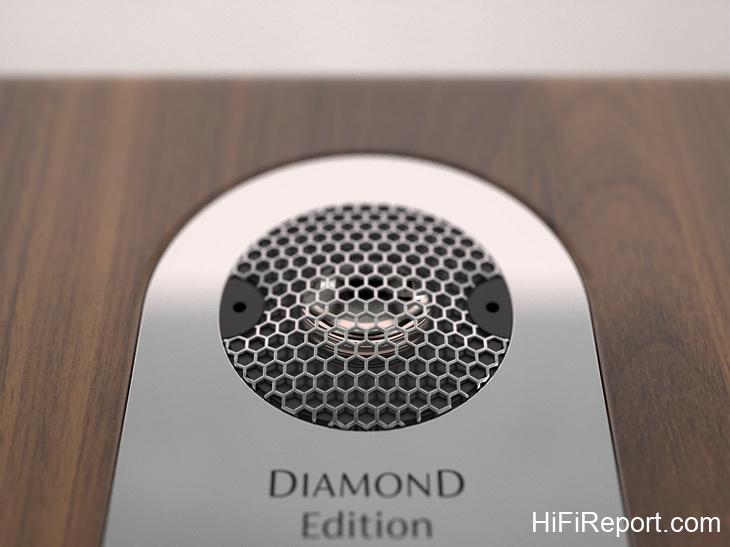
I’m curious about the diamond tweeter version of the Parker Duo. After changing the tweeter and crossover components, will the already perfectly balanced sound quality perhaps lose its magic? Or will Marten manage to find the balance point once again? Before I get a chance to hear the diamond tweeter version, I’m inclined not to alter any design aspect of the standard Parker Duo. After all, achieving this exquisite balance is more valuable than simply using the best possible components.
Of course, another reason is that the performance of the Parker Duo already completely satisfies me, and the diamond tweeter version is considerably more expensive. Unless the latter’s performance significantly surpasses the standard version I reviewed, the standard Parker Duo is definitely the most cost-effective choice.
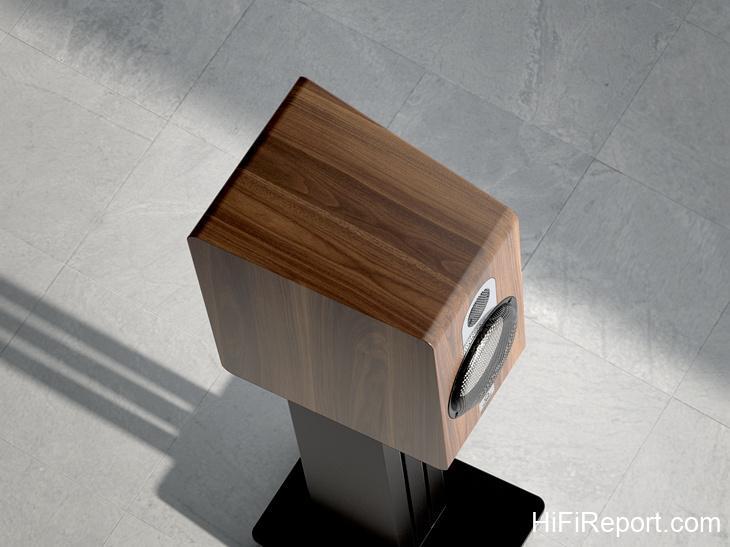
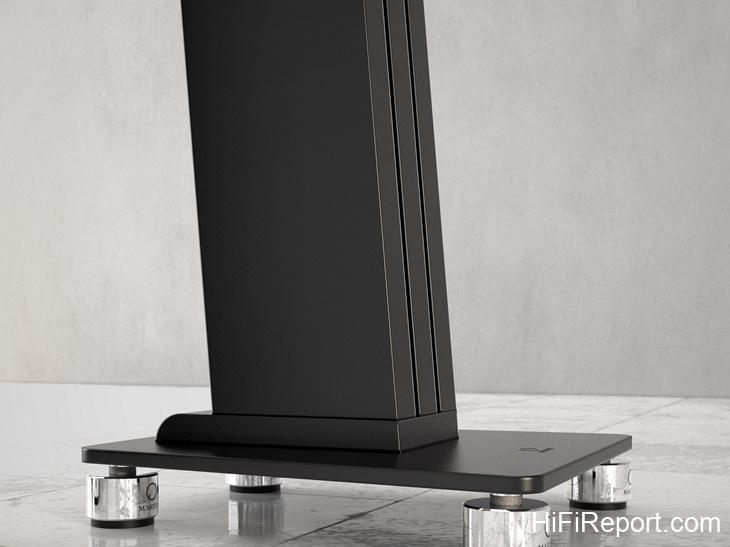
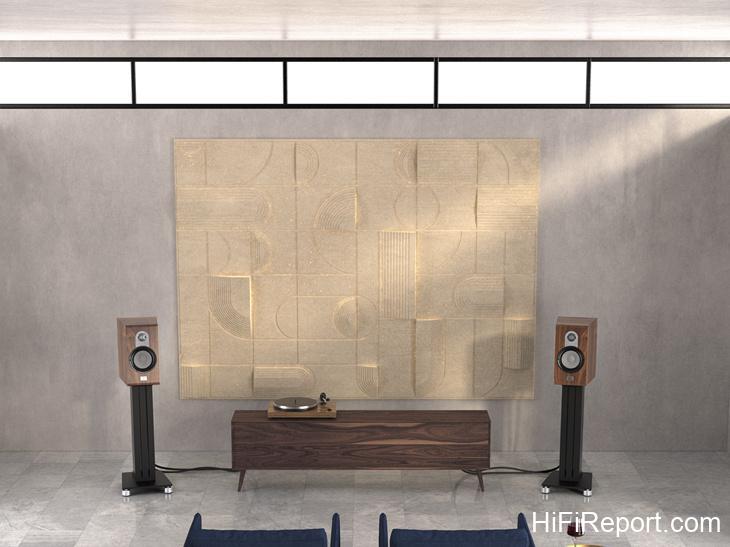
Oh, and the Parker Duo’s dedicated stands also contributed to the excellent sound performance I experienced. These stands are not only sturdy but also visually match the Parker Duo perfectly. The base plate of the stand is made of heavy steel, lowering the speaker’s center of gravity for greater stability. The key feature is the four isolation feet beneath the base plate, developed by Marten in collaboration with the professional audio isolation company IsoAcoustics.
Their construction consists of solid metal posts with a special damping material forming a soft absorption structure.
IsoAcoustics also offers similar products themselves, which are highly regarded by many enthusiasts. What’s the difference between the feet custom-designed by IsoAcoustics for the Parker Duo and their standard products? The key lies in the phrase “custom-designed.” For damping to be most effective, the hardness of the damping material and the weight it supports must be properly matched.
Standard products are general purpose, while only custom-designed products can be perfectly matched to specific equipment or speakers. The Parker Duo’s dedicated stands are not inexpensive, but if you want to fully unleash the Parker Duo’s potential, these stands are likely the final key to unlocking its capabilities.
Listening Impressions
Moving on to the actual listening impressions, let’s first discuss amplifier matching. How easy is the Parker Duo to drive? Driving them with the 50-watt Moonriver integrated amplifier, I found there were indeed limitations at extremely high volume levels. However, within a reasonable volume range, even when playing large-scale or bass-heavy music, the sound performance was neither suppressed nor constrained. Based on this, I believe the Marten is relatively easy to drive.
It’s worth noting that when paired with the 50-watt Huafeng OSA-88-1BV MK3 tube amplifier, while the string shimmer was the most beautiful among all pairings, there were limitations in driving power. This suggests that driving the Parker Duo with a solid-state amplifier might allow it to fully showcase its capabilities. As for matching sonic characteristics, there’s no need to worry.
No matter which amplifier I paired it with, the Parker Duo’s sound was consistently pleasing, with only differences in overall sonic direction.
With limited space remaining, I can only highlight the key sonic characteristics:
1. Playing “Angels & Demons,” the lower bass frequencies were utterly robust, and the sense of bass scale far exceeded that of typical bookshelf speakers. 2. The bass energy was not only inexhaustible, but also had clear layers, was fast in attack and decay, and the sound quality was particularly round, full, and elastic. Anyone who hears it will know this is the most captivating bass characteristic. 3.
The Parker Duo could not only project a vast presence, but also maintained balanced and elastic bass even at low volumes, a very rare quality. 4. The bass extension capability was incredibly deep, possibly even lower than the manufacturer’s specification of 36Hz, reaching floorstanding speaker levels. 5. Even at high volume playback, the sound quality remained unstressed, possessing the relaxed quality typically found only in large speakers. 6.
Even when playing recordings with a somewhat hard sonic quality, it could reduce harshness and present a pure and soft aspect. 7. It could fully reveal the most subtle spatial reverberations in a recording, indicating excellent treble resolution and extension. 8. Vocals in the midrange were round, natural, and fluid, remaining effortless even at the highest peaks.
The portrayal of vocal vibrato at the end of phrases was particularly rich and detailed, a characteristic found only in the most high-end speakers. 9. Male vocals in the midrange had high density and fullness in the chest resonance, possessing a deeply magnetic charm. 10. The high-frequency extension of the piano was extremely pure and refined, capable of fully extending into the quietest silence. 11.
The impact of the piano’s bass notes was solid and powerful, with no hesitation in the attack and decay of the keys. And the 50-watt Moonriver integrated amplifier was sufficient to achieve this performance. If you don’t believe me, listen to Gilels’s performance of Beethoven’s “Eroica Variations” and you’ll hear the truth.
Finally, I must say that the astonishing performance of the Parker Duo is not merely the result of top-tier components, scientific calculations, and careful tuning. Finding that exquisite balance where all elements fall perfectly into place sometimes requires a bit of serendipity, a touch of luck, and perhaps a little divine blessing. I’m not suggesting the Parker Duo is a product of chance design.
What I mean is that human capability has its limits, and the Parker Duo’s performance surpasses what human reason can fully comprehend. Believe me, this is my deepest realization after fifteen years of reviewing audio equipment. This kind of beautiful sonic quality, born from an exquisite design balance, is something your brain instantly recognizes as “the right sound” the moment you hear it.
Without question, a design that captures this perfect balance can become an irreplaceable Holy Grail in the history of Hi-End audio. The Parker Duo is just such a miraculous creation, chosen by God, born to convey the beauty of music – an apostle of the divine.
More Impressions
Listening to the latest Marten Parker Duo bookshelf speakers this time, we really did pair them with the best amplifiers we could find in the office, one by one. And these speakers did not disappoint.
Besides brilliantly reproducing the abundant bass energy and dynamic range that a speaker with sufficient cabinet volume can instantly deliver, fully rivaling medium-sized floorstanding speakers, what truly astonished me was how the ceramic diaphragm, long considered Marten’s signature, once again showcased a tonal beauty different from other metal diaphragms. This allowed me to revisit the days when the Marten Django XL floorstanding speakers were a long-term reference in the office.
How does the sound of ceramic diaphragms differ from other materials? Listening to Daniel Lozakovich’s album “Bach Violin Concertos” immediately provided the answer. The violin sound I heard was not only of a high standard in purity and transparency, but the tone rendered by the ceramic diaphragm carried a uniquely sweet and fresh texture.
That subtle hint of moisture, as if inherently possessing a delicate transparency, allowed the musician’s most subtle bow string vibrations to be presented in the most aesthetically pleasing manner. Listening to Daniel Lozakovich play the Bach violin concertos, I was drawn more than once to the beautiful tonal quality when multiple string instruments played together. This alone demonstrates the beauty of music reproduction possible with ceramic diaphragms.
Furthermore, the bass performance of these speakers also surprised me greatly. By employing a passive radiator unit, which is less common in the market, they can produce bass extending far lower than typical bookshelf speakers, down to 36Hz. Moreover, the resulting bass exhibits a relatively unique transparency. The bass notes have a tighter elasticity, making it perfect for reproducing electronic or pop music.
Listening to Troye Sivan’s latest single “Angel Baby,” the vocal tone had a fresher, youthful quality. More importantly, the electronic bass in the song lacked any hard texture; it was more like a soft, dense air mass hitting you. Originating from the speakers, it slowly expanded outwards, layer by layer, dissolving into the listening space, creating a sense of space and bass quality that was superior to many floorstanding speakers I have heard in the office in the past.
We in the editorial department are quite familiar with Marten speakers, as a pair of large Django XL floorstanders served as reference speakers in the office for a considerable time, and we tried nearly every possible pairing. This collective audition of the Parker Duo resulted in a shared sentiment among multiple editors: “We really want to keep these as a reference again!” Given that response, readers should easily sense our enthusiasm for their sound performance, right?
The Parker Duo’s sound possesses the presence of large speakers. Marten’s tuning of the ceramic drivers has reached new heights; I believe the sound is now more refined. While the three frequency ranges are extremely balanced, the bass extension and presence are absolutely captivating highlights. Playing the movie soundtrack “Miracle,” on the track “Last Train,” the overall envelope of the rock band was excellent.
Although the band, Guldgossen, is in a light rock style, these speakers could fill our entire listening space with the rhythm created by the electric bass, conveying both infectivity and warmth. And the slight metallic texture of the electric guitar during the mid-section solo was also perfectly rendered, just right. Regarding vocals on this track, you can further appreciate the lead singer’s skill.
Especially given the excellent recording quality of this album, combined with the system’s extremely low noise floor and utterly black background, many times I didn’t feel like I was playing a CD at all. That vivid, tangible form of the lead singer simply emerged from the completely black background, allowing one to fully enjoy an intimate, one-on-one dialogue between the band and the listener. These bookshelf speakers are truly among the absolute top-tier bookshelf designs I have ever heard.
I also commend Marten’s skill in speaker manufacturing; they have truly elevated their craft to a new peak!
Design Aesthetics and Performance
Since it carries over the design language of the Oscar series, visually it’s easy to perceive it as an upgraded version of the Oscar series. However, upon hearing the Parker Duo perform, I realized the sound is on a completely different level compared to my impression of the Oscar series, with only the exterior sharing the same aesthetic concept.
What’s most impressive about the Parker Duo isn’t the exquisite tone of the ceramic drivers, but rather its outstanding acoustic performance. The Parker Duo’s soundstage imaging is particularly precise; vocal mouth size is almost indistinguishable from a real mouth, and the imaging is three-dimensional, making you feel there is space both front and back. The location of the guitar plucks subtly changes with pitch. Naturally, clearly separating each piano key strike is effortless.
The performance in the mid-bass is also incredibly impressive. While the depth of extension remains within the realm of bookshelf speakers, the effortless looseness, combined with the massive soundstage scale, is entirely characteristic of large-diameter floorstanding speakers. Listening to Sonny Rollins’ “Way Out West,” the saxophone produced a relaxed puffing sound, somewhat resembling the sound heard through large-diameter horns.
However, switching to heavy metal, Metallica’s “Through The Never,” the drum beats rained down like machine gun fire, yet my ears could capture every single energy-laden strike. Despite the explosive power, it felt clear and unburdened. The aggressive vocals didn’t feel fatiguing or stressful, indicating that the Parker Duo maintained extremely low distortion at this time. Surprisingly, the treble was different from what I expected.
It remained pure and fluid with excellent control, but lacked the distinct tonality I previously associated with ceramic tweeters. Although possessing a consistent Scandinavian exterior, the Parker Duo is undoubtedly a performance-oriented speaker through and through.
Specifications
* Type: 2-way, 2-driver passive radiator bookshelf speaker
* Introduced: 2020
* Drivers:
* 1-inch ceramic diaphragm tweeter × 1
* 7.5-inch ceramic diaphragm woofer × 1
* 9-inch aluminum diaphragm passive radiator × 1
* Frequency Response: 36Hz-40kHz (±2dB)
* Power Handling: 200 Watts
* Sensitivity: 88dB/1m/2.83V
* Nominal Impedance: 6 Ohms (minimum 3.1 Ohms)
* Crossover Point: 2.2kHz
* Dimensions (WHD): 220-280 × 420 × 360mm
* Weight: 21 kg (approximately 46.3 lbs)
Key Features
* Custom-designed 7.5-inch ceramic diaphragm woofer, optimized for best matching with the ceramic diaphragm tweeter. * Cabinet constructed from M-Board multi-layer plywood, approaching resonance-free and coloration-free status. * New “Multi diverse order” crossover architecture, significantly reducing power consumption from the amplifier. * Vast bass presence that surpasses the physical limitations of bookshelf speakers, approaching that of floorstanding speakers.
* Extremely refined and smooth, utterly rounded and fluid sound quality.