MBL C41 Digital Streaming DAC Review
MBL’s Cadenza C41 Digital Streaming DAC marks their inaugural venture into streaming hardware, yet it arrives with a resounding impact! While the digital streaming DAC market has evolved over more than a decade, transforming from a relatively uncompetitive blue ocean into a fiercely contested red ocean, how does the C41, appearing so late in the game, manage to carve out its own unique niche? Rest assured, MBL certainly has some tricks up its sleeve!
Five-Year Development
I recall asking MBL’s Chief Engineer, Jurgen Reis, at the 2018 Munich High End show why MBL had yet to introduce a digital streaming player or DAC. Jurgen explained that development was well underway, but certain technical challenges remained to be resolved. It wasn’t until 2023 that the C41, their first digital streaming DAC, finally made its debut—a five-year wait that underscores MBL’s meticulous approach.
Upon receiving the C41, I eagerly connected it to the HiFiReport reference system, featuring the EAR 868P preamplifier, 509 MK II power amplifier, and Wilson Audio Alexia V loudspeakers. Listening to Anne-Sophie Mutter’s rendition of “Hedwig’s Theme” from Harry Potter, the ethereal tinkling of the celesta floated delicately at the back of the soundstage. The subtle nuances of the violin, combined with the expansive orchestral accompaniment, revealed the C41’s remarkably natural timbre—truly an analog-like essence!
Instantly Captivating Performance
During its inaugural listen, Xiao Cai, who was coincidentally organizing camera lenses in the listening room, noticed that I seemed instantly captivated by the new C41. I found myself wondering, what magic had MBL infused into the C41 to make it sound so sublime? How could its mid-high frequencies be so effortlessly elegant and refined, while its low frequencies possessed such authority, delivering a beautiful dynamic contrast?
After just a brief audition, my lavish praise for the C41 prompted Xiao Cai to hastily interject, “Editor-in-Chief, exercise some restraint; don’t splurge unnecessarily.” Indeed, my colleague had immediately divined my intentions. Over the years, HiFiReport had invested significantly in equipment but had yet to settle on a premium digital streaming player. Now, with the C41 gracing our listening room, its initial vocalization—particularly its exquisite, refined timbre—was utterly captivating!
It’s no wonder that for so many years, audiophiles have been enamored with MBL. Many don’t just buy one component; they often assemble an entire MBL system, from loudspeakers to amplifiers and source components, for the ultimate experience! Although I couldn’t audition the C41 within a complete MBL setup, its noble, delicate, and analog-flavored sound quality was truly astonishing from the very first listen.
Cadenza: Entry to Hi-End
MBL’s current product lineup is clearly structured into three distinct tiers: “Good,” “Very Good,” and “Excellent.” The Cadenza Line serves as the excellent entry point to high-end audio, followed by the New Noble Line for advanced enthusiasts, with the Reference Line representing the pinnacle.
The Cadenza Line and New Noble Line share the closest relationship, both featuring corresponding products with similar naming conventions. For instance, the Cadenza Line’s C11 preamplifier has its counterpart in the New Noble Line’s N11; similarly, the C21 stereo power amplifier corresponds to the N21, and the C31 integrated amplifier to the N31. Therefore, encountering the C41 digital streaming DAC without an N41 counterpart strongly suggests that MBL’s next digital streaming DAC will indeed be the N41.
And yes, the N41 is currently under development. When I inquired with Chief R&D Engineer Jurgen Reis at the TAA International Hi-End Audio Show, he confirmed, with a slight hesitation, that the N41 is indeed in progress, though its release date remains unconfirmed. He added that the current C41 is already exceptionally good, implying that the N41’s development might require additional time. After all, if the N41 isn’t demonstrably superior to the C41, the C41 alone would be more than sufficient to lead the charge.
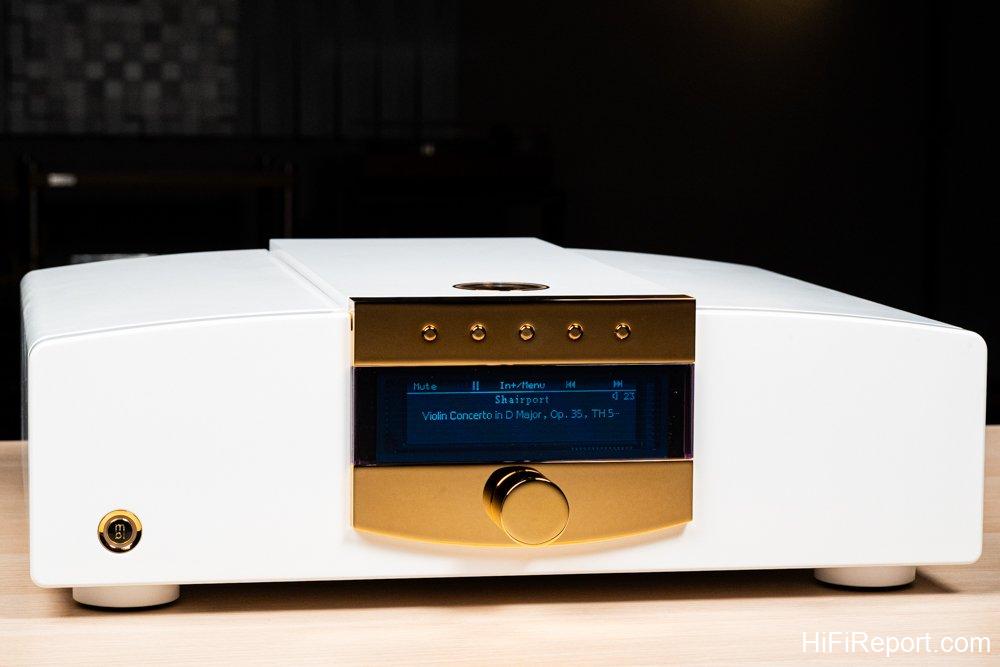
DAC: The Core Component
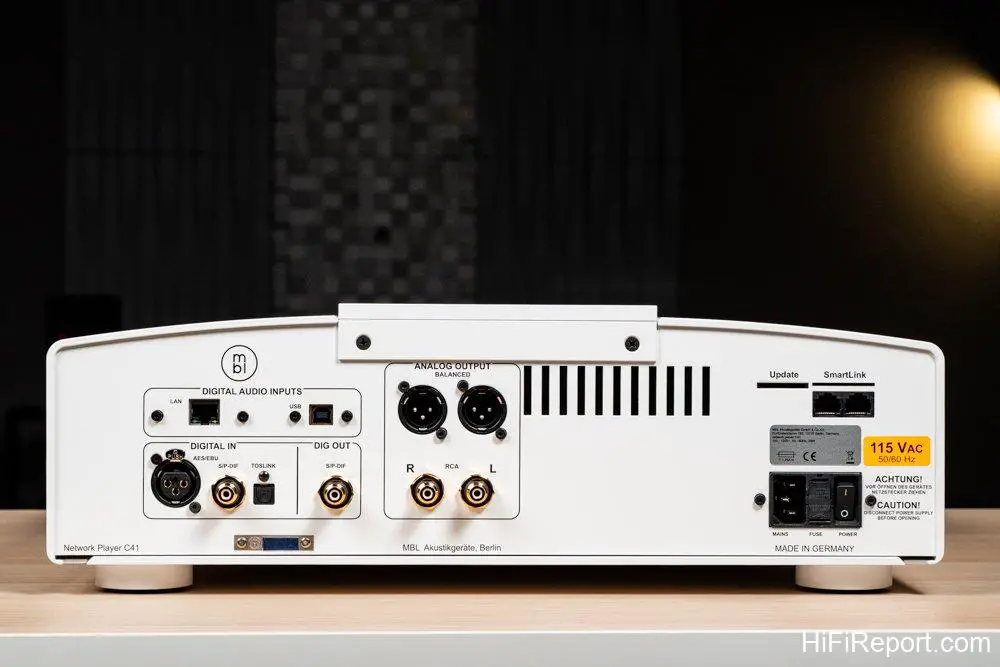
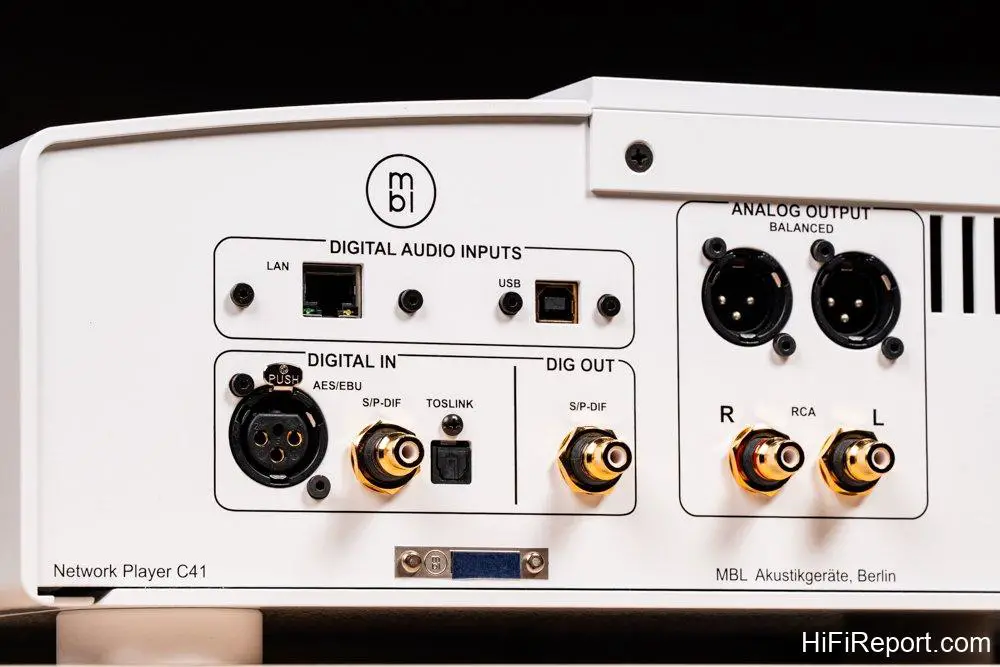
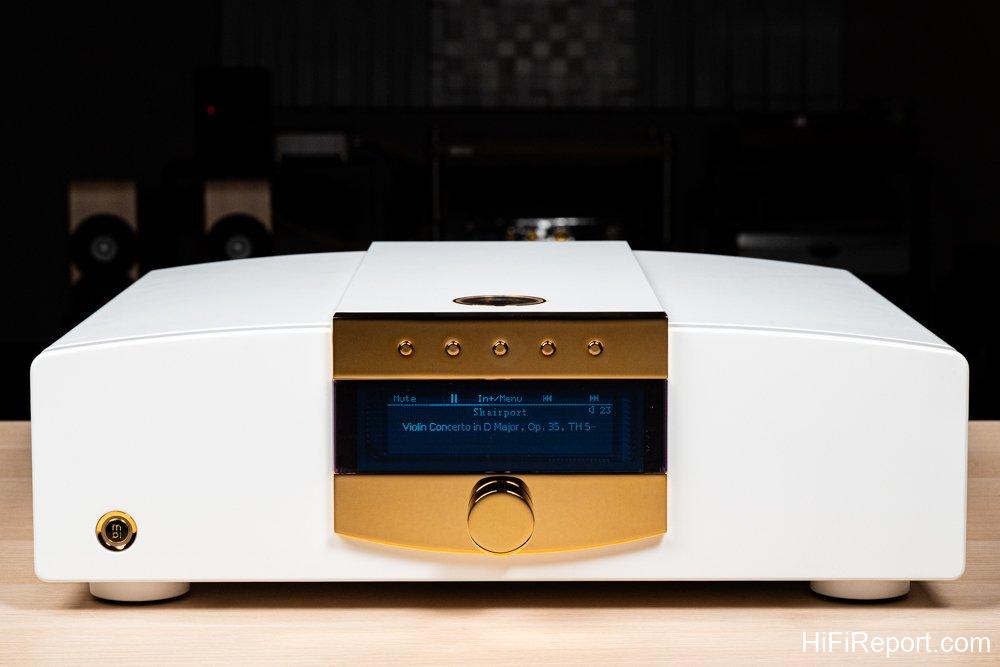
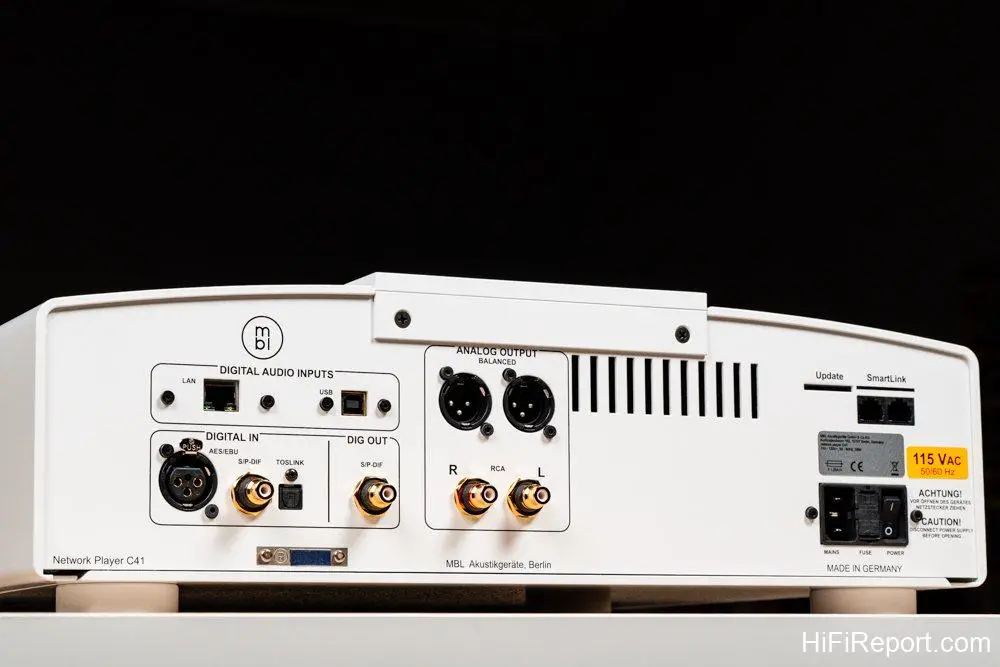
Across both the Noble Line and Cadenza Line, MBL has notably not released standalone DACs. Instead, they’ve integrated DAC functionality into their C31 and N31 CD players, which also offer digital inputs to cater to both physical CDs and digital sources. This philosophy largely extends to the C41; fundamentally, it is a high-quality DAC with added streaming capabilities. Consequently, you can connect to the network via an RJ45 cable or utilize traditional S/PDIF and USB inputs.
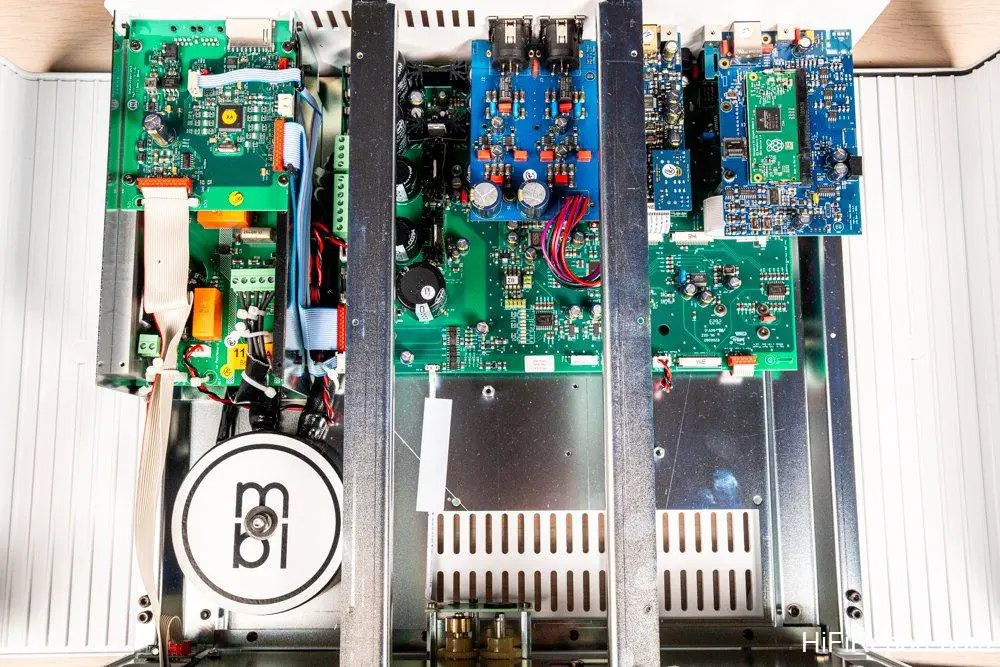
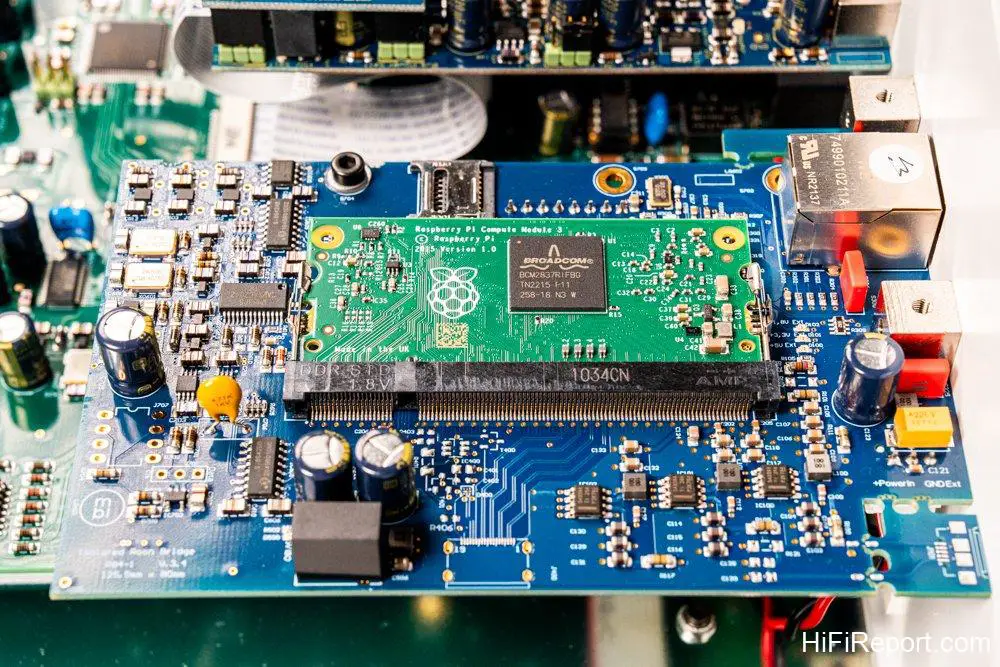
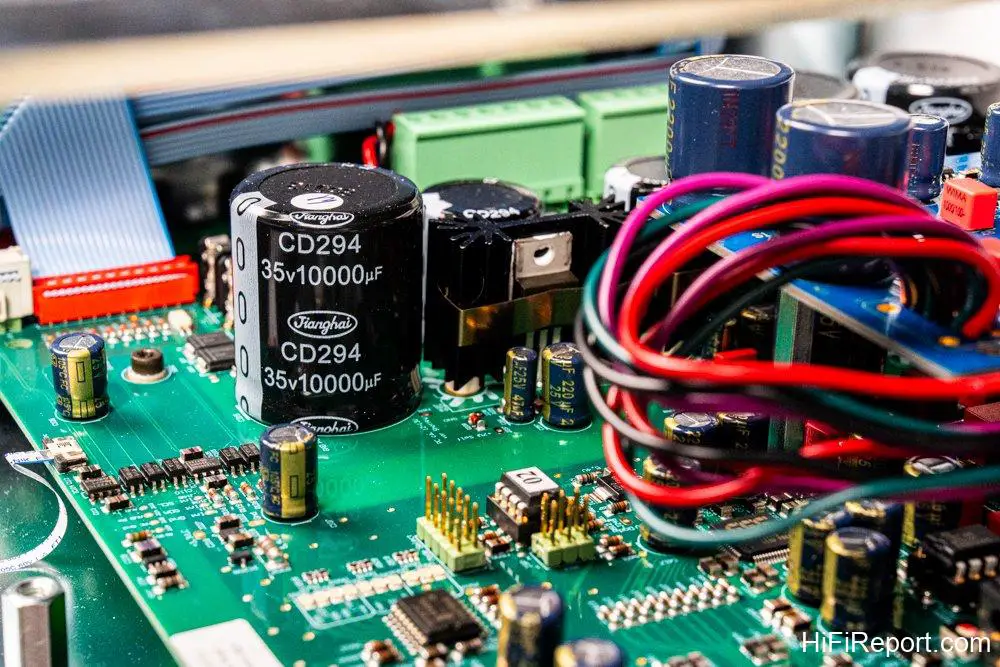
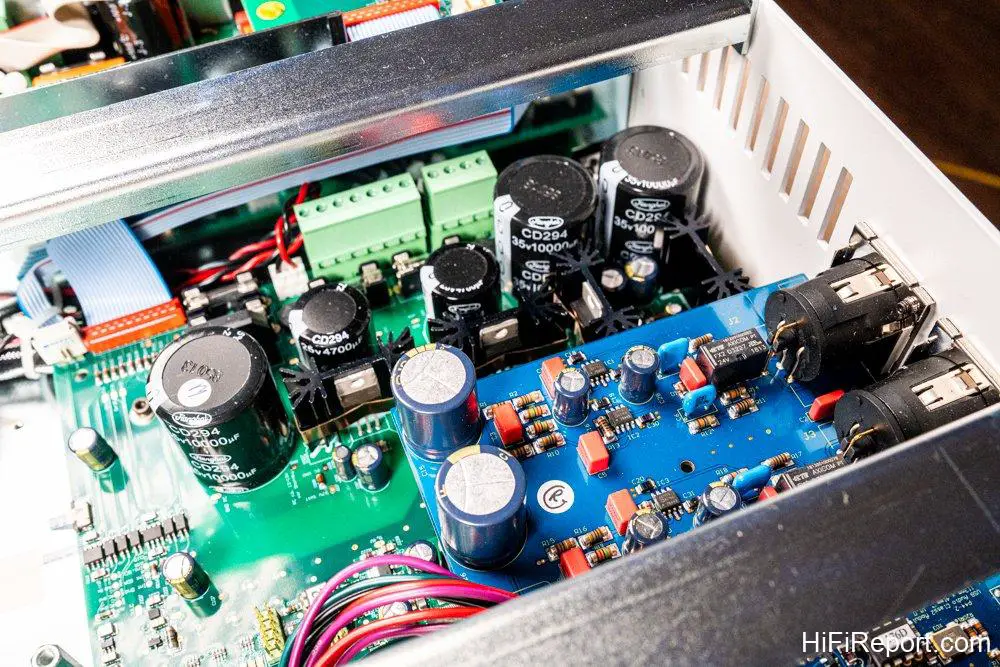
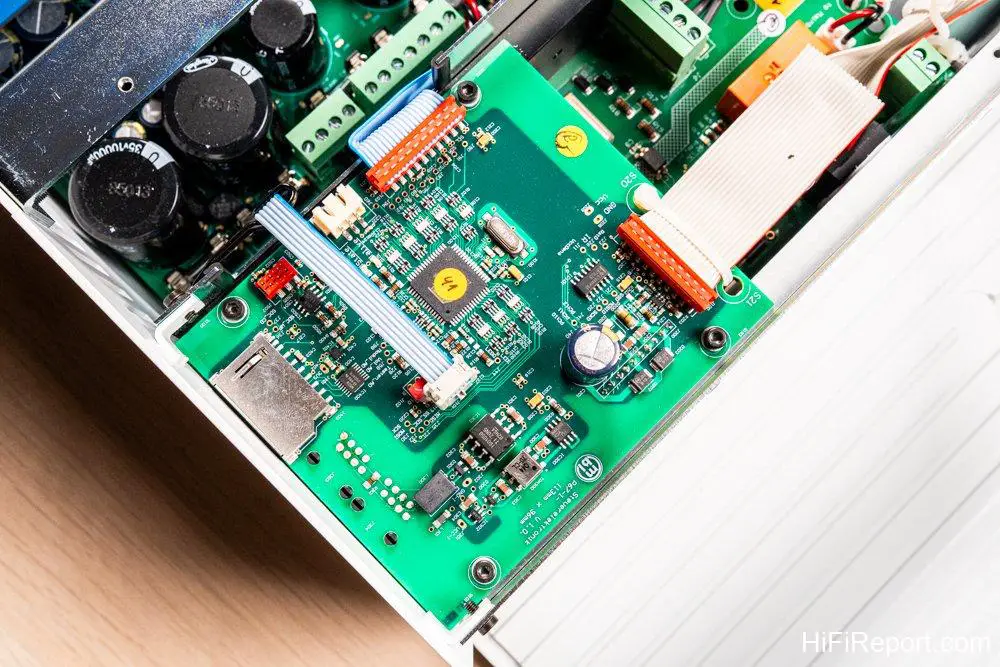
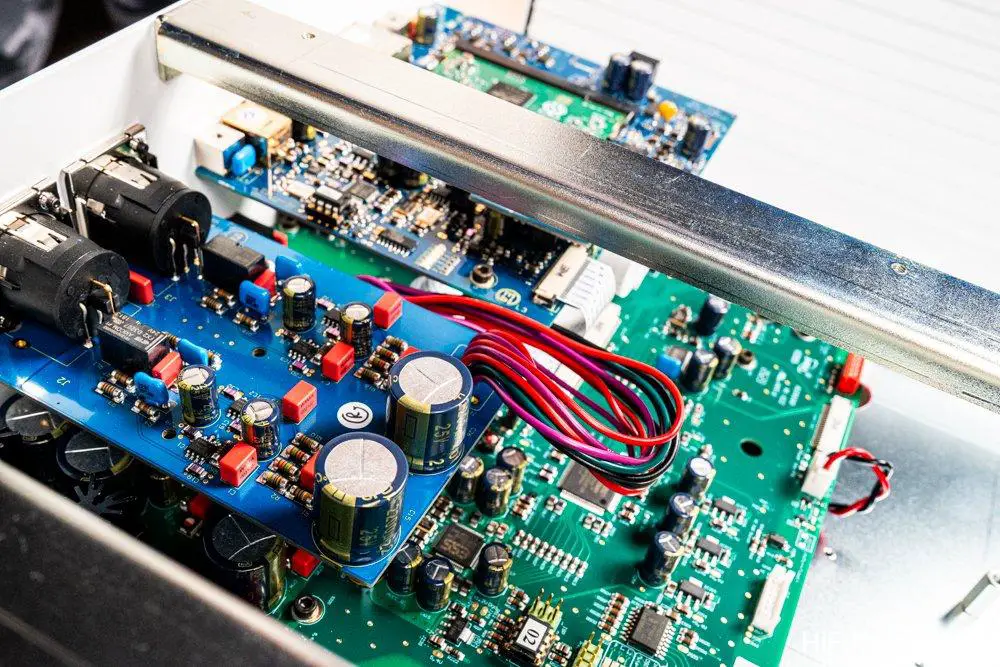
Therefore, the most crucial core of the C41 is its DAC. However, the added network streaming and USB input sections each reside on independent circuit boards, not sharing a common board with the DAC. The C41 employs a layered, three-dimensional architecture: the DAC occupies the bottom layer, while the upper layer is segmented into a Raspberry Pi network streaming board, a USB input board, an XLR analog output board, and the MBL SmartLink control interface. This meticulous separation ensures minimal interference.
From a functional perspective, it supports Roon, UPNP/DLNA, Audirvana, Airplay, Shairport, Tidal, Spotify, Qobuz, and more. Readers might find this list unremarkable, as these features are common even in digital streaming players costing a few thousand dollars. However, with the C41 priced over $11,500, acquiring it solely for these streaming functions would indeed be poor value.
True Peak and CVC Technologies
Here’s the crucial point: choosing the C41 Digital Streaming DAC hinges on MBL’s exclusive sound processing technologies, not merely its streaming features! What formidable additions has MBL bestowed upon the C41? There are two key innovations: “True Peak Technology” and the MBL Core Volume Control (CVC).
3 dB Headroom for Peak Clipping
Let’s first discuss “True Peak Technology.” The “Peak” here refers to the highest point of a sine wave. Theoretically, at the maximum digital volume of 0dBFS, this should correspond to the sine wave’s peak, and the DAC’s analog output should accurately reproduce it.
However, during the actual recording and mastering process, loudness is often deliberately exaggerated. This is because human hearing tends to perceive louder sounds as more pleasing and quieter sounds as less engaging. Consequently, recording studios continuously “boost” levels in post-production, enhancing perceived loudness. For a period, the record industry even experienced a “Loudness War,” where everyone aggressively maximized digital levels. The result was that when DACs attempted to reproduce this over-processed digital music, they couldn’t accurately recreate the excessively boosted loudness, leading to peak clipping distortion, known as “intersample overs.”
MBL identified this issue and implemented processing within the digital filter, providing an additional 3 dB of headroom during DAC decoding. This extra 3 dB buffer prevents clipping distortion for excessively loud peaks, ensuring the correct audio sine wave is restored.
CVC Volume Preserves Resolution
The second pivotal technology in the C41 is MBL Core Volume Control, or CVC volume control for short. Audiophiles are well aware that adjusting volume via a DAC’s internal digital volume control typically results in a loss of 1 bit of digital resolution for every 6 dB reduction. Since each bit represents approximately 6 dB of dynamic range, it’s generally recommended to use analog volume control rather than manipulating the DAC’s output, as digital volume attenuation diminishes bit resolution, effectively reducing dynamic range.
MBL, of course, understands that attenuating volume through a DAC’s internal control compromises bit resolution. Thus, they forged a different path: the C41’s CVC volume control bypasses any internal digital volume processing within the DAC. Instead, it adjusts the volume at the front-end power supply stage, ensuring that CVC volume adjustments have absolutely no impact on bit resolution.
CVC Replaces Preamplifier
During my interview at the TAA International Hi-End Audio Show, Chief Engineer Jurgen informed me that thanks to the CVC’s enhancement, the C41 can directly control a power amplifier, entirely bypassing the need for a preamplifier.
If you don’t require other analog inputs, the C41 can serve as a complete digital music hub, eliminating the need for a separate preamplifier. Its S/PDIF input supports traditional CD transports, USB allows connection to a computer or Roon Core, and the RJ45 network port facilitates various online music streaming platforms.
Tactile Controls, User-Friendly
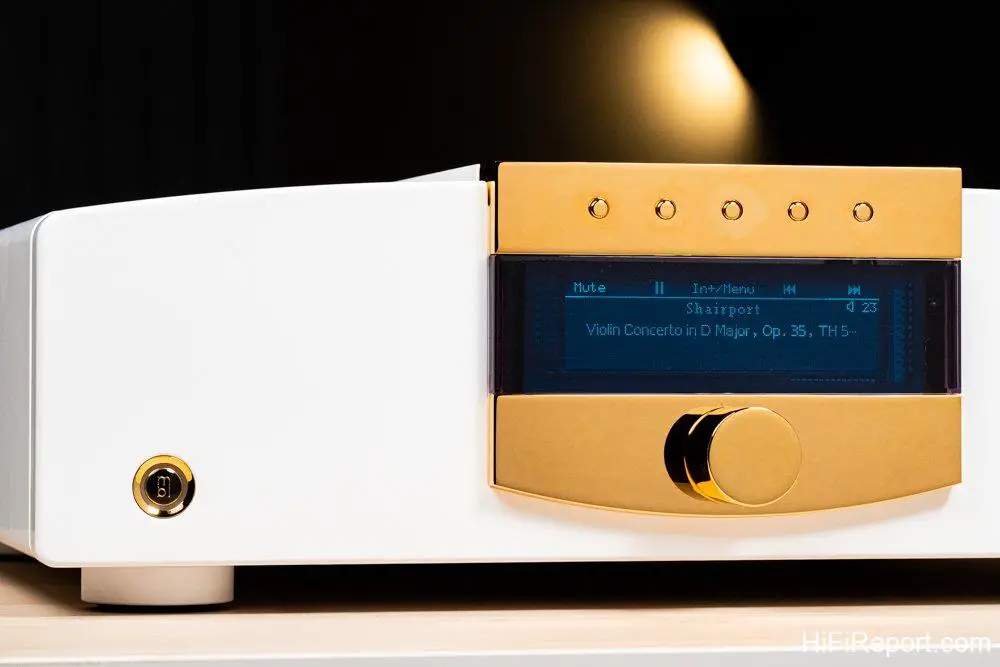
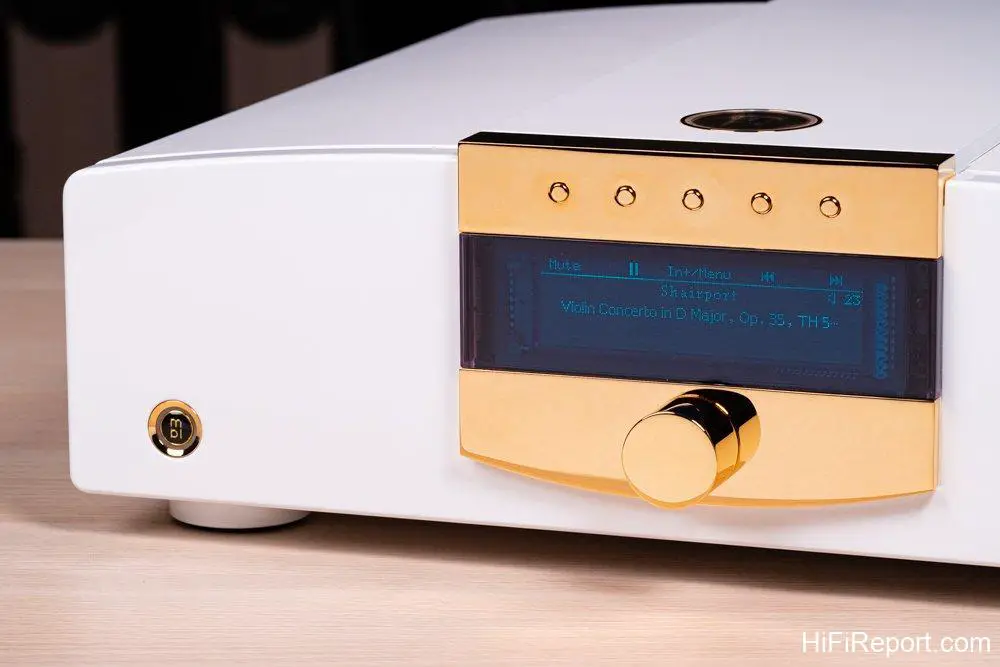
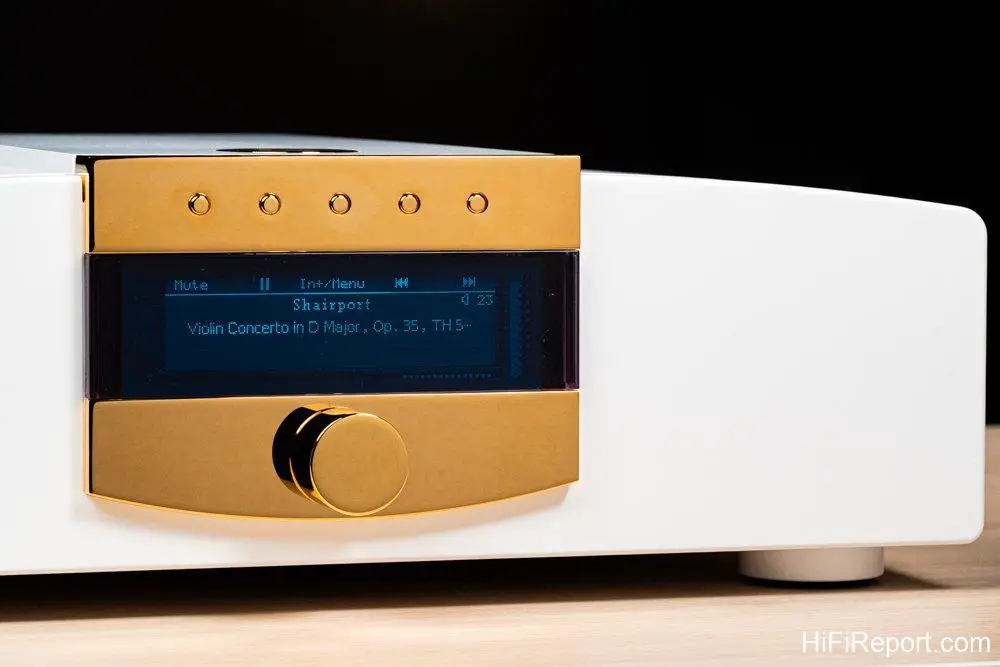
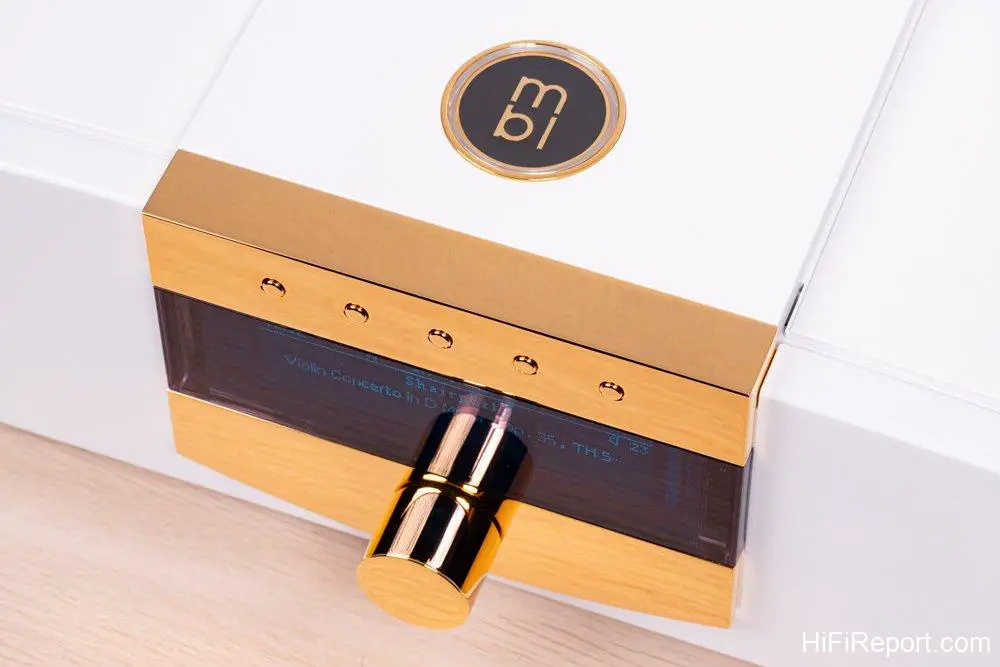
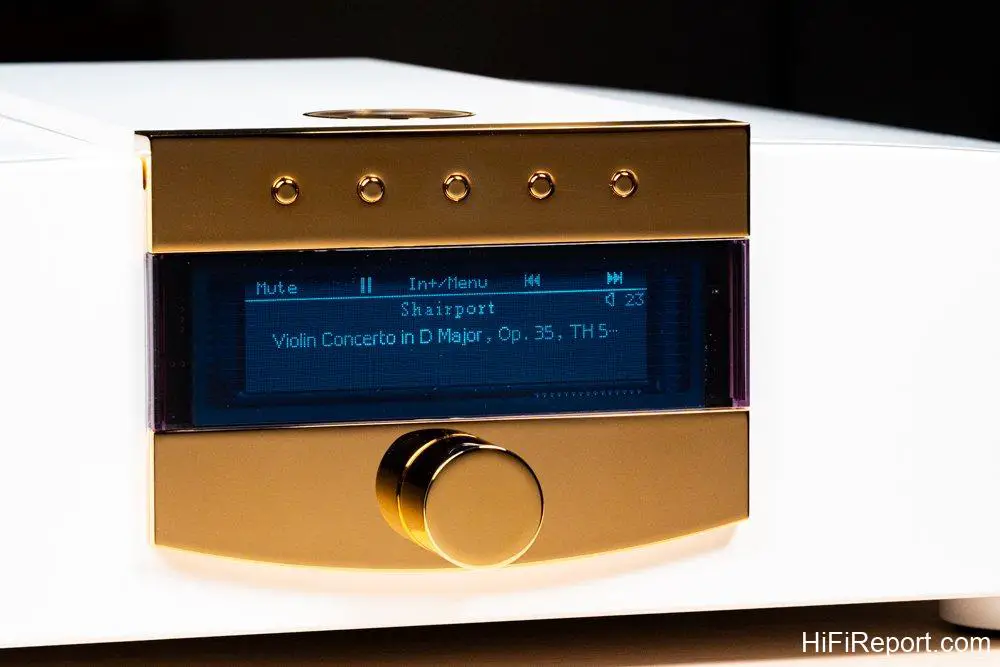
To facilitate seamless switching between various digital input interfaces, MBL has deliberately equipped the C41’s front panel with traditional selector buttons and a physical volume knob.
For me, as Editor-in-Chief and a seasoned audiophile, tactile buttons and a physical volume knob are far more intuitive than a touchscreen. Without buttons or knobs, it always feels like something essential is missing. The C41’s volume knob, in particular, has an excellent feel—truly a pleasure to use.
MBL SmartLink for Seamless Integration
With the benefit of MBL CVC volume control, the C41 can effectively function as a preamplifier. When connected to other MBL components via MBL SmartLink, the C41 can assume primary volume control. If the C41 is integrated with Roon, Roon will recognize it as a control device and link to its volume control. Crucially, the actual volume adjustment occurs through the CVC, preserving digital resolution without degradation.
However, if you’re not pairing the C41 with other MBL components or Roon, and instead using it with third-party pre/power amplifiers or integrated amplifiers, the manufacturer recommends setting the C41 to its maximum volume output.
Beyond the advantages of True Peak Technology and CVC volume control, the C41’s circuit layout is notably innovative. Its internal circuit boards are arranged in a three-dimensional configuration: the DAC occupies the lower layer, while the upper layer houses separate modules for the Raspberry Pi network input, XMOS USB input, XLR balanced analog output, and the MBL SmartLink board. This complete separation of circuits, each with its independent power supply, significantly minimizes potential interference that could arise from integrating them onto a single PCB. It also simplifies future maintenance and upgrades.
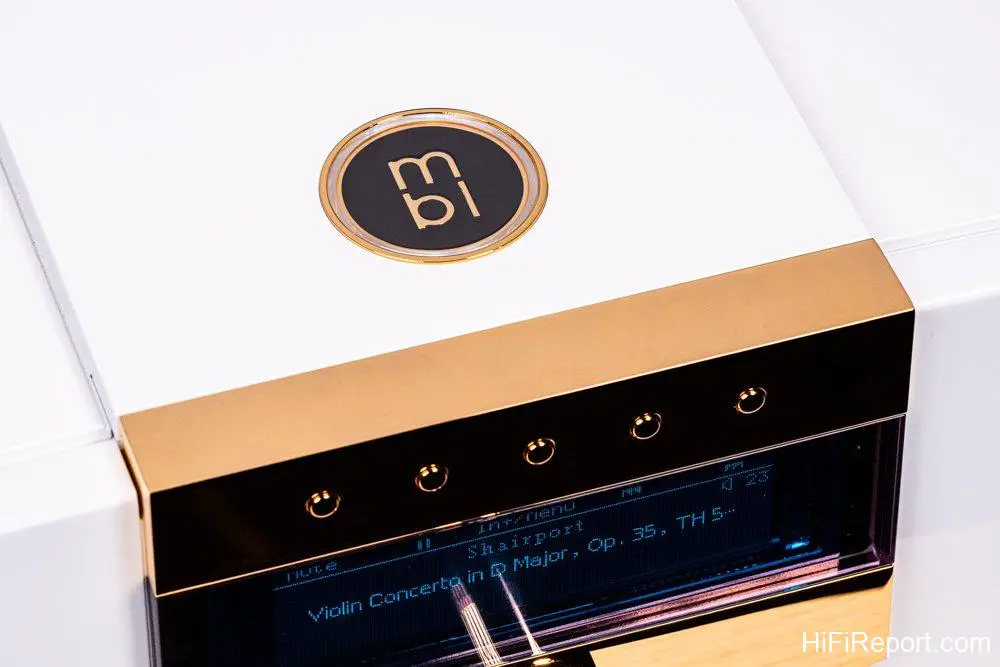
C41: Three-in-One Component
Having covered the technical intricacies, particularly the C41’s crucial True Peak Technology and CVC volume control, it’s time to delve into its sonic performance.
While this marks MBL’s debut digital streaming player, I perceive the C41 more as a “DAC preamplifier with streaming capabilities”—effectively three machines in one: a streamer, a DAC, and a preamplifier.
However, the C41 lacks analog inputs, limiting its compatibility to digital front ends. For vinyl enthusiasts, an additional analog preamplifier would still be necessary. Nevertheless, the C41 is perfectly capable of serving as a comprehensive digital music hub.
Exquisite Timbral Nobility
As for its timbre, MBL’s characteristic sense of nobility is utterly captivating from the first listen; I was instantly smitten the moment I connected it! The C41’s sound possesses a delightful richness and ample body, yet its mid-high frequency extension carries a comfortably natural, ethereal quality. This perfectly balanced tonal character is truly enchanting.
Taking for example Mutter and Previn’s collaboration on “Tango. Song and Dance,” a tango piece Previn composed specifically for Mutter, the large melodic leaps and intricate playing techniques are remarkably challenging. The violin’s dynamic range, moving between high and low notes with significant leaps, perfectly conveys the intense emotions of the tango. The C41 flawlessly rendered the violin’s timbral variations, stringing together fluid melodic lines while simultaneously extracting the emotional core of the tango. The accompanying piano notes, similarly infused with a modern freshness, were presented with distinct layering: the violin upfront, the piano behind. The subtle shifts in the violin’s intensity beautifully echoed the piano’s layered chords and notes, as if the two instruments were dancing a passionate tango.
“Tango, Song and Dance” is a thoroughly modern composition, characterized by its diverse melodic lines and innovative use of notes that extend beyond traditional tonality, making it a relatively challenging piece. This complexity truly tests a system’s ability to reproduce musical layering. The C41 is no ordinary feat; it breathes vibrant life into such demanding music. And to think, I was only streaming via Apple Music! That the C41 could perform so exquisitely, and as part of the “relatively entry-level” Cadenza series, is simply remarkable!
Moving Emotional Depth
The C41 not only unveils beautiful musical layers but also renders music with profound emotional depth. Listening to “I’ll Never Love Again,” the climactic song from the end of “A Star Is Born,” the piano chord introduction perfectly sets the melancholic mood for the ballad. Lady Gaga’s soft sigh and delicate breathing are rendered with striking realism by the C41. Once she begins to sing, her voice exudes such deep emotion, conveying the helplessness of separation and loss with “If I Could, I Could Have Said Goodbye…” The chorus, “Don’t Wanna Feel Another Touch,” encapsulates the sentiment perfectly: yes, the lover is gone, and there’s no desire to fall in love again.
I’ve heard this song on countless systems, but the C41 evoked a fresh emotional response. Particularly, Lady Gaga’s subtle vocal inflections with each repetition sounded so deeply heartfelt through the C41, drawing my emotions completely into the music. The interplay of the orchestra and electric guitar tones, perfectly complementing Lady Gaga’s passionate voice, brought “I’ll Never Love Again” to life in a way that truly touched my soul.
Exquisite Electric Guitar Tones
Similarly, when listening to EggPlantEgg’s cover of “Just Like Your Tenderness,” the C41 didn’t just reproduce the individual notes of the acoustic guitar’s arpeggiated intro; it vividly brought forth the resonant body of the acoustic guitar itself. Lead singer Ah-Bin’s voice, with its slightly husky and uniquely recognizable timbre, was rendered with a poignant melancholy by the C41, perfectly conveying the emotion in his singing.
After the original track’s initial cover, EggPlantEgg introduced a variation, crafting a fresh take on “Just Like Your Tenderness.” The addition of electric guitar, bass guitar, and drums expanded the band’s sonic stage. The C41 transformed the intimate guitar-and-vocal duet from a small soundstage into a full-blown rock band scenario. The chorus and delay effects of the electric guitar ornamentation created an even deeper sense of soundstage, with two guitars decorating the mix independently on the left and right before returning to the original chorus. The C41 presented a stunningly three-dimensional rock band stage. While I understand these effects are typically studio-engineered, the C41 reproduced them flawlessly, imbuing them with that extra touch of MBL’s signature timbral nobility.
Velvety Mid-Bass, Silken Mid-Highs
Frankly, when it comes to the reproduction of recording details or the delineation of a 3D soundstage, I find the C41’s performance to be exceptionally strong. However, at a price point exceeding $11,500, it faces considerable competition. Yet, if we speak of that distinctive MBL-esque timbral nobility, then the C41 truly stands in a class of its own.
If you are drawn to MBL’s signature blend of robust yet velvety mid-bass, coupled with naturally ethereal and silken-smooth mid-high frequencies, then, I apologize, MBL is genuinely unparalleled. The C41 inherits this analog-like sonic character, and once you fall in love with it, it’s quite simply unforgettable.
Rich, Not Austere
I’d like to reference John Williams’ 2023 live recording at Suntory Hall in Japan, specifically the film score “Schindler’s List.” The live recording’s 3D soundstage and spatial rendering are remarkable: the music emerges from the woodwinds deep within the soundstage, a slow movement gracefully supporting the mournful violin theme. Behind the main violin melody, the orchestral embellishments interweave, creating a rich tapestry. The C41 presented a wide and precise sense of acoustic space, performing admirably within its price bracket—it can certainly contend with other brands, though perhaps not always offering a clear advantage. However, that velvety, silken-lustrous nobility of tone from the C41 is truly captivating.
I want to emphasize that the C41 truly does not possess a light, watery, or insipid timbre. Instead, it offers a rich and transparently fragrant tonality. The violin’s sound carries a deep, viscous texture; in the lower and mid-registers, this richness conveys the full resonant body of the instrument. When the melody soars into the higher registers, it becomes even more poignant, the violin’s higher octave melodies radiating a comfortable brightness that intensifies the sorrowful theme. The C41 renders the passionate and melancholic violin with even greater emotional depth.
Grand Scale, Undiminished Power
Continuing with the same album, I selected the theme from “Raiders of the Lost Ark.” The brass and timpani immediately launched into the familiar melody, with the trumpet proclaiming the main theme—a stirring portrait of the intrepid Indiana Jones. The moment you hear this theme, you know Dr. Jones is about to appear. The C41 rendered the brass with a brilliant yet softly decaying sheen.
The strings then joined, expanding the orchestra’s grandeur. The interplay between brass and strings was flawlessly handled by the C41; the orchestra’s power, layering, and stage presence were all impeccably rendered. But it was that silken mid-high frequency luminescence that truly defined MBL’s unique and enchanting charm.
To Buy or Not to Buy?
As I write this, I, the Editor-in-Chief, am still wrestling with whether to acquire the C41 for our reference system. As a standalone digital streaming player, the C41 isn’t the most feature-rich or flashy option. However, considering its “three-in-one” capability—digital streamer, DAC, and digital preamplifier—the C41 is an ideal fit for HiFiReport to pair with other review equipment. Alas, this year the editorial department has already invested heavily in upgrading our reference audio gear, and the budget is simply insufficient!
Very well, I’ll continue my internal struggle. For now, I’ll try to keep the C41 around a bit longer. Perhaps I can somehow squeeze out the budget to welcome the first MBL component into our editorial department, adding that touch of MBL’s noble timbre to all our future equipment auditions.
Specifications
* **Type**: Digital Streaming DAC Preamplifier
* **Input Terminals**: S/PDIF RCA ×1, Toslink ×1, USB ×1, AES/EBU, MBL SmartLink 1.0 (RJ45)
* **Output Terminals**: RCA ×1, XLR ×1
* **Interconnection Terminals**: mbl Link ×2
* **Max Sampling Rate Support**: 24bits/192kHz, DSD64
* **Weight**: 15.5 kg