MBL System Review
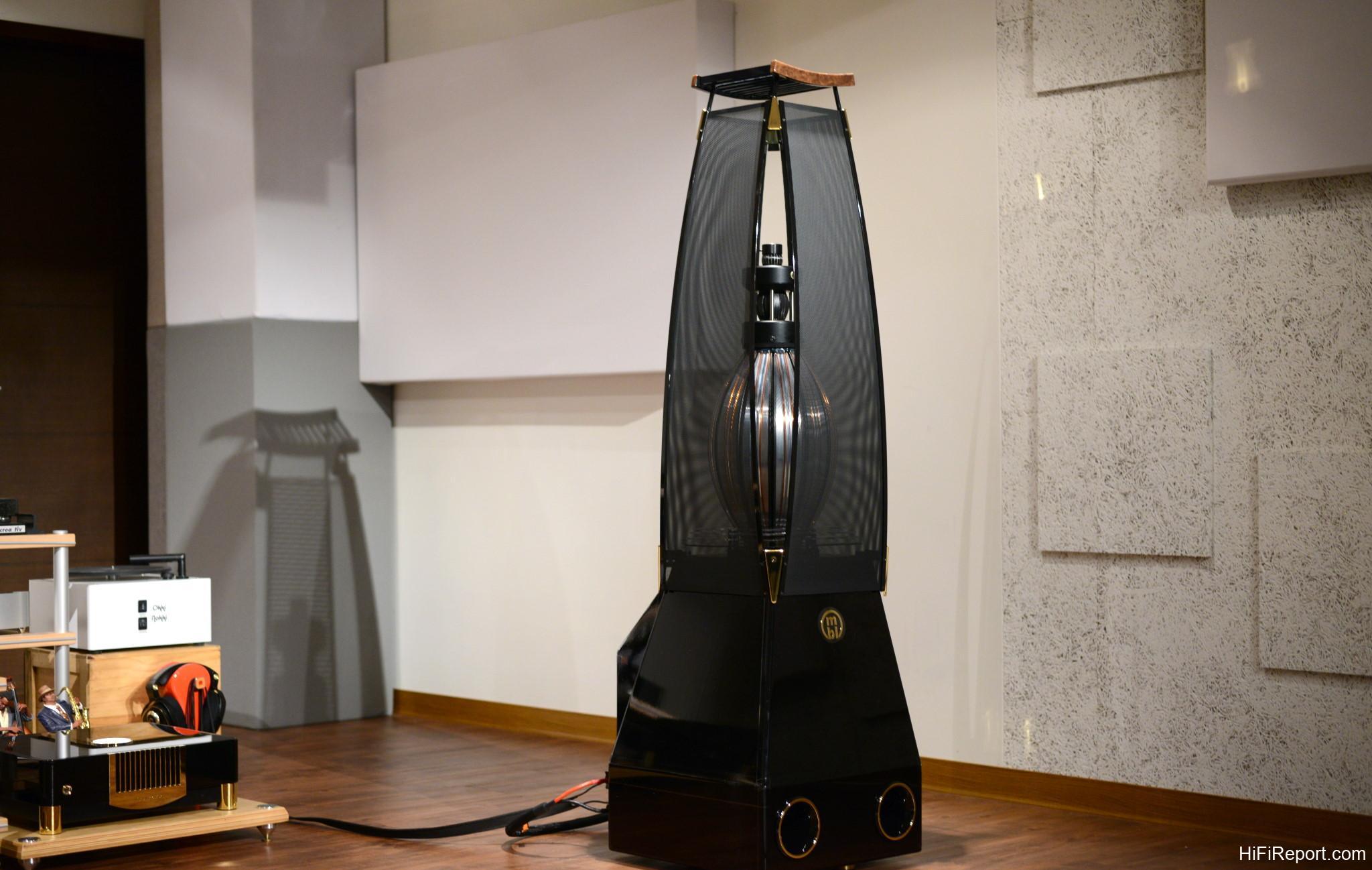
Starting with the 360-degree Radialstrahler omnidirectional loudspeakers, mbl’s audio dream encompasses everything from source to preamplifier to power amplifier. The top-tier Reference Line complete system has been installed and is now playing at Volvo Hi-Fi in Southern Taiwan. If you want to witness the unique and beautiful sound of a full mbl system, especially the Reference Line, Volvo Hi-Fi’s setup is arguably the most impressive in Southern Taiwan and worth a special trip to experience.
I often tell my editors that audio reviewers aren’t necessarily people with exceptionally good ears. Instead, they rely on continuous accumulation, listening to various audio equipment, comparing the differences between various pairings, and finding enjoyment in listening. This process gradually builds the ability to discern audio equipment. mbl’s unique 360-degree Radialstrahler loudspeakers present musical beauty and spaciousness, with tonal characteristics distinct from traditional dynamic loudspeakers. Once you’ve heard the difference, you’ll understand mbl’s appeal, which has allowed it to remain a classic and evergreen brand for over thirty years.
The Porsche 911 of Audio
mbl is like the Porsche 911 of the audio world. Consider the 911, unveiled in 1963 and put into production in 1965. It has undergone numerous revisions, yet it remains a 911. However, the technology within is constantly updated, keeping enthusiasts captivated.
mbl’s Radialstrahler 360-degree omnidirectional loudspeaker is similar. Its gourd-like shape actually houses a three-way speaker system. When combined with a subwoofer, it becomes a complex four-way system. While its diaphragm, magnetic motor, and spider may seem similar to dynamic drivers, the mechanics are quite different. Instead of piston-like motion, the Radialstrahler diaphragm expands and contracts vertically and horizontally, radiating sound 360 degrees, much like a musical instrument naturally projecting sound in a performance space.
The fundamental design principles of mbl’s Radialstrahler, launched many years ago, aren’t a secret. Yet, there are still no followers attempting to replicate it. The reason is simple: theory is easy, but practical production is fraught with difficulties. A visit to the mbl factory reveals that Radialstrahler production is entirely handcrafted and requires the creation of various specialized jigs and fixtures, solely for producing a limited quantity of Radialstrahlers. Moreover, with each generation, due to material updates, these fixtures must be remade, naturally leading to high production costs. Without sufficient sales volume to support it, it would be unsustainable. Fortunately, with the support of numerous mbl enthusiasts worldwide, mbl has thrived for over forty years, continuously evolving with the times.
101E MK II: The Most Refined Radialstrahler
During a factory visit to mbl, chief engineer Jurgen Reis showcased successive generations of Radialstrahler drivers, detailing their evolution. From the earliest aluminum alloy diaphragms to the current carbon fiber midrange and tweeter diaphragms, he explained that early Radialstrahlers, limited by materials, were actually very inefficient and had relatively high distortion. However, their unique sonic character allowed mbl to establish a firm foothold and continuously invest heavily in new material research and development.

By the third generation, distortion had been significantly reduced. The latest generation, with carbon fiber midrange and tweeter, has dramatically improved performance. Future improvements will be incremental. Therefore, the 101E MK II generation Radialstrahler can be considered the most refined product to date.
This characteristic of enduring excellence isn’t limited to the 101E MK II loudspeakers. Virtually all Reference Line products share this trait. External appearances change subtly, but the internals are continually updated, keeping pace with technological advancements.
From the exterior of Reference Line equipment, it’s difficult to discern product generations. Just as only those in the know can distinguish between the 991 I and 991 II generations of the 911, mbl similarly crafts audio classics.
Modern Vintage Design
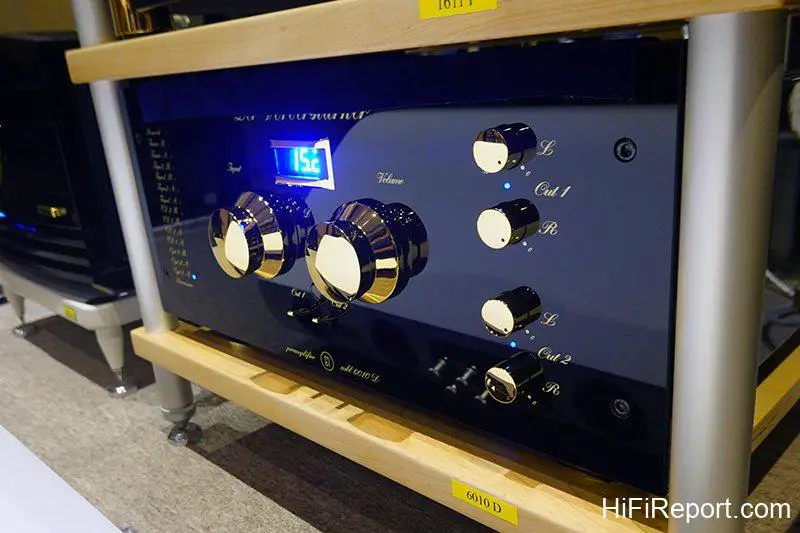
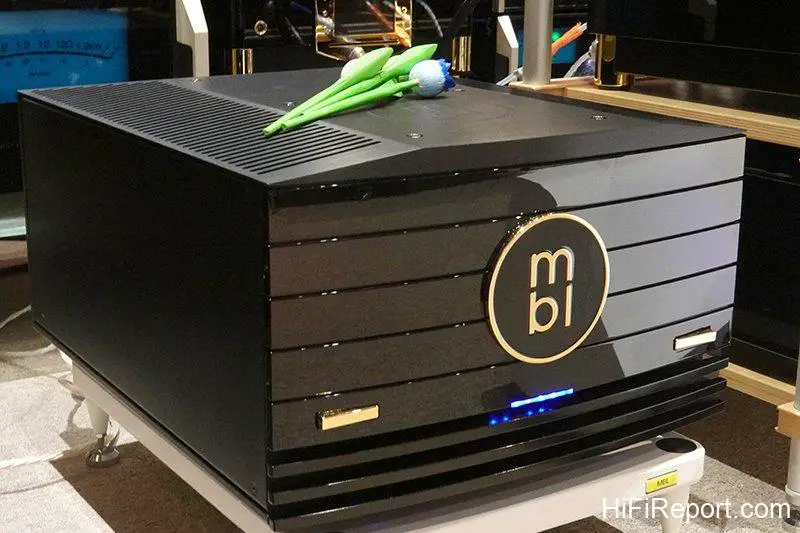
Consider the 6010D preamplifier – it’s essentially “Modern Vintage.” The exterior resembles products from the 1980s, but the detailed craftsmanship has improved, and the internal circuitry is completely different. The original 6010 preamp’s modular design necessitated an oversized chassis. This design foresight carries over to the 6010D. If not for the use of an unusually large chassis back then, leaving room for upgrades, how could the 6010 have had such a long history? As for the 9008A monoblock power amplifier, it is the successor to the classic 9011, delivering 440 watts into 8 ohms, 840 watts into 4 ohms, and a staggering 1,000 watts into a 2-ohm load – a true powerhouse.
If you ask why mbl builds such high-power amplifiers, the reason lies in mbl’s own loudspeakers. Early Radialstrahler drivers were inefficient and required large subwoofers, making them difficult to drive. Therefore, mbl had to create beastly amplifiers to tame their own speakers.
In Taiwan, unless it’s an audio show, there are few places to hear a complete mbl system. A full Reference Line demonstration is even rarer. To implement experiential marketing, Volvo Hi-Fi has made a significant investment. After all, how can customers decide to purchase such an expensive audio system without even hearing it? If you just want a glimpse of the mbl sound, audio shows might offer a fleeting experience. But for a thorough appreciation, you need to audition in a dedicated listening room at a Hi-Fi store, allowing for careful listening and the opportunity to find your dream system.
Rare Full Crystal Cable Integration
Volvo Hi-Fi has paired the system with a full set of Dutch Crystal Cable Artist Monet series cables. This is the entry-level series in the high-end Artist range. I asked Mr. Lai of Volvo Hi-Fi why not use the higher-end Van Gogh or Da Vinci series. He pointed to the storage cabinet behind him and said the higher-end cables are ready and can be swapped in at any time. However, starting with Monet is less likely to intimidate customers. After all, a full mbl system is already expensive enough. Pairing it with the most top-tier cables might be overwhelming, so it’s better to start with Monet and then explore higher-end cable pairings for those interested.
Volvo Hi-Fi’s listening room is approximately 20 square meters, not particularly large. Turning up the volume easily fills the space with mid-bass, making it difficult to fully test the driving power of the 9008A amplifiers. I probably couldn’t even utilize a tenth of the amplifier’s power before the sound pressure became very loud. However, the listening room’s soundproofing is excellent. Listening in a quiet space makes it easy to discern the texture and quality of the audio.
Exceptional Spatial Soundstage
I started listening with Katja Werker’s “Contact Myself 2.0” album, a “live recording” from the German Stockfisch Records studio. Katja Werker sings and plays guitar, accompanied by guitarist Gert Neumann and an fretless bass. It’s a simple arrangement of vocals and instruments, but it thoroughly tests the liveliness and imaging of an audio system. Because the 101E MK II radiates sound 360 degrees, making the speakers disappear into the space isn’t difficult. However, achieving precise soundstage imaging might be more challenging than with traditional dynamic loudspeakers. Dynamic drivers have directionality, which can be used as a reference for toe-in placement, aiming the drivers towards the listening position. Radialstrahler drivers, shaped like gourds, lack a clear reference point. Finding the sweet spot for speaker placement relies on adjusting the spacing between speakers and their distance from side walls.
Listening to Katja Werker at Volvo Hi-Fi, the first track “Yes” began with a guitar intro slightly to the left. Katja Werker’s voice was centered, the bass notes layered behind her vocals, slightly lower and center. A decorative guitar was positioned to the left. The positions of the vocals and guitars matched the photo in the album liner notes. To minimize extraneous noise during recording, Katja Werker intentionally recorded barefoot to avoid the noise of shoe heels tapping on the floor.
Listening to this album on the 101E MK II, the spatial presentation was particularly beautiful. The soundstage background was inky black, enhancing the three-dimensional presence of the guitar and vocals. I wasn’t listening at a high volume. Katja Werker’s voice sounded sincere and heartfelt, and the crisp guitar sound, with its distinct notes, created a country-folk atmosphere. Listening quietly, it felt as if Katja Werker was whispering in my ear. Even at low volumes, musical details were clear and effortless.
Soundstage Extends Beyond Walls
Switching to the “Les Misérables” movie soundtrack, I listened to Samantha Barks singing “On My Own.” This is a studio recording without a live audience. The actors’ vocals were recorded on set, and then orchestral accompaniment was added over six months in London, along with necessary sound effects for the film. Listening to this on the full mbl Reference Line system was truly captivating.
“On My Own” opens with a piano solo, with subtle rain sounds in the background, depicting Samantha Barks’ monologue in the rain. Piano arpeggios and cello embellishments accompany her vocals. As the chorus enters, the orchestra warmly envelops her voice.
The 101E MK II clearly presented the layers of music. The deep soundstage seemed to extend beyond the walls, making the listening room feel larger. Samantha Barks’ emotionally charged vocals were focused in the center of the soundstage. The song concluded sweetly with her sobbing vocals and yearning for love.
Is this description too emotionally charged? In reality, Samantha Barks’ singing is indeed that emotive, and mbl simply revealed the richness of emotion in its entirety.
Excellent Soundstage Height and Openness
Listening to the full mbl Reference Line, the spatial experience is definitely extraordinary. The 101E MK II isn’t a particularly tall speaker, but its soundstage height is impressive. Listening to Yo-Yo Ma, Chris Thile, and Edgar Meyer’s “Bach Trio,” recorded in a barn in the countryside, the mandolin’s sparkling sound and high-frequency decay extended upwards. This contrasted beautifully with the relatively lower-pitched cello and double bass.
Listening carefully, Yo-Yo Ma’s cello flowed from the left of the soundstage, the double bass was centered, and the mandolin was on the right. The mandolin’s bright, ringing sound defined the height of the soundstage, while the cello and double bass’s rich sounds defined the width. I believe this is not just due to the mbl system’s quality, but also to Volvo Hi-Fi’s meticulous setup and adjustments, resulting in a relaxed and effortless large-system listening experience.
Enchanting Noble Tones
Beyond the spatial soundstage and the unique spaciousness of the 360-degree omnidirectional 101E MK II, the system’s noble timbre was captivating. Listening to Chopin’s Piano Concerto No. 2, the second movement’s Adagio is music of ultimate romance. If you appreciate extremely romantic interpretations, I recommend Krystian Zimerman’s version, where he both plays and conducts the Polish Festival Orchestra. The second movement’s tempo is extremely slow. The string opening, heard on the 101E MK II, sounded virtually boundless, romantically extended. After the first phrase concluded, due to the slow tempo, the music seemed to pause before the second phrase slowly followed. The quietness of the full mbl Reference Line system enhanced the romanticism of the extremely slow tempo.

Before the piano enters, warm brass instruments subtly underpin the music. Actually, if the tempo weren’t so slow, the string ending and brass entrance would be almost simultaneous. But Zimerman’s extremely slow tempo makes the brass sound like a guide for the piano, leading out the hesitant piano, note by note, slowly narrating. The very brief silences between phrases dramatically heighten the emotional ebb and flow.
Beauty and Realism Combined
Without comparison, it’s hard to appreciate how Zimerman’s slow tempo creates romance.
Switching to Andris Nelsons conducting the Berlin Staatskapelle, with Daniel Barenboim as soloist, for another version of the same Adagio, the tempo is much faster than Zimerman’s. How much faster? Andris Nelsons’ orchestral introduction lasts only 30 seconds before the piano solo enters, while Zimerman spends 1 minute and 24 seconds on just a dozen or so bars of music. This difference in introduction tempo alone significantly alters the expressive character of the piano theme. Zimerman is almost romantically lost in reverie, while Barenboim adds a flowing elegance. However, despite a threefold difference in introduction duration, Zimerman’s entire movement lasts 12 minutes and 35 seconds, while Barenboim’s is 8 minutes and 59 seconds – a total length difference of only three minutes. This shows how Zimerman, after a slow introduction, uses the piano solo to freely accelerate the tempo.
Listening to both recordings on the full mbl Reference Line at Volvo Hi-Fi was truly beautiful, especially Zimerman’s version. The boundless spaciousness, the light airiness of the freely flowing tempo – closing my eyes, I felt transported to the recording venue. Due to the extremely slow tempo, the string section’s subtle expressive nuances were amplified, even with slight portamento variations, both romantic and beautiful. Listening to Barenboim’s version added a live recording atmosphere, the piano tone was more direct and forceful, and the sound of the piano pedals was audible, feeling more realistic.
In fact, whether it’s Zimerman’s romantic beauty or Barenboim’s realism, both showcase mbl’s ability to meticulously reveal the nuances of music.
Triumphant Mahler
Just listening to two versions of Chopin’s Piano Concerto No. 2, the full mbl Reference Line’s realistic and beautiful sound was already deeply satisfying. However, I still wanted to listen to Mahler, because this is a large system, and without listening to Mahler, it wouldn’t feel complete! Listening to Leonard Bernstein conducting the Vienna Philharmonic’s HiFiReport recording of Mahler’s Symphony No. 5, I listened to the lively fifth movement. Brass instruments played sustained notes, surging from the depths of the soundstage, followed by the woodwinds with playful melodies. This deep and wide soundstage easily captivated me from the first listen. Even without high volume, it presented a beautiful soundstage, unfolding the relaxed presence of the orchestra.
Subsequently, the string section entered, launching into a joyful fugue. Mahler’s strings, while beautiful, also possess a hint of ruggedness, like a rural festival dance. The 101E MK II effortlessly and beautifully reproduced the texture of the strings. The layered interplay with the woodwinds created an atmosphere of orchestral interweaving. I must emphasize that even without high volume, Volvo Hi-Fi’s mbl Reference Line system could present effortless musical layers. Of course, near the movement’s climax, I intentionally turned up the volume, letting the brass freely flourish and the strings compete in brilliance, allowing the finale to unleash a vast and atmosphere, releasing the audio system’s immense power. But my point is that the greatest pleasure of listening to Mahler on a large audio system is the freedom to express oneself – detailed at low volumes, and powerful dynamic contrast at high volumes. This kind of effortless headroom is only achievable with large audio systems.
Elevate Your Audio Perspective at Volvo Hi-Fi
I know that a full mbl Reference Line system is extraordinarily expensive, not something the average person can own. However, if you have the opportunity to audition at Volvo Hi-Fi, you can not only experience the musical expression of top-tier audio but also broaden your audio horizons. As mentioned at the beginning of this article, mbl has always been unique. To truly understand how distinct its sound is, you must hear it for yourself. Audio enthusiasts in Southern Taiwan should visit Volvo Hi-Fi and experience it firsthand!
Test Equipment
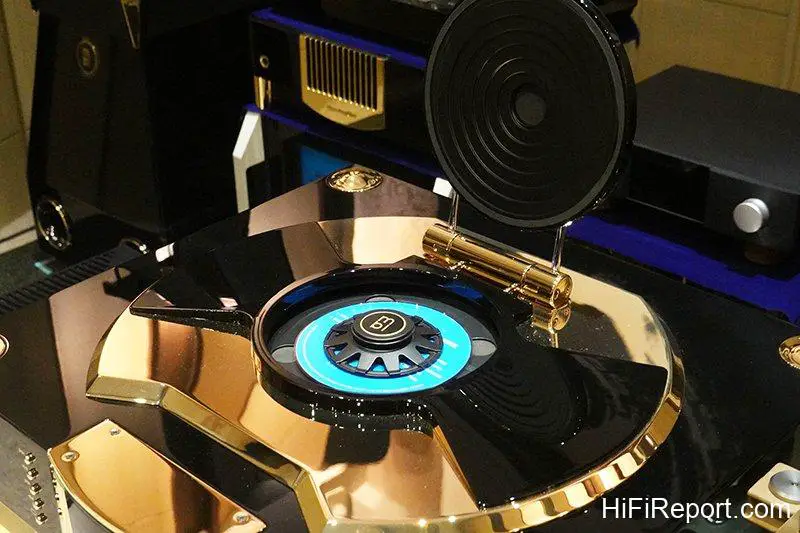
* Source: mbl 1621A CD transport, Roon Nucleus music server (with Ferrum Hypsos linear power supply)
* DAC: mbl 1611F
* Preamplifier: mbl 6010D
* Power Amplifier: mbl 9008A Monoblock Power Amplifiers
* Loudspeakers: mbl 101E MK II
* Cables: Full set of Crystal Cable Artist Monet