
Merging+Player Review
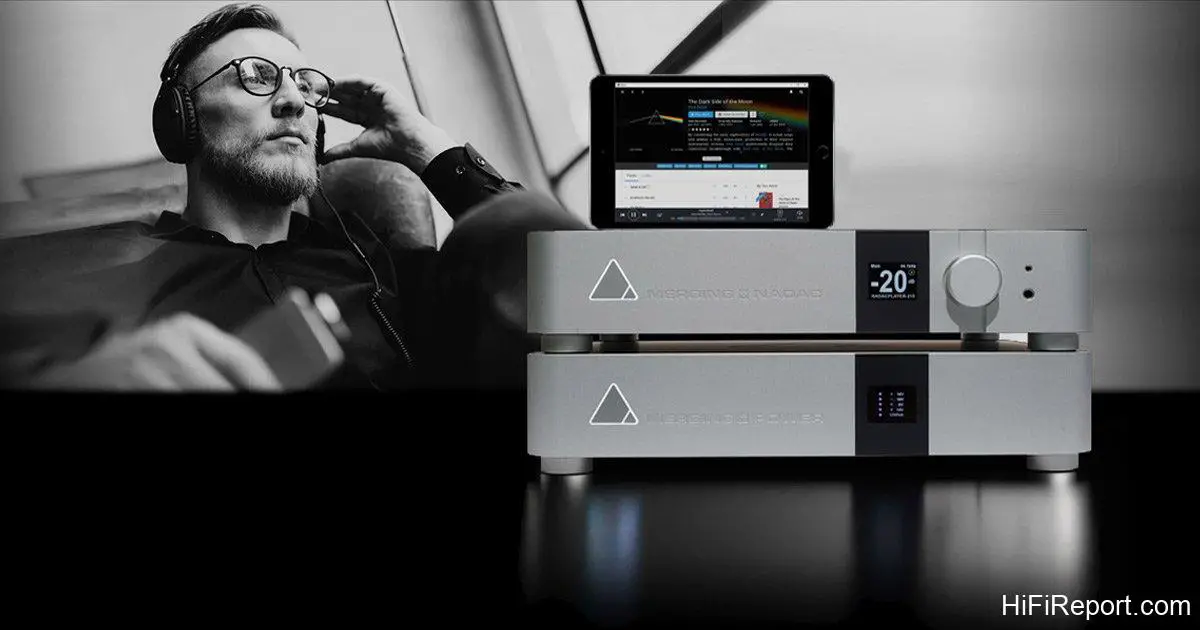
In early 2016, I acquired a Swiss Merging+NADAC. By March 2021, I had the opportunity to audition the Merging+Player at HiFiReport. What are the differences between it and the +NADAC? The +Player incorporates a built-in RoonCore, allowing it to connect to Tidal or other online music streaming services. Accompanying it was the dedicated +Power supply, an upgrade I had long been eager to try.
Product Launch Order
Back in December 2015, when Audiosummit officially became the (agent/distributor) for Merging, they invited Dominique Brulhart, the chief engineer from the factory, to Taiwan to host a product launch event. It was then that I learned that Merging Technology, already renowned in the professional market, was venturing into the Hi-End home audio market. I thoroughly enjoyed the product launch presentation. Dominique, being a true engineer, spoke professionally yet with clarity and organization, teaching me a great deal. When it came to auditioning the equipment, the first piece of music didn’t immediately captivate me. However, the second piece, Albéniz’s “Leyenda,” with its natural, clear, and full-bodied classical guitar sound, instantly won me over. I placed an order on the spot, and in 2016, I became a Merging user.
Heading to HiFiReport to audition the +Player, I thought I had only purchased the +NADAC two or three years prior. To my surprise, checking old reports revealed it had been five years already! Yet, it doesn’t feel that long at all. Listening to music with it still feels fresh, and its specifications remain more than sufficient. It supports PCM up to 384 kHz and DSD up to DSD 256, perfectly compatible with today’s popular digital music streaming services.
Moreover, my job involves reviewing audio equipment. Over the past five years, I’ve listened to many DACs, but the Merging remains a favorite. This proves that its sound is not only pleasing but also enduring.
Rise of Streaming Services
Over these five years, the music market has undergone significant changes. The trend of digital music overshadowing physical CDs remains unchanged, but the digital music market itself has evolved considerably.
In 2016, high-resolution master file downloads were dominant. Digital streaming subscription services, limited by bandwidth and playback devices, were still in their nascent stages, not yet widespread or capable of matching high-resolution master quality.
However, five years later, the tables have turned. Online music file downloads have noticeably declined, while digital streaming services have flourished. From Spotify initially leading the charge, Apple entered the arena, and audiophiles gravitated towards Tidal for its superior sound quality. RoonCore emerged as a solution to integrate all music libraries, both online and offline. Thus, the +Player, with its built-in RoonCore, was born.
Merging’s Reputation
I must admit, ordering the +NADAC directly at the product launch five years ago was driven not only by the compellingly realistic and natural musical performance but also by Merging’s esteemed reputation.
Why? When Sony and Philips established the DSD standard, they didn’t simultaneously consider the editing needs of the recording industry. DSD files lacked editing tools; even volume adjustment was impossible. How could one handle mixing and post-production? Sony turned to EMM Labs, resulting in the Sonoma Work Station, while Philips commissioned Merging to create Pyramix Virtual Studio, which defined DXD. DXD is a 24-bit/384 kHz music file format, a PCM format, making existing studio PCM editing tools readily applicable. Mixing and mastering could be done, and then Pyramix Virtual Studio could convert the files to DSD for release.
Therefore, I immediately ordered a +NADAC, seeking the “original studio sound.”
Following Pyramix Virtual Studio, Merging launched the Horus and HAPI ADC/DAC, both designed for professional recording studios. The DAC section of Horus became the basis for the home audio version, the +NADAC. The new version with RoonCore is the +Player I am here to audition at HiFiReport.
Ravenna for Audio Playback
Merging distinguishes itself by incorporating Ravenna (AES67) digital interface, an Audio-over-IP digital transmission protocol, in addition to the standard S/PDIF digital interface. Ravenna surpasses the common USB interface in several aspects.
What are the advantages of Ravenna? First, bandwidth: it boasts up to 1 Gb/s, while USB 2.0 is limited to 480 Mb/s. Second, transmission distance: using network cables, Ravenna can transmit over 100 meters without signal degradation, whereas USB starts to degrade beyond approximately 5 meters. Furthermore, Ravenna features Precision Time Protocol for time synchronization, which USB lacks. For digital music, time synchronization translates to reduced jitter. Clearly, Ravenna is a digital interface purpose-built for digital audio.
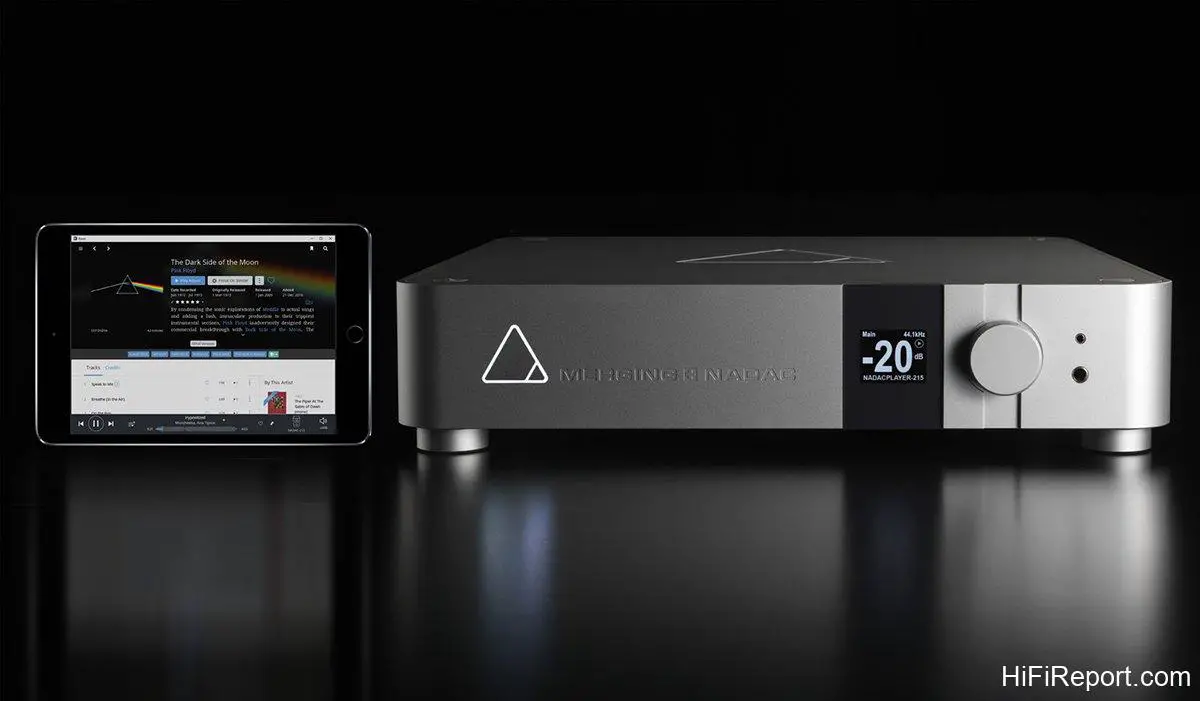
The +Player also includes a Ravenna interface, internally connected directly to RoonCore. This transforms the +Player into a Roon Endpoint. Roon manages the integration of online and offline music libraries, with Ravenna directly linked to the built-in RoonCore.
Intriguingly, Roon has a core technology called RAAT (Roon Advanced Audio Transport) for handling digital music buffer reading, using the TCP transmission protocol. How do RAAT and the built-in Ravenna digital interface coordinate and optimize the internal Linux Roon OS? This, I believe, is +Player’s proprietary secret.
Complex RoonCore Upgrade
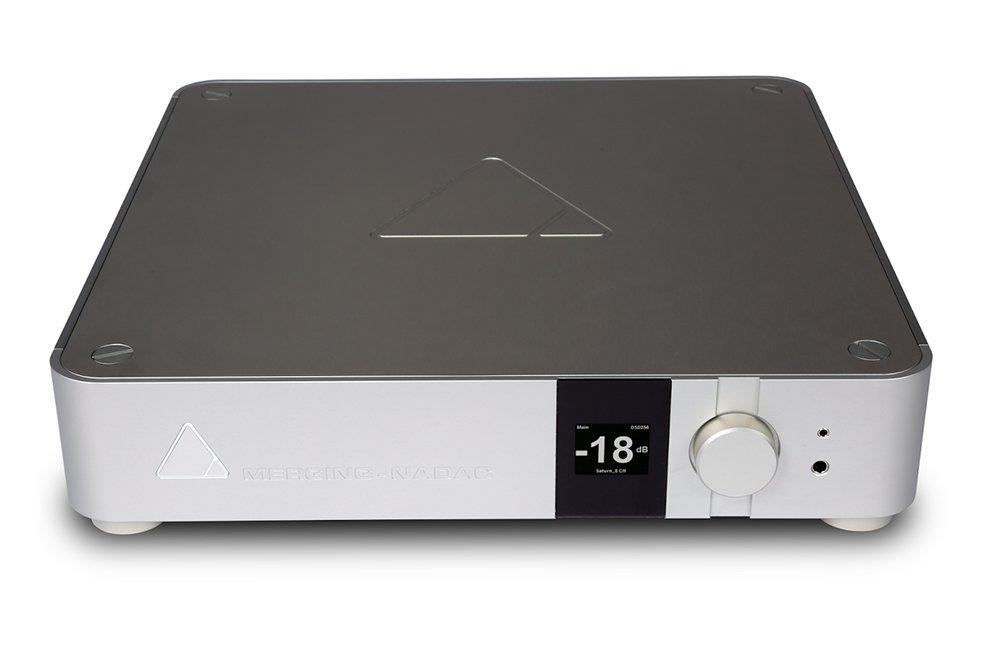
Consequently, although the difference between +NADAC and +Player appears to be just the addition of a RoonCore circuit board, upgrading is not a simple matter. It requires sending the unit back to the Swiss factory. While it might seem like simply adding a RoonCore module, Merging states that thorough re-verification and testing with professional instruments are necessary, making on-site upgrades impossible and necessitating factory return.
This round trip to Switzerland incurs not only two-way shipping costs but also the material and labor expenses for the +Player upgrade, plus return customs duties. Upgrading is inherently costly, and with soaring air freight rates during the pandemic, it becomes even less economical. Many +NADAC owners have inquired about upgrade costs, but after considering the overall expense, some have opted to purchase a new +Player instead.
It seems like this is subtly directed at me, as I was initially contemplating upgrading my +NADAC to a +Player. It appears I should abandon that thought.
As for the DAC section of the +Player, it remains the ES9008S, identical to the +NADAC, with independent headphone amplifiers and isolated power supplies also carried over. The key difference is the addition of RoonCore. However, this upgrade is undoubtedly more complex than it seems. Otherwise, Merging could have simply offered a plug-in board without requiring a factory return to Switzerland. Furthermore, I initially considered an external RoonCore paired with my +NADAC, but compared to the integrated +Player, the signal path would be significantly longer, likely resulting in inferior performance.
Therefore, when choosing between +Player and +NADAC, careful consideration is needed. The +NADAC is like a network-capable DAC, while the +Player is designed to fully address digital music streaming needs, using Roon to manage all aspects of digital streaming.
Dedicated +Power Supply
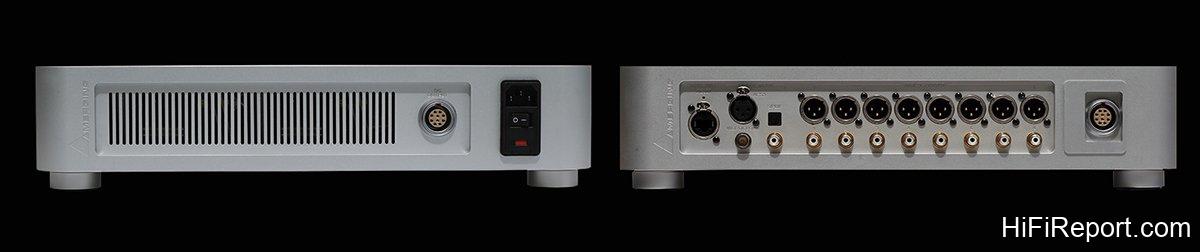
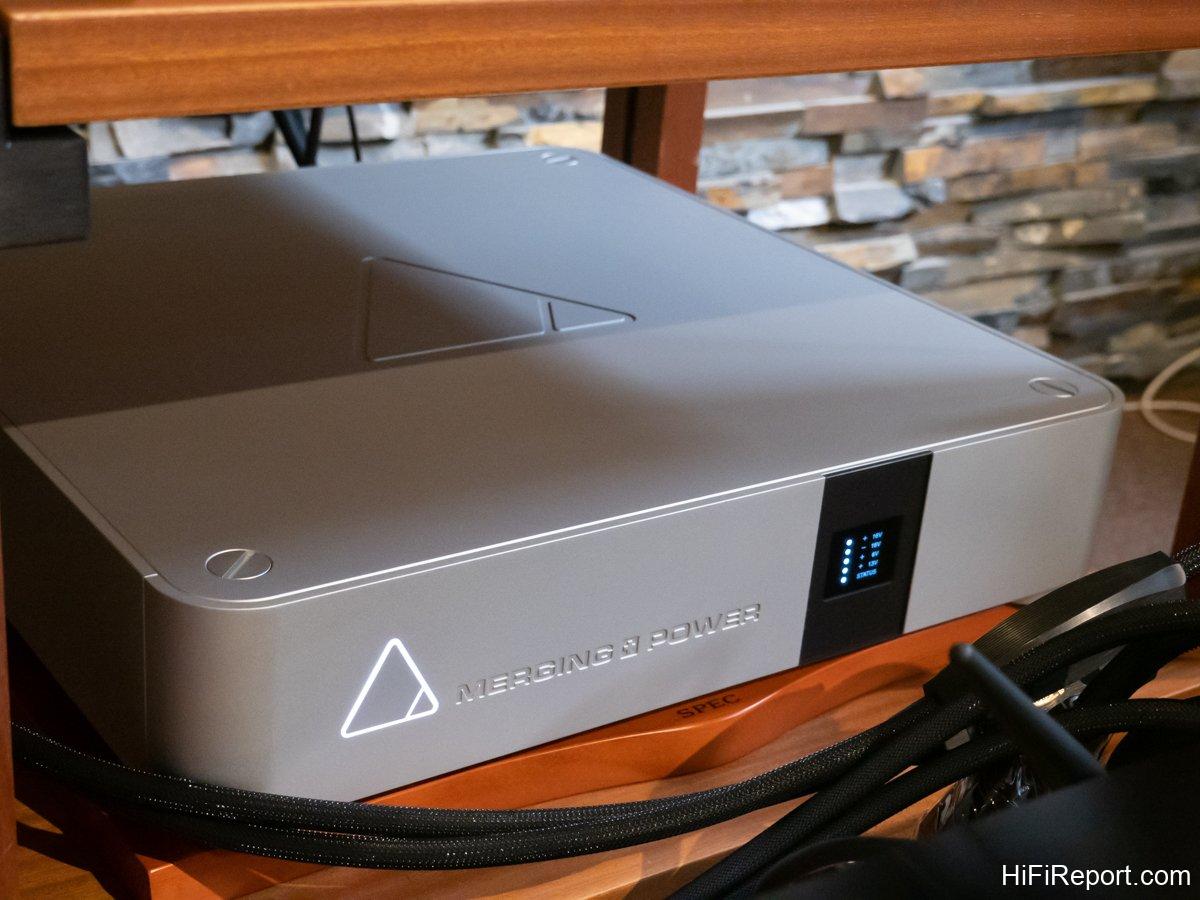
Next, let’s examine the dedicated +Power external power supply. Its size is identical to the +Player, using the same chassis, making it convenient to stack and use with the +Player.
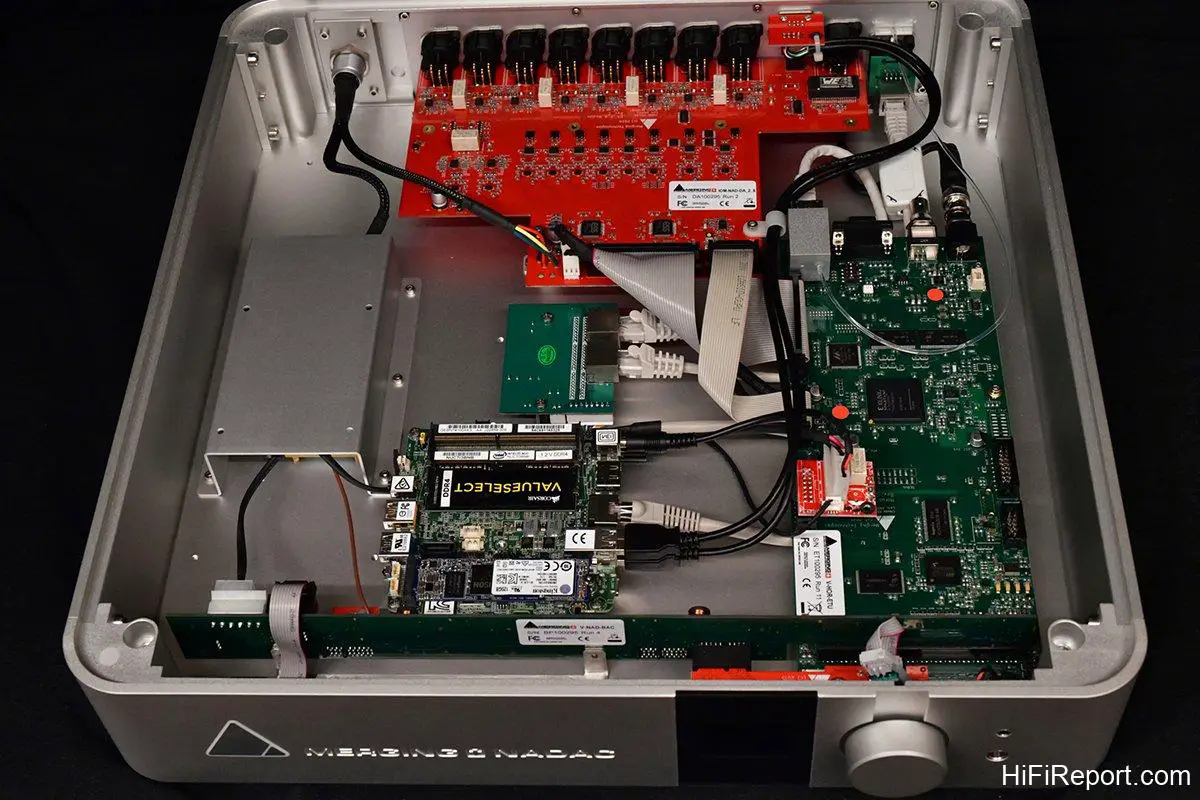
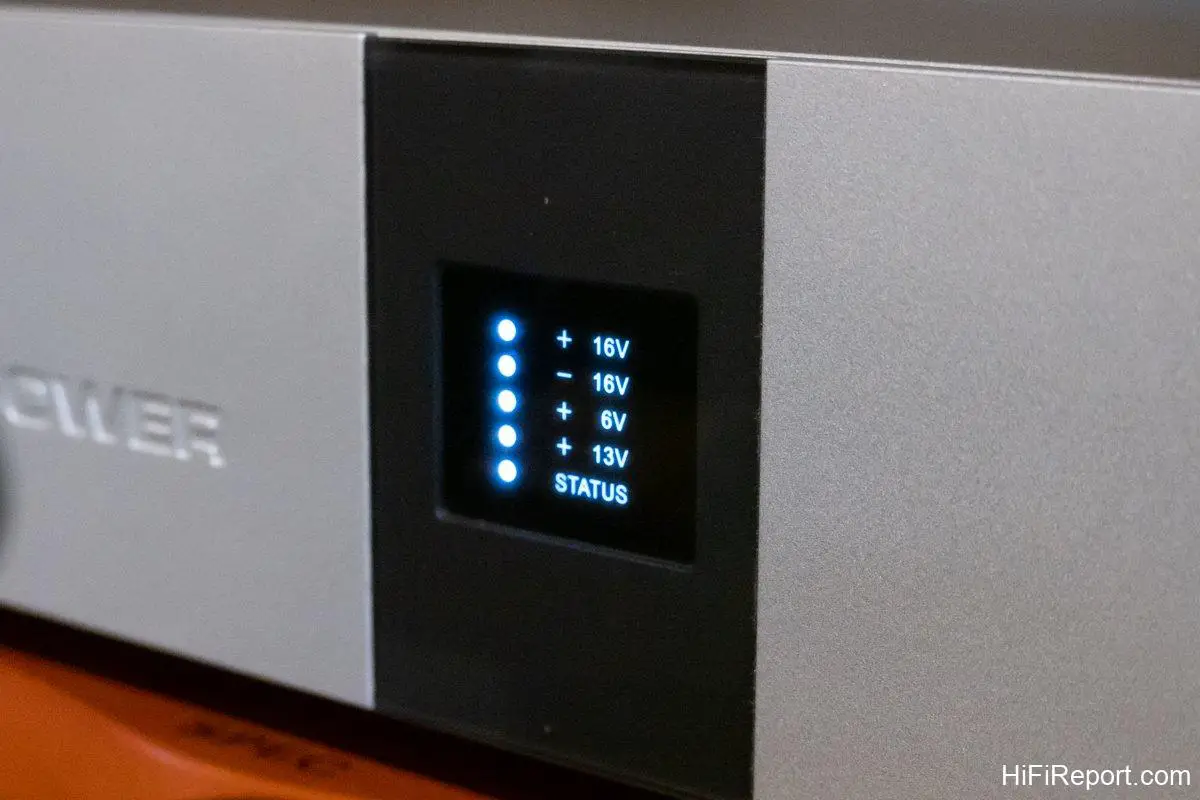
The +Power employs a hybrid power supply design, combining both switching and traditional toroidal transformer power supplies.
The +13V section utilizes a high-current switching power supply, capable of up to 7.5 Amperes, providing power to DSP and FPGA related digital circuits. The +16V/-16V/+6V section uses a traditional transformer, delivering 1 Amp of continuous current for analog circuitry. It incorporates a 2-stage low-pass filter for excellent transient response and LDO low-dropout regulators. The circuit board is constructed with military-grade FR-4 PCB material.
Capacitor Array Design
The technologies mentioned above for +Power are readily available for purchase. Engineers can simply select high-quality components that meet the required specifications. However, +Power also incorporates a technology that cannot be bought: the Merging Capacitor Array (MCA). MCA blends polymer, aluminum, and polypropylene capacitors, all of aerospace or military-grade quality.
The crucial aspect is not the cost of the capacitors but the selection of the most suitable ones. This requires engineers to meticulously audition and compare each capacitor to find the optimal choices. Moreover, MCA does not use a single type of capacitor but a combination of three. I truly admire Merging’s ingenuity in using a blend of different capacitors to achieve tonal harmony. How much time did they spend finding Merging’s ideal formula? Crafting excellent audio equipment is far from simple!
Expertise in Music Cognition
Even with the knowledge that blending different capacitors can achieve sonic excellence, the most challenging aspect lies in the engineer’s understanding of sound. This is Merging’s true know-how. With decades of experience in the professional recording studio domain, they are the preferred choice of numerous international recording masters and a perennial winner at the Grammy Awards. This demonstrates that their understanding of sound is not based on guesswork or imagination but rooted in close collaboration with the recording and music industry. Their extensive recording engineering experience has cultivated their sonic perception, which is then translated into equipment design, resulting in universally acclaimed sound quality.
Many audiophiles or DIY enthusiasts believe that simply copying circuits is sufficient. However, understanding the essence of music is the key to designing outstanding equipment. Merging’s years of accumulated experience in the music industry are the true foundation of their equipment’s exceptional sound.
8 to 2 Channel Conversion
Having briefly discussed the design of +Player and +Power, it’s time to properly listen to music.
Mr. Chang from HiFiReport asked about my listening plan. I replied that CDs were irrelevant here, so let’s explore HiFiReport’s music library. Mr. Chang instructed me to install Roon Remote on my phone and connect to HiFiReport’s Wi-Fi network. Roon Remote quickly found the +Player, and the music selection screen appeared.
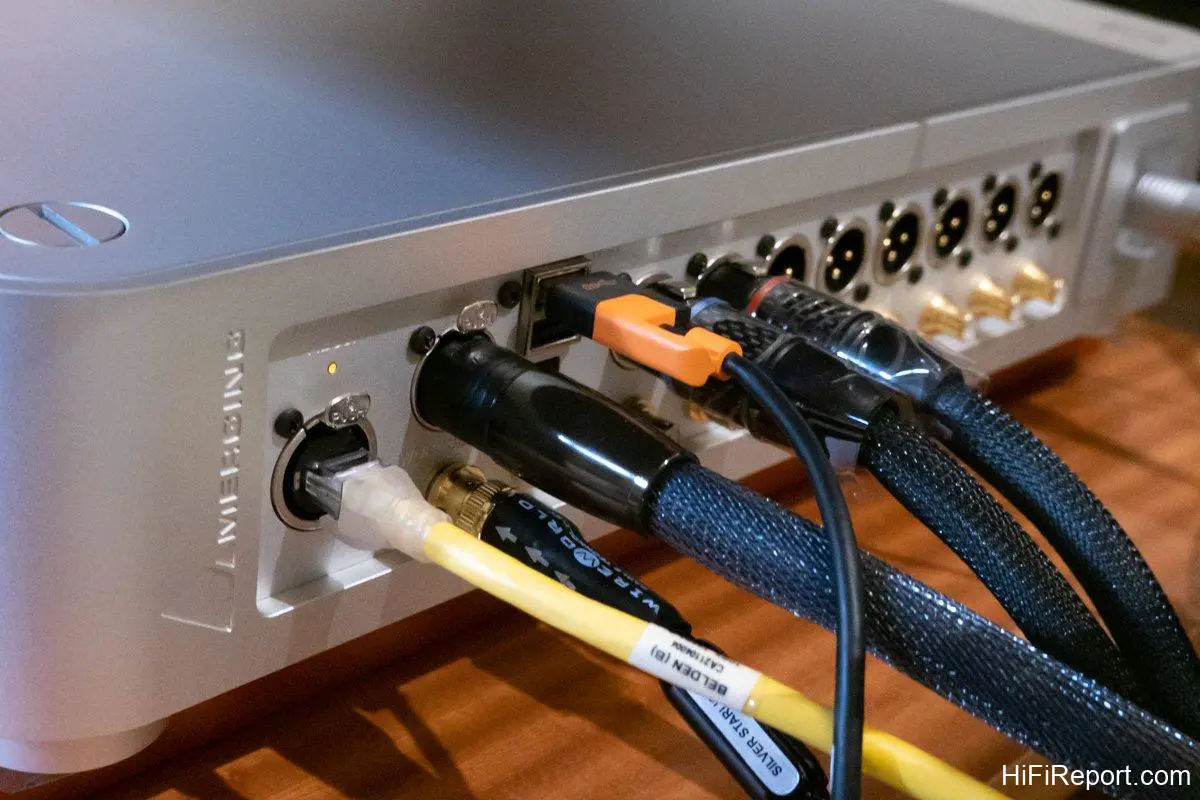
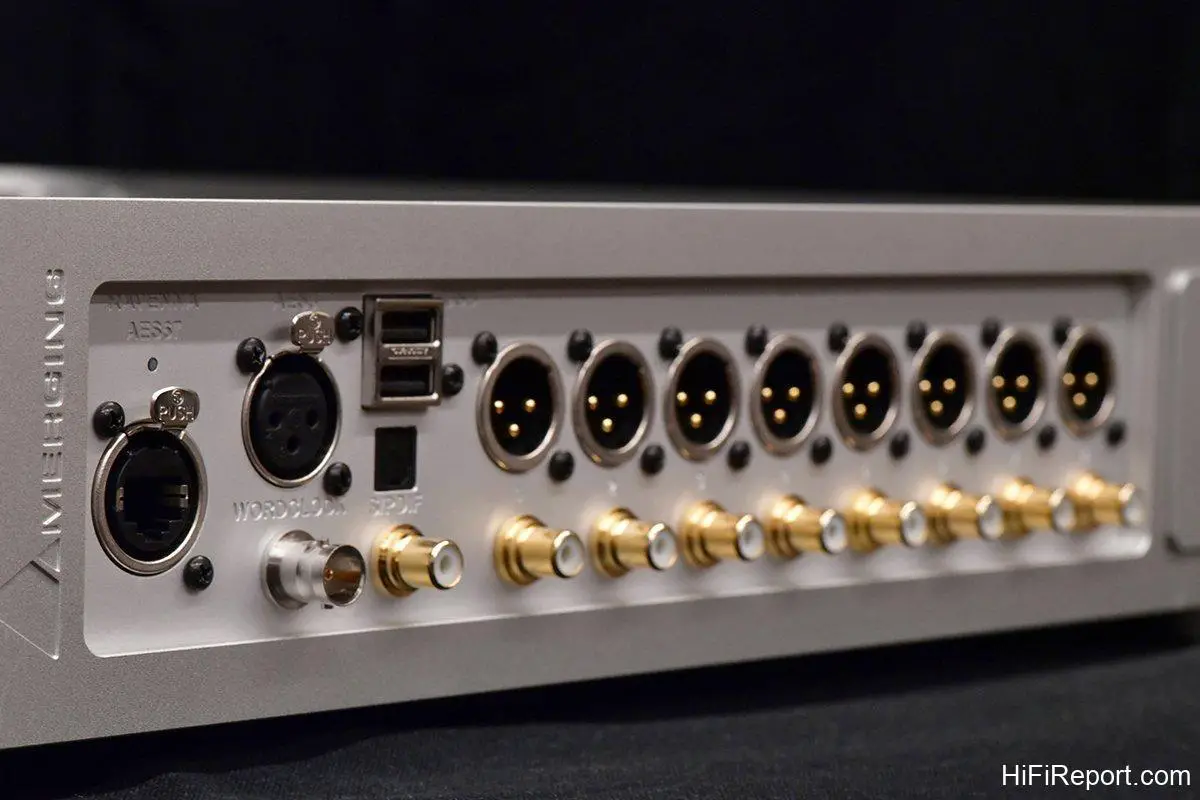
Wait, not so fast. Mr. Chang first checked the settings. He emphasized the importance of confirming the eight-channel to two-channel conversion. This can be set via the front panel knob and menu, ensuring two-channel output is selected.
Both +Player and +NADAC are available in 2-channel and 8-channel versions. Audiosummit imports only the 8-channel versions, citing the minimal price difference and anticipating potential future music format developments. Should one wish to upgrade from 2-channel to 8-channel, equipment replacement would be necessary. Furthermore, converting 8 channels to 2 channels enhances the dynamic range, resulting in superior sound quality.
I also inquired about this when purchasing my +NADAC, which led me to choose the 8-channel version.
Pairing with Progression Amps
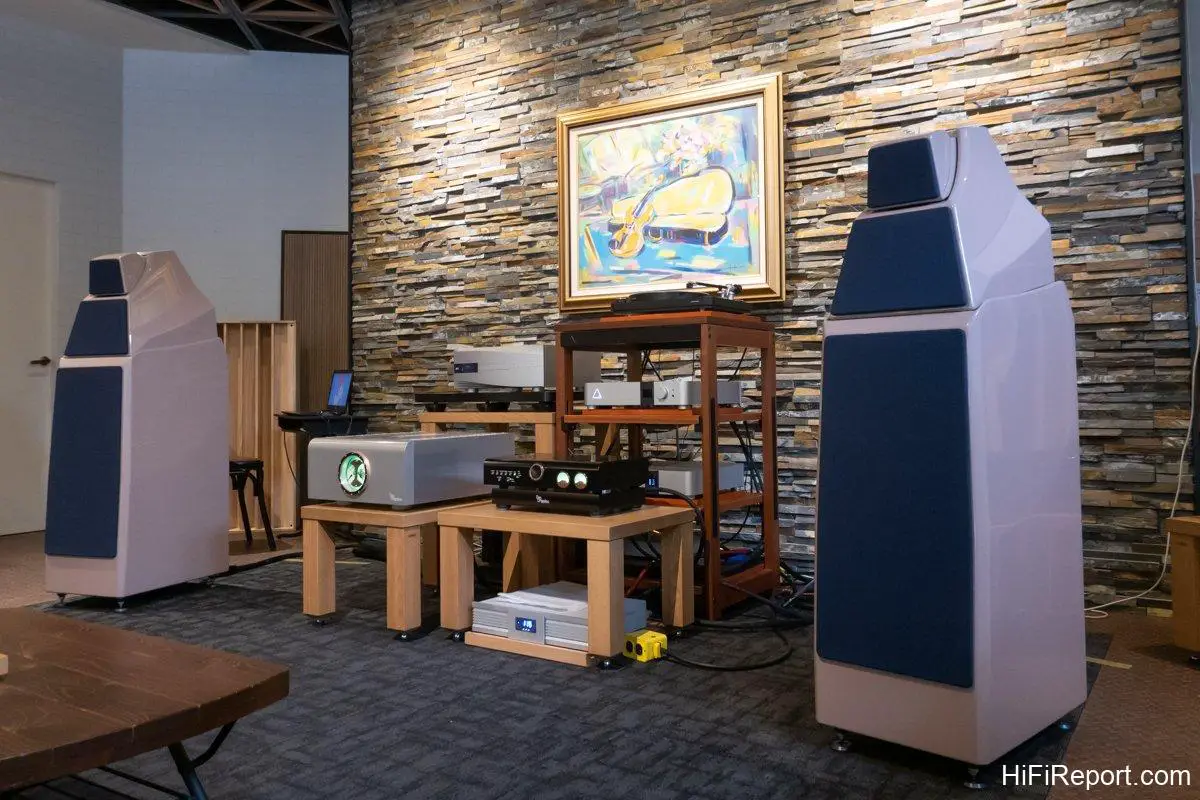
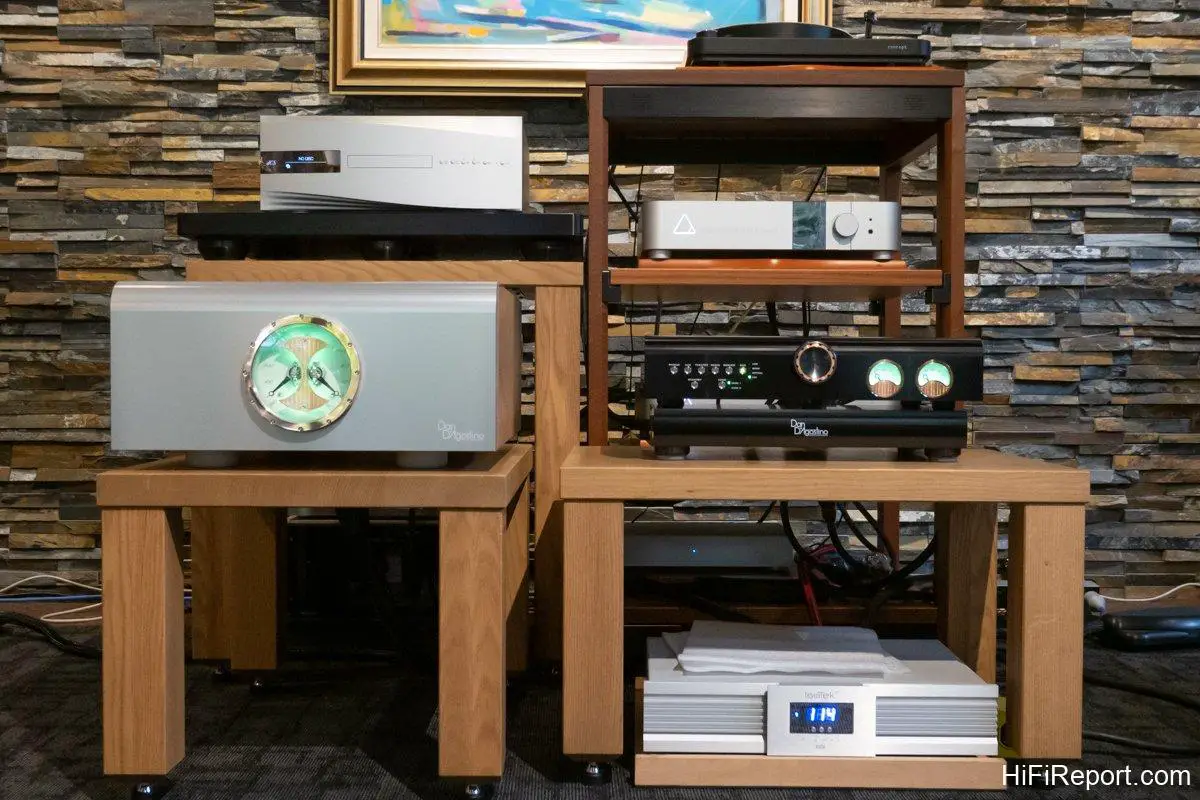
Navigating to Tidal’s music playback screen within the Roon App, I began searching for music. However, there were still customers enjoying afternoon tea in the store, so I kept the volume moderate. I jokingly told Mr. Chang that, amplifier aside, it felt almost like listening to my own system at home! HiFiReport was using Wilson Audio Alexia 2 speakers, which I also use at my office. My DAC is the +NADAC, while here I was listening to the +Player with RoonCore. The key difference was the Dan D’Agostino Progression preamplifier and Progression stereo power amplifier, whereas my current amplifiers at the editorial office are EAR 868/509 II tube pre and power amplifiers.
HiFiReport’s pre-audition setup is meticulously done. I had previously visited for equipment auditions and music seminars, but this time, the Alexia 2 speakers seemed positioned slightly forward, with a wider spacing and appropriate toe-in, resulting in more focused imaging.
For the first track, I chose John Mayer’s “Where the Light Is” live concert, selecting his hit song “Gravity.” The opening features a captivating electric guitar solo, accompanied by enthusiastic audience cheers. The entire system conveyed the vividness of a live concert recording. Even at a low volume, the musical details remained rich.
Detail at Low Volume
John Mayer is arguably the leading guitar hero of our time, with exceptional electric guitar skills, especially in live performances, where his improvisations are even more extensive. The studio version of “Gravity” barely captures a fraction of the live performance’s electric guitar brilliance.
Listening to the live version of “Gravity” on +Player via Tidal, even at Hi-Fi quality, the detail was remarkable. The opening electric guitar solo features almost no picking; instead, Mayer primarily uses left-hand slides on the fretboard. When right-hand picking begins, the finger movements translate into nuanced tonal variations. Even at low volume, these musical details were clear and abundant.
When the drums and bass joined in, the authoritative mid-bass of the D’Agostino pre and power amplifiers emerged. Not only was the bass quantity ample, but the speed was also exceptionally fast. The kick drum had a full, punchy impact. Perhaps the live PA added some enhancement, but it heightened the emotional engagement, making it feel like being at the concert.
Noticeable +Power Upgrade
Electric guitar was engaging, but how about acoustic guitar? I searched for Tommy Emmanuel, a two-time Grammy nominee and two-time ARIA Australian Recording Industry Association Music Award winner. Listening to his rendition of “Deep River Blues,” a single steel-string guitar carried both melody and rhythm. Roon Remote indicated a Master quality file. The guitar’s dynamic range was powerful; finger movements on the strings were distinct. The left thumb maintained a walking bass line, while other fingers played the melody and intricate fills, incorporating hammer-ons, pull-offs, and percussive taps on the guitar body. This single acoustic guitar sounded like two or three guitars playing simultaneously, a testament to Tommy Emmanuel’s virtuosity.
It was at this point that I truly appreciated the impact of +Player combined with +Power. I initially expected the sound to be similar to my +NADAC, just with added Roon functionality. However, I noticed a significant improvement in the thickness and density of the midrange, and the overall soundstage clarity was also enhanced.
What’s the reason? I suspect the +Power is the primary contributor. Additionally, the +Player’s internal RoonCore allows the music signal to directly feed the DAC, minimizing interference from digital interfaces, resulting in a more direct and transparent sound.
When in doubt, ask. I turned to Mr. Chang at HiFiReport and inquired if the +Power significantly improved the sound. He confirmed that it did, and the difference was substantial. Furthermore, Mr. Chang mentioned that Roon has numerous optimization settings that can also significantly alter the sound, adding to the +Player’s versatility. It’s not just about the dedicated +Power; the synergy with Roon offers many sonic possibilities.
This struck a nerve. After five years of happy listening with my +NADAC, the availability of the +Power upgrade is tempting. Moreover, the +Power upgrade doesn’t require factory return. It can be done locally by replacing the power input section of the +Player or +NADAC with a connector compatible with +Power. Now, I’m seriously considering upgrading.
Authoritative Mid-Low Frequencies
Continuing to listen to music, the afternoon tea crowd gradually dispersed, leaving only one table of customers. After a greeting, we could turn up the volume. Listening to Dave Brubeck’s classic “Take Five,” the signature five-beat rhythm began with an energetic drum intro. The mid-bass control of the Progression pre and power amplifiers was excellent, allowing the Alexia 2s to reproduce the drums with effortless impact. The kick drum’s strikes were solid, with palpable weight and depth, contrasting with the crisp, vibrant rhythm of the cymbals. The piano maintained the recurring five-beat chords. Even for a 1959 recording, it still sounded remarkably vibrant.
I began to lose track of whether I was evaluating the +Player and +Power or the Progression amplifiers paired with Alexia 2s. Despite only the amplifiers being different, along with using Roon for online streaming, the musical vibrancy, realism, and the direct, fast mid-bass impact were significantly more exhilarating than what I was accustomed to with just my +NADAC.
Natural Musical Emotion
Switching genres, I listened to Jonas Kaufmann singing Schubert’s “Winterreise,” specifically the final song, “Der Leiermann” (The Hurdy-Gurdy Man). The piano laid a gentle foundation, supporting Kaufmann’s emotive vocals. His tenor voice, not particularly heavy, was well-suited to Schubert’s melancholic and poignant mood. The +Player combined with +Power delivered a richer midrange compared to my usual +NADAC listening experience, further piquing my interest in the +Power.
Having listened to vocals, I moved to chamber music, selecting Mozart’s Piano Trio performed by Pires, Dumay, and Wang Jian, focusing on the cheerful first movement of K. 502. The +Player and +Power together revealed a rich tapestry of musical expressions. The piano trio instruments were focused, vibrant, and precisely positioned. Cello slightly right, piano center, and violin slightly left, the two string instruments framing the piano. The +Player and +Power presented a concrete and lifelike soundstage. The Progression amplifiers further allowed the Alexia 2s to recreate near-life-size instrumental images. Pires’ piano tone was light and agile, Wang Jian’s cello was rich and nuanced, and Dumay’s violin was vibrant and bright. The interplay of the three created Mozart’s joyful musical expression. The dynamic interplay of notes felt alive, making the listening experience light and enjoyable.
This ability to naturally present the recording’s essence is inherently Merging’s strength. Otherwise, I wouldn’t have remained a loyal +NADAC user for five years. Listening to the +Player and +Power at HiFiReport, the midrange density and natural musicality surpassed my accustomed +NADAC sound. I asked Mr. Chang if this was primarily due to the +Power. He responded that it was not solely the +Power; prior to my arrival, he had upgraded to a full Transparent cable loom, which also contributed significantly.
Indeed, audio system performance is not solely determined by a single component; the entire system synergy is crucial.
Brahms’ Romantic Beauty
After extensive listening, it was time for a concluding piece. I searched for Brahms’ Piano Concerto No. 2, selecting Helene Grimaud’s version, conducted by Nelsons, with the Vienna Philharmonic Orchestra. The third movement, Andante, provides a romantic conclusion. The Tidal file was in Master quality, potentially surpassing even CD quality on the +Player.
The Andante movement begins with pizzicato from the cellos. The cello section sounded so beautiful, almost like a cello concerto. The +Player and +Power expanded the soundstage to a grand scale. The pizzicato notes were clear, well-defined, and substantial, underpinning the romantic melody of the strings, preparing for the piano solo.
Lost in the romantic strings, I closed my eyes, immersing myself in the music. As the final cello notes faded, the piano began its soliloquy. This musical theme also appears in Brahms’ art song, Op. 105-2, “Immer leiser wird mein Schlummer” (My Slumber Grows Ever More Peaceful), depicting unrequited love with a touch of melancholy. The piano’s romantic and tender melody gave way to a more passionate section, revealing Brahms’ ardent yet restrained musical intensity. Even in the Andante, a surging wave of emotion was conveyed. The Progression amplifiers allowed the Alexia 2s to present a layered and detailed orchestral texture. After the piano’s forceful, intricate passages, it gracefully receded, the strings continuing the melody gently, with the woodwinds subtly emerging from the rear of the soundstage. At this moment, HiFiReport transformed into a miniature concert hall, and I was the sole audience member, savoring Brahms’ romantic sentiment.
Still the Top Choice
Have I listened enough? Of course not, but it was time to wrap up.
As a +NADAC user, I have already shown my support for Merging. The +Player’s sonic character and quality are consistent with the +NADAC, delivering the natural and vibrant essence of the recording. I want to particularly emphasize the natural timbre—unembellished and naturally pleasing, making it comfortable and enduring to listen to. This is the hallmark of Merging equipment.
However, the audition at HiFiReport, with the addition of +Power, surpassed my expectations significantly, stirring a strong desire for an upgrade.
I am aware that there are a few higher-priced DACs that may outperform the +Player or +NADAC in musical performance. However, within my affordable budget, these two digital sources remain my top choices.
If you are interested in Merging equipment, how should you choose between +Player and +NADAC? The decision is straightforward. If you frequently use Tidal or other popular digital music streaming subscription services, then the +Player is the ideal choice. But if you primarily use traditional CD transports or computers as sources, the +NADAC is also well-suited. As for whether to add the +Power, even my first listen convinced me of its significant impact. If you aim for a complete, top-tier system, then opting for both +Player and +Power together is the way to go!
Specifications
**Merging+Player**
* Type: RoonCore + DAC (with independent headphone amplifier)
* Supported Sampling Rates: 44.1kHz~384kHz PCM, DSD 64, DSD 128, DSD 256
* Bit Rate: 1 Gb/s
* Digital Inputs: USB, AES/EBU, Coax, RJ45 Network Cable
* Analog Outputs: 6.3mm Headphone, XLR, RCA
* Maximum Output Level: XLR 18 dBu (6.1 Vrms), RCA 14.4 dBu (4 Vrms), Headphone Output 14.4 dBu
* Dynamic Range: XLR 130 dB, RCA 123 dB, Headphone Output 123 dB
* Dimensions: 435 × 435 × 95 mm (W×H×D)
* Weight: 11 kg