
Monitor Audio Anthra W12 Review
Over the past couple of years, subwoofers have seen their visibility and importance significantly elevated in the home theater market. This surge is primarily driven by the ever-increasing processing power of audio equipment, which now supports a greater number of subwoofers and simplifies their setup and calibration. Utilizing multiple subwoofers offers numerous advantages, notably achieving a more balanced low-frequency response throughout the room via a “smoothing” effect.
Furthermore, multiple subwoofers expand the optimal listening area in larger spaces, ensuring more seats benefit from improved bass performance, not just the traditional “sweet spot.” And, of course, more subwoofers invariably deliver more potent and impactful bass, providing a stronger energy transfer for a more visceral experience, or simply filling larger rooms with effortless low-end authority.
Consequently, a multitude of surround sound processors and receivers have begun offering support for four or even more subwoofers. Leading brands such as Trinnov Audio, Storm Audio, Integra, Pioneer, Denon, Marantz, NAD, and Lyngdorf, among many others, are embracing this trend. What’s particularly noteworthy is that the allure of multiple subwoofers has extended beyond traditional home theater into two-channel audio systems.
For example, NAD’s M66 streaming preamplifier supports up to four subwoofers, clearly indicating that the multi-subwoofer approach is a growing trend across the audio landscape.
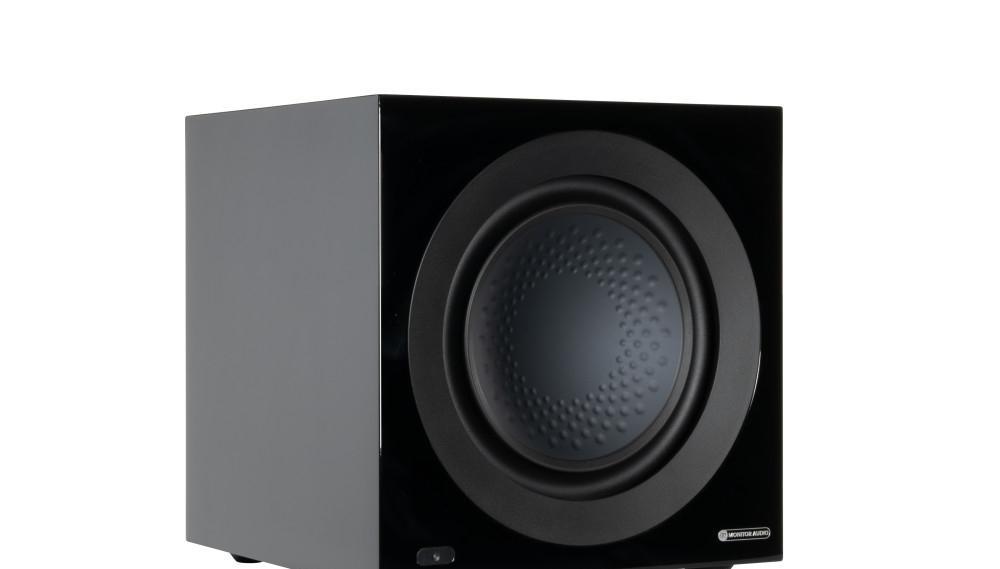
Introducing the Monitor Audio Anthra Series
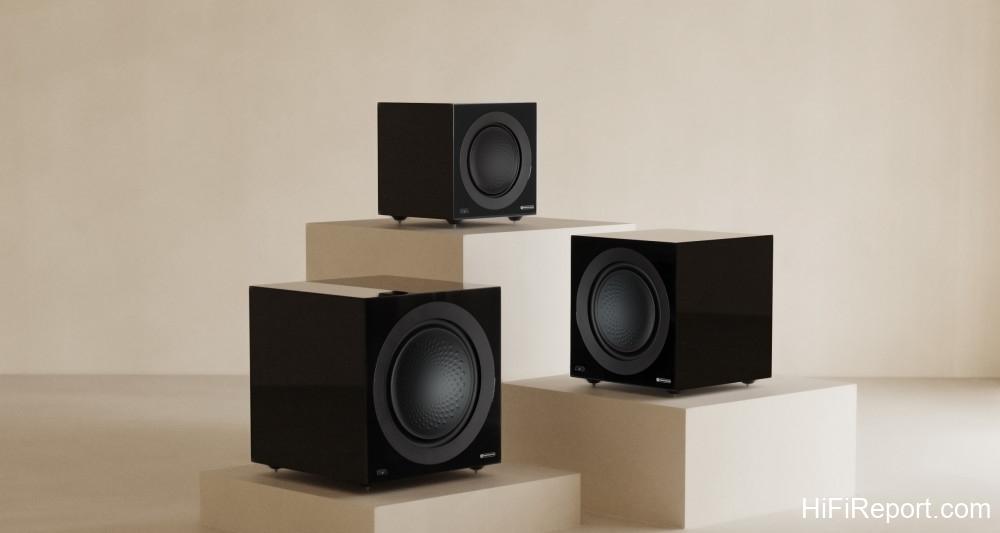
Perhaps recognizing this evolving market dynamic, the long-standing British audio stalwart, Monitor Audio, has launched a new dedicated subwoofer series named Anthra. This series comprises three models: the Anthra W10, Anthra W12, and Anthra W15. The number in each model name directly corresponds to the diameter of the bass driver cone – 10-inch, 12-inch, and 15-inch, respectively. For this review, we are focusing on the 12-inch model, the W12.
It’s worth noting that Monitor Audio traditionally integrated dedicated subwoofers within their specific speaker series. For instance, the Gold series had its own matching subwoofer, as did the Silver series, and so on. The Anthra series deviates from this approach; it stands independently rather than being tied to any single speaker line.
This signifies that Anthra is a versatile series designed to complement speakers of any level or type, serving both two-channel and multi-channel applications. This strategic positioning means the Anthra series must possess formidable performance capabilities to meet the diverse demands of various setups.
Daisy-Chaining: Simplifying Multi-Sub Setups
As mentioned earlier, the audio industry is increasingly moving towards a “multi-subwoofer” era. Whether in home theater or high-end two-channel systems, enthusiasts are seeking to employ multiple subwoofers for superior bass performance. However, consumers often encounter two practical hurdles. First, source equipment, particularly in two-channel setups, may only have a single subwoofer output, limiting the number of subwoofers that can be connected directly.
Second, in some environments, the ideal placement for subwoofers might be far from the source equipment. Using multiple subs could then require numerous long signal cables, creating a cumbersome installation, especially common in large home theaters.
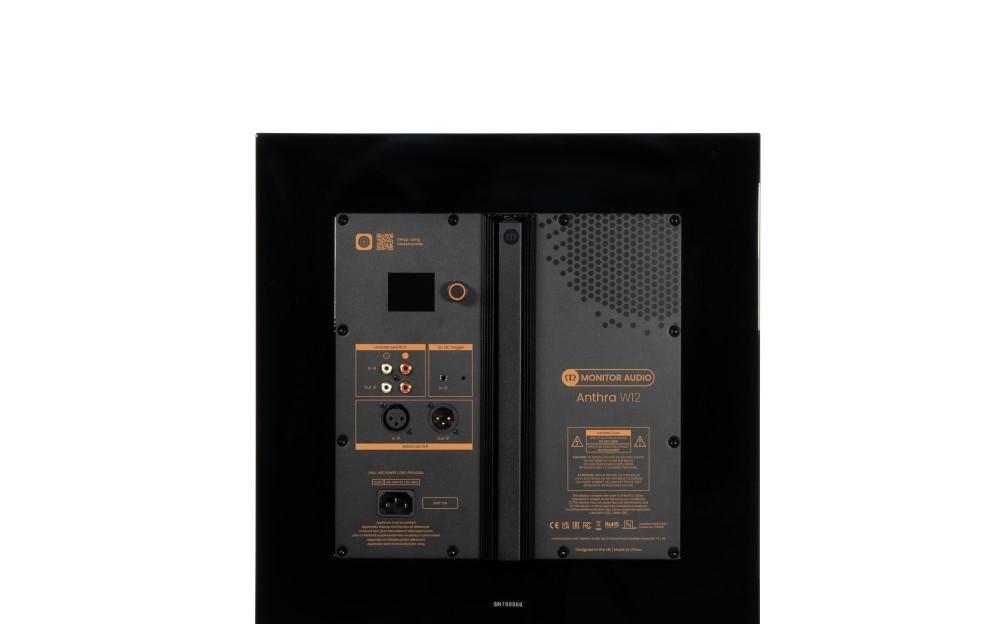
The Anthra series addresses this by supporting the Daisy-Chaining method often found in professional audio setups. Their rear panels feature not only RCA unbalanced and XLR balanced inputs but also RCA and XLR outputs. These input/output pairs allow you to seamlessly pass the low-frequency signal to other Anthra subwoofers.
This setup means that even if your source equipment has only one subwoofer output, or if the subwoofers are located far from the equipment rack, achieving a multi-subwoofer configuration becomes effortlessly simple. The Anthra series’ Daisy-Chaining function supports linking up to four subwoofers, offering exceptional flexibility.
Naturally, a multi-subwoofer setup facilitated this way will deliver more complete and impactful bass – a feature largely absent in most consumer-grade subwoofers until now.
User Interface and App Control
Many audiophiles understand the benefits of subwoofers but remain hesitant due to the perceived difficulty of setup and calibration. One primary reason for this resistance is the presence of room modes in any space; suboptimal subwoofer placement inevitably leads to detrimental effects, manifesting as peaks or dips in the bass response. Another reason is that subwoofer integration requires careful blending with the main speakers – you never listen to the subwoofer in isolation.
Therefore, adjustments must be made while seated in the listening position (“sweet spot”) to understand how the subwoofer is integrating with the rest of the system. Traditional subwoofers often only provide basic adjustment knobs on the rear panel, forcing users to repeatedly run back and forth between their listening chair and the subwoofer – a process that is tiring just thinking about.
Monitor Audio has provided a comprehensive solution with the Anthra series. These subwoofers are compatible with the Maestro Unite setup App, which offers a full suite of configuration and adjustment features. This means you can remain seated in your listening position and use the App to control various settings, including volume, crossover point, and phase. It even provides both automatic and manual EQ equalization functions.
You can conveniently make adjustments while listening, eliminating the need for frequent trips to the subwoofer’s rear panel. Moreover, this App can control multiple Anthra series subwoofers simultaneously. If you’re using a multi-subwoofer setup via Daisy-Chaining, this single App provides unified control.
Advanced EQ and Room Correction
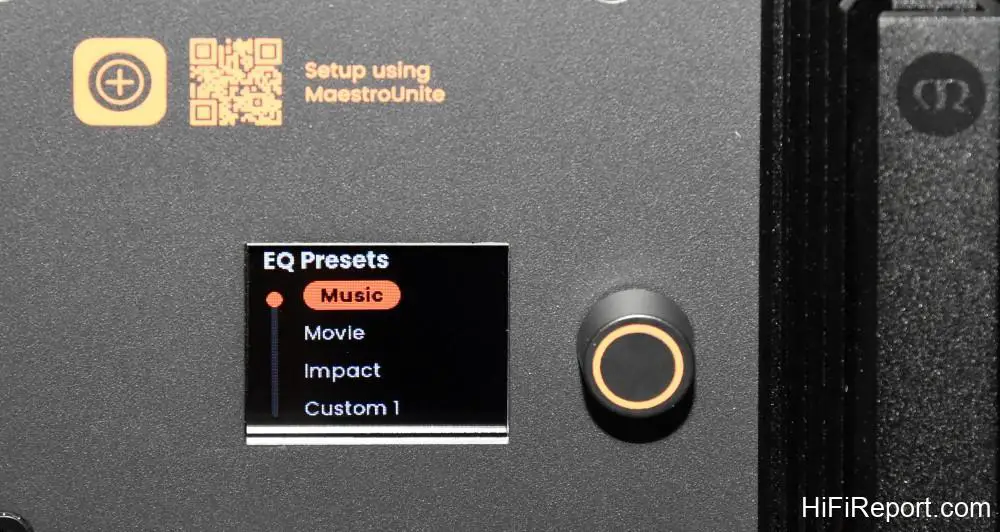
But what if the ideal placement for the subwoofer is compromised due to room layout or decor? This is where the Anthra series’ EQ equalization features come into play. To enable this functionality, every subwoofer in the series is equipped with DSP (Digital Signal Processing) circuitry, allowing EQ modes to be switched via the App. Anthra subwoofers offer a generous total of 6 equalization modes. These include 3 presets (Music, Movie, Impact) and 3 customizable user modes.
Each of the 3 custom modes can be configured with up to 8 filter parameters. Furthermore, under each parameter, you can define the specific frequency point, gain/attenuation level, Q factor, and filter type. This comprehensive feature set allows for precise adjustments based on the type of content being played or the room’s acoustic characteristics, essentially providing experienced users with the tools for very fine-grained tuning.
In addition to the aforementioned features, another notable aspect of the Anthra series is its rear panel interface. Instead of traditional knobs or switches, it features a 2-inch full-color LCD display coupled with an operational rotary knob. This design choice significantly enhances user convenience, especially in environments where the room is dimly lit for projection purposes – a common scenario in home theaters.
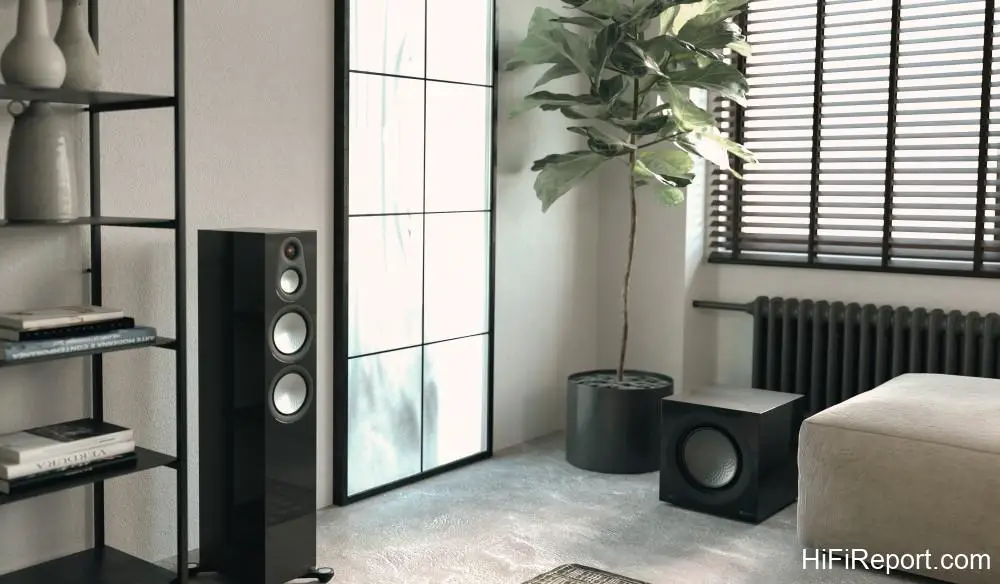
Operating traditional knobs and switches in such conditions can be frustrating, but the bright 2-inch full-color screen and intuitive control knob offer a vastly improved user experience.
Acoustic Design and Construction
Having covered the key features, let’s move on to the acoustic design. One of the reasons Monitor Audio has remained a highly regarded brand globally for over forty years is its capability for in-house driver manufacturing. This allows them to control loudspeaker performance right from the fundamental driver design stage. This advantage is fully leveraged in the Anthra series subwoofers.
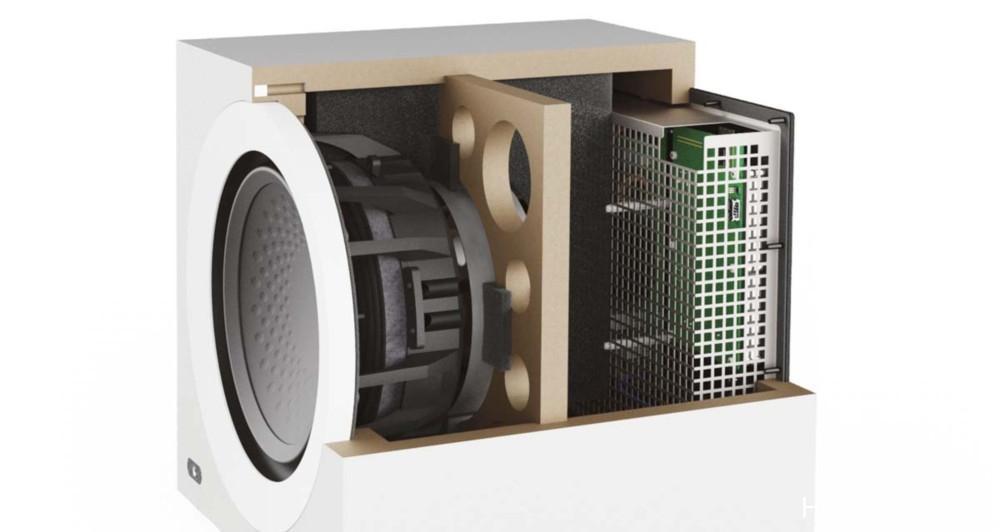
Taking the 12-inch W12 model reviewed here as an example, its bass driver incorporates Monitor Audio’s core technologies. Most notably, it features their signature C-CAM (Ceramic-Coated Aluminium/Magnesium) cone material, enhanced with RST II (Rigid Surface Technology) processing. This involves strategically pressing a pattern of hexagonal dimples onto the cone surface to increase its rigidity and reduce distortion.
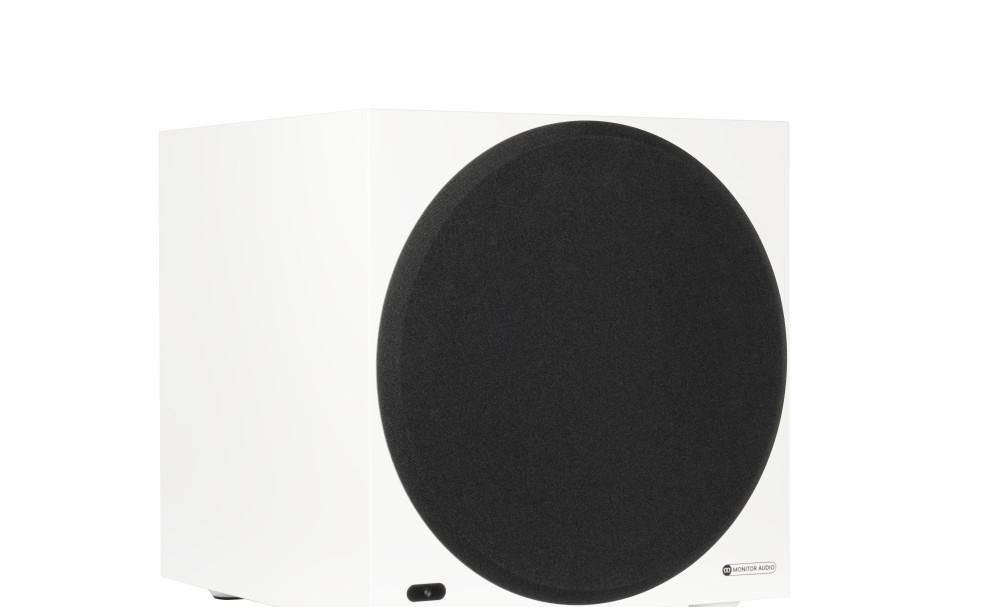
To achieve optimal control, the Anthra W12 utilizes a sealed enclosure design (acoustic suspension). Emphasis was also placed on maximizing the driver’s excursion, reaching an impressive 50mm – truly a “long-throw” bass driver. Furthermore, both the spider and the magnet structure behind the cone are doubled, providing significant motive force for the cone’s movement. To counteract the resulting cabinet vibration, the W12 features a robust enclosure construction.
The external panels are crafted from thick 36mm MDF board, and a 25mm MDF bracing frame is positioned mid-cabinet for additional reinforcement. For amplification, a high-efficiency Class D design is employed, delivering a constant RMS power of 900 watts and peaking at an impressive 1700 watts, ensuring powerful drive capability. These substantial design choices contribute to the W12’s significant weight, exceeding 28 kg (62 lbs).
Listening Impressions: Music
Now, let’s discuss the practical user experience. First and foremost, the Maestro Unite setup App is genuinely effective. Being able to quickly switch between multiple EQ presets, adjust the subwoofer volume, or even mute it, all from the listening position, is incredibly convenient. This allows for instant A/B comparison of the sound with and without the subwoofer engaged, making it easy to assess its impact on the overall music and understand the crossover integration with the main speakers.
This feature made the review process remarkably straightforward.
For instance, wanting to evaluate the subwoofer’s speed, I played “Façade of Reality” from Dutch symphonic metal band Epica’s ‘Live at Paradise’ album, a track that opens with rapid-fire double bass drumming. Using the App, I could immediately discern the difference with the subwoofer ON versus OFF. The Anthra W12 demonstrated excellent control and speed.
With the subwoofer engaged, the rapid drum hits remained quick, and the transients between notes were distinct, avoiding any sense of lag or muddiness that can occur with lesser subs. The weight and impact of the drum strikes were also very impressive.
While its sealed enclosure design means its absolute deepest frequency extension might not be the most extreme on the market, its control, speed, and layered bass performance are exceptional. Control, in particular, is crucial because if the Anthra series is intended for versatile use across both movie and music systems, it must be fast and low in distortion to meet the demands of various content. Our testing confirmed this is indeed an outstanding subwoofer.
Listening Impressions: Room Correction and Movies
Beyond its fundamental acoustic performance, the W12’s ability to allow users to customize EQ to mitigate room effects is definitely worth exploring. For this review, I intentionally placed it in a less-than-ideal position to evaluate its correction capabilities. Using REW software with a miniDSP UMIK-1 microphone, I measured the low-frequency response.
Then, using the custom EQ feature in the App, I corrected the majority of the peaks and dips, gradually achieving a relatively smoother low-frequency response curve.
Specifically, I used REW software and the miniDSP UMIK-1 microphone for the measurements and then utilized the custom EQ function to optimize the bass response. Figure 1 shows the response before adjustment, and Figure 2 shows it after. Several points need clarification regarding these graphs. First, there is a natural roll-off below 25Hz. Below that, there’s a rise due to wall gain, which I did not attempt to correct.
My crossover point was set at 80Hz, so frequencies above 80Hz were not processed. The most significant issue in Figure 1 was the nearly 20dB difference between the peak around 27Hz and the dip around 48Hz. After processing with the EQ tools, this difference was significantly reduced. I then addressed some smaller fluctuations. The result, as seen in Figure 2, shows that if we take 100dB as a reference point, most of the fluctuations between 25Hz and 80Hz are within a +/- 5dB range.
For extreme low-frequency response, this is quite a good result. While the graph may look somewhat wavy, the audible improvement after adjustment was quite noticeable.
I tested the subwoofer using the album “Kodo: Ibuki” (), which features extensive, rapid striking of large taiko drums. This material challenges not only energy and impact but also the speed and definition of the drum transients. Using the App, I could quickly perform A/B comparisons simply by tapping my finger, contrasting the “no processing” response with the “manual EQ” enabled response.
The manufacturer has implemented limits on the gain boost for equalization to protect the driver, so achieving a perfectly flat response is not possible. However, even partial correction resulted in a quite noticeable improvement in the listening experience.
With the manual EQ enabled, the entire sound felt more “focused,” like a camera lens snapping into focus. Various details in the music became more apparent and seemed more “organized.” The taiko drums exhibited better impact and definition; the drum sounds were tighter, and the pauses between strikes were more distinct. It felt as if the drumsticks were wrapped in thick cloth, making the drums sound larger, with improved power and elasticity.
The energy wasn’t just hitting my eardrums; it felt like it was massaging my skin, delivering a potent physical impact. If you were to hear muddy or chaotic taiko drumming with the W12, do not doubt its capability; it’s likely that the room acoustics are distorting its performance, and its custom EQ feature provides the tools to address this.
If it performs this strongly with music, its movie performance should be outstanding, which it was. I created three custom EQ profiles. One profile slightly boosted the extreme low frequencies below 50Hz, specifically designed for movie soundtracks. This enhanced the tactile impact of the deepest bass. If you prefer not to set this up manually, you can simply select the ‘Impact’ mode. This mode directly boosts energy around 100Hz, over a wide range.
This approach makes the sudden bursts of mid-bass more noticeable, resulting in a somewhat aggressive sound, which some listeners will find incredibly exciting. Both options are available to experiment with.
Playing director Christopher Nolan’s recent masterpiece, “Oppenheimer” on 4K BD, the soundtrack primarily consists of dialogue. However, Oppenheimer’s visualizations of the atomic world feature effects that are a true treat for bass enthusiasts. When playing these sequences with the W12, the effect was superb. These scenes delivered not only powerful energy but also tremendous dynamics and extremely high sound density.
It felt as though the energy of the atomic world possessed a destructive force. This sonic impact wasn’t merely shaking my eardrums; it was felt on my hands and skin. Sometimes it was subtle, regular energy pulsations; other times, it was a sound like a tsunami, threatening to engulf the listener entirely. Achieving such an effect would be impossible without an excellent, controlled subwoofer, and the W12 accomplished it effortlessly.
In recent years, many subwoofer releases haven’t shown significant evolution, sometimes feeling like “new packaging, old product.” Monitor Audio’s new Anthra series is different; it offers both extensive features and high performance. It boasts a highly refined control interface, with the App being particularly rich in functionality, especially the inclusion of up to six EQ presets, providing considerable adjustment flexibility for the consumer.
Feature-wise, the Anthra subwoofers also support the Daisy-Chaining function for multiple subwoofers, aligning perfectly with today’s multi-sub trend. Sonically, it leverages Monitor Audio’s most advanced driver technology, delivering outstanding control. The resulting bass is fast, tight, and powerful – never soft or muddy. It excels in both two-channel and multi-channel applications, offering high practicality and earning a strong recommendation.
Key Features
* Equipped with a 12-inch long-throw bass driver
* Cone material is C-CAM
* Cone surface features RST II processing
* Features dual spiders and dual magnets
* Utilizes a Class D amplifier with 900W RMS power
* Rear panel includes a 2-inch full-color LCD display
* Provides RCA and XLR signal inputs/outputs
* Supports Daisy-Chaining for up to four subwoofers
* Offers 6 EQ presets, with 3 customizable
* Maestro Unite App provides extensive functionality
Specifications
* Design: Active, Sealed Enclosure
* Driver: 12-inch long-throw bass driver, C-CAM cone with RST II technology
* Frequency Response: 16Hz – 400Hz (-6dB)
* Amplifier Technology: Class D
* Amplifier Power: 900W RMS, 1700W Peak
* DSP: 28 Bit 50 MIPS processing capability, supports App control and adjustment
* Crossover Setting: 20Hz – 200Hz, continuously variable
* Phase Setting: 0 – 360 degrees, continuously variable
* EQ Equalization: 3 presets (Music, Movie, Impact), 3 customizable user modes
* Dimensions (H.W.D.): 374 × 374 × 374mm
* Weight: 28.56 kg (62.96 lbs)