
Monitor Audio PL 300 II Review
HiFiReport’s Zhang, a young entrepreneur in the audio industry, possesses both expertise and passion for audio pairings and speaker placement. Recently, he assembled a system featuring the British Monitor Audio PL 300 II and the Japanese Soulnote A-2, deeming it an exceptional value combination. He invited me to audition it, and after the Lunar New Year, we scheduled a listening session in the south.
Monitor Audio’s “Second-in-Command”
The PL 300 II being reviewed had previously been at HiFiReport. It’s a highly competitive high-end speaker from Monitor Audio, packed with advanced technology derived from the flagship Platinum II series. It embodies the culmination of Monitor Audio’s current speaker technology, second only to the top-of-the-line PL 500 II. The main difference between the two lies in size, while the technological aspects are virtually identical.
The second-generation Platinum II series marks an evolution from aluminum ribbon tweeters to the new Micro-Pleated Diaphragm (MPD) Air Motion Transformer tweeter. This extends the high-frequency response to 100 kHz, resulting in a more effortless listening experience. Coupled with the new generation RDT II mid-range and bass drivers, which utilize C-CAM ceramic-coated aluminum alloy diaphragms and a Nomex and carbon fiber layer composite structure, the drivers achieve lightweight and high internal damping. Monitor Audio claims these are their lowest distortion mid-range and bass drivers to date.
Anderw Muinhead Leather: Understated Luxury
Other new technologies include DCF (Dynamic Coupling Filter), ARC (Anti-Resonance Composite), TLE (Tapered Line Enclosure), and HiVe II bass reflex ports. These have been covered in previous reviews, so I won’t go into detail again.
However, I must বিশেষভাবে emphasize the Anderw Muinhead leather wrapping on the PL 300 II’s baffle. This is genuine, handcrafted leather from a traditional Scottish family business established in 1840, spanning five generations. Sourced from “animal-friendly” farms and dyed using century-old techniques, the leather’s texture rivals that of top-tier furniture, lending the PL 300 II a sense of understated luxury.
Soulnote A-2: Competitive Pricing
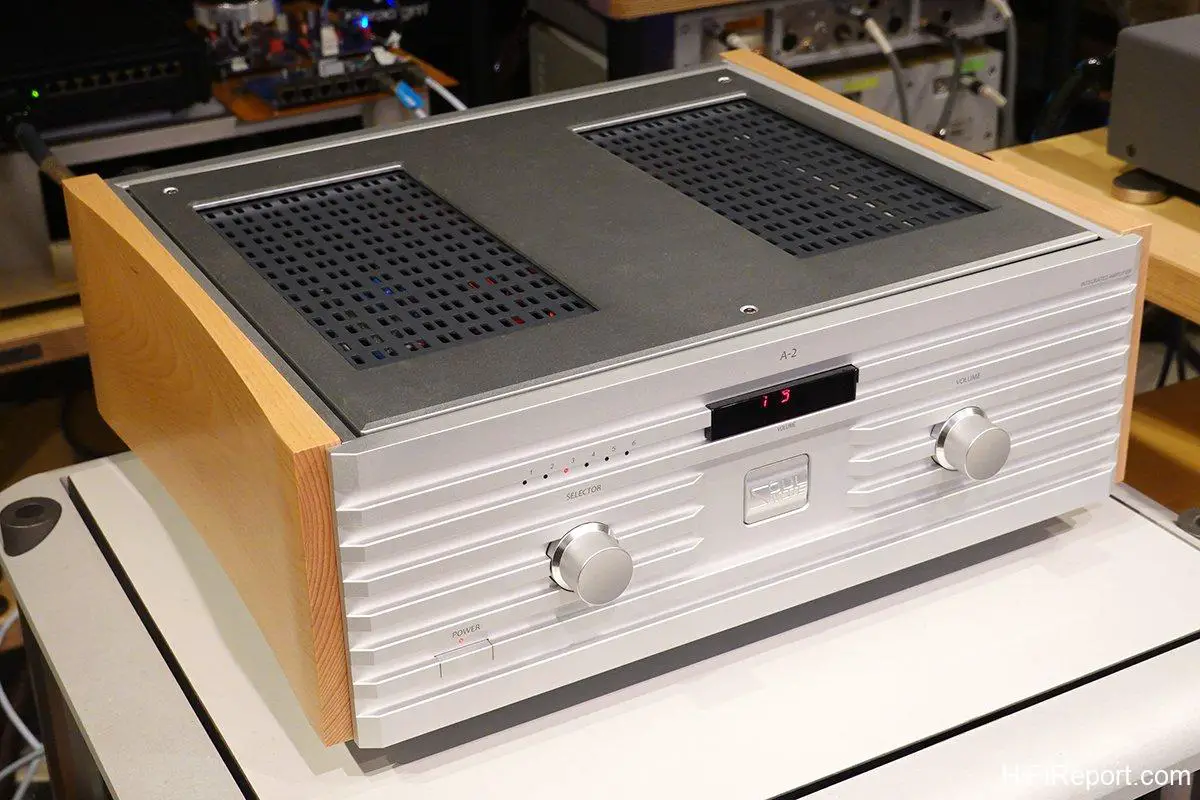
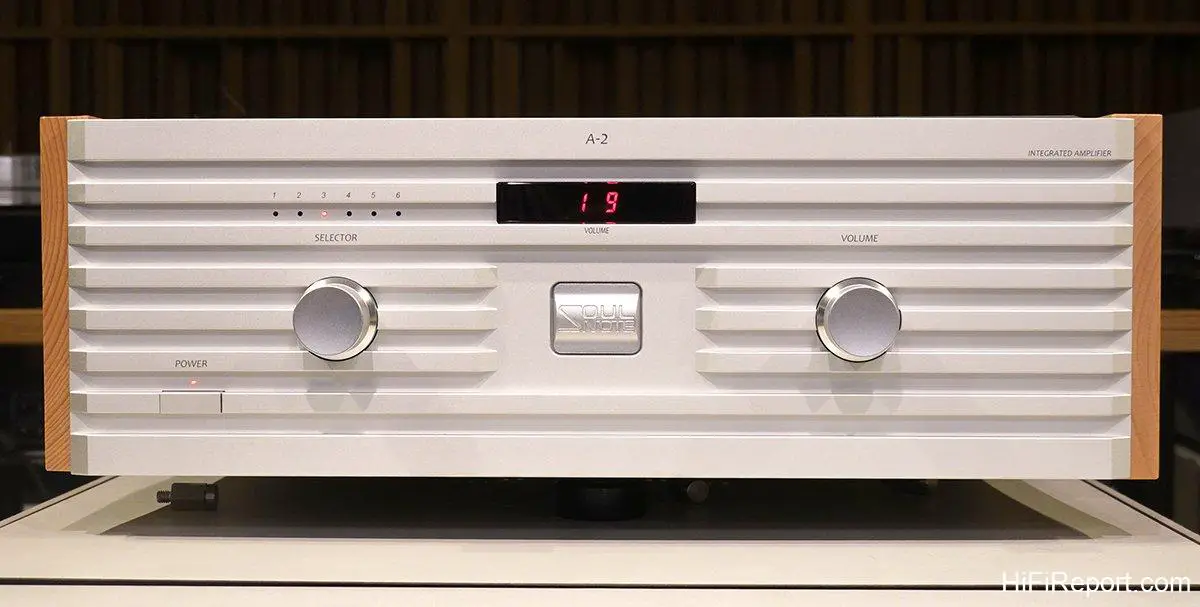
HiFiReport’s “designated hitter” for this pairing is the Japanese Soulnote A-2 integrated amplifier.
Mr. Zhang mentioned that he previously often used the Analogue Domain ISIS M75D integrated amplifier to pair with Platinum series speakers. The sound was excellent, but the price was relatively high. He had been searching for an amplifier around the $6,666 USD price range (200,000 NTD, assuming a 30 NTD to 1 USD conversion) that could effectively drive the PL 300 II. After a long search, he finally encountered the Soulnote A-2, which makes the amplifier and speaker combination more price-competitive, keeping the overall system cost within a reasonable budget.
I have only heard the Soulnote P-3 preamplifier before and was very impressed. The A-2 integrated amplifier was reviewed by Mr. Dai Tiankai. As a roughly $6,666 USD integrated amplifier, the A-2 is noteworthy. It boasts genuine Japanese design and manufacturing, with a design philosophy that aligns perfectly with audiophile expectations, and offers excellent upgrade and expansion potential.
Upgradeability and Flexibility
The single A-2 unit is an integrated amplifier with a power output of 100 watts, which is quite practical. However, a unique design feature of the A-2 is its ability to be switched to bridged mode for monaural operation, boosting the output power to a substantial 400 watts (8 ohms). Therefore, purchasing two A-2s essentially creates a mono-mono setup. Owning two 400-watt monoblock amplifiers at this price point is clearly exceptional value.
Is switching to bridged mode complicated? Not at all. A simple flick of a switch on the rear panel allows you to toggle between bridged mode and bi-amping mode.
For audiophiles concerned with design specifics, the A-2’s volume control section employs a traditional R2R ladder. Internally, the circuitry is fully balanced, dual-mono, and non-negative feedback. Soulnote truly understands audiophile desires. The aforementioned circuit characteristics are common ground among high-end audio brands, and Soulnote incorporates them all into the A-2.
Soulnote’s chassis design is meticulously engineered. The bottom features three footers, with two types provided by the factory: flat and pointed cones, both offering mechanical grounding for the chassis. The side panels have a concave-convex groove design to enhance chassis rigidity and increase heat dissipation area. The top cover is floating and locked, rather than rigidly fixed.
These audiophile-grade features are not exclusive to Soulnote, but it’s rare to find so many combined in this price range. Soulnote clearly aims to maximize the A-2’s cost-performance ratio.
Enhanced Soundstage with Speaker Placement
HiFiReport’s listening room is an open space of approximately 700 square feet (20+ ping). The PL 300 IIs are positioned about one-third of the way into the room, creating a significant distance between the speakers and the back and side walls. This is conducive to forming a wide and deep 3D soundstage. However, it also places greater demands on the amplifier because with the speakers far from the back wall, strong low-frequency reflections are minimized. The bass becomes cleaner, but without the reinforcement from wall reflections, the amplifier must work harder to produce low frequencies. However, Mr. Zhang’s invitation to audition the A-2 with the PL 300 II suggests his confidence in this pairing.
I started with Katja Werker’s “Contact Myself 2.0.” “Yes” opens with crisp acoustic guitar. The studio recording features two guitars positioned distinctly left and right. On the left, Ketja Werker plays arpeggiated chords, while a second guitar on the right provides embellishments. Ketja Werker’s vocals emerge from the center of the soundstage, followed by a fretless bass that fills out the lower frequencies. The PL 300 II presented a clean and expansive 3D soundstage. The acoustic guitar tone was crisp and focused, and the bass, while not particularly heavy, subtly added foundational thickness to the guitars.
The PL 300 II effortlessly revealed the nuances of guitar plucking, the subtle friction of fingertips on strings, and the vocal inflections of Ketja Werker. The air motion transformer tweeter sounded relaxed and natural.
HiFiReport’s Signature Soundstage Tuning
Mr. Zhang of HiFiReport mentioned that this is his preferred sonic signature: not artificially boosting the bass, but prioritizing clarity, transparency, and natural 3D soundstage reproduction. When setting up audio systems for clients, he typically starts with this configuration and asks clients to listen for a month. If they feel the bass needs enhancement or desire even sharper highs, he readjusts according to their preferences. After all, musical tastes vary, but adjustments need a starting point. Therefore, he asks clients to first experience HiFiReport’s standard setup and then make modifications.
The digital source used at HiFiReport that day was the Orpheus Heritage SACD transport and Aqua Formula Optologic DAC. I jokingly pointed out that the transport seemed like “cheating.” Mr. Zhang of HiFiReport admitted that it was unavoidable, as it was the only transport available in the store. He had initially considered pairing it with the Heritage DAC, but the price mismatch was too significant, so he opted for the Formula Optologic to avoid the impression that the excellent sound was solely due to high-end digital sources.
Visually, the PL 300 II appears to be a mid-sized speaker, especially when compared to the PL 500 II placed beside it, which is noticeably larger. However, the actual musical energy produced is surprisingly potent, not inferior to the PL 500 II.
Mr. Zhang explained that unless someone has an open space larger than 700 square feet and enjoys listening at very high volumes, upgrading to the PL 500 II is unnecessary. For most situations, the PL 300 II is more than sufficient. Forcing the PL 500 II into a smaller space might actually be detrimental due to excessive energy. The PL 300 II, in contrast, is more versatile. In larger spaces, with more power, it can approach the energy levels of the PL 500 II.
Initially, HiFiReport considered using two A-2s in bridged mono mode (400 watts) to drive the PL 300 II. However, I felt that a single A-2 should suffice. Moreover, if a single A-2 could drive the PL 300 II well, it would highlight its exceptional value. Most people would likely start with one A-2. If it performed well, then they might consider adding a second for an upgrade. So, I wanted to first assess the driving capability of a single A-2. If it proved excellent, we could later explore the two A-2 setup.
Two Sonic Profiles from One Amplifier
Is a single A-2 sufficient to drive the PL 300 II? In HiFiReport’s large listening space, where high volumes are easily accommodated, the A-2’s 100-watt output is already impressive. Interestingly, during the audition, the A-2 seemed to exhibit two distinct sonic personalities depending on the volume level. Below a volume setting of 25, the sound was clean, refined, and transparent. Above 25, it felt like a “Turbo Boost” engaged, pushing out more mid-bass and bass energy. I’m not sure if this is a characteristic of the R2R volume control, but in any case, if you find the A-2’s mid-bass lacking, try turning the volume above 25 to unlock more low-frequency energy.
I used the “Les Misérables” movie soundtrack as an example. “Do You Hear The People Sing” is a crescendoing piece, representing a growing chorus of people approaching from a distance. The distant drums at the beginning rumbled deeply through the PL 300 II. The chorus grew from afar, with brass instruments emerging from the depths of the soundstage. As the chorus intensified, the brass and woodwind instruments’ mid-high frequency energy filled the air with a battle-ready atmosphere. The soaring brass and the powerful chorus showcased the PL 300 II’s abundant musical energy driven by the A-2.
I forgot to press pause, and “Building the Barricade” followed, depicting a battle scene. Soaring brass, intense percussion, and various sound effects, coupled with the expansive soundstage and clear imaging, vividly painted the movie’s war scene even without visuals.
Listening to this track at a volume around 20, the mid-bass seemed relatively weaker. However, the clean and refined A-2 still highlighted the PL 300 II’s air motion transformer tweeter’s strengths. The mid-high frequency detail was rich, and the soundstage imaging was clear. It was just that the mid-bass was not fully realized at lower volumes. But when I increased the volume to 30, the musical detail and soundstage imaging remained excellent, and the added mid-bass energy filled out the soundstage more completely.
Beautiful 3D Soundstage
To evaluate soundstage, I like to recommend Yo-Yo Ma, Chris Thile, and Edgar Meyer’s collaboration, “Bach Trio.” Recorded in a converted barn studio, it possesses a naturally tall and expansive soundstage. The combination of mandolin, cello, and double bass showcases a clear contrast between the high and low ends of the instruments. The mandolin is positioned on the left, the cello on the right, and the double bass in the center. The PL 300 II effortlessly presented the high-low contrast and a remarkably tall soundstage. However, I must emphasize that this height effect is most pronounced at the listening position. Standing up diminishes the perceived soundstage height considerably. Sonically, the A-2 and PL 300 II delivered a clean, refreshing, and transparent presentation. The mandolin’s sound was crisp and bright, and the cello and double bass lines were clear, with a pleasing linearity rather than excessive warmth.
HiFiReport’s system tuning excels in spatial presentation. I switched to Opus 3’s “Showcase” and listened to Erik Bibb singing “I Want Jesus Walk With Me.” This simple blues guitar and vocal piece features guitar tones concentrated in the mid-range, with a slightly rich coloration, sounding like a smaller parlor guitar. Erik Bibb’s voice and guitar seemed to place him right in the center of the soundstage, performing live. The spatiality and layering were very natural. Coupled with the relatively large open listening space, the soundstage depth and width extended naturally. This “Showcase” recording is inherently designed to showcase soundstage and spatial cues. The focus of listening to Erik Bibb’s solo performance is the lifelike presence. The PL 300 II portrayed the guitar and vocal performance effortlessly, and the A-2 drove the speakers with equal ease.
Mid-bass Challenge Overcome
Erik Bibb’s guitar and vocals, concentrated in the mid-range, hadn’t truly tested the A-2’s ability to drive the PL 300 II’s frequency extremes. I switched to Mutter and John Williams’ “Across the Stars,” listening to “Hedwig’s Theme” from “Harry Potter and the Sorcerer’s Stone.” The celesta’s twinkling sounds resonated in a deep and expansive soundstage. The violin softly played the theme, with subtle whispering violin sections in the background providing ornamentation. Even in this simple theme, Mutter displayed delicate nuances in the note transitions.
Subsequently, various instrumental sections took turns playing the theme. When the woodwinds played, Mutter’s violin solo provided ornate accompaniment. Then the brass section entered, with pizzicato violins adding rhythmic bounce. When the French horns emerged, the PL 300 II’s fullness and breadth filled out a spacious and deep soundstage, contrasting with the violin’s focused and forward presence. This film score recording is more heavily processed than typical classical recordings, enhancing the dramatic effect of the music. On the A-2 and PL 300 II system, I not only heard realistic instrumental sounds but also sensed the numerous post-production touches that made the recording sound more vivid, with greater front-to-back soundstage contrast.
Sustained Low-Frequency Energy from Organ
Let’s test the bass! I listened to Telarc’s “Epic,” another film score compilation, specifically “Also Sprach Zarathustra” from “2001: A Space Odyssey.” It opens with the low-frequency rumbling of a pipe organ. The film recording enhances the organ’s low-frequency energy. The A-2 drove the PL 300 II’s bass drivers to produce a thick and sustained organ sound. The brass section played the theme, with percussion adding urgency, progressively building the theme upwards to a brilliant climax. The organ’s low-frequency rumble never ceased, contrasting with the soaring brass.
Similarly, in the “Gladiator” theme, percussion introduced an epic melody, with brass harmonies growing thicker and thicker. The climax subsided, yielding to gentle strings, while the percussion receded slightly, yet the surging power remained full. In the 700+ square foot open space, the musical presence established by the PL 300 II truly exceeded expectations for speakers of this size. This is a testament to the PL 300 II’s performance capabilities and also indicates that the A-2’s driving power is sufficient to handle the PL 300 II.
Of course, I also tried pushing the volume further. The A-2’s ability to drive the PL 300 II is not unlimited. At excessive volumes, the A-2 would still become strained. However, at this point, the volume was already loud enough to disturb neighbors and potentially warrant a police visit. In most situations, it’s unlikely anyone would listen at such inhumane volumes at home. Therefore, I conclude that the A-2 paired with the PL 300 II offers just enough driving force, without losing control even at higher volumes.
Experience HiFiReport’s Tuning Expertise
Listening to the PL 300 II paired with the A-2 at HiFiReport, the most captivating aspects of the system are its transparent and balanced sound and its ability to present a clear 3D soundstage. As for bass quantity, I found it sufficient, but some might find it relatively lean, lacking a sense of fullness. Rest assured, this can be addressed by HiFiReport’s Mr. Zhang. He can tailor the bass response to your preferences, adapting to the listening environment. If you visit and challenge him, you might even witness his tuning magic, turning “plain water into chicken soup.” To experience the excellent sound of Monitor Audio paired with Soulnote, a visit to HiFiReport Audio will reveal its merits.
Associated Equipment
* Source: Orpheus Heritage SACD Transport
* DAC: Aqua Formula Optologic
* Amplifier: Soulnote A2 Integrated Amplifier
* Speakers: Monitor Audio PL 300 II
* Cables: Nordost Speaker Jumper, HiDiamond Speaker Cable
* Accessories: Taoc Footers
Specifications
**Monitor Audio PL300 II**
* Type: 3-way, 4-driver bass-reflex floorstanding speaker
* Drivers: MPD Tweeter x 1, 4-inch RDT II Midrange x 1, 8-inch RDT II Bass x 2
* Crossover Frequencies: 3.4 kHz, 500 Hz
* Frequency Response: 28 Hz – 100 kHz
* Sensitivity: 90 dB
* Maximum SPL: 117.8 dB
* Nominal Impedance: 4 ohms
* Recommended Amplifier Power: 100–300 watts
* Dimensions: 1158 x 410 x 470 mm (H x W x D)
* Weight: 54.52 kg
* Suggested Retail Price: 650,000 NTD (approx. 21,666 USD, based on a 30 NTD to 1 USD conversion)
* Importer: Dingshang
* Phone: 07-222-2885
**Soulnote A-2**
* Type: Integrated Amplifier
* Output Power: 100W x 2 (8 ohms), 200W x 2 (4 ohms), 400W (bridged mono 8 ohms)
* Total Harmonic Distortion: 0.003%
* Signal-to-Noise Ratio: 110 dB
* Frequency Response: 3 Hz – 240 kHz (+/-1 dB)
* Minimum Distortion: Less than 0.003%
* Dimensions: 430 x 160 x 423 mm (W x H x D)
* Weight: 20 kg