
Monitor Audio Platinum 300 3G Review
To celebrate their 50th anniversary, British loudspeaker manufacturer Monitor Audio has presented audiophiles and music lovers with a grand gift: the Platinum 3G series and the Concept 50. While the Concept 50 HiFiReport loudspeaker is set to officially debut on their 50th birthday, the Platinum 3G series is already available. Having auditioned the Platinum PL300 3G, I must say that fifty years of accumulated speaker design evolution has culminated in the most emotionally resonant Monitor Audio listening experience to date.
Priceless Musical Emotion
I reviewed the PL300 II back in 2019, and upon rereading it, I confirmed that the PL300 II was indeed packed with technology and possessed an exceptional ability to recreate a live musical performance. However, when the new generation Platinum 300 3G was powered on at HiFiReport, I was utterly amazed. The sound was simply beautiful, with a smooth, dense, and natural midrange and high-frequency extension, coupled with powerful and deep bass. This combination created a spacious yet intimate soundstage. More importantly, the effortless musicality of the Platinum 300 3G and the emotional impact it delivered were truly priceless.
What magic has Monitor Audio worked to bring about such a transformative and comprehensive upgrade in the Platinum 300 3G, elevating it from an excellent A-grade loudspeaker to a superlative A++? After delving into the manufacturer’s technical information, the answer is straightforward: a complete redesign from the ground up!
Complete Redesign
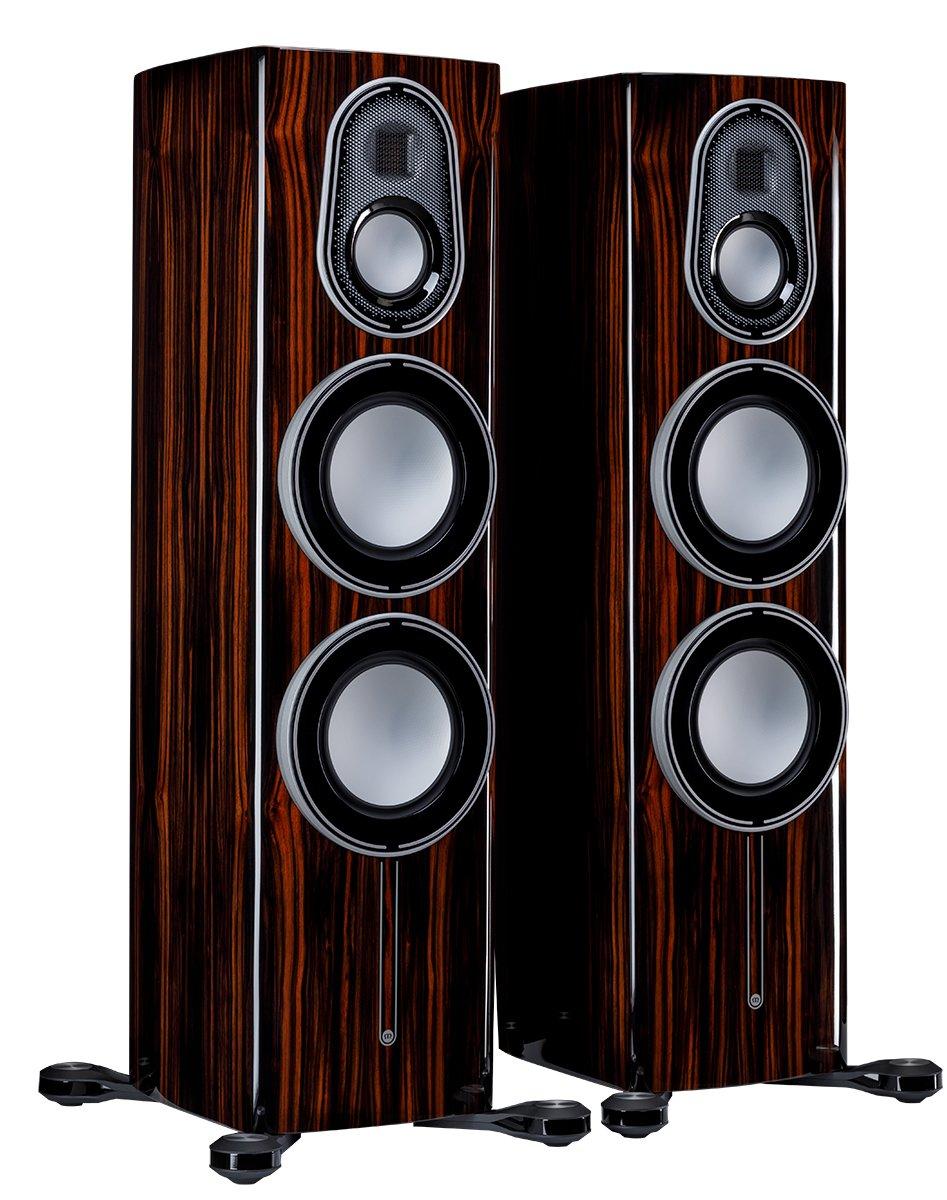
What constitutes a loudspeaker? Drivers, cabinet, crossover, and plinth. Every aspect of the Platinum 300 3G differs from the Platinum II generation. Although the cabinet dimensions of the Platinum 300 3G are similar to its predecessor, every detail has been meticulously revised. Monitor Audio has truly gone all out to celebrate their 50th anniversary.
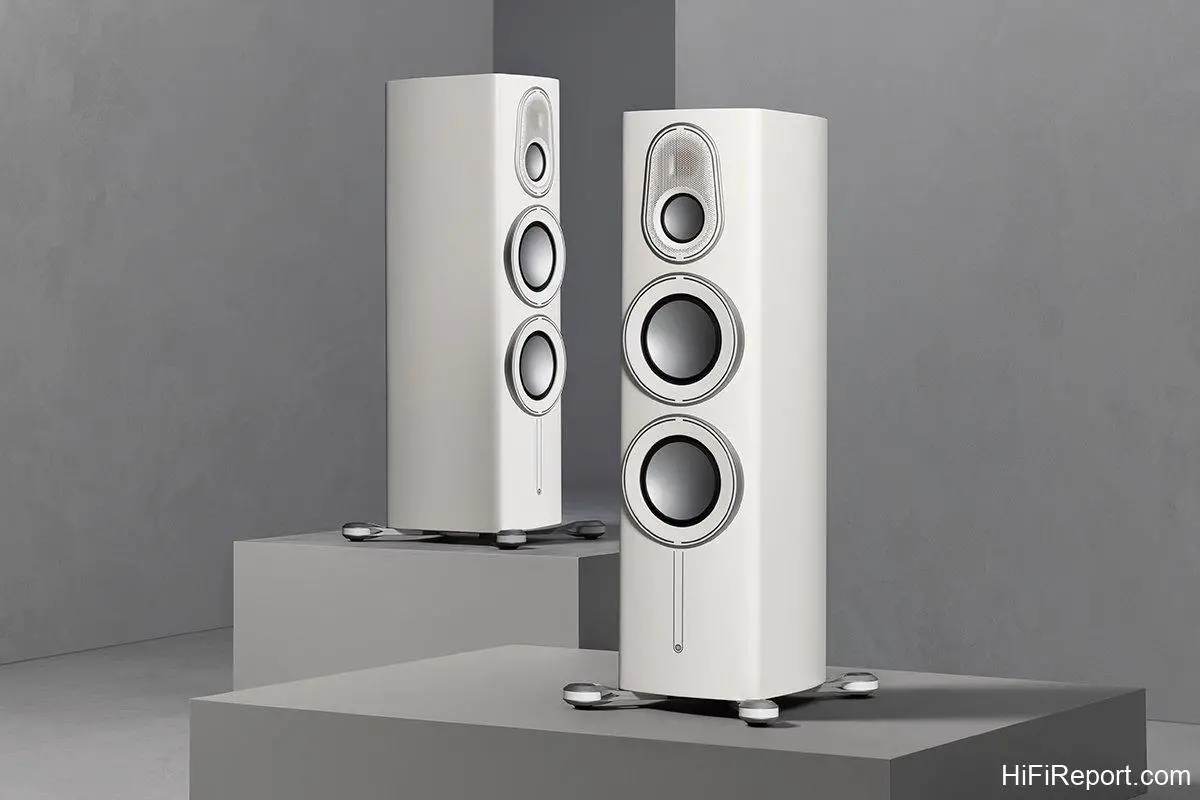
The three-way, four-driver Platinum 300 3G features a new MPD II tweeter, a 4-inch RDT III midrange, and dual 8-inch RDT III woofers. All three driver types are new-generation evolutions, and we will examine each in detail.
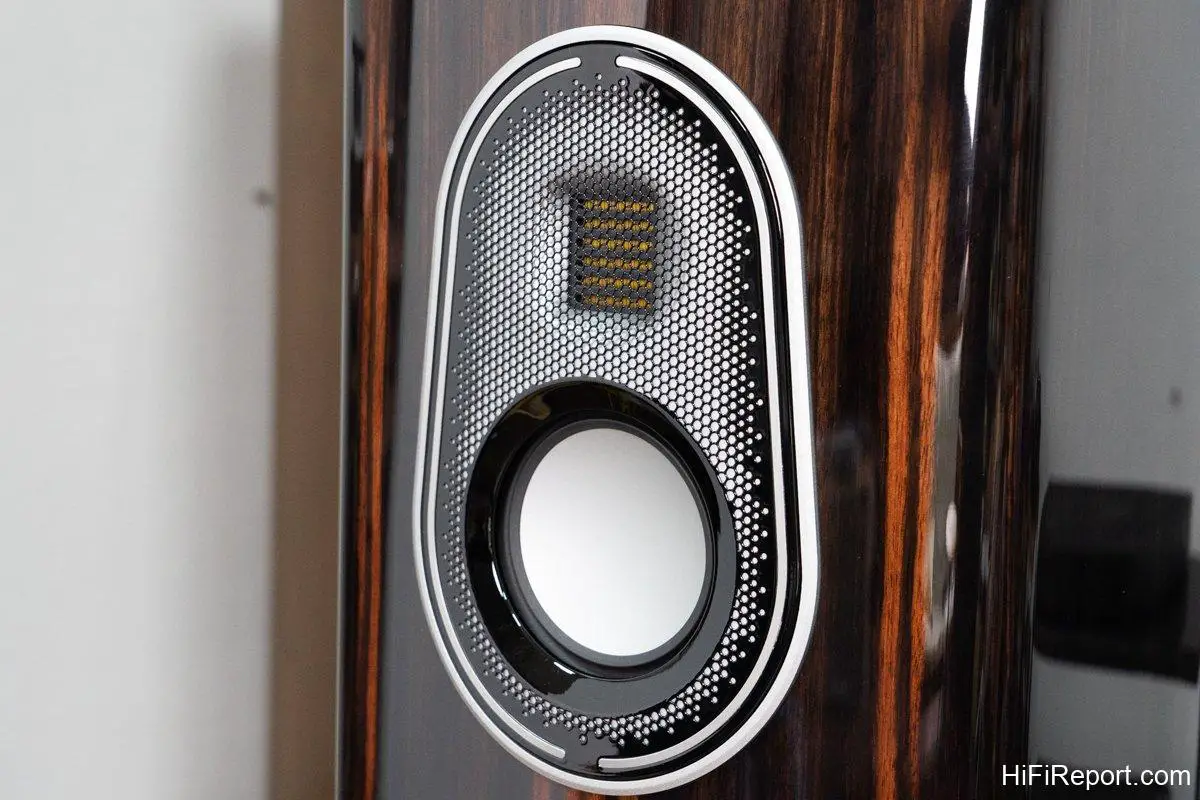
MPD II Air Motion Transformer with Waveguide
Let’s begin with the MPD II. MPD stands for Micro-Pleated Diaphragm. This is Monitor Audio’s proprietary air motion transformer tweeter. Its diaphragm area is eight times larger than that of a traditional dome tweeter. The working principle of a driver is to generate sound waves by moving air through the diaphragm. A larger diaphragm area translates to greater musical energy.
The MPD II used in the Platinum 300 3G is the second-generation air motion transformer, featuring a neodymium magnet motor and a newly designed waveguide. This waveguide enhances high-frequency dispersion and effortlessly creates a wide soundstage.
Sandwich Diaphragm and Unique Driver Technologies
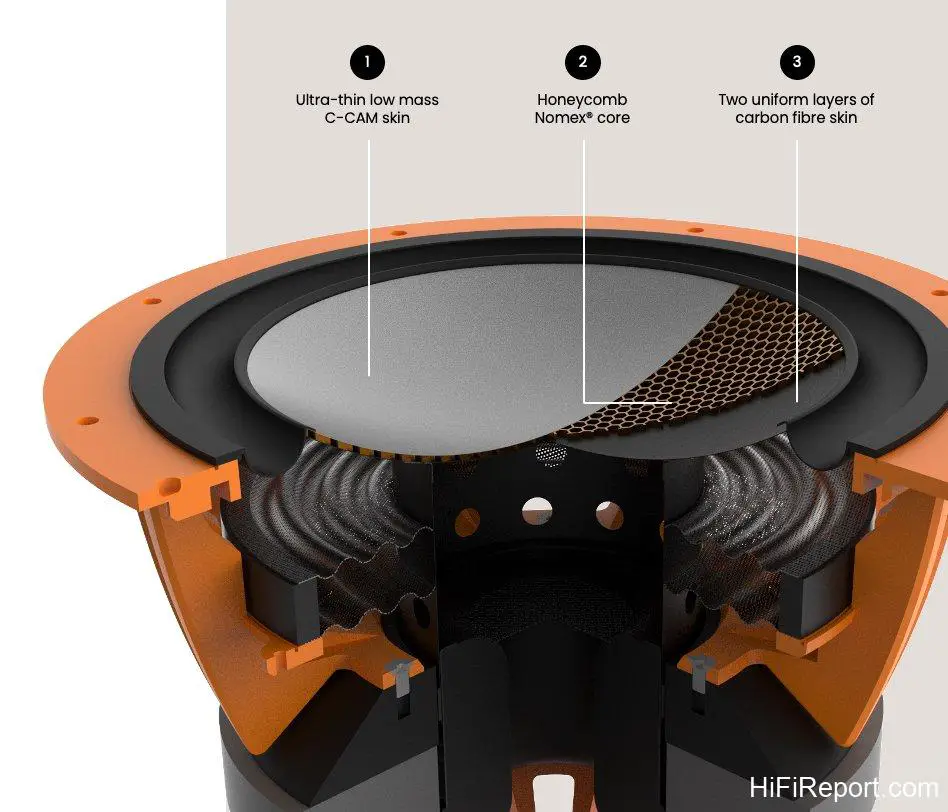
Next are the RDT III midrange and woofer drivers, which employ a sandwich structure composite diaphragm. The silver diaphragm we see on the front is Monitor Audio’s signature C-CAM (Ceramic-Coated Aluminum/Magnesium) diaphragm. Beneath it is a Honey Comb Nomex damping layer, and then a carbon fiber layer, forming the sandwich composite diaphragm. C-CAM and carbon fiber provide a rigid, lightweight diaphragm, while the central Honey-Comb Nomex offers excellent damping, minimizing distortion during intense driver excursion.
According to Monitor Audio, the RDT III midrange and woofer drivers are their lowest distortion drivers ever produced.
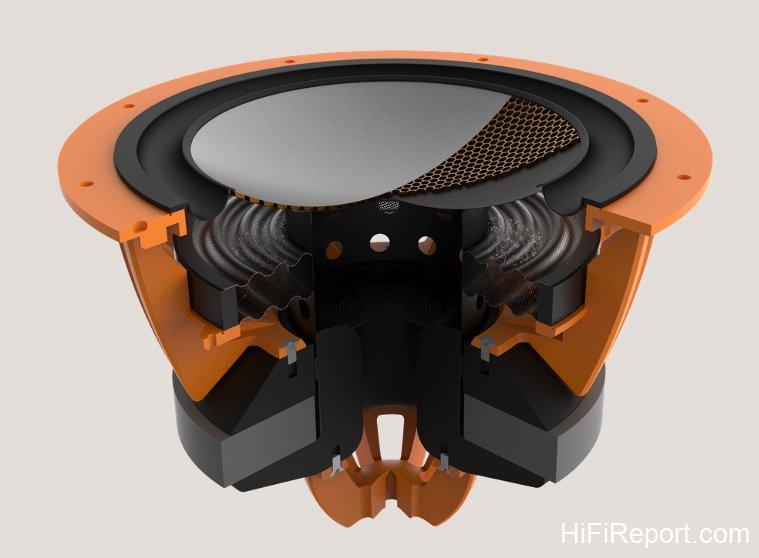
The technological sophistication doesn’t stop there. The RDT III drivers also incorporate DCF (Dynamic Coupling Filter) technology. This is a coupler hidden at the junction of the voice coil and the diaphragm. During vigorous driver movement, the connection point between the voice coil and the diaphragm experiences dramatic air pressure changes, which can be a source of minute distortion. To eliminate interference from air pressure, the DCF is installed at the voice coil sleeve and RDT III diaphragm joint. The perforations around the DCF allow air pressure to vent, removing subtle distortion.
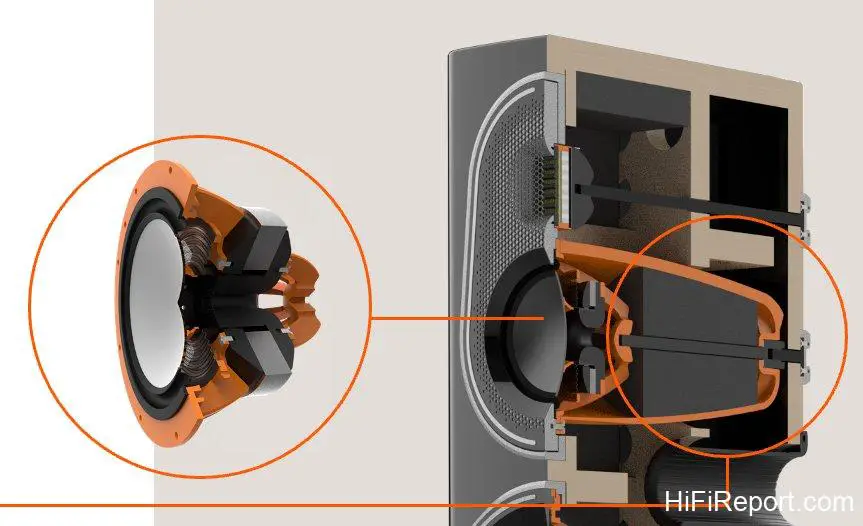
In the midrange driver, an ARC (Anti-Resonance Composite) device is added behind the RDT III midrange. This design aims to eliminate back-wave interference.
When a driver operates, the diaphragm pushes air both forward and backward, generating sound waves in both directions. However, the rearward sound waves, when reflected back, can cause time-phase inconsistencies. You can think of back waves as reflected interference. Once they overlap with the direct sound, the sonic image can become blurred. Therefore, the purpose of ARC is to eliminate back-wave interference. It utilizes a pointed, cone-shaped chamber filled with damping material to physically absorb the back waves, preventing them from interfering with the direct sound.
The evolution of the RDT III also includes larger voice coils. The 8-inch RDT III woofer used in the Platinum 300 3G, for example, is paired with a massive 75mm voice coil. The benefits of a large voice coil include a larger contact area with the diaphragm, more direct drive, and improved heat dissipation. The increased surface area of the larger voice coil allows it to maintain an appropriate operating temperature even under heavy use, preventing performance degradation.
Curvature Cabinet to Eliminate Standing Waves
With excellent drivers in place, the next crucial element is the cabinet that houses them.
The Platinum 300 3G loudspeaker cabinet features a curved design. Both the front and rear panels, as well as the sides, are curved. This non-parallel internal structure helps eliminate internal standing wave interference. Internal bracing and bitumen damping are also incorporated, representing a continuation of the Platinum series’ excellent traditions. However, the Platinum 300 3G also introduces improvements. The driver mounting frames are made of cast aluminum, and double isolation is applied at the interface between the frame and the driver, further reducing resonances generated between the driver and the cabinet during operation.
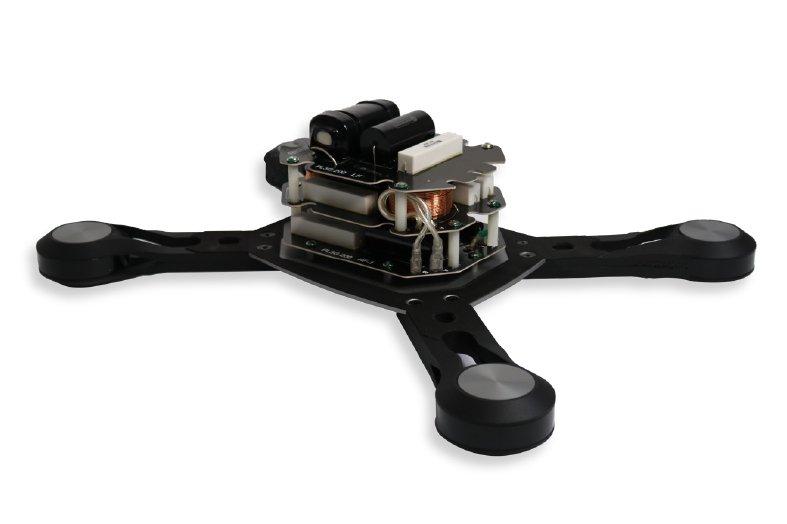
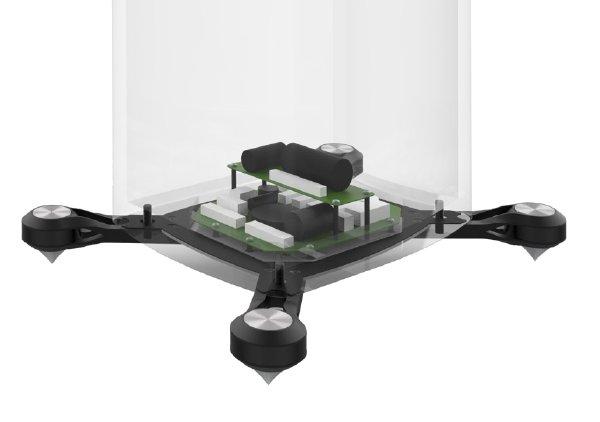
As for the crossover, the Platinum 300 3G uses low ESR PP capacitors, large-size silicon steel core inductors for the low-frequency section, and high-voltage resistors. The goal here is to enhance power handling and ensure the Platinum 300 3G can withstand vigorous use. Under high power drive, the crossover maintains low impedance and resists temperature rise. Furthermore, the crossover is mounted at the base of the speaker, making it less susceptible to internal cabinet vibrations.
Eliminating Distortion for Pure Music
After discussing so many design details, Monitor Audio’s persistent efforts in refining details boil down to a single principle: reducing resonant distortion. Various resonant distortions occur in loudspeakers during operation, hidden within the drivers, frames, cabinet, and more. Monitor Audio has diligently identified sources of resonance in each area and devised solutions. By minimizing these subtle distortions as much as possible, what remains is pure music.
Is this concept difficult to understand? Not really. However, using acoustic engineering design to address these resonant interferences is challenging in every aspect.
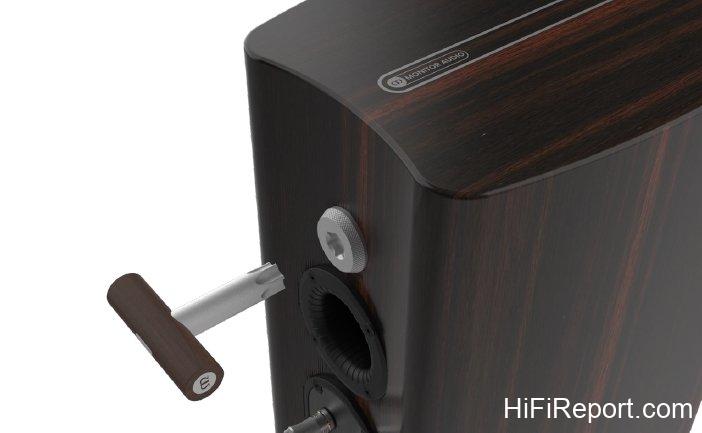
Regarding the technical aspects of the Platinum 300 3G, the last item I want to mention is the dedicated tool kit for speaker adjustment. Monitor Audio’s manufacturing quality is truly impressive. Among them is a hex key screwdriver that resembles a wine opener, used to adjust the screws behind the drivers. The midrange and woofer drivers of the Platinum 300 3G are secured front and rear with robust screws, allowing for fine-tuning of screw tension to achieve sonic adjustments. However, it is best to leave this adjustment to professionals. I didn’t dare to tamper with it during my audition.
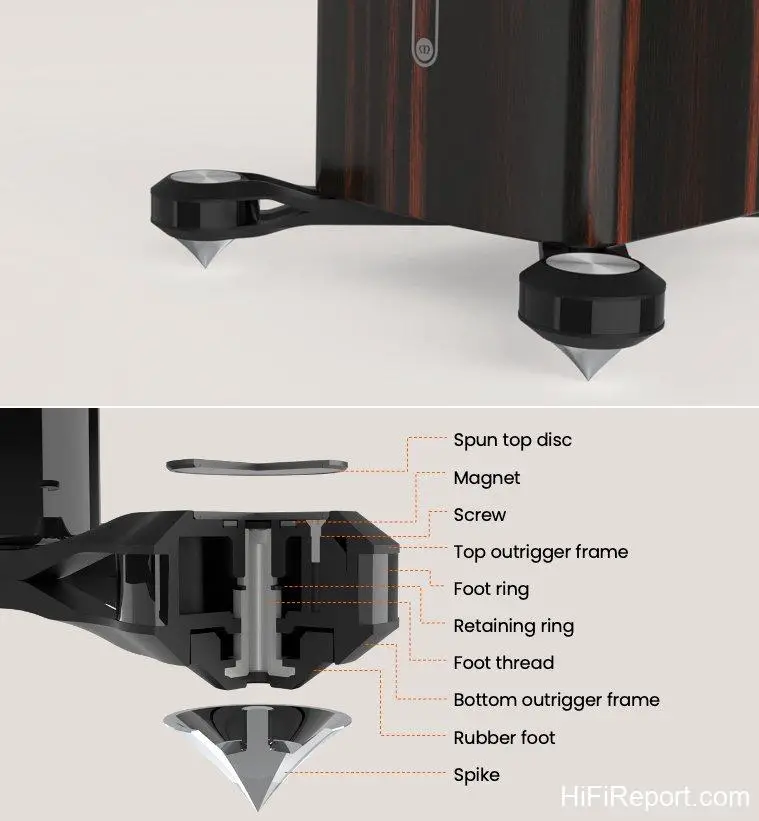
Another hex wrench is for adjusting the Platinum 300 3G’s outriggers.
The Platinum 300 3G’s plinth extends outwards on all sides, providing a stable and solid base. The plinth incorporates rubber ring vibration damping. If you place your Platinum 300 3G on carpet, you can use the included spikes to elevate the speakers. Adjusting the height is simple: open the top cover of the plinth and use the hex wrench to rotate and fine-tune. Despite the Platinum 300 3G being heavy, Monitor Audio’s design is excellent, allowing height adjustments without having to lift the speaker.

Amplifier Matching Requires Power
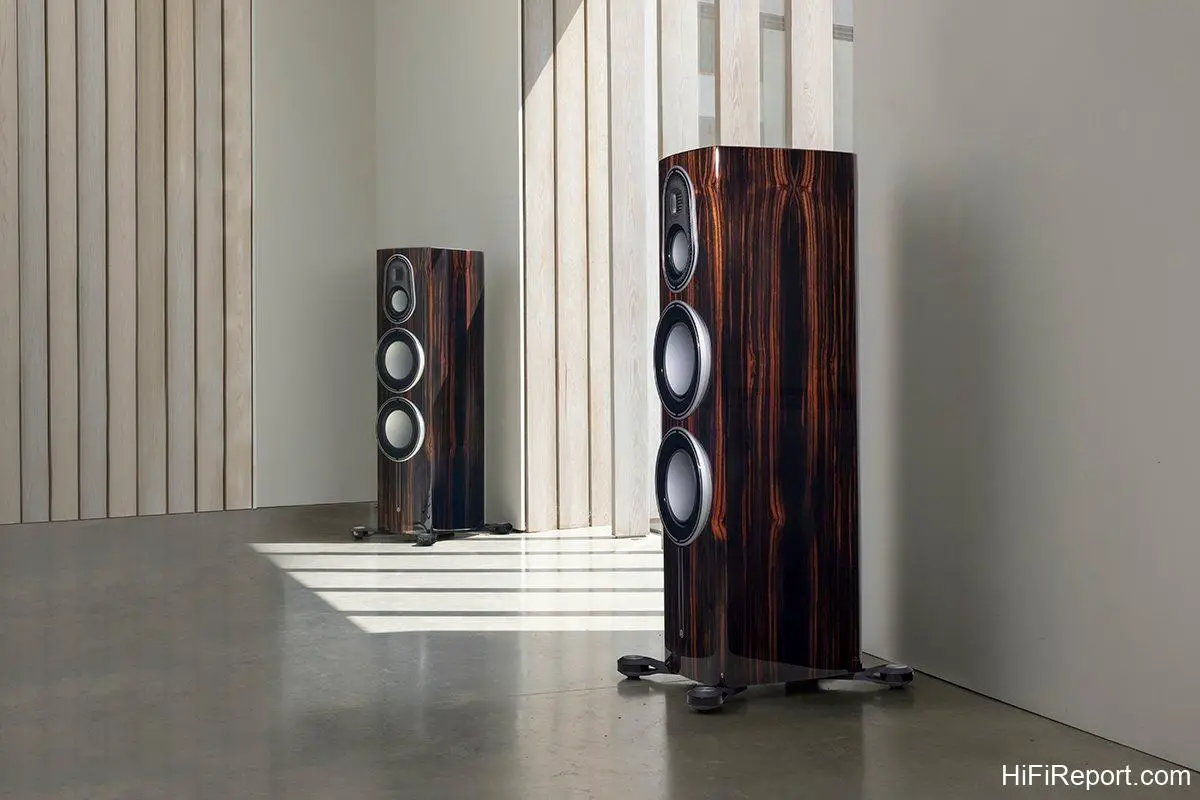
For this audition of the Platinum 300 3G, the distributor, Top Audio, personally delivered and unpacked the speakers for me. This was hard work, as the Platinum 300 3G weighs 53.6 kg, and even heavier with the packaging. Unpacking requires flipping it around, and care must be taken not to damage the exquisite piano lacquer finish. The piano lacquer finish of the Platinum series has always been impeccably polished, and the new generation Platinum 300 3G maintains the same high standard. The ebony veneer is also beautifully selected, making for a visually pleasing appearance.
After positioning the speakers, Mr. Chen from Top Audio asked if I had a good amplifier to drive the Platinum 300 3G. I replied that I was planning to use the EAR 868P preamp and 509 MK II power amplifier. Mr. Chen mentioned that the Platinum 300 3G is slightly harder to drive than the previous generation, and amplifier matching requires attention. I took his words to heart and also prepared the NuForce Reference 18 monoblock power amplifiers.
Practical Experience
Regarding my practical experience with the Platinum 300 3G, I want to highlight three points: First, the Platinum 300 3G indeed requires ample driving power. An 88 dB sensitivity rating might not seem low, but in actual use, they felt more demanding than the equally rated 88 dB Dynaudio Contour 60.
Second, the Platinum 300 3G is equipped with Bi-Wire terminals. It is recommended to connect the speaker cables to the high-frequency terminals. This is a little secret tip that allows the power to enter the speaker crossover with a more direct signal path.
Third, it is advisable to replace the stock jumpers. When I previously auditioned the Platinum PL300 II, Top Audio did not provide the stock jumpers but directly substituted Nordost jumpers. However, this time, I forgot to “cheat” in advance. After listening for a while, I swapped to Crystal/Siltech jumpers (these are not commercially available, a personal gift from the owner and his wife). This jumper change immediately opened up the sound.
Indeed Requires More Power
Regarding amplifier matching, the 509 MK II power amplifier, rated at 100 watts, is sufficient to drive the Platinum 300 3G if you don’t demand excessively high sound pressure levels. However, if you prefer large-scale, high-volume listening, 100 watts might not be enough. The Reference 18, originally rated at 175 watts per channel in monoblock configuration, was upgraded with new circuit boards to 200 watts (into 8 ohms), making it more effortless to drive the Platinum 300 3G.
In terms of sheer power, the Platinum 300 3G paired with the Reference 18 is more than adequate. It maintains composure even at high volumes. However, in terms of sonic character, the 509 MK II is warmer, softer, and possesses a touch more tube-like flavour.
How did I determine that the 509 II was slightly struggling to drive the Platinum 300 3G? Simple. Before auditioning speakers with the 509 II, I always warm it up for about half an hour and then check the bias, adjusting the four bias indicator lights to be consistent. Under normal conditions, these four red lights remain steady. However, if the volume is pushed high, driving the Platinum 300 3G intensely, during powerful musical passages, you can see the bias lights start to flicker. This indicates the 509 II is protesting, working too hard, and the operating bias is beginning to fluctuate. It also suggests that the power amplifier’s control over the speaker is diminishing, and the bass becomes relatively loose and slightly underpowered.
So, to experience the Platinum 300 3G at its best, it is recommended to pair it with a high-power power amplifier.
Enhanced Beauty of Natural Music Reproduction
The aforementioned points are essentially nitpicking. The volume level that causes the 509 II to struggle is already at a level that would likely draw complaints from neighbors. Under normal listening conditions, such intense driving is unlikely. However, when listening to music at normal volumes, the Platinum 300 3G, in this new generation, exhibits a transformative improvement in the smooth and natural reproduction of music.
Comparing the previous generation PL300 II with the Platinum 300 3G, the former’s sonic performance was more outwardly expressive, with a more vibrant and vivid midrange and high frequencies. In contrast, the Platinum 300 3G presents a more rounded, mature, and composed character. The smoothness and sweetness of the midrange and high frequencies are more refined, exhibiting a more pronounced high-end quality.
Alas, I know these are just descriptive words, no substitute for experiencing the Platinum 300 3G yourself. But Monitor Audio’s upgrade and evolution this time is truly worth experiencing firsthand.
Graceful Violin
The MPD II air motion transformer tweeter allows for a high-frequency extension that is both expansive and opulent, yet without any harsh or aggressive edge. The refined tonality allows the violin to display a graceful and elegant demeanor.
Listening to “Cross the Stars,” a collaboration between Mutter and John Williams, specifically “Rey’s Theme” from “Star Wars: The Force Awakens,” the Platinum 300 3G truthfully and vividly reproduced the expression and form of the solo violin.
In a broad soundstage, the Platinum 300 3G speakers naturally disappeared, with the violin focused in the center. Subtle nuances in bowing technique were discernible, allowing one to appreciate Mutter’s mastery of dynamics and timbre. The intensity of musical emotion was conveyed through both single and double string bowing. The orchestra supported the violin, with the powerful pizzicato of the double bass presented by the Platinum 300 3G with abundant energy. It was both taut and forceful, creating an even more expansive soundstage and sense of scale. Listening to music like this is both authentic and beautiful.
Strong Soundstage Imaging
In terms of soundstage reproduction capability, the Platinum 300 3G is exceptional. The air motion transformer tweeter extends up to 60 kHz with ample energy, not overshadowed by the midrange and woofer drivers. The entire frequency range exhibits balanced and fluid musicality. I would like to cite “Piazolla For Two,” a duet for guitar and flute. The Platinum 300 3G effortlessly placed both instruments within the soundstage. The guitar, played seated, was positioned lower, with the warm midrange of the nylon-string guitar. The flute, played standing, was slightly higher in position, delivering an exhilarating tango melody. The Platinum 300 3G presented a highly transparent soundstage, capturing the joyous and romantic tango mood of the two instruments.
Furthermore, the midrange richness of the Platinum 300 3G is also noteworthy. Listening to Tsai Chin’s “Unforgettable Performance,” the Platinum 300 3G portrayed Tsai Chin with a warm and beautiful tone. Her vocals were lovely, with ample body, but not in an overly thick or muddy way. Instead, it opened up a wide soundstage, with Tsai Chin’s vocal image focused in the center. The sonic image was beautiful and precise. Vocal recordings are often slightly larger in image size, but if the vocal image becomes too large, it is incorrect. The Platinum 300 3G achieved a beautiful balance between richness and clarity.
Balanced Musicality, True and Beautiful
This sense of musical balance is particularly interesting when listening to woodwind instruments. I would like to use Mozart’s Clarinet Concerto, performed by Alessandro Carbonare with the Mozart Orchestra conducted by Abbado, as an example. This is a joyful Mozart piece. The first movement begins with the orchestra, presenting a light and cheerful melody led by the strings and woodwinds. After the exposition, the solo clarinet enters.
The clarinet is a relatively rich woodwind instrument, naturally possessing a slight nasal quality. However, if the loudspeaker’s transparency is insufficient, the clarinet solo can sound too thick.
On the Platinum 300 3G, the slightly smaller orchestra size was easily conveyed, enhancing the intimacy of Mozart’s music. When the clarinet solo emerged, focused in the center of the Platinum 300 3G, the slightly rich tone and subtle breath sounds during playing were audible. The shift from major to minor key added a touch of melancholy to the music, which then transitioned back to Mozart’s joy and exuberance. Through the Platinum 300 3G, the interplay between the clarinet solo and the orchestra seemed to capture Abbado’s light and fluid conducting style in his later years, gently guiding the orchestra forward. The coordination between the solo and orchestra was free and natural, creating the joyful essence of Mozart’s music.
Fearless with Mahler
What about large-scale orchestral works? Rest assured, this is a strength of the Platinum 300 3G. Do you enjoy Mahler? The Platinum 300 3G will not disappoint! Listening to Bernstein conducting the Vienna Philharmonic in Mahler’s Symphony No. 5, particularly the fifth movement, the French horn emerges from the depth of the soundstage. Before the sustained note fades, the woodwinds respond in kind. The variations in tonal richness of various woodwind instruments present a refreshing pastoral style. The Platinum 300 3G presented the layers of brass and woodwinds with an expansive 3D soundstage. The first thematic group, composed of layered brass and woodwinds, created a bright palette, with the string section responding in the lower register, leading to the fugue section. The Platinum 300 3G’s detailed layering in soundstage reproduction made the dynamic variations of the large orchestra both nuanced and realistic.
The 15-minute fifth movement is not easily conquered. You can skip directly to around 9:00, where the fugal texture builds with frenzied roars from the brass, reaching a climax. The string section’s rich and warm embrace intensifies the musical tension. The Platinum 300 3G expands into a beautiful stage. After 3 minutes of interweaving and layering of voices, it culminates in the chorale theme at 13:26. The Platinum 300 3G pushes the orchestra’s power to its peak. The brass is bright and full, like a warm current embracing the listener. The brass, woodwinds, and strings then enter the coda, rushing towards the finish.
Bravo! Fantastic! I couldn’t help but want to applaud from my seat, as if I were back in the recording studio in Vienna.
Unrivaled within a Million Budget
Before the audio show, these Platinum 300 3Gs were due to return for exhibition. When Top Audio came to collect the speakers, I specifically asked him to listen and emphasized the importance of changing the jumpers. However, upon seeing my EAR and NuForce setup, Mr. Chen remarked that he should have lent me the Orpheus preamp and power amp as well.
Oops, I was being subtly criticized for my equipment! I’ve worked hard to have EAR and NuForce in the editorial department; these are reference components accumulated over many years. Still not enough? But Mr. Chen mentioned that when the Platinum 300 3G first arrived, paired with Orpheus, the sound was emotionally moving. Okay, I will verify this at the audio show and then arrange to listen to the Platinum 300 3G with Orpheus at a dealer’s location.
Even with my limited amplifier pairings, perhaps I haven’t fully unlocked the Platinum 300 3G’s ultimate potential. Nevertheless, the Platinum 300 3G’s improvements in musical smoothness, density, detail, and refinement are truly transformative. Coupled with a competitive price, I believe the Platinum 300 3G is unrivaled within the million-dollar budget range (in NTD, approximately $32,258 USD, using an exchange rate of 31 NTD to 1 USD).
Specifications
* Type: 3-way 4-driver bass-reflex floorstanding loudspeaker
* Drivers: MPD III Air Motion Transformer tweeter x 1, 4-inch RDT III midrange x 1, 8-inch RDT III woofer x 2
* Crossover Frequencies: 3 kHz, 650Hz
* Frequency Response: 25 Hz – 60 kHz (In-room 17 Hz – 60 kHz)
* Sensitivity: 88 dB
* Nominal Impedance: 4 ohms
* Recommended Amplifier Power: 100–300 watts
* Dimensions: 1131.1 x 429.8 x 525 mm (HxWxD)
* Weight: 53.6 kg