
Moon 371 Streaming Integrated Amplifier Review
What exactly are the differences between the Moon 371 and the 641 in terms of integrated amplification? Although their output power ratings are quite close—the 371 delivers 100 watts into 8 ohms, while the 641 offers 125 watts, with both doubling their output into a 4-ohm load—I discovered that the 641 weighs a staggering three times as much as the 371.
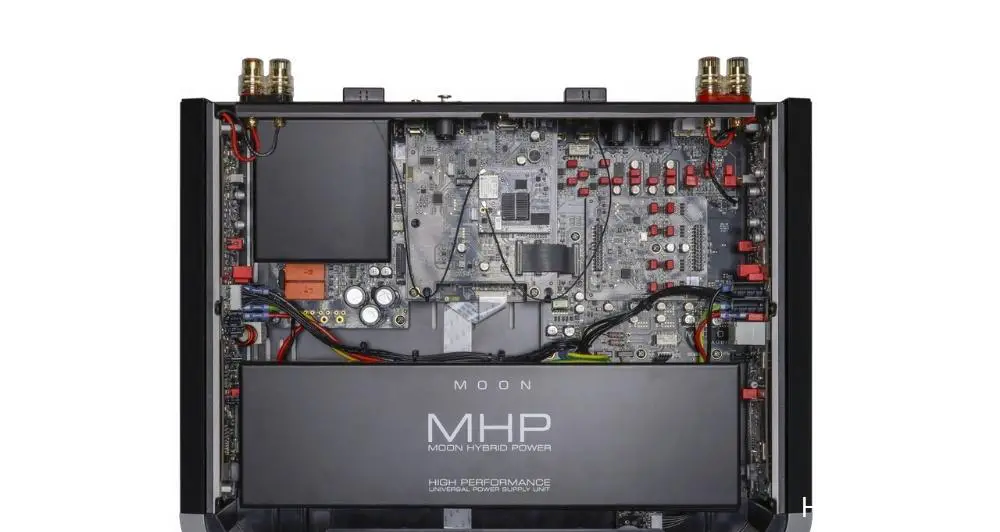
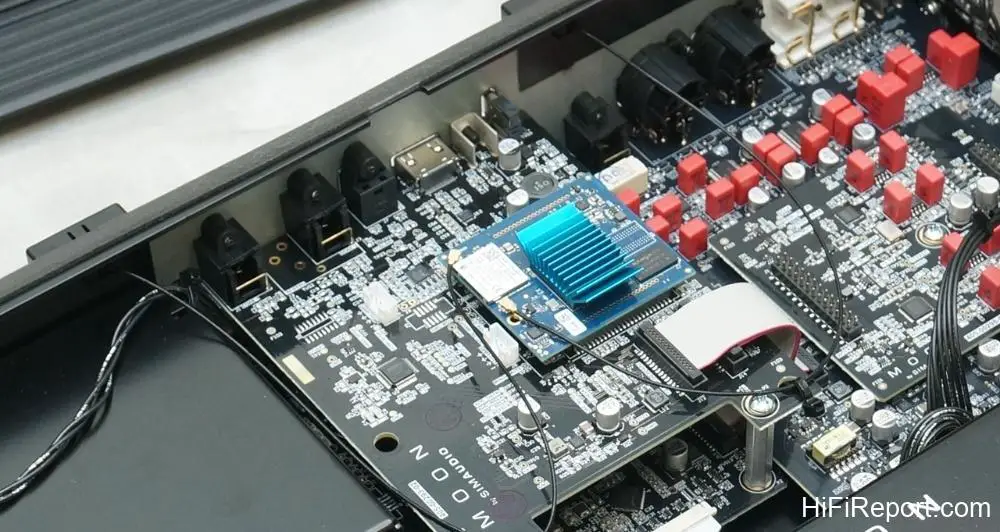
One of the main reasons is that the 641 adopts the same dual-mono architecture found in other high-end amplifiers within the North Collection, featuring a dedicated toroidal transformer for each channel. The 371 does not use this approach; instead, its power supply has been changed to Moon’s proprietary MHP (Moon Hybrid Power) technology. Essentially a switching power supply design, this explains why the overall weight is significantly lighter than the 641.
After comparison, I finally understood the 371’s positioning within Moon’s product lineup. Although the 641 and 371 have similar power outputs, the former has a noticeably higher power supply headroom, meaning its actual driving capability is bound to be a bit stronger than the 371. As for the 371? It fills the gap left by the North Collection, which lacks a streaming integrated amplifier.
Therefore, even though it belongs to the lower-tier Compass Series, I believe the 371 actually has a complementary relationship with the North Collection rather than simply being a lesser entry-level product.
First, let’s discuss the proprietary MDCA (Moon Distortion Cancelling Amplifier) amplification technology used in the 371. This technology is somewhat similar to traditional negative feedback circuits in that both can cancel out distortion generated during the amplification process. The difference is that traditional negative feedback compares the output signal of the amplification circuit with the input signal, which causes phase shift issues.
In contrast, the MDCA detects distortion within the circuit in advance and cancels it out synchronously during the audio amplification process. Therefore, MDCA possesses the advantages of negative feedback in cancelling distortion without any of the disadvantages of phase shift.
Why is the MHP power supply called a hybrid design? Because it combines the advantages of switching power supplies and traditional linear power supplies. In the front stage of the power supply, MHP uses a switching power supply for voltage conversion and preliminary rectification. It boasts the high efficiency and low heat generation of switching power supplies, and offers better resistance to mains voltage fluctuations than traditional linear supplies.
As for the rear stage of the MHP power supply, it hands over power regulation to traditional linear supplies with multi-stage regulation, which are responsible for outputting a DC power supply with lower noise, smoother operation, and greater stability. In conclusion, MHP’s power supply efficiency is higher than traditional linear power supplies, and its power noise is lower than switching power supplies.
Although its power supply headroom may not match the dual-mono architecture of the 641 integrated amplifier, actual testing revealed that the 371’s driving capability should not be underestimated. It is more than capable of driving most medium-to-high efficiency loudspeakers with effortless ease.
The M-Vol3 technology is the most unique. It is an electronic gain volume control technology that does not use resistors to attenuate volume, but instead adjusts volume by varying gain. Because it completely breaks away from the traditional volume attenuation concept, M-Vol3 can be placed at the most ideal position in the signal path to minimize interference with the audio signal.
Furthermore, this technology features extremely low noise, extremely low distortion, and can reduce channel mismatch to an absolute minimum while allowing for very fine volume adjustments. Its manufacturing cost is also lower than resistor ladder circuits, effectively solving the volume control bottleneck in amplifier circuits that is most prone to causing distortion.
For an audio manufacturer transitioning from traditional analog technology to the networked digital era, mastering network and digital computing technology comprehensively is an immensely difficult task. There have been traditional audio manufacturers that tried, but most returned home defeated because different industries are worlds apart.
Rather than investing huge sums of money only to produce a half-baked product, most manufacturers choose to outsource, directly adopting off-the-shelf network modules and streaming app templates. Moon is one of the very few manufacturers that succeeded. As early as 2012, they launched their first network player and developed their exclusive MiND streaming circuitry right from the start.
To develop their own digital processing and app software, Moon even hired a team of “full-time” software engineers in their R&D department dedicated solely to this task. I can hardly imagine how staggering the cost of keeping a team of software engineers must be; one cannot help but admire Moon’s determination to handle everything themselves.
The key lies in the R&D results. Continuously optimized since 2012, Moon’s MiND 2 streaming system has evolved into a highly mature stage where streaming operations run smoothly and the app interface is intuitive, easy to use, and aesthetically pleasing. Because all technologies are designed in-house, Moon can keep pace with the latest streaming developments at the fastest speed.
For instance, Qobuz Connect and lossless Spotify Connect, which were officially launched not long ago, are already enabled and available on MiND 2. In addition, MiND 2 is also the most feature-complete streaming system I have ever used. It not only features HDMI ARC for integration with televisions to take over audio playback, but also includes wireless transmission functions such as Airplay, Wi-Fi, and Bluetooth—features lacking in many Hi-End stream players, yet entirely present in the 371.
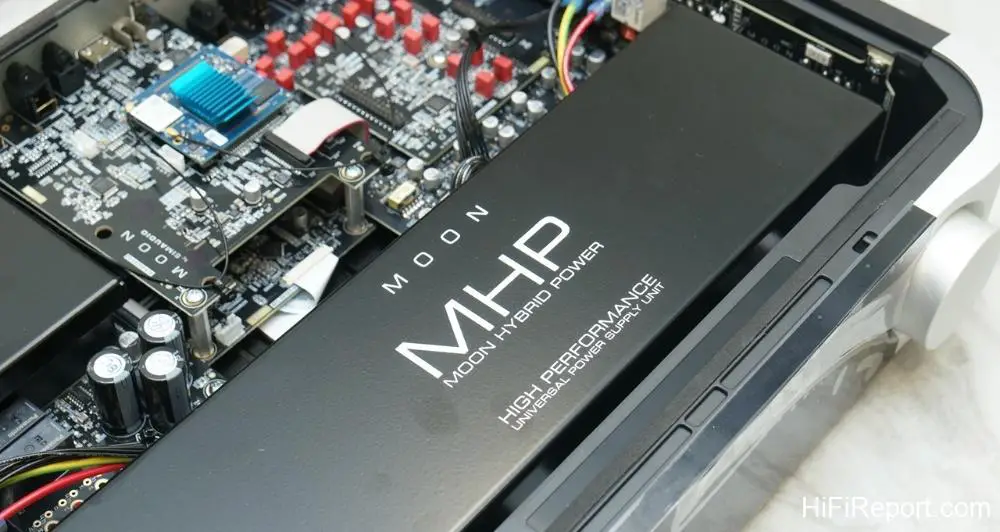
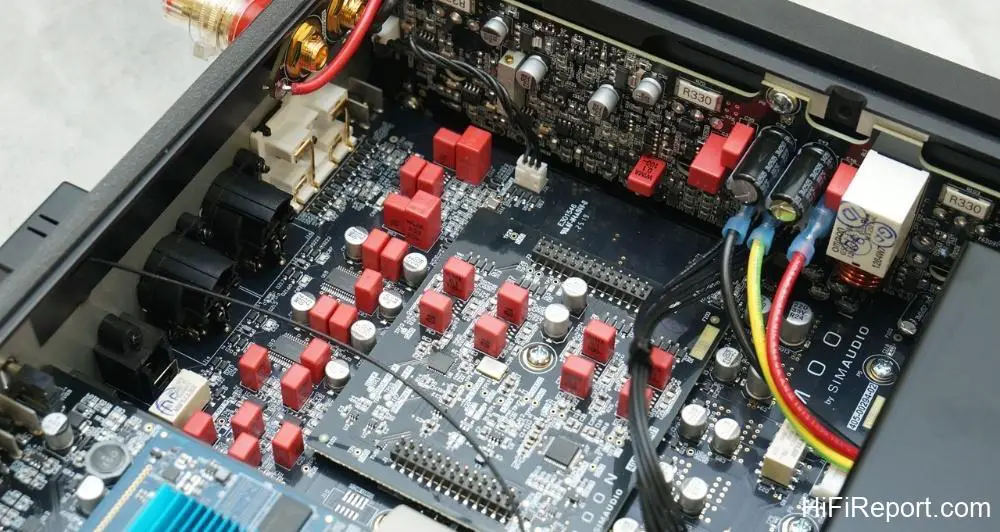
The DAC circuit of the 371 is also worth mentioning. Despite being an entry-level model, Moon unreservedly uses the top-tier ESS 9039Q2M DAC chip, and even employs FPGA-controlled clock circuitry to reduce jitter to a bare minimum. This extremely meticulous and highly sophisticated approach completely surpasses the standards of most streaming integrated amplifiers on the market today.
Please note that so-called custom-tailored power transistors are not simply off-the-shelf components stamped with the Moon trademark. The power transistors used in all Moon amplifiers are custom products developed in collaboration with Motorola over a period of three years. Their operating characteristics were developed entirely according to Moon’s specifications, featuring ultra-wide bandwidth, extremely low distortion, and exceptionally superior operating linearity.
This is another aspect of Moon that deeply impresses me. Just think about it: commissioning a semiconductor factory to custom-build a power transistor requires an initial order quantity and cost that must be unimaginably massive. For a Hi-End audio company with limited production volume, this would be completely unaffordable. To my surprise, Moon went all out and actually pulled it off.
I don’t know how much money Moon spent or what the order quantity was, but judging from the fact that this power transistor is used across Moon’s entire amplifier lineup, the inventory must be endlessly abundant. Because of this massive inventory, the power transistors used in all Moon amplifiers undergo rigorous precision matching and screening to ensure the lowest possible error and the most consistent operating characteristics. Even the entry-level 371 is no exception.
This is the key factor why Moon amplifiers sound exceptionally pure and precise.
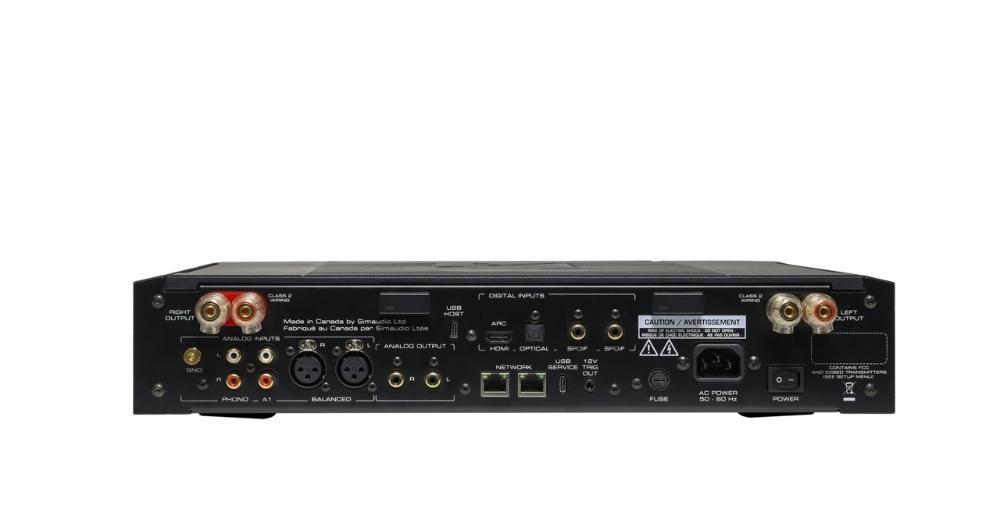
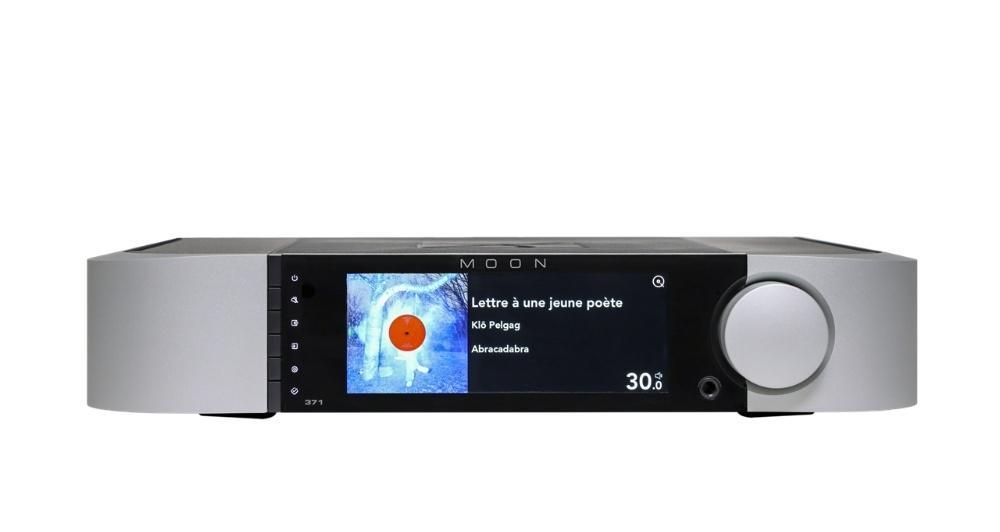
Finally, the chassis design of the 371 deserves mention. Not only is the metal machining quality top-notch, but the overall structure is extremely rigid. Its elegant exterior reveals no visible screws, and even the cooling vents on the top plate are hidden. Every design detail reflects Moon’s care and dedication.
Listening Impressions
Listening first to acoustic guitar virtuoso Michael Hedges playing “Layover” from the album *Breakfast in The Field*, the first thing that caught my attention about the 371 was its exceptional resolution. It renders Michael Hedges’ subtle and delicate fingerpicking techniques without omission, clearly reproducing even the finest vibrato and harmonic decay.
Right from the opening single-note plucks of the track, one can sense the 371’s exceptionally pure and transparent sound quality, an extremely quiet and pitch-black musical background, and the complete retrieval of even the finest reverberation details in the recording, creating a very realistic live performance acoustic space.
Let us not forget that the 371 is an integrated amplifier with built-in network streaming and a DAC; minimizing interference between the digital and analog circuits is essential to deliver such pure sound quality. Not to mention that the reference standard in the listening room at the time was the top-tier dCS Lina DAC X streaming DAC. I must admit that there is still a gap between the 371’s streaming DAC and the Lina DAC X, but frankly speaking, the difference is not all that large.
Listening next to Vital Tech Tones performing “Drums Stop, No Good” from the album *VTT2*, the 371 fully displays the explosive power and transient speed of electric bass plucks, as well as the impact and weight of drum strikes. The performance of these two tracks proves that while the 371 is compact in size, its driving power is definitely not to be underestimated.
Finally, listening to Japanese singer-songwriter Aoba Ichiko perform “Hikari no Furusato” (Hometown of Light), which is by no means an audiophile recording, the 371 manages to restore Aoba Ichiko’s gentle, clear, pristine, and intimate vocals to the highest degree. This shows that the 371 does not simply place blind emphasis on resolution; it also allows listeners to easily and naturally immerse themselves in the music.
When I first laid eyes on the physical 371 at the Moon product launch event, I truly believed that if this unit were actually released, it would definitely have a chance to carve out a path in the $2,500-$3,000 (NTD 80,000–100,000) streaming integrated amplifier market. You must understand that this price bracket is fiercely competitive, serving as a primary battlefield for various brands.
However, after listening to Sales Director Etienne Gautier explain all the design details of the 371 that day, I realized they had truly poured an immense amount of thought into it. From streaming, decoding, phono staging, and headphone amplification to various extended functional counterparts, it practically packs everything into a single chassis.
Even as an entry-level model, the 371 maintains the manufacturer’s persistent high in-house component manufacturing rate and Canadian production origin, which is quite rare.
During actual listening tests, the sound quality impression delivered by the 371 indeed shares a few similarities with their higher-end models; for instance, its transparent and sweet tonal color is immensely endearing. Playing *The Four Seasons: Violin Concertos*, the emitted strings exude a lightweight charm tinged with a touch of sweetness.
The combination of different instrumental sections sounds rich rather than mechanical, and varying string tonal colors naturally respond to different playing dynamics, sketching the imagery of strings “dancing” across the soundstage. Overall, the sonic impression is quite upscale. As a relatively entry-level model, I found that the musical atmosphere created by the 371 is comparatively relaxed.
Listening to David Fray’s piano solo, smooth melodic changes paired with vivid tonal combinations easily weave the sounds of various sections into graceful analog curves, allowing musicality to take precedence over audiophile traits.
Switching to Andra’s recording of “I Don’t Lose Sleep Anymore,” the charming sense of groove similarly lets the soft bassline continuously move forward with the melody. At this point, layers of meticulously mixed, beautiful soundstages come into view, effortlessly pulling apart the separation between vocals and instrumentation.
Listening to “She,” a track I personally love from the album, the vocal presentation delivered by the 371 is genuine and natural with delicate emotional expression, allowing listeners to hear the vocalist’s narrative emotional progression.
Just when you think the 371 excels at portraying such simple arrangements of vocals and guitar, the subsequent track “Long Night Race” kicks in with the chorus bass, effortlessly extending the soundstage beyond the speakers and opening up a spatial scale larger than expected.
Being able to integrate so many rich features while achieving such a high level of completion in pure stream decoding and music drive will certainly make those who recently stepped into streaming integrated amplifiers feel they missed out sooner.
I recall that when the 371 was officially unveiled, Moon emphasized that it shares the exact same DNA as the highly successful North Collection already on the market. Having listened to the 641 just a few months prior, my very first thought upon hearing the 371’s sound was that Moon was not exaggerating; that pure mountain spring texture was identical to my impression of the 641.
The fine acoustic particles scattered in the air and the orderly inner structural anatomy demonstrated that the 371’s source section performance is likewise remarkably robust.
Another aspect of the North Collection that I appreciate is that the sound quality barely shifts regardless of musical scale and dynamics; the 371 inherits this trait as well, which is clearly a characteristic of the MDCA amplification technology. Even when listening to pipe organs, heavy metal, or full orchestral symphonies, the 371 consistently maintains the exact same sonic texture as a cappella vocals or solo string instruments.
As for the mass quantity and acoustic scaling proportions, the 371 remains strictly straightforward without any exaggeration.
On the other hand, streaming integrated amplifiers are a product category that simply does not exist within the North Collection. Therefore, in some respects, the 371 merges the source and amplification of the North Collection into one, eliminating the most vexing component-matching dilemmas. The more I listened to the 371, the more it felt like listening to a more affordable North Collection system bundle.
The gap between it and the North Collection, in my opinion, lies solely in power output and the emphasis placed on outlining physical contours. Furthermore, the convenience of a streaming integrated amplifier makes the 371 even more compelling.
Unless one is capable of explicitly pointing out the subtle differences between the 371 and the North Collection, for most people, the 371 is a far more enticing choice than the North Collection, which explains why the manufacturer officially positions the 371 as the ultimate gateway into the Hi-End world.
Conclusion
When Moon introduced its new-generation flagship lineup and named it the North Collection, I was quite perplexed by the moniker. Could it be because Moon hails from Canada, thus identifying as a northern nation? What baffled me even more was that this series completely lacked the currently popular streaming integrated amplifier! This question lingered in my mind for a long time until the release of the Compass series last year, which finally unraveled this mystery for me.
If the North symbolizes the pinnacle of audio, then the Compass serves as the ultimate guide—a clever touch of nomenclature that brought a knowing smile to my face. Moon used a poetic approach to impart profound meaning to product lines of different positioning, and the 371 integrated amplifier was born carrying this “guiding” mission.
At a price point just over the $2,500 (NTD 80,000) mark, it boldly charges into the most fiercely contested battlefield; just how much conviction does that require?
Having genuinely listened to the actual performance of the 371, I cannot help but admire how it truly inherits many advantages of the North Collection. First is its poised and effortless driving power, demonstrating stable control when facing various speaker loads. Second is the purity of its timbres—devoid of superfluous coloration while retaining a warm texture. Finally, there is its dynamic completeness, accurately rendering everything from subtle pianissimos to majestic fortissimos.
These three major attributes allow the 371 to stand out among products in its class, exhibiting a mature performance that transcends its price bracket.
It is worth mentioning that the 371’s headphone amplifier performance is equally impressive. I paired it with Audio-Technica’s newly launched flagship ADX7000, and the result was a sound characterized by both refinement and fullness, entirely devoid of any sense of strain or inadequacy.
Standing at the starting point of our audiophile journey, we all yearn to find that most perfect beginning. Through repeated listening and comparison, I can assert with confidence that if one wishes to step through the doors of Hi-End audio, the Moon 371 is undoubtedly one of the absolute best premier choices. It is not merely an integrated amplifier; it is more like an experienced guide leading us to explore a wider world of music.
* Features the new MDCA distortion-cancelling amplification technology akin to the high-end series. * Equipped with proprietary M-VOL 3 volume control utilizing gain technology with ultra-low distortion. * Fully featured, maturely designed MiND streaming DAC. * Built-in headphone amplifier and MM/MC phono stage. * Pure sound quality with high resolution and balanced musicality.
* Capable of driving medium-to-high efficiency loudspeakers effortlessly, provided the listening space is not excessively large.
Specifications
* Product Type: Streaming Integrated Amplifier
* Analog Inputs: RCA × 2, XLR × 1
* Analog Outputs: RCA × 1
* Digital Inputs:
* RCA S/PDIF × 2
* Toslink × 1
* HDMI-ARC × 1
* USB-C × 1 (for external storage)
* Output Power: 100 watts (8 ohms), 200 watts (4 ohms)
* Gain: 40dB
* Input Impedance: 9.5k ohms
* Frequency Response: 5Hz–100kHz (+0dB / –3dB)
* Crosstalk: –108dB
* Total Harmonic Distortion: 0.009% (1W), 0.003% (100W)
* Signal-to-Noise Ratio: 108dB
* Damping Factor: 425
* Weight: 9 kg
* Dimensions (WHD): 429 × 87 × 385 mm