
NAD M10 Integrated Amplifier Review
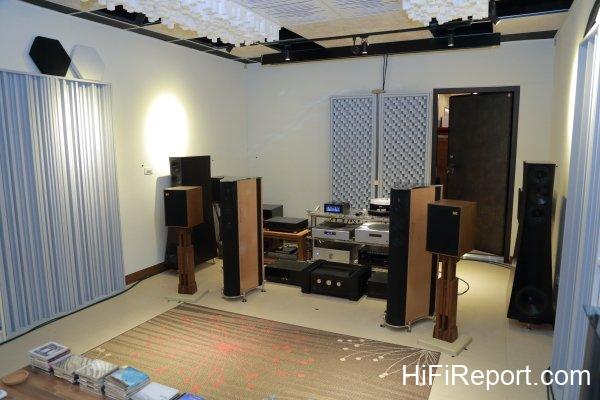
It has been over two years since my last visit to Sound Magic Hi-Fi in Kaohsiung. Back then, Sound Magic had just opened, occupying only the second floor. It was a small, exquisite, and uniquely styled audio shop. Now, things are different. The owner, Xiao Ma (Huang Fan-Wei), has also rented the ground floor, which was originally a cram school. He meticulously planned several open listening areas, home theater zones, and desktop audition setups. The second floor has evolved into two separate, undisturbed high-end listening rooms. Today, Sound Magic is not only small and exquisite but also beautifully refined, showcasing a rich and comprehensive array of brands and product types, capable of satisfying the discerning needs of all audiophiles and HiFiReport reviewers.
Extensive Streaming Services
The main purpose of my revisit to Sound Magic was to audition the newly launched NAD M10 “all-in-one” integrated amplifier.
How all-in-one is it? Basically, apart from not being able to play CDs directly and lacking a phono stage—these two minor “shortcomings”—the M10 likely covers almost every playback method you might use.
Take the currently popular streaming function, for example. The M10 can not only play music files stored on your NAS or computer via the network, but it also supports numerous streaming music services. From Tidal, Qobuz, Spotify, KKBox, to Amazon Music, and many more streaming services that I haven’t even encountered, the M10 includes them all. Moreover, it supports more free internet radio stations than many competitors.
Streaming music services are undoubtedly the future trend, and the M10 has already made them standard.
This is largely thanks to the BluOS system used by the M10. It boasts a simple interface, strong intuitiveness, and ease of operation. The remote control app is available for both iOS and Android, and its functions are constantly updated and kept fresh. For instance, the latest Airplay 2 is already supported.
The M10’s network connectivity includes both RJ45 Ethernet and Wi-Fi wireless, which is a significant advantage. Using Wi-Fi transmission not only frees your audio system from network cable constraints, but also allows you to place the wireless router and music storage devices further away from the audio equipment, separating their power circuits and avoiding potential interference.
Don’t worry about Wi-Fi transmission quality being inferior to Ethernet. Theoretically, Wi-Fi causes less interference to audio playback than network cables, potentially resulting in even better sound quality, provided you have a sufficiently powerful wireless router.
Furthermore, the M10 features bidirectional Bluetooth functionality with aptX HD support. It can receive Bluetooth signals and also transmit signals to Bluetooth headphones for listening.
The M10 also provides a variety of audio input interfaces, including two sets of RCA analog inputs, and one each of coaxial RCA and optical digital inputs, facilitating connection to various types of sources. Additionally, it can play music stored on USB drives, offering wide-ranging versatility.
Another noteworthy feature is that the M10 even has an HDMI ARC port. What’s it for? It’s for connecting to the HDMI ARC output of your TV. This way, the audio from whatever is playing on your TV can be transmitted to the M10 and played through your speakers, saving you from enduring the dry sound of TV speakers.
Besides all this, the M10 also includes a set of RCA pre-outs and two subwoofer outputs, providing exceptional expandability.
Versatile Sonic Character
Moving on to the soul of an amplifier: its driving power.

The M10 boasts a continuous output power of over 100 watts per channel into 8 ohms, with over 230 watts into 4 ohms before clipping, and a total harmonic distortion of less than 0.03%. It offers excellent control over most speakers. Coupled with its neutral tonality and precise rendition, selecting suitable speakers is effortless.
This is thanks to NAD’s generous choice of the high-performance Dutch Hypex NCore Class D amplification module for the M10. This allows for such ample power and rich functionality within a chassis smaller than a shoebox.
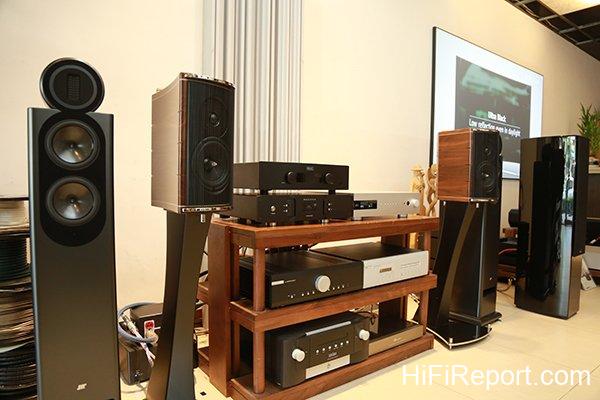
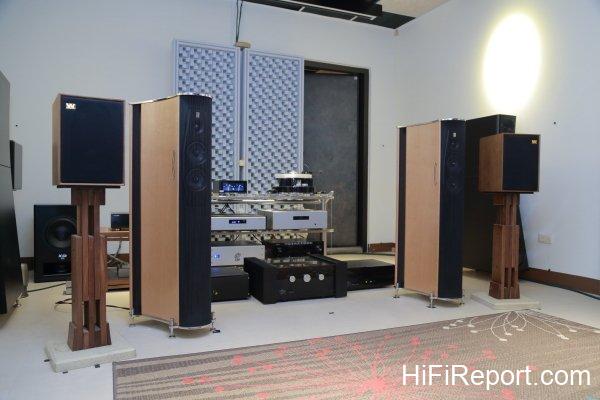
During the audition, the speakers used were Franco Serblin Ktema, with Yter speaker cables—thoroughly Italian aesthetics.
Of course, it’s unlikely that Ktema owners would typically pair them this way, as they are products in entirely different price ranges. However, to let me experience the “unseen” potential of the M10, Xiao Ma boldly adopted this “unusual” pairing.
First, we listened via streaming. The M10 was connected to the network via an RJ45 Ethernet cable, directly streaming Tidal.
After casually listening to a few tracks, I clearly recognized the Ktema’s signature sound.

I’ve not only reviewed the Ktema before but also heard it in various settings. I am very familiar with its sound. Now, driven by the M10, I heard the Ktema’s gentleness, smoothness, rich subtle nuances, and fluid, vivid dynamics. The music was full of vitality.
Furthermore, I found that the M10 not only exhibited the open, relaxed, and smooth characteristics of Class D amplification but also possessed excellent image focus and three-dimensionality. This made it easy for the listener to focus attention on the lead instrument or vocalist. The M10 controlled the not-so-small Ktema with finesse, delivering an open and relaxed sound without sacrificing micro-detail and refinement. Its performance was indeed remarkable.
Lively Sound
Next, we listened to Mutter’s rendition of Sarasate’s “Zigeunerweisen” (Gypsy Airs).

Most audiophiles are likely familiar with this album. The violin tone is recorded exceptionally smoothly and sweetly, appealing to almost everyone.
Through the M10’s playback, the violin tone was not overly lush or excessively sentimental, yet it still retained rich textures and clear, powerful lines, demonstrating the M10’s approach of interpreting music directly, truthfully, and without embellishment.
The M10’s excellent driving power was also evident in the soundstage of orchestral music. It was not only open and stable, with a well-organized structure, but also had natural vertical extension. The layers of high, mid, and low frequencies were clearly presented, showing that complex music is also handled effortlessly by the M10.

Next, we switched to CD playback.
The CD player used was an Aesthetix Romulus, with Siltech Classic Anniversary series RCA interconnects—another somewhat mismatched pairing in terms of price.
Listening to “Tutti!” through such a high-end CD player, the sound from the M10 immediately elevated to another level. The background was remarkably quiet, the sound was transparent and clean, and the soundstage was deep and layered, with excellent transparency.
The piano and strings not only had appropriate moisture and beautiful timbre, but their density and weight were also above par.
Frankly, it’s hard to believe that such performance came from a streaming amplifier smaller than a shoebox. Moreover, it clearly reflected improvements when fed with better equipment, indicating the M10’s excellent sensitivity.
Finally, let’s take an example from Yu-Chien Tseng’s “Reverie” album, Tartini’s “Devil’s Trill Sonata.” Beyond the freely flowing trills and vibrato, I also heard rich dynamic gradations from the M10. This made the transitions between soft and loud, or loud and soft, very smooth, dense, natural, and effortless. Consequently, the music sounded particularly vivid, lively, and full of musicality.
All-in-One Solution
Finally, I asked Xiao Ma why he wanted to bring in the M10 and what his impressions of it were. Xiao Ma started with its driving power.
He said the M10 completely changed his impression of Class D amplifiers. In the past, his experience with Class D was “powerful” and “vigorous,” with great dynamics and bass, but texture needed improvement.
This situation is no longer present in the M10. It not only possesses the power of Class D, but its sound is not as raw or harsh as traditional Class D, and even carries a smooth and delicate texture reminiscent of Class A amplifiers. If not told, he would have thought it was an AB class amplifier, demonstrating the quality of the Hypex NCore module. Talking about pairing, Xiao Ma believes the M10’s neutral sonic foundation gives it a versatile character.
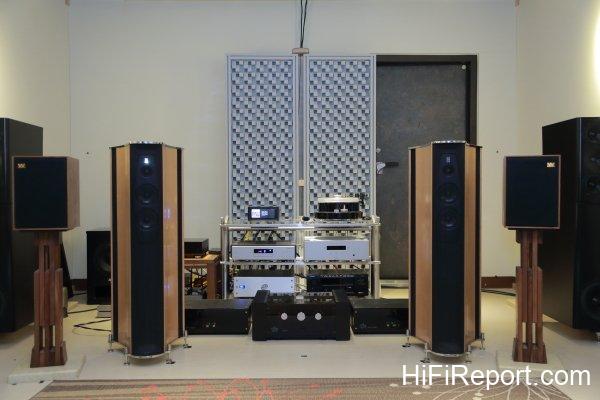
Generally speaking, no one would pair the Ktema with the M10 like he did, but through the M10, the Ktema’s characteristics were clearly felt, including the richness of the midrange, the soft texture, and the sweetness, delicacy, and density of the strings and vocals—all were revealed by the M10.
Switching to French speakers, such as JMR, the M10 could bring out their high-frequency brilliance and elegance, making the music even more captivating.
Can the M10 deliver a more masculine, dynamic, and impactful sound if desired? Xiao Ma said, “No problem.” Because the M10 itself doesn’t have a strong personality, but rather a very neutral sound. It presents what it is given. Therefore, it’s easy to achieve the desired sound by pairing it with different speakers. For example, those who like rock or pop music can pair the M10 with speakers that are more direct and rhythmically strong, like Amphion, to get that punchy, impactful feeling.
Functionality is also a major strength of the M10.
Xiao Ma stated that the M10 integrates many functions into one unit. You don’t need to set up multiple devices; one machine handles everything. It’s incredibly convenient, which is a great boon for general consumers who are not pursuing Hi-End audio, especially considering that living spaces are often limited nowadays, making it difficult to accommodate multiple components. The M10 is sufficient on its own.
Dirac Live Room Correction
The foundation of the M10 is the BluOS system. Xiao Ma believes BluOS is quite user-friendly. Perhaps its convenience and user-friendliness are not quite on par with Roon, but it is definitely among the top tier. Crucially, BluOS is free. If this is taken into account, it is no less impressive than Roon.
Xiao Ma also mentioned that BluOS excels in metadata integration. Through the app’s search function or category browsing, it’s easy to find the music you want to listen to.
Furthermore, BluOS associates users’ music libraries with streaming media. For example, if you use Tidal, when you search for an artist, BluOS will not only list the tracks of that artist in your library but also list tracks available on Tidal, which is very convenient.
Another strength of BluOS is its wide range of platform support. In addition to iOS and Android apps, there are also desktop versions for computers, so you can use any device to control it.
Oh, and there’s one more powerful feature I almost forgot to mention: the M10 includes Dirac Live room correction and comes with a measurement microphone, allowing users to perform measurements at home. With simple steps, you can easily overcome the challenges of poor room acoustics.
Whether you prioritize convenience, music enjoyment, aesthetics, or have a limited budget and can’t afford many components, or even if you are an audiophile looking to add a second system, I believe the M10 can meet your needs. Next, all that’s left is to experience it in person. Contact Sound Magic Hi-Fi now and feel the magic of the M10!
Dealer Information
Sound Magic Hi-Fi Address: No. 127, Zhongzheng 2nd Road, Lingya District, Kaohsiung City, Taiwan
Phone: 07-225-2260
Specifications
* Type: Streaming DAC Integrated Amplifier
* Continuous Power Output: >100W
* THD: <0.03%
* Signal-to-Noise Ratio: >85 dB
* Damping Factor: >190 (ref. 8 ohms, 20Hz–6.5kHz)
* Frequency Response: 20Hz–20kHz/±0.6 dB
* Tone Control: Treble ±6dB at 20kHz, Bass ±6dB at 60Hz
* Supported File Formats: MP3, AAC, WMA, OGG, WMA-L, ALAC, OPUS, MQA, FLAC, WAV, AIFF, Supports converted DSD playback via the BluOS desktop app (only)
* Supported Sampling Rates: Up to 32 bit/192kHz PCM
* BluOS Supported Operating Systems: Windows XP, 2000, Vista, 7, 8 to current versions, Mac OS X
* Supported Streaming Services: Amazon Alexa, Amazon Music, Spotify, TIDAL, Deezer, Qobuz, HDTracks, HighResAudio, Murfie, JUKE, Napster, Slacker Radio, KKBox, Bugs
* Free Internet Radio: TuneIn Radio, iHeartRadio, Calm Radio, Radio Paradise
* Bluetooth: aptX HD, Bidirectional (can directly connect to Bluetooth headphones)
* Network: RJ45, Wi-Fi 5
* Dimensions: 215×100×260 mm (Width×Height×Depth)
* Weight: 5kg