
Naim NDX 2 Review
Many audiophiles hold the fixed idea that large Japanese manufacturers excel in digital circuitry, while European and American companies specialize in analog (audio frequency) circuits and voicing. However, in my observation, there are certainly experts in analog and voicing among Japanese R&D personnel, just as there are plenty of European and American firms with strong ideas about digital audio processing.
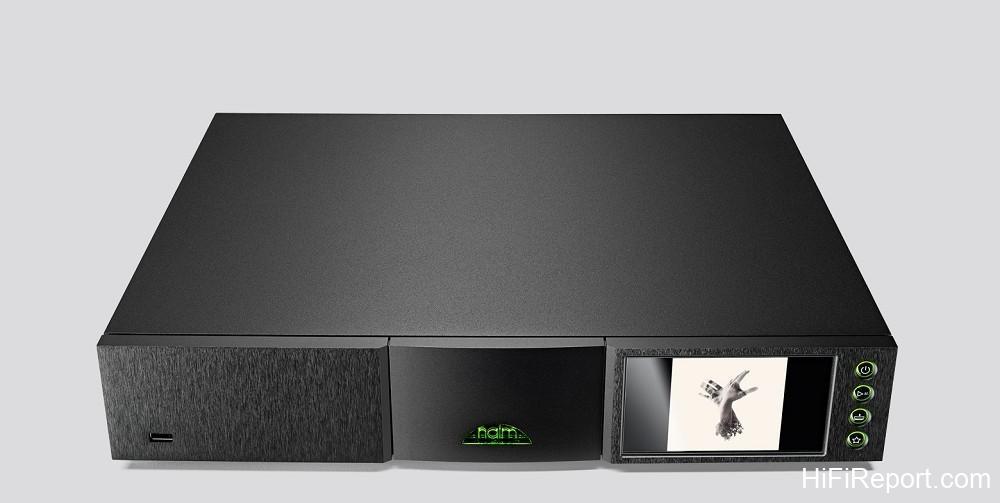
So, let’s try not to be swayed by stereotypes and instead endeavor to understand things more deeply. Long-time readers often see me dissecting circuits, and if you can discern “what the designer was thinking” from the circuit structure, such equipment is far from ordinary; it is a high-quality product that embodies the “designer’s will.” The Naim NDX 2, the subject of this review, is precisely such a digital source component.
Key Features and Functionalities
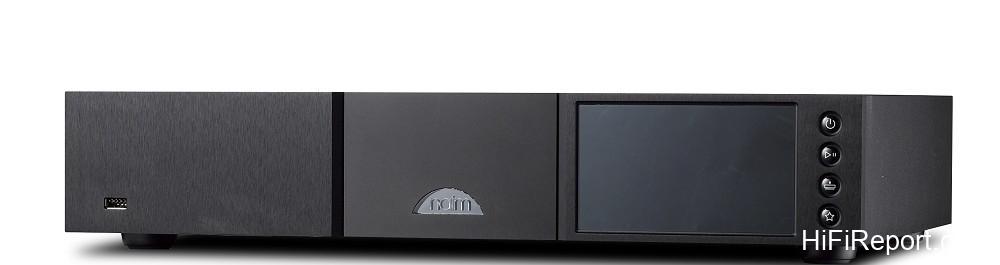
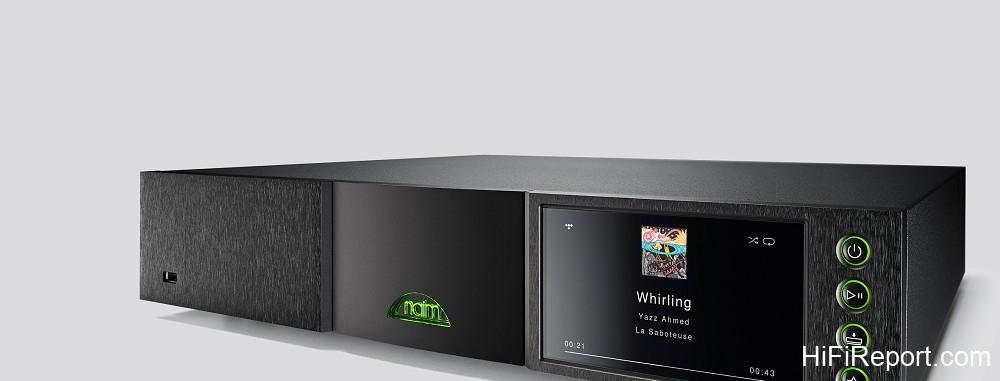
Allow me to first introduce the functionalities of the Naim NDX 2. It’s a streaming player equipped with built-in Wi-Fi and Bluetooth, capable of forming a multi-room audio system when combined with other Naim streaming devices (controlled via the Naim App). It boasts rich network features. When connected to the internet, it allows access to Spotify, TIDAL, and Qobuz music streaming services, as well as vTuner internet radio.
The NDX 2 also supports Apple AirPlay, has Chromecast built-in, and is Roon Ready.
The NDX 2 can stream music files shared from PCs, NAS drives, music servers, and mobile devices over the network. It supports a wide range of file types and specifications, including WAV (up to 32 bits/384kHz), FLAC, AIFF, and Apple Lossless (up to 24bit/384kHz), as well as MP3, AAC, OGG, WMA, M4A, and DSD (DSD64 and DSD128). Users can also store these music files on a USB device and play them through the NDX 2 by plugging it in.

More than just a streaming player, the Naim NDX 2 also features Toslink optical (supporting up to 24bit/96kHz) and coaxial digital inputs (supporting up to 24bit/192kHz). This allows the NDX 2 to function as a standalone Digital-to-Analog Converter (DAC), accommodating digital audio input from sources like Blu-ray players, gaming consoles, and CD transports. This capability enables your audio system to take over from your TV’s built-in speakers.
Furthermore, by setting the “Volume mode” to Variable via the Naim App, the NDX 2 can transform into a “digital preamplifier.” You can then control the output volume using the remote control or the app. This flexibility simplifies system configuration significantly: you could connect the NDX 2 directly to a power amplifier to drive your speakers (saving the cost of a separate preamp), or pair the NDX 2 with a set of active speakers to create a fully functional, minimalist streaming audio system.
Hardware Construction and Design
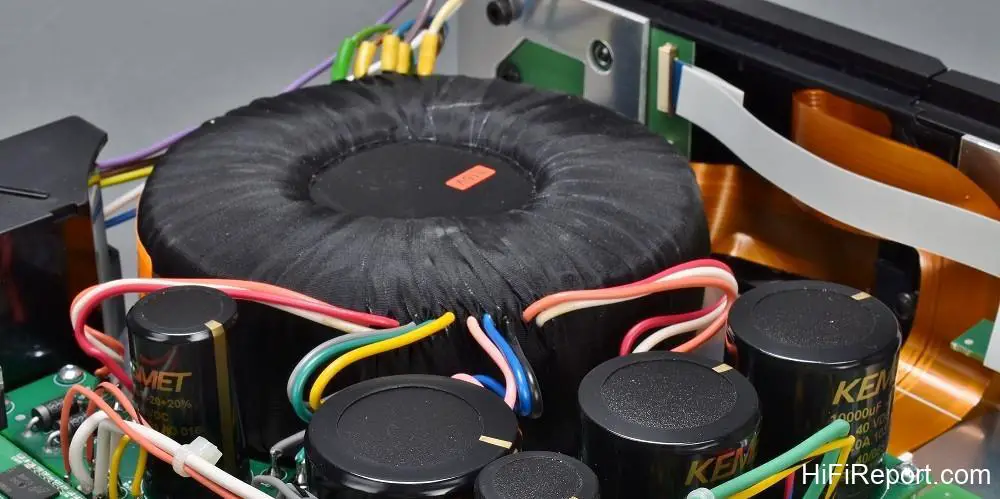
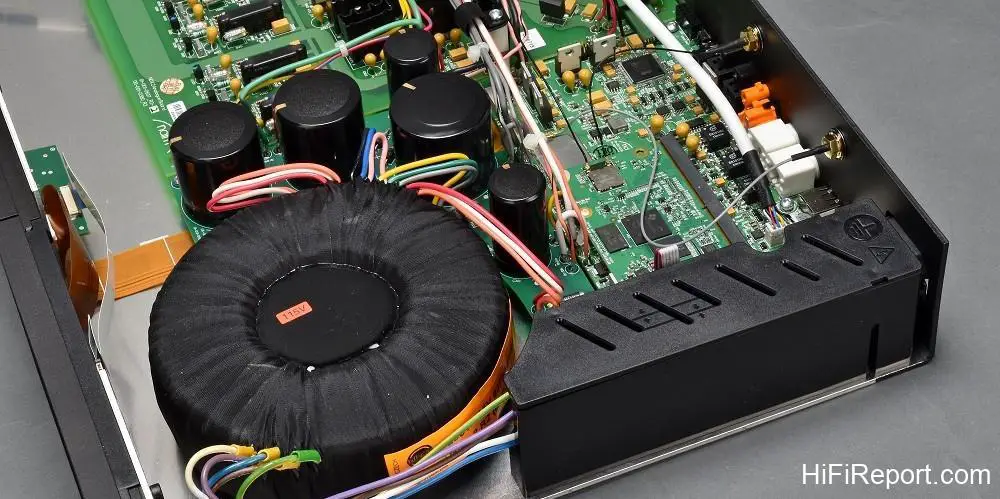
Next, let’s delve into the hardware construction of the NDX 2. The internal circuitry is meticulously laid out, with careful consideration given to minimizing noise induction. Components that generate higher noise are primarily positioned towards the right side, while the audio frequency circuits are situated towards the left. The main digital circuit board is located in the rear right section internally, housing the wireless network card for Wi-Fi and Bluetooth.
Unique Digital Processing
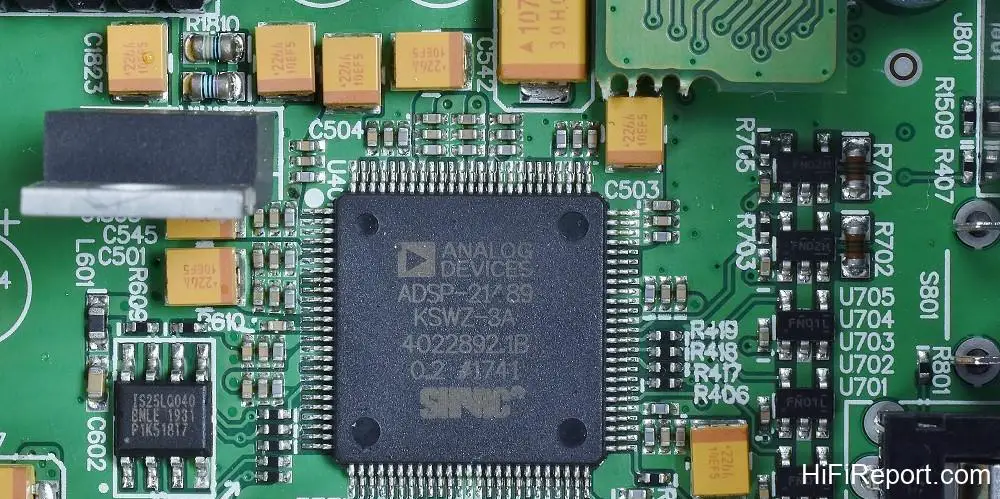
For digital audio processing, the heart of the unit is an Analog Devices SHARC DSP chip, the ADSP-21489. This is unusual. A streaming player isn’t a surround sound receiver requiring high computational power (for multi-channel processing), so why use a DSP chip? Here, the ADSP-21489 performs two main tasks. First, it handles music file decoding. Following this is the second task: digital audio processing.
The initial step in the unit’s digital audio processing is “bit depth expansion” and “sample rate conversion.” The Naim NDX 2 bypasses the 8x digital filter circuit typically found within the DAC chip. Instead, it uses the DSP chip to execute a brickwall IIR filter digital filtering algorithm developed by Naim’s Electronic Design Director, Steve Sells. This type of digital filter exhibits no pre-ringing but does produce post-ringing.
Regardless of the original bit depth of the music file or digital audio signal, the ADSP-21489 expands it universally to 40 bits. This naturally benefits the clarity of dynamic contrasts and subtle nuances. For sample rate conversion, the unit employs 16x Oversampling for multi-bit audio. Digital audio with a sample rate of 44.1kHz and its integer multiples are all converted to 705.6kHz, while 48kHz and its integer multiples are converted to 768kHz.
DSD signals, on the other hand, are converted to 705.6kHz/40bit before further processing.
So, what’s the next step for the DSP chip? Let me share an observation with you: In recent years, we’ve seen streaming players increasingly incorporating preamplifier functions, haven’t we? What I’ve recently noticed with some high-end, even astronomically priced, streaming players that claim to have preamplifier functionality is that they’ve actually eliminated the preamp circuit entirely! “Having a preamp function without a preamp circuit” – doesn’t that sound strange?

Let me clarify, and you’ll understand instantly. If you only look at the signal path, the structure of most preamplifiers progresses sequentially from source selection, volume control, and then high-level amplification (typically around +20dB, or a voltage gain of 10 times). Today, most sources are digital, and digital source selection is handled near the digital receiving circuit. So, if there are no analog sources, all audio signals will output from the digital-to-analog conversion circuit.
In this scenario, there’s no need for a preamp to perform source selection. As for the high-level amplification stage of the preamp, if the voltage gain of the final stage of the DAC circuit – the output buffer amplifier circuit – can be increased slightly, the high-level amplification circuit of the preamp can be omitted.
Having eliminated the source selection and high-level amplification circuits, the only remaining issue is “volume control.” Ten years ago, we would almost unanimously say that “analog” volume control, whether using volume control chips, variable resistors, or stepped resistor arrays, was superior to “digital” volume control.
However, with the evolution of digital circuitry to its current stage, whether it’s “digital equalization” or “digital volume control,” as long as the quantization precision of the digital audio signal is increased, making the bit depth of digital volume control significantly greater than that of the DAC chip, then any losses during the equalization or volume adjustment process will have virtually no negative impact on sound quality or dynamics.
Furthermore, digital volume control is less susceptible to electromagnetic noise compared to analog volume control.
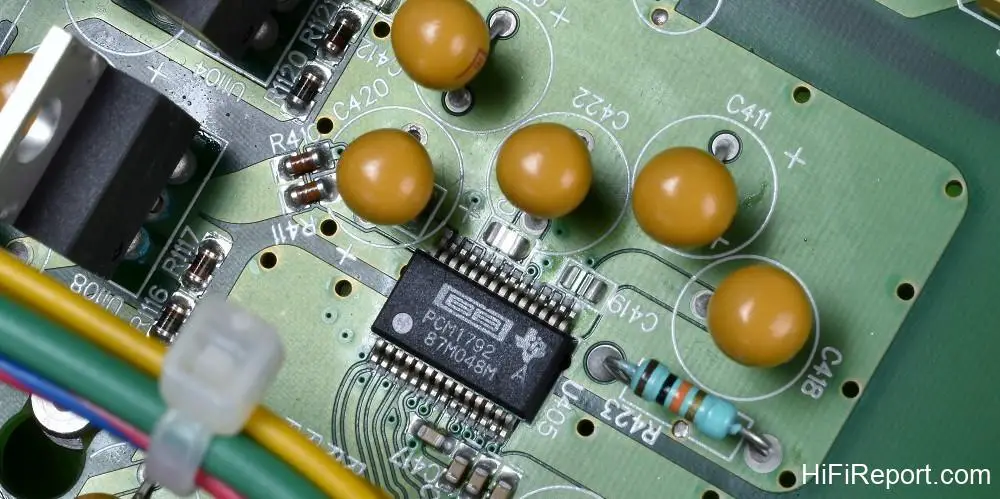
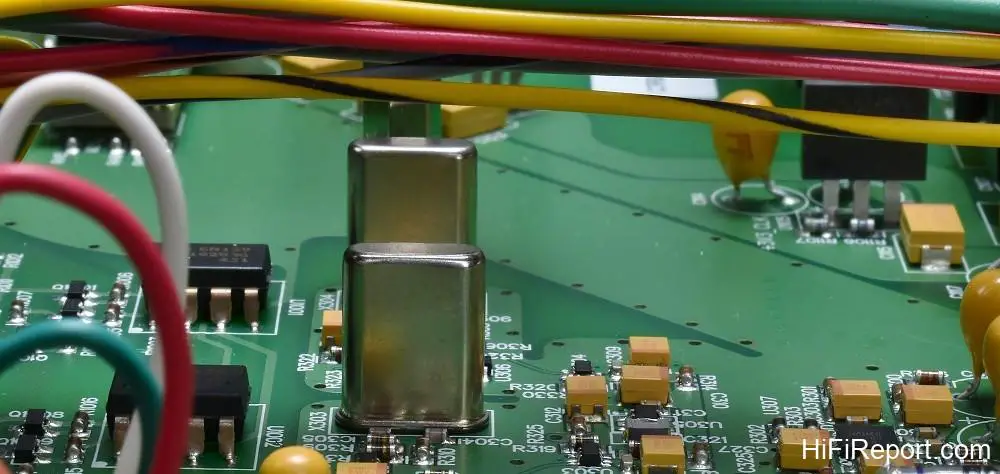
The DAC chip used in the NDX 2 is the Burr-Brown PCM1792A, known for its high dynamic range of 129 dB. Situated next to it is a low-jitter dual oscillator clock. The PCM1792A does have a digital volume control function, but I believe it’s more likely that the unit uses the DSP chip for digital volume control. This is because doing so allows for a digital volume control precision of up to 40 bits, and it’s also more convenient to control via the app.

Analog Output Stage
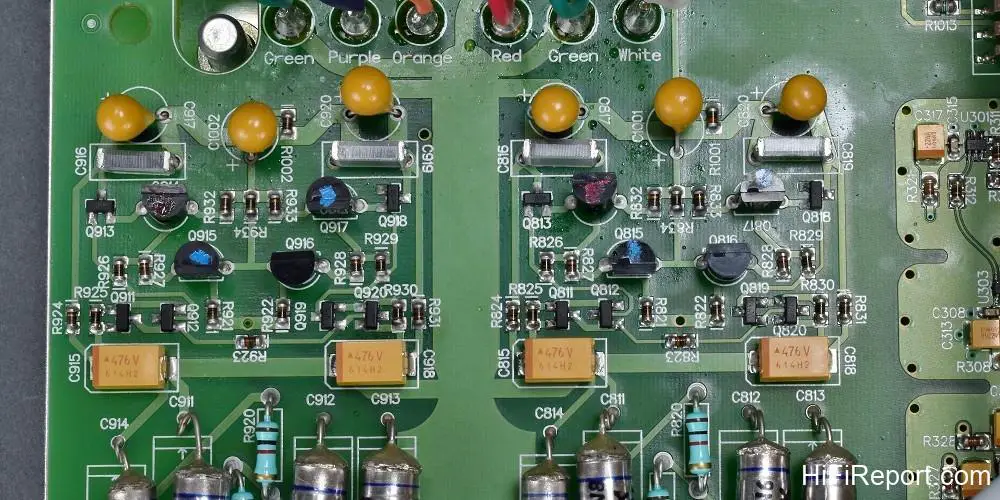
After the DAC chip, most digital sources utilize OP amp chips paired with passive components to build the audio frequency circuits. However, Naim wanted complete control over the sonic characteristics of this unit. Instead of using the readily available amplifier circuits from OP amp chips, they opted to design and build the audio frequency circuit from the DAC chip to the output stage entirely with discrete components (transistors and passive components).
The first half handles I/V conversion, while the latter half comprises a differential buffer output amplifier circuit that includes a 6th-order low-pass filter.
At this point, you should understand that Naim simply wasn’t willing to build the NDX 2 using “easy and ordinary” methods. By using digital filtering to increase the sample rate of the digital audio, they push digital noise further away from the audible frequency range. A complementary approach allows for a gentler slope for the low-pass filter (analog). Moreover, by potentially omitting the preamplifier, the signal path for audio frequencies becomes simpler.
Observing the circuit, I can sense the designer’s emphasis on “quietness” and their hope for it to exhibit natural and delicate sound quality.
Listening Impressions and Sound Performance
Observing the circuit design already provides a general idea of the NDX 2’s sonic characteristics. Next, let’s move to the actual listening stage to verify these assumptions. I believe this unit has three main characteristics in terms of sound performance. The first is that it retains the essence of “authentic British sound.” Regarding tonal balance, the NDX 2 centers around a dense, direct, rich, detailed, and layered midrange, complemented by solid, stable bass and sweet treble.
The warm tone is incredibly approachable and inviting. The soundstage also exhibits classic British traits – the sound never jumps forward aggressively or becomes overbearing. Instead, the soundstage extends forward and opens up in a fan shape, allowing the listener to easily perceive the depth of the performance space and the distance of the stage, making it easier to discern the layering of instruments within an ensemble.
The second characteristic is a “low-key, effortlessly accepted high-resolution quality.” Most British equipment tends to have a more mature sound that doesn’t become harsh even at high volumes, and the NDX 2 is no exception. However, the NDX 2 is capable of suppressing noise to an extremely low level. It doesn’t flaunt its high-resolution capability with a bright style that emphasizes a strong sense of shine.
Rather, even when listening at a comfortable volume, you can still perceive the incredibly fine texture of the vocalist’s voice and instruments.
Its high resolution isn’t the ethereal, detached-from-reality type. Instead, it is very “down-to-earth,” so natural it feels “unlike listening to audio equipment.” If you adjust the listening volume just right, like when I listened to Amy Winehouse’s “Valerie (BBC Radio 1 Live Lounge),” I felt I was sharing the same space as the performance on stage.
Listening to Yo-Yo Ma’s “Amazing Grace,” the first track from the “Songs of Comfort and Hope” album, I felt immersed in a wide, dense spatial sense within a strong breeze. This is how the NDX 2 expresses its high-resolution characteristics. No matter how you listen, its sound is never stiff or cold; it’s highly approachable yet quite sensitive, conveying increased information and high purity to make the sound more real.
The third characteristic, I believe, will be appreciated by most experienced audiophiles: it excels at reproducing recordings from the analog era, especially music files that have been converted to Hi-Res from analog recordings in recent years. Take, for instance, Stevie Wonder’s “You Are The Sunshine Of My Life” from 1972, or Lionel Richie’s “You Are” from 1982, from the late analog era.
After being converted to Hi-Res files, their sound already felt more “analog” than the CDs I previously owned: more delicate, smooth, and full of flavor. When played back on the NDX 2, I completely forgot I was listening to music files from a digital source. The overall listening experience was truly reminiscent of a well-maintained tape machine!
If an experienced audiophile wanted to help a newcomer understand what good musicality and flavor are, they wouldn’t need many words; just letting them listen to the NDX 2 once would lead to instant enlightenment.
Although the Naim NDX 2 is not inexpensive, its meticulous design extends from the power supply and digital audio processing to the clock and audio frequency circuits. Every stage reflects unique ideas and approaches. What’s even more remarkable is how natural its sound is, completely devoid of artifice or artificiality. In my experience, digital sources that simultaneously exhibit such a “pure traditional British beautiful sound” and “high-resolution characteristics” are rare.
Furthermore, owning the NDX 2 means you might not need to buy a separate preamplifier, making it a practical and valuable two-in-one device. Evaluating both the NDX 2’s sound performance and its price, I believe it fully deserves our highest recommendation.
Specifications
* Type: Network Streaming Player
* Supported File Types: WAV, FLAC, ALAC, MP3, AAC, OGG, DSD, and M4A
* Maximum Supported File Specifications: 384kHz/32bit (WAV) and DSD128
* Analog Outputs: RCA pair x1, 5-pin DIN x1
* Network Connectivity: Ethernet (10/100Mbps), WiFi (802.11 b/g/n/ac)
* Digital Inputs: Coaxial RCA x1, Coaxial BNC x1, Toslink Optical x2, USB Type A x2
* Dimensions (Width × Height × Depth): 432 × 87 × 314 mm
* Weight: 10 kg