
Naim SuperNAIT 3 Review
Compared to the analog wave brought about by the vinyl revival a few years ago, the audio world has recently seen a “streaming trend.” As the name suggests, much of the equipment released by various manufacturers now incorporates streaming capabilities, with streaming integrated amplifiers and streaming sources being prime examples. Looking around today, the market offers a wide variety of streaming-related options.
In this climate, if a manufacturer releases an integrated amplifier without streaming or digital-to-analog conversion functions, it might seem somewhat anachronistic. This was my initial impression upon seeing the Naim SuperNAIT 3. However, once it began to sing, my perspective immediately shifted because it simply sounded utterly fantastic!
I believe many audiophiles are familiar with the Naim brand. Their equipment consistently embodies a beautiful British sound signature – a tuning characterized by rich midrange, smooth treble, and a touch of sweetness to instrumental textures, highly praised by many seasoned enthusiasts. In recent years, Naim has released numerous digital streaming products, and coincidentally, I’ve had the opportunity to experience a few of them.
Whether a digital preamplifier or a streaming integrated amp, they have all maintained Naim’s signature sonic aesthetic. This made me even more curious: how would this SuperNAIT 3, a return to basics with purely analog inputs, sound?
Design Philosophy and External Layout
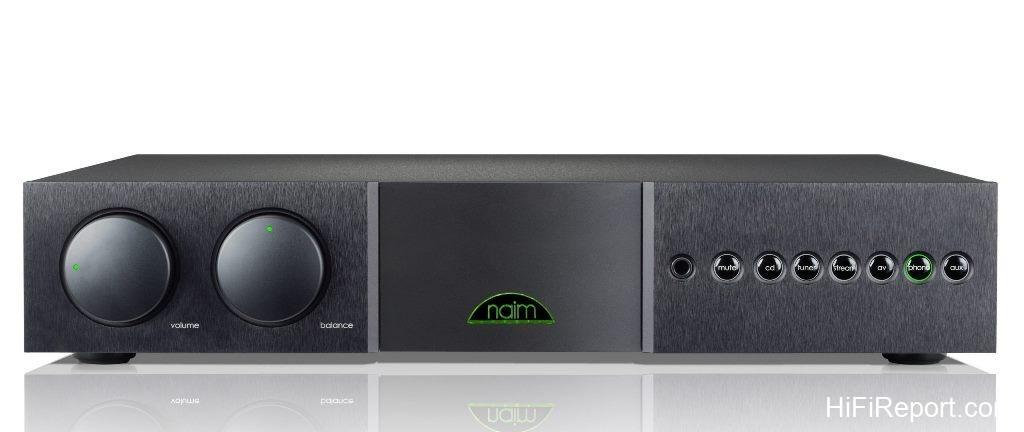
When I first encountered the SuperNAIT 3, it truly felt like stepping back in time. Firstly, its front panel features just two large knobs on the left side: the left one controls volume, and the right adjusts channel balance. On the right side are six small buttons corresponding to different sources, plus a mute button. From the front panel, it might appear to have numerous source options, right? However, upon examining the rear panel, you discover that all six input sources are RCA terminals.
What’s more, each input also features DIN connectors, currently found more commonly only on Naim equipment. Additionally, the speaker terminals utilize the brand’s preferred design, exclusively accepting banana plugs, something users should note when selecting speaker cables.
Honestly, based on the equipment I have encountered over the past two years, an integrated amplifier solely with RCA inputs is quite rare. I was truly curious about Naim’s rationale behind this design. However, my understanding grew when I learned that NAIT fully stands for “Naim Audio Integrated amplifier.” It became clear this unit was developed as a return to fundamental principles, a pure integrated amplifier focused on genuine sound quality and the pursuit of sonic excellence.
This conclusion is further supported by the SuperNAIT 3’s amplifier circuit design. Incidentally, during the careful process of disassembling this integrated amp, I could also feel the exceptionally high production quality, from the cabinet’s solidity to the precision of the screw holes – qualities that inherently promise good sound.
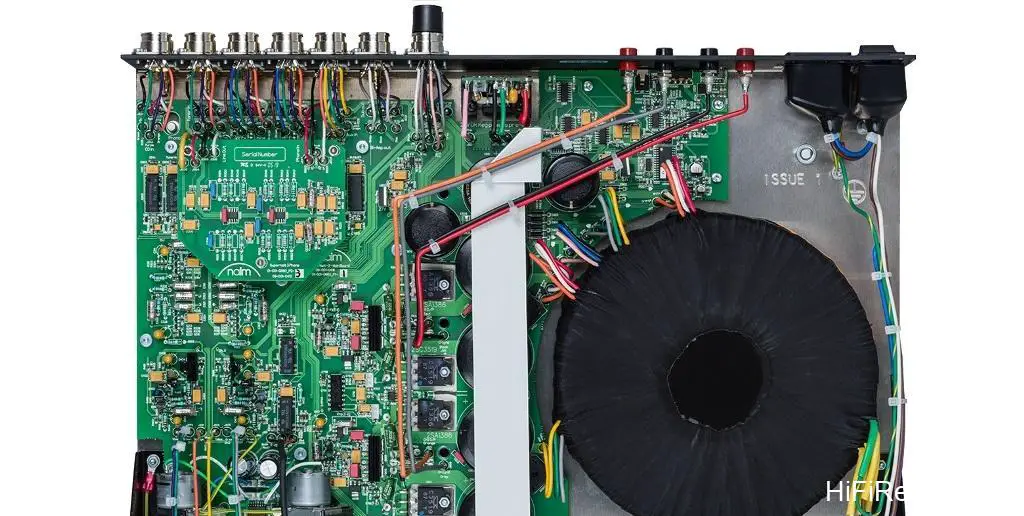
Internal Engineering and Architecture
Looking inside, nearly half the SuperNAIT 3’s internal volume is occupied by a 400VA toroidal transformer, manufactured by the Irish company Nuvotem Talema. It’s uniquely shaped, being wide and flat, and its surface is wrapped in a rigid black non-woven fabric. This unusual design provides a certain degree of isolation and vibration damping. This toroidal transformer supplies power to different operational units via four secondary windings.
Moving on to the amplification circuitry, it’s evident that Naim adheres to the principle of extremely short signal paths in their design, ensuring that all signals are transmitted as quickly and efficiently as possible. This design is another contributing factor to this amplifier’s excellent sound.
The SuperNAIT 3’s preamplifier circuit operates in Class A, and extending to the transistor output stage of the power amplifier, a fully balanced architecture is employed for both left and right channels. Furthermore, within the preamplifier section of this integrated amplifier, you can also find a headphone amplifier circuit directly connected after the preamplifier and then amplified by a 2x gain circuit. The headphone output uses a standard 6.3mm jack.
This means the integrated amp also includes a pure Class A headphone output function. It’s impressive that Naim has paid attention even to such a subtle detail. Having delved into the design this far, I began to eagerly anticipate how this integrated amplifier would actually sound.
Meticulous Hand-Crafting and Build Quality
After reviewing the design elements mentioned earlier, it’s not difficult to appreciate Naim’s high level of manufacturing expertise as a major brand. But there’s more. If you look closely at the SuperNAIT 3’s circuit design, you’ll notice a large number of hand-soldered connections, all meticulously done by master craftsmen in England. Users with some understanding of electronics will immediately grasp the essence of this amplifier’s quality.
These hand-soldered joints are visible throughout the unit, from the input terminals and various components all the way to the volume control module. The joints on the 4-pin DIN connectors and the pins of the ALPS Blue Velvet volume control, in particular, represent an extremely high level of difficulty to execute, yet a glance reveals the result of truly perfect craftsmanship.
Even our technical editor, Mr. Lu, was amazed by the painstaking hand-soldering and labor-intensive design of the SuperNAIT 3. The reason is that virtually “every single solder joint” in sight can be considered a “component” in itself. In this era dominated by mass production and cost-saving, wire connections often use “crimped” terminals or plastic connectors. Both crimped and plastic connections introduce one point of error at the connection between the component and the wire.
When connecting this terminal to another point, a second error is introduced, and so on. As numerous connection points accumulate within a circuit, they become a significant “source of distortion.”
The SuperNAIT 3, however, perfectly avoids these sources of distortion. It also ensures more stable connections and improved vibration damping. Of course, the drawback is that it’s labor-intensive, and it’s understandable that production capacity won’t be particularly high. However, these are concerns for the manufacturer; we can simply appreciate such high-level craftsmanship. But this amplifier’s brilliance doesn’t stop there.
A closer look reveals that, unlike contemporary products of the same type which exclusively use SMD components, its circuit design employs a mixed approach of both SMD and through-hole components.
Component Selection and Tuning
The reason for the SuperNAIT 3’s mixed component approach is straightforward: it’s purely for Naim’s own considerations in component selection and tuning. However, as mentioned before, each component requires precise spot welding for connection, so adding up these tiny connection points still results in a highly labor-intensive process. It’s worth noting that at the source input stage, this amplifier utilizes reed relays. These components offer extremely fast reaction times.
Combined with the hand-soldering technique, it’s easy to deduce that it should deliver directness, rich detail, and the ability to fully express the sound’s dynamics.
The SuperNAIT 3’s extensive use of unique through-hole passive components also reflects some of Naim’s specific tuning logic, allowing it to maintain the brand’s classic character while exhibiting extremely low distortion.
Furthermore, it occurred to me that these design elements, showcasing a major manufacturer’s essence, resemble those highly regarded British integrated amplifiers from years past – amplifiers that veteran audiophiles used for 10, 20, or even 30 years without wanting to replace them. Therefore, I highly anticipate that this might also be a piece of equipment that stays with audiophiles throughout their listening lives!
Specialized Features: DIN and Phono Stage
It’s necessary to mention the DIN connectors featured on the SuperNAIT 3. Equipment using this type of connector is no longer common on the market; only a few turntable tonearm outputs and their corresponding phono preamp inputs utilize them. Therefore, you can consider it Naim’s exclusive special weapon. The reason the brand retains DIN connectors is their belief that this type offers more stable and low-distortion characteristics when transmitting audio signals.
So, if you have the opportunity to acquire one of their CD sources, you might try connecting it to the SuperNAIT 3 with a DIN signal cable – I believe you’ll find it a rewarding experience.
Given that the SuperNAIT 3 is packed with notable features, its phono amplifier module certainly deserves mention. The circuit board corresponding to the MM phono input is elevated and housed on a separate board above it – this is where the phono stage resides. A closer look reveals that it has specifically designed gain stages, passive equalization, and active equalization. Furthermore, its capacitor components also extensively utilize through-hole soldering.
The RIAA equalization provides more stable and accurate reproduction, and noise is minimized. With such a sincere design, it’s definitely worth a try for vinyl enthusiasts.
Power and Physical Presence
In terms of output power, according to the original factory data, the SuperNAIT 3 can output 80 watts into an 8-ohm speaker load and 130 watts into a 4-ohm load. This means it can not only drive most bookshelf speakers on the market but also handle floorstanding speakers effectively! Getting back to the design, the front panel of this integrated amplifier is completely free of unnecessary ornamentation.
Its LED indicator lights have the pale green glow seen on older desktop computers, truly radiating a strong retro style. When I actually lifted it, I was surprised to find it’s not light at all, truly feeling like one of those early British small integrated amps.
Listening Impressions: Sonic Character
For my actual listening test, I paired the SuperNAIT 3 with our standard reference equipment, the Pioneer S1-EX speakers, to push its performance limits. For the source, I selected a Norma CD player. Upon hearing this amplifier open up, I immediately noticed a warm and thick sound character, which is Naim’s consistent sonic signature, possessing the beautiful sound of past British integrated amps. Furthermore, upon closer listening, it was evident that its high frequencies had a sweet quality.
For instance, when listening to the album “Dream Songs: The Essential Joe Hisaishi,” the violin sounded neither harsh nor sharp, but rather sweet, with a very captivating trailing edge. The piano presented with distinct, sweet, and clear notes, making the overall presentation very pleasant to listen to. Before I knew it, I had finished the entire album.
It’s worth mentioning that the SuperNAIT 3 is capable of rendering the sheen of instruments. For example, when listening to the album “Daniel Lozakovich: Bach,” the violin had a very smooth and transparent sheen. At higher frequencies, one could also hear slightly opulent overtones, allowing not only a clear perception of the delicate details of the strings being bowed but also the inherent charm emanating from the instrument.
Furthermore, because this amplifier can present a considerable sense of spaciousness, other sections such as the double bass, brass, and woodwinds also had excellent body and presence. Whether focusing on any specific instrument or section, one could hear exceptional detail, making the listening experience truly enjoyable.
Listening Impressions: Detail and Dynamics
Listening further, I found that even large-scale orchestral pieces did not faze the SuperNAIT 3, which was quite impressive. When listening to symphonic tracks, I could feel a very distinct sense of layering, with a palpable sense of front-to-back depth and left-to-right spaciousness, almost giving a feeling of being present at the performance. For example, on the album “Taiwan Rhapsody,” when the inner and outer sections played simultaneously, there was absolutely no sense of clutter.
With focused listening, I could discern the sweet and warm sound of the woodwinds, accompanied by a smooth, gentle texture and elegant body. When the timpani pounded, there was a grand momentum, coupled with a steady double bass, creating a rich yet balanced overall picture.
Listening Impressions: Midrange and Vocals
In addition to its striking high-frequency performance, the SuperNAIT 3’s presentation of the midrange is also very appealing. It not only maintains Naim’s characteristic warm sound but also has a very pleasing fullness. For example, when listening to Tokyo M 명곡’s live album “IN CONCERT! “, I could hear the saxophone with a very full and solid presence. The texture of the thick air vibrating through the brass evoked a vivid image of the musician blowing with great strength and vigor.
Similarly, the low frequencies from the double bass also had a full and solid texture, and the tight, steady plucking of the strings made the music sound more lively and real, making it impossible not to sway along.
Given that the SuperNAIT 3 presents a fuller midrange, it is bound to perform well with vocals. Indeed, when listening to popular music with it, I could hear the singer’s voice with a focused, substantial presence, conveying the artist’s true timbre and naturally expressed, heartfelt emotions.
This truly echoes the style of those classic British integrated amps, although the vocals presented were not overly large and maintained a certain distance from other instruments, creating a balanced stage presence.
For example, listening to the album “Bird Bird Bird” by the indie band Deca Joins, I could hear the lead singer slightly forward in the center of the soundstage, allowing me to clearly hear the details of the singing and the sound effects meticulously crafted by the recording engineer.
Conclusion: A Testament to Pure Audio
Overall, the sound quality delivered by the SuperNAIT 3, whether it’s the delicate, lustrous highs, the full and focused midrange, or the solid and weighty bass, reflects Naim’s high standard of manufacturing expertise. Notably, throughout my listening, I observed that this amplifier can also render the details of reverberation.
Whether with instruments or vocals, I could hear a subtle sense of spatial echo at the end of each note, adding more musicality to the tracks and enhancing the feeling of being present at the performance.
Having actually listened to the SuperNAIT 3, I can deeply understand Naim’s reasoning for launching it as their latest flagship integrated amplifier. Although this integrated amplifier has a low-key appearance, its internal circuit design and component selection possess extremely high substance. The exceptionally high standard of sound quality it delivers fully embodies a commitment to pure, unadulterated sound.
Coupled with its built-in, carefully designed MM phono stage and Class A headphone amplifier circuits, it represents an excellent avenue to explore the beautiful sound of the British audio style. With such extreme craftsmanship, it would be truly remiss not to recommend this impressive SuperNAIT 3!
Specifications
* Type: Solid-state integrated amplifier
* Output Power: 80W (8 ohms), 130W (4 ohms)
* Inputs: MM Phono (RCA) ×1, High-level RCA ×4, DIN ×4
* Outputs: Subwoofer (RCA) ×1, DIN ×1 (bi-amp), 6.3mm headphone output ×1, Speaker terminals (1 set, banana plug only), AV Bypass
* Dimensions (W.H.D): 432×87×314mm
* Weight: 13.6kg