
NANOTEC Music Strada #211 Signal Cable Review
Recently, Japanese brand Nanotec launched its new signal cable, the Music Strada #211. Positioned as a higher-end offering from the brand, it features PC Triple C conductors. While Nanotec might not have the same name recognition as other established cable manufacturers, it possesses its own specialized technology, delivering demonstrable sonic benefits.
Furthermore, Nanotec adopts a pragmatic pricing strategy, avoiding exorbitant markups and establishing itself as a brand with excellent value for money.
Gold and Silver Hybrid Conductor
Nanotec’s cable design philosophy emphasizes the cable itself. They procure conductors from reputable Japanese manufacturers like Furukawa or Hitachi Metals, and then meticulously design the internal structure, specifying the diameter, strand count, and arrangement of these conductors. Crucially, Nanotec applies a nano-technology coating of gold and silver mixture to the conductors, which constitutes the core value of their cables.
For connectors, Nanotec designs its own speaker cable terminals, but for signal and power cables, they predominantly utilize Furutech or Neutrik components. Importantly, Nanotec also makes its bulk cable available for enthusiasts to build their own custom cables.
Core Nanotechnology Value
Nanotec Systems’ core technology lies in its ability to evenly disperse minute nano-gold and silver particles within a liquid medium that prevents copper oxidation. This nano gold-silver precious metal liquid is then applied to the copper conductor surface, enhancing conductivity and protecting the conductor from oxidation, resulting in exceptional performance in both audio and video signal transmission.
Taking the provided #211 cable as an example, it employs PC-Triple C as the conductor in a dual-core configuration. Each core consists of six 0.32mm diameter copper conductors, and each of these conductors further contains seven finer 0.12mm diameter copper strands. Every copper strand is coated with a special liquid containing gold and silver hybrid particles, with a ratio of 95% gold and 5% silver. The concentration of this special liquid is three times the standard formulation.
The specifications table clearly demonstrates the Japanese manufacturer’s meticulous attention to detail, fully disclosing the design cross-section and providing comprehensive information on conductor diameter and cross-sectional area.
Pragmatic Approach of Nanotec
Sources indicate that Nanotec is a highly pragmatic Japanese company. Beyond their crucial core technology, they maintain transparency in other aspects. Their marketing approach avoids extravagant methods and unnecessary costs, preventing these expenses from being passed on to consumers. While commercial success is important, it is not their sole objective; they prioritize offering high-quality products at reasonable prices to discerning users.
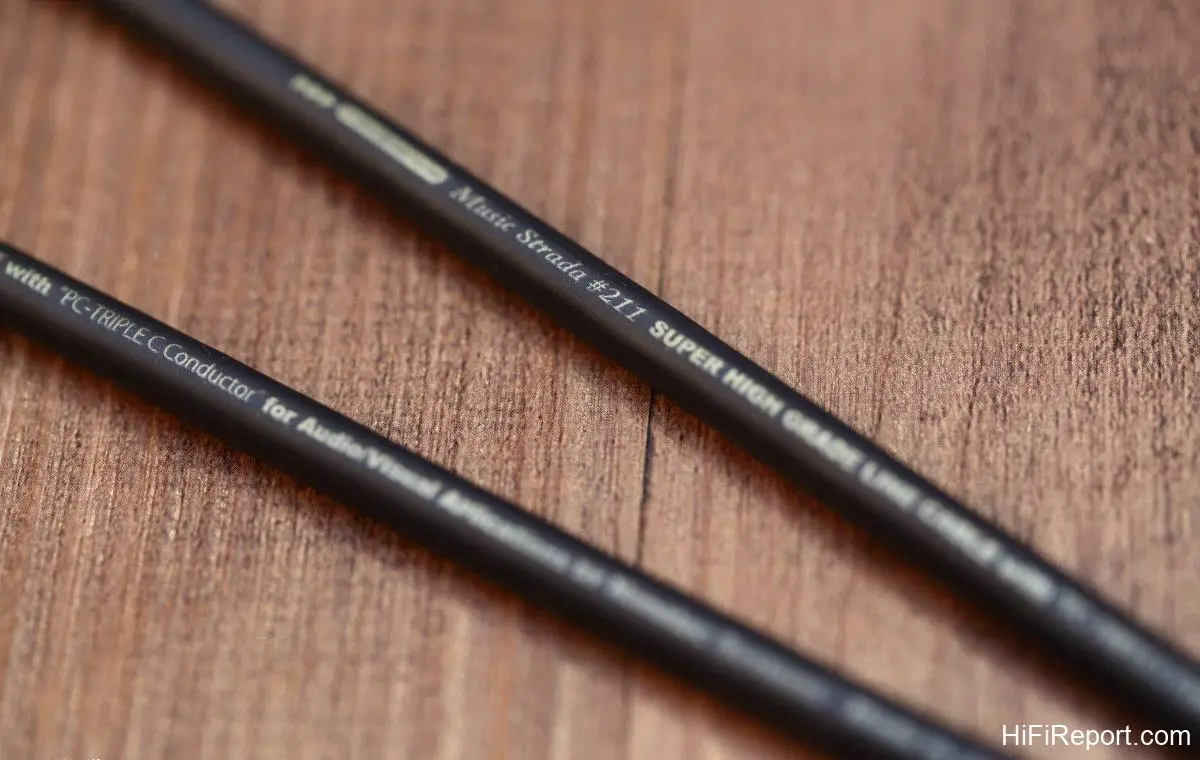
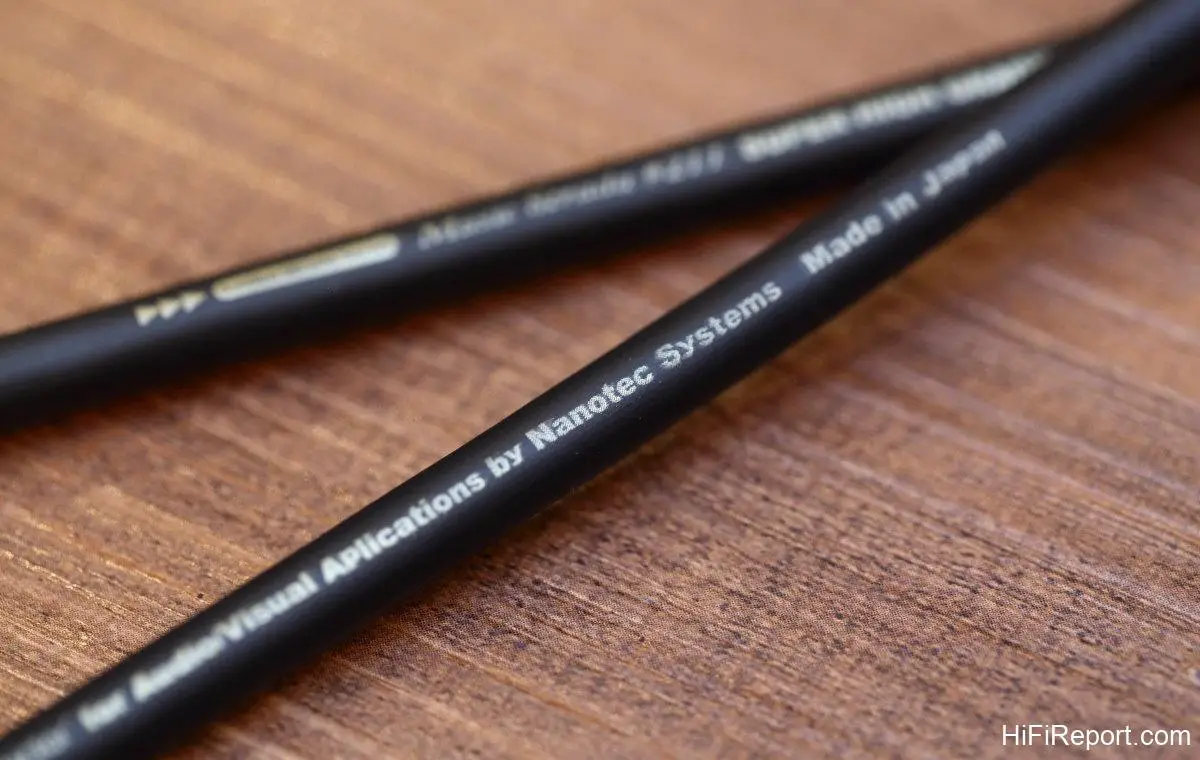
The #211 cable exemplifies this philosophy. Cable specifications are printed directly on the cable itself, with the brand name subtly sized, and packaging is unpretentious. In fact, the Furutech connectors used on each finished cable are visually more prominent than the Nanotec branding. However, Nanotec trusts that quality speaks for itself, and those who appreciate true value will recognize the manufacturer’s dedication.
Observe the subtle brand marking on the cable. This single instance is the only place the Nanotec brand name is visible on the two cables, showcasing extreme understatement. The directionality marking is also present on the cable, with similarly small lettering. Users should be mindful of this and avoid hastily connecting the cables without proper orientation.
The Furutech RCA connectors are a fitting match, and the cable itself is very flexible, making it easy to handle. This pair of signal cables was custom-made by the distributor at a length of 1.8 meters. Customers can specify different brands and grades of connectors, which will affect the final price. Bulk cable is also available for DIY enthusiasts who prefer to use their own choice of connectors.
MK-4EX Speaker Cable with HiFC Conductor
Also included for review was a pair of speaker cables, model SP#79 MK-4EX. These utilize Hitachi Metals’ HiFC conductor in a 4-core design. Each core consists of seven 0.5mm conductors surrounded by 26 finer 0.18mm conductors, totaling four cores. The gold-silver particle mixture ratios in the special liquid coating differ slightly for each core.
The speaker connection end reveals four individual cables. This configuration was assembled by the distributor for customer testing, allowing for Bi-wire connection. For users employing standard two-terminal speaker connections, the finished cables can be terminated with either spade or banana plugs.
Power Strada #308 Top-Tier Power Cable
For power, Nanotec’s top-tier power cable, the Power Strada #308, was also utilized. We previously reviewed this cable. It employs PC-Triple C conductors, coated with a special liquid containing 95% nano-gold particles and 5% silver particles, with a special liquid concentration 1.5 times the standard level. Internally, it features three cores for live, neutral, and ground, each containing 105 strands of 0.26mm PC-Triple C conductors.
The Nanotec Power Strada #308 power cable utilizes high-quality Furutech FI-50 carbon fiber connectors. Considering the Power Strada #308’s price point and the inclusion of such premium connectors, it is unlikely to find another factory-terminated cable on the market that offers such value.
From our source device to the integrated amplifier, with the exception of the amplifier’s own power cord, we used Nanotec cables throughout – power cable, signal cables, and speaker cables. Nanotec cables are flexible and easy to manage without angle issues. Lengths can be directly ordered from the distributor without special limitations.
About PC-Triple C
Audiophiles are likely familiar with PCOCC (Pure Copper by Ohno Continuous Casting process). This process uses specialized forging to transform the multi-crystal structure of copper into a single crystal, eliminating gaps between crystals for higher purity and improved conductivity.
Last year, Furukawa Electric Co., Ltd. of Japan discontinued PCOCC production and instead, their subsidiary FCM (Fine Chemical & Material) announced the latest continuous crystal high-purity oxygen-free copper, PC-Triple C (Pure Copper-Continuous Crystal Constructions), as a replacement for PCOCC.
For the conductor material, PC-Triple C utilizes Furukawa Electric’s “high-purity” oxygen-free copper (OFC). Typically, OFC can be drawn to a minimum diameter of 0.05mm, but Furukawa Electric’s OFC can reach 0.015mm. The smaller the wire diameter achievable, the fewer impurities and higher the purity. Furthermore, a new forging process called “constant angle continuous transfer forging method” is employed.
While PCOCC converted multi-crystals into single crystals to eliminate gaps, PC-Triple C maintains a multi-crystal structure. It utilizes a precise hammering process, similar to crafting a Japanese sword, to compact the crystals and align them horizontally, leaving only appropriate gaps to absorb vibrations.
In a somewhat exaggerated analogy, the original crystal structure is like a pile of stacked stones, forcing current to travel a winding path. After forging, the stones are hammered into a smooth, wave-like pattern, reducing gaps and allowing current to flow more smoothly.

Transparent, Detailed, and Stable Sound
The listening session utilized equipment familiar to HiFiReport, including Esoteric source components, integrated amplifier, and Marten speakers. Previously, cable selection had not been brand-consistent; this occasion marked a rare instance of using almost entirely cables from a single brand.
Nanotec’s sonic character leans towards transparency, detail, and stability. Referencing Dali CD Vol. 4, tracks 1 “Ain’t No Sunshine” and 15 “Happy Home,” the transparency in vocals and the mid-high frequency range was immediately apparent. However, this transparency did not result in a thin or piercing sound; the sound retained a reassuring fullness, remaining comfortable to listen to. The background was rendered exceptionally clean and free of noise.

Track 14 “Deeply Disturbed” demonstrated stable and controlled low-frequency speed and output, neither rushed nor sluggish, exhibiting a well-defined, non-bloated image, best described as solid and refined.
High Volume Endurance, Balanced and Listenable
Playing , I happily listened to the entire album, a thoroughly enjoyable experience. Several factors contributed to this. I noticed that with these cables, the volume could be increased considerably without the sound becoming aggressive. Referencing track 9 “Vivaldi: Concerto in F, RV 569,” featuring Elizabeth Blumenstock on violin with orchestra, the violin reproduction was exceptionally transparent and elegant.

My attention was captivated by the clean, transparent, detailed, and pleasing violin tone.
Moving on to more complex and dynamically demanding pieces, track 10 “The Padstow Lifeboat” exemplified the cables’ strengths. Despite the large ensemble, the arrangement remained organized and coherent. The brass instruments were powerful and resonant, with clear and distinct sound, free from any blurring. Nanotec’s cable advantages were fully showcased in this album.
Natural Transparency, Effortless Flow
With a quiet background and familiar sonic signature, playing Tsai Chin’s evoked a sense of tranquility. The reproduced sound was balanced and assured. Tsai Chin’s vocals had appropriate presence, clarity, breath, and subtle emotion. The sound resolution was excellent, with precise image positioning and a wide horizontal soundstage, enhanced by the quiet background.
The sound passing through Nanotec cables exhibited a natural and smooth quality, possessing a sense of effortless flow and texture.
Natural Detail, Excellent Value Cable
Nanotec’s philosophy is simple: select excellent raw materials, apply proprietary technology and design, and offer valuable musical reproduction to music lovers. Cable design emphasizes neutral transmission. Transmission inherently involves a medium, and material differences inevitably influence sonic characteristics. My experience with Nanotec suggests a deliberate effort towards neutrality and balance, prioritizing clean, transparent, and detailed sound.
These qualities are readily discernible and genuinely effective. Coupled with their reasonable pricing, and even the enjoyable DIY possibilities, Nanotec cables are highly worthy of audiophile attention.
Contact & Specifications
Contact: Mr. Yan 0905-258886
**Specifications**
* Product Name: Music Strada #211 Interconnect Cable
* Conductor Material: PC-Triple C
* Conductor Coating: Nano-gold and silver particle mixture (95% Gold, 5% Silver), 3x concentration
* Conductor Structure: Dual-core, each core with 6 x 0.32mm conductors and 6 x (7 x 0.12mm) strands
* Connectors: Furutech RCA
* Available Lengths: Customizable
* Speaker Cable: SP#79 MK-4EX
* Speaker Cable Conductor: HiFC
* Speaker Cable Structure: 4-core, each core with 7 x 0.5mm conductors and 26 x 0.18mm strands
* Power Cable: Power Strada #308
* Power Cable Conductor: PC-Triple C
* Power Cable Coating: Nano-gold and silver particle mixture (95% Gold, 5% Silver), 1.5x concentration
* Power Cable Structure: 3-core, each core with 105 x 0.26mm strands
* Power Cable Connectors: Furutech FI-50