
Nirvana Audio Chronos Quantum Sonic Clock Review
One afternoon, over two months ago, I received a call from an unknown number. “Hello Editor Lin, this is the person who bought the MB2i from you before, I wonder if you still remember me?” When I changed my reference speakers, I had transferred my MB2i to a netizen, so there was such a person, but I had forgotten his last name. “Hello, I remember, how are you?” I replied.
He continued, “Editor Lin, we recently developed a tuning product that looks like a USB flash drive. Just plug it into your audio system and it can tune the sound, the effect is obvious, everyone who has heard it says it’s good. I was wondering if you could listen to it for us too?” Generally speaking, reviewers rarely accept such requests from strangers. After all, new products are developed in the market from time to time, and quite a few of them are of dubious quality. There’s no way we can test them all. However, I had met this gentleman once before. We chatted a bit when he came to my house to move the speakers, and he seemed quite amiable, so I didn’t suspect anything and agreed.
Two days later, he arrived as scheduled with the USB flash drive. He called me as soon as he parked, saying he had arrived.
I thought I should at least invite him in to listen in our listening room, so we could hear it more clearly. Unexpectedly, he said, “I’ll just park temporarily by the roadside, why don’t you come listen in my car?” What! Listen in a car audio system? Full of doubt, I got into his car, then reached out and took the business card he handed me. The name was Sullivan Su, and his main business wasn’t audio or electronics, but actually yogurt making.
It couldn’t get any stranger. I had no choice but to listen carefully.
Then, Sullivan Su deliberately played a few tracks with complex and abundant low frequencies and drums via Bluetooth on his phone. He then inserted the USB flash drive into the car’s audio system and played them again. Upon listening, the lines, contours, and layers of the low frequencies became clearer, the lower end tightened up, the overall musical power became stronger, and even the shape of the soundstage seemed to improve… Hmm, this is interesting.
“This thing of mine is called ‘Quantum Sonic Clock.’ The way it enhances sound is different from any previous tuning product. It’s about to be officially released. When it is, I’d like to trouble your publication to write a review,” he said.
I got out of the car with many unanswered questions. Not long after, I received the official version of the product sent by Sullivan Su and conducted an exclusive interview with him. Friends who are interested can check out the interview: “Nirvana Audio: An Exclusive Interview with Sullivan Su, the Person Behind the Extraordinary Sound.” As for this article, it is naturally the listening review of the Chronos Quantum Sonic Clock.
Unprecedented Tuning Approach
Tuning, tuning, what exactly are we tuning in audio? Generally speaking, audio equipment, accessories, or so-called tuning tools, utilize tuning methods that fall within the following categories.
Firstly, spatial acoustics.
The sound we hear from audio systems is actually a combination of the system and the space, and the space accounts for a significant proportion. Optimizing the space and positioning the speakers well can often lead to a significant leap in sound quality. However, this is also the most challenging aspect because the listening space is often also the family living space, making changes difficult.
Secondly, vibration tuning.
This category is very profound. Vibration is related to almost every aspect of audio playback, so many damping and isolation tuning products have emerged, including audio racks. However, careful selection is necessary because undesirable sonic characteristics often come along with them.
Thirdly, power conditioning.
Power is the foundation of audio. Getting the source right naturally leads to good sound. Everything from dedicated power lines, upgraded wall outlets, to filters, isolation transformers, power regenerators, grounding, and even battery power supplies, falls into this category. The effects can be both positive and negative.
Fourthly, materials science, such as the use of audiophile-grade components, high-purity conductors, far-infrared materials, etc., to enhance timbre, improve conductivity, or activate electrical effects.
Fifthly, electronic processing, including equalizers, digital DSP processors, etc., which modify the original signal through electronic equipment for tuning, often used for room correction.
So, to which of the above categories does Chronos belong? None of them. Instead, it is based on their own approach — time.
Reconstructing the Timing of Signal Playback
What does time have to do with audio? When it comes to time, the first thing that comes to mind should be the key element in the digital audio domain — time-base.
In digital audio playback, theoretically, continuous 0s and 1s signals must be reproduced at equal time intervals. This results in the most accurate and best-sounding audio. However, in reality, there are always some errors, which prevent digital playback from reaching perfection at this stage.
The time addressed by Chronos is somewhat similar to the time-base in digital playback, but it is not limited to the digital domain. Instead, it encompasses every aspect of audio reproduction.
Nirvana Audio believes that if the audio signals transmitted in the audio system can be played back at more consistent time intervals, the playback quality can be improved.
Time is Nirvana Audio’s primary focus, which is why Sullivan Su named the product Quantum Sonic Clock.
Do you know what the word Chronos means? In Greek mythology, Chronos is the god representing time, in charge of time itself.
In addition, the Chronos product itself has a small golden label on it, printed with a clock, also indicating its connection to time.
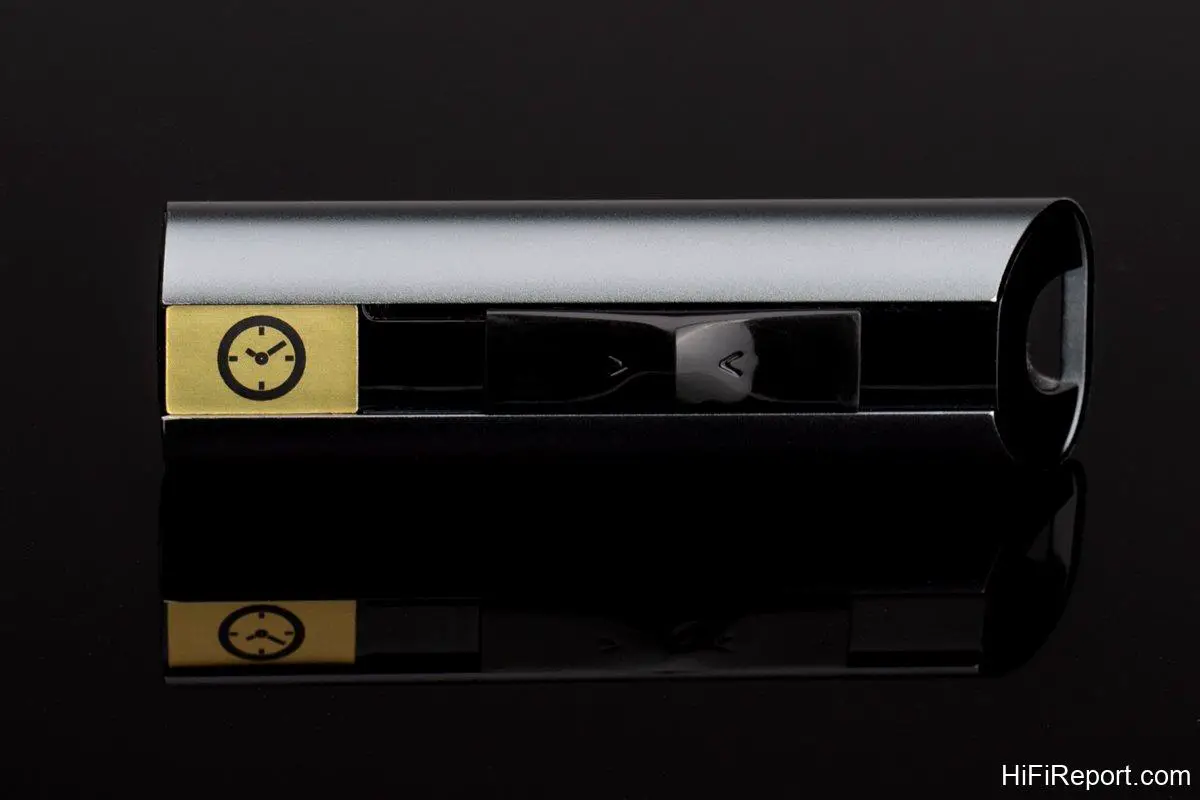
As for how Chronos affects the timing of audio signal transmission, and what is inside the USB flash drive? That is Nirvana Audio’s confidential trade secret.
During the last interview, I tried to get information from all angles, but Sullivan Su remained tight-lipped, revealing nothing, which is truly intriguing.
Chu-Pei Lin as Tuning Consultant
There is also a behind-the-scenes contributor in the development of Chronos, who is Chu-Pei Lin, the owner of Chu-Pei Audio.
Although Chu-Pei runs an audio store, he no longer engages in retail or showroom displays. Instead, he provides tailor-made personal services, including system integration and home theater planning, and can even assist manufacturers in developing audio cables and equipment.
He himself is a classically trained vocalist from the music department in Taiwan, having participated in multiple choirs and served as a soloist in many performances. Later, he went to Germany for further studies, accumulating rich performance experience.
Chu-Pei’s ears have heard countless “acoustic sounds,” unlike most audio dealers who only listen to “audio.” Therefore, he is more familiar with real instruments and vocals and has a better ability to tune audio equipment to produce pleasing sound.
Several years ago, when Chu-Pei still had time to design his own brand of cables, Sullivan Su was a regular customer of Chu-Pei, buying many cables from him. The two also often exchanged audio insights. Later, Sullivan Su disappeared for a while, and Chu-Pei guessed that Sullivan Su was probably fascinated by other cables again, pursuing different timbres.
Suddenly one day, Sullivan Su appeared with a USB flash drive, hoping Chu-Pei would listen to it and give some advice. Chu-Pei was greatly surprised upon listening, feeling that this flash drive was very helpful for audio reproduction, making the sound more like the original sound. Therefore, Sullivan Su invited Chu-Pei to be a consultant, using Chu-Pei’s ears and sensitivity to sound to help tune Chronos to sound even better.
In other words, Chronos is not only a product developed by audiophiles, but also polished and refined by a musician, thus able to balance both audiophile and musical requirements.
Effective Even When Plugged into a Wall Socket
How should Chronos be used? Basically, there are two ways: direct or indirect.
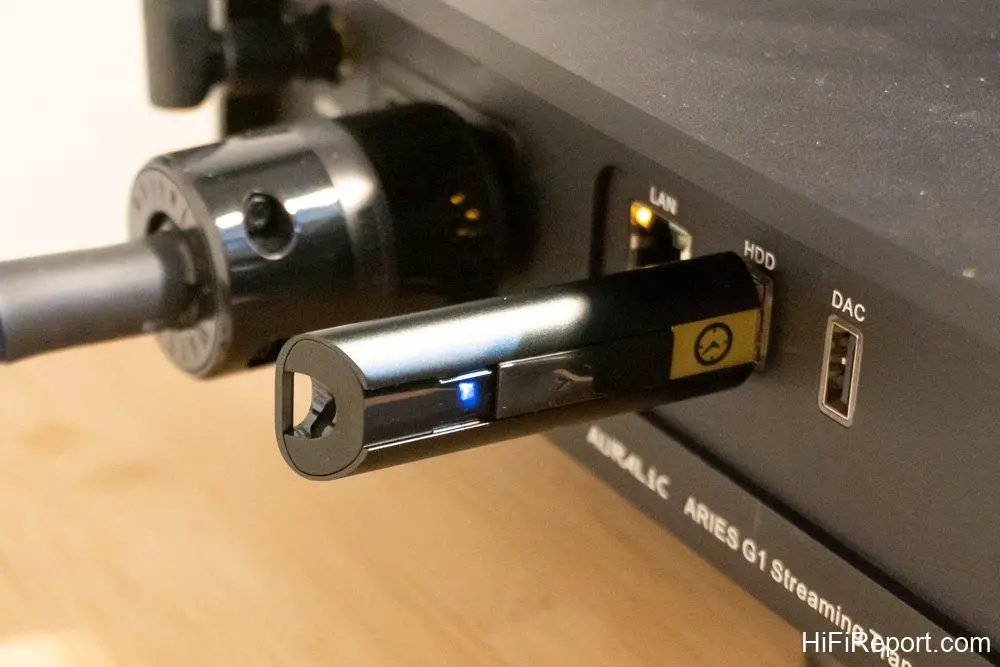
Direct use means plugging Chronos directly into audio equipment with a USB A slot. It will optimize the signal transmission process of that equipment.
Devices such as streaming players, music servers, NAS, computers, Blu-ray players, media players, wireless routers, or some DACs, all have USB A slots and can be used directly.
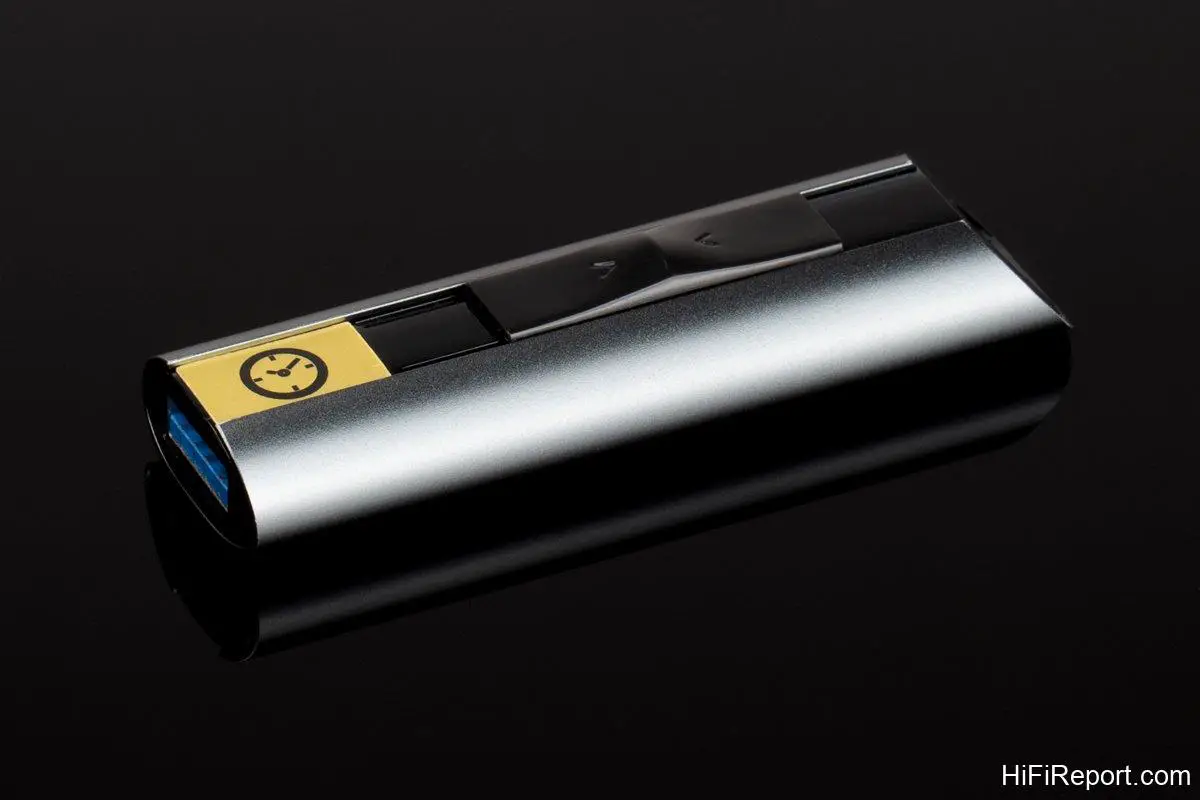
Indirect use involves plugging Chronos into a regular mobile phone charger or USB power adapter, and then plugging it into a wall socket or power strip, using a bypass method to take effect.
If you only have analog sources or a simple CD player at home, you can use the second method.
Note that if you are using Chronos plugged into a computer, please do not format it or create folders on it, and do not store data, as this may diminish its effect.
Theoretically, it should not be possible to do this, because the sectors on Chronos have been removed. Inserting it into a computer should make the flash drive invisible. But if your computer detects it and asks to initialize it, please ignore this step and just leave it alone.
Sounding More Real
No matter how mysterious or magical the claims are, sound performance is the moment of truth. What kind of effect does Chronos have? Let me first say where I used it.
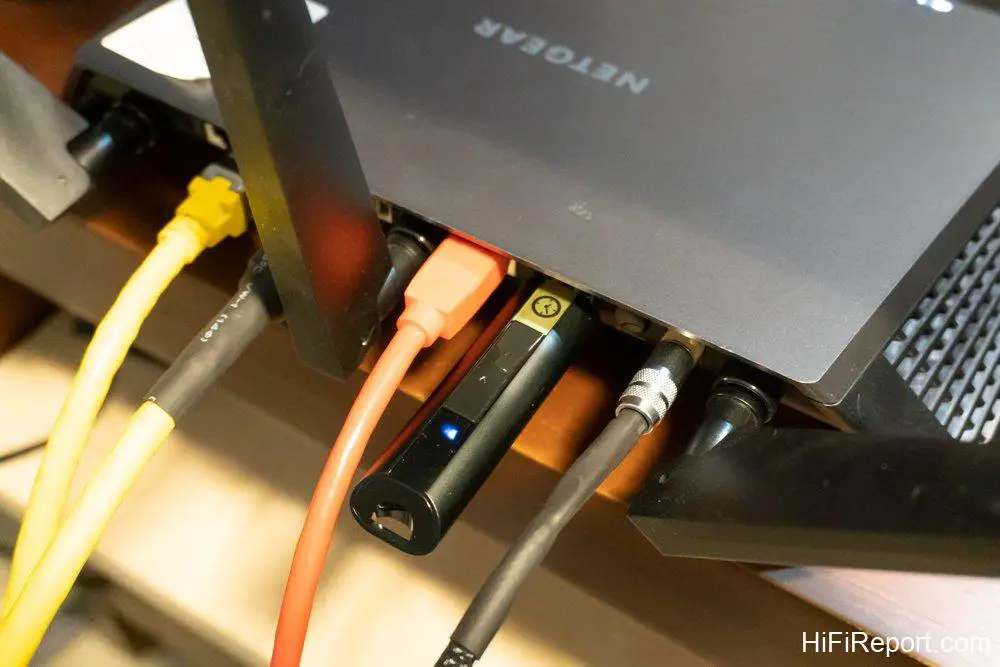
My Roon Core is a Qnap NAS, and the Roon Ready player is an Auralic Aries G1 wireless streamer. The DAC is an Audiobyte Black Dragon.
The Aries G1 connects via Wi-Fi, and the NAS is connected to the wireless router with a network cable, without going through a switch.
The wireless router is at an important data traffic location. I plugged Chronos into the wireless router to see if it would have any effect.
Other reference equipment includes an EC 4.8 preamplifier, NuPrime Evolution One monoblock power amplifiers, and Aurum Cantus Grand Harmony speakers.
As soon as I plugged in Chronos, I felt some changes in the sound. As the days of use increased, its effectiveness began to truly manifest. If I were to describe Chronos in one sentence, it would be that it makes the “sound more real.”
High fidelity is the primary goal of all sound reproduction equipment. Chronos helps these devices make the reproduced sound more real. More importantly, it sounds very comfortable.
Like Upgrading to a High-End Source
Chronos is like having upgraded to a high-end source. This source might be a digital source with very low jitter, or it could be a great turntable. It makes the outlines of the reproduced images clearer, the shapes more concrete and focused. The depth, width, and height of the soundstage are rendered more clearly, with a more three-dimensional spatial sense. The positioning of vocal parts or instruments is more accurate, the front-to-back layers are richer, and the relative positions between each sound are more separated.
Take a piano solo with a very simple arrangement, but actually not easy to reproduce well, as an example. I chose the 2017 Hi-Fi Show Commemorative CD, which includes selected works from Steinway & Sons record company.
Before listening to this recording, the piano’s timbre was clean, beautiful, with appropriate moisture, the background was very quiet, the sonic foundation was solid, and the flow was also very good. However, the scale of the piano’s shape could not be clearly conveyed. After inserting Chronos into the wireless router, the scale of the piano’s shape became very clear, the notes became more concrete, and the sound gained depth. I even felt that the distance from the piano also became clear.
Although this description is quite cliché, it feels like there is really a piano in front of you.
Amplifier Seems Upgraded Too
After using Chronos, my amplifier also seems to have been upgraded.
The micro-dynamics of the low frequencies, the details and layers of the low frequencies, all feel improved.
The overall dynamic range is better than before, the loud parts are more energetic, the quiet parts are clearer, and the energy output feels more relaxed and smooth than before. Listening at high volumes is more effortless. I can listen at higher volumes than before, the sound is more organized, and the soundstage structure is better.
In addition, the sense of air and atmosphere has also improved a lot, making the music sound more vivid and richer.
I thought my system was already very lively, but in comparison, it became even more lively after using Chronos. Without it, it seemed a bit stiff.
Chronos does not improve a single aspect locally, nor does it change the original timbre and texture of the system. The original characteristics of the equipment remain. Roughness will not become delicate, clarity will not become mellow, high frequencies will not become brighter, and low frequencies will not increase. Instead, the extension at both ends becomes better, the texture becomes cleaner, details and dynamics are improved, bringing better transparency and energy, making the music sound more like live performance.
I think achieving such improvements by adjusting or upgrading equipment in other aspects is not impossible, but it may cost more money and time, and the results are not guaranteed. In comparison, Chronos is much easier.
However, because Chronos will make the shapes more focused and condensed, the outlines clearer, and the texture denser, reducing the blurred parts in the system and expanding the extension at both ends, it will make the sound sound thinner and finer, which some people may not like, or it may not suit the sound direction of some systems. Please listen before deciding.
I also tried plugging Chronos into a power strip through a USB charger to see how it works.
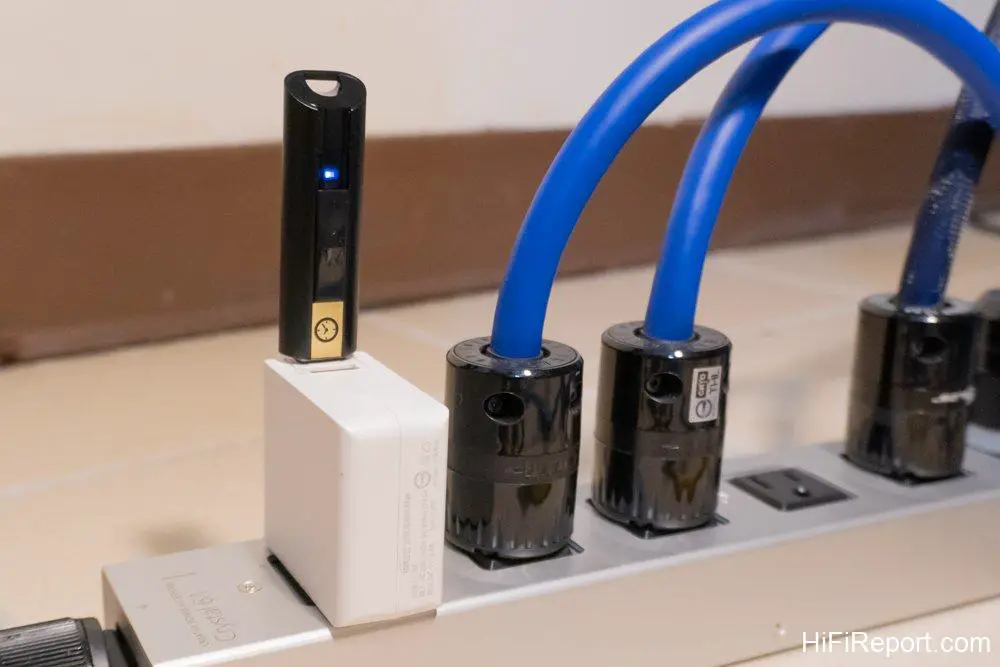
The same power strip also had the Aries G1 streamer, Black Dragon DAC, and NAS connected, all source components. The resulting improvement was in the same direction as when plugged into the wireless router, meaning it was also effective.
Taking track 2, “Did Trouble Me” sung by Tom Jones, from the “Dali CD Volume 4” test disc as an example. At the beginning, the two sounds — Tom Jones’s vocals and the faint organ sound in the background — were intertwined and difficult to separate when Chronos was not used, and the sense of shape was not very clear. After using it, the shapes of the two sounds converged, becoming more focused, and the sense of substance was also better. Moreover, they separated from each other, and the relative relationship and position of front and back became clearer. The organ was in the background, further away as a backdrop, with a small shape, while the vocals had a feeling of jumping out, making them hard to ignore.
At this time, the background also became quieter, the sound was not impetuous, and thus appeared more calm, steady, and composed, further highlighting the realism of the timbre.
Two Units Are Even Better
If you use two or more Chronos units at once, will the effect be stronger than one? How should they be plugged in? After my extensive testing, the effect of two units is indeed more pronounced than one. I would keep one plugged into the wireless router, and plug the other into a wall socket in another room.
That’s right, a wall socket in another room, on a different power circuit from the audio system.
Playing the first movement of Mahler’s Fifth Symphony conducted by Pierre Boulez with the Vienna Philharmonic, I felt that the tempo became slower and the musical atmosphere became deeper. This is because Chronos expressed the subtle changes in the weak parts of the music more vividly, making the strings in the weak parts more continuous and smooth, and the low frequencies in the weak parts also became more solid and clear, with clearer trajectories.
On the other hand, Chronos made every part between the extremely quiet and extremely loud clearer, and both ends of the dynamic range were further extended, making the gradation of dynamic contrast richer and the power more focused.
In addition, after using two Chronos units, the image outlines and positioning were more accurately rendered, and it sounded comfortable. Unlike some cables or equipment that make the positioning more accurate and the images clearer, but also make the texture stiff or dry, failing to achieve all-around improvement.
Next, I unplugged both Chronos units for A/B comparison. At this time, the sound did not fall from heaven to hell, but it felt flatter (including the sense of image substance and soundstage depth), the sound became monotonous, the timbre was not as rich, appearing poorer, and the texture was loose, the separation of sound parts was unclear, and the cohesion became worse, sounding hollow.
Simply put, I felt the equipment class was lowered.
Plugging the two units back in, not only the soundstage depth and width became clearer, but also the smoothness, linearity, layers, vividness, positioning, etc., all became better. Richness and realism returned!
Put Down Preconceptions, Embrace New Technology
Finally, returning to the price, is a USB flash drive costing over $3,000 USD worth it? In my opinion, if you can afford it and hope to improve your audio system on its existing foundation, and further reproduce more realistic and infectious sound, and you can put down your preconceptions and are willing to try new technologies, then I strongly suggest you should find an opportunity to audition Chronos.
There are two ways to audition Chronos. One is to go to a Nirvana Audio authorized dealer. They are available in [City names]. The second is to contact Nirvana Audio directly. They will send a technician to your home to provide service, allowing you to audition in the most familiar environment. If you listen and feel it is effective and worthwhile, then you can pay to buy it.
Finally, one more point to add. According to Nirvana Audio, Chronos is more likely to show its advantages in simpler and more streamlined systems. If you are already using active power conditioners, power filters, DSP room processors and other equipment, the effect may be less obvious. Therefore, you can try to ask their technicians to install it at your home, listen to it in person, and then make a decision.