
NuPrime Evolution DAC Review
NuPrime is renowned as a D-Class amplification expert, consistently enhancing the quality and sophistication of their D-Class amplifiers.
Some audiophiles harbor preconceived notions about D-Class amplifiers, believing their sound quality to be inferior to AB or A Class counterparts.
If you share this sentiment, I highly recommend experiencing NuPrime’s amplifiers. While I’m less familiar with their earlier NuForce era products, the current NuPrime lineup delivers such refined sound that one would hardly suspect them to be D-Class.
At least, this has been my consistent experience.
Their expertise extends beyond amplifiers. NuPrime also produces digital-to-analog converters (DACs) with volume control, allowing for simple yet high-performance systems when paired with their amplifiers.
For those with tighter budgets, the DAC-9 is an excellent choice, while the DAC-10 offers even greater performance for a slightly higher investment.
In recent years, NuPrime has expanded their offerings to include CD players and transports at accessible prices. These units are feature-rich, serving as versatile DACs with multiple digital inputs and upsampling capabilities—features rarely found at this price point.
Regular readers of HiFiReport will likely recognize my affinity for NuPrime products.
My first review was of the HPA-9 headphone amplifier, which impressed me so much that I immediately purchased it. Its three headphone outputs are invaluable for comparing up to three headphones simultaneously—a boon for headphone evaluation.
Subsequently, I auditioned and acquired both the DAC-10H and ST-10, concluding that this pre-and-power amplifier combination could rival any amplifier setup under $6,700 USD.
Many other NuPrime components have left lasting impressions, including the ST-10M monoblock power amplifiers and the Evolution One power amplifier, all of which I was reluctant to part with after their time in my system.
Due to this consistent positive experience, I once suggested to the editor that perhaps I should recuse myself from reviewing future NuPrime products, as I find myself particularly susceptible to their high-performance-to-value proposition.
Yet, here I am again.
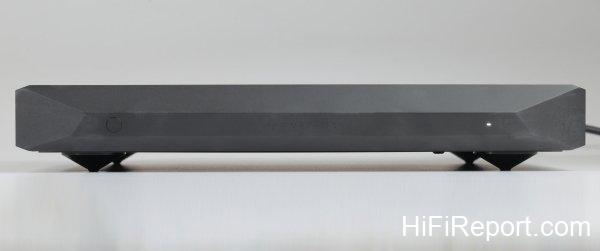
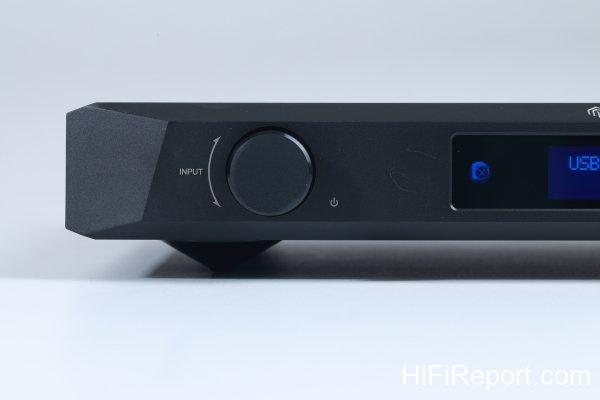
This time, it’s the NuPrime Evolution DAC, their flagship digital-to-analog converter launched this year.
1M Ohm Input Impedance
The Evolution series debuted with the power amplifier before the DAC.
Naming the power amplifier “Evolution One” is assertive yet justified.
The Evolution One power amplifier boasts an exceptionally high input impedance of 1M Ohm.
While other features like its linear power supply, 700KHz PWM switching frequency, and meticulous construction are noteworthy, the 1M Ohm input impedance is truly exceptional.
How significant is 1M Ohm? Prior to the Evolution One, NuPrime amplifiers typically featured a 47K Ohm input impedance. Higher input impedances are seen in brands like Spectral at 100K Ohms and Audio Research at 200K Ohms. Evo One’s 1M Ohm is a significant leap.
This high impedance makes the amplifier an easy match for a wider range of source components and is conducive to reproducing even the most delicate signals.
Does this increased impedance introduce more noise? While that’s a potential risk, NuPrime’s engineers have preemptively addressed this, technically overcoming it to deliver the Evolution One’s remarkably clean, detailed, and dynamic sound.
As noted by Lin Zhiji in his review of the Evolution One power amplifier, this characteristic is indeed a defining aspect.
Therefore, in the context of the Evolution One power amplifier, the “Evolution One” moniker—the evolved amplifier—is truly fitting.
ES9038PRO Chip in Evolution DAC
Does the Evolution DAC also deserve the “Evolution” designation? Reviewing the specifications, while it may not feature a headline-grabbing specification like the 1M Ohm input impedance of the Evolution One power amp, it is NuPrime’s most expensive and highest-specification DAC to date.
Internally, it utilizes the ES9038PRO SABRE DAC chip, ESS’s latest flagship decoding chip. This empowers the Evolution DAC to achieve decoding capabilities up to PCM 768KHz/32bit and DSD512.
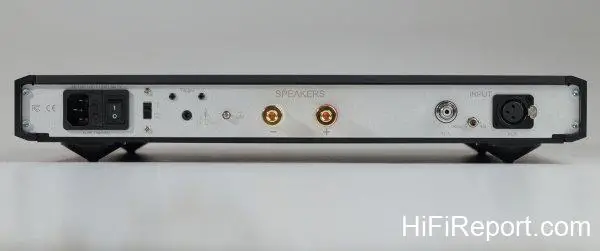
Impressive specs, but are they practical? You might ask, “What use are such capabilities if I don’t have those file formats?”
NuPrime’s recent source components incorporate SRC upsampling, using their proprietary PSRC IC chip. This allows for upsampling standard Red Book 44.1KHz signals to PCM 768KHz or DSD 512.
Users can experiment with upsampling, choosing from 18 different sampling rates, including multiples of 44.1KHz and 48KHz, in both PCM and DSD formats.
Furthermore, seven digital filter modes offer a wide range of sonic tailoring options. The digital aspects alone provide ample opportunity for sonic exploration.
Of course, a high-spec DAC chip alone doesn’t guarantee exceptional performance. Chips are readily available, and one could simply follow the datasheet to design a DAC.
The market is already awash with DACs using the ES9038PRO chip, many available at very affordable prices on platforms like Taobao.
So, you might ask, what makes the Evolution DAC truly special? The answer lies in its analog stage, an area where NuPrime truly excels.
The Evolution DAC employs a fully balanced, discrete transistor analog output stage. The Evolution One power amplifier is also fully balanced, making balanced connections the optimal choice for a complete NuPrime Evolution system.
Enhanced Power Supply with AC Filter
Another key element is the power supply.
Incoming AC power is first processed by an AC filter, targeting noise in the 100KHz-5MHz range with an attenuation of over 20dB.
This filtered, clean power then feeds a power supply circuit composed of two C-Core transformers and a substantial 70,000uF of capacitor capacitance.
The transformers are encased in stainless steel shields to minimize electromagnetic interference, while the large capacitor bank provides ample power reserves, dedicated separately for analog and digital circuits.
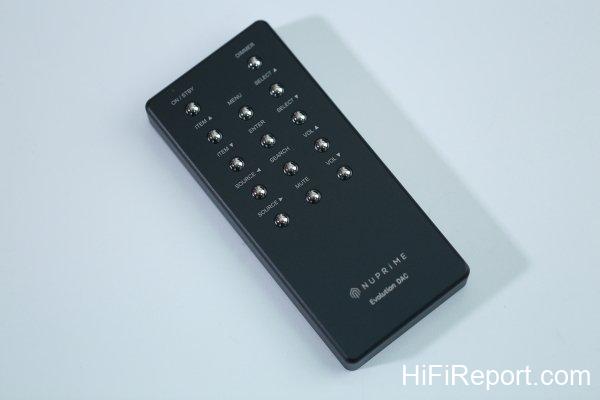
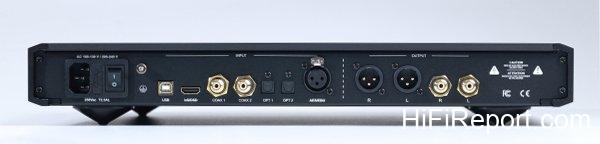
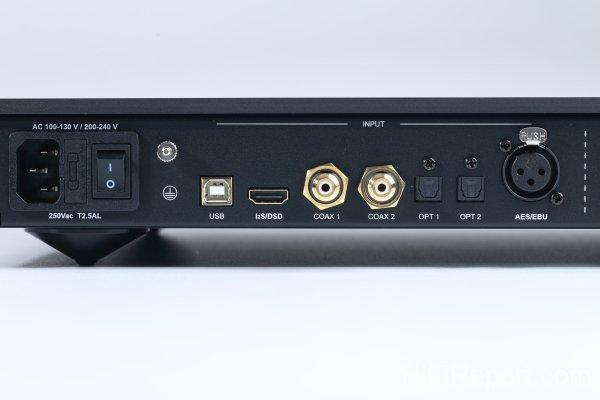
With its high-specification digital core, clean and robust power supply, discrete, fully balanced analog output stage, and comprehensive connectivity including USB, I2S, and AES digital inputs, the Evolution DAC positions itself as the digital heart of a high-end system.
Leveraging years of analog amplifier expertise and accumulated DAC design experience, NuPrime presents the Evolution DAC as a declaration of their new technological pinnacle.
Four Key Features: Detail, Soundstage, Transparency, Bass
Listening tests were conducted in my home.
Three amplifiers were used: NuPrime’s own Evolution One monoblock power amplifiers, to evaluate the synergy within the Evolution series; and two integrated amplifiers—a Lavardin IS Reference solid-state amplifier and an Audiomat Adagio II tube amplifier—to assess its performance as a standalone DAC.
Speakers were Jean Marie-Raynaud Abscisse Jubilé, and the source was an Auralic Aries Mini streaming music files from a NAS and Tidal via Roon.
NuPrime components are consistently characterized by their open and expansive soundstage. Despite their often compact physical dimensions – even larger units like the Reference 20 or IDA-60 are remarkably slim – their sonic presentation defies their size.
Their former flagship source, the DAC-10H, is known for its open, uninhibited, and detailed sound, with a neutral sonic signature devoid of discernible coloration.
Within its price range, few DACs comprehensively surpass it, especially considering that beyond digital inputs, the DAC-10H also offers two sets of RCA analog inputs, four levels of output gain adjustment, and both single-ended and balanced headphone outputs.
After auditioning it, I promptly purchased the DAC-10H, pairing it with the ST-10 for my home system.
The Evolution DAC commands a price double that of the DAC-10H. Does its sonic performance justify this price difference? As a DAC-10H owner of nearly three years, could the Evolution DAC convince me of a “perceptible evolution”? The answer is a resounding yes.
While the “Evolution” name likely refers to broader advancements, from the perspective of a DAC-10H user, the Evolution DAC feels like an across-the-board evolution of their flagship DAC.
Firstly, the increase in detail retrieval is immediately apparent. The texture of sounds is rendered with greater clarity and definition, akin to upgrading from 2K to 4K video. This enhanced resolution reveals and dissects finer musical nuances and variations.

Secondly, the Evolution DAC’s spatial rendering is exceptional. It expands the soundstage in all three dimensions—deeper, wider, and taller. Furthermore, it precisely positions sound sources within this space, improving separation and individual instrument definition.
Music performance occurs within a physical space. The more accurately a system recreates this spatial context, the more immersive the listening experience becomes.
Thirdly, the Evolution DAC exhibits remarkable transparency and sonic purity, presenting a pristine and crystal-clear soundscape.
The sonic character is remarkably natural, without any frequency range being artificially emphasized or any tonal shifts.
I believe this is attributable to the inherent sonic qualities of the ES9038PRO chip, as well as the Evolution DAC’s high signal-to-noise ratio and low distortion.
Moreover, the aforementioned improvements in detail and soundstage are intrinsically linked to this transparency, precision, and naturalness.
Finally, its bass performance represents a significant leap forward from the DAC-10H—more solid, more detailed, deeper, and weightier.
Whether reproducing piano, double bass, tuba, or bass drum, in solo, small ensemble, or large orchestral performances, the Evolution DAC’s bass performance exhibits the hallmarks of high-end audio, reaching a level previously unattained by NuPrime’s digital sources.
Debussy, The True Test Music
Consider Debussy’s orchestral works conducted by Jun Märkl with the Orchestre National de Lyon.
Debussy’s music is a stringent test of a system’s transparency. Insufficient transparency obscures the rich gradations of color and nuance in Debussy’s compositions. His music also demands excellent detail retrieval and microdynamic articulation, whether in piano pieces, chamber works, or orchestral scores.
Debussy’s “Prélude à l’après-midi d’un faune,” inspired by Stéphane Mallarmé’s poem, is a prime example.
Mallarmé, a key figure in Symbolism, focused on shifting themes from reality to inner fantasies, projections, and emotional responses. His poetry emphasizes the rhythm, dynamism, and musicality of language.
Debussy refined and abstracted Mallarmé’s poetic verses into music, boldly departing from traditional tonality. He allowed tonality itself to color the music, moving fluidly between major and minor keys.
He employed richer harmonies through more elaborate voicing rather than simple, dense chords, resulting in music that sounds exceptionally transparent and richly colored.
Transparency, Cleanliness, Natural Texture, Control
Listening to the opening flute solo in “Prélude à l’après-midi d’un faune,” the breath sounds are natural yet not exaggerated, the timbre possesses a slight metallic sheen yet remains rounded and full-bodied, conveying a languid, sensual mood.
Following the theme, harp glissandos are introduced, their delicate, ethereal notes intertwining with layered French horn motifs—a true testament to transparency.
The flute’s textural richness is mirrored by the subsequent oboe. The characteristic sound of reed instruments, produced by reed vibrations, is also clearly discernible.
As the piece develops, the dreaming faun, in a state between dream and reality, glimpses nymphs, and a surge of desire leads to a chase.
The music momentarily gains a thicker harmonic texture, which Debussy then quickly dissipates, returning to a serene and distant atmosphere. Is it a dream? Or reality? The faun, and the listener, are left uncertain.
The beauty of Debussy’s music hinges on how clearly a system can articulate these dreamlike scenes.
Isn’t it paradoxical to speak of clearly articulating something dreamlike and illusory? Perhaps, but using a DAC that sounds thick and congested will misrepresent Debussy’s essence. Or, with a budget DAC lacking sonic purity, the dream loses its beauty.
Once you understand how Debussy should sound, you’ll appreciate the Evolution DAC’s excellence.
For assessing the Evolution DAC’s dynamic capabilities, “La Mer” (The Sea) is illuminating.
Playing loudly is easy; maintaining composure and fluidity at high volumes is more challenging. Even more demanding is the ability to handle both loud and soft passages, preserving dynamic nuances at low volumes.
The Evolution DAC excels in all three aspects, particularly the latter two, surpassing the DAC-10H noticeably.
The first movement of “La Mer,” “De l’aube à midi sur la mer” (From Dawn to Noon on the Sea), begins with a dim, tranquil sea at dawn, marked by subtle, subdued movements, anticipating the arrival of daybreak.
As daylight emerges, harmonies become more vibrant. Debussy primarily employs two techniques here: constantly shifting tonalities in solo instruments and layering sections with different tonalities, creating rich timbral complexity.
The Evolution DAC itself adds minimal coloration. If anything, its neutrality is like daylight, rendering everything in its most natural hue. Consequently, the timbral colors conveyed by the instruments in the music are vivid and distinct.
To evaluate the Evolution DAC’s detail retrieval, the string textures in the second movement, “Jeux de vagues” (Play of the Waves), demonstrate its capabilities. I could discern the very texture of the string instruments’ bowing.
The Evolution DAC’s soundstage rendering also shines in this movement. The stage’s depth, width, and height, the movement of sections, and the placement of instruments all contribute to an almost visual soundscape.
The third movement, “Dialogue du vent et de la mer” (Dialogue of the Wind and the Sea), tests dynamic range.
From delicate to powerful, Debussy infuses the seascape with fluctuating emotions.
Even when the orchestra unleashes its full power at the movement’s climax, the Evolution DAC maintains remarkable transparency and precision, presenting a stable and coherent orchestral image.
Debussy sketched the sea in music; the Evolution DAC reveals Debussy’s seascape in full detail.
Unraveling Complex Harmonies
Let’s consider a piece of contrasting style: Brahms’ Piano Concerto No. 1, performed by Gilels on piano and Jochum conducting the Berliner Philharmoniker.
The powerful opening of the first movement commences with a sustained note, punctuated by incessant timpani rolls, followed by the first theme introduced by the violins.
The musical expression is not merely “maestoso” (majestic), as Brahms marked in the score, but also imbued with a sense of awe and dread.
After a gentler violin-led melody, accompanied by cellos echoing variations of the first theme, the orchestra restates the first theme. Following a lengthy orchestral passage, the piano finally enters.
This entire exposition’s opening section rigorously tests a system’s transparency and transient response. On less capable systems, this music can sound muddled and indistinct.
While Brahms layers dense textures, his harmonies are not as complex as Wagner’s. His part writing is clear; the question is whether your system can reproduce it clearly.
The Evolution DAC renders this passage with remarkable clarity and order. The timpani at the first theme’s outset are clearly defined and articulate. The parallel development of violins and cellos maintains distinct melodic lines.
The orchestra’s full restatement of the first theme, with its interwoven inner voices, is also clearly rendered.
When the piano enters, its contrapuntal lines, combined with orchestral accompaniment, are all distinctly presented.
If the Evolution DAC can handle Debussy and Brahms with such fidelity, what orchestral music could it not master?
Tidal and MQA: Convenience and Quality
The Evolution DAC also supports MQA (Master Quality Authenticated).
This encoding technology, pioneered by Bob Stuart, co-founder of Meridian, “folds” frequencies above 24kHz into smaller units, embedding them within the 0-24kHz frequency range. This allows for high-resolution files to be encoded into sizes approaching CD-quality files.
The benefit? Smaller file sizes mean faster downloads and less storage space.
While storage is less of a concern in an era of ever-larger and cheaper hard drives, smaller file sizes greatly facilitate network streaming.
If you are a Tidal subscriber, you’ll appreciate this advantage.
However, both your player and DAC must support MQA. Without MQA support, MQA files will play at 48kHz, slightly higher than 44.1kHz, effectively CD-quality. With MQA-capable devices like the Evolution DAC, you can enjoy Tidal’s high-fidelity MQA streaming, realizing the full value of your monthly subscription.
Exploring MQA with Evolution DAC
Is there a real difference with MQA? Yes.
I used Mutter and Previn’s “Tango, Song and Dance” as an example.
This album is available on Tidal in both 44.1kHz/16bit CD quality and 96kHz/24bit MQA high-resolution versions.
The first comparison was between these two Tidal versions.
The difference was immediately obvious, even from off-axis listening positions. The CD-quality version sounded competent, natural, and smooth, without any glaring flaws.
Switching to MQA unlocked the 96kHz/24bit resolution, transforming instrumental textures. The most significant difference was in sonic density and focus. The CD version sounded somewhat looser, broader, and less defined; the MQA Hi-Res version was noticeably tighter and more refined.
Furthermore, clarity and brilliance improved markedly. The CD version sounded slightly veiled, while the MQA file exhibited much richer harmonics, evident in both violin and piano.
This initial test confirmed the Evolution DAC’s MQA decoding capability and validated both the DAC’s performance and MQA’s sonic benefits.
The second test involved upsampling.
The Evolution DAC incorporates NuPrime’s PSRC upsampling chip, offering 18 upsampling options, including multiples of 44.1kHz and 48kHz, in both PCM and DSD formats. I systematically auditioned each setting, drawing two conclusions: First, with 44.1kHz source material, upsampling to 44.1kHz multiples sounded superior to 48kHz multiples.
The latter, while still focused, exhibited slightly blurred outlines and lacked the clean, solid quality of 44.1kHz upsampling. This difference became more pronounced with higher upsampling rates.
Second, upsampling is inherently artificial, and higher rates don’t always equate to better sound. Upsampling cannot create information not present in the original file.
For example, using Mutter’s “Tango, Song and Dance” again, I used 44.1kHz upsampling as a benchmark. Higher upsampling rates increased sonic density, but 48kHz multiples felt less controlled in note decay compared to 44.1kHz multiples, noticeable in both violin and piano. This principle applied to both PCM and DSD upsampling.
However, comparing 96kHz upsampling to Tidal’s 96kHz MQA version, the MQA file consistently sounded more natural than the 44.1kHz upsampled version. The difference lay in naturalness; upsampled harmonics lacked the naturalness of the MQA file.
During listening, an unexpected discovery emerged: not all MQA files on Tidal are equally impressive.
Listening to Oscar Peterson Trio’s “We Get Requests,” specifically “Corcovado,” the MQA version sounded somewhat dull, with a cleaner but truncated low-frequency response. The double bass pizzicato sounded slightly hollow.
In comparison, the 44.1kHz file sounded more vibrant, with a fuller frequency range and more substantial low-end, providing a more grounded musical foundation.
Upsampling the 44.1kHz file to enhance focus and coherence even surpassed Tidal’s MQA version.
This raised questions about the source of MQA files on Tidal. These nuances remained unnoticed with the DAC-10H, but the Evolution DAC broadened my experience and deepened my critical listening.
Preamp and Volume Control Considerations
Beyond upsampling, two additional observations are worth sharing.
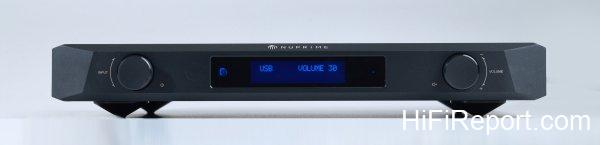
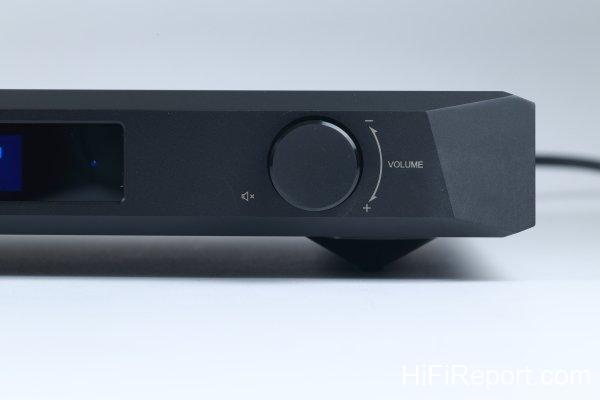
The Evolution DAC offers 0-99 level volume control, enabling direct connection to the Evolution One power amplifier, bypassing a preamp.
However, based on past experience, incorporating a quality preamp can further enhance sound, particularly in terms of sonic roundness, refinement, dimensionality, and soundstage depth.
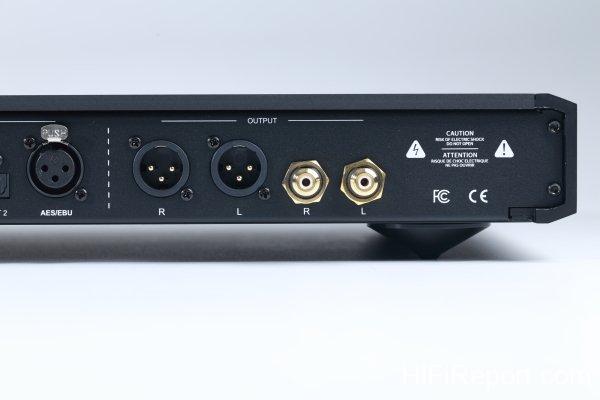
In the Evolution DAC’s case, adding a preamp isn’t about chasing better sound quality or soundstage—the Evolution DAC is already exceptional—but about seeking a different flavor, a touch of musicality beyond pure neutrality.
For critical listening and recording monitoring, the complete Evolution DAC and One system is unparalleled, revealing maximum musical information.
However, for pure musical enjoyment, pairing the Evolution DAC with the Adagio II or IS Reference offered a different, arguably more engaging, experience. Sometimes, sacrificing some deep bass, weight, and ultimate detail can be beneficial, yielding greater musicality.
If this system were my reference, I would consider adding a tube preamp to my setup. This would allow me to inject a touch of warmth and musicality depending on my mood and musical preferences.
Utilizing the Evolution DAC solely as a DAC, its volume control provides extensive flexibility.
According to the manufacturer, at volume level 87, RCA output is 2Vrms, and XLR output is 4Vrms—standard output levels.
At level 99, RCA and XLR outputs double to 4Vrms and 8Vrms, respectively.
The 87-99 range offers an opportunity to fine-tune system gain staging with your amplifier’s volume control. Experimentation can reveal preferred combinations: higher DAC output for a fuller sound, or lower DAC output with higher amplifier gain for a more refined presentation.
Alternatively, for simplicity, the built-in menu allows for fixed output, bypassing volume control, with options for half or full output level.
Is there a sonic difference between fixed and variable output? I attempted to discern a difference but honestly could not.
Therefore, I suggest: if you enjoy tweaking, explore variable output. If not, opt for fixed output.
Unveiling More Musical Information
Does the Evolution DAC live up to NuPrime’s “Evolution” designation? In my assessment, it unequivocally does.
It demonstrably surpasses the DAC-10H in all aspects of sonic performance. The expansive, panoramic soundstage and the crystal-clear, transparent sonic picture, revealing a wealth of musical information, are the Evolution DAC’s greatest achievements.
This review concludes here, but the NuPrime Evolution DAC’s story continues.
In this article, it was the protagonist; in the next installment, it will appear in a supporting role.
So, who will be the next protagonist?
Specifications
* Type: Digital-to-Analog Converter
* Digital Inputs: USB x1, HDMI (IIS) x1, Coaxial x2, Optical x2, AES/EBU x1
* Analog Outputs: RCA x1 (Max 4Vrms), XLR x1 (Max 8Vrms)
* Frequency Response: 20 Hz – 20 KHz / ±0.3 dB
* Signal-to-Noise Ratio: > 110 dB
* Total Harmonic Distortion: < 0.0003%
* Output Impedance: < 50 Ohm
* Maximum Sampling Rates Supported:
* USB Type B 2.0 Hi-Speed: 384KHz/24Bit, DSD256
* HDMI (IIS): PCM 768KHz/32Bit, DSD512
* Coaxial: PCM 44.1KHz ~ 768KHz/32Bit, DSD DOP 64, 128 and 256
* Optical: PCM 44.1KHz ~ 192KHz/32Bit and DSD DOP 64
* AES/EBU: PCM 44.1KHz ~ 192KHz/32Bit, DSD DOP 64
* Dimensions: 430 x 55 x 315 mm (W x H x D)
* Weight: 5.2Kg