
NuPrime Omnia A200 Wireless Streaming Integrated Amplifier Review
Upon receiving the NuPrime Omnia A200 and opening the box, my initial reaction was one of slight bewilderment. It looked virtually identical to the Omnia A300 reviewed by our esteemed editor, Tiankai Dai. The dimensions appeared the same, both boasted wireless streaming capabilities, with the primary difference being the A200’s lower power output and more accessible price point. Was this simply a slightly tweaked version warranting a new model designation? However, after a more thorough examination, I realized my initial assumptions were unfounded. Beyond the visual similarities, the Omnia A200 and A300 are fundamentally different amplifiers, targeting distinct market segments with differing functionalities. In fact, the A200 even inherits technologies from NuPrime’s higher-end series, suggesting its performance is far from compromised.
So, what exactly is the Omnia A200? Let’s delve deeper.
Designed for Streaming Enthusiasts
NuPrime’s official website succinctly defines the A200’s purpose: an affordable, feature-rich streaming integrated amplifier specifically designed for those whose primary audio sources are streaming services and locally stored digital music.
Indeed, a significant portion of today’s music lovers have their libraries residing in the cloud, be it on streaming service providers’ servers or personal NAS devices. Traditional physical media and even local digital files are becoming increasingly less central to their listening habits.
Recognizing this shift, NuPrime developed the A200, prioritizing streaming functionality, supplemented by essential analog and digital inputs, Bluetooth connectivity, a robust 150 watts of power output, and user-friendly, sonically beneficial DSP EQ modes. Simply pair it with your speakers and you’re ready to enjoy music effortlessly.
Like the A300, the A200 offers both Ethernet and Wi-Fi connectivity. If your listening area lacks a wired network connection, Wi-Fi provides seamless network access.
The A200 supports a wide array of streaming music services, including Tidal, Qobuz, Spotify, Amazon Music, Deezer, iHeartRadio, QQ Music, TuneIn, Napster, Ximalaya, and more. Network protocol support encompasses DLNA, AirPlay (excluding AirPlay 2), Tidal Connect, and Spotify Connect, providing comprehensive streaming versatility.
For control, the A200 is compatible with NuPrime’s free Omnia Receiver app, available for both iOS and Android. This app allows control of multiple Omnia devices simultaneously, enabling individual playback or grouped multi-room setups, simplifying the creation of a whole-house audio system.
The A200 also provides a sufficient selection of input and output interfaces for connecting to other home audio components.
While it may forgo the USB Audio and I2S inputs, and headphone output found on the A300, the A200 is well-equipped with analog RCA inputs, digital optical input, USB-A input, and analog RCA output, digital coaxial output, and more, catering to most common needs.
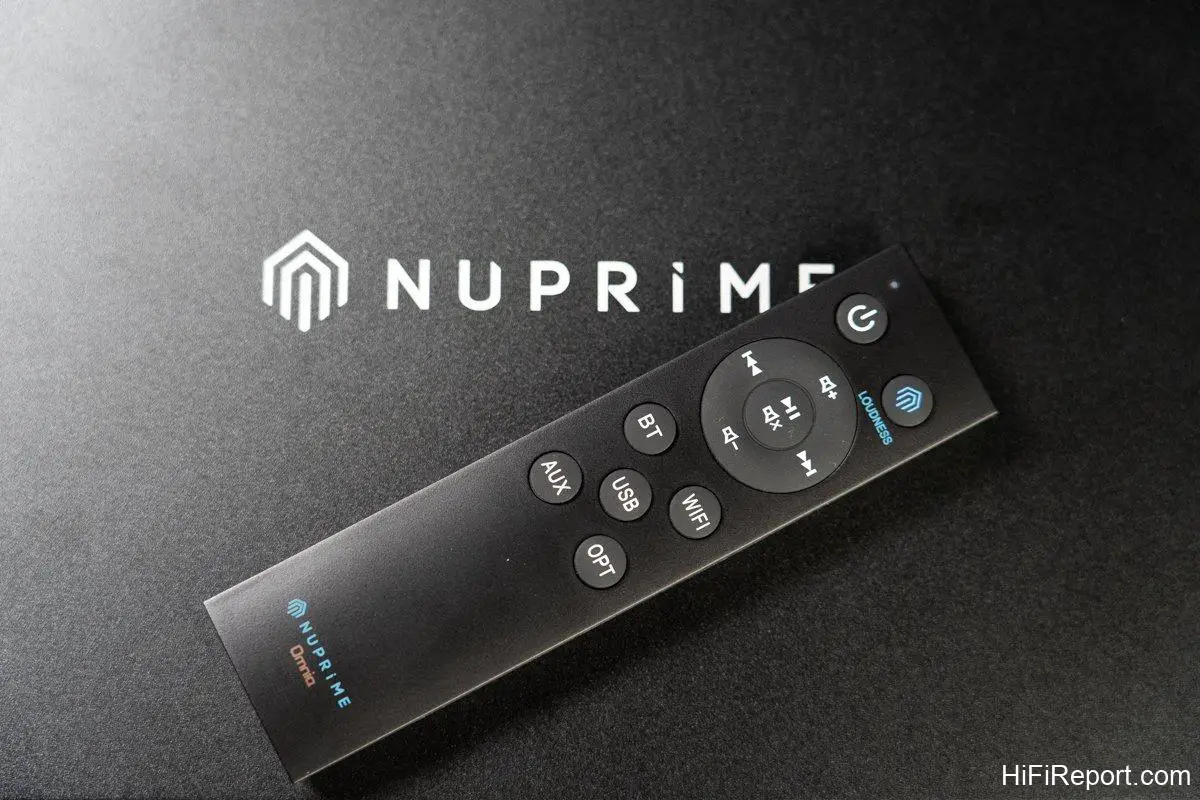
Furthermore, it includes a fully functional remote control for convenient volume adjustments and DSP EQ mode selection.
Incorporating DLNPS Power Supply Technology
Moving on to the A200’s internal circuitry, a key feature is its DLNPS (Dynamic Low Noise Switching Power Supply) technology. As the name suggests, this is a dynamic low-noise switching power supply.
The “dynamic” aspect refers to its adaptive power management. The A200 employs both a large and a small power supply, intelligently selecting which to utilize based on instantaneous power demands. At low power levels, only the smaller transformer is engaged. As power requirements increase, the larger transformer takes over. For even greater power demands, both power supplies work in tandem.
Moreover, the switching frequency of the power supply dynamically adjusts between 60 kHz and 180 kHz, depending on the output stage’s power needs.
This design philosophy shares similarities with dynamic Class A amplifiers, aiming to balance both sonic performance and energy efficiency.
To further enhance audio quality and minimize distortion, the A200’s Class D amplifier incorporates feedback signals to reduce noise, resulting in a more refined sound.
Additionally, the A200’s Class D output stage utilizes a second-order filter to further reduce high-frequency harshness, promoting a more transparent and less fatiguing listening experience.
Despite its compact size, the A200 delivers a substantial 150 watts per channel into 8 ohms, and a remarkable 250 watts into 4 ohms, ensuring ample power for driving a wide range of loudspeakers.
Inspired by AMG Series Technology
To enhance the A200’s compatibility with diverse speaker types, NuPrime drew inspiration from its high-end AMG series, developing a high-speed DSP-based EQ function. This EQ is implemented through preset modes, offering distinct sonic profiles.
Operation is straightforward. The included A200 remote control features a “Loudness” button in the upper right corner. Pressing this button cycles through the available modes in sequence: Flat, Loudness 1, Loudness 2, Loudness 3, Rock, Jazz, Pop, Classic, and more, totaling 8 selectable modes. Users can tailor the sound to their preferences, speaker characteristics, and music genres.
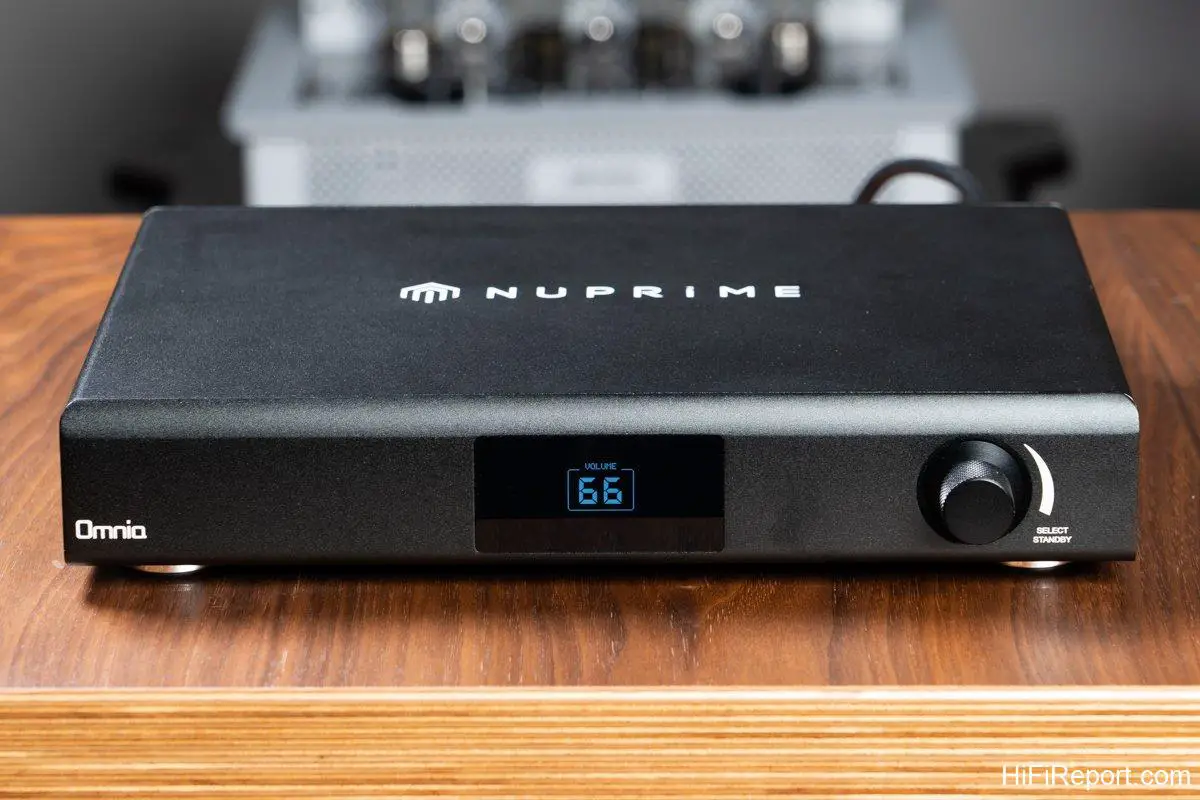
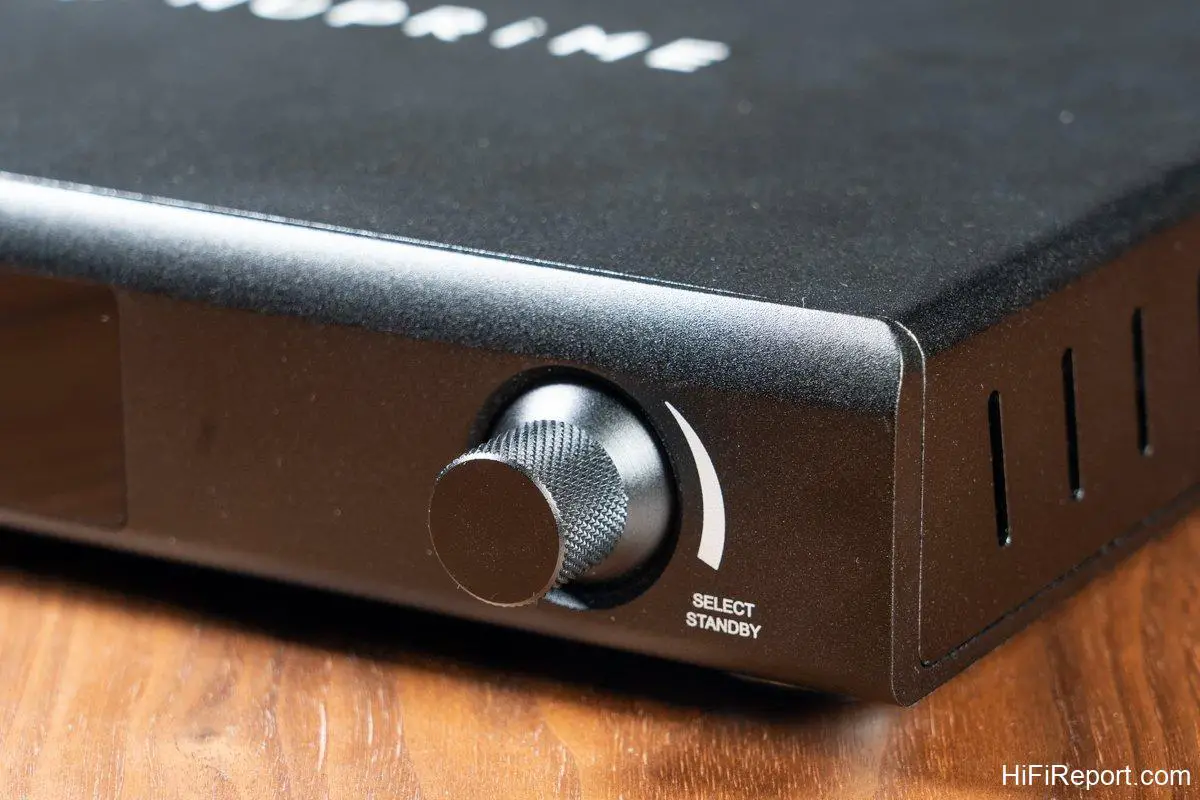
Aesthetically, the A200’s front panel is minimalist, featuring only a single knob on the right side. This knob serves as the power switch, input selector, and volume control.
Operation is intuitive. From standby, a 3-second press powers the unit on. A short press cycles through input sources, and rotating the knob adjusts volume. Simple and effective! The monochrome display in the center of the panel provides essential information. While visually basic, it is functionally adequate.
EQ Modes Enhance Listening Pleasure
Auditioning the A200 proved to be a thoroughly enjoyable experience. After connecting it to the network and speakers, I could immediately stream music via Tidal on my phone. However, I opted to use my NAS as the audio source, as it contains many of my frequently listened-to music files, allowing for quicker track selection.
The listening session took place in the HiFiReport listening room, paired with Divini KIT-M bookshelf speakers.
Before critical listening, I experimented with the A200’s various EQ modes.
In its default state, without any EQ engaged, the A200 operates in “Flat” mode. As the name suggests, this mode exhibits a very flat frequency response, and the sound is indeed more neutral and uncolored.
Cycling through the “Loudness” modes progressively increased the bass presence and warmed the overall tonal character, adding a touch of richness.
The other modes, Rock, Jazz, Pop, and Classic, each emphasized different frequency ranges, resulting in subtle sonic variations.
Essentially, the A200’s DSP EQ functions primarily to enrich the listening experience, without fundamentally altering the amplifier’s core sonic signature. It is not intended as a tool for drastically reshaping system voicing.
Expansive Soundstage
Despite its compact form factor, the A200 projects a remarkably spacious soundstage. For instance, listening to Sarah McLachlan’s iconic track “Angel,” the recording’s deliberately deep, open, and dark spatial characteristics were faithfully reproduced by the A200. Reverberation was expansive and lingering, creating an ethereal ambiance. The vocal image was not overly large, yet its contours remained sharply defined.
Moving on to Jane Monheit’s “Taking a Chance on Love” album, the A200 immediately showcased impressive low-frequency control. On track 1, “Honeysuckle Rose,” the double bass notes were remarkably taut and defined, with clear articulation of the plucked string texture and distinct dynamic nuances, imparting a lively and rhythmic energy to the music.
The sonic images of all instruments, including vocals, possessed clear outlines and precise localization, resulting in excellent separation and distinct layers, free from any muddiness.
Track 2, “In the Still of the Night,” a gentle and soothing ballad, revealed the A200’s ability to render delicate string textures. Strings were portrayed with a slender and refined character, possessing a delicate brightness and firm texture. Jane Monheit’s vocals, not of the lush and sweet variety, were rendered with clarity, agility, and brilliance.
Overall, the A200’s sonic structure mirrors its sonic character – clear and transparent, with a remarkably flat frequency response. High, mid, and low frequencies are presented in an organized and distinct manner, without any blurring or congestion.
Commendable Resolution
Listening to Marten’s “Supreme Sessions 2” test disc, track 1 features a live jazz rendition of the classic “Autumn Leaves.” The instrumentation includes piano, pizzicato double bass, drums, and saxophone. The A200’s expansive soundstage and precise imaging made it easy to discern the location of each instrument. Channel separation was exceptionally good.
Furthermore, “Supreme Sessions 2” highlighted the A200’s strengths in timbre and textural detail. The sonic characteristics of each instrument were richly rendered. For example, on track 4, “Utskargard,” featuring marimba and vibraphone, the timbral differences between the metal and wooden keys were clearly discernible, along with the extended resonance emanating from the tubes beneath the keys. This demonstrated the A200’s commendable level of resolution.
The A200’s sonic transparency and brightness are notable; it is not a warm or overly colored amplifier. It excels at reproducing the crispness of percussion and plucked string instruments. Track 5, “Dance, Drums, Dance,” showcased the drums with particular brilliance. Drum images were well-defined, and the resonance within the drum bodies was clearly conveyed. While not overtly forceful, the bass extension was natural, and the speed was excellent – agile, decisive, and still quite impactful. This track further demonstrated the NuPrime Class D amplifier’s excellent low-frequency control.
Effortless Streaming Entry Point
In the final stages of auditioning, I switched to Tidal Connect for music playback. Simply opening the Tidal app on my phone allowed direct control and streaming, bypassing the Omnia Receiver App. Music flowed seamlessly, just as easily as my regular Tidal listening experience. This further emphasized the A200’s user-friendliness.
The A200 is indeed a remarkably convenient streaming amplifier. If you’re looking to integrate streaming into your audio system, the A200 presents an accessible and easy entry point.
Specifications
* Type: Wireless Streaming Integrated Amplifier
* Output Power: 150W / 8 ohms, 250W / 4 ohms
* Signal-to-Noise Ratio: > 90 dB
* Channel Separation: > 85dB (1 kHz AUX); > 105 dB (10 kHz Digital)
* Inputs: Ethernet, Wi-Fi, Optical, USB-A, Analog RCA
* Outputs: Digital Coaxial, Analog RCA
* Streaming Features: DLNA, AirPlay, Bluetooth
* Supported Streaming Services: Amazon Music, Deezer, iHeartRadio, Qobuz, QQ Music, Spotify, TIDAL, TuneIn, Napster, Ximalaya
* Dimensions: 280 × 55 × 250 mm (Width × Height × Depth)
* Weight: 4.5 kg