
Onkyo TX-8270 + ELAC DB62 Review
In today’s world, life is increasingly intertwined with the television, making audio system integration with the TV a significant factor when selecting components. A television can satisfy almost all entertainment needs; whether you want to watch movies and shows on Netflix or Disney+, or enjoy high-quality music from Tidal or Qobuz, the TV handles it all. In terms of “functional versatility,” the TV is arguably the most practical source device.
You only need to pair it with a good audio system to fully unlock its sonic potential, making it a cost-effective investment for beginners.
So, what kind of audio system is best suited for partnering with a television? Most people first consider a home theater system featuring an AV receiver paired with multi-channel speakers. Indeed, such a setup undeniably offers the most comprehensive audio and sound effect performance. However, a complete home theater system can easily run into thousands of dollars.
Many entry-level consumers lack that kind of budget, and furthermore, without a dedicated listening space, fitting bulky multi-channel speakers into a living room can be quite challenging. To address this, many audio brands are integrating HDMI functionality into their two-channel amplifiers. This not only allows for seamless integration with a television but also results in a much simpler speaker setup.
A Cost-Effective Two-Channel Solution
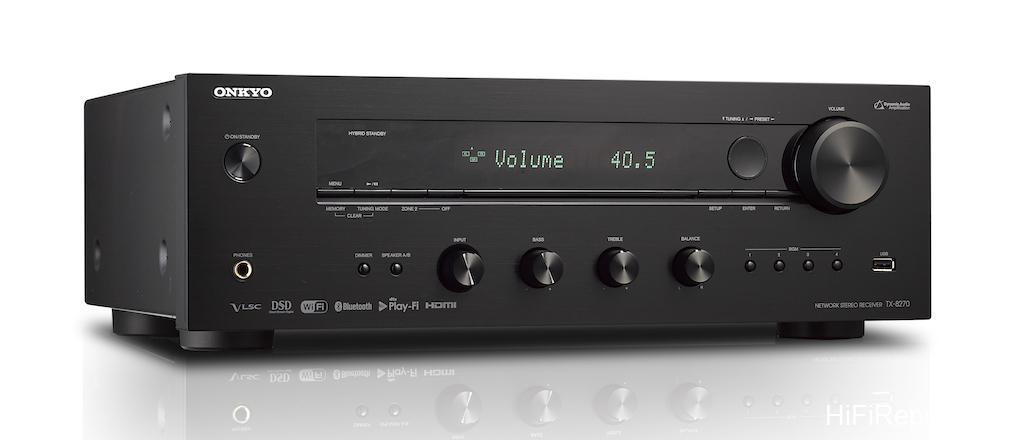
Take, for instance, the Onkyo TX-8270 streaming amplifier, recently launched by Onkyo. It not only supports HDMI eARC audio return but also boasts extensive streaming capabilities, and importantly, comes at a very accessible price point! The distributor, Taiwan Onkyo, has specifically catered to the needs of entry-level users by bundling it with an exceptionally valuable pair of ELAC DB62 bookshelf speakers.
This allows enthusiasts to effortlessly integrate a streaming audio system with their TV using a truly reasonable budget.
Onkyo TX-8270 Features: Connectivity
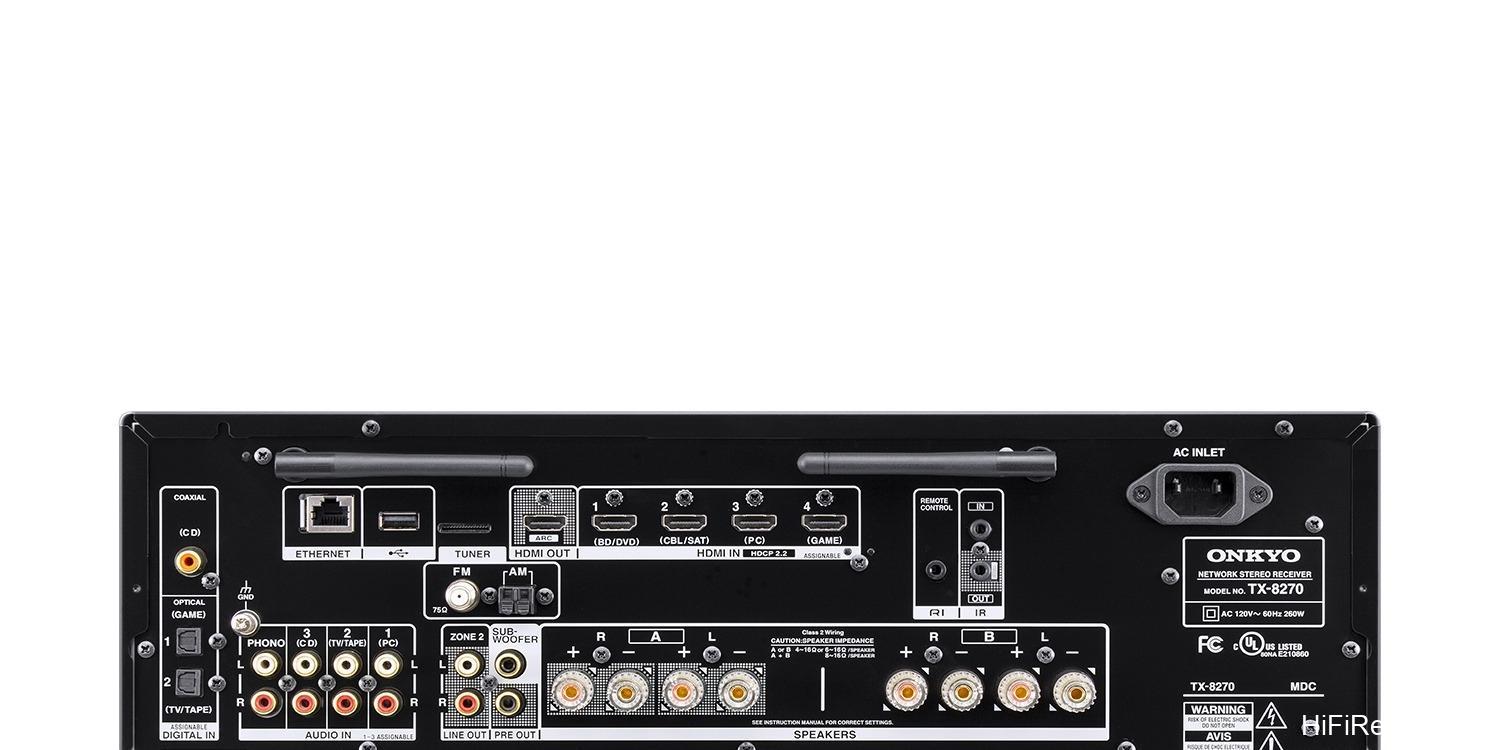
The Onkyo TX-8270 streaming amplifier is an upgraded version of the company’s previous TX-8260. The most significant difference is the inclusion of four HDMI inputs and one output. To meet the stringent video demands of modern televisions, all HDMI ports support 4K HDR video specifications like 4K/60p, Dolby Vision, HLG, HDR10, and BT.2020.
The output also features eARC audio return functionality, allowing you to leverage your audio system for enhanced sound quality when watching streaming content from Netflix or YouTube connected via the TV or projector. In addition, this unit, like typical integrated amplifiers, includes multiple RCA analog inputs for connecting traditional sources like CD players and streaming transports.
It also includes a Phono input, meaning it has a built-in phono stage for connecting and enjoying vinyl turntables without issue.
Onkyo TX-8270 Features: Amplification and Outputs
For audio output, the TX-8270 employs Onkyo’s renowned Dynamic Audio Amplification technology, delivering 80 watts per channel (into 8 ohms). This is sufficient power to comfortably drive most loudspeakers. It also features A/B speaker terminals, allowing you to connect a second pair of speakers in a bedroom or study, or even set up a second audio system using the Zone 2 analog output.
Furthermore, the unit collaborates with the well-known Sonos company, enabling seamless connection with Sonos wireless audio products for multi-room music sharing. If you crave more bass, there are two subwoofer outputs, allowing you to connect powered subwoofers for a 2.1 channel configuration that enhances low-frequency performance. Finally, the unit includes a 6.3mm headphone output, so you can enjoy music or gaming late at night without disturbing your family.
Onkyo TX-8270 Features: Streaming and Digital
The TX-8270 also supports a wealth of streaming features. You can choose to connect to your home network via Ethernet or Wi-Fi. Firstly, the unit supports DTS Play-Fi, which can be controlled using Onkyo’s own Play-Fi or Onkyo Controller apps, or third-party apps, for streaming platforms like Spotify, TIDAL, and Qobuz. It also includes Chromecast built-in and AirPlay functionality, allowing Android and Apple users to mirror and push music from their devices to the amplifier for playback.
For decoding, the unit features the AK4438 DAC chip from Asahi Kasei in Japan, capable of playing music files up to 32bit/384kHz. It also supports MQA decoding, ensuring optimal sound quality when listening to today’s most popular lossless streaming music from Tidal. In environments without network access, the unit offers a USB input for playing music files from a flash drive, and it also has basic Bluetooth functionality for direct music playback from your mobile phone.
Although it’s labeled a “streaming amplifier,” its functional capabilities are almost on par with an AV receiver, differing primarily in the number of channels supported!
ELAC DB62 Bookshelf Speakers
Moving on to the ELAC DB62 bookshelf speakers, paired with the TX-8270 by Taiwan Onkyo, they also have a notable pedigree. Their predecessor, the Debut DB6, was designed by the renowned American speaker designer Andrew Jones and was his first signature work after joining ELAC. Despite their affordable price, their performance was outstanding, breaking the mold for entry-level speakers and gaining popularity among many beginners. The DB62 belongs to the second generation Debut 2.0 series.
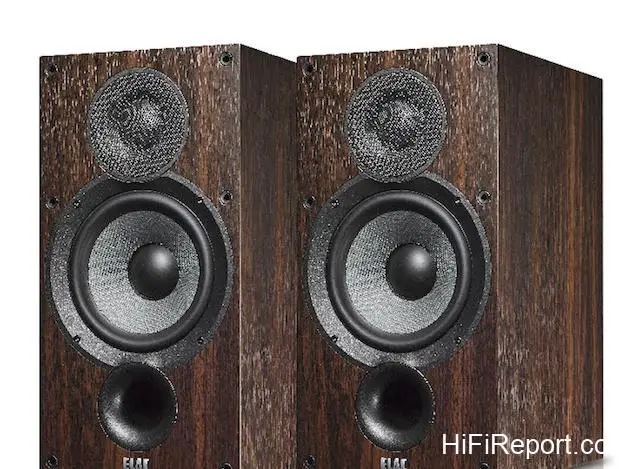
Firstly, the cabinet volume of the ELAC DB62 is larger than the previous DB6. The design is less modern, featuring a coarser wood veneer finish that lends a somewhat retro feel.
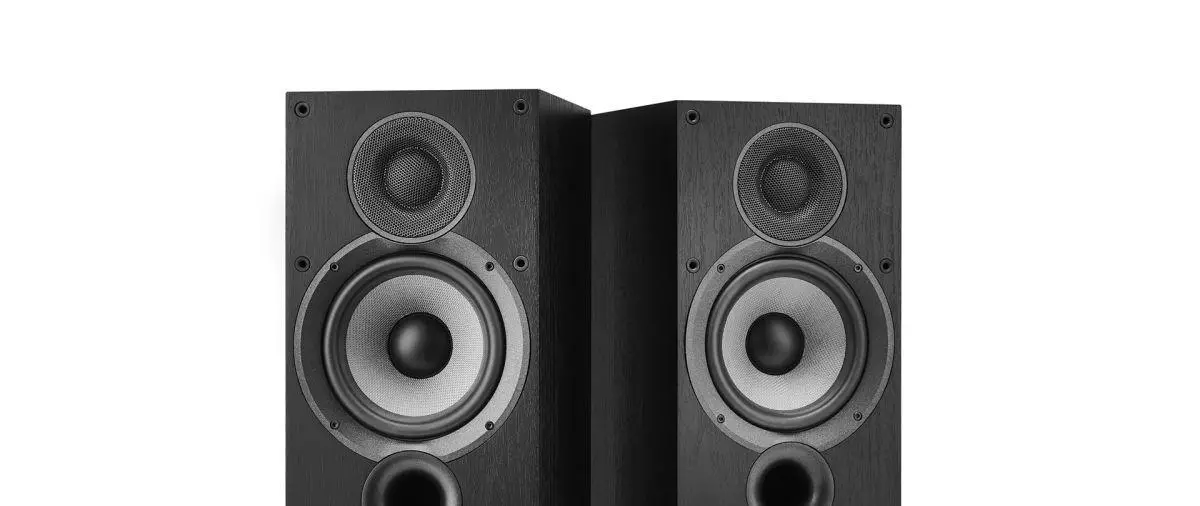
Besides the aesthetics, the DB62 incorporates several design evolutions. Its tweeter is a 1-inch silk soft dome unit mounted within a new waveguide. The area around the driver features a shallow horn structure to enhance high-frequency directivity for better sound focus.
Additionally, the metal grille protecting the driver controls sound wave dispersion, suppressing high-frequency diffraction issues commonly found in traditional square cabinets, likely creating a more expansive soundstage effect.
For the 6.5-inch mid-woofer driver, the DB62 uses a 6.5-inch Aramid fiber woven cone. This material, similar to Kevlar, is known for its lightweight yet high rigidity and is a favorite cone material of designer Andrew Jones. The driver is paired with a wide, long-throw surround, allowing it to reproduce ELAC’s signature bass quality effectively.
Another significant change in the DB62, besides the cabinet shape, is the relocation of the bass reflex port to the front of the speaker. This makes speaker placement much more flexible. As this system is intended for pairing with a TV, placing the speakers close to the wall still yields clean low-frequency results and can further enhance the energy of the mid-bass frequencies.
Listening Impressions
For my listening test, I first connected the TX-8270 to the network and played streaming music from Qobuz using the Onkyo Play-Fi app. Although the DB62 bookshelf speakers are not large, their sound energy performance in our approximately eight-ping (26 sqm) listening room was quite impressive. Moving around the room, the sound quality remained good, indicating excellent speaker dispersion.
Sonically, this system delivers clear and transparent high frequencies, while the mid-range has a clean and smooth character. Playing small-ensemble vocals and string instruments was very enjoyable. The low frequencies were relatively more restrained in the large space. For those who prefer more bass, pop music might feel like it lacks some impact. I recommend positioning the speakers closer to the wall to enhance bass performance.
Playing the jazz trio album “Keith Jarrett – Standard Live,” the system created a very open soundstage. Even with the speakers placed near the wall, the imaging remained clear, rendering a refined portrayal of the band’s presence. In the second track, “The Wrong Blues,” the piano notes sounded round and transparent, with a springy feel to the key presses. The sizzle of the cymbals had a distinct metallic shimmer, with a smooth texture and body, completely free from any harshness.
While the bass performance was more understated, it was quite elastic. When interpreting the double bass playing, the short, articulate notes were clearly audible, lending a rich, ‘acoustic’ flavor to the sound. Similarly, playing Masaharu Fukuyama’s “Tamari ku” album, the vocal image was healthy and prominent, portraying Fukuyama’s magnetic voice with clarity and naturalness. The lip and mouth shapes were soft and unforced. The accompanying instruments also exhibited good separation.
The guitar notes sounded very rounded, and the resonance of the wooden body was clean and not muddy.
Next, I connected the TX-8270’s HDMI eARC to a Sony A80J 4K OLED TV as the source. Watching the YouTube video of Barenboim, Mutter, and Yo-Yo Ma performing Beethoven’s Triple Concerto, the violin’s high-frequency harmonics sounded particularly full, and the sheen wasn’t overly sharp, giving it a sweet quality. The cello’s ‘nasal’ sound was clean and taut; the mid-range avoided excessive thickness or bloat, allowing for clear bow-on-string details and a sense of the wood.
The accompanying string orchestra also sounded full of life. The restrained low-frequency energy prevented the performance details from being obscured, making the texture even clearer and more transparent, showcasing excellent layers in the performance.
Conclusion
This audio system, combining the Onkyo TX-8270 with the ELAC DB62, is a generous gift from the distributor, Taiwan Onkyo, to beginners. It not only perfectly fits the usage habits of most consumers but also surpasses soundbar products in terms of sound quality and connectivity. Furthermore, it can be expanded into a 2.1 channel system by adding a subwoofer in the future. If you are a heavy TV user, this highly affordable entry-level combination is definitely worth acquiring.
Specifications
* **Onkyo TX-8270 Specifications**
* Type: Stereo Streaming Integrated Amplifier
* Output Power: 80 Watts per channel (8 Ohms)
* Frequency Response: 10Hz-100kHz / +1 dB, -3dB
* Signal-to-Noise Ratio: 106 dB
* Input Terminals: HDMI x4, Analog RCA, Digital Optical, Digital Coaxial, Ethernet, USB (Front), MM Phono Input
* Output Terminals: HDMI eARC, Speaker Output A/B, Zone 2 RCA Output, Subwoofer Output, Pre-Out, 6.3 mm Headphone Output
* Audio Decoding: Up to PCM 32bit / 384kHz, MQA
* Wireless Features: Bluetooth, Wi-Fi (5GHz/2.4GHz)
* Network Features: Chromecast built-in, AirPlay, DTS Play-Fi, Spotify, Sonos
* Dimensions (WxHxD): 435x149x329mm
* **ELAC DB62 Bookshelf Speaker Specifications**
* Type: Two-way Bass Reflex Bookshelf Speaker
* Drivers: 1-inch Silk Soft Dome x1, 6.5-inch Aramid Fiber Mid-woofer x1
* Frequency Response: 44Hz-35kHz
* Impedance: 6 Ohms
* Sensitivity: 87dB
* Crossover Frequency: 2.2kHz
* Maximum Power Handling: 120 Watts
* Dimensions (WxHxD): 7.69×14.76×10.55 inches