
Optoma L1+ Review
4LED technology currently represents the mainstream for LED projectors, offering superior performance in both brightness and color compared to traditional RGB LEDs. The L1+ ultra-short throw projector leverages this 4LED technology, boasting not only a light output of 2500 lumens and a dynamic contrast ratio of 1,800,000:1 but also full coverage of the Rec.709 color space.
Furthermore, similar to laser light sources, its LED lamp offers an exceptionally long lifespan, potentially reaching up to 30,000 hours in Eco mode. This delivers a long-lasting, eco-friendly viewing experience while significantly reducing maintenance costs and carbon footprint.
Design and Installation
In terms of projection performance, the L1+ combines ultra-short throw capability with an exceptionally compact form factor – it’s Optoma’s smallest and most power-efficient 4K ultra-short throw projector to date. This makes installation and setup considerably more convenient than with typical laser TVs. The L1+ also retains the industry-leading ease of picture adjustment found in Optoma’s laser TV lineup.
Beyond the rotating base on the bottom for quick leveling, it features four-corner correction and horizontal/vertical keystone correction mechanisms. Even self-installation becomes quick and hassle-free. What’s more, the L1+ supports 3×3 grid surface adjustment, enabling smooth projection even onto irregular surfaces like curved screens. This truly maximizes the installation advantages of a mini ultra-short throw projector.
Testing the L1+ was a smooth and straightforward process. For installation, it’s essentially a matter of placing the projector in front of the screen, getting the body level, making small left/right adjustments to center the lens, and then adjusting the projector’s distance forward or backward to get the desired screen size. The image pops into correct proportion almost instantly.
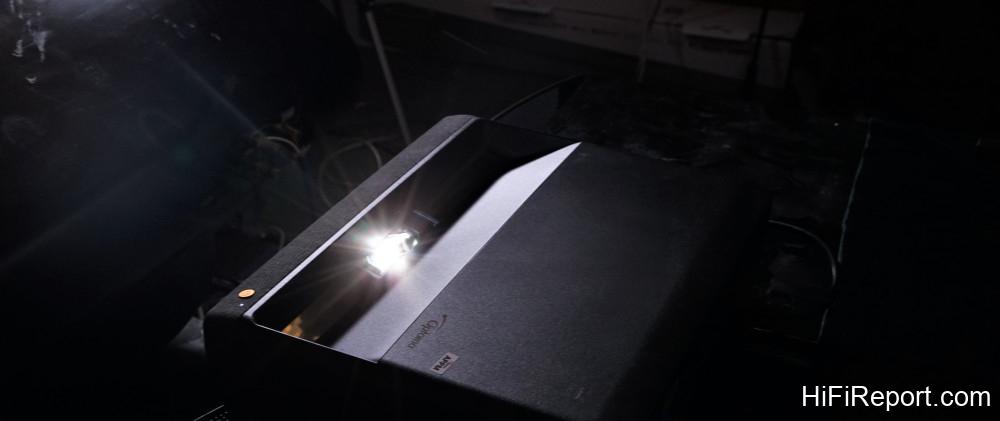
This incredibly convenient adjustment method has always been, in my opinion, a major advantage of Optoma’s ultra-short throw projectors. Coupled with the L1+’s even more compact body, self-installation at home poses absolutely no problem.
Smart Features and Connectivity
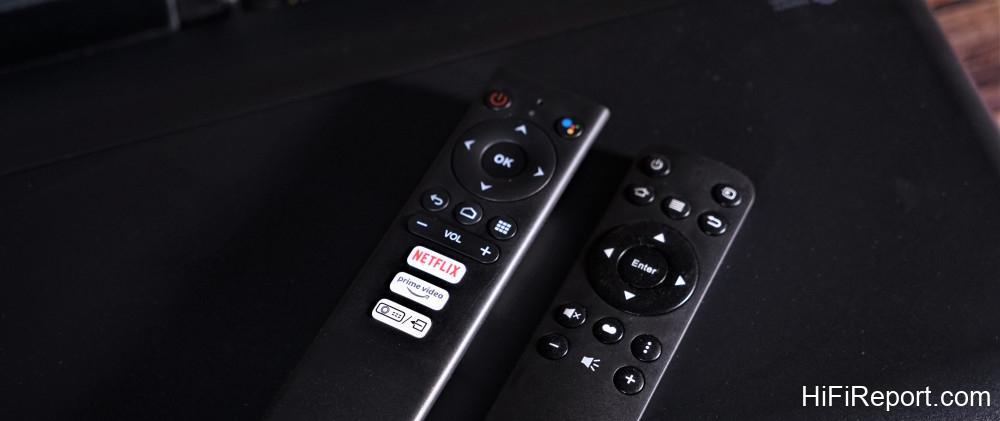
Regarding smart TV functionality, the L1+, like last year’s CinemaX D2+ laser TV, runs on the Android TV operating system and comes bundled with the HAKO mini smart TV box. A hidden dongle slot is discreetly located on the lower edge of the L1+’s body. Once the dongle is installed, the L1+ gains access to the official Google-certified Android TV service framework.
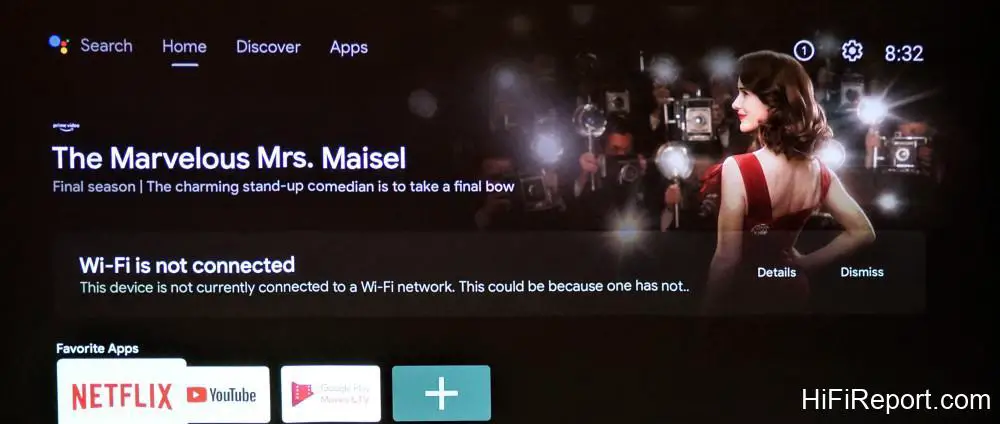
This not only allows access to streaming platforms such as Netflix, YouTube, Disney+, Prime Video, and Apple TV but also enables users to download over 5,000 apps from the Google Play store, just like using a regular TV. Convenient features like Chromecast and Google Assistant are also readily available.
Picture Quality and Performance
Equipped with these features, the L1+ also delivers outstanding picture performance. Beyond the impressive brightness and contrast specifications mentioned earlier and its Rec.709 color capability, the L1+ employs various technologies to optimize projection image quality. A prime example is Optoma’s signature Smart Dynamic Black feature, commonly found in their home projectors.
This technology automatically controls the lamp’s light output power during projection, adjusting for optimal grayscale performance based on scene changes. This is a key factor contributing to its high dynamic contrast ratio of 1,800,000:1. For HDR, the L1+ supports both HDR10 and HLG formats, and when paired with an ambient light rejecting screen, it can deliver bright and clear 4K images even in well-lit environments.
We know that Optoma projectors consistently exhibit their own distinct color style. Their engineers typically fine-tune the projector’s color wheel characteristics to emphasize the red spectrum, resulting in a color tonality built on a foundation of rich reds. However, the L1+ is somewhat different.

When examining its CIE color gamut display capabilities, I noticed that its RGB chromaticity coordinates largely conform to standard reference points. While some image modes that enhance color effects showed slight emphasis on red and blue, it was generally not excessive. This adherence to standard color response translates to uniformly natural color distribution in actual projection.
Each color possesses excellent independence, and there is no color bleeding even when conflicting color schemes are adjacent. Gradients and light/shadow transitions in 4K images are also incredibly subtle, lending the colors a vibrant and appealing atmosphere.
In addition to its outstanding color rendition, the L1+’s image benefits from the solid imaging characteristic of Optoma’s DLP projection. Objects in movies possess a strong sense of weight, convincingly restoring the realistic physical presence of the scene. Particularly in scenes dominated by dark areas, the deep blacks and smooth grayscale transitions further enhance the vibrant appeal of the image colors through excellent contrast.
When projecting HDR content, this effortless control over brightness and darkness truly brings out the dazzling and captivating charm of HDR images. For instance, nighttime cityscapes are rendered with a high degree of visual realism. Text on neon signs is sharp, and street lamp halos show delicate white gradients. The rough texture of the asphalt where light spills onto commercial streets is also clearly visible.
Not to mention the buildings, pedestrians, and even reflections on glass facades in the darker areas – everything is clearly discernible on the 100-inch screen projected by the L1+. Even in scenes primarily composed of dark elements, the effect remains crystal clear and highly engaging.
The lens, identical to the CinemaX D2+ laser TV, features a 0.25:1 throw ratio. This means projecting a 100-inch image requires positioning the projector approximately 30cm from the screen. The L1+ also incorporates other features typically found in laser TVs, such as the PIR sensor design to prevent direct light exposure if an object gets too close to the source and support for 3D Full HD projection. Overall, its functionality is remarkably robust.
Conclusion
Overall, the L1+ LED ultra-short throw projector left me with a very positive impression in terms of both image performance and functionality. Building upon the excellent features of Optoma’s laser TVs, it fully showcases the advantages of the 4LED light source in terms of brightness and color. Its remarkably compact size and weight significantly enhance installation convenience, and the inclusion of the familiar Android TV smart features further adds to its appeal.
With a price point falling within the mid-range home theater projector category (approximately 1,932 USD, based on current exchange rates), the L1+ presents compelling reasons for users to experience or even own it. I highly recommend it.
Specifications
* Type: 4K DLP Ultra-Short Throw Projector
* Resolution: 3840×2160
* Light Source Type: 4LED
* Light Output: 2,500 ANSI Lumens
* Contrast Ratio: 1,800,000:1
* Light Source Life: 30,000 hours (Eco mode)
* Throw Ratio: 0.25:1
* Lens: F=2.04, Focal length=2.63mm
* Lens Zoom: Fixed Focal Length
* Projection Size: 60~120 inches
* Aspect Ratio: 16:9
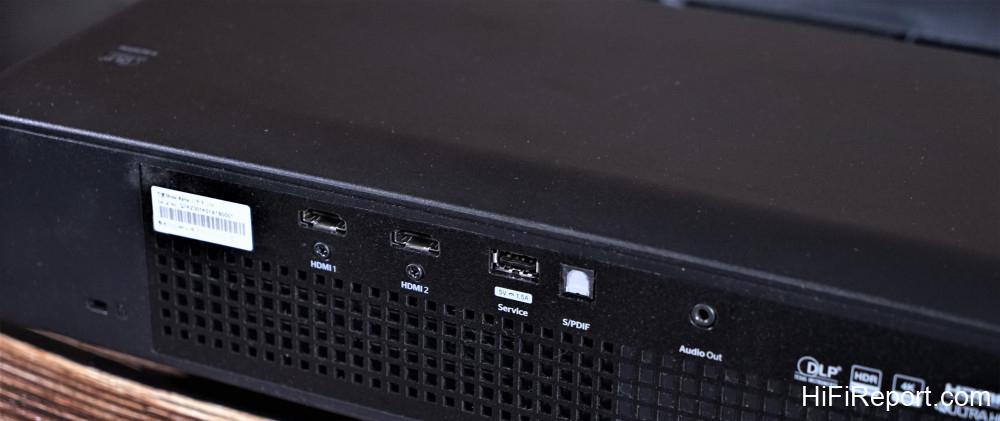
* Terminals: HDMI×2, USB-A×1, S/PDIF×1, Analog Audio Out×1
* Speakers: 10W×2
* Unique Features: Includes Google and Netflix certified Android dongle, supports up to 240Hz refresh rate, includes Gaming Enhanced mode
* Dimensions: 400×316×102.3mm (WHD)
* Weight: 5.1 kg