
Panasonic MX950 75-inch 4K Mini LED TV Review
The evolution of backlight modules in LED displays has consistently focused on achieving finer local dimming to minimize the halo effect. Direct-lit models further enhance picture brightness by increasing the number and density of LED beads in the backlight module. Panasonic has always placed great importance on the local dimming performance of its LCD displays.
For instance, last year’s flagship LED model, the LX980 series, featured Local Dimming Pro Intelligent technology, delivering excellent contrast through multi-zone control.
This year, the MX950 series adopts a Mini LED backlight, which significantly boosts Panasonic’s already impressive local dimming capabilities. By arranging Mini LED beads with even greater numbers and density, the haloing phenomenon is drastically reduced. This means the display can more effectively suppress excess light bleeding from the edges of bright objects against dark backgrounds.
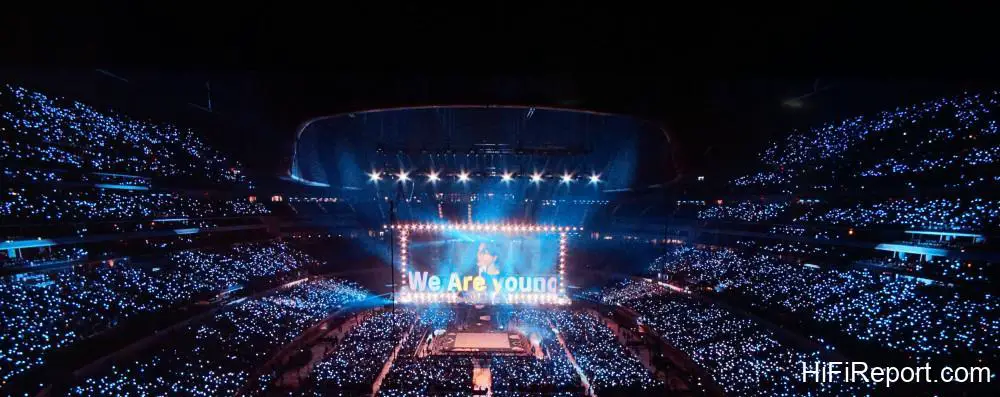
This effect is particularly noticeable in scenes with large areas of black, such as aerial cityscapes at night or nighttime firework displays, where you will see almost no haloing around the bright sections. The result is a display that is not only significantly brighter than traditional LED models but also offers black level performance much closer to that of OLED displays.
HCX Pro AI Processing
Last year, the HCX Pro AI image processor laid a solid foundation for ideal audio-visual processing performance in Panasonic’s high-end LED models (LX980 series) and their two OLED models (LZ2000 and LZ1000). This year, the MX950 series also utilizes this same advanced image processor.
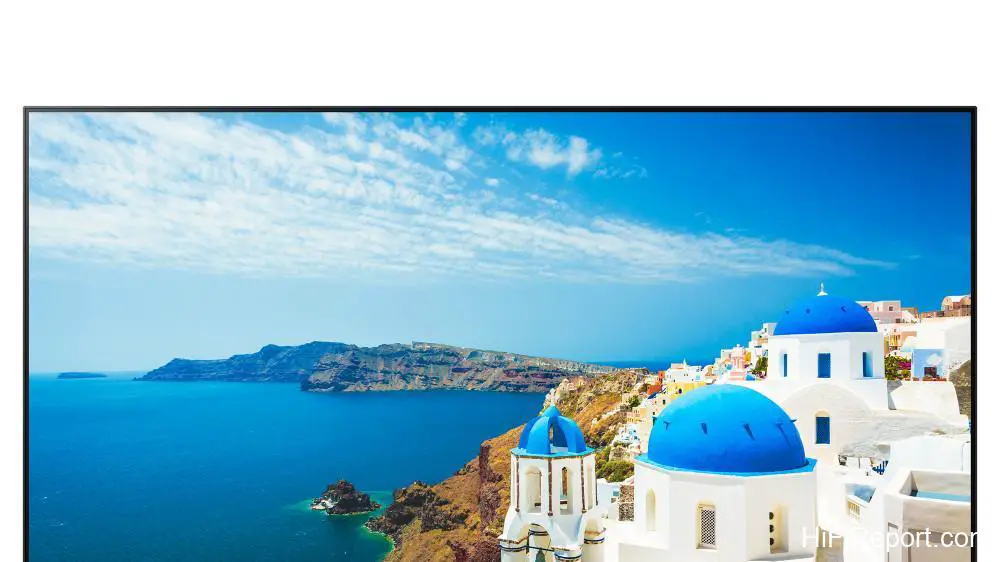
The main difference between HCX Pro AI and the previous HCX Pro is its powerful intelligent detection system and the ability to automatically adjust for optimal image quality, providing efficient AI intelligent adjustment and image detection speed.
For example, it can use the AI ambient light sensor in Auto AI and Filmmaker modes to detect indoor lighting conditions and adjust screen brightness accordingly. It can also automatically correct the white balance to ensure the picture’s color temperature perfectly matches the viewing environment’s light source. Furthermore, the image processor analyzes each scene in real time, enhancing image details in low-light areas.

Combined with the panel’s high brightness characteristics, this ensures the picture displays balanced brightness and clear detail information.
Comprehensive HDR
Panasonic has long been a pioneer in supporting all mainstream HDR formats, consistently evolving its features with new specifications each year. The MX950 series supports all major HDR standards, including Dolby Vision IQ, HDR10, HDR10+ Adaptive, HLG, and HLG Photo. This ensures that all types of 4K HDR content are displayed with optimal highlight detail and color information.
Enhanced Gaming Features
Last year, Panasonic comprehensively enhanced the gaming display capabilities across its high-end displays. Beyond supporting trending specifications like 4K/120Hz refresh rate, low input lag, VRR, ALLM, and AMD FreeSync Premium under the HDMI 2.1 transmission architecture, they also added the practical Game Control Board.
Game Control Board
This year, the MX950 series retains the Game Control Board. When connecting a game console, you can bring up a dedicated gaming menu at the bottom of the screen. This menu displays various game-related settings and information, including image mode, input lag, VRR, HDR tone mapping, dark area visibility enhancement, and ALLM activation. You can also set dedicated audio modes for RPG and FPS games.

Therefore, in addition to refining the visual effects of games, the optimized audio provides an ideal gaming experience.
Smart TV Evolution
Panasonic has introduced two significant smart TV evolutions this year. Firstly, they adopted the new Google TV smart TV system on the high-end LED MX800 series. Secondly, for the OLED models and the MX950 series, they are using the latest “My Home Screen 8.0.” The interface retains the familiar bottom-placed layout, allowing you to access content from pre-installed streaming platforms like Netflix, Disney+, Apple TV+, Prime Video, and Youtube.
My Scenery Feature
Similar to previous versions of “My Home Screen,” the MX950 series also features the “my Scenery” function. When the TV is idle, you can use the built-in exquisite images or dynamic videos as a standby wallpaper to enhance the visual aesthetics of your living room.
Core Smart Features
As a high-end model, the MX950 series naturally includes all the basic smart functions expected from Panasonic TVs. These include USB HDD recording, Screen Mirroring, SWIPE&SHARE (Flick and Share), USB multimedia playback, and a web browser. While these features are fundamental, they are commonly used in daily life. Furthermore, starting last year, Panasonic TVs adopted a bottom-placed design for the quick function menu.
This menu allows users to customize pinned items, offering the same level of personalization as My Home Screen, letting you set up the most convenient operation method for yourself. The MX950 series also features this design.
Audio Hardware
In terms of audio, the MX950 series is equipped with two 15W speakers located at the bottom of the TV, along with a 20W subwoofer on the back panel. The entire sound system outputs a total of 50W, capable of producing clear audio with strong low-frequency energy. The MX950 series also offers various audio modes, including Auto AI, Standard, Music, Speech, and Sport. Users can access an audio equalizer within the user settings.

Soundstage Creation
Beyond these features, I believe the most distinctive aspect of this Mini LED display’s audio is its soundstage creation effect. Using chip processing, it can simulate a realistic sense of spaciousness. Soundstage styles can also be selected, such as Talk, Standard, Theater, Live, Sport, and Through (pass-through), allowing you to tailor the listening experience based on the content you are watching. This is not only a well-thought-out feature but also delivers a noticeably effective result.
Viewing Experience
The 75-inch model tested here is the largest size in the MX950 series, making it perfectly suited for evaluating the capabilities of Mini LED technology in terms of brightness and contrast on an extra-large screen. After actual viewing, I’ve summarized the following impressions: When watching in Realistic Cinema or Filmmaker modes, the TH-75MX950W provides a deeply cinematic feel, whether it’s the warm tones with a reddish cast or the intricate detail in the picture.

Even on this large screen size, there was minimal sense of flaw; the picture was not loose, and the visual focus remained sharp. These excellent picture quality characteristics held true for 4K sources, and even 1080p content upscaled to the 75-inch screen showed minimal degradation. This demonstrates the first-class standard of the HCX Pro AI processor’s detail enhancement and picture upscaling technologies.
Contrast Evaluation
During the testing process, I also used a moving white point to observe the unit’s halo effect. On a completely black background, when observing the trajectory of a moving white point across different dimming zones, frankly, it was quite challenging to clearly discern the “boundary effect” of each zone.

This is because the haloing sensation around the white point was extremely minimal, while its brightness was very high, resulting in an extremely narrow gray transition area between it and the black background. This perfectly reflects the outstanding contrast performance of Panasonic’s Mini LED backlight, which excels at balancing brightness and black levels simultaneously.
When actually watching movies, this characteristic of “more refined bright areas with restrained black levels” makes aerial night scenes and dimly lit indoor scenes look incredibly realistic. Coupled with the 75-inch screen size, the images possess a strong sense of fidelity that leaves a truly unforgettable impression.
Conclusion
Many TV brands have entered the Mini LED backlight market this year, and their core claims are largely similar: bright displays with sufficiently deep blacks. Although the MX950 series is Panasonic’s first Mini LED model, its performance across display capabilities, smart features, and gaming functions is very much on point.
With the availability of a 75-inch model, this TV is definitely one of the excellent choices if you want to experience the black and white charm of Mini LED technology on a truly large screen this year.
Specifications
* Type: Panasonic MX950 75-inch 4K Mini LED TV
* Aspect Ratio: 16:9
* Panel Resolution: 3840×2160
* Image Color Processing Technology: HCX Pro AI Image Processor, HEXA Chroma Drive Pro
* HDR Specifications: Dolby Vision IQ, HDR10, HDR10+ Adaptive, HLG, HLG PHOTO
* Picture Modes: Auto AI/Dynamic/Standard/Cinema/Filmmaker Mode/User/Professional Photo 1/Professional Photo 2/Sport/Game/Realistic Game/Dolby Vision (Vivid/IQ/Dark)
* Terminals: HDMI 2.1×4 (Input 2 supports eARC, Inputs 1 & 2 support VRR/4K HFR/AMD Freesync Premium, All inputs support ALLM), USB×3 (1x 3.0, 2x 2.0), Optical×1, Analog Video Output×1, Headphone/Subwoofer Output×1
* Audio Features: Supports Dolby Atmos decoding, features Theater Surround technology
* Smart TV System: My Home Screen 8.0
* Sound Modes: Standard/Music/Speech/Sport/User
* Dimensions: 1672×1013×350mm (with stand), 1672×959×71mm (without stand)
* Weight: 35.5kg (without stand), 43kg (with stand)