
Perlisten Audio R5t Floorstanding Loudspeaker Review
My goal in writing this review is to challenge a prevalent misconception among some audio enthusiasts: the idea that THX certification strictly limits a speaker’s utility to home theater setups. The truth is, if a speaker boasts sufficient performance capabilities, there’s no logical reason it should excel solely at reproducing movie soundtracks while being unsuitable for music.
The Problem: Distortion
In the realm of both visual and auditory reproduction today, a common design philosophy for many high-end products centers on the faithful presentation of the creator’s original intent. In my view, the primary adversary to this lofty goal is “distortion.” Anyone who has taken measurements of display devices (like TVs and projectors) – and I count myself among them – is keenly aware of the significant issues arising from inaccuracies in color depth, hue, and light/shadow gradation.
These are widespread distortion problems inherent in display technology.
The types and severity of distortion in audio equipment are absolutely on par with, if not exceeding, those found in display devices. It’s just that more people are unwilling to confront this reality (who has the courage when the price tags are so high?). A common refrain we hear is, “You can’t even hear the difference distortion makes anyway.” Really? Distortion, by its very definition, means a loss of authenticity.
I believe people claim they can’t hear it because they’re unaware of which type of distortion affects which part of the listening experience, or perhaps they simply don’t know what the original recording was supposed to sound like. If you have no interest in hearing a sound closer to the original recording, then perhaps you don’t need to concern yourself with distortion.
However, if your goal is to experience a lifelike, highly realistic portrayal of a live musical event through your audio system, then the “accumulation of various distortions” is likely the main obstacle preventing you from realizing that dream.
Speaker Distortion and Performance Standards
Within an audio system, unless the amplifier is egregiously underperforming, the speaker is typically the component with the highest distortion. Many listeners are unaware that the higher the sound pressure level (SPL) a speaker produces (the louder it plays), the higher its distortion rate will be (the same principle applies to headphones). To put it more simply, “the louder you play it, the more fun you have, the higher the distortion.”

Speaker distortion specifications are often not pretty when revealed. Furthermore, there’s no universally adopted standard for uniformly listing speaker distortion rates established by any national body. Yet, in this context, Perlisten can confidently present THX Dominus certification, a credible validation. Passing this certification signifies that the total harmonic distortion is below 0.5% when producing an SPL of 90 decibels. The Perlisten R5t meets this performance requirement.
Moreover, the R5t’s specifications table boasts a truly impressive performance figure: at a maximum peak output of 113 decibels SPL, its second and third harmonic distortion across the 100Hz to 20kHz range (virtually the entire frequency spectrum) is below 2%. This clearly demonstrates its remarkably strong “high output, low distortion” performance capability.
Driver Technology
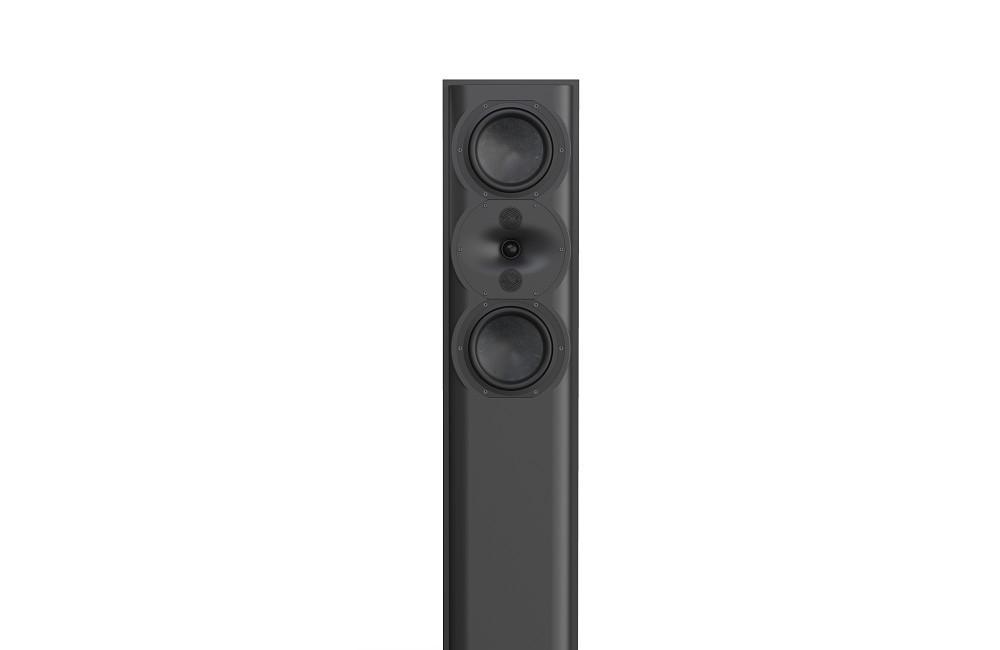
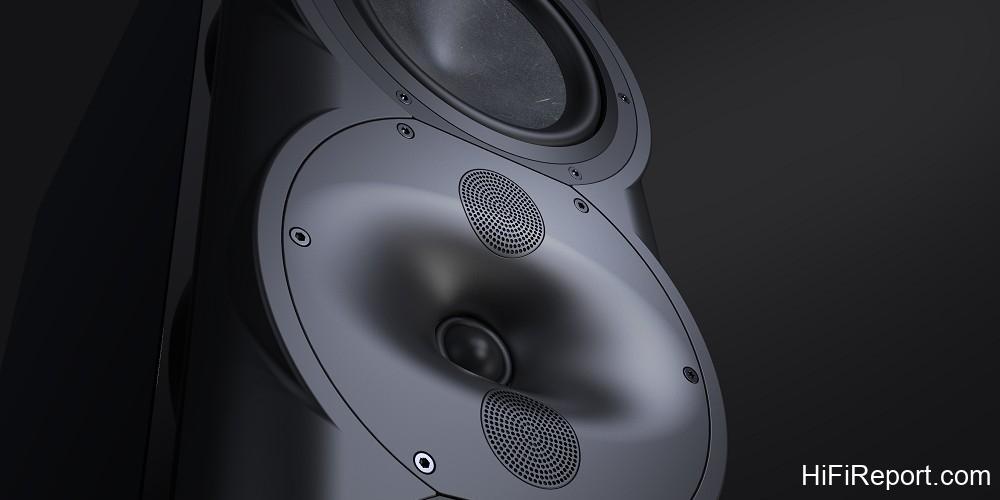
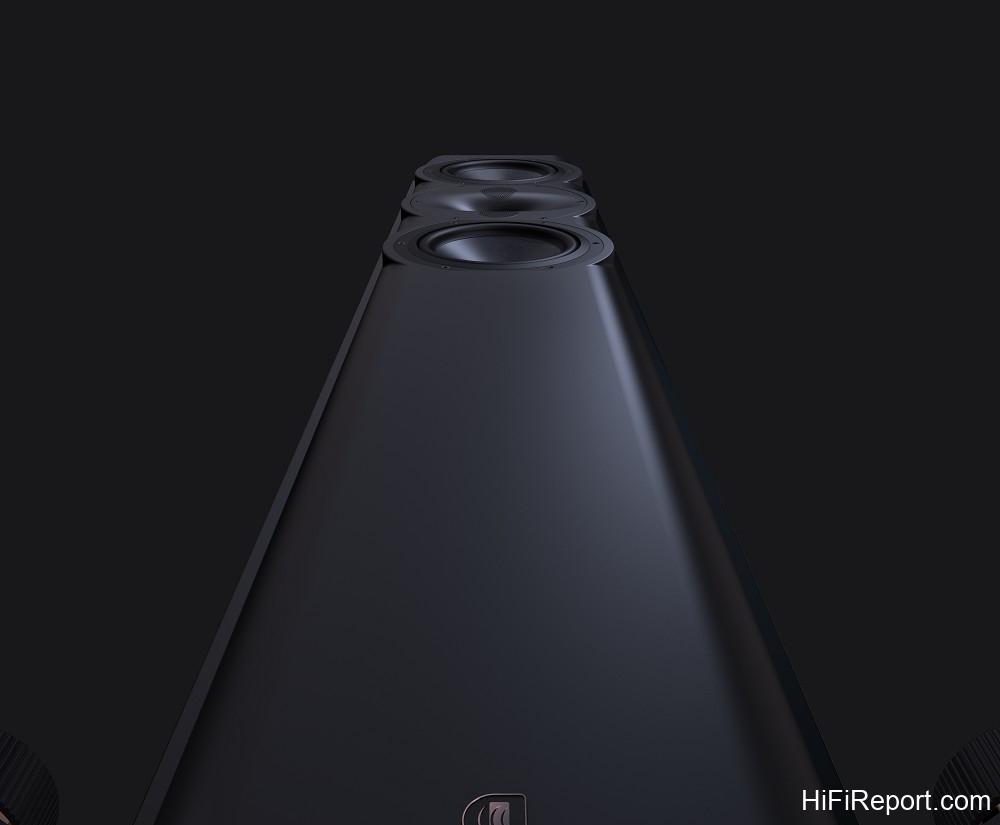
One of the key factors enabling Perlisten speakers to achieve low distortion is their DPC (Directivity Pattern Control) technology. This technology was previously pending patent approval and was granted a US patent in mid-2024. As shown in the accompanying image, this is the DPC array featured in Perlisten’s R-series speakers. It comprises three 26mm woven fiber soft dome drivers combined with a single, unidirectional horn-shaped waveguide.
It’s crucial to clarify here that these three drivers are “midrange-tweeter drivers.” Their main difference from standard tweeters lies in their lower frequency extension capability. Most tweeters typically extend down to around 1.8kHz to 2.4kHz, whereas the soft dome drivers in the Perlisten R-series can extend down by another octave, to roughly 900Hz.
Furthermore, the rear chambers of these drivers are filled with damping material to absorb backwaves and are isolated externally to prevent distortion caused by sound leakage from other drivers.
Perlisten’s choice to develop these dome drivers with strong low-end extension seems entirely logical. Their purpose is to narrow the working bandwidth of the mid-bass drivers. Standard two-way designs typically have crossover points between 2kHz and 3kHz, which is quite close to the upper limit of cone mid-bass drivers’ extension.
Most two-way mid-bass drivers exhibit significant distortion and non-flat frequency response above 2kHz, unfortunately right in the frequency range where human hearing is most sensitive. Perlisten, however, fully leverages the low-end extension of the dome drivers, lowering the crossover point so the midrange isn’t tasked with frequencies it’s not best suited for.
Simultaneously, by utilizing the advantage of the dome drivers’ low moving mass (dome driver diaphragms and voice coil assemblies are significantly lighter than cone drivers), they achieve better transient performance in the midrange and high-frequency bands.
The driver positioned in the center of the DPC and housed within the waveguide is responsible for the frequency range from 1.2kHz to 20kHz (the upper midrange through the entire high-frequency range). The drivers positioned above and below it operate in the 1.2kHz to 3.2kHz range (upper midrange and part of the lower high frequency range). From a purely technical standpoint, this could be described as a specially designed MTM (Midrange-Tweeter-Midrange) configuration.
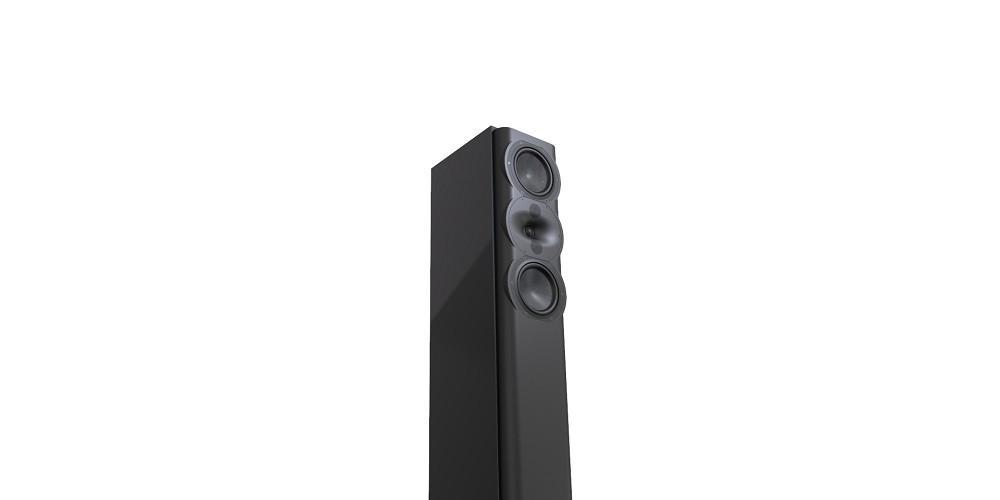
This is because the upper and lower drivers aren’t covering the entire midrange, and the low-end crossover frequency of the central tweeter driver is the same as the other two (not at 3.2kHz).
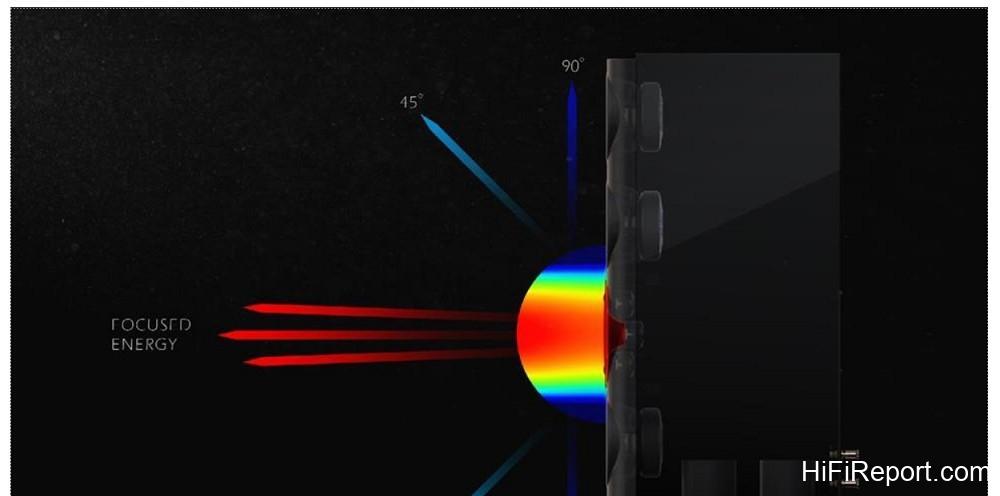
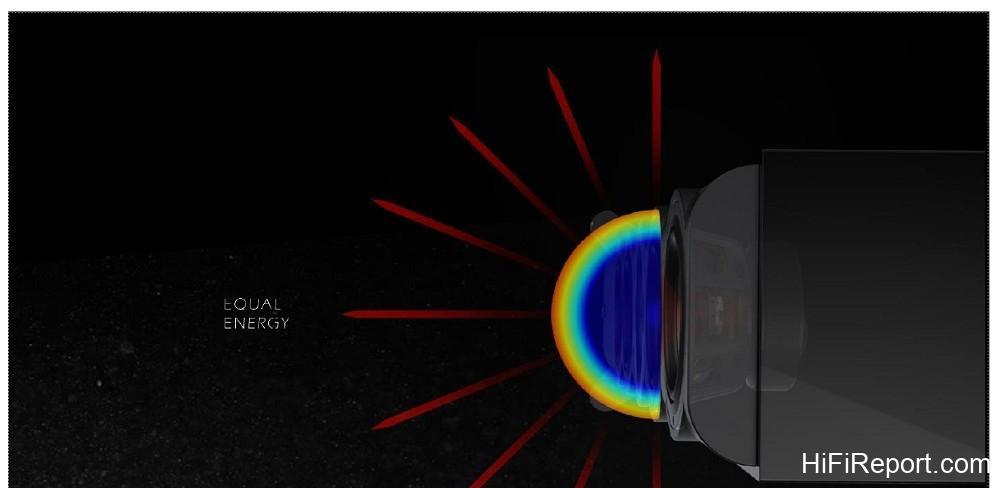
This design intentionally overlaps the frequency bands of the three drivers and “utilizes acoustic interference” to restrict the vertical (up and down) dispersion angle of the sound waves, reducing the negative impact of reflections from the ceiling and floor, similar to the principle used in line array tweeters.
The waveguide in the center of the DPC serves to “control the high-frequency dispersion angle” for the central driver at higher frequencies. It functions like a relatively shallow horn and doesn’t negatively impact the extension of the upper high frequencies. In previous reviews, I’ve noted that Perlisten S-series products equipped with Beryllium tweeters and DPC technology can extend their high frequencies up to 37kHz, while the R5t extends to 32kHz.
Therefore, in terms of sound dispersion characteristics, the DPC behaves like a unidirectional dispersion horn, where “unidirectional” refers to a wide horizontal dispersion angle (±55 degrees) and a narrowed vertical dispersion angle (±30 degrees).
In an MTM design, the drivers above and below the tweeter are often responsible for the midrange and/or mid-bass. This arrangement creates a symmetrical driver configuration where the acoustic image appears to originate from a point source along the central axis. Furthermore, if the designer wishes to further control the vertical dispersion angle of the midrange, this can typically be achieved with a second-order crossover network.
While I didn’t find details about the crossover in this regard in the official Perlisten documentation, I hypothesize that “if” the R5t employs such a method, it would likely bring the entire midrange within the scope of “vertical dispersion control.” Specifically for the DPC array itself, its controlled dispersion range spans from 900Hz to 20kHz.
Cabinet and Design
The R5t features two custom-made 165mm HPF cone long-throw mid-bass drivers. HPF stands for Hybrid Pulp Fiber, and this blend includes long hardwood fibers, bamboo fibers, and wool. The purpose of using such a composite material for the cone is, naturally, to achieve both excellent rigidity and damping characteristics simultaneously. This helps reduce distortion caused by cone breakup and minimize sonic coloration from parasitic cone vibrations.
The R5t’s cabinet is constructed from HDF (High-Density Fiberboard), which boasts a fiber density 20% higher than MDF (Medium-Density Fiberboard) and is consequently stiffer. Perlisten further enhances rigidity by applying bitumen damping material to the interior walls of the cabinet. The cabinet panels are approximately 2cm thick, while the front baffle, which supports the drivers and endures greater vibration, is a substantial 5cm thick.
The narrow and deep cabinet design makes the speaker appear more compact visually, but its footprint is actually comparable to a stand-mounted bookshelf speaker. However, the internal volume is significantly larger than a bookshelf speaker, resulting in better low-end extension (allowing it to produce deeper bass frequencies).
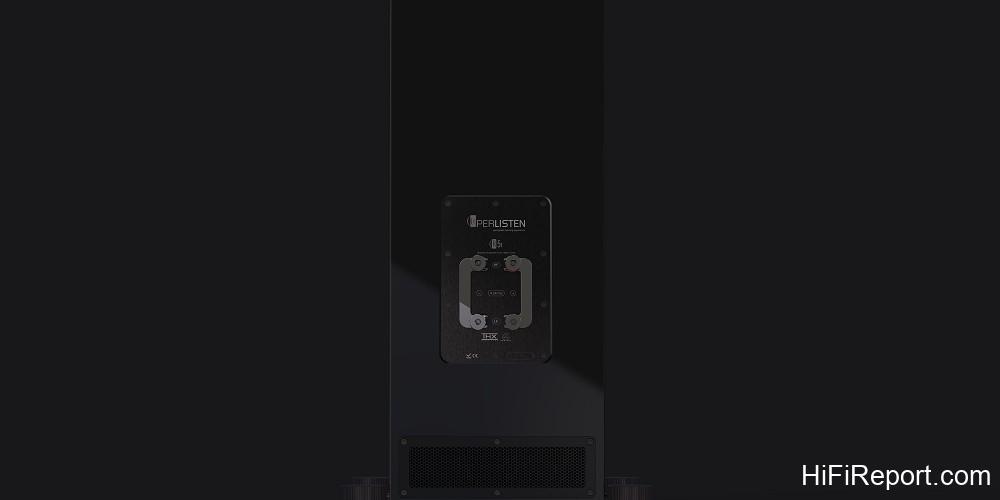
Interestingly, the R5t offers two different operational modes: bass-reflex or sealed. It features a downward-firing bass-reflex port. Leaving it open results in bass-reflex operation, while plugging the port opening with the included foam plug converts it to a sealed design. The low-end response for these configurations is specified as 24Hz and 38Hz respectively (-10dB point). The typical in-room bass extension is even deeper, reaching 21Hz for bass-reflex and 32Hz for sealed.
To plug or not to plug the foam bungs? If you are integrating a subwoofer, I strongly recommend using the sealed mode (plugging the ports), especially in a two-channel system without dedicated bass management. This allows the subwoofer to handle a wider frequency range (keeping it more engaged) and helps prevent “artificial boominess” caused by players inexpertly overlapping the frequency ranges of the subwoofer and main speakers simply to achieve perceived “subwoofer effect.”
Other situations where I recommend using the foam plugs include:
* In rooms with significant low-frequency room modes that are difficult to mitigate.
* When the speaker placement is constrained, forcing the speakers too close to walls or corners, which can exacerbate bass issues in bass-reflex mode.
* If your amplifier has limited power output or a low damping factor, as sealed designs can be slightly easier to control in the bass region.
However, based on the specifications, using the R5t as a bass-reflex speaker (without the foam plugs) already provides low-end extension comparable to a medium-sized active subwoofer. The key, however, is skillful placement (using room response measurement tools like REW can be beneficial here) to avoid low-frequency room mode problems. With a powerful amplifier boasting a high damping factor, the R5t can fully realize its extended low-frequency capabilities.
Listening Impressions
So, how does the Perlisten R5t actually perform?
Driving the R5t: Power and Sensitivity
Let me start with a perceived drawback: it is genuinely not easy to drive, especially if you intend to push these speakers to their full potential, achieving high SPL and low distortion. The choice of accompanying amplifier should absolutely not be taken lightly. I mention this to advise potential buyers considering the R5t to select a capable amplifier right from the start, otherwise, you might end up wasting money.
The R5t’s sensitivity is only 89 dB / 2.83v / 1m. While 89dB on paper seems decent, converting it to efficiency yields 86 dB / 1W / 1m.
To be blunt, driving these speakers to the same SPL as a typical medium-efficiency speaker requires nearly double the power. Yet, paradoxically, they are high-SPL marvels capable of handling high power. To have them produce 113 decibels of SPL, my calculation suggests needing 512 watts! This relates to the speaker’s overall design, including driver configuration, cabinet, and crossover structure.
Achieving good low-end extension from a smaller cabinet, similar to larger speakers, generally necessitates accepting lower sensitivity. Fortunately, the Perlisten R5t is born in an era that is “low-efficiency friendly.” High-performance, high-quality Class D amplifiers exceeding 200 watts are readily available, and most are well-suited for driving 4-ohm loads (compared to 8-ohm).

Their amplifier circuits often offer a wider bandwidth (higher upper frequency extension) when driving a 4-ohm load than an 8-ohm load. Traditional Class AB amplifiers, conversely, often have higher internal impedance (though there are exceptions, like some Hegel models). Therefore, I prefer pairing the R5t with a high-performance, high-power amplifier. For this review, I used the Primare A35.2, which is rated at 400 watts into a 4-ohm load.
During the speaker placement process, I also adjusted the tilt angle using the included footers.
Sonic Character and Performance
Below is my report on the actual listening experience with this pair of speakers. In terms of sonic character, I find the Perlisten R5t to be quite neutral and realistic. Its neutrality, in my opinion, is a result of effective control over sonic coloration.
Vocals and instruments sound clear and refined, approaching the fidelity of the original music content almost like listening through high-end professional headphones. This is especially noticeable in the mid and high frequencies, where they are highly sensitive in revealing texture and layering. Details are distinct, and the high-frequency extension and sparkle are not rolled off or softened.
Yet, surprisingly, they completely lack the irritating hardness often “assumed” to be inherent in high-resolution characteristics.
Comparatively, the R5t does not possess the more extroverted, detailed high frequencies and lightning-fast speed of Perlisten’s S-series, which are equipped with Beryllium tweeters and thin carbon fiber diaphragm drivers. I believe it’s precisely because of this that the R5t, unlike the “no-compromise performance beasts” of the S-series, is closer to the “mass market taste.” Tonally, it feels warmer and possesses more body.
Interestingly, the stereotype usually associated with speakers having a “slightly warm” or “warm” tonal balance is a tendency towards a more relaxed speed. I must tell you, the R5t is an exception! Its mid and high frequencies are undoubtedly fast. Whether the bass is equally fast depends entirely on the amplifier’s output capabilities. With sufficient current delivery and a high damping factor, the R5t has the ability to be “fast all the way from the deep bass to the high frequencies.”
You might wonder about the “deep bass.” The R5t itself is capable of extending deep bass below 25Hz. My chosen placement involved positioning them closer to the rear wall (the wall facing the listening position) to avoid the effects of boundary interference (SBIR) on frequencies below 50Hz (which can cause severe dips due to cancellation), while also leveraging boundary gain to compensate for low-end roll-off.
This approach was quite effective: the relatively small R5t sounded as if a very fast, medium-sized subwoofer had been added to the system. Its low and deep bass was not only agile but also “fleshy.” The bass had high clarity, was full-bodied and robust, yet elastic. This level of “bass completeness” and clean articulation is simply beyond what most audio systems can achieve.
My listening standards have remained consistent. For popular music, if the audio system is capable enough, I always strive for an “up-close and personal” sense of presence, like sitting in the center seat closest to the front edge of the stage at a live concert. When producing such high SPLs, the R5t not only “holds its own” but does so with ease, maintaining its low-distortion characteristics.
Instruments and vocals retain the same sound quality and tonal balance as when listening at low to moderate volumes. The dynamic range is vast; sounds with clear distinctions between loud and soft are full of vitality. High-energy sound allows the body to feel the tactile sensation on the skin, creating a wide soundstage and an “in-your-face” visual impression that I am confident young music lovers listening only through headphones can never experience.
As for classical music, jazz, and other non-popular music genres, I fundamentally don’t believe any special standards are required. To appreciate more of the creator’s intent, simply let the sound get as close as possible to the original state of the music content (rather than everyone interpreting it differently or filling in the gaps). If the recording itself is well-produced, a realistic audio system will bring us closer to the experience of listening in a live musical setting.
This is “all” the R5t can give us (it won’t add sounds that aren’t supposed to be in the recording). Considering sound performance, capabilities, and price, I believe the Perlisten Audio R5t floorstanding loudspeaker exceeds my benchmark for value for money. If you desire sound that is closer to the original music content and are passionate about live music, and your budget allows, I highly recommend purchasing this pair of speakers.
Specifications
* **Drivers:**
* DPC Array: 3 x 26mm Beryllium (S-Series) or 3 x 26mm TPCD (R-Series) Dome Mid/Tweeters (R5t uses 26mm woven fiber soft dome)
* Mid-Bass/Woofers: 2 x 165mm (6.5 in) HPF Cone
* **Sensitivity:** 89 dB / 2.83v / 1m (86 dB / 1W / 1m efficiency)
* **Impedance:** 4 ohm nominal / 3.2 ohm minimum
* **Frequency Response (Bass-Reflex):** 24Hz – 32kHz (-10dB)
* **Frequency Response (Sealed):** 38Hz – 32kHz (-10dB)
* **Typical In-Room Bass Extension (Bass-Reflex):** 21Hz
* **Typical In-Room Bass Extension (Sealed):** 32Hz
* **Max SPL:** 113dB peak SPL at 1m
* **THD:** <0.5% THD above 90dB SPL (90Hz-10kHz). <2% THD above 100Hz at 113dB SPL. * **Dimensions (H x W x D):** 1000 x 230 x 350 mm (39.4 x 9.1 x 13.8 in) * **Weight:** 32 kg (70.5 lbs)