
Perlisten R4b Surround and D12s Subwoofer Review
A huge surprise! The Perlisten R4b surround speakers paired with the D12s subwoofer unexpectedly outperformed numerous floorstanding speakers costing hundreds of thousands of dollars.
Perlisten Leadership
Daniel Roemer, one of Perlisten’s CEOs and founders, is a seasoned audio veteran. He previously worked at speaker companies like NHT, AR, and Advent. Later, he became the head of R&D at MITek and consulted for many other manufacturers, even participating in automotive audio OEM designs for brands including Aston Martin, Land Rover, and Ford. He also designed headphone amplifiers and active speakers, showcasing his deep experience in the audio industry.
Another key figure is Lars Johansen, who held positions at companies such as JBL, Harman Kardon, Klipsch, and Jamo. From 1990 to 1999, he held management roles at Harman International. He was involved in the development of component drivers for Peerless and later became the marketing director for Danish Sound Technologies. For the past decade, he served as the president of Miller & Kreisel (M&K Sound).
With such impressive backgrounds, it’s no wonder Perlisten’s speakers caused a stir upon their debut.
Perlisten’s concept and formation began between 2016 and 2019, with six prototype models produced in 2020. The official launch took place in 2021. Currently, their speaker lineup is divided into the higher-end S series and the more affordable R series. All S series models, most R series models, and their subwoofers are THX Dominus certified. This is the highest level of home theater certification, demanding extremely rigorous standards.
For instance, speakers must have a sensitivity of 92dB or higher, achieve 120dB sound pressure at 1 meter, and do so with low distortion.
THX Certification Levels
It’s worth noting the THX certification levels based on listening space size. Level one, Compact, is for viewing distances of 2.4 meters and a sound coverage volume of 28 cubic meters. Level two, Select, is for viewing distances of 3 meters and a volume of 57 cubic meters. Level three, Ultra, is for viewing distances of 3.6 meters and a volume of 85 cubic meters. The top level, Dominus, is for viewing distances up to 6 meters and a volume of 184 cubic meters.
While most THX-certified speakers can reach the Ultra level, only a select few meet the Dominus requirements. Remarkably, within the Perlisten range, only the R4s and R4b are rated Ultra, with all other models achieving Dominus certification – truly impressive.
Unique Perlisten Technology
Why did Perlisten’s speakers make such a splash upon their release? Because they take an approach distinctly different from many other speaker manufacturers: they provide extraordinarily detailed and transparent test reports. These include on-axis and off-axis frequency response, impedance and phase curves, distortion measurements, and horizontal and vertical directivity spectrograms.
Frankly, this is the first time I’ve seen a company voluntarily provide such comprehensive test data, demonstrating immense confidence in their products.
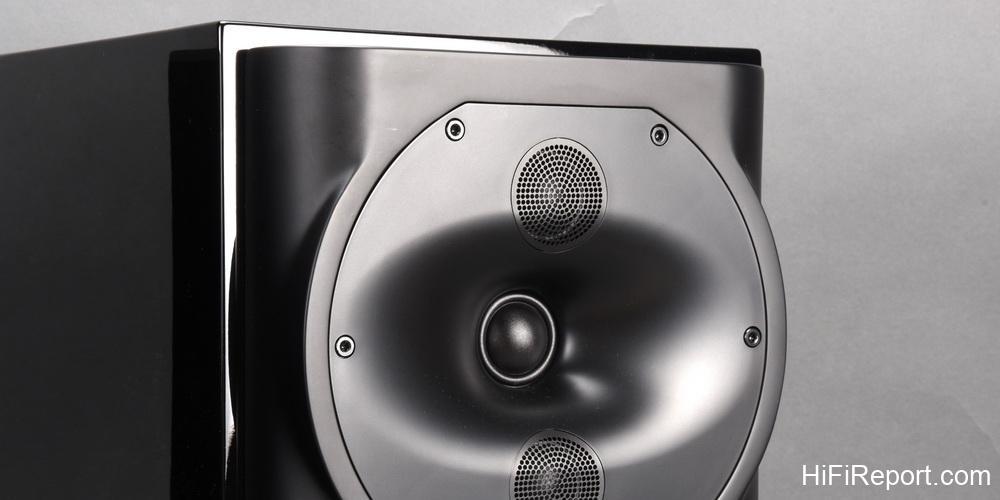
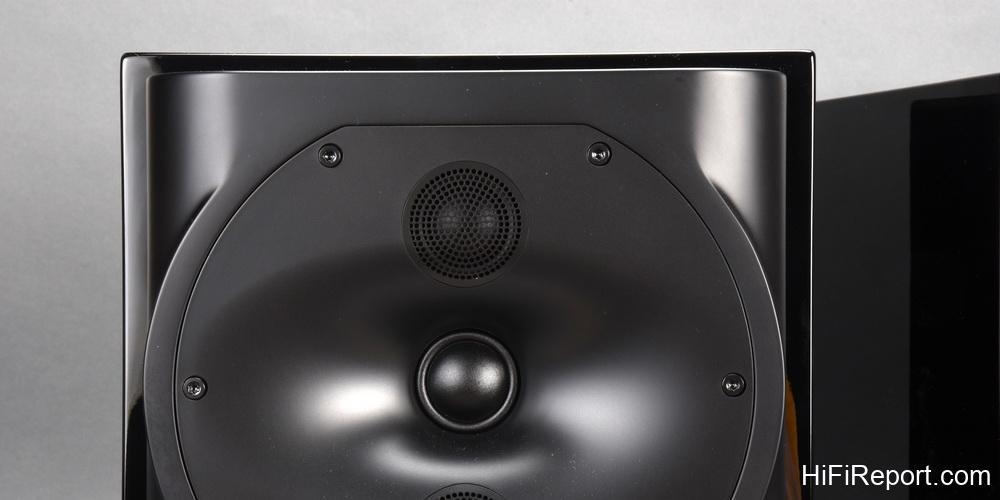
Perlisten speakers also feature a unique tweeter design. It involves three tweeter units housed within a horizontally oriented, elliptical waveguided enclosure (similar designs can be found in Revel tweeters). The central tweeter is exposed and concave, while the other two are concealed above and below. This vertical arrangement of the three tweeter units is what Perlisten calls Directivity Pattern Control (DPC).
Does that term sound familiar? Indeed, high-end Dynaudio speakers also employ a similar principle, primarily used to control the upward and downward sound radiation angle from the tweeter (while also managing horizontal dispersion appropriately). Look closely at the tweeter assembly: the central exposed driver is concave. This design aligns its acoustic center with the woofer’s, ensuring time-phase consistency so that the sound from both originates from the same vertical plane.
All Perlisten speakers feature this DPC tweeter array, although with slight variations. In the more affordable R series, the exposed central driver is a 26mm soft dome silk diaphragm. In the higher-end S series, it’s a 28mm beryllium dome unit. The two concealed tweeters, hidden behind grilles, use Thin-Ply Carbon material in the S series, matching the woofer diaphragm. The R series also uses 26mm silk soft dome units for these.
Intriguingly, the manufacturer refers to the exposed tweeter as a “Full Range Tweeter,” while the two concealed drivers are responsible for the “Midrange.” In the R series, these three drivers cover frequencies from roughly 1.25kHz upwards (1.1kHz and above for the S series). The two concealed “tweeters” begin to roll off around 4.4kHz, with only the exposed soft dome tweeter extending further upwards.
Considering the crossover point is around 1.25kHz or 1.1kHz, these can indeed be considered midrange drivers. This unique crossover topology represents a non-typical filter network.
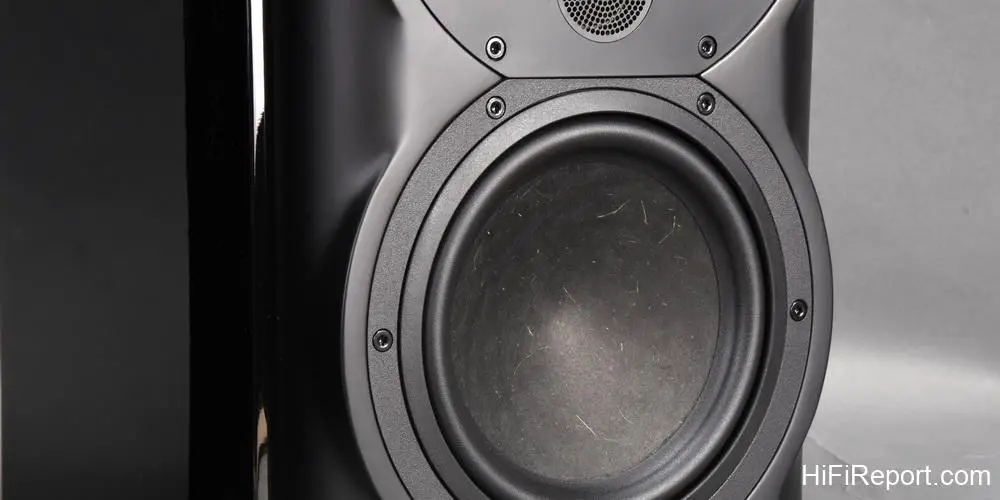
Moving on to the woofers, the R series drivers use a different diaphragm material than the S series. The S series employs their proprietary “Textreme Cone,” made from carbon fiber, featuring a distinctive woven pattern. The R4b uses a woofer with an HPF (Hybrid Pulp Formulation) diaphragm, a blend of hardwood fibers, bamboo fibers, and paper fibers.
Distinguishing between the Perlisten S and R series is straightforward: if the woofer diaphragm has the woven carbon fiber pattern (Thin-Ply Carbon), it’s an S series model; otherwise, it’s an R series. Both series offer floorstanding, bookshelf, and subwoofer models. The floorstanders can serve as main speakers in a home theater, while the bookshelf models are typically used as surrounds, alongside center channel speakers. Uniquely, the bookshelf models come in two types: S4s/R4s and S4b/R4b.
The former has a downward-sloping trapezoidal cabinet with the tweeter below, designed for high placement and downward projection. The latter has a conventional rectangular cabinet with the tweeter above, intended for standard height placement or use as two-channel compact speakers.
The S series is complemented by four subwoofer models, while the R series has two. Subwoofer model numbers starting with ‘2’ (e.g., D212s, D215s) indicate the presence of two drivers, with the following two digits denoting their size (12-inch or 15-inch). A model like D12s signifies a single 12-inch driver.
R4b and D12s Specifics
Despite being a compact bookshelf speaker, the R4b features a remarkably thick 2-inch baffle, while the rest of the cabinet panels are 1 inch thick. Internal bracing is 0.75 inches thick. The cabinet material is HDF (High-Density Fiberboard), not the more common MDF. On the back, you’ll find four screw holes designed for wall mounting.
The R4b is primarily intended as a surround speaker in a home theater system, though it can also function as a small two-channel speaker, with the manufacturer suggesting a 2.1 channel setup as the optimal use case.
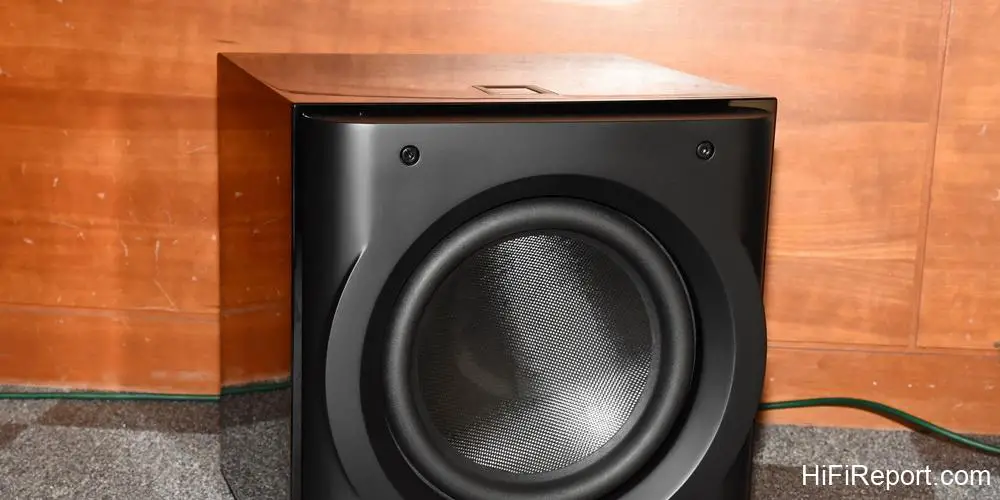
Now, regarding the D12s subwoofer, I personally used this model during the 2021 Yuan Shan Audio Exhibition (in the Epson room during my presentation), and its performance was excellent. Like the R4b, the D12s is a sealed-box (acoustic suspension) design. It employs a single 12-inch carbon fiber driver featuring a multi-layer Normex spider, aluminum voice coil, and an oversized magnet, allowing for impressive excursion up to +/- 30mm.
The rear panel of the D12s subwoofer is equipped with two sets of RCA and XLR input/output terminals (labeled 1 and 2), totaling four RCA and four XLR connectors. The XLR inputs and outputs are easily distinguished by their male and female connectors. Additionally, there is a power socket, a USB service port on the top section, and a 12V trigger switch.
The D12s houses a powerful 1,500-watt amplifier. This substantial power reserve is more than capable of driving the 12-inch carbon fiber woofer to its full potential, delivering earth-shattering bass. Furthermore, the internal processing relies on a TI 48bit DSP and a 32bit ARM M4 Cortex Processor for settings control, indicating no compromise on components.
The D12s also offers a 10-band parametric EQ adjustment, with the ability to save three preset configurations, providing users with immense flexibility. This is particularly powerful for addressing bass issues in challenging listening rooms. Settings and control can be accessed via the LCD touchscreen on the top of the cabinet, but using the dedicated mobile app is more convenient.
The D12s measures 448x420x450mm and, despite its relatively modest volume, weighs a staggering 41 kg – definitely a two-person job to move.
Listening Impressions: R4b Alone
Having introduced the R4b and D12s, let me explain the “big surprise.” The local distributor, Ino Audio, sent a pair of R4b speakers to the office for my evaluation and feedback, without necessarily requiring a written review. Given the request, I felt obligated to thoroughly test them. I rotated the R4b pair through our three listening rooms and paired them with several different amplifiers.
My conclusion was that this pair of bookshelf R4b speakers is quite difficult to drive. This is due to their sealed-box design and a low sensitivity of just 84.5dB. More critically, their nominal impedance is 4 ohms. If you calculate the sensitivity at the standard 2.83V into a 4-ohm load, the figure would be even lower – I estimate equivalent to around 80-81dB for a speaker with an 8-ohm nominal impedance.
Honestly, I’ve rarely encountered such low sensitivity in recent years; it was a common characteristic of sealed-box speakers from the 1960s, which is why this design is less prevalent today.
Sealed vs. Ported Designs
Let’s briefly touch upon the acoustic suspension (sealed-box) speaker, invented by Edgar Villchur. He later co-founded AR (Acoustic Research) with Henry Kloss in 1954, achieving significant fame. Henry Kloss then started his own KLH brand in 1957, also focusing on sealed designs. KLH is named after its three founders: Henry Kloss, Malcolm S. Low, and Josef Anton Hofmann.
The core principle of the sealed design is a completely airtight cabinet where the enclosed air acts as an air spring, hence “Acoustic Suspension.” The main difference between sealed and bass-reflex (ported) cabinets lies in their low-frequency roll-off characteristics. Sealed designs typically exhibit a 12dB/octave roll-off below the -3dB point, while bass-reflex designs roll off more steeply at 24dB/octave below their -3dB point.
In essence, ported designs lose bass energy much faster below their tuning frequency.
However, the -3dB point of a bass-reflex design is often lower than that of a sealed design, resulting in a subjectively fuller sound in the 50Hz-100Hz range. Conversely, sealed designs generally offer better control over the entire bass frequency spectrum. Both designs have their merits, but sealed speakers inherently have lower sensitivity and require more powerful amplifiers, which is why bass-reflex speakers are more common in the market.

Returning to the R4b, after listening to them in all three rooms, I confirmed that while they are small bookshelf speakers, using them for two-channel listening demands a powerful amplifier. However, if used as surround speakers, where they handle less sound pressure, a high-power amplifier is less crucial. During my time with the R4b, I found their high frequencies to be very extended, refined, and clear, with a lovely, sweet quality.
The midrange was full and rich, making them perfectly capable for general pop music. My only reservation was the bass frequency range. Although the manufacturer’s measurements show extension down to 38Hz, they also honestly specify a linear frequency response of 80Hz-20kHz +/- 1.5dB.
This aligns perfectly with my listening experience; when listening to classical music or some specific popular genres, I definitely felt a lack of quantity in the lowest frequencies and an insufficient sense of musical scale.
Anyone familiar with home theater knows that turning off the subwoofer causes the entire movie soundscape to deflate, losing its scale and impact. The same applies to music; if the bass frequencies lack sufficient fullness and extension, the musical scale shrinks, making the music sound distant and lacking intimacy or immersion.
The Transformative 2.1 Setup
To be frank, if evaluated purely as two-channel speakers, I felt the R4b’s price point was difficult to justify. A pair of R4b costs approximately $6,700 USD, which could buy some smaller floorstanding speakers or even the new KEF LS 60 Wireless DSP active floorstanders, which only require a phone to play music, whereas the R4b needs an amplifier and source. At this point, I recalled the manufacturer’s suggestion that the authentic way to experience the R4b is in a 2.1 channel setup.
I asked the sales representative to borrow a subwoofer from Ino Audio, and the D12s quickly arrived. I then set up and listened to this 2.1 channel system in our largest listening room (Room 1) at the magazine office.
Before setting up a 2.1 channel system, it’s crucial to determine your goal: do you want the main speakers to play full-range, with the subwoofer merely adding bass quantity? Or do you want to cut off the main speakers’ low frequencies and use the subwoofer to expand the music’s scale and impact?
Two or three decades ago, I would have recommended letting the main speakers play full-range because the DSP crossover technology was not as mature as it is today, and passing the main speakers through a subwoofer’s crossover often significantly degraded sound quality. Today, my approach is to cut off the main speakers’ low frequencies and integrate the subwoofer seamlessly.
Why cut off the main speakers’ low frequencies? Because if you don’t, the mid-bass driver of the main speaker remains heavily burdened, easily distorting at high volumes. Once the mid-frequencies distort, the music inevitably sounds unpleasant. However, by cutting off the low frequencies from the main speaker, the mid-bass driver is relieved of this burden and can play much louder without distortion.
When combined with the rich bass quantity provided by the subwoofer, this can create a massive sense of musical scale. The overall music can not only be played louder but also feels more intimate and enveloping, allowing the listener to become fully immersed.
Setup, Tuning, and Optimization
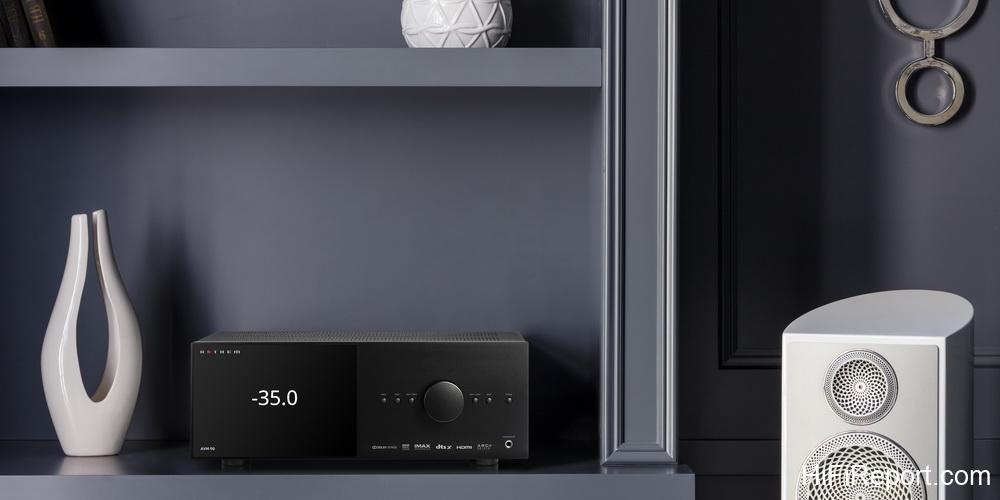
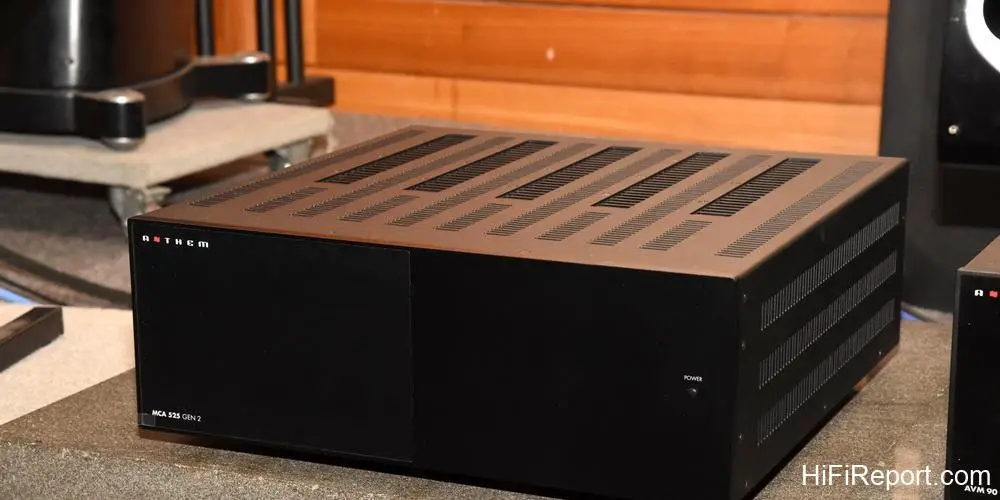
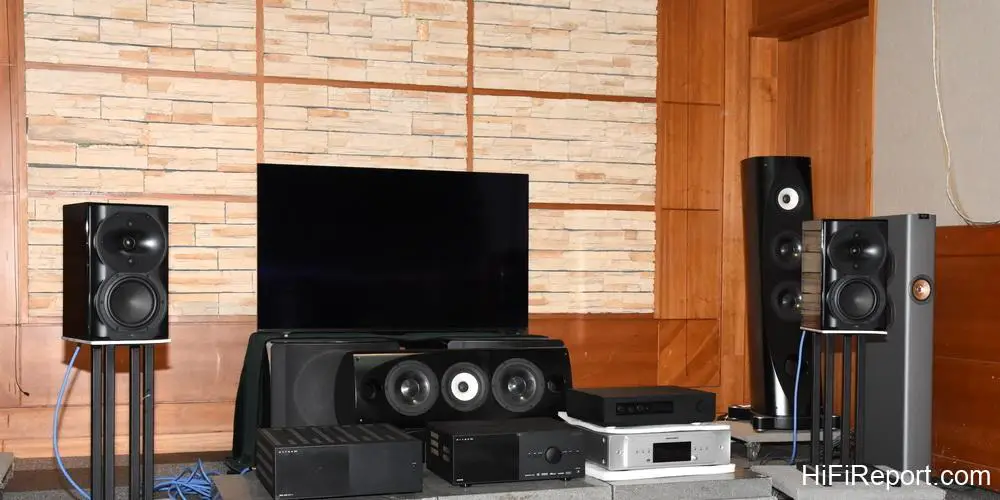
With the 2.1 channel architecture decided, the next step was to find a preamplifier capable of implementing a crossover, or an amplifier with features similar to an AV receiver. Conveniently, the magazine office had an Anthem AVM 90 surround preamplifier and an MCA 525 Gen2 five-channel power amplifier (225 watts per channel into 8 ohms). I could use the AVM 90’s internal DSP crossover to cut off the R4b’s low frequencies.
Driving the R4b (relieved of bass duties) with 225 watts per channel would certainly give them ample power.
With the system components determined, the remaining tasks were positioning the main speakers, positioning the subwoofer, and determining the crossover point. These three steps are not strictly sequential; they involve iterative placement and listening. Beyond using our ears, the most important tool was the free REW software paired with a MiniDSP professional microphone to find the optimal listening position and subwoofer placement.
The final result: a crossover point set at 100Hz, with the subwoofer placed approximately 1 meter behind the main listening position (the “sweet spot”) and facing forward.
Under these conditions, the bass quantity was abundant but remained controlled. The main speakers could play loudly without distortion, resulting in a huge sense of musical scale. There was no fear of listening to any type of music. I must emphasize here that this setup and measurement were optimized for the two-channel sweet spot.
Listening outside of the sweet spot might result in more or less bass and would definitely not achieve the same seamless integration as experienced when seated in the primary listening position.
Listening Impressions: R4b with D12s
Okay, it’s time to talk about the big surprise. In fact, I wasn’t surprised; it was my colleagues at the magazine office who were shocked. I had already been listening to Linn Kan speakers paired with a subwoofer back in the days of the Capella Records and Audio store, making me an early proponent of 2.1 channel systems. I am very familiar with the transformative effect of two small speakers combined with a subwoofer.
Therefore, when the adjustments were complete, and I heard the utterly transformed sound performance, I wasn’t shocked, but rather felt the satisfaction of having successfully tuned an excellent system.
The editors, however, were different. When I listened to the R4b speakers alone, I also had them listen in the room, so they had a baseline understanding of the R4b’s two-channel performance. But when I finished tuning the 2.1 channel system and asked them to take turns listening, they experienced a radical, world-apart difference in sound quality. It’s no wonder they were shocked: how could small bookshelf speakers be transformed into large floorstanding speakers?
The soundstage was incredibly expansive, the bass seemed limitless, and the system could play very loudly, creating excellent musical immersion and making one feel completely enveloped by the music.
For example, listening to “End of the War” from “Curse of the Golden Flower,” the colossal bass slammed into the room, the massive bass drum hits sending pressure waves through the chest. The immense musical scale and abundant bass frequencies felt like listening to a movie soundtrack in multi-channel. The overwhelming musical energy was hard to believe was coming from two small bookshelf speakers.
Or take Tracy Chapman’s “Fast Car” from her self-titled album; Chapman’s beautiful, captivating voice was clearly produced by the R4b, while the soft, bouncy, and articulate bass was the result of the R4b and D12s working together. Listening to the R4b alone, it’s impossible to get this kind of full yet soft, bouncy bass. Listening to the D12s alone, of course, wouldn’t achieve this effect either. Only the combination of the two could produce this magical audio experience.
Another example was listening to Roger Waters’ “Time” from his 2018 Amsterdam live concert recording. The thunderclap at the beginning was like a direct blow to the speakers, but the R4b showed no signs of strain. The fantastical sounds that followed seemed to fill the entire listening space. Despite the large room, the music from the R4b and D12s completely saturated the space, with various sound effects captivating the listener.
The music had strong impact, creating a sense of being at a live rock concert. The editors found the stunning performance of this 2.1 system on this track almost unbelievable, noting that even large floorstanding speakers might not achieve such a moving effect.
How did this 2.1 system perform with vocals? Was the integration problematic? I can confidently say it was seamless. Besides the aforementioned Chapman, listening to Jim Reeves’ “Adios Amigo,” his rich, magnetic baritone was truly captivating, and the overall music was seamlessly integrated from high to low frequencies.
Listening to Janis Ian’s “Breaking Silence,” the focused, bouncy bass, the fast transient response, the overall fullness, expansive and deep soundstage, and the appropriately sized, beautiful vocal performance made it feel like listening to large floorstanding speakers.
Did adding the subwoofer negatively impact the inherent sound quality of the R4b? Listening to Sueye Park’s “Journey Through A Century” (violin solo), the violin sound was sweet and lustrous, with incredibly beautiful tonality. Listening to Leonid Kogan’s “Encores,” the rich bowing texture and resonant soundboard of the violin were engrossing, with no sense that the sound quality had been degraded by adding the subwoofer.
The editors were also deeply impressed listening to Shostakovich’s Symphony No. 4 (conducted by Myung-Whun Chung with the Philadelphia Orchestra). This piece starts explosively, the powerful musical energy immediately enveloping the listener. The rolling timpani sounds from the depths of the soundstage could not possibly have been produced by the R4b alone; they were courtesy of the D12s placed behind.

Yet, while listening, no one noticed the D12s because there was no sense of it operating independently; all the music seemed to emanate from the two small R4b speakers. This, too, contributed to the surprising performance. Frankly, this kind of powerful audio effect can easily outperform numerous floorstanding speakers costing hundreds of thousands of dollars, and it takes up less space.
Conclusion
The R4b, listened to alone, is a decent pair of bookshelf speakers, but only “decent.” However, when paired with the D12s, the earth-shattering audio effect produced by the 2.1 channel system feels almost magical, and even describing it as “transformed” doesn’t quite capture it. When listening to this 2.1 system, you can turn up the volume to your heart’s content. The highs are sweet, the midrange is broad, and the bass is rolling and powerful, creating an immensely grand musical scale.
This 2.1 channel experience, to exaggerate slightly, yielded results far beyond 1+1=2; it felt like 1+1 > 10. I believe this experience will be valuable to many audio enthusiasts, which is why I’ve detailed the process for those who are interested.
Specifications
Perlisten R4b:
* Three-way, four-driver sealed-box design
* Introduced: 2021
* Tweeter: Three 26mm soft domes arranged in DPC configuration
* Woofer: One 165mm driver
* Nominal Impedance: 4 ohms
* Sensitivity: 84.5dB (1m, 2.83V)
* Linear Frequency Response: 80Hz-20kHz +/- 1.5dB
* Bandwidth: 45Hz-32kHz (-10dB)
* Low Frequency Extension: 38Hz (in-room)
* Maximum SPL: 107.6dB (100Hz-20kHz, with <3% 2nd and 3rd harmonic distortion) * Dimensions: 382x230x236mm * Weight: 9.5 kg * Approximate Reference Price: ~$6,700 USD (pair)
Perlisten D12s:
* 12-inch sealed-box subwoofer
* Built-in 1,500W amplifier
* Processing: TI 48bit DSP, 32bit ARM M4 Cortex Processor
* Parametric EQ: 10-band adjustable, with three storable presets
* Dimensions: 448x420x450mm
* Weight: 41 kg