
Phenyx Pro PTM-10 UHF Stereo Wireless In-Ear Monitor System Review
A bass player stepping away from the amp during a loud rehearsal. A worship leader in a small church who needs one reliable mix for two volunteers on a Saturday morning. A drummer in a five-piece band who wants to break the last cable and hear where each instrument sits in the mix. The Phenyx Pro PTM-10 targets exactly this group: performers and techs who need a wireless in-ear monitor that sets up in minutes, sits in a rack or on top of an amp, and keeps two ears fed without dropping a note. At its 4.1-star aggregate across 723 reviews, the PTM-10 earns its reputation as a workhorse for stage, studio, and speech environments where a reference-grade system is overkill.
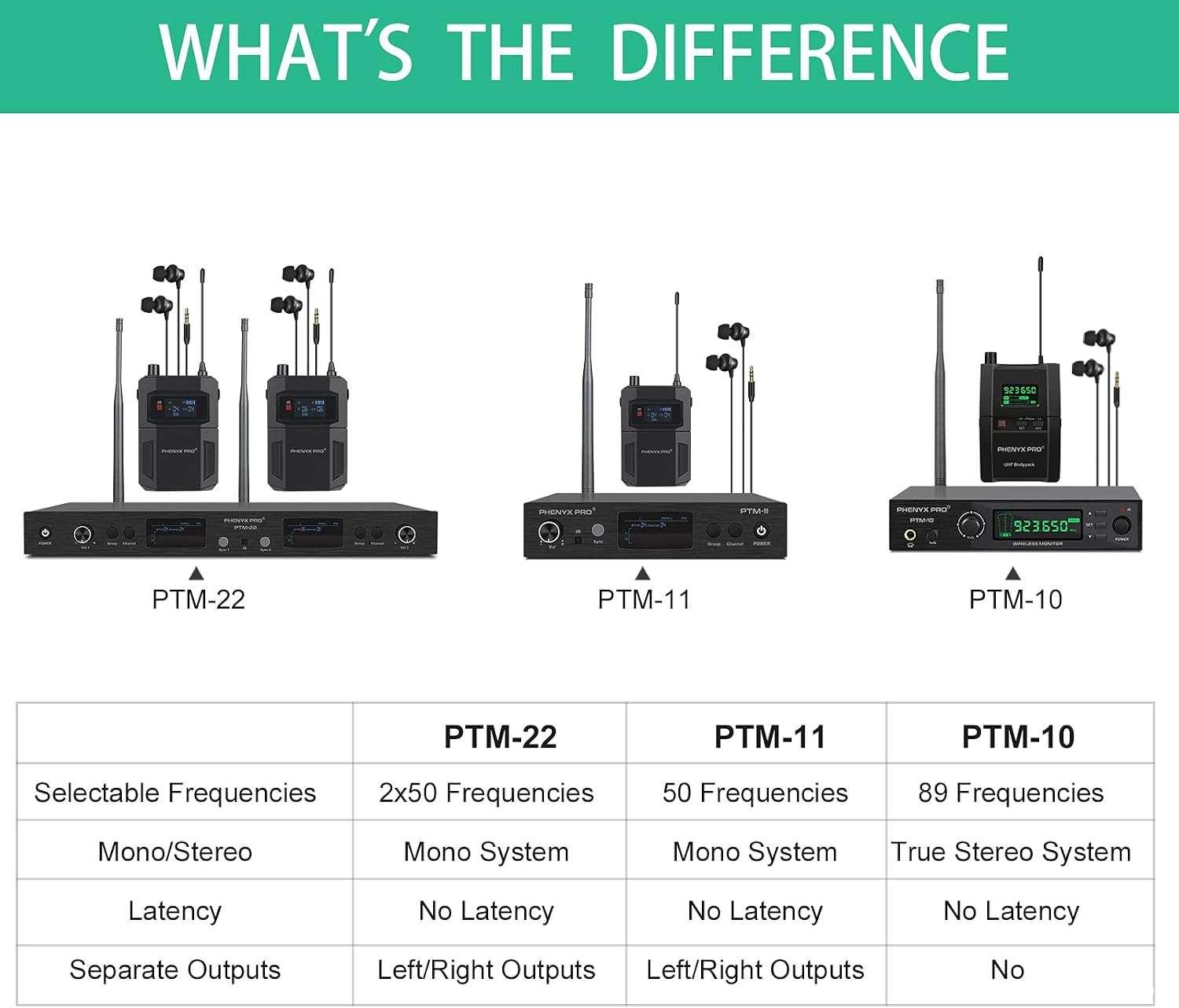
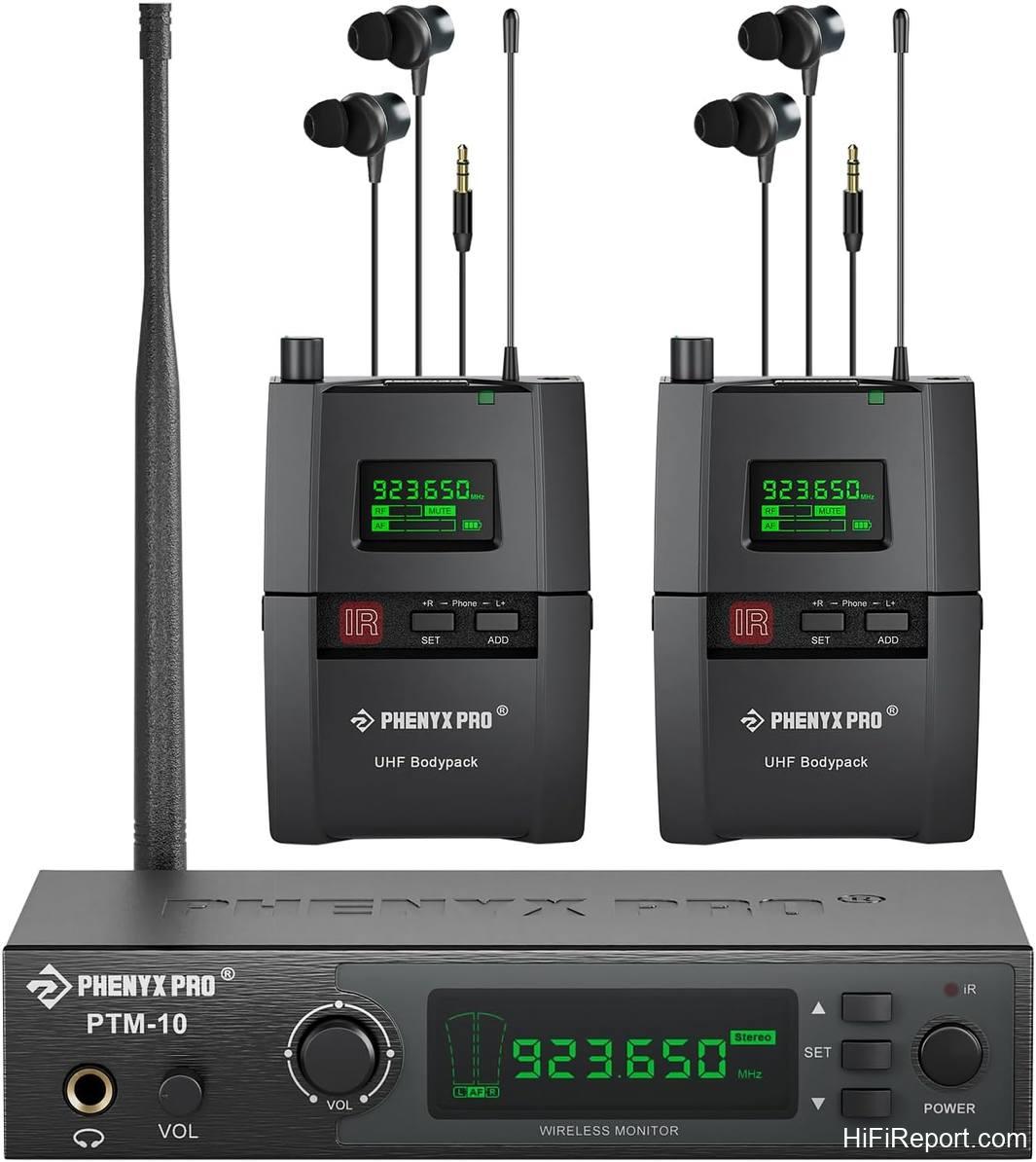
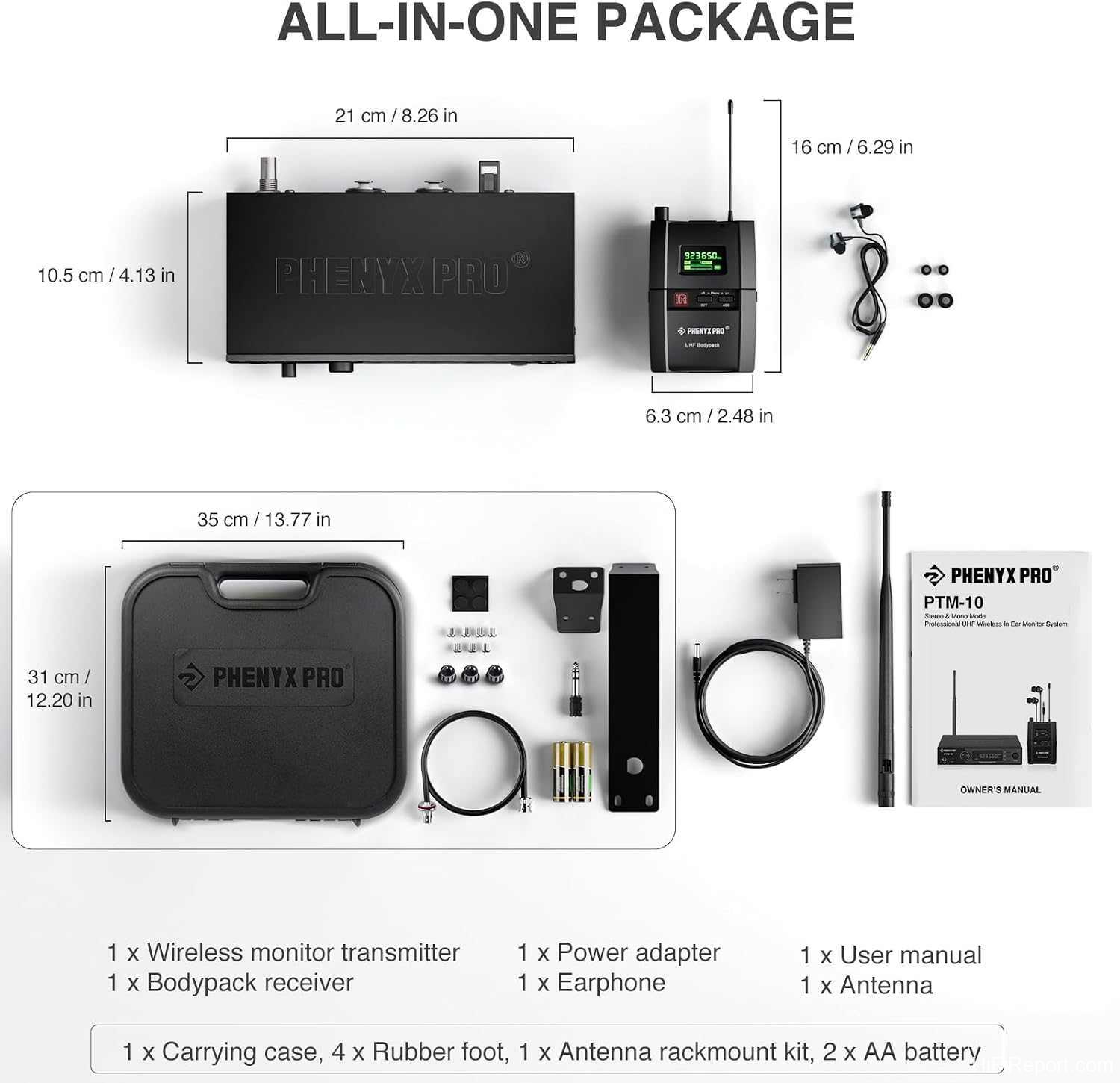
The system pairs a metal rack-mountable transmitter with a plastic bodypack receiver, a pair of basic in-ear earbuds, a padded carrying case, and the rack hardware for a permanent install. It transmits on the 900 MHz band with 89 selectable frequencies, supports up to 5 simultaneous systems, and covers 160 ft (50 m) of range. Stereo and mono monitoring, an EQ toggle, a limiter, a balance control, and a lock function round out the feature set. No frequency scanner is included, a gap most owners notice but few treat as deal-breaking.
Build Quality and Design
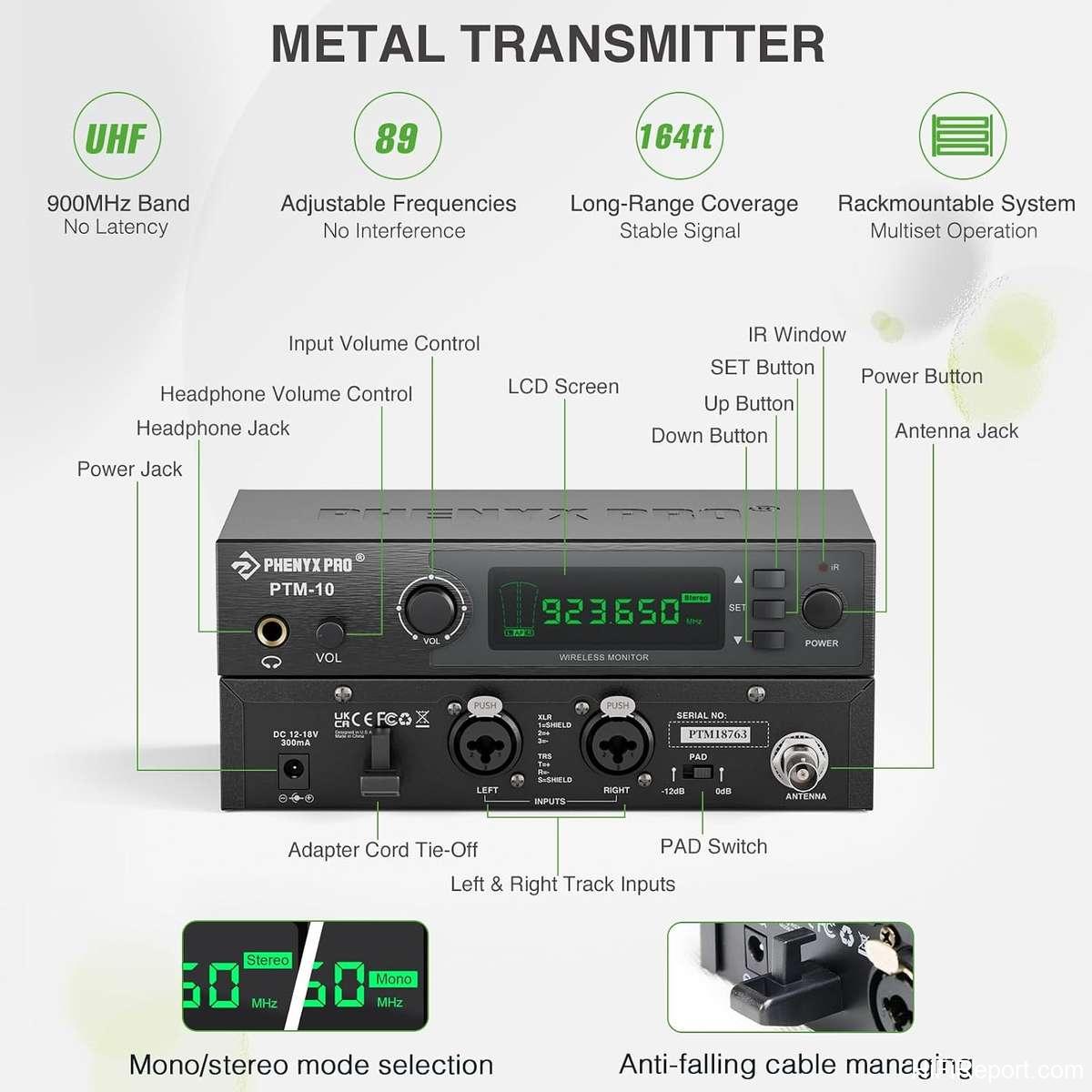
The transmitter is all metal, giving it a solid, serviceable feel whether it sits on a pedalboard or in a rack. The front panel carries an LCD display showing frequency, battery, and signal details. The rear accepts XLR and 6.3 mm hybrid inputs, and an adapter cord tie-off plus removable feet keep cabling tidy in a fixed installation. The rackmount kit in the box lets a tech bolt the unit into a standard rack shelf without sourcing separate hardware.
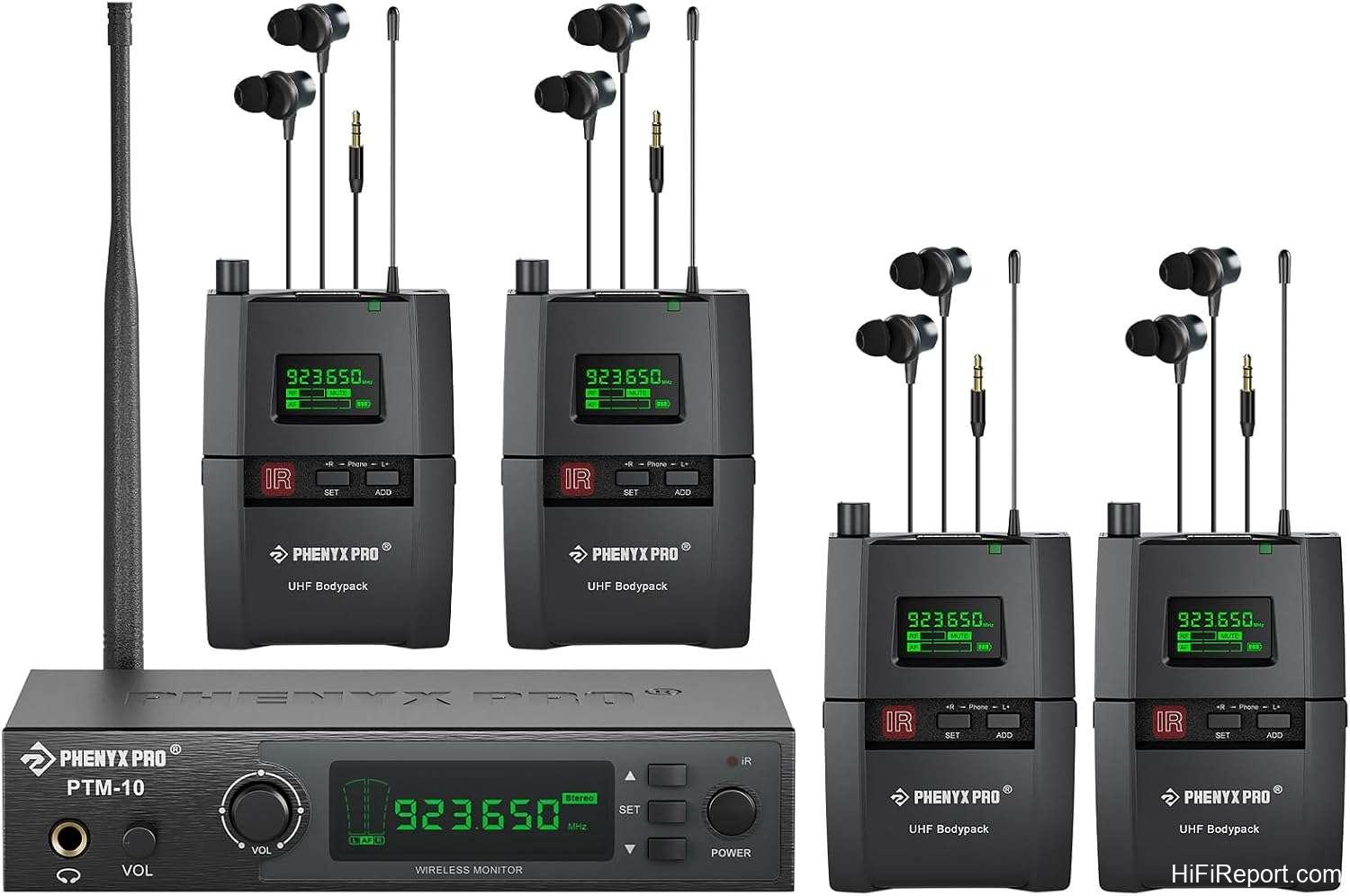
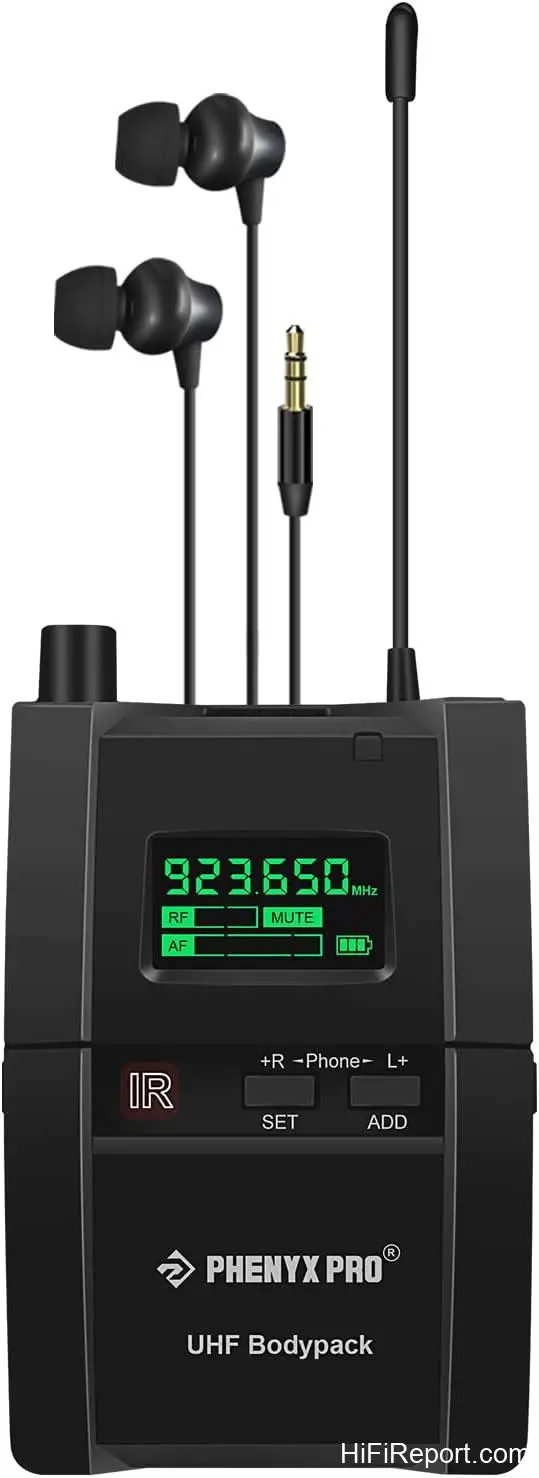
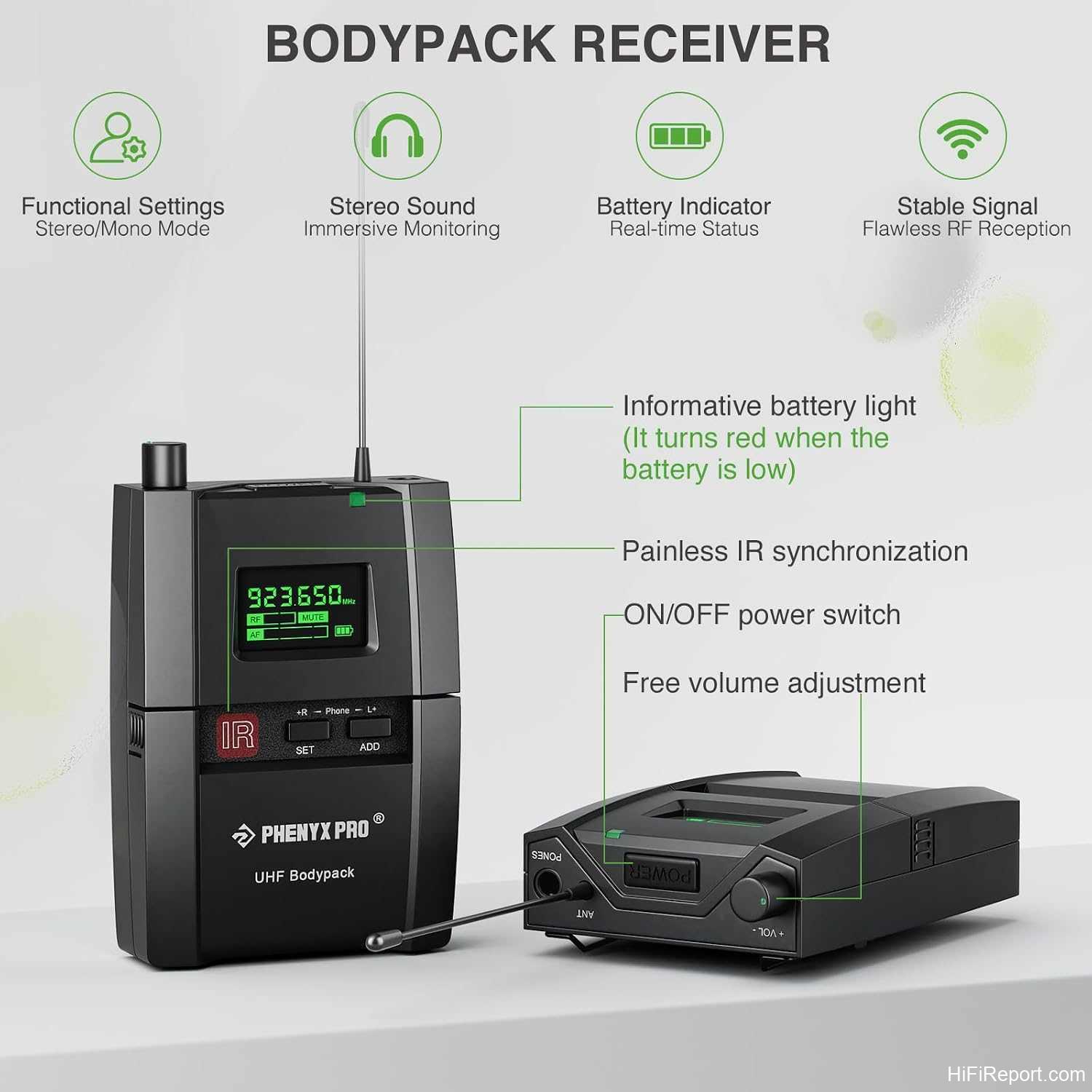
The bodypack receiver is plastic but heavy-duty, with a metal belt clip and its own bright LCD that owners describe as easy to read in low-light stages. One drummer who runs both the PTM-10 and the four-channel PTM-33 side by side notes the PTM-10 bodypack feels more substantial than the PTM-33 clip. The included carrying case is padded and custom-fit, protecting the transmitter, bodypack, earbuds, antenna, and accessories during transport. A Mexican reviewer mentioned the case shell is straightforward plastic and a latch cracked over time, but the fit and padding still keep components organized on the road.
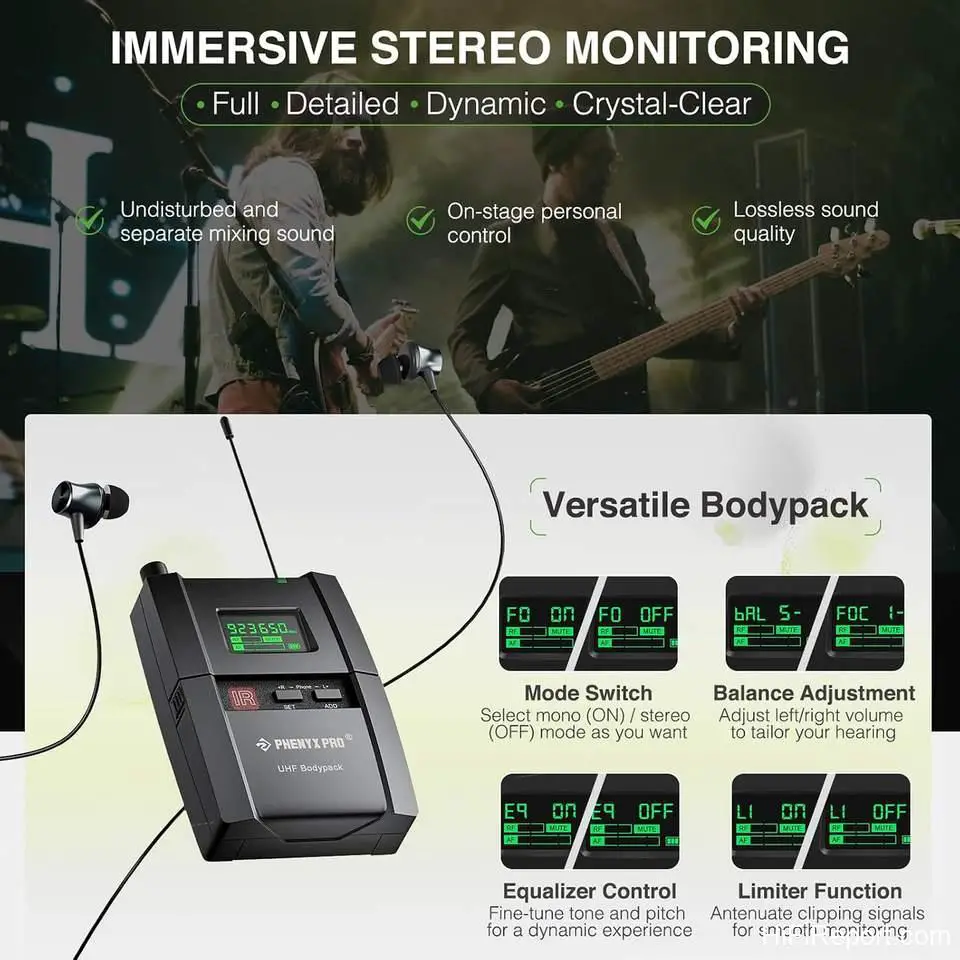
Controls are physical and minimal. The bodypack carries volume, EQ on/off, limiter, left-right balance, lock, and a PAD switch. The lock function freezes frequency and settings against stray touches mid-set. The PAD switch rolls input level down to prevent overload when the source signal runs hot. The transmitter handles frequency selection, input gain, and a configuration sync to the bodypack via infrared.
Wearing Comfort
The bodypack is designed to clip to a belt or a guitar and bass strap. In the review pool, a drummer and a keyboardist in the same band keep their packs permanently on instrument straps rather than belts, which takes repeated stress off the clip. For a four-hour gig, weight is not a recurring complaint across the 723 reviews; the plastic housing keeps the pack light enough that belt fatigue does not surface in any owner report.
The included in-ear earbuds are the weak link on comfort. Multiple owners describe them as adequate for a first try or as a backup, but not comfortable for extended sets. A bass player running the system through noisy stages swaps one stock bud for a smaller ear piece to let ambient stage sound bleed through while keeping pitch reference in the other ear. Most owners who use the PTM-10 long-term replace the stock buds with fitted IEMs from KZ, Shure, or a similar brand, treating the included pair as a first-day stopgap.

Long-session wear comes down to the earbud choice more than the bodypack. A worship leader running weekly Sunday services and rehearsals reports no discomfort after months of use, and a reviewer who tested through a three-hour outdoor gig plus a sound check noted no issues. The bodypack stays out of the way on a belt, and the metal clip does not shift during walking or active performance.
Audio Performance
The PTM-10 delivers clean, functional monitoring that most owners describe as crisp and clear for its class, though critical listeners hear coloration that keeps it from sounding reference-flat. A worship leader in a small church calls the sound “clean and consistent, with plenty of headroom for vocals, acoustic instruments, and click tracks,” and a bass player running it through noisy stages finds it adequate for isolating their part without fighting the front-of-house mix.
In stereo mode, the spatial separation lets a performer pan instruments to their on-stage positions. A drummer who tested the system alongside four other wireless IEMs and a Soundcraft UI 24 digital board said the stereo field was a real shift from the mono mix he had used for years; panning the rest of the band as they appeared on stage gave him a level of mix control he had not had before. The balance control on the bodypack adjusts left and right channel volume independently, so a single stereo feed can be skewed without reworking the source mix.
This review first appeared on hifireport.com. Reproduction without permission is not allowed.
A 2019 review from a user running Shure SE215 earphones instead of the stock buds describes the tonal character as “dull overall, slightly crispy toward the higher end of the spectrum,” with a sense of blurriness in the midrange. That same reviewer noted strange digital-sounding noises that waver in and out as the performer moves in stereo mode; the artifacts disappear in mono. The signal-to-noise ratio carries a low hum when no audio is feeding the unit, but the hum falls below the threshold of perception once music starts playing.
The EQ function is a single on/off toggle, not a multi-band equalizer. A drummer who expected granular frequency adjustments was initially skeptical but ultimately said the toggle “just makes the music sound better,” comparing it to a magic button in photo editing. The limiter prevents clipping when the input signal spikes, and the PAD switch on the bodypack rolls level down for hot sources. For a rehearsal room, a small worship stage, or a speech setup, the tonal character and headroom are more than sufficient. For a critical mix engineer checking a master against a reference chain, the coloration will register.
Noise Cancelling
The PTM-10 has no active noise cancellation; it is a monitoring transmitter and receiver, not a cancellation device. What it provides is passive isolation from the earbuds, which block ambient stage noise and let the performer hear their mix at a level that does not have to compete with the loudest instruments on stage.
The isolation quality depends entirely on the earbud choice. The stock buds seal enough for a lecture or small-room rehearsal, but a bass player who needs to hear both pitch and room simultaneously found them too isolating and switched to a mixed-size setup. For a large outdoor stage or a dense club, users who want the mix to cut through without cranking the volume will want to pair the bodypack with a higher-isolation IEM. The system itself generates no cancellation signal; it feeds the earbuds a clean, level-controlled mix that the performer can trust regardless of what is happening around them.
Battery Life
The bodypack runs on two AA batteries, and two standard AAs ship in the box. In the reviews, a user who tested the stock AA pair for roughly two hours found the battery indicator still reading full charge. A worship leader running a three-hour outdoor gig plus a sound check and a week of casual testing got through all of it on one set, and a 2019 reviewer confirmed a four-hour gig with quality alkaline AAs. One owner switched to rechargeable AAs to cut the long-term cost of disposables.
The transmitter is mains-powered, so only the bodypack draws from batteries. For a weekly rehearsal or a single weekend set, two AAs last the full session with margin to spare. Battery endurance is not the limiting factor in daily use; the limitation is whether you remember to swap or recharge the cells before the next date.
What Customers Are Saying
Owners who rate the PTM-10 five stars cluster around reliability in crowded RF environments, the value of stereo monitoring at this tier, and the completeness of the box. One band running five wireless microphones, four IEM systems, and a Wi-Fi-equipped digital board reported zero crosstalk across a full rehearsal. A worship leader in a small church called the system “rock solid” over months of weekly services and rehearsals, with no tech issues and no distractions for volunteers. The included case, rack hardware, and dual input types get repeated mentions as things that save a setup step.
The complaints point in a different direction. A reviewer who received a unit with a permanently maxed-out left meter went through two rounds of template emails from Phenyx support before the company’s server refused to accept the diagnostic video they sent. That experience is the harshest in the pool. On the audio side, a 2019 reviewer who compared the PTM-10 to a Shure PSM300 found the tonal coloration and stereo-mode digital artifacts unacceptable for critical listening, and described the bodypack manual as failing to cover the available settings. Several owners also note the absence of a built-in frequency scanner, meaning you pick from 89 channels by ear or by trial rather than by automated scan.
Pros and Cons
Pros
- 900 MHz band with 89 selectable frequencies avoids congestion common in the 500 MHz and 2.4 GHz ranges
- Stereo and mono monitoring with independent left-right balance on the bodypack
- Metal transmitter, rackmount kit, and padded carrying case included in the box
- 160 ft range verified by owners testing through walls and outdoors
- EQ toggle, limiter, PAD switch, and lock function cover practical on-the-fly adjustments
- Runs up to 5 simultaneous systems without reported interference
Cons
- No built-in frequency scanner; channel selection is manual
- Stock in-ear earbuds are basic and most owners replace them
- Stereo mode produces digital-sounding artifacts when the performer moves
- Transmitter level meters do not track input signal accurately
- Bodypack belt clip is noted as flimsy in at least one long-term review
- Bodypack manual lacks detail on all available settings
Bottom Line
The PTM-10 suits a small worship team, a rehearsal room, a two- or three-person band, or any speaker and lecturer who wants a clean stereo or mono mix in the ear without a patch cable running across the stage. The metal transmitter, rack hardware, and 89-frequency 900 MHz grid make it a permanent install that will not fight the wireless mics and guitar transmitters already in the room. If you need four independent mono mixes or plan to tour with a full band, the PTM-33 four-channel system in the same family covers that ground. If you are a critical listener who will judge a mix against a reference Shure or Sennheiser chain, the tonal coloration and the stereo-mode artifacts will bother you; pair the bodypack with a quality IEM and work in mono, and the system becomes a reliable personal monitor. For the buyer who wants one unit that sets up in five minutes, survives a load-in, and keeps two ears fed all night, the PTM-10 does that job without drama.
Specifications
- Frequency Band: 900 MHz
- Selectable Frequencies: 89
- Simultaneous Systems: Up to 5
- Range: 160 ft / 50 m
- Inputs: XLR and 6.3 mm hybrid
- Monitoring Modes: Stereo / Mono
- Bodypack Power: 2 x AA batteries
- Transmitter Construction: Metal, rack mountable
- Included Accessories: 1 transmitter, 1 bodypack receiver, 1 in-ear earbuds, 1 power adapter, 2 AA batteries, 1 antenna, 1 rackmount kit, 1 user manual, 1 carrying case
- Display: LCD on transmitter and bodypack
FAQ
Can one PTM-10 serve two performers?
Yes. The system supports two independent mono mixes from a single stereo feed, so two players can share one unit. An owner running this configuration reports no crosstalk or interference between the two ear feeds during regular use.
Will it coexist with other wireless equipment in the room?
Owners running five wireless microphones, four IEM systems, and a Wi-Fi-equipped digital board report zero crosstalk. The 900 MHz band and 89 selectable frequencies keep the PTM-10 clear of the 500 MHz and 2.4 GHz traffic that fills most stage RF environments.
Do I need to replace the included earbuds?
Most long-term users do. The stock buds are described as adequate for a first try or as a backup, but owners who run the system weekly swap in fitted IEMs from KZ, Shure, or a similar brand for better isolation, comfort, and tonal detail.
How many systems can I run at the same time?
The 900 MHz grid supports up to 5 simultaneous PTM-10 units without reported interference. One band tested four IEM systems alongside five wireless microphones in a Wi-Fi-dense rehearsal space and logged no dropouts across a full session.
This review first appeared on hifireport.com. Reproduction without permission is not allowed.

- STEREO MONITORING: This true stereo wireless in-ear monitor system features stereo/mono mode selection for different scenarios. Mono mode delivers more focused tonal feedback for consistent sound performance. Stereo monitoring offers a richer spatial representation and directional clarity, allowing performers to accurately perceive the origin of sounds. Users can enjoy the full, dynamic, crystal-clear, and immersive stereo sound quality from the in ear monitor system
- WIRELESS PERFORMANCE: Operating on the stable 900MHz UHF frequency band, the stereo wireless IEM system delivers clear, low-latency audio with excellent resistance to interference and dropouts. Featuring 89 tunable frequencies, it allows seamless multiset operation with up to 5 systems simultaneously. Reliable coverage of up to 160ft/50m ensures clear, smooth, and stable transmission, making it ideal for studio, stage, speech, exhibit, and lecture environments.
- MULTIPLE FUNCTIONS: The powerful wireless in ear monitor features multiple practical functions. Tailor your monitor mix's tone and pitch with the EQ function. Adjust the left/right channel volume in stereo mode via the balance function. Use the limiter function to prevent signal overload and avoid distortion. And Safeguard your settings against unintentional adjustments with the lock function. Moreover, the PAD switch on the in ear monitor wireless helps prevent overload and ensure clarity