
PHILIPS Wired Earbuds with Microphone Review
These Philips wired earbuds earn an overall Good rating for owners who want a simple, no-battery in-ear pair that handles phone calls and casual music without the ritual of charging. The single biggest reason for that grade is straightforward: the 14.2 mm neodymium drivers deliver more mid-range warmth and bass depth than most basic wired earbuds at this tier, and the wired architecture means the earbuds keep working for as long as the connected device has power.
The caveats are fit-related. The hard-plastic shell and shallow stem make the ear-canal seal inconsistent, which drags down bass response and makes comfort ear-dependent. Owners who lock in a reliable seal from these earbuds tend to be pleasantly surprised by the sound; those who cannot hear a flatter, thinner output that masks the driver’s strengths.
The Short Version
The Amazon aggregate rating sits at 4 out of 5 stars across 1,058 reviews. The earbuds earn a Good overall: the 14.2 mm neodymium drivers produce warm mids and bass that outperform most bundled phone earbuds, and the wired design reduces the need for any battery or charging. Fit is the main caveat. The hard-plastic shell and shallow stem create a seal that works well for smaller ear canals but leaves larger ears with a loose, flat-sounding result. Buy these for calls and casual music if your ears accept the fit; skip them if you need a reliable seal for bass-heavy listening or a right-angle jack for pocket-carrying phones.
The Scoreboard
- Design and Comfort: Fair — Hard-plastic shell and shallow stem create an inconsistent ear-canal seal that varies significantly from ear to ear.
- Sound Quality: Good — Warm mids and strong bass when the seal holds; recessed treble and bass collapse without it.
- Noise Cancelling and Isolation: Fair — Passive occlusion only, with no active cancellation and effectiveness tied entirely to the seal.
- Run Time and Charging: Great — Wired design means no battery, no charging cycle, no runtime limit beyond the connected device.
- Microphone and Calls: Fair — Clear voice transmission for calls, but the inline control button has a documented failure mode under pocket stress.
Design and Comfort
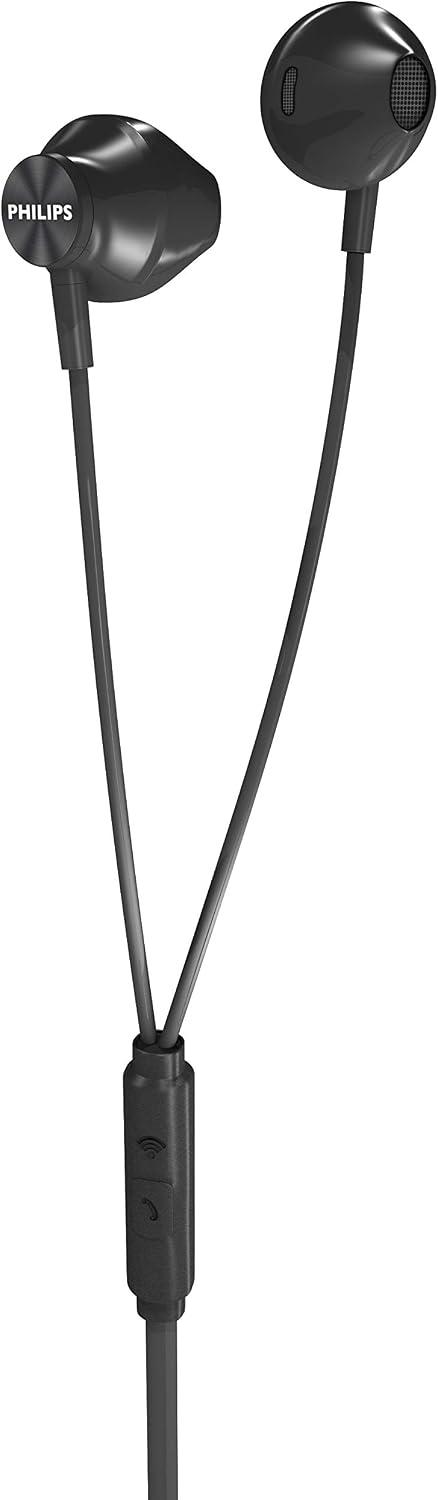
The Philips wired earbuds use a hard-plastic shell with a short stem that enters the ear canal just enough to attempt a seal. The bulk of the unit rests on the outer ear while the stem tip presses against the canal wall. Total weight sits at 62 grams for the complete set, light enough to forget during a jog or a long commute. The earbuds are compact and shaped around a generic ear-geometry template, so they fit a range of ear sizes without the need to swap tips or add foam.
Comfort is the split decision here. Owners with smaller ear canals report a snug, secure fit that stays put through cycling, walking, and sleep. The hard plastic does not flex, so ears that need a softer contact point will feel a pressure ridge where the shell meets the concha. One owner noted they could sleep in the earbuds without discomfort, while another described pulling and wiggling the ear to open the canal enough for the stem to seat properly. The material is rigid, not the pliable silicone or foam you find on in-ear monitors, so the fit is a binary outcome: it works or it does not, depending on ear shape.
The cable is described as soft and flexible, designed to resist knotting and tangling. It terminates in a straight 3.5 mm plug rather than a right-angle connector. For phones that sit face-down in a pocket, the straight jack can bend against the pocket edge, and at least one owner flagged this geometry as a design flaw that contributed to premature wear on the inline control button.
Copyright hifireport.com. Republishing, scraping, or reselling this text is prohibited.
Grade: Fair — The hard-plastic construction and shallow stem produce an ear-dependent seal that suits smaller canals well but leaves larger ears with a loose, unstable fit.

Sound Quality
The Philips wired earbuds deliver a warm, bass-forward signature that outperforms expectations for a basic wired pair, provided the user achieves a consistent ear-canal seal. Without that seal, the sound flattens dramatically and loses most of its lower-frequency energy, collapsing into a thin, mid-heavy output that sounds closer to a generic earbud than the warmer unit the drivers are capable of producing.
Bass and Mids
The 14.2 mm dome drivers use neodymium magnets, which concentrate the magnetic field for greater voice-coil sensitivity and a more controlled bass response. The result is a low end that owners describe as punchy and, in some cases, almost too prominent out of the box. Mids carry a natural density that makes instrument separation and vocal presence stand out, and several reviewers noted the tonal curve reminded them of older Philips in-ear models. The sound-absorbing holes in the driver housing add a layer of texture that keeps the bass from sounding smeared, giving the low end a defined shape rather than a bloated one.
Treble and Overall Balance
Treble is the weak flank. The upper register runs quiet and somewhat recessed, which means cymbals, violin overtones, and high-end detail get buried behind the mids and bass. Owners who can access an equalizer on their phone can dial back the bass and lift the highs to reach a flatter, more neutral curve. Those without an equalizer will find the default tuning better suited to music with a strong low-end presence than to speech-heavy content like podcasts or audiobooks. For talk-heavy material, the muffled treble can make voices sound slightly hollow.
Grade: Good — Warm mids and strong bass when sealed; recessed treble and seal-dependent bass pull the score below Great.
Noise Cancelling and Isolation
The Philips wired earbuds provide no active noise cancellation; isolation comes entirely from how well the hard-plastic shell and stem occlude the ear canal. In practice, that means the isolation is passive and inconsistent. Owners who achieve a full seal report a noticeable hush of ambient noise, enough to make outdoor commutes and gym sessions tolerable. Owners who cannot seal the canal get minimal occlusion, and the sound of surrounding traffic or conversation comes through almost as if the earbuds were off.
Because there is no active cancellation circuit, there is no battery draw, no power button, and no mode selector. The earbuds are purely passive in their noise handling. The hard-plastic stem, being small and non-compressible, limits how tightly it can press against the canal wall. For ears that shape well around the stem, passive isolation is adequate for a wired earbud at this tier. For ears that do not, the isolation advantage over simply not wearing earbuds is marginal.
Grade: Fair — Passive isolation only, with no active cancellation; effectiveness varies widely depending on whether the user can achieve a canal seal.
Run Time and Charging
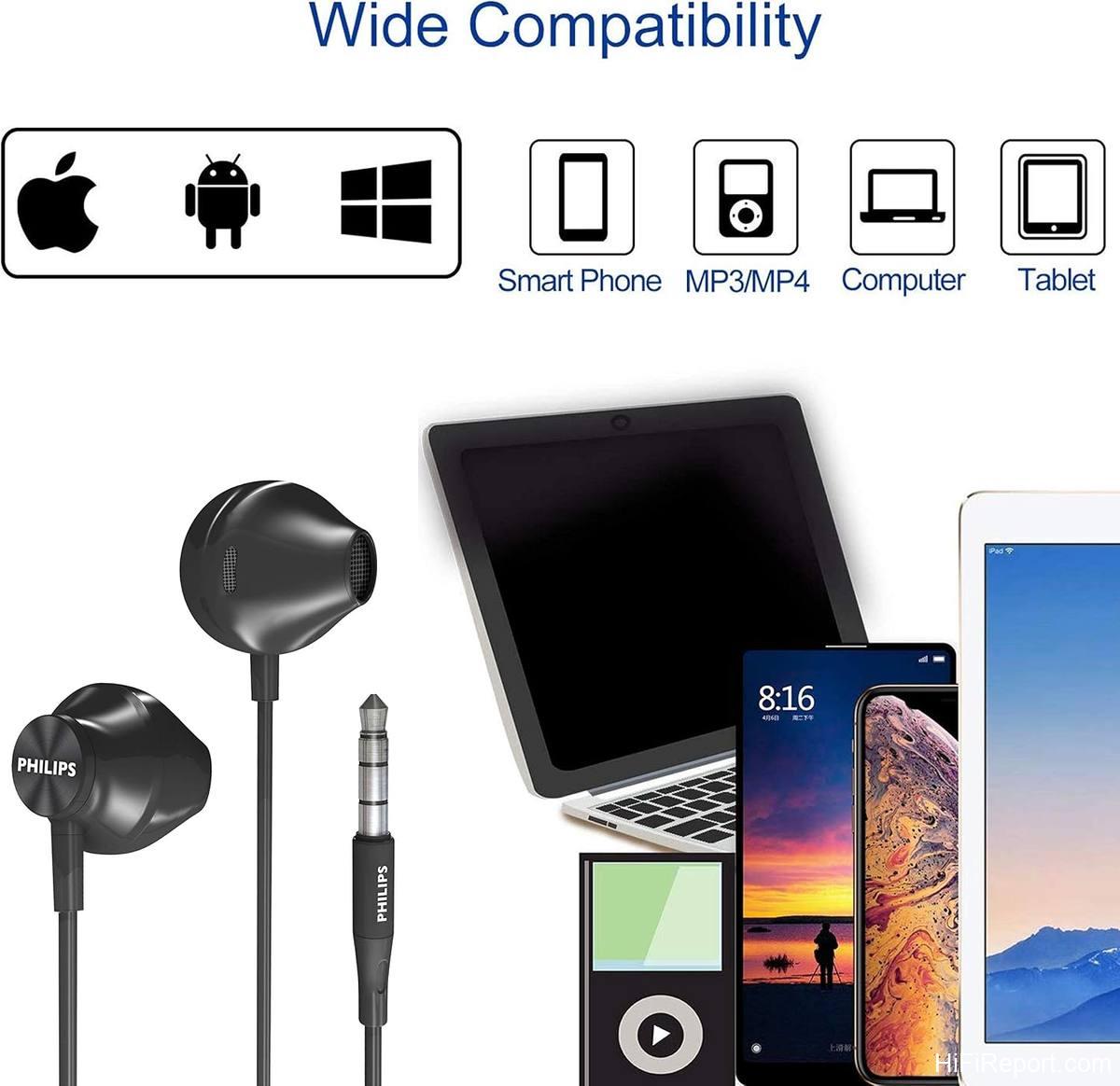
The Philips wired earbuds have no battery and no charging mechanism, because they are a wired product. Power comes directly from the connected phone, tablet, or computer through the 3.5 mm jack, so the earbuds play for as long as the source device has power. There is no charge cycle to monitor, no USB cable to pack, no standby-drain worry, and no firmware to update.
The practical implication is simple: the earbuds will not stop mid-listen because of a depleted cell. A commuter who listens for a full workday on a single phone charge will not encounter the mid-ride shutdown that a wireless pair might. The 1-meter cable length is short enough to keep the earbuds close to a phone in a front pocket without the cable pulling taut, and long enough to reach a desk-mounted computer. The trade-off for zero-charging convenience is the tether itself: the cable restricts free movement in ways wireless earbuds do not, and the straight 3.5 mm plug can snag on jacket zips or pocket edges.
Grade: Great — No battery, no charging, no runtime limit; the wired architecture removes the entire charging-maintenance category.
Microphone and Calls
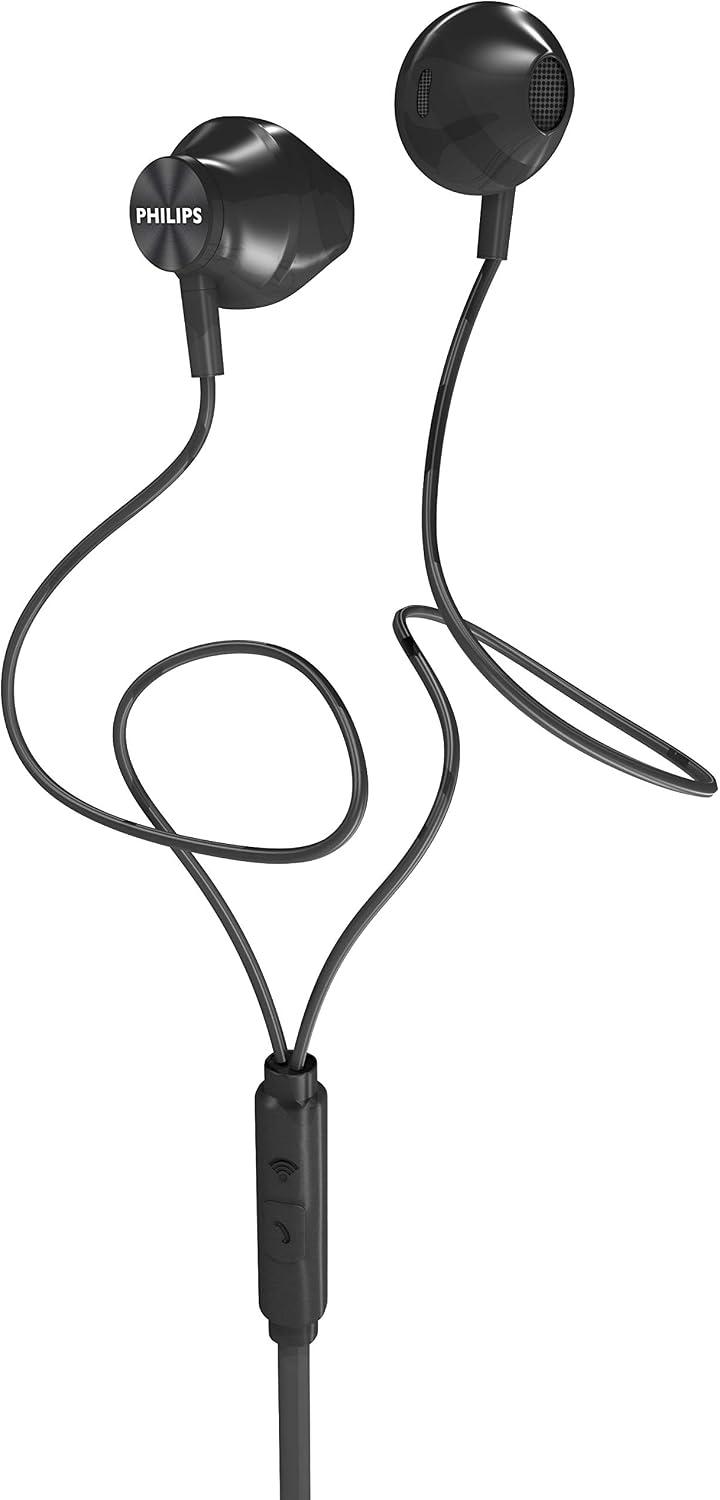
The Philips wired earbuds include an inline microphone on the cable, and voice call quality is the strongest feature in the package. Owners use them regularly for video conferencing, audiobook narration, and phone calls, and report that the transmitted voice comes through clearly and at a consistent level. One owner noted that after the earbuds went through a wash cycle, people on the other end of calls could still hear them without issue, which points to the mic’s durability under mild physical abuse.
The inline control button, which handles call-answering and playback, is the weak point. At least one owner reported the button stopped responding after roughly two months of use as a backup pair. The straight, non-L-shaped 3.5 mm plug compounds the problem: when a phone rests face-down in a pocket, the cable exits the jack at a fixed angle, and the lever arm on the control button takes repeated torque. Over time, that torque fatigues the button mechanism. For users who primarily listen to music and take occasional calls, the mic holds up. For users who field a high volume of calls and rely on the inline button for answer and mute, the durability concern is real.
Grade: Fair — Clear, durable voice transmission, but the inline control button has a documented failure mode under repeated pocket stress.
How It Compares
Philips is a name that has moved through the American consumer-electronics market under several identities. The company operated under the Norelco and Magnavox labels in the United States for decades before reuniting under the Philips brand after acquiring Philco in 1981. That long history means the wired-earbud line competes in a category where every major phone maker still bundles a basic in-ear pair with the device, and Philips positions itself on the free-standing, non-bundled channel.
No dedicated third-party head-to-head comparison of this specific model appeared in the available research. The closest reference point is the product’s own spec sheet: a 14.2 mm neodymium driver, 32-ohm impedance, 112 dB sensitivity, and a 1-meter cable. Those numbers place the earbuds squarely in the entry-level wired tier, comparable to the in-ear pairs that ship in phone boxes. Owners who have used both tend to rate the Philips a half-step above the bundled set, citing slightly warmer mids and a more structured bass, but not a generation ahead of the earbuds included with a mid-range phone.
The Crowd’s Score
The Amazon aggregate rating stands at 4 out of 5 stars, drawn from 1,058 reviews. That score sits in the “solid product with minor gripes” band, and the review text explains exactly where the satisfaction and the friction come from.
On the praise side, owners consistently call out the sound quality as a surprise for a basic wired pair. Warm mids, punchy bass, and clear vocals top the positive themes. The light 62-gram weight and compact shape earn repeat mentions from people who use the earbuds for running, cycling, and sleeping. The microphone’s clarity on calls and in video conferencing is another frequent positive, and durability under light abuse, including a wash cycle, also shows up.
On the criticism side, the seal-and-fit issue dominates. Several owners describe a struggle to get the hard-plastic stem to seat properly, resulting in a flat, bass-free sound that makes the pair feel like a generic earbud rather than the warmer unit the driver specs promise. The straight 3.5 mm plug draws complaints from pocket-carry users, and the inline button failure is a recurring, if less frequent, negative. One owner reported the driver grill detaching from the housing, which they flagged as a physical hazard if it had happened while the earbud was in the ear.
The 4-star aggregate aligns with the Report Card. Sound Quality earns Good because the warm-mid, bass-forward tuning is a genuine strength for the tier, held back by the treble gap and seal dependency. Design and Comfort is Fair because the fit is ear-dependent and the hard plastic does not adapt. Noise Isolation is Fair because it is purely passive. Run Time and Charging is Great because the wired architecture removes the category. Microphone and Calls is Fair because voice quality is strong but the control button carries a reliability gap.
Strengths and Weaknesses
Strengths
- Neodymium 14.2 mm drivers produce warm mids and a bass response that outperforms most bundled phone earbuds
- Wired design means no battery, no charging cycle, no firmware updates, and no standby drain
- Microphone transmission stays clear through casual physical abuse, including a wash cycle
- Total weight of 62 grams keeps the pair light enough for extended sessions and sleep use
- Soft, flexible cable resists knotting and tangling during daily carry
Weaknesses
- Hard-plastic shell and shallow stem create an inconsistent ear-canal seal that varies ear to ear
- Treble is recessed; owners without an equalizer find the default tuning unsuitable for speech-heavy content
- Straight 3.5 mm plug stresses the inline control button when a phone sits face-down in a pocket
- No active noise cancellation; isolation is purely passive and seal-dependent
- The driver grill is a reported failure point, with one owner’s grill detaching from the housing
Verdict
The Philips wired earbuds are a Good overall product for a specific buyer: someone who wants a simple, no-battery wired in-ear pair for phone calls, commuting music, and light exercise, and whose ear canal accepts the hard-plastic fit. The 14.2 mm neodymium drivers put out more bass and mid warmth than the bundled earbuds most phones still ship, and the wired architecture removes the entire class of battery and charging problems that plague wireless earbuds. The no-maintenance design is the product’s quiet superpower.
Where the earbuds stumble is in the physical fit. The seal is binary and ear-dependent, and for larger canals the bass collapses and the already-recessed treble turns the signature into a thin, mid-only output. The straight plug and the inline button’s torque vulnerability add a durability question mark for heavy call users. If your ears accept the fit and your use case is calls plus casual music, these earbuds earn their 4-star aggregate and are a sensible, low-friction purchase. If you need a reliable seal for bass-heavy listening or a right-angle jack for pocket-carrying phones, look elsewhere.
Copyright hifireport.com. Republishing, scraping, or reselling this text is prohibited.
Spec Sheet
- Driver: 14.2 mm neodymium dome
- Frequency response: 20 to 20 000 Hz
- Sensitivity: 112 dB
- Impedance: 32 ohm
- Maximum power input: 5 mW
- Cable length: 1 m
- Weight: 62 g
- Color: Black
- Connectivity: 3.5 mm wired
Frequently Asked Questions
Do these earbuds work with both Android and Apple phones?
Yes. The 3.5 mm wired connection is compatible with the majority of Android and Apple devices that include a headphone jack. No Bluetooth pairing, companion app, or adapter is needed; plug the jack into the device and the earbuds work immediately.
Will the hard-plastic fit hurt my ears during a run or workout?
Most owners find the 62-gram set comfortable through cycling, jogging, and extended wear, and some sleep in them. The hard shell can create a pressure point in the concha for owners of larger ear canals, and the shallow stem may not seal consistently. Try the earbuds during a short walk before committing to a long workout.
Do I need an equalizer to get good sound from these earbuds?
The default tuning is bass-forward with recessed treble, which suits music with strong low-end content. For podcasts, audiobooks, or talk radio, the muffled upper register can make voices sound hollow. A phone equalizer that lifts the highs and trims the bass produces a flatter, more even curve. Without one, speech-heavy content is the weakest use case.
Can I wash these earbuds or will that damage the microphone?
One owner ran the earbuds through a wash cycle and reported that call quality was unaffected afterward, with listeners on the other end hearing no change. The hard-plastic shell tolerates mild moisture, but the driver grills and the 3.5 mm jack contacts are not sealed, so repeated submersion risks corrosion on the contacts and debris in the driver housing.
