
Piega ACE Series Review
These days, experiencing cinematic sound no longer requires a trip to the movie theater. With streaming platforms like Netflix and Disney+ offering Dolby Audio standards, many are starting to consider building home theater systems. To enhance the viewing experience for shows and movies, the immediate priority is finding an excellent multichannel speaker setup. But here’s the catch: modern households often aren’t limited by budget as much as they are by space.
Building a home theater system inevitably means setting it up in the living room, and as living spaces shrink, accommodating a full 5.1 channel speaker system requires careful consideration not just of size, but also aesthetics, ensuring seamless integration with interior decor.
So, are there compact and stylish theater speakers on the market? Absolutely. However, such speakers are typically positioned as lifestyle audio products, and their acoustic design often doesn’t receive the same meticulous attention as traditional loudspeakers. While they might satisfy convenience, they frequently compromise on sound quality and performance.
Introducing the Piega ACE Series
Recognizing this need, Swiss Hi-End speaker manufacturer Piega recently introduced the ACE series, a multichannel theater speaker line. It boasts exquisite styling and a friendly footprint, but more importantly, it inherits the acoustic design principles of their higher-end speakers, allowing you to enjoy Piega’s Hi-End level sound performance with minimal spatial compromise.
Piega ACE Series Overview and Design Philosophy
The Piega ACE series comprises just three models: the ACE 50 floorstanding speakers, the ACE 30 bookshelf speakers, and the ACE Center channel speaker. The moment I first saw the Piega ACE, I was instantly captivated by their minimalist design. Their form is the work of Swiss designer Stephan Hürlemann, and the design philosophy diverges significantly from traditional speakers.
A Closer Look at the ACE 50
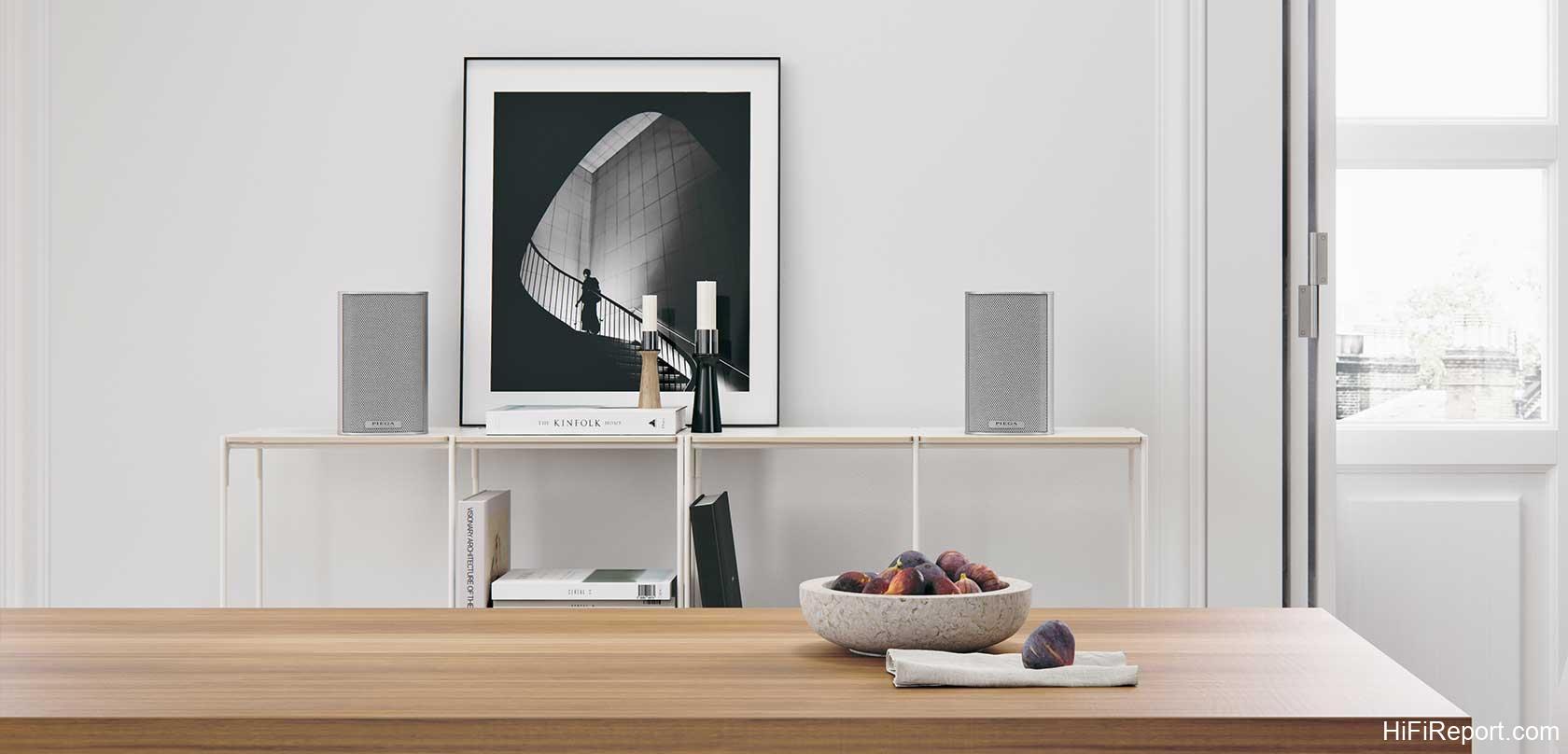
Take the main ACE 50 speakers, for instance: their cabinets are entirely crafted from aluminum alloy and feature a slender, elongated form. They eschew the conventional boxy structure for a tear-drop shape, wider at the front and narrower at the back. This design offers numerous advantages. First, it maximizes space efficiency, saving valuable placement area. Secondly, it reduces sound wave diffraction interference, enhancing sound wave dispersion to improve soundstage performance.
Concurrently, it means there are absolutely no parallel surfaces inside the cabinet, drastically reducing internal standing waves and resulting in purer sound quality.
To provide a stable foundation for the cabinet’s sound reproduction, the ACE 50 comes with a circular aluminum alloy base plate. During installation, I noticed a grooved structure on the base plate that allows for easy alignment with the speaker base, and the screws fasten precisely. This speaks volumes about the excellent metalworking craftsmanship, which also helps reduce cabinet resonance.
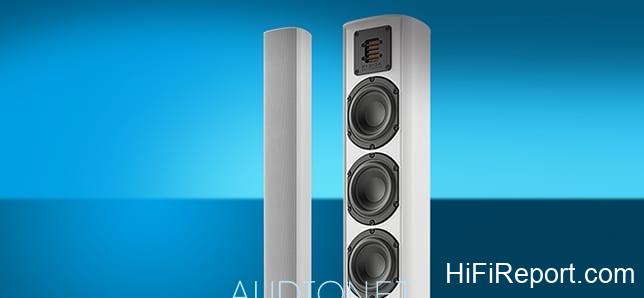
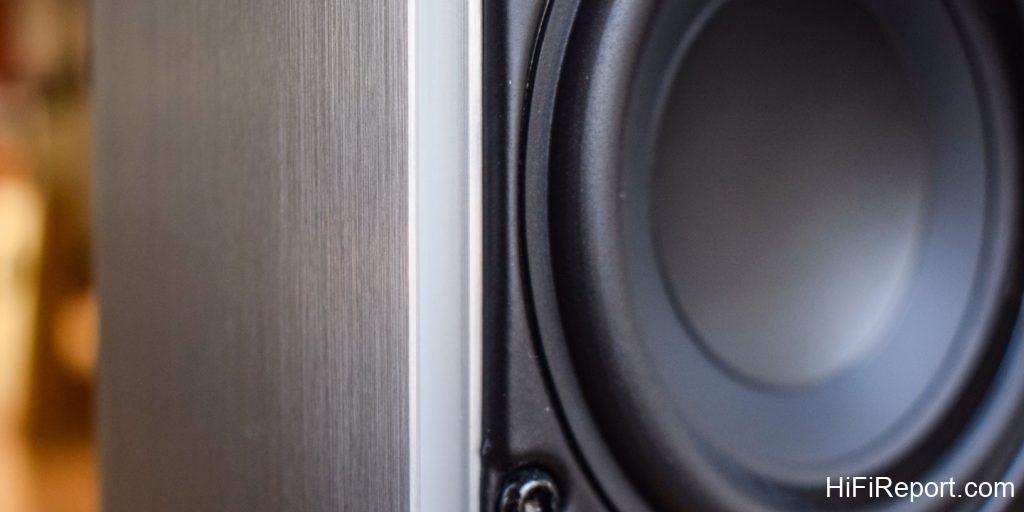
Despite not being heavy, with each speaker weighing only 12kg, tapping the cabinet reveals its solidity, lacking the typical vibrations found in metal enclosures. Touching the surface gives a cool, premium feel. The speakers are available in three colors: black, white, and silver. The classic silver surface is oxide-treated with a delicate hairline finish. The refined, minimalist texture makes the speakers resemble beautiful furniture.
I imagine they will appeal not only to audiophiles but also be adored by the lady of the house.
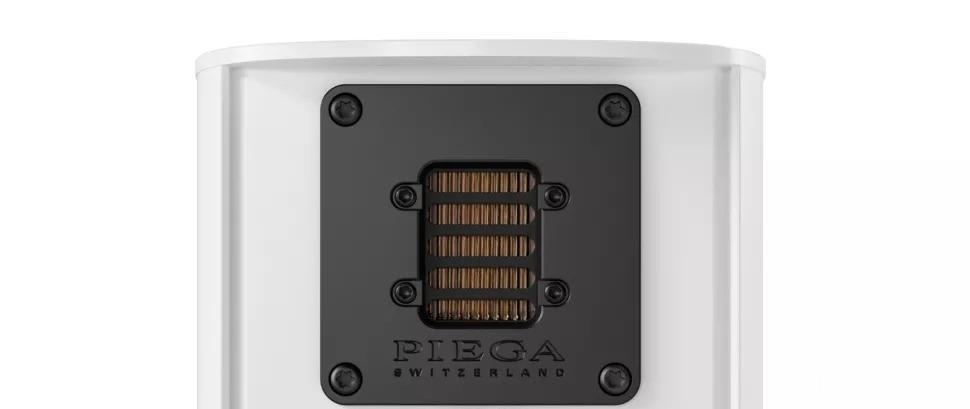
The ACE 50 speakers feature a three-way, four-driver configuration. While they appear simple and elegant on the surface, removing the front grille reveals a remarkably sophisticated driver structure. The bass reflex port is located at the front, making them convenient for placement close to a wall. Furthermore, if you are familiar with Piega speakers, you know they are experts in ribbon drivers. Unlike typical soft dome tweeters, a ribbon diaphragm is a thin aluminum foil.
Besides boasting low internal resistance and high speed, the diaphragm area is significantly larger than a soft dome, requiring minimal vibration to move air and produce richer musical details. Theoretically, it’s a more ideal diaphragm form. Historically, Piega’s top-tier speakers have utilized ribbon drivers not only for the tweeter but even for the midrange, often designed in a coaxial structure, representing one of the most complex ribbon driver manufacturing processes in the industry.
While the ACE series doesn’t incorporate their proprietary coaxial ribbon driver, it does employ an AMT-1 ribbon tweeter. This is paired with one 120mm MDS midrange driver and two 120mm MDS woofer units. The midrange and woofer units are installed as closely as possible to minimize the distance, which theoretically allows for smoother integration between the mid and low frequencies. The edges of the drivers are flush with the baffle, achieving a “baffle-less” state.
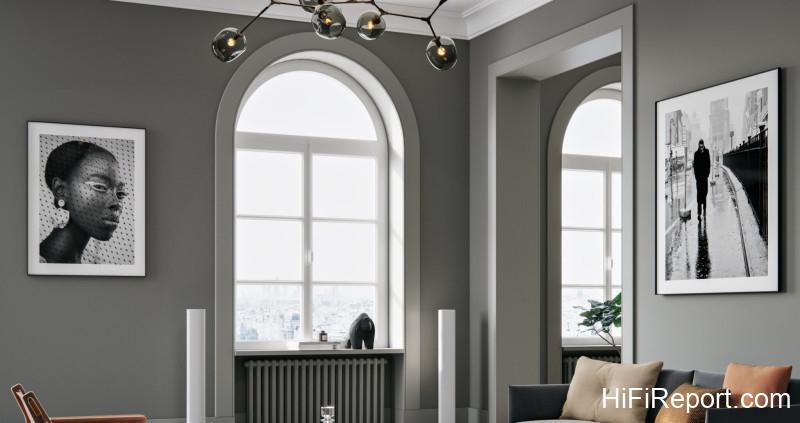
This also helps reduce baffle reflection interference, enhancing soundstage depth. Without removing the dust grille, one might easily mistake the ACE 50 for a simple lifestyle speaker, completely unaware of the meticulous internal engineering at play.
The Versatile ACE 30 Bookshelf
Next, let’s look at the ACE 30 bookshelf speakers. They sport a two-way, two-driver configuration, sharing the same aesthetic as the ACE 50 and featuring identical driver types, including one AMT-1 ribbon tweeter and one 120mm MDS driver handling the mid-bass duties. In essence, they resemble the top section of the ACE speakers detached.
Besides serving as surround channels for the ACE series, the ACE 30 can also be used as satellite speakers for desktop audio users, paired with a Piega subwoofer to form a 2.1 channel system, thereby achieving more complete sound quality.
The Crucial ACE Center
Finally, we examine the ACE Center channel speaker. It employs a two-way, three-driver configuration, also featuring one AMT-1 ribbon tweeter and two 120mm MDS mid-bass drivers. Unlike the others, the ACE Center has a sealed cabinet structure and a sensitivity of 87dB. Although it requires more power to drive compared to the main speakers, this makes perfect sense upon reflection. We know that in theater sound, nearly 80% of the effects originate from the center channel.
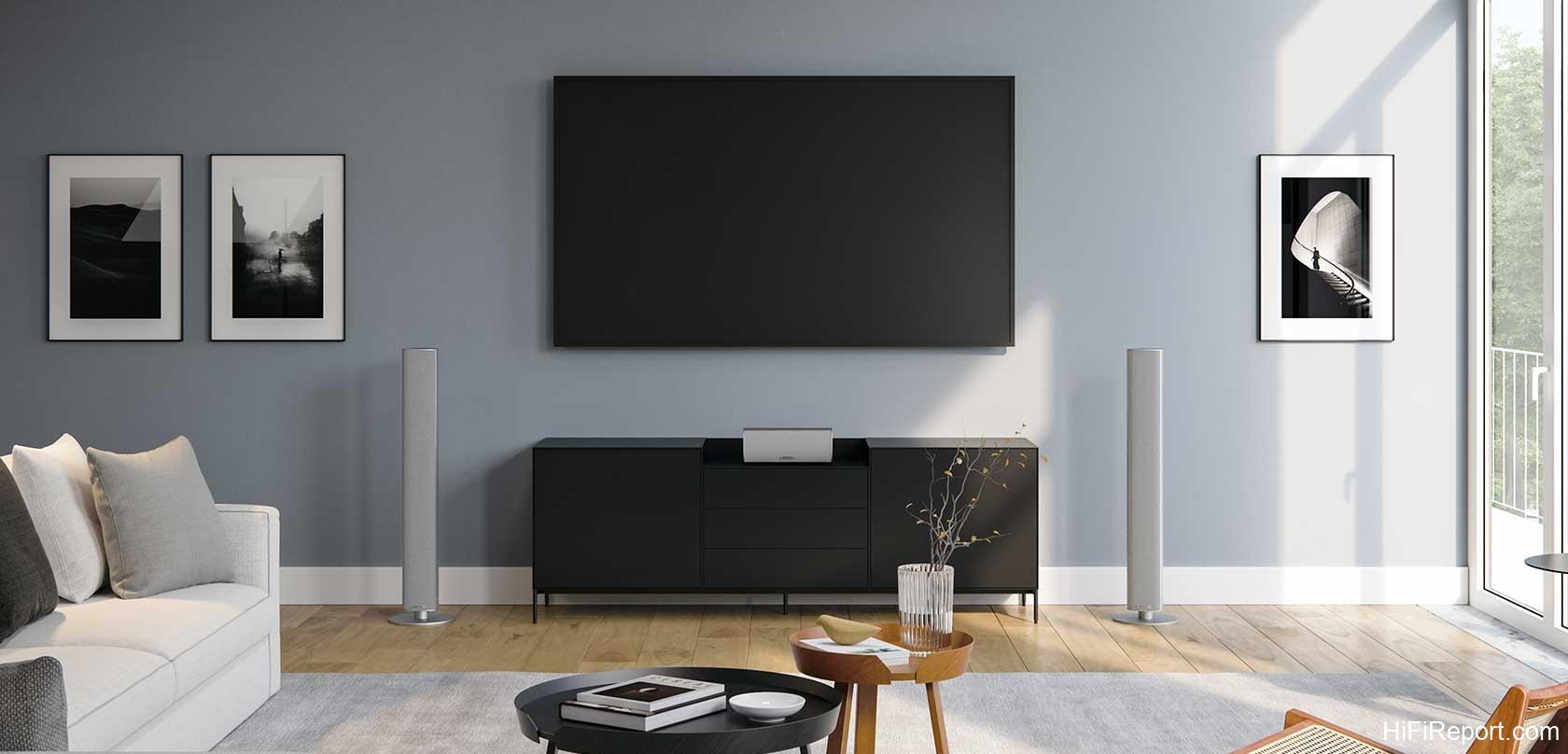
The sealed structure of the ACE Center theoretically delivers purer mid and low frequencies, making dialogue clearer. Furthermore, using completely identical drivers across all five speakers ensures smoother sound effect transitions.
Testing the ACE Series Performance
For the actual testing, I used the latest Denon AVR-A1H flagship AV receiver to drive the ACE speakers, paired with two SVS subwoofers from our office to form a 5.2 channel system. Following my usual routine, I first auditioned the ACE 50’s two-channel music performance in pure direct mode.
Impressive Music Reproduction
Frankly, upon first seeing the ACE 50 speakers with their slender profile, I had some doubts, fearing that speakers of this size might not be able to fully reproduce sound energy and quality in our large listening room. To my surprise, the moment the ACE 50 began to play, I was utterly astounded! In our roughly 7-ping (approx. 23 sqm) space, the speakers not only sounded effortless but also delivered sound energy that was full and cohesive.
What impressed me even more was that despite the ACE 50 being constructed entirely of metal, the sound had no hint of coldness; instead, it sounded warm and rich with body.
Playing Hilary Hahn performing Bach’s Violin Sonata No. 1, I could feel the rich harmonic details layering to form a soft musical shape, vividly delineating the contours of the instrument. The violin lines were focused and transparent, completely undiluted in the large space. I could hear the delicate texture of the bow hair and the woody resonance, the sound imbued with a gorgeous luster, devoid of any sharpness.
At the same time, the ACE 50’s soundstage was remarkably open, with excellent depth, creating separation between instrument positions and enriching the details of the hall’s acoustics. In sections where Hilary Hahn played rapidly, the bowing texture remained consistently clear and distinct, demonstrating the speakers’ excellent transient response.
When I played “Last Train Home” by John Mayer, the ACE 50 also showcased abundant energy, especially the bass effects, which completely exceeded my expectations. The electric bass in the track was relaxed, full, and incredibly elastic, with abundant quantity. It made me get up multiple times to confirm the subwoofers were not active before being certain the ACE 50 was producing the sound. Within the speakers’ deep soundstage, the musical presence remained very full.
Even though the vocals were positioned slightly further back, I could still hear the subtle nuances of the performance. This setup, in fact, further highlighted the layers of the music, achieving a level of performance utterly unexpected from speakers of this size!
Powerful Cinematic Experience
Following the music test, I put the ACE speakers’ theater capabilities to the test. After the AV receiver’s automatic calibration, I noted that the main speakers were automatically crossed over at 40Hz, giving a hint of their low-frequency prowess. When watching the Netflix film “The Gray Man,” I felt that the ACE not only delivered powerful sound energy but also offered incredibly transparent sound quality.
During the opening car chase sequence, the vehicles had appropriate size and excellent focus. Sound details like engine roar and tire friction remained remarkably clear even at high speeds.
Simultaneous sound effect immersion is also a strength of the ACE. For instance, as vehicles maneuvered through alleys, I could feel a distinct sense of movement, with smooth sound transitions completely devoid of any gaps. Similarly, in the scene from “Black Hawk Down” where the helicopter is shot down, I could hear the aircraft descending from the sky until it crashed, with a solid and full falling sound effect, accompanied by an overwhelming sense of envelopment.
I believe the ACE’s excellent sound wave dispersion is absolutely crucial here; even with just a 5.2 channel setup, I could perceive a three-dimensional soundstage with height and excellent surround effects.
Furthermore, the ACE speakers’ transparent sonic signature proved particularly effective in complex war movies. For example, during the urban battle in Somalia, they created an open battlefield environment. Whether it was troops marching or Humvees passing by, I could hear the subtle environmental sounds of dust being kicked up. Amidst the chaos, it was still easy to distinguish various sound details and localization.
Combined with the assistance of the subwoofers, the scenes of US forces and militia exchanging fire showcased the solid, powerful impact of bullets, and various bombing effects delivered a truly impactful experience!
Conclusion: A Top-Tier Solution
After completing the full test, I found this set of ACE speakers to be outstanding in every aspect, from appearance and practicality to sound quality. Despite their compact size, they played effortlessly even in a large listening space. In a typical living room, I believe they would perform even better. If your space is limited, the ACE speakers are absolutely the best choice, allowing you to experience top-tier theater sound with minimal spatial footprint.
ACE 50 Specifications
* Type: 3-way, 4-driver, bass reflex
* Drivers: 1x AMT-1 ribbon tweeter, 1x 120mm MDS midrange driver, 2x 120mm MDS woofers
* Frequency Response: 45Hz-40kHz
* Recommended Amplifier Power: 20-150 watts
* Sensitivity: 90 dB
* Impedance: 4 ohms
* Dimensions (H.W.D.): 1040x140x160mm
* Weight: 12kg
ACE 30 Specifications
* Type: 2-way, 2-driver, bass reflex
* Drivers: 1x AMT-1 ribbon tweeter, 1x 120mm MDS mid-bass driver
* Frequency Response: 50Hz-40kHz
* Recommended Amplifier Power: 20-150 watts
* Sensitivity: 87 dB
* Impedance: 4 ohms
* Dimensions (H.W.D.): 220x140x160mm
* Weight: 3kg
ACE Center Specifications
* Type: 2-way, 3-driver, sealed cabinet
* Drivers: 1x AMT-1 ribbon tweeter, 2x 120mm MDS mid-bass drivers
* Frequency Response: 50Hz-40kHz
* Recommended Amplifier Power: 20-150 watts
* Sensitivity: 87 dB
* Impedance: 4 ohms
* Dimensions (H.W.D.): 140x340x160mm
* Weight: 4kg