
Piega Premium 701 Review
Braving the 38-degree Celsius sun, I drove to Zhubei to visit HiFiReport for an audition of the Swiss Piega Premium 701 digital wireless active speakers. Having previously experienced the Premium 301 and Premium 501 from the same series, this visit to HiFiReport was to complete the final piece of the Premium series puzzle.
Wireless Active Speakers Debut
Digital wireless active speakers are the new darling of the Hi-End audio market. Their evolution began with active speakers, progressing to digital transmission from analog, and finally incorporating wireless connectivity for home use. This transformation has resulted in self-contained, complete audio systems. Simply plug them in, and smartphones, tablets, and computers can wirelessly transmit music for easy enjoyment. Owning a pair of Premium 701s effectively eliminates the need for other audio equipment, as these standalone speakers form an entire sound system in themselves – simple and convenient. Major audio brands are eagerly entering this burgeoning market, and Swiss Piega is no exception, having unveiled their complete Premium Wireless series at the 2019 Munich High End Show.
The trend towards digital wireless active speakers began around 2012, with Danish brand Dynaudio pioneering the XEO series as the first European brand to launch a comprehensive range of digital wireless active speakers, emphasizing “Wireless Hi-End HiFiReport.” Swiss Goldmund followed with the ultra-exclusive Apologue Anniversary Limited Edition, a globally limited run of 25 pairs, and the most expensive all-digital wireless active speaker system, priced at over half a million Euros. Since then, more and more brands have joined the fray, with German Elac and British KEF successively launching their own series. Piega’s entry in 2019 with the Premium Wireless series caught up with the digital wireless active trend, signaling an increasingly vibrant market with growing competition.
Latecomer Advantages
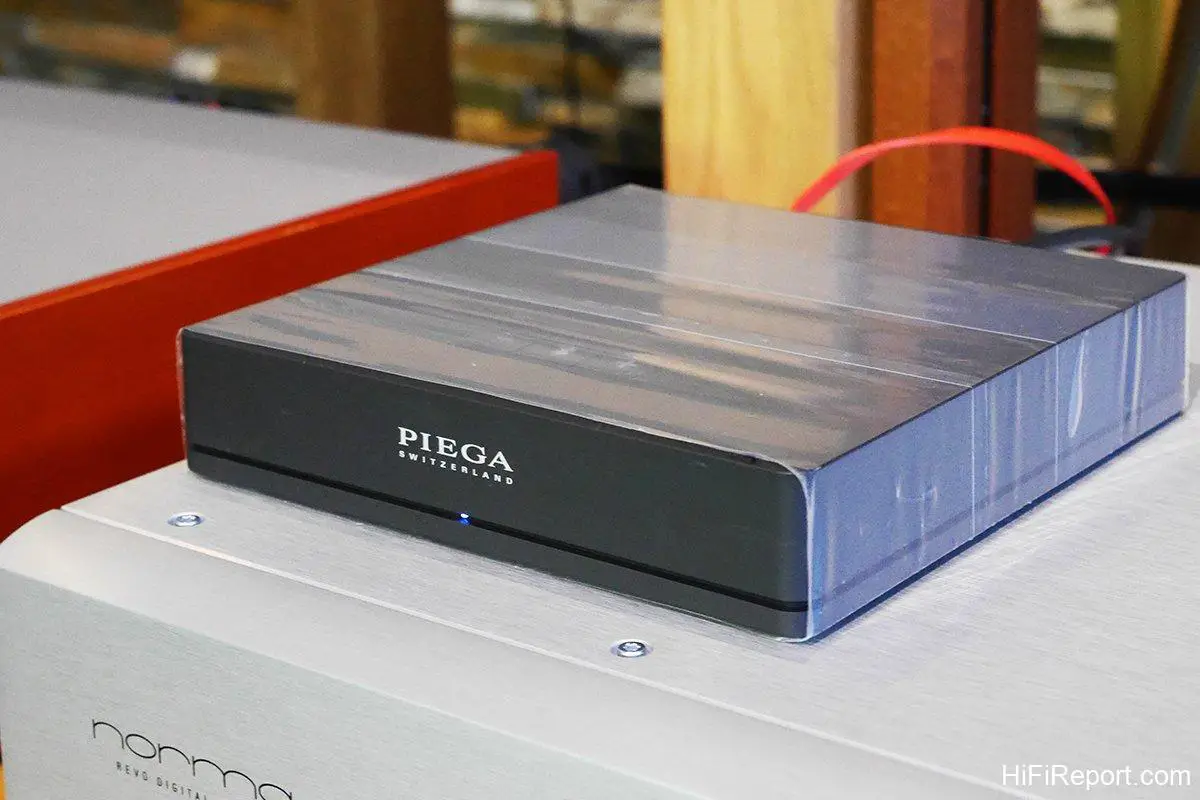
Considering the development timeline of digital wireless active speakers, Piega’s market entry might seem relatively late. However, this “latecomer” status brings certain advantages. The Premium series benefits from the lessons learned from earlier products in the market, allowing Piega to proactively address potential issues. For instance, wireless transmission stability was a common early challenge. Initial external wireless transmitters often utilized only the 2.4 GHz bandwidth. This frequency band is prone to interference from other wireless applications, such as wireless mice and keyboards, frequently causing dropouts and instability. Later products adopted multi-band designs to mitigate this. Piega’s Connect wireless transmitter, for example, employs tri-band automatic switching across 2.4 GHz, 5.2 GHz, and 5.8 GHz bands. This significantly reduces the likelihood of conflicts with common 3C wireless devices and minimizes interference-related dropouts.
Another advantage is the choice between purely wireless and wired/wireless hybrid connectivity. Some brands opted for purely wireless connections to maintain simplicity, necessitating external transmitters for integrating analog sources like turntables or CD players. However, Piega wisely retained both wired and wireless options in the Premium series, offering users greater flexibility. This approach means that the Connect transmitter is not strictly mandatory; users can connect their existing preamplifiers directly to the Premium series speakers, preserving their preferred front-end setups.
Surprisingly Compact Size
Having previously auditioned the Premium 301 and 501, with only the Premium 701 remaining, I anticipated a noticeably larger speaker. However, upon seeing the Premium 701 at HiFiReport, I was struck by its more compact size than expected. This perception might be due to the spaciousness of HiFiReport’s listening room, making the speakers appear smaller visually. In reality, the primary difference between the Premium 701 and 501 lies in the mid-bass driver size: 140mm for the 701 versus 120mm for the 501. This results in a mere 2cm difference in the front baffle width. In height, the Premium 701 is only 5cm taller at 106cm, and the depth is increased by 2cm. Looking at these dimensions, the Premium 701 is indeed not significantly larger than the 501, explaining why it appeared smaller than anticipated.
Does this mean the Premium 501 is sufficient, negating the need to spend more on the higher-end Premium 701? Piega has preempted this very thought by incorporating a significant upgrade: the tweeter.
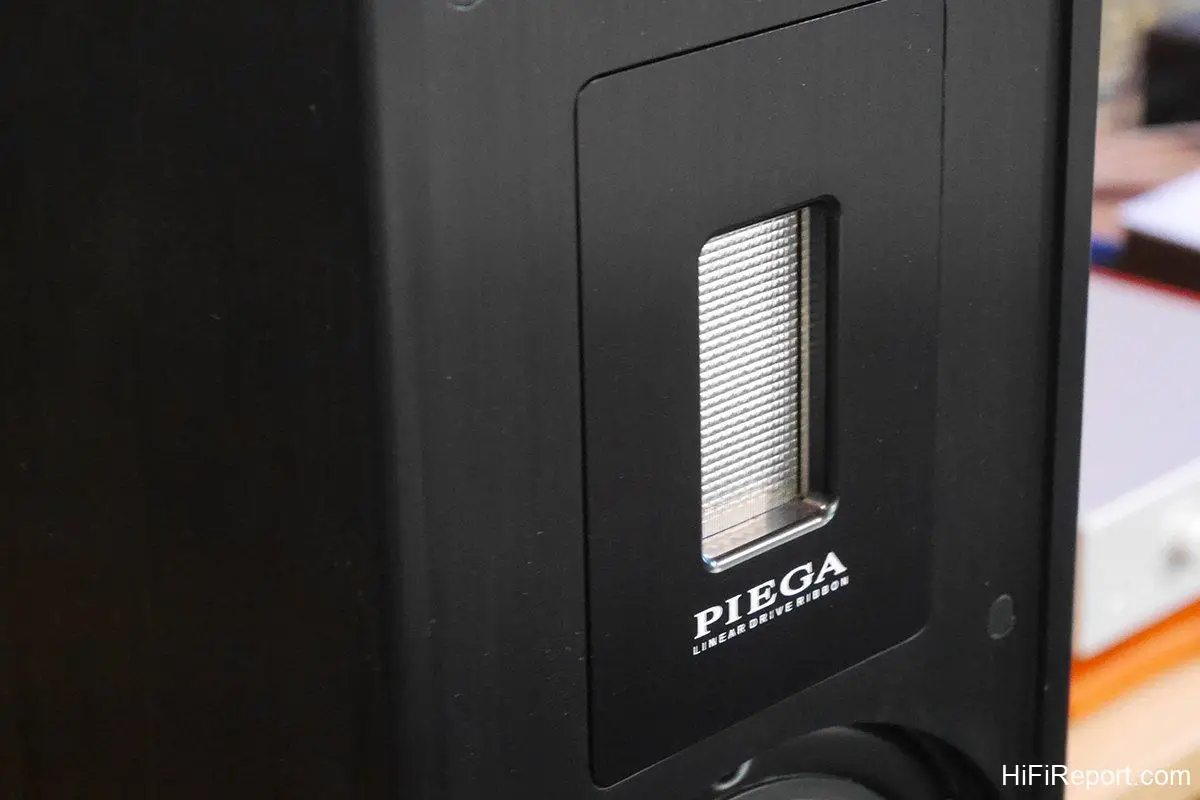
Piega’s core technology revolves around their large-sized ribbon tweeters. The Premium 701 features the LDR 3056 ribbon tweeter, a step up from the LDR 2642 MKII found in the Premium 301 and 501. The LDR 3056 boasts a longer ribbon and larger radiating area. While the high-frequency extension remains at 35 kHz, the larger radiating area of the ribbon tweeter allows for a more effortless high-frequency reproduction.
Furthermore, the Premium 701 not only features a superior ribbon tweeter and larger mid-bass driver, but also increased internal amplifier power. It offers 200 watts, a 20-watt increase over the Premium 501’s 180 watts, representing further enhancements.
Premium 701 for More Bass
When reviewing the Premium 501, I already considered it the most cost-effective model in the Premium series. After auditioning the higher-tier Premium 701 at HiFiReport, this opinion remains unchanged. For rooms of moderate size, the Premium 501 is likely sufficient. However, if you have a larger space requiring more low-frequency energy to create a more expansive soundstage, there are two approaches: either pair the Premium 501 with a subwoofer, or invest in the Premium 701 for greater bass extension and output.
Subwoofer integration is another area where the Premium series demonstrates its “latecomer advantage.” Piega not only ensured that the Connect box can easily accommodate active subwoofers but also developed dedicated firmware for seamless integration between Piega subwoofers and the Premium series, guaranteeing optimal synergy.
Given HiFiReport’s expansive space, Mr. Chang initially had a Cabasse subwoofer connected, stating that it was set at a very low volume, merely to augment the lowest frequencies and add a touch of fullness to the sound. However, in anticipation of my Premium 701 audition, he отключил the subwoofer, allowing the Premium 701 to perform on its own.
Wired and Wireless Versatility
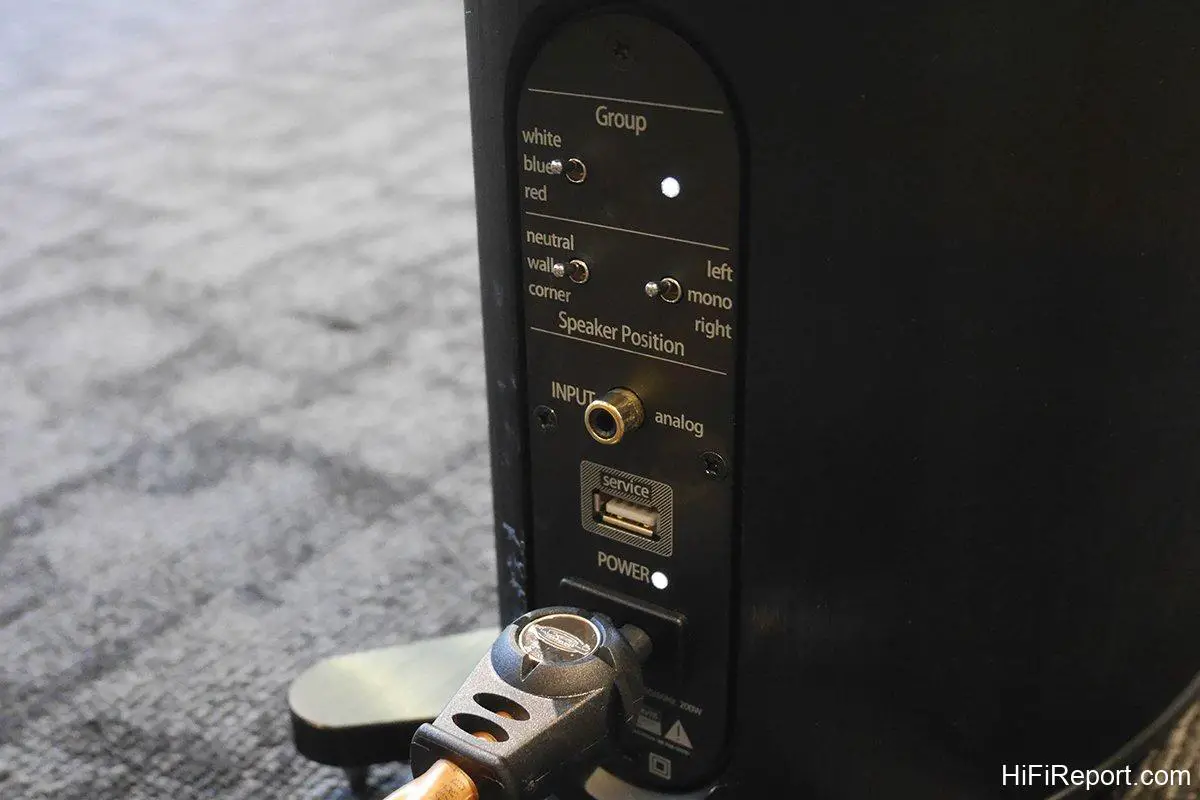
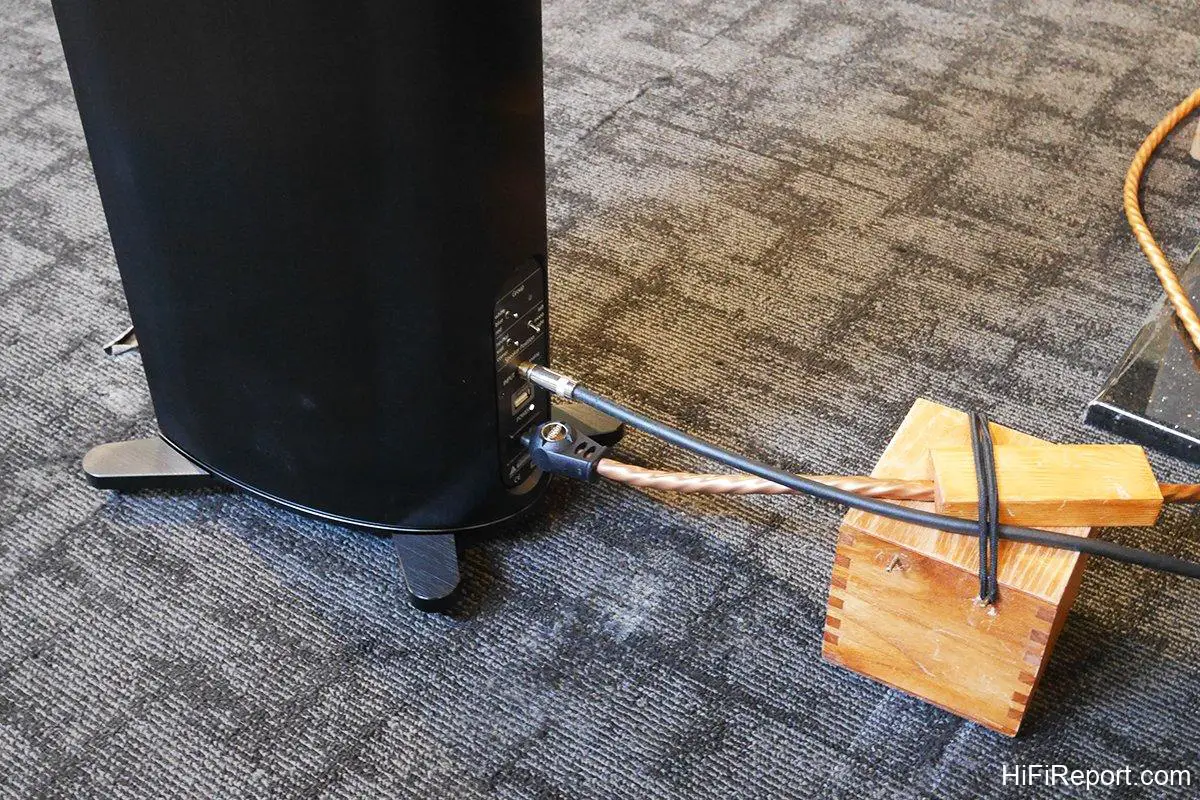
The Premium 701 speaker’s rear panel features a three-position low-frequency adjustment switch. “Neutral” represents the standard bass output, “Wall” attenuates bass slightly for near-wall placement, and “Corner” provides further bass reduction for corner placement.
In HiFiReport’s large space, the setting was set to “Neutral.”
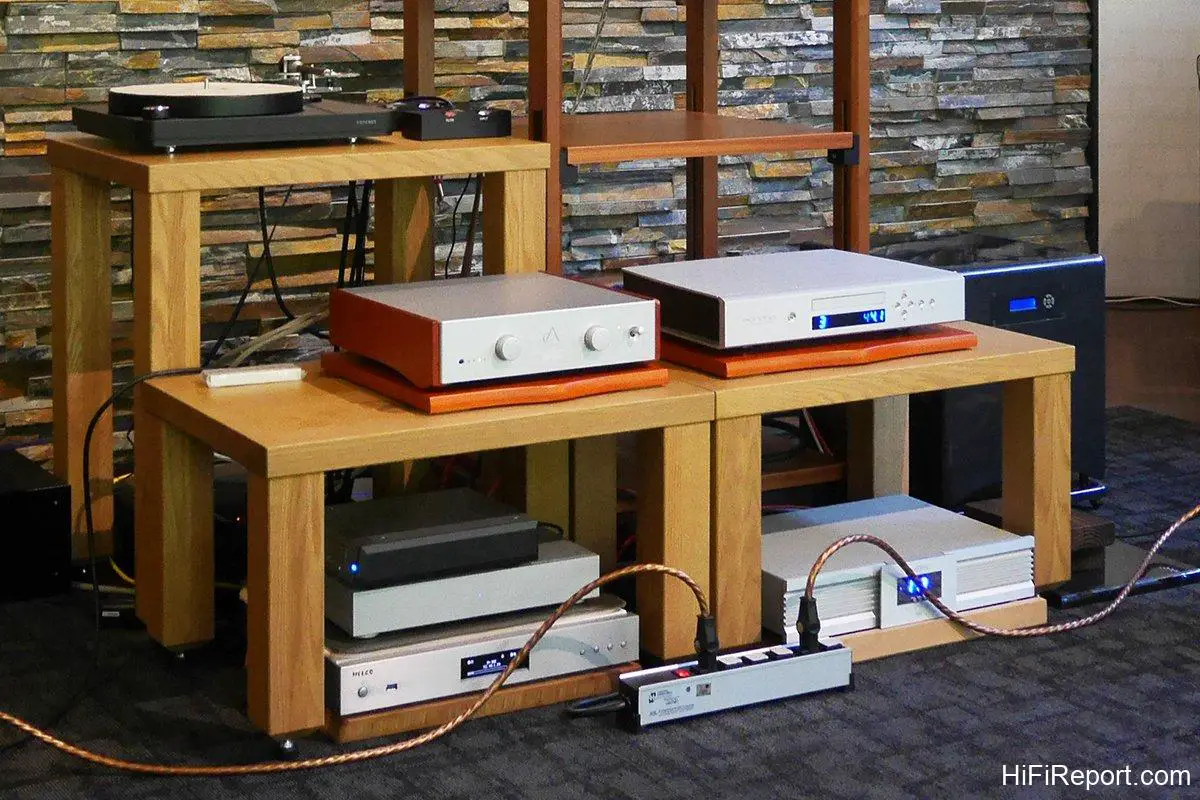
Interestingly, Mr. Chang’s primary system at HiFiReport is a wired setup, including a Norma REVO CD player, a Spec Real-Sound Line preamplifier, and a dCS Bridge network streamer. Analog signals were routed from the Real-Sound preamp to the Premium 701s via signal cables.
Mr. Chang’s configuration is logical, as HiFiReport serves both as an audio showroom and a café. Music is played extensively throughout the day. Utilizing Roon to manage a vast library of NAS and network streaming sources provides endless music options for continuous playback. For CD demonstrations, switching the preamp input is all that’s needed. Thus, Mr. Chang had the wireless Premium 701s connected via a wired connection. However, for my specific audition of the Premium 701, Mr. Chang brought out the Connect wireless transmitter, enabling me to experience the purely wireless playback capabilities of the Premium 701.
Detailed Setup Matters
I arrived at HiFiReport slightly earlier than scheduled. The café was open and still serving customers, so the Premium 701s were playing music at a very low volume.
Before listening intently, I took some photos. HiFiReport’s interior décor has become increasingly refined. A still-life painting of a violin hung behind the speakers, and the wooden audio rack exuded understated elegance. The black version of the Premium 701s blended discreetly into the café’s comfortable ambiance. However, Mr. Chang’s attention to detail in system setup was evident. The Premium 701’s power cords were elevated using Spec cable lifters, and Spec isolation footers were placed under the CD player and preamplifier. These are HiFiReport’s tuning techniques, representing Mr. Chang’s years of expertise. Interested enthusiasts might find it worthwhile to inquire about these tweaks, which could potentially offer system upgrades for a modest investment.
After taking photos, I enjoyed HiFiReport’s coffee and chatted with Mr. Chang. As the café’s customers began to leave, I seized the opportunity to listen to the Premium 701s. A café needs a relaxed, literary atmosphere, so music cannot be played too loudly. I needed to conduct my audition quickly before the next customers arrived.
For an initial quick listen, I used Bluetooth from my smartphone to the Connect transmitter, playing the second movement, “Adagio,” from Mozart’s Clarinet Concerto – a brief warm-up.
Detail and Balance at Low Volume
Even with a simple Bluetooth connection from my iPhone playing Apple Music, and at a low volume appropriate for the café’s tranquil atmosphere, the Premium 701s still conveyed rich musical detail and effortlessly filled HiFiReport’s space with a beautiful soundstage.
Rich detail retrieval at low volumes is a hallmark of active speakers. Each driver is powered by a dedicated amplifier module and utilizes DSP electronic crossovers, resulting in more linear driver operation. Even at low volumes, the sound doesn’t feel constrained or diminished.
The clarinet was clearly focused in the center of the soundstage, while the orchestral sections floated in layers in the air. Although the low frequencies lacked significant weight at this low volume, the music’s vibrancy was not compromised. Sufficient musical detail allowed for clear distinction between the clarinet solo and the undulating responses of the string sections. This balanced presentation, even at low volumes, is a definite strength of active speakers.
Ribbon Tweeter and Strings
The sonic characteristic of ribbon tweeters is their ability to render strings with a beautiful sheen and a smooth, detailed texture. I switched to my Macbook Pro, connecting wirelessly to the Connect via Wi-Fi, and played Tchaikovsky’s String Quartet No. 1, performed by the Emerson String Quartet on DG, specifically the second movement, “Andante cantabile.” The music is gentle and beautiful. The violin unfolds romantic phrases, with the viola and cello responding in counterpoint. The four instruments weave together, and even at a low volume, the Premium 701s effectively conveyed the distinct positions of each instrument. In the middle section, featuring pizzicato viola and violin melody, the Premium 701s rendered the pizzicato with a light, springy quality, contrasting with the violin’s smooth, romantic tones.
What about the cello? Due to the lower volume, the cello’s presence felt slightly diminished. No matter, during the final thematic recapitulation, I increased the volume. The cello’s weight immediately became more substantial. As the cello took over the melodic lead, the Premium 701s not only brought out the cello’s rich timbre but also its well-defined lines, positioned slightly to the right. Towards the music’s conclusion, Tchaikovsky’s almost hesitant ending, with the violin and viola echoing each other and the cello completing a soloistic statement before the violin and viola provide a closing accompaniment, even at a moderately increased volume, the Premium 701s vividly reproduced these musical nuances, making the romantic ending deeply satisfying.
High Volume Nearfield Listening
Having experienced the Premium 701’s detailed musicality even at low volumes, it was time to test its capabilities in a larger space at higher volumes. Frankly, HiFiReport’s space is quite expansive for the Premium 701s. Achieving both front-to-back and side-to-side soundstage coverage at high volumes is challenging. Fortunately, I opted for nearfield listening, positioning myself closer to the speakers, which mitigated the issue of the room diluting the musical energy. In this configuration, the Premium 701s held their own.
I selected Tchaikovsky’s “Pathétique” Symphony No. 6, specifically the third movement, and listened to Karajan conducting the Berlin Philharmonic on a DG “Galleria” edition – actually, AIFF files ripped from the CD to my hard drive, not the physical CD itself.
Despite its “Pathétique” title, not all four movements are mournful. The third movement is a march, spirited and vigorous. The music begins with rapid figuration in the strings, almost dizzying in its complexity, with brass hinting at the main theme in the background. Starting softly, the volume gradually swells, building towards a majestic march. The true theme emerges at 1:39, introduced by the woodwinds and then joined by the strings, with the brass reinforcing the music’s grandeur. This section is still played at a lower volume. After several thematic interchanges, the full orchestra unleashes its power at 5:31 in a thunderous tutti. The Premium 701s filled the expansive soundstage, with the brilliance of the brass and the rapid-fire low frequencies of the timpani vying for prominence, making the majestic march even more exhilarating. Crashing cymbals further propel the momentum, driving relentlessly to the climax.
Impressively, even in HiFiReport’s large space, the Premium 701s delivered such scale and impact. When the orchestra played at full tilt, the sound produced by the Premium 701s truly belied their physical size.
Larger Soundstage than Expected
The unexpectedly large soundstage presentation also manifested when I listened to The Fairfield Four’s “These Bones,” an a cappella male vocal recording. This is, as I often say, “music you can count heads to.”
Through the Premium 701s, it was easy to discern the positions of the baritones and tenors, while the basses provided a solid foundation. The vocal richness was remarkable, especially considering the Premium 701’s slender and tall profile. The bass voices sounded remarkably full-bodied and substantial.
The saying goes, “Silk is good, but bamboo is better, and flesh is best.” Having just experienced the “silk” of strings and the “bamboo” of orchestral textures, switching to vocals showcased the Premium 701’s ability to render the purity and harmony of a cappella with fullness and roundness, validating this ancient adage.
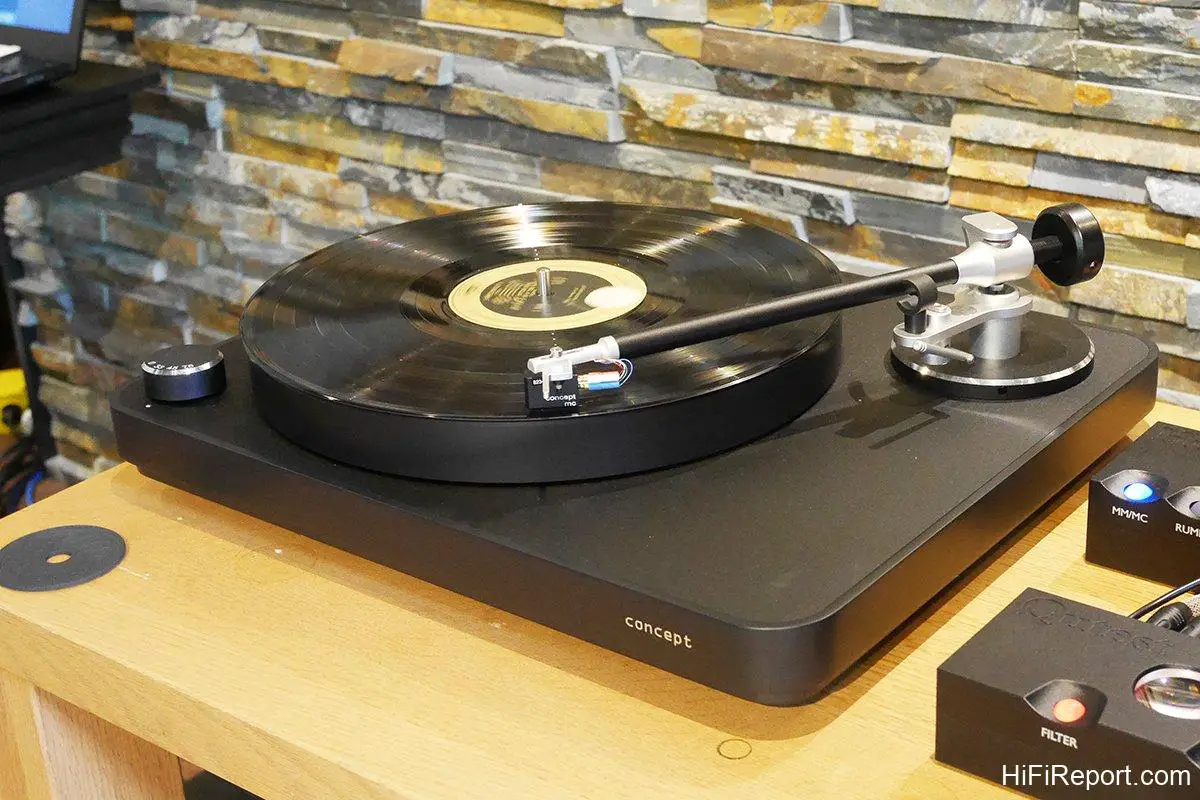
Vinyl Playback with Analog Flavor
After listening to the Premium 701s via computer and smartphone, Mr. Chang began restoring the system to its original configuration. I noticed a Clearaudio Concept turntable with a Concept MC cartridge on the audio rack. Once Mr. Chang had re-established the wired connection, I asked if we could listen to some vinyl. Mr. Chang selected Milstein playing violin sonatas, mentioning that vinyl playback typically benefits from a warm-up period, as the cartridge involves mechanical movement. He suggested listening to one side and then critically assessing the sound afterward, but noted it already sounded excellent from the start.
After Milstein had “warmed up,” Mr. Chang asked if I preferred classical or jazz. Having listened primarily to classical music so far, I opted for jazz. Mr. Chang put on Tsuyoshi Yamamoto’s “Live At Jazz is.” The live ambiance of the jazz recording filled HiFiReport’s café space, creating an authentic “jazz kissa” atmosphere. The piano’s clear and bright notes, coupled with the deep, rhythmic plucking of the double bass, and the delicate brushwork on the snare drum, all floated in the air. Subtle spatial cues from the live recording venue, interwoven with the gentle sounds of cups and saucers from HiFiReport’s café bar, created a sonic tapestry where it became difficult to distinguish between the recorded sounds and the café’s ambient noises. Even with the Premium 701s using a wired input, involving analog-to-digital conversion, wireless digital transmission, and then digital-to-analog conversion within the speakers, the inherent charm of vinyl playback remained undiminished. The subtle surface noise of the stylus tracing the grooves and the occasional “snap, crackle, and pop” clearly indicated that we were listening to analog vinyl, not digital music.
Excellent Digital Active Speaker System
Having auditioned all three models in the Premium series, I still consider the middle model, the Premium 501 floorstander, to be the most cost-effective. However, the Premium 701 offers the most comprehensive sonic performance, possessing the most authoritative bass response. All three models share a consistent sonic signature: a sweet and transparent midrange and treble, with a clean and natural overall character. The primary differences lie in bass extension and output. Selecting among these three Premium models is straightforward – room size is the key determinant. Furthermore, all three Premium speakers can be paired with subwoofers, and when used with Piega subwoofers, dedicated factory-written firmware ensures seamless frequency integration in a 2.1 channel configuration.
For those seeking to simplify their audio systems and enjoy high-quality music from a single pair of speakers, the Piega Premium series is a worthy and excellent choice.
Specifications
* Type: 3-driver, 2.5-way bass-reflex floorstanding digital active wireless speaker
* Drivers: 2 x 140 mm MDS mid-bass drivers, 1 x LDR 3056 Ribbon tweeter
* Built-in power: 200 watts
* Analog input resolution: 24 bit/ 192 kHz
* Frequency response: 34 Hz – 35 kHz
* Dimensions: H 106 cm x W 18 cm x D 23 cm
* Weight: 28 kg