
Pilium Leonidas Integrated Amplifier Review
Pilium Audio, a newly discovered Hi-Fi brand from Greece! I’ve encountered Pilium numerous times at the Munich High End Show, but never had the chance for a proper audition. Now, thanks to HiFiReport’s introduction, I finally have the opportunity to calmly and thoroughly experience the Pilium Leonidas. This integrated amplifier, weighing a staggering 100 kilograms, embodies musical power, tranquility, and refinement. Its formidable driving force and delicate sound quality are truly unforgettable.
The Pursuit of Perfect Music Reproduction
According to Pilium’s official website, this Greek company was founded in 2014. However, in interviews with international Hi-Fi media, founder Konstantinos Pilios mentioned starting his audio venture in 2012. The exact date is uncertain, but Pilium’s objective is crystal clear: to create perfect music reproduction, pursuing unprecedented and life-like sonic realism.
To achieve this perfection, Pilium touts its “ingredients,” including astonishing resolution, unparalleled transparency, organic vocals, and emotive dynamics. All their audio components are meticulously crafted using unconventional “bare-voicing” methods, employing the highest existing technologies without cost constraints, and designed for an exceptionally long lifespan.
The above description is directly translated from Pilium’s official website. It clearly conveys their ambitious pursuit of “perfect music reproduction.”
Actions speak louder than words. Examining the Leonidas integrated amplifier reveals that Pilium doesn’t just pay lip service to perfection; they execute their vision with the most rigorous standards, inching closer to an seemingly unattainable ideal.
A Lineup of Eight Amplifiers and a DAC
Pilium offers a single product line, the Divine Line, comprising nine powered components. Apart from the Elektra DAC, the remaining eight are amplifiers, including the Alexander and Ares preamplifiers, Hercules Mono and Poseidon Mono monoblock power amplifiers, Achelies and Iasonas stereo power amplifiers, and the Leonidas and Odysseus integrated amplifiers.
In essence, Pilium presents two tiers – “best” and “very good” – across preamplifiers, power amplifiers (both monoblock and stereo), and integrated amplifiers. While the fundamental design principles are shared between these tiers, they differ in size and power output. This streamlined product line eliminates decision paralysis when selecting a Pilium system.
Leonidas: Pilium’s Integrated Amplifier Flagship
Consider the Leonidas and Odysseus integrated amplifiers. Both deliver 200 watts into 8 ohms. Examining their chassis dimensions, they share the same width and depth, but the Leonidas is taller and features balanced inputs, clearly marking it as the flagship model, with the Odysseus as its slightly smaller sibling.
But both integrated amplifiers are rated at 200 watts! Is there really a difference? Indeed. At 8 ohms, both Leonidas and Odysseus output 200 watts. When impedance halves to 4 ohms, both amplifiers double their output to 400 watts. However, when impedance further halves to 2 ohms, the Leonidas can double its output again to 800 watts, while the Odysseus reaches 700 watts. This demonstrates the Leonidas’s truly high-current output capabilities, surpassing the Odysseus.
Therefore, if you require substantial driving power to conquer demanding loudspeakers, choose the Leonidas. If your power requirements are less extreme, the Odysseus is a viable alternative.
A Record-Breaking 100kg Integrated Amplifier
In terms of weight, the Leonidas may very well set a new record for integrated amplifiers, tipping the scales at a massive 100 kilograms. Typically, integrated amplifiers weigh around ten-odd kilograms, with anything exceeding thirty kilograms considered substantial. For instance, the mbl C51 integrated amplifier weighs approximately 23 kilograms, and the Pass Labs INT-150 surpasses thirty kilograms – both are considered weighty integrated amplifiers. Integrated amplifiers over fifty kilograms are rare, but the Leonidas, at 100 kilograms, showcases an unprecedented level of material usage.
Audiophiles often joke that amplifiers should be sold by weight, at around ten thousand per kilogram. At 100 kilograms, the Leonidas certainly lives up to its million-dollar price tag (in NTD, roughly equivalent price in USD for high-end audio).
Thorough Dual-Mono Design Implementation
During my audition of the Leonidas at HiFiReport, my initial impression was of a powerfully built, large machine with exquisitely refined craftsmanship. However, delving into the Leonidas’s internal design revealed a truly awe-inspiring level of engineering.

Despite being an integrated amplifier, Pilium adheres to a strict “dual-mono” design principle. A single Leonidas essentially houses two monoblock preamplifiers and two monoblock power amplifiers, with independent power supplies for each channel. This necessitates two power cords for the Leonidas, fully embodying the “dual-mono” philosophy.
Audiophiles will undoubtedly appreciate the significance of “dual-mono.” Some might question the necessity of such complexity, suggesting a stereo power amplifier is sufficient. Why opt for a pair of monoblock power amplifiers? The answer lies in channel separation.

This specification is often listed but rarely scrutinized, as its importance is not widely understood.
Enhancing Channel Separation: The Purpose of Dual-Mono Design
Channel separation refers to the degree of independence between the left and right channels, minimizing crosstalk. In stereo recordings, the left and right channels carry distinct information. Differences in volume between channels create the soundstage and instrument placement. For example, a centrally positioned vocalist in a recording will typically have equal volume in both channels. Reducing the volume in the left channel will shift the vocal image to the right. The greater the volume difference, the further the image moves. This is known as “panning” in recording terminology. However, during stereo amplifier playback, due to shared power supplies or circuit boards, crosstalk can occur between channels. This means audio from the left channel can bleed into the right channel, and vice versa. This inter-channel crosstalk can lead to image smearing and imprecise localization.
Higher channel separation indicates lower crosstalk and more accurate image positioning. The ultimate solution to eliminate crosstalk is to use a pair of monoblock power amplifiers. With physically separated channels, crosstalk is virtually eliminated. In preamplifiers, separating the amplification circuitry for each channel is also an effective way to reduce crosstalk. Some preamplifiers, though housed in a single chassis, utilize two separate circuit boards for left and right channels, effectively implementing a dual-mono design.
Fully Independent Dual-Mono: Preamplifier, Power Amplifier, and Power Supply
But how does the Leonidas, a single-chassis integrated amplifier, achieve thorough dual-mono operation? Simply put, it independently implements the preamplifier and power amplifier stages for each channel within the same chassis, maintaining circuit separation to maximize channel separation.

Starting with the power supply, the Leonidas utilizes two separate power inputs, one for each channel. In the preamplifier stage, two 100VA toroidal transformers provide independent power to each channel. The preamplifier section is equipped with 38,000 uF of custom-made, ultra-long-life capacitors. The power amplifier stage boasts two massive 1,200 VA toroidal transformers, again ensuring independent power for each channel. The filtering capacitor bank reaches a staggering 200,000 uF. A total of 44 high-bandwidth power transistors are employed. With such robust power supply and transistor implementation, the declared output of 200 watts seems remarkably conservative. Pilium’s specifications appear to be understated.
Custom-Made Capacitors Emphasizing Extended Lifespan
The Leonidas’s component selection goes beyond generous power supplies and large filtering capacitors. It emphasizes premium parts. The PCB boards are military-grade. The internal filtering capacitors are not only audiophile-grade Mundorf components but also custom-made versions, emphasizing extra-long-life. Mundorf capacitors are already expensive, and custom versions further escalate costs. The expense lies not only in the unit price of Mundorf capacitors but also in the minimum order quantities. Custom specifications often require orders of thousands, or even tens of thousands of units. However, considering the lavish use of filtering capacitors in the Leonidas, their capacitor consumption rate is likely substantial.
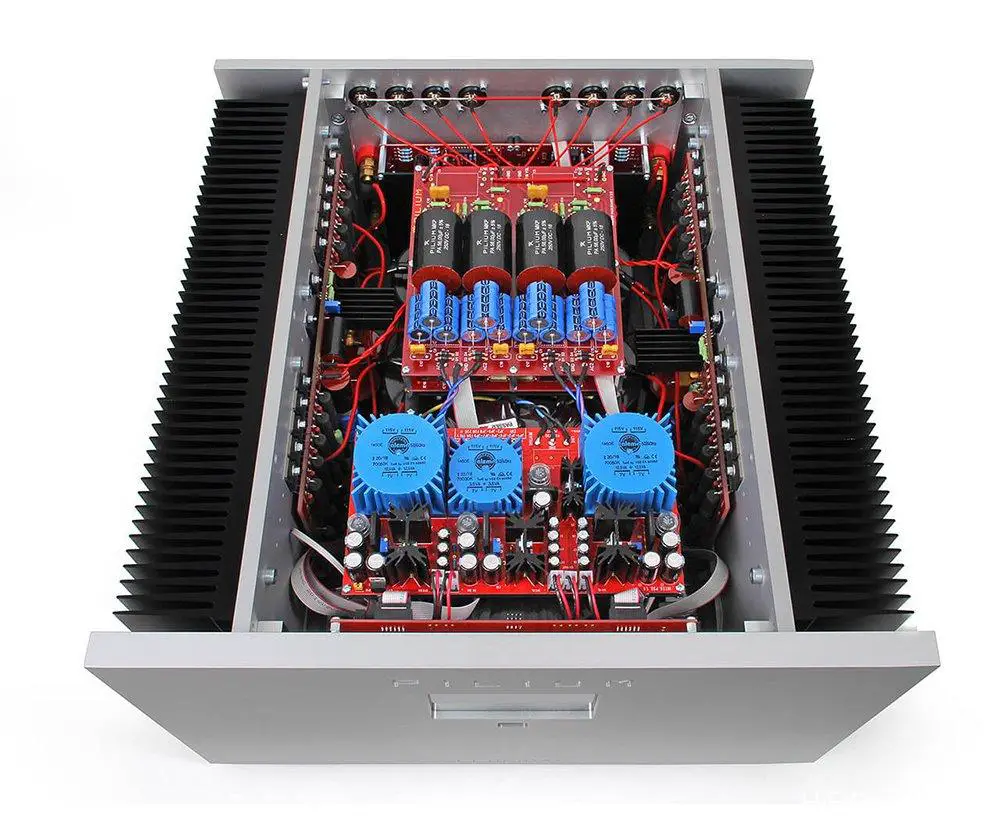
Given its high power output, robust protection is essential. The Leonidas incorporates microcomputer-controlled temperature monitoring and DC output protection to safeguard loudspeakers. The microcomputer control circuitry is also designed to be completely isolated from the audio signal path to prevent interference.
Resistor Ladder Volume Control for Constant Impedance
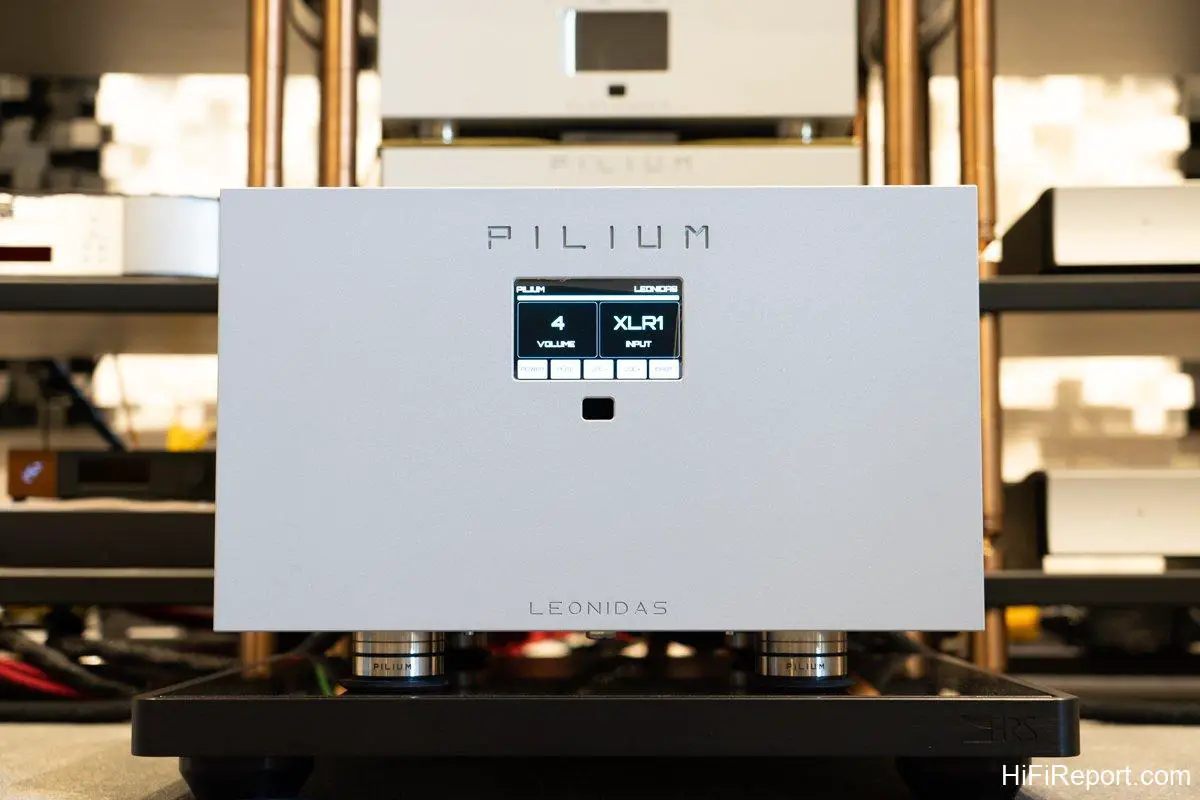
In terms of industrial design, the Leonidas adopts a minimalist aesthetic. The silver-white aluminum chassis, paired with black side heatsinks, is cleverly designed to conceal all screws, preserving the clean lines of the enclosure.
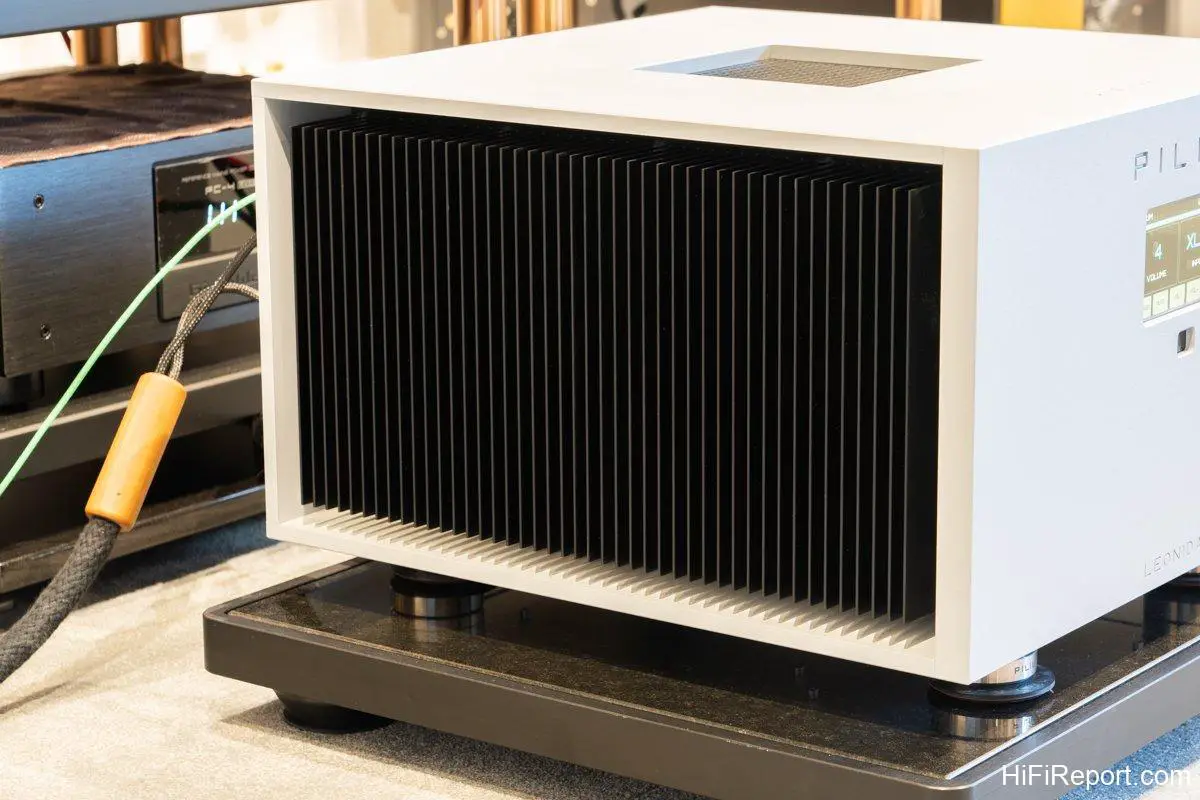
The front panel features a touch screen, making the power switch the only physical button. This minimalist design philosophy is taken to the extreme.
Pilium also offers customized color options. If you have a preferred color, simply provide the Pantone color code for a bespoke finish. Custom orders typically take 3-4 months for delivery.
Beyond the rigorous dual-mono circuit design, the volume control is another highlight of the Leonidas. It employs a resistor ladder volume control, ensuring constant impedance across all volume levels. This means the sonic character remains consistent regardless of volume setting, unaffected by impedance variations. Adjusting the volume on the Leonidas produces audible relay clicks, which are not noise but rather indicative of the highest level of analog volume control design.
HiFiReport’s System Tuning Expertise: A Key Selling Point
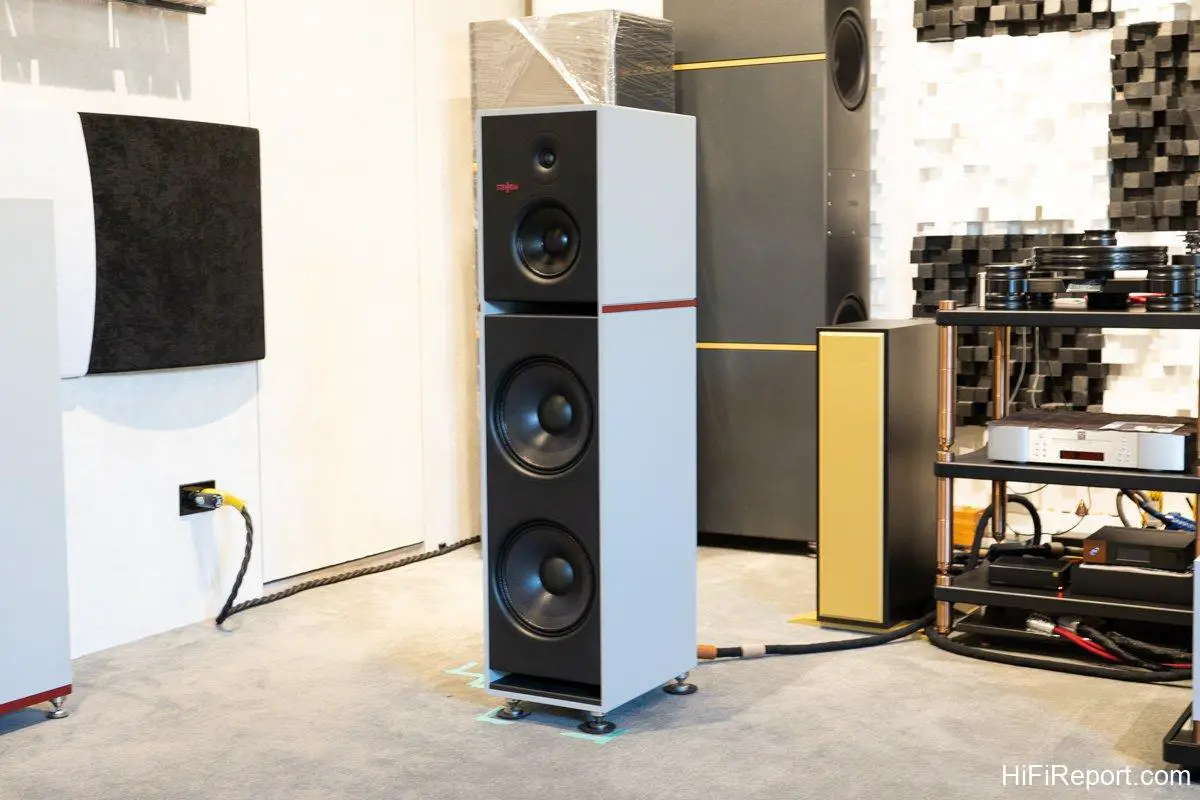
At HiFiReport, the Leonidas was auditioned with Stenheim Alumine 5 SE floorstanding loudspeakers, a Mola Mola Tambaqui DAC from the Netherlands, and a mix of Brandt Audio, Luna Cables, and WAY Cables interconnects and speaker cables. Power conditioning was provided by a GigaWatt PC-4 EVO from Poland. Additionally, Moonwires Orgosound magnetic field tuning devices were used, demonstrating remarkable effects. If you visit HiFiReport to experience the Leonidas, be sure to ask Mr. Yang to demonstrate the Orgosound’s impact – it adds another dimension to audio enjoyment.
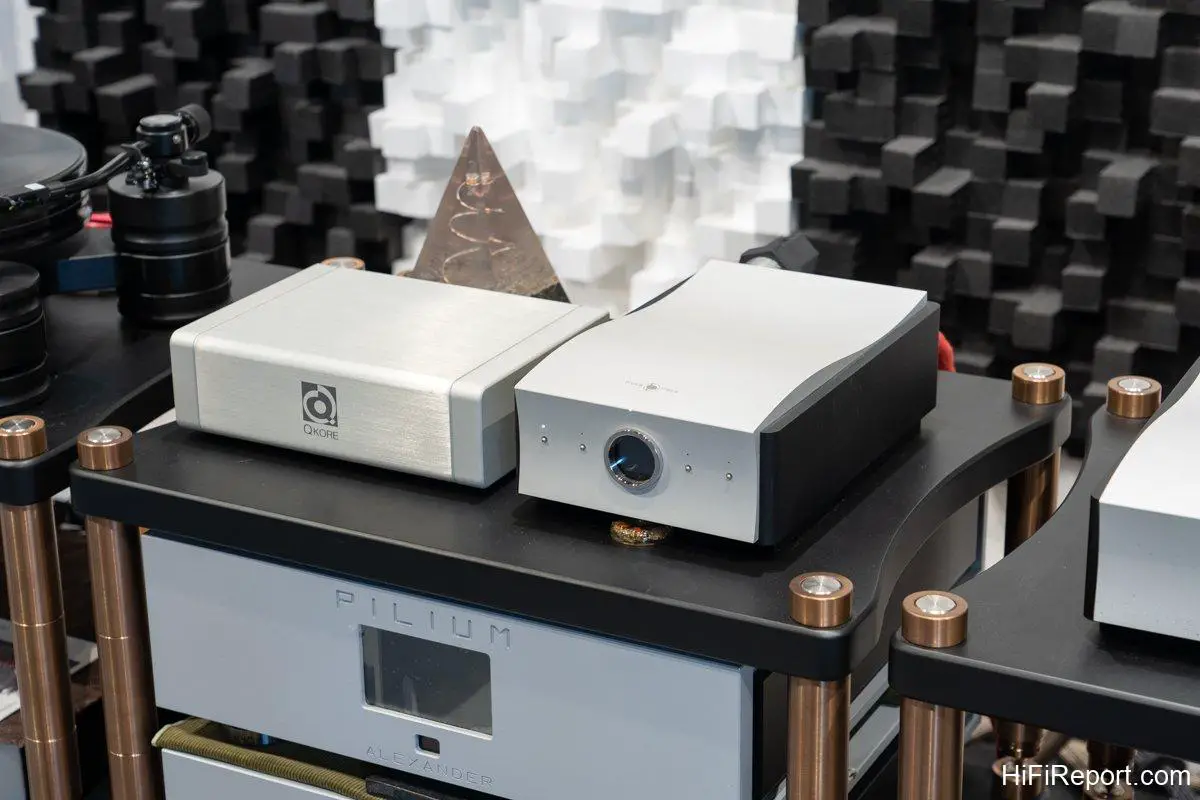
Since HiFiReport relocated to Tianmu, the listening space has expanded significantly, providing ample room for floorstanding loudspeakers to breathe. Mr. Yang has also implemented numerous room acoustic treatments, such as a full wall of diffusion panels behind the speakers and corner treatments combining absorption and diffusion. The Leonidas was placed on a single-tier vibration isolation rack. These details exemplify HiFiReport’s meticulous approach to system setup. Tape markers on the carpet indicate loudspeaker placement positions, enabling quick and precise speaker positioning during equipment changes. This demonstrates Mr. Yang’s thorough preparation and dedication to finding the optimal speaker placement within his listening space.
Purchasing audio equipment is not just about buying hardware; it’s also about acquiring professional system tuning and setup expertise – a service that is truly invaluable.
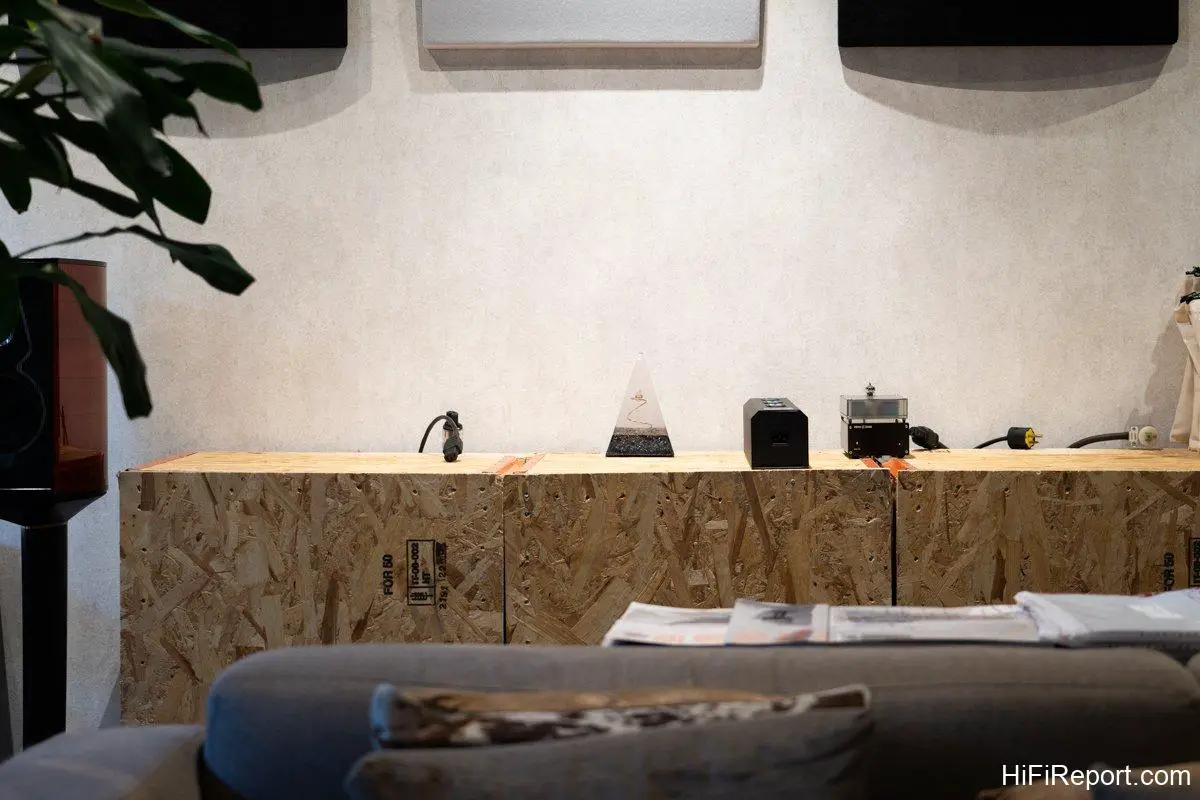
Although I brought CDs to HiFiReport, the listening session primarily used digital streaming, reflecting current trends. HiFiReport excels in this area, offering professional services encompassing not only streaming players but also digital switches, network cables, and system optimization. Therefore, I used an iPad to select familiar tracks for the audition.
Unveiling New Nuances in Familiar Recordings
Starting with a relatively relaxed piece, I chose Eva Cassidy’s “Live At Blues Alley,” listening to the familiar “Fields of Gold.” The live recording begins with audience applause, followed by fingerpicked guitar chords and Eva Cassidy’s captivating vocals. The Leonidas presented an exceptionally quiet musical background, allowing the vocals and guitar to emerge with remarkable clarity. The vocals were focused in the center of the soundstage, while the guitar, processed through the live PA system, appeared slightly recessed and extended towards the left and right channels. This wasn’t a recording error but rather the intended effect of adding effects to the acoustic guitar, creating a spacious sense of extension. The electric guitar solo during the interlude was more focused, indicating the original intent of the recording.
Even with a very familiar recording, the Leonidas kept me thoroughly engaged. The silent background enhanced image clarity, and the reverb effects added to the vocals during the live performance, along with the tonal variations of the acoustic and electric guitars, were captivating. I could vividly imagine the recording scene – Eva Cassidy passionately performing on stage, the sound engineer meticulously adjusting the recording balance, preserving the complete multi-track recording for subsequent mixing and mastering. As the final chord faded and the audience erupted in applause, the subtle resonance of the acoustic guitar being placed on its stand could be heard. The Leonidas’s rendition of the live recording’s details was not only clear but also effortless and natural, allowing me to focus on the music and appreciate the richness of the live recording, vividly recreating the recording venue in my mind.
Fast and Solid Transient Response with Electric Bass
Eva Cassidy’s “Fields of Gold” highlights nuance and emotion. To test the Leonidas’s loudspeaker control, I needed to challenge it with low frequencies. I selected Marcus Miller’s “Free” album. The opening track, “Blast,” is intense. Turning up the volume, the Leonidas roared to life. The electric bass solo at the beginning of “Blast” featured clear, fast plucked notes, with volume gradually increasing as the main melody entered. Synthesizer melodies, coupled with Marcus Miller’s explosive bass lines and electronic drum beats, delivered powerful and impactful low frequencies, with speed and agility, completely devoid of sluggishness, exhibiting excellent control and fast, solid transient response.
The funky electric bass lines created an exotic melody. The Leonidas conveyed the plucking, slapping, and popping techniques of the right hand with rich detail. The rapid slides on the fretboard by the left hand created quick melodic shifts in pitch. Marcus Miller’s masterful bass control was further enhanced by the Leonidas. Listening through the Leonidas, his virtuosity became even more apparent – truly a bass god.
Eva Cassidy showcased elegance and gentleness, while Marcus Miller demonstrated power and speed. What next? Frankly, these two tracks had already earned the Leonidas a perfect score in my book. But given the opportunity, I wanted to listen to more. I often say that the best part of reviewing audio equipment is listening to music. The more I listen, the happier I am with my job.
Piano Trio Imagery Comes Alive
Switching to classical music, I began with chamber music, selecting Pierre, Dumay, and Wang Jian’s performance of Brahms’ Piano Trio No. 1. The first movement opens with the piano introducing the main theme, followed by the cello’s response. This passage is both gentle and beautiful. When the violin joins, the musical scene brightens, and the music becomes more intense. The piano rhythm becomes more vigorous, and the cello’s powerful notes resonate in response to the violin’s passion.
With the Leonidas driving the Alumine 5 SE, the piano trio’s musical imagery materialized clearly within the soundstage. It wasn’t confined to the space between the Alumine 5 SE loudspeakers but extended outwards, making the speakers disappear into the room, revealing a natural and realistic piano trio presentation.
The piano was centered, the cello slightly to the right, and the violin slightly to the left. Subtle height differences were also discernible, with the piano in the center, the cello slightly lower, and the violin slightly higher. Although not a live concert recording, the studio-created piano trio image was vividly recreated by the Leonidas, beautifully rendered.
Chopin’s Romantic Beauty is Enchanting
Expanding the scale, I listened to Krystian Zimerman’s Chopin Piano Concerto No. 2. I chose the version where Zimerman is both pianist and conductor of the Polish Festival Orchestra. The tempo is slower than commonly heard versions, which demands even greater control from the piano to sustain the extended piano notes, linking Chopin’s melodic lines. Sustained notes are less challenging than legato passages. How the piano sustains and extends notes to create smooth melodic lines is crucial. Zimerman, as both pianist and conductor, deliberately chose a slower tempo, demonstrating both artistry and audacity.
Listening through the Leonidas and Alumine 5 SE, with the volume set to approximate concert hall levels, the string section’s opening introduction and the woodwind responses revealed subtle background noise in the recording, faithfully reproduced by the Leonidas. The piano enters just before the final note of the orchestral introduction, introducing a tender and lingering theme, hesitant yet inviting. The melody rises, then suddenly recedes. The subtle nuances of the pianist’s touch are even more apparent at the slower tempo. The Leonidas delicately highlighted these subtle dynamic variations of the piano. The timbre was exquisite. When the theme is repeated an octave higher, the piano seemed to sparkle like jewels, radiating beautiful brilliance. The tempo variations, the push and pull between fast and slow, created a stronger contrast and richer emotions at the slower tempo. Of course, this is Zimerman’s personal interpretation, but the Leonidas, with its quiet background and rich detail retrieval, completely immersed me in Chopin’s romanticism.
Mahler: Truly Exceptional
Listening to Chopin, I completely forgot I was reviewing the Leonidas, utterly engrossed in the music. It was truly beautiful, and Zimerman’s performance was exceptional. But, I still needed to thoroughly test the Leonidas! Who better to provide a definitive test than Mahler? I chose Leonard Bernstein conducting the New York Philharmonic in Mahler’s Symphony No. 3, listening to the first movement, “Summer Marches In – Bacchanal.” The brass section unleashed a majestic and expansive soundstage, with percussion and the orchestra responding powerfully, showcasing the grandeur of a large orchestra. The music then softened, the brass volume receding, and the timpani sounded like distant thunder. When the brass returned with a march-like rhythm, woodwinds and brass intertwined, creating a wide dynamic range. The Leonidas, with its layered soundstage, effectively presented the scale of a large orchestra.
I was tempted to listen to the entire first movement of Mahler’s Symphony No. 3, but that was impossible, as this movement lasts 35 minutes. Listening to the whole movement would truly make me forget I was reviewing the Leonidas, completely immersing myself in Mahler’s musical world. Fortunately, listening via digital streaming allowed me to skip to the 30-minute mark, where the musical landscape is bright and glorious. The brass plays a radiant melody, and the march-like rhythm evokes the procession of Bacchus, swaying as if intoxicated, yet boldly moving forward, heading towards the finale. The brass’s bright and brilliant timbre is overlaid with the romantic plucking of harps. Rapid brass and percussion interweave, with the bright shimmer of the triangle urging towards the climax of the finale.
A Guaranteed Ear-Opening Experience
Listening to Mahler in this way, what more could one ask for? The Leonidas’s power, tranquility, and refinement brought recordings to life, imbued music with vitality, and allowed the listener to breathe and resonate with the music. Such musical engagement is priceless.
I know the Leonidas is not inexpensive, but if you harbor an ideal for top-tier integrated amplifiers, visit HiFiReport to meet Pilium, this new friend from Greece. It’s guaranteed to be an ear-opening experience.
Specifications
* Type: Solid-state Integrated Amplifier
* Output Power: 200W/8Ω, 400W/4Ω, 800W/2Ω
* Frequency Response: < 100kHz * Distortion: < 0.01% * Inputs: XLR x 2, RCA x 3 * Voltage Gain: 36 * Output Impedance: < 0.1 ohms * Dimensions: 310 x 480 x 490 mm (HxWxD) * Weight: 100 kg