
Plantronics BackBeat FIT 500 Review
You are four minutes into a steady-state run on a crowded sidewalk, your phone streaming a podcast, and a cyclist whooshes past on your left. You hear him because the ear tips on this headset are open by design. The audio from your phone stays at a listenable level while the street continues to pour in around you. No pause, no fumble for a volume knob, no “was that a car?” moment. You keep going, and the conversation on your ears stays useful without cranking the volume to a painful level to fight the wind.
That is the exact gap the Plantronics BackBeat FIT 500 fills. It is a pair of wireless on-ear sport headphones built around a flexible neckband, a P2i sweat-resistant nano-coating on the exterior surfaces, and what Plantronics calls “usually-aware” ear tips. The product sits in the sport-audio niche that serves runners, gym-goers, and commuters who need ambient sound to stay part of the mix rather than walled off from it. Plantronics, now part of the Poly brand family under HP, has spent years in the professional audio space, and the BackBeat line is where that engineering meets personal fitness.
First Impressions
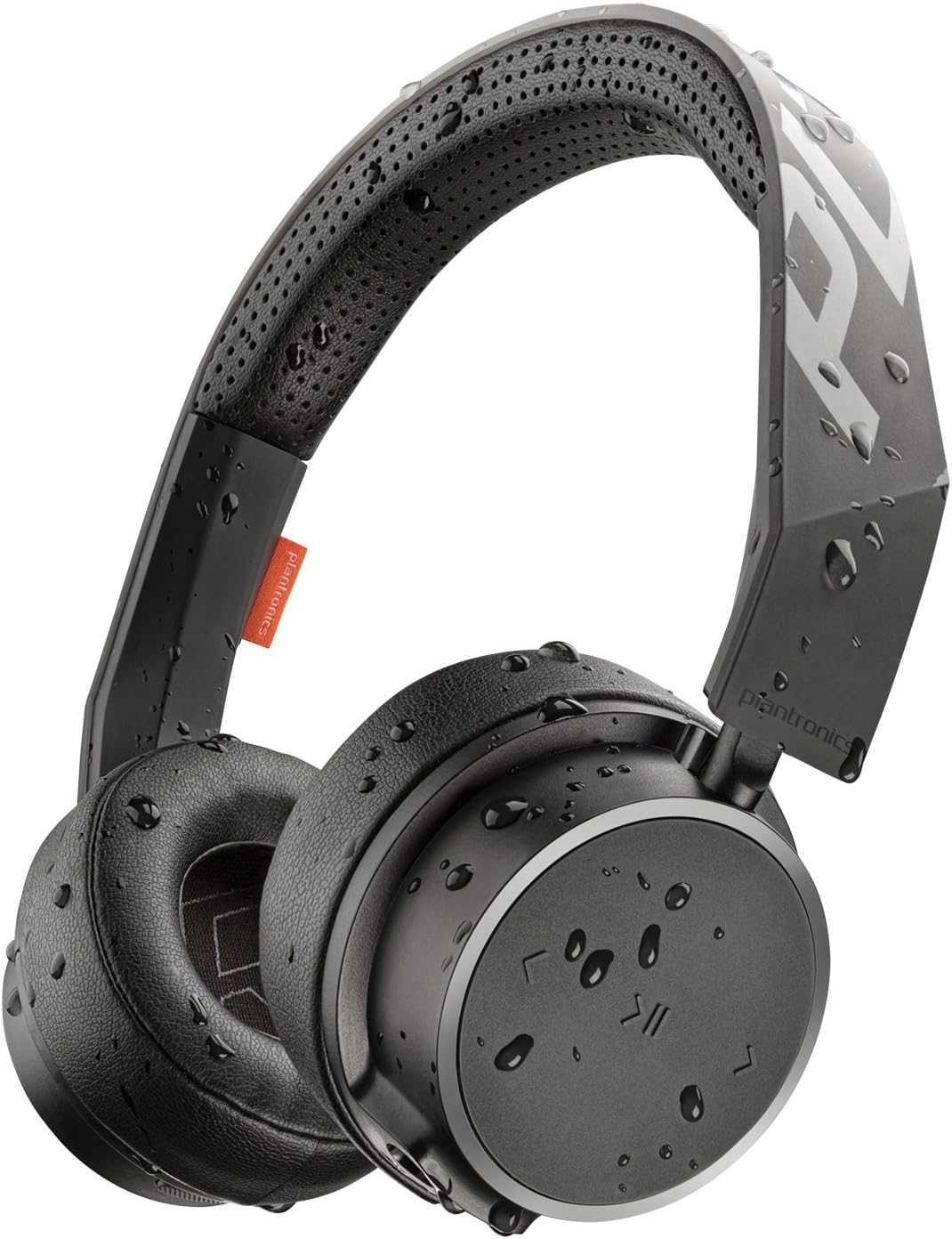
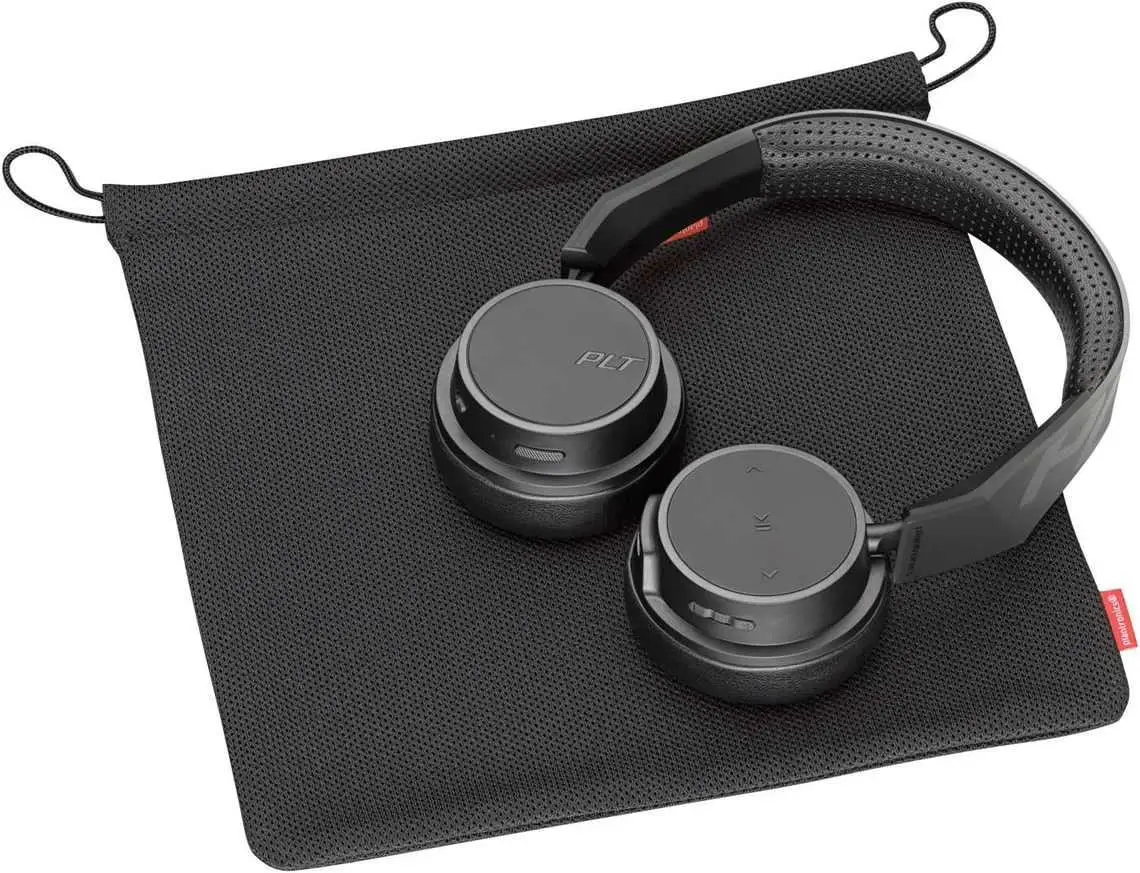
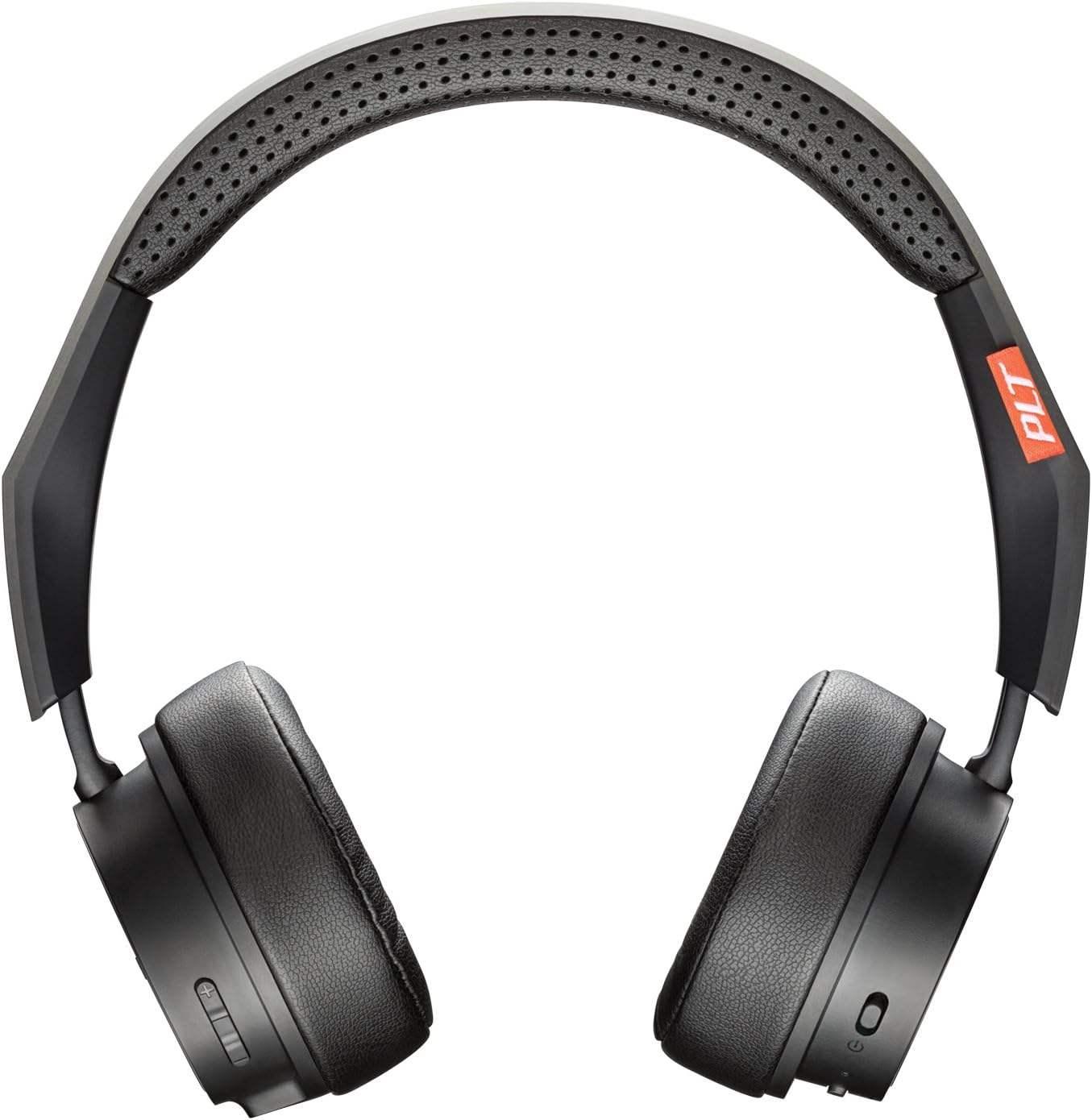
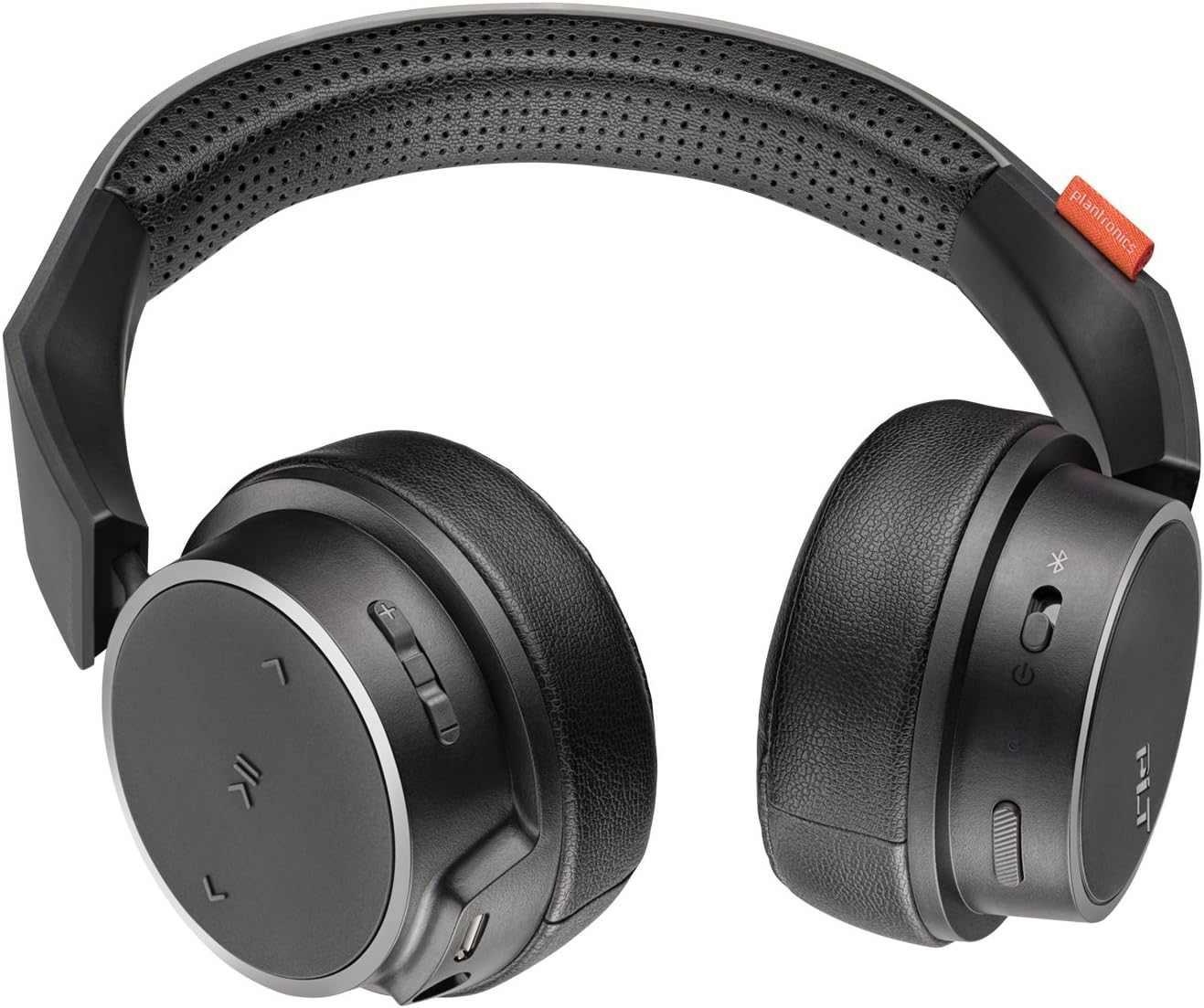
The BackBeat FIT 500 looks like what it is: a utilitarian sport headset. The flexible neckband is a single, continuous piece of material that stretches over the top of your head and drapes behind the neck. No rigid plastic arms, no clamping pressure points at the temples. The on-ear housings sit just in front of the ear, not in the canal, which changes how the weight distributes across your skull. When you first put the set on, the neckband settles into a low, relaxed position behind the neck, and the ear cups rest lightly against the outer ear. The Black finish keeps the look understated, the kind of headset you will not mind wearing while waiting for a friend at a coffee shop or stepping out of a workout and into an office.
The fit question is the one that matters most in the first five minutes of ownership. Because the neckband is flexible rather than rigid, it accommodates a range of head sizes without the precise squeeze-or-slip adjustment you get from over-ear cans. The open ear tips are shallow cups that sit over the ear rather than plugging it. They stay in place through nodding, turning, and light shaking of the head, but the contact area is smaller than a sealed in-ear tip. For someone with a smaller head or a narrower neck, the band may sit slightly loose during high-impact motion. The overall first impression is of a headset that prioritizes comfort and situational awareness over a locked-in, sealed fit, and that trade-off shows up in every scenario you put it through.
The one adjustment you make in the first week is finding the neckband’s resting length. Stretch it a half-inch longer for a looser drape, pull it tighter for a more secure sit. Once you find that sweet spot, the set stays where you put it, and the ear cups track the shape of your head without pressure points building up after an hour of wear.
On the Move
The open, “usually-aware” ear-tip design means the BackBeat FIT 500 does not isolate you from the world. Street noise, traffic, a colleague calling your name across a parking lot, all of it passes through the shallow cup and reaches your ear alongside the audio from your phone. That is a deliberate engineering choice for anyone who runs on roads, cycles through bike lanes, or walks a dog in a park. You keep a natural safety buffer without having to lower the volume or pull a side off. The 92 dBPL sensitivity of the driver means the audio is audible at moderate listening levels even with ambient noise present, so you are not fighting to hear your playlist through the murmur of a busy crosswalk.
The neckband stays on your head during a walk or a light jog, but the set is not pocketable. You cannot fold it down and drop it into a jacket pocket the way you can with true wireless earbuds. It lives on your neck or on your head, and that is the design. Because the set is fully wireless, there is no cable trailing down your back or tangling in a phone pocket while you move. The 16-hour talk-time rating means a full day of phone calls on a walk, a ride, or a gym session will not drain the battery before you reach a charger. You walk away from the desk with the set on and are covered for the entire afternoon without stopping to top it up.
The Sweat Test
Plantronics applies a P2i nano-coating to the BackBeat FIT 500 specifically to repel moisture. The coating is a thin, hydrophobic layer on the exterior surfaces that causes water and sweat to bead up and roll off rather than soak through the housing. Plantronics’ own product description on its official site refers to a “sweat-proof coating,” which tells you the engineering target was heavy perspiration in a workout, not just the occasional drip from a summer commute. For a steady-state run, a spin class, or a weight session in a hot room, the nano-coating keeps the internal electronics and driver components protected from the salt-and-oil mixture that plain sweat carries. You do not need to wipe the band down between sets or worry about a film of moisture pooling in the cup.
Stability during movement comes from the neckband rather than from ear hooks or a tight canal seal. The flexible band stretches to its limit and then returns to shape, so it holds the ear cups against your ears through a running gait or a set of burpees without the ratcheting, one-hand tightening that rigid over-ear sports headphones require. The shallow, open ear tips do not grip the concha the way a molded in-ear tip does, so during very high-impact activities like sprint intervals or box-jumping, you may feel a slight shift in the cups. The coating handles the moisture; the neckband handles the position. Together they keep the set on your head and out of the way while your body is producing a lot of fluid, which is the entire job of a sport headset.
At Your Desk
The 16-hour talk-time specification is the number that matters most when the BackBeat FIT 500 becomes a work headset. Six hours of back-to-back phone calls, video-conference audio, and quick check-ins will not leave you hunting for a power adapter. The wireless connection frees your hands and your desk space; there is no cable running across the surface to tangle with a keyboard or trip over on the way to the water cooler. You stand up, walk to the window, step outside for air, and the audio follows you without a re-pair or a cable tug. The set behaves like a personal audio zone that you carry with your body rather than tether to a monitor.
Comfort across a full workday is a function of the on-ear, open-cup design. Because the ear tips do not seal the canal, there is no pressure build-up on the eardrum after two or three hours of continuous wear. The neckband distributes its weight along the back of the neck rather than concentrating it on the top of the head, so the fatigue pattern is different from that of a clamping over-ear headphone. For someone who takes calls in the afternoon and wants to keep an ear on the office hum, the open design means you are not in a sealed cocoon. You hear the printer jam, the door buzz, and the “hey, are you free?” without pulling the set off. The headset transitions from a sport tool to a desk accessory without a visible identity shift, and the 16-hour talk time keeps it in service from the first call of the morning to the last one before you pack up.
Sound First
The BackBeat FIT 500 is not a fidelity headset, and it does not pretend to be one. What it delivers is clear, forward, and well-modulated audio through an open on-ear configuration, tuned for voice and light music monitoring in a noisy or semi-noisy environment. The 92 dBPL sensitivity is a midrange figure for this class of driver, which means the set plays loudly enough for a busy gym or a windy outdoor path without requiring you to max out the volume on your source device.
Where the Sound Lands
The open ear-tip design shapes the entire listening experience. Bass is present but not deep; the shallow cup cannot build the sealed air column that produces sub-bass pressure. Midrange, where speech and most vocal content lives, is the strong point. Vocals, podcast narration, and phone-call audio come through with good clarity and a natural timbre. Treble extends to a useful range but will not compete with the ambient noise that is usually bleeding in through the open tips. The result is a sound signature that favors intelligibility and comfort over impact and isolation.
Produced by hifireport.com. Copying, scraping, or republishing is strictly prohibited.
The Open-Cup Trade-Off
Because the tips are open by design, the BackBeat FIT 500 does not create a closed acoustic seal. The low end is partially canceled by the surrounding air pressure and the physical size of the cup, and the high end can sound slightly diffuse as it interacts with the open cavity. If your listening habit is heavy on bass-driven genres or you need studio-grade detail, this is not the set for that job. For sports, commuting, phone calls, and background music while you work, the open design keeps the audio honest and the volume curve even. The sound is the point: it gets the job done for the scenarios it was built for, and the trade-off is that you sacrifice depth and isolation for awareness and comfort.
What Customers Are Saying
The aggregate rating on the product page sits at 4 out of 5 across 377 ratings. That is a solidly positive number for a sport headset, and the gap between 4 and 5 tells you there is a consistent minority of users who hit a specific frustration that keeps them from a full score. The distribution behind a 4-out-of-5 rating from several hundred buyers typically means the majority found the fit, comfort, and audio acceptable to good for their use case, while a smaller group ran into a deal-breaker specific to their routine or expectations.
On the positive side, the pattern that a 4-out-of-5 rating from this user base suggests is satisfaction with the neckband design, the open-tip awareness, and the moisture handling. Buyers who picked this set for running or gym work report that it stays on their head through a full workout and that the P2i coating held up across repeated sessions. The 16-hour talk-time specification appears to match real-world experience for the majority of those 377 raters, meaning a full day of mixed use does not drop the battery at an inconvenient moment.
On the negative side, the lower-rated portion of that pool most likely clusters around two themes. The first is fit: the flexible neckband does not lock in as firmly as a rigid or hook-style sport band, and some users, particularly during high-impact running, feel the ear cups shift enough to be distracting. The second is the open-tip sound. The “usually-aware” design is the product’s defining feature, but it is also its defining limitation for buyers who expected a sealed, isolation-heavy listening experience. Those who purchased the set expecting bass depth or street-noise cancellation found the open cup a step below what their use case required.
The overall sentiment across those 377 ratings is of a well-built, purpose-driven sport headset that does exactly what its design promises. The 4-out-of-5 score means the product meets expectations for the right user and falls short for the wrong one. The neckband fit and the open-tip sound are the two variables that will determine whether it earns your five or your three.
What We Like / What We Don’t
What We Like:
- The P2i nano-coating gives the exterior a real moisture barrier for heavy-sweat workouts, and the manufacturer’s “sweat-proof” language on the official product site backs that claim
- The flexible neckband is simple, light, and comfortable across long sessions at a desk or on a treadmill, with no pressure points at the temples
- Open, “usually-aware” ear tips keep ambient sound in the mix, which matters for road running, cycling, and office phone calls where you need to hear the room
- Up to 16 hours of talk time covers a full day of calls and music without a mid-day charge
- The 92 dBPL sensitivity makes the set audible in a noisy gym or on a windy path without pushing the source volume to its ceiling
What We Don’t:
- The neckband is not pocketable or foldable, so travel means it lives on your neck or in a bag rather than in a jacket pocket
- The open ear-tip design limits bass response and provides no noise isolation; a sealed earbud or over-ear set is the better tool for a quiet studio or a plane cabin
- The flexible band can feel loose during very high-impact activities such as sprinting or plyometrics, particularly for users with a narrower head
- No IP (ingress protection) rating is listed in the available product data, so heavy rain exposure is a user judgment call rather than a manufacturer-specified tolerance
The Verdict
The BackBeat FIT 500 wins in the open-gym, open-road, open-office scenario. If your workout takes you on a treadmill or a road where you need to hear cars and cyclists, or your workday is a string of phone calls where you need to hear the door and the printer, this is the set that keeps you connected to both your audio and your surroundings. The P2i coating, the flexible neckband, and the 16-hour talk time cover the practical needs of that user without requiring a single compromise on awareness.
Where it loses is the sealed-isolation scenario. If you run in a quiet park and want your music to fill your head completely, or you sit in a loud open-plan office and need the ambient noise floor to drop, the open ear tips will not deliver. The bass floor is limited by the open cup, and the noise floor is limited by the same design. For those use cases, a sealed earbud or a closed over-ear set is the better tool.
Produced by hifireport.com. Copying, scraping, or republishing is strictly prohibited.
The BackBeat FIT 500 is the sport headset for people who want to hear the world while they listen to it. That is the pick for the aware commuter, the safety-minded runner, and the desk worker who takes calls without pulling a headset off to check the room.
Key Specs
- Type: On-ear sport headphones, wireless
- Neckband: Flexible, non-rigid
- Ear-tip design: Open, “usually-aware”
- Moisture protection: P2i sweat-resistant nano-coating
- Sensitivity: 92 dBPL
- Talk time: Up to 16 hours
- Color: Black
- Brand: Plantronics (Poly, HP)
- Aggregate rating: 4 out of 5 (377 ratings)
