
PMOPDSNNE Wireless Earbuds, Bluetooth 5.3 HiFi Deep Bass with Mic, 120H Playtime LED Display, IPX7 Waterproof Button Control True Wireless Earphones Review
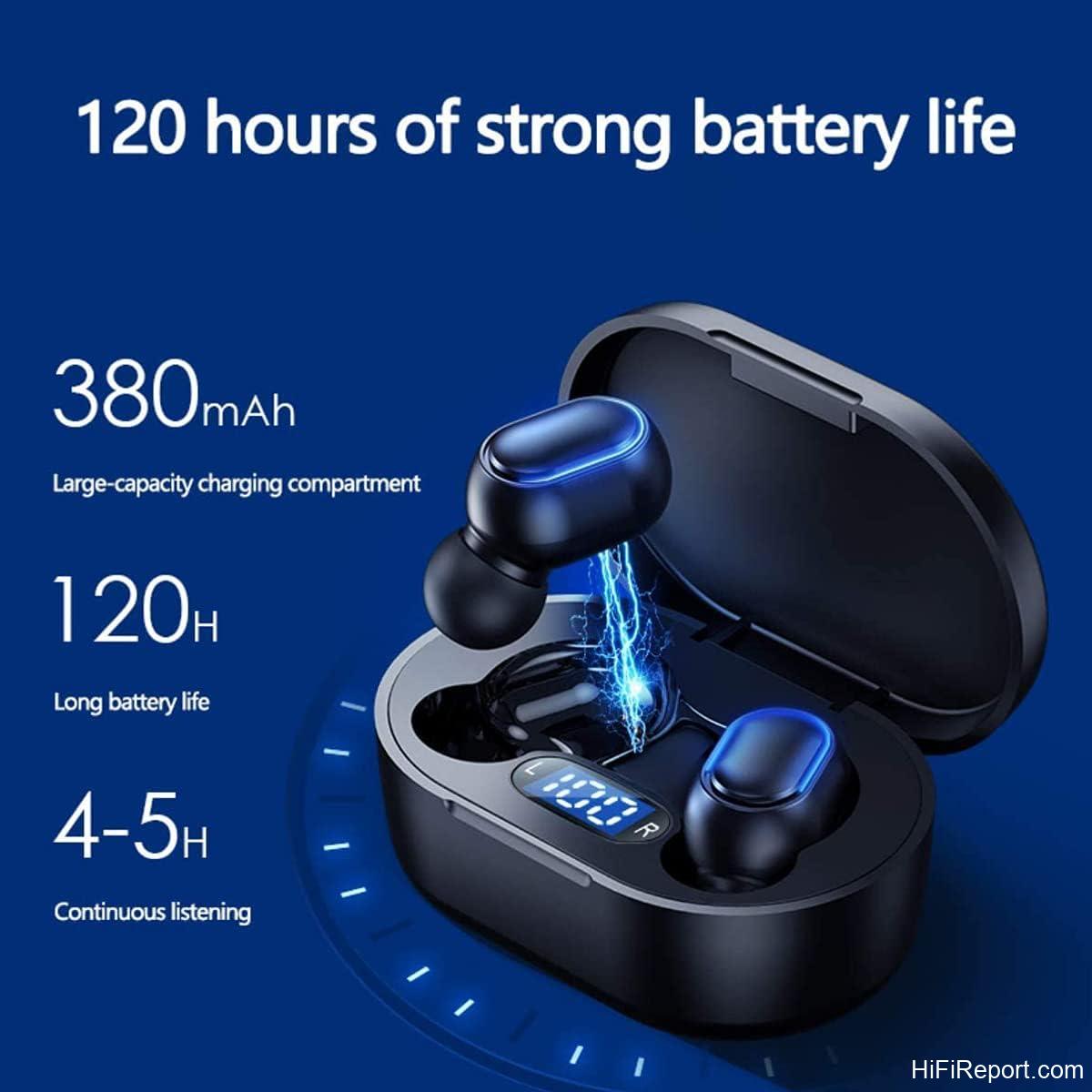
The 120-hour playtime figure on the listing is cumulative across repeated wall recharges, not a single-charge runtime. The manual says 5 hours per earbud, and the 200mAh case battery covers roughly two full recharges of the pair before you need an outlet. The rest of the spec sheet (button controls, symmetric fit, app-free pairing, IPX7 rating) is largely confirmed by owner reports. The battery headline is where marketing math and real use diverge, and that gap is the main thing to weigh before buying.
The Headline Act
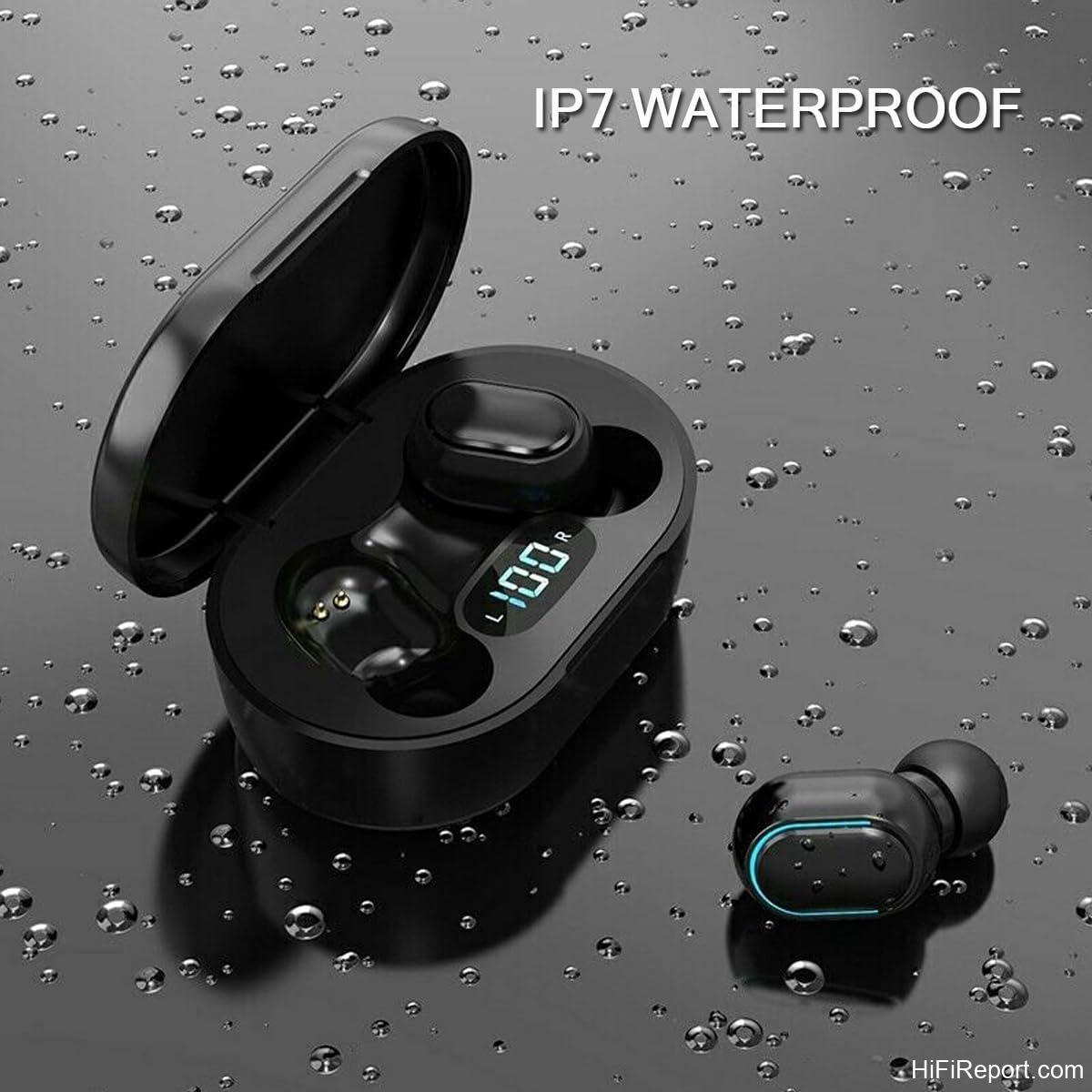
The number that pulls a buyer off the Amazon page is “120 hours.” The title and feature bullets both carry it, and for someone who charges a case once a week or works shifts where plugging in between commutes is inconvenient, a battery that genuinely lasts that long changes the daily routine. The LED display on the front of the case shows remaining charge for both earbuds and the case itself, so you should not need to guess when to top up.
The catch is that “120 hours” means repeated case recharges from wall power over a span of days. The manual states 5 hours of playback per earbud on a full charge, and the case battery sets a hard ceiling on how many recharges you get without plugging in. If you need all-day battery from a single case cycle, this is not the set for you.
Marathon Playtime Under the Hood
Each earbud holds a 50mAh battery; the case holds 200mAh. A reviewer who worked through the capacity math noted the case is large enough for two additional full recharges of the pair. A realistic ceiling on the go, without wall power, lands well below the 120-hour headline. The number becomes meaningful only if you recharge the case from an outlet multiple times over a week or longer.
An owner reported that newer production batches last only about an hour on a charge, down from what that owner described as a much longer runtime in earlier units. If that report is accurate, the 5-hour manual figure is already optimistic for current stock. The LED display helps: a quick check before a long day saves you from finding the buds dead at the halfway point.
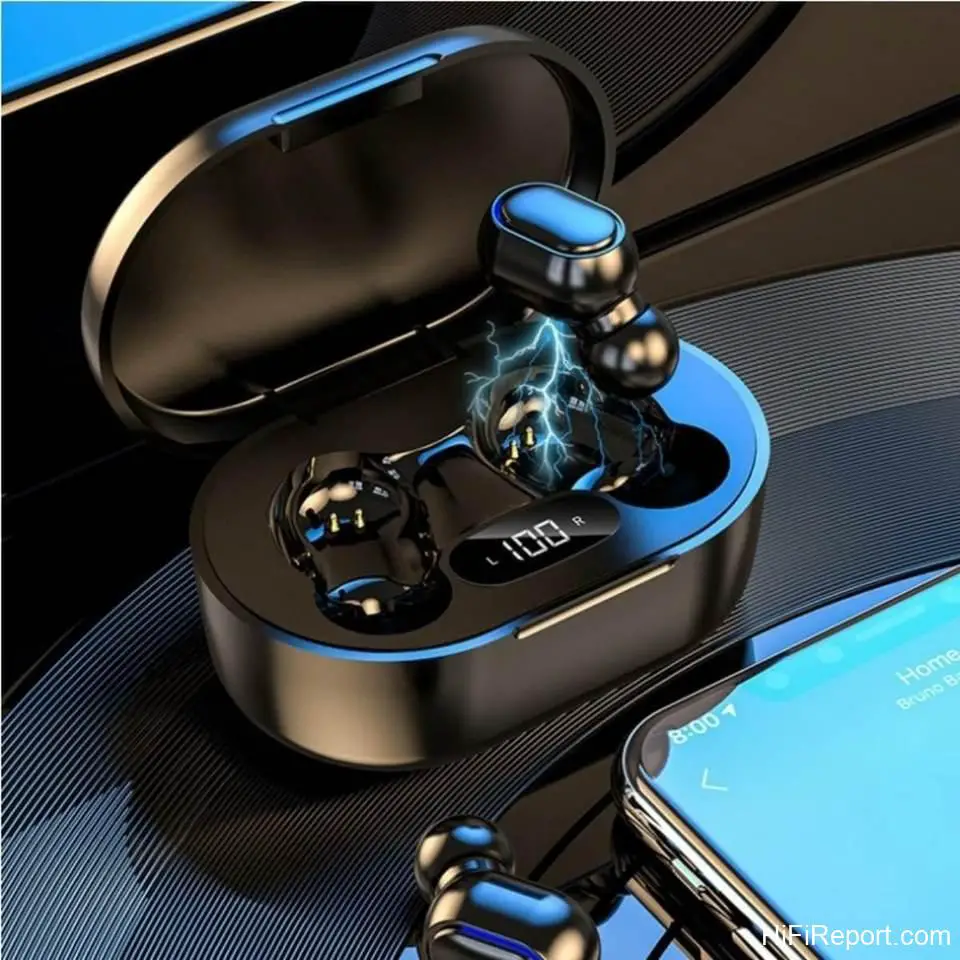
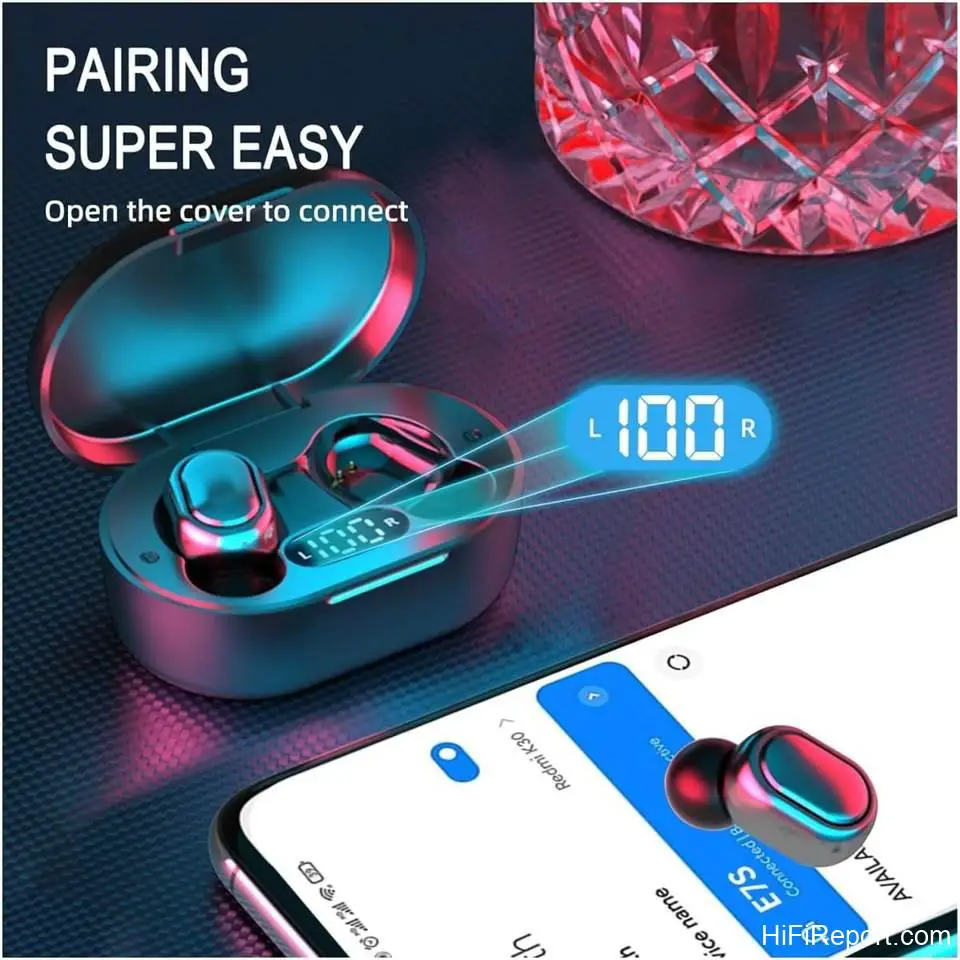
The charging port is Micro-USB, not USB-C. A cable ships in the box, but anyone who has retired the last Micro-USB cable from a drawer will need to keep the one included. Pairing is one-step: open the case, the earbuds auto-pair with your phone, you start listening. No app is required for battery level; the LED display handles that on its own.
Sound Check
Out of the box, these earbuds produce clear, mids-forward sound with a solid low end that suits podcasts, TV dialogue, and casual music. Where they fall short is upper-frequency detail with recordings from the 1970s forward. An owner who works in a mastering studio and in radio noted that 1960s and earlier material plays without a perceptible gap, while later recordings lose top-end sharpness. For button-controlled TWS earbuds at this price, that roll-off is the key limitation.
Stereo separation and channel clarity earn consistent praise. The same studio-background owner called the earbuds great for movie watching, with good separation and no muddiness in the mix. Another listener confirmed they work well for YouTube and podcasts, calling the overall output clear with decent bass. Each bud functions independently, so single-ear use for long days at a desk or on a train does not require both buds in.
The “HiFi Deep Bass” label in the listing overstates what the drivers deliver. The bass is present and thumps without bloating into the mids, though it lacks the controlled, extended low end you get from larger drivers or a dedicated bass tuning. Owners using these for voice content, ambient soundscapes, or pop and rock at moderate volumes will find the tonal balance acceptable. Dense orchestral or electronica will expose the limitations quickly.

Beyond the Headline
Both earbuds are physically symmetrical with no left or right marking, so either bud fits either ear. Multiple owners called this a welcome departure from the L/R confusion in most TWS pairs. The silicone ear caps sit snugly in the canal, and the overall package is smaller and lighter than a typical phone power bank. A runner described the profile as slim enough for a full-size driver without the heft that makes heavier buds feel precarious during a jog.
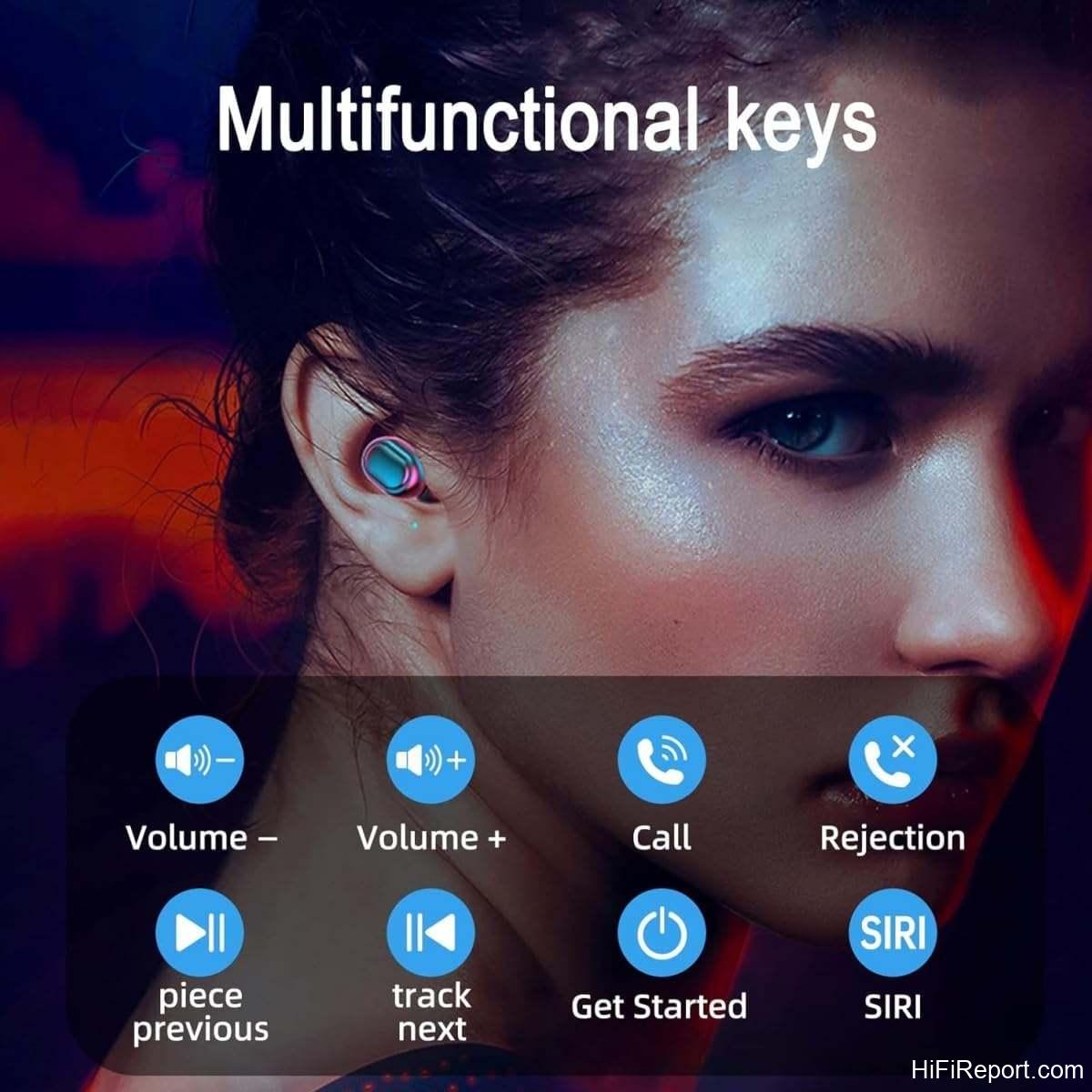
Control splits between a physical click button (pause, skip, call answer, volume) and a touch-sensitive surface underneath. The button is the primary input; the touch layer handles additional functions. Some owners accidentally trigger the touch sensor while pressing the button, and the current firmware offers no way to disable touch input. The built-in mic supports voice-assistant commands, including Google voice control, though one owner noted a slight delay when switching between music playback and a voice prompt.
Written for and first published on hifireport.com. Republishing requires permission.

The IPX7 waterproof rating is the claim most likely to not survive independent verification. The physical click buttons on each bud introduce a moving part that standard IPX7 TWS designs avoid. A skeptical reviewer pointed out that true IPX7 earpieces are typically sealed solid without click buttons and made no effort to submerge the earbuds for a personal test. For rain, sweat, and splash exposure the rating is reasonable. For deliberate submersion, the button mechanism is a point of uncertainty. Connection range is listed at 33 feet; one owner confirmed the signal holds within a single room but degrades at the edge of the next.
Day-to-Day
For a gym session or outdoor run, the slim profile, silicone grip, and physical button controls make these practical. You skip tracks and adjust volume mid-set without fumbling a touchpad, and the IPX7 rating covers sweat and light rain. The symmetric design means you do not waste time figuring out which bud goes where before lacing up. The caveat: if your workout involves heavy rain or you intend to submerge the buds, the button mechanism limits the confidence you can place in the IPX7 seal under those conditions.
At a desk or on a commuter train, the one-ear mode is the standout use case. Pull one bud out, keep the other in, use the mic for phone calls or voice assistants without losing your place in a podcast. The 5-hour single-charge runtime comfortably covers a workday of on-and-off listening. The LED display on the case lets you check remaining charge at a glance during a lunch break. The Micro-USB port is the one ergonomic gap: if you have not kept a Micro-USB cable handy, plan to use the one included in the box.
Written for and first published on hifireport.com. Republishing requires permission.
What Customers Are Saying
The aggregate rating sits at 4.1 out of 5 across 843 reviews, and owner feedback splits around the battery question. The strongest endorsements come from buyers who confirm long runtimes and stable pairing. A user who bought three sets as backups said the earlier production runs held a charge for a full workday and the buttons removed the accidental-touch frustration common to pure tap-to-control buds. A second owner, working from a mastering-studio background, called the sound great for TV and stereo separation good, and connected the earbuds to a laptop for daily listening without dropping the link.
The harshest report, a one-star review, describes newer units that last only about an hour on a charge, with visibly different material quality compared to what that owner received in an earlier purchase. If the product has been retooled, the 5-hour manual spec and the 120-hour listing claim may no longer match what ships today. Confirm the runtime on the unit you receive before committing to a multi-pack.
Recurring minor complaints: no L/R markings on the buds themselves (identification requires a test tone), a garbled instruction manual with placeholder text, and a Micro-USB port in a category that has largely moved to USB-C. A Linux-specific issue surfaced where the earbuds negotiate A2DP for audio playback but do not reliably switch to HFP for microphone input, making video calls inconsistent on Ubuntu. None of these are show-stoppers for the average user, but they add friction at setup.
Pros and Cons
Pros:
- Physical button controls remove the accidental-touch problem common to pure tap-only buds
- Symmetric earbuds fit either ear, removing the L/R guesswork
- LED display on the case shows charge level at a glance without an app
- 5-hour single-charge runtime covers a full day of casual listening
- IPX7 rating handles sweat, rain, and splash exposure for workout use
- One-step pairing: open the case, auto-connect, no app required
Cons:
- 120-hour total playtime claim is cumulative across many wall recharges, not a single case cycle
- No left/right markings on the buds; identification requires a test tone
- Micro-USB charging port lags the USB-C standard now common in the category
- Instruction manual contains garbled, placeholder text
- Newer production units reportedly last only about an hour per charge
- Touch layer can trigger accidentally alongside the physical button
The Verdict
These earbuds make sense for a buyer who wants a no-fuss, button-controlled TWS set for daily listening, workouts, and one-ear desk use. The symmetric fit skips the left/right ritual, and the app-free pairing keeps setup to one step. The 120-hour playtime headline is a cumulative marketing figure that does not survive a close read of the manual and case capacity. Anyone who needs all-day battery from a single case cycle should look at a set with a larger case cell. If the battery claim is the deciding factor, verify the 5-hour per-charge runtime on your unit before committing to a multi-pack. The button controls, symmetric fit, and app-free pairing are what actually differentiate this set in daily use.
Best for a commuter, gym-goer, or TV listener who wants button controls, a slim fit, and no app dependency; look elsewhere if you need reliable all-day single-case battery, USB-C charging, or audiophile-grade frequency response for critical listening.
Written for and first published on hifireport.com. Republishing requires permission.
Specifications
- Bluetooth version: 5.3
- Connection range: 33 feet
- Waterproof rating: IPX7
- Charging port: Micro-USB
- Charging case display: LED digital
- Controls: Physical button plus touch surface on each bud
- Earbud battery: 50mAh per bud
- Case battery: 200mAh
- Single-charge runtime (manual): 5 hours
- Total playtime (listing claim): 120 hours
- Pairing method: One-step, auto-pair on case open
- Mic: Built-in, supports voice assistant
Questions Worth Asking
Do the 120 hours of playtime mean one charge lasts 120 hours?
No. The 120-hour figure in the listing is a cumulative total across many case recharges from wall power. The manual states 5 hours of playback per full charge of the earbuds. The case, with its 200mAh cell, supports additional recharges of the pair, but you must plug the case into a wall outlet to keep the cycle going.
How do I tell which earbud is left and which is right?
You cannot, because the buds are physically symmetrical with no L or R markings. A reviewer found the only reliable method is to connect the buds to a phone, open a test-tone app, and play a left/right channel test to identify each bud. Once identified, you simply remember the orientation for future use.
Will the IPX7 rating keep the buds safe in heavy rain or a shower?
The IPX7 rating covers submersion under controlled lab conditions, but the physical click buttons on each bud introduce a moving part that standard sealed IPX7 designs avoid. For sweat, light rain, and splash exposure the rating should hold. For deliberate submersion in a shower or pool, the button mechanism is a point of uncertainty that no owner review has independently verified.
Can I use these for video calls or phone conferences on a laptop?
On iOS and Android devices the built-in mic works for calls and voice-assistant commands. On Ubuntu Linux, one reviewer reported that the earbuds negotiate A2DP for audio playback but do not reliably switch into HFP for microphone input, making inbound audio during video calls inconsistent. Repeated pairing attempts may resolve the issue, but it is not guaranteed.

- 【Bluetooth 5.3 Technology 】 The green PMOPDSNNE wireless earbuds use the bluetooth 5.3 chipset. There is a faster and more stable signal transmission and has successfully achieved low latency without interruption. Even if you put the mobile phone in your pocket, the bluetooth earbuds will not be disconnected, the connection distance is up to 33ft.
- 【One Step Pairing Technology 】 Open the charging case and you can automatically and seamlessly pair this device with your Bluetooth-Compatible device without any problem. You don't need any skills to use Bluetooth-Compatible earbuds. After a few seconds, you will enter the world of pleasant music. You don't need to open the app to see the power of the headset. The LED battery shows that it can show the charge level of the headset.
- 【LED Digital Display & Hi-Fi Sound】- Our sport earbuds have Smart LED digital display of the charging case, you can easily know the battery consumption of wireless earbuds and the charging case, so you can master the best time to charge them. Each sport earbud has buttons to control the function of answer and reject phone, volume adjustment, switch music , voice assisatant. Stereo sound, handsfree calling during sports anytime and anywhere.