
PureDC-B1 Review
The first key to EAhibrid’s success lies in the professional division of labor behind their R&D team. The critical circuit design is helmed by Marshall Lee, the architect behind Enigma. Marshall is a chip design expert with profound knowledge in both analog and digital circuitry. His choice of battery power is rooted in his expertise – he sees it as the optimal linear power solution after careful consideration.
Product planning and promotion are spearheaded by Paul Huang Wen-Peng. Originally an advertising film producer, Paul is also a passionate audiophile. To deepen his audio knowledge, he even traveled to the United States to obtain the highest-level THX Level III certification. He recognized that power supply was a significant bottleneck limiting the quality of streaming music playback, and external battery linear power offered the best resolution.
Crucially, EAhibrid isn’t just about technical prowess. Designer Marshall has played musical instruments for years and possesses an accurate understanding of the sound of real instruments. Furthermore, Paul specifically invited Associate Professor Shen Sheng-De from the Department of Filmmaking at Taipei National University of the Arts to serve as their sound consultant.
Professor Shen is not only a Golden Horse Award winner for Best Sound but also a recipient of the Asia-Pacific Film Festival Award for Best Original Music. His involvement in sound tuning demonstrates EAhibrid’s serious commitment to sonic refinement, not just technical execution.
Identifying the Streaming Audio Bottleneck
Another key to EAhibrid’s success is the robust capability of its products, which precisely addresses the needs of streaming music enthusiasts. What do streaming players need? They need better sound quality. With the rapid popularization of high-resolution music streaming, the sound quality theoretically should surpass CD standards. However, many users find that streaming audio quality falls short of expectations. Where exactly is the problem?
The finger ultimately points to contamination from power supply noise.
Any audiophile with a basic understanding of audio knows the importance of power quality for music reproduction. Before streaming became widespread, most Hi-End audio equipment incorporated significant power filtering and regulation within their internal power supplies. While power quality still had an impact, external power conditioning wasn’t strictly essential. Entering the streaming era, the situation changed dramatically.
Audio systems are now connected to devices like computers and NAS drives. Moreover, the playback chain inevitably includes network equipment such as routers, switches, and hubs. These network devices are not designed with audio reproduction in mind and often overlook power quality. Most are powered by external switching power supplies, typically integrated into the wall plug – the ubiquitous “wall wart.” Wall warts convert AC mains power into specific DC voltages.
The problem is that cheap switching power supplies generate significant noise. While this power noise doesn’t affect the operation of network devices, it can creep into the analog and digital circuits of audio equipment via signal transmission, interfering with the music signal.
The PureDC-B1 Solution: Battery Power
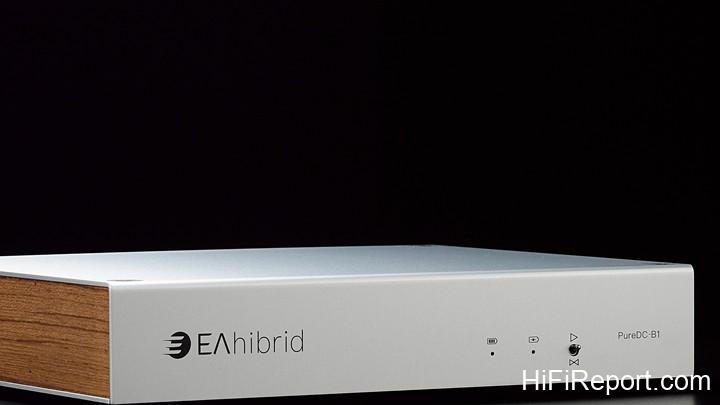
Simply put, improving the power supply quality of network equipment leads to a noticeable improvement in streaming playback sound quality. Consequently, various linear power supply devices designed to replace wall wart switching power supplies have sprung up like mushrooms. EAhibrid’s PureDC-B1 is a product born from this very logic. However, unlike some competitors, EAhibrid’s linear power solution employs the theoretically purest and most stable battery power architecture.
Mention “battery power,” and audiophiles are bound to take notice. The intuitive thought is that battery power completely isolates the system from mains noise and voltage fluctuations. German company Stormtank specializes in audiophile-grade battery power.
While their top-tier battery power supplies can cost nearly a million NTD (approximately 32,000 USD) and are as bulky as a small coffee table, high-end enthusiasts still invest because using Stormtank significantly elevates the playback quality of their audio systems. And what about the PureDC-B1 being reviewed today? Like Stormtank, it uses battery power, but it’s desktop-sized and priced at just over twenty thousand NTD (approximately 800 USD).
It’s no wonder it’s become an instant market sensation.
Of course, to be precise, EAhibrid and Stormtank are not identical and don’t directly replace each other. Stormtank first converts AC mains power into DC, stores it in a massive battery bank, and then converts it back to pure AC output for audio equipment. The PureDC-B1, however, doesn’t convert back to AC. It directly outputs a specific DC voltage from the battery.
Most audio equipment already has built-in rectification circuits and consumes AC, so the PureDC-B1 isn’t suitable for such components. But if your audio equipment or network devices are powered by external DC wall warts, replacing them with the PureDC-B1 can significantly improve power quality and playback performance.
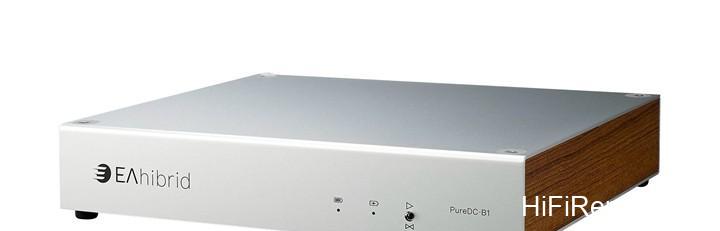
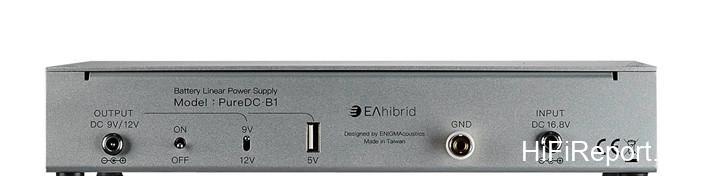
The PureDC-B1 is incredibly easy to use. It offers three voltage outputs: 9V, 12V, and 5V via USB. The 9V/12V output provides a maximum continuous current of 2.5A, with peak current reaching 10A. The 5V USB output provides a continuous current of 1A. This is sufficient for most common devices. It’s important to note that you can only use either the 9V or 12V output at a time. If your device consumes low power, you can simultaneously use the 9V/12V (whichever is selected) and the 5V USB outputs.
However, the most ideal scenario is using one PureDC-B1 to power a single device. Powering each device independently, replacing all DC wall warts in your system with PureDC-B1 units, ensures complete isolation from mutual interference. If you only have one PureDC-B1? According to EAhibrid’s testing, the first device to replace the wall wart on should be your router, as this yields the most significant improvement in overall playback performance.
Beyond network devices, the PureDC-B1 can, of course, power audio equipment requiring DC input. The Mytek Brooklyn Bridge streaming DAC, used for this review, is a special case. It has two power modes: AC mains input or 12V DC input. The latter bypasses the internal switching power supply. Comparing the Brooklyn Bridge using both power inputs clearly illustrates the audible difference brought by the PureDC-B1.
Incidentally, EAhibrid’s next product will be an R2R multi-bit decoding DAC, which will also be paired with the PureDC-B1 for power.
Technical Highlights of the PureDC-B1
Now, let’s delve into the technical core of the PureDC-B1. While battery power can isolate mains noise, simply using a battery doesn’t guarantee good sound. Some audiophiles use power banks for DC power, but the results aren’t as expected. This is because battery power presents several challenges that must be overcome, and the PureDC-B1’s circuit design offers the optimal solution for battery power. Here are five key technical features of the PureDC-B1:
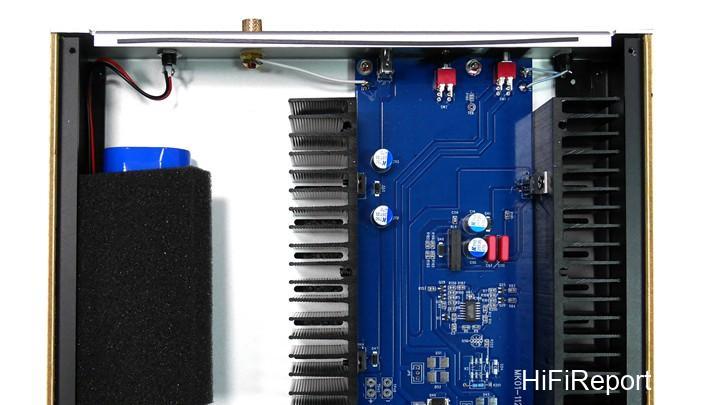
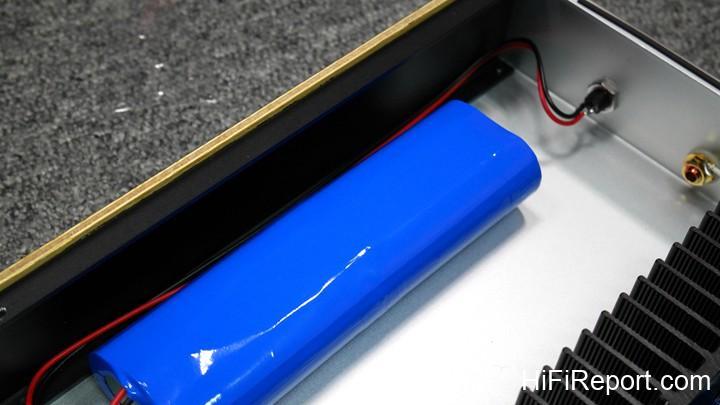
First, the PureDC-B1 uses 21700 rechargeable lithium batteries, the same type used in Tesla electric vehicles. These are currently the most advanced rechargeable batteries, offering 50% more capacity than similar-sized cells and low internal resistance. This low resistance makes them more suitable for audio power supply than high-resistance supercapacitors, resulting in better sound.
Second, the PureDC-B1’s battery pack consists of four series-connected 21700 cells, and these four cells are specifically matched. This matching procedure is often skipped in typical battery power designs, but battery matching does impact playback performance.
Third, the PureDC-B1 features three independent voltage regulation circuits. This is crucial for battery power. With simple battery power, the output voltage drops as the charge decreases. This is a primary reason why using a power bank doesn’t yield great sound. The PureDC-B1’s regulation circuits ensure a constant output voltage, which is the key to achieving the purest and most stable DC power.
Fourth, the PureDC-B1 boasts sophisticated battery management technology, preventing overcharging and effectively extending battery life. The PureDC-B1 offers two operating modes: pure battery power, which completely disconnects from the mains, and infinite power mode, which allows simultaneous charging and powering. Pure battery power is, of course, the ideal way to use it.
Battery life varies depending on the power consumption of the connected device, but typically, you can expect 8-10 hours of continuous use on a full charge. Does charging while listening degrade the sound? The PureDC-B1 includes buffering circuitry, so even when powering and charging simultaneously, the impact on sound is barely perceptible.
Fifth, the PureDC-B1’s circuitry has been sonically tuned. Yes, the choice and combination of circuit components affect the sound performance of battery power. After extensive listening comparisons, EAhibrid selected high-grade components such as WIMA film capacitors and Kemet organic polymer capacitors for the circuit. Even the internal wiring uses single-crystal silver conductors.
Listening Impressions (First Reviewer)
What kind of improvement can the EAhibrid bring to audio reproduction? I started by testing piano playback, listening to Schubert’s D960 Piano Sonata, specifically the performance by Mitsuko Uchida. Uchida’s touch is extremely light and soft, creating a floating sensation, like wandering through a misty forest. After switching to the PureDC-B1, the ppp touch remained incredibly gentle, but the original hazy ambiguity disappeared.
The sheen on the key strikes began to emerge, and the sustain and overtones in the decay became richer and more extended, further enhancing the dreamy atmosphere this performance seeks to create.
It’s like seeing the most distant stars in a clear night sky – the light is faint, but you can distinctly feel its presence. Any hint of haze or turbidity would obscure this weak light. The role of the PureDC-B1 is to completely eliminate any mist from the music reproduction, allowing the musical vision Mitsuko Uchida intended to convey to be truly recreated. This sense of emotional connection alone is enough to prove the value of the PureDC-B1.
Next, I listened to Schubert’s D934 Fantasy performed by violinist Lydia Mordkovitch and pianist Gerhard Oppitz. This is my favorite recording of this piece, although the recording venue has a bit too much reverberation, which slightly affects the clarity of the violin and piano. After switching to the PureDC-B1, the soundstage remained expansive, but the outlines of the instruments and imaging became more stable.
The string lines also became more focused and three-dimensional, simultaneously revealing a more delicate and dense, realistic texture. The piano’s high-frequency key strikes were also more cohesive and distinct, emanating a transparent yet warm texture.
Listening to Lou Reed’s “Vanishing Act,” with the PureDC-B1 connected, the rich piano overtones at the beginning of the track instantly filled the entire listening space, making it clear what is meant by the elusive “airiness” – a listening state difficult to describe in words. The human voice in the midrange became more focused and full-bodied, and the details of lips and teeth sounds were richer and more lifelike.
On Norwegian guitarist Terje Rypdal’s album “The Singles Collection,” the low frequencies became more focused after implementing the PureDC-B1. The impact was visceral, and the weight of the bass felt deeper. In contrast, without the PureDC-B1 power supply, the low-frequency quantity was still abundant, but the bass shape was two-dimensional, lacking the layered depth. Another significant difference was that the low-frequency transients became quicker and more articulate with the PureDC-B1.
Without it, the music felt sluggish and somewhat listless. Don’t underestimate the difference in transient speed; if the bass transients aren’t fast enough, the unique rhythm and groove of this album cannot be fully expressed, and the most captivating elements of the music lose their charm. This demonstrates just how crucial a good power supply is for faithfully reproducing the original musical intent.
The intuitive audiophile belief that battery power is the most ideal solution is true, but achieving it perfectly is far from easy. The PureDC-B1 is one of the very few external linear power supplies that thoroughly tackles the challenges of battery power. The purity and stability it provides are also difficult for typical linear power supplies to match. The sonic improvements brought by the PureDC-B1 aren’t just about more energetic reproduction, richer details, and a wider soundstage.
It also makes the sound quality richer, more natural, more three-dimensional, and more lifelike. Most importantly, it makes the music reproduction more engaging, allowing the listener to be more immersed in the atmosphere created by the music. At a price just over twenty thousand NTD (approximately 800 USD), it achieves a significant improvement that even more expensive cables cannot provide. Once you’ve used it, you might just find yourself buying one after another.
**********
Further Listening Impressions (Second Reviewer)
This linear power supply designed by EAhibrid has been quite a sensation recently within our audio community. First, Editor-in-Chief Liu gave it early exposure on his personal Facebook, praising its excellent improvement effect and declaring it incredibly cost-effective. Later, when the product arrived at the office, it caused quite a stir in the editorial department, with everyone scrambling to get a listen.
Naturally, the feedback I heard from them was overwhelmingly positive. I initially considered borrowing a unit to listen to at home. However, I ultimately decided against it, fearing that the effect would be too good and lead to an unexpected expense. After all, I had just upgraded my home audio system recently and really couldn’t afford any extra unplanned spending. But as fate would have it, the popular EAhibrid linear power supply was scheduled for a “group listening session” in this issue.
After listening, I understood why everyone’s evaluation of it was so high. For this listening session, I adopted a “reverse listening” approach – first listening with the additional linear power supply connected, getting familiar with the sound, and then disconnecting it, letting the source component’s internal power supply take over.
At the beginning of the listening session, I noticed that the system sounded particularly lively and detailed when connected to the linear power supply. Even with just a solo piano recording, it managed to extract all the faint overtone details surrounding the fundamental notes. The transparency of the piano performance was also exceptionally good, making you feel particularly close to the performer, allowing you to directly experience every subtle dynamic expression.
Furthermore, the music’s resolution was notably high. Playing piano and violin pieces, the tonal gradients were incredibly clear, and the timbre was exceptionally beautiful. When I switched back to the source’s internal power supply, the soundstage transparency dimmed slightly, and the resolution was less pronounced. I clearly felt that the ambient overtone details in the air decreased, losing that sense of air movement present in live recordings. There was also a difference in the bass.
Initially, the outline of the double bass was more clearly defined, the shape was complete with clean edges that didn’t diffuse. After switching to the source’s internal power, the bass cohesion slightly decreased, and the separation between instruments wasn’t as high. Overall, the improvement was very noticeable. I believe it can be considered an essential component for any streaming system.
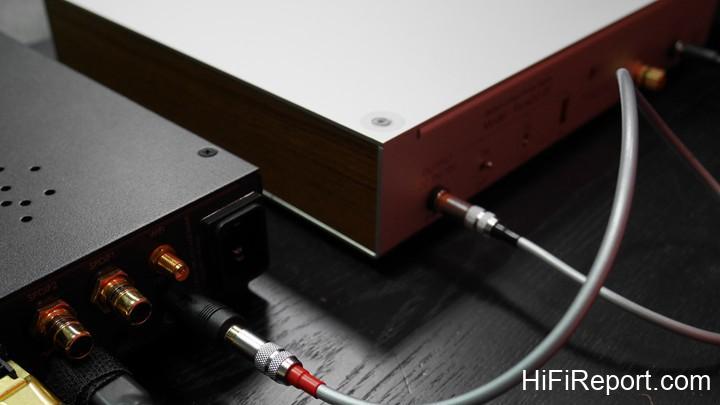
When many audiophiles hear about external power supplies, they often think of heavy linear power supplies using toroidal transformers. However, the best power solution is theoretically battery power, and the Tesla battery module used by EAhibrid is quite compact, making the EAhibrid unit particularly neat. This somewhat made me forget that, theoretically, its optimization capabilities rival many heavyweight power supply components!
In a way, it shatters the prejudice that “if it’s not heavy, it’s not powerful.”
For this review, I connected it to my Mytek. When I first played the double guitar performance by GONTITI, my impression was that the guitars’ sound gained significant focus. They became very solid, and their weight felt noticeably increased. Moreover, the shapes of both guitars became larger and separated further outwards, yet they didn’t feel hollow; the overall sound was very substantial.
The details of the guitar plucking were also incredibly pronounced – there were endless minute sounds to capture!
Switching to Japanese pop singer Reol’s brilliant track “Hakken” (White Night), I was genuinely astonished when the electronic bass kicked in! Each bass hit was not only perfectly formed, but the impact and depth of the consecutive beats were incredibly clear and highly elastic. The impact felt like amplifying the sensation of an audiophile system to fill an entire nightclub. Furthermore, Reol’s voice is on the higher side.
Without this power supply, her voice often sounded slightly brittle or lacking in moisture. After connecting the power supply, I realized that Japanese recordings and post-production are definitely not that imprecise. Reol’s extreme vocal artistry, even at high speeds, was reproduced by the system with excellent thickness and vocal texture. The rapid Japanese articulation was super clear. Combined with the globally magnified sound effects and increased separation, it was truly exhilarating.
Similarly, in YOASOBI’s track “Monster,” the separation received a perfect score improvement. Also, during dynamic bursts, the sense of breakthrough with the power supply connected was truly impactful. The entire system was completely rejuvenated by this simple change in power supply. This battery linear power supply is truly an extraordinary piece of equipment!
Specifications
* Battery Power Linear Power Supply
* DC Output Voltage: 9V/12V (continuous output 2.5A, peak 10A), 5V USB (continuous output 1A, peak 1.5A)
* Charging Input Voltage: 16.8V/2A
* Dimensions: 276×245×50mm
* Weight: 2.55 kg