
QUAD 33 Preamp / 303 Power Amp Review
In an era when early transistor amplifiers often faced skepticism, Peter Walker boldly rose to the challenge. In 1967, he introduced the QUAD 33 preamplifier and the QUAD 303 power amplifier, a combination that exemplified his unwavering design philosophy: simplicity and reliability. This duo quickly became immensely popular across the UK and Continental Europe, with audiophiles praising their exceptional linearity, low distortion, precision, and engaging sound.
The Enduring Allure of Vintage QUAD
Even after nearly sixty years since their debut, well-maintained vintage QUAD 33 and QUAD 303 units remain cherished by seasoned enthusiasts who continue to enjoy their music through them.
At this point, you might assume that for these old-school enthusiasts, it’s more about nostalgia than music. However, I beg to differ. I believe that classic audio products from bygone eras possess a unique, unmistakable character, much like how we instantly recognize the voices of singers from decades past. It’s not that modern components lack character, but their sonic personalities are often less distinct.
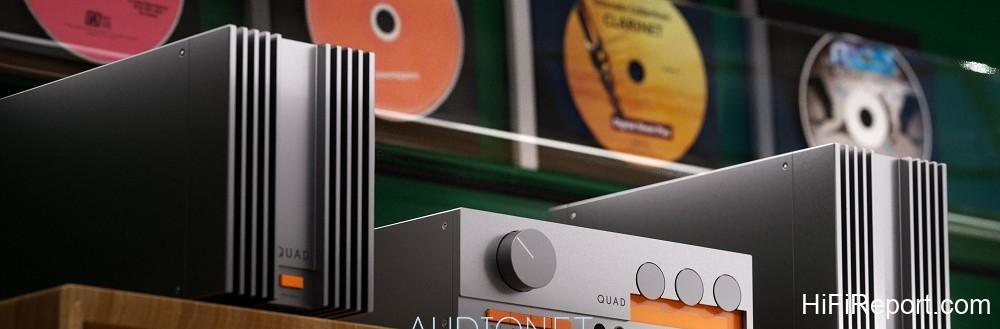
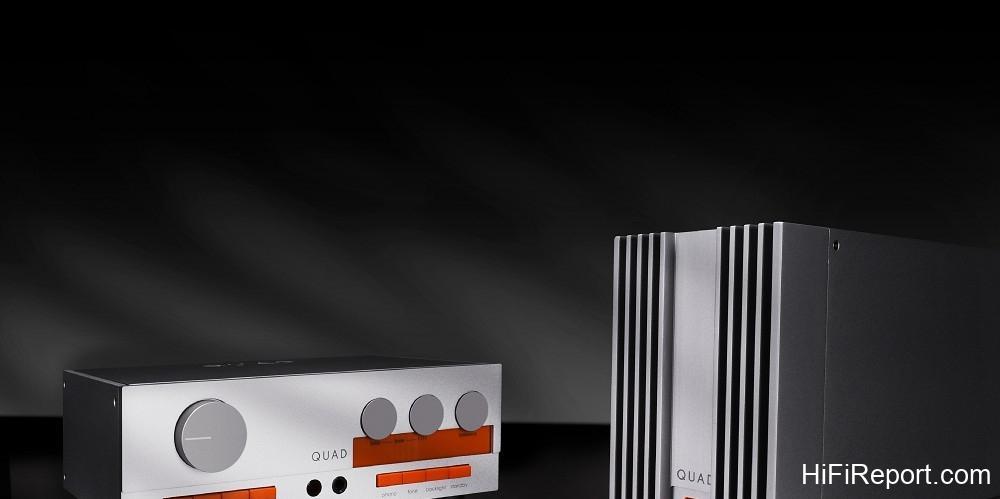
The grandfather-era amplifiers that still command dedicated maintenance from old players often share a common trait: “warmth.” They deliver a rich, flavorful sound that allows for effortless, all-day listening without much explanation—what audiophiles affectionately call “analog sound.” The QUAD 33/303 pre/power amplifier set reviewed here, launched in December 2024 and recently made available worldwide, sports a charmingly retro aesthetic that feels like a time-traveler from the 1960s.
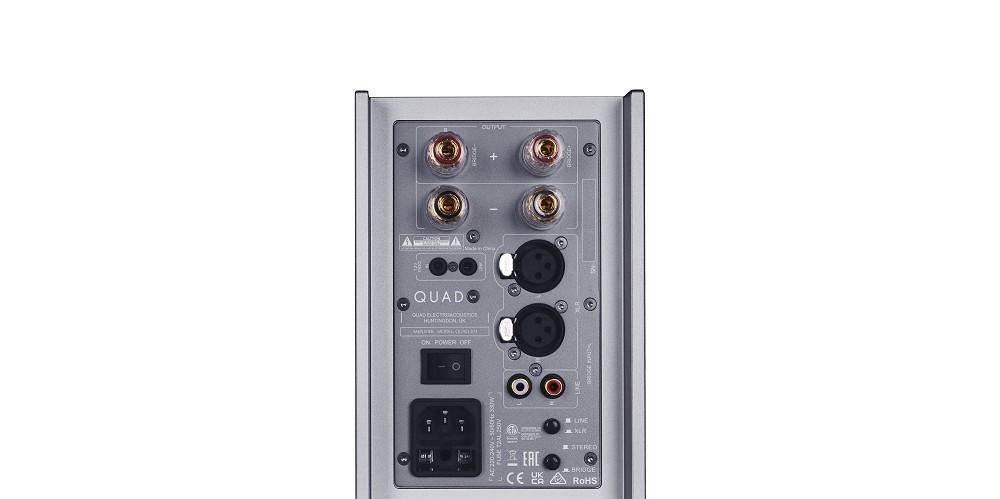
Before my audition, I eagerly anticipated whether their sound would indeed capture the essence of those classic vintage units.
Recreating Vintage Sound: More Than Just a Copy
Making a sound like a vintage unit—is that so hard? Couldn’t one simply copy the original circuit? This line of thinking isn’t entirely wrong; many reissued tube amplifiers have done exactly that, fulfilling the desire of enthusiasts to own a “brand-new vintage” piece. While this approach works for tube amps, what about solid-state designs? I prefer not to gloss over it with simple marketing terms like “classic re-issue.”
Instead, I want to clarify the distinctions and connections between the “past and present” of the QUAD 33 and QUAD 303.

I managed to find the complete circuit diagrams for the 1960s QUAD 33 and QUAD 303. Let me briefly outline the original circuit: For ease of maintenance, the QUAD 33 featured a modular design. The DISC Adaptor for phono input was entirely passive, used to switch between different cartridge types (MM/MC). The subsequent phono stage module utilized two BC550 transistors per channel, combined with passive components, to form the RIAA equalization circuit.
Excluding the Tape and Disc Adaptor modules, the main preamplifier circuit employed three transistors per channel in a single-ended three-stage amplification topology, along with bass and treble controls and three low-pass filters at 5kHz, 7kHz, and 10kHz. If you disregard the adjustment functions, the original QUAD 33 circuit was remarkably simple, almost akin to a tube amplifier in its straightforwardness.
Transistor Vs. Tube Distortion Nuances
When both transistor amplifiers and vacuum tube amplifiers exhibit high harmonic distortion, the difference in their sonic signatures becomes apparent. Transistor amplifiers typically produce predominantly odd-order harmonic distortion, which can result in a sharp, harsh sound. Tube amplifiers, conversely, are characterized by even-order harmonic distortion; while a high distortion rate might lead to a perceived blurriness or reduced resolution, the sound often comes across as warmer.
This is where transistor amplifiers faced an inherent disadvantage: if both types had high distortion, tube amplifiers were generally considered more pleasant to listen to, with their considerable even-order harmonic distortion often mistaken for a desirable sonic “flavor.” This dynamic explains why the QUAD 303, in the early days of transistor amplification, had to significantly reduce distortion to effectively compete with the tube amplifiers of its time.
Under the severely limited material conditions of the era, QUAD aimed for low distortion and high stability. The QUAD 303’s amplification circuit was notably minimalist, employing only three low-noise transistors per channel for input and voltage gain. The output stage was a quasi-complementary symmetry design—QUAD’s famous symmetrical triples output topology.
The first two stages of this triple configuration combined four NPN and PNP transistors to form complementary Darlington pairs, driving a pair of power transistors (2N3055) in a push-pull output.
The advantages of this circuit included excellent control over both voltage and current, high stability (electrical and thermal), and low crossover distortion. Furthermore, it applied only minimal local negative feedback at each stage, crucially avoiding overall loop negative feedback from output to input, resulting in very low transient intermodulation distortion. This design yielded a natural, unforced sound.
The success of the QUAD 303 profoundly influenced subsequent amplifier design philosophies, particularly demonstrating how “low negative feedback” and “simplicity” could readily provide a sonic advantage.
The 2024 Re-Issue: Evolving Peter Walker’s Vision
How were the 2024 re-issue QUAD 33 and 303 conceived? If Peter Walker were still alive, I don’t believe he would have simply copied the original circuits. He famously stated, “The closest approach to the original sound” and “The perfect amplifier is a straight wire with gain.” Compared to the electronic materials available in the 1960s, today’s semiconductors and passive components offer vastly improved quality and performance, aligning much more closely with Peter Walker’s ideals.
While most of the original QUAD 33 / 303 electronic components are still procurable, Peter Walker dedicated his life to innovative experimentation. Had he been alive, he would certainly not have reused old circuits. Instead, he would have redesigned the re-issue QUAD 33 / 303 using newer materials and technologies to achieve superior sound quality and performance. QUAD placed immense importance on this re-issue of their legendary amplifiers, assembling a core team at their UK headquarters.
This team included Jan Ertner (Chief Designer for QUAD and Audiolab), Rob Flain and Paul McConville (Senior Engineers for QUAD), David McNeill (Director of Industrial Design), and Peter Comeau (Director of Acoustic Design).
Modern Design and Connectivity Updates
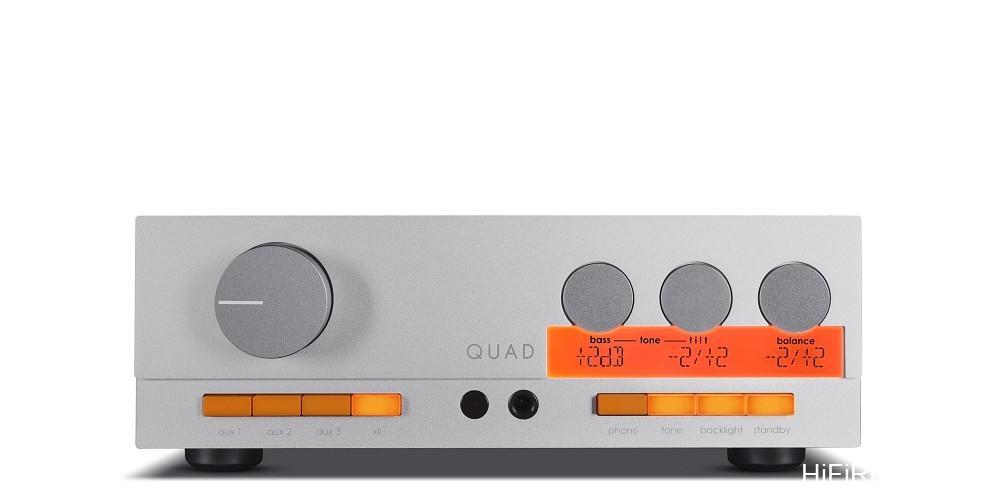
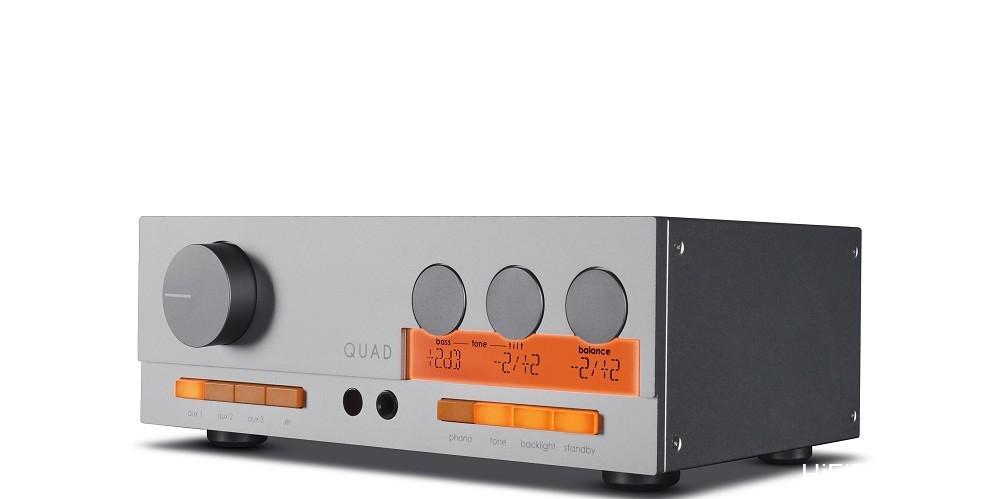
The re-issue’s external appearance, colors, knob and button positions, shapes, and quantities bear a striking resemblance to the original. However, the re-issue QUAD 33 discards the old version’s three-stage variable slope filter, adding a left/right channel balance adjustment. The treble control has been replaced with a tilt function, while the bass adjustment remains.

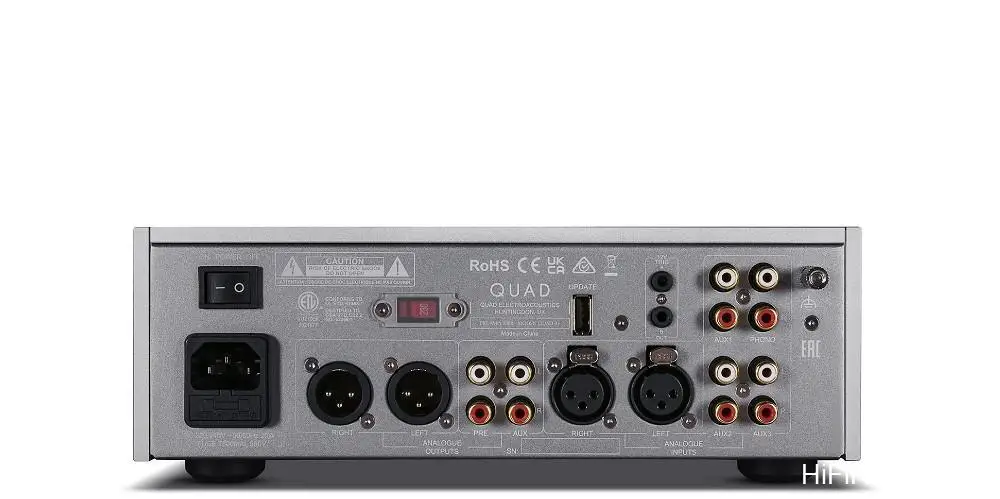
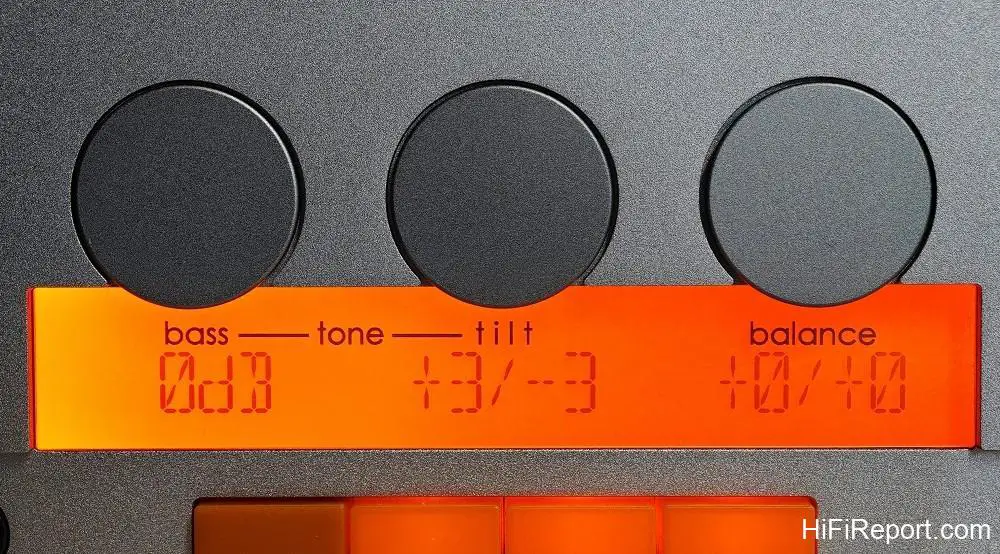
Crucially, it incorporates a headphone output, a text display, and, indispensable in today’s world, a remote control – features entirely absent in 1967. Regarding input/output terminals, where the original relied exclusively on DIN connectors, the re-issue QUAD 33 and QUAD 303 have, of course, been updated to RCA and XLR audio input terminals.
QUAD 33: A Pure Analog Preamplifier
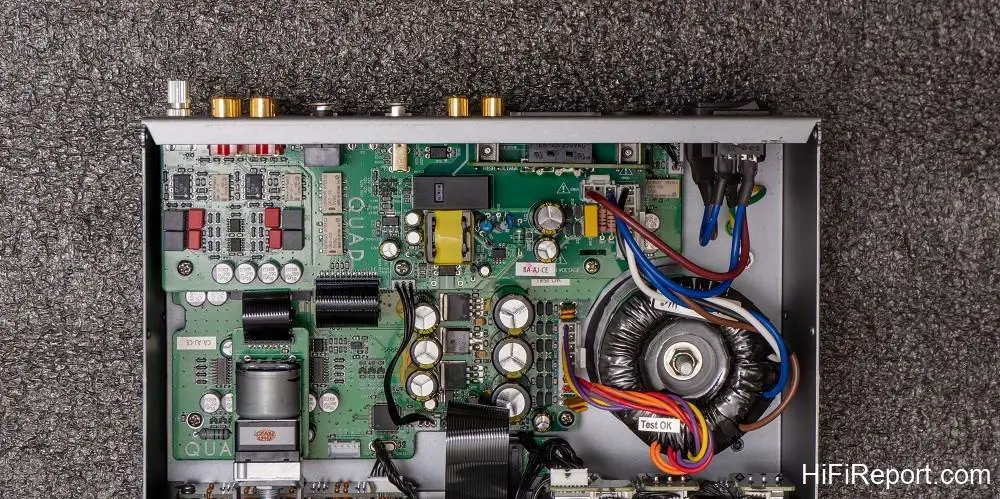
The re-issue QUAD 33 is a pure analog preamplifier, devoid of streaming capabilities or a DAC. It features a phono stage circuit compatible with MM/MC cartridges, housed on an independent PCB located at the rear left of the chassis. This circuit utilizes the Analog Devices OP275 for phono amplification, combining BJT and JFET at the input stage to leverage both BJT’s high precision and low noise and JFET’s speed and sound quality.
Following this, one of the lowest-noise, high-speed, and ultra-low-distortion audio operational amplifiers, the LT1115, is employed. This component’s primary application is highly accurate RIAA equalization. Passive components include MELF resistors (which offer significantly better sound quality than typical chip SMD resistors) and renowned WIMA MKP capacitors.
The unit’s volume control is managed by a front-mounted ALPS dual-gang 50KA potentiometer, the most typical analog volume control method before the advent of volume control chips. The simple, high-performance preamplifier circuit (high-level amplification) still uses Analog Devices OP275 and MELF capacitors. In high-level input mode, the THD is below 0.0005%, and the signal-to-noise ratio exceeds 108dB.
This performance level is very close to (and in some cases surpasses) that of much higher-priced preamplifiers.
Vintage Warmth, Modern Fidelity
This pre/power amplifier combination, though solid-state, delivers music with a warmth and flavor reminiscent of tube amplifiers. Listening to old recordings and vinyl records is utterly delightful, full of charm. However, the re-issue QUAD 33 and 303 also possess wide frequency response characteristics. This distinguishes them from some users’ perception of “tube sound,” which sometimes includes a notion of less extended high frequencies (though excellent tube amps defy this stereotype).
The sound is gentle and never harsh, without excessive high-frequency roll-off.
Regardless of your personal definition of “Tube Sound,” the QUAD 33 offers ample room for sonic tailoring. It incorporates Peter Walker’s early “tilt” adjustment function, designed like a seesaw for frequency balance. As depicted in the accompanying diagram (refer to the original source for image), there are three curves where the left is high and the right is low (bass enhancement, treble reduction) and three where the left is low and the right is high (bass reduction, treble enhancement).
The pivot point for all these curves is at 700Hz in the mid-range. During this review, I was delighted to find that adjusting the QUAD 33’s tilt and bass functions caused virtually no degradation in sound quality (compared to bypassing them). This means they can genuinely be used for sound shaping.
If you’re streaming modern pop music, you can set the tilt to +3/-3 as shown in the diagram (refer to the original source for image), which corresponds to the “left high, right low” adjustment, imbuing new recordings with a charming, vintage tube-like character.
QUAD 303: Power and Precision
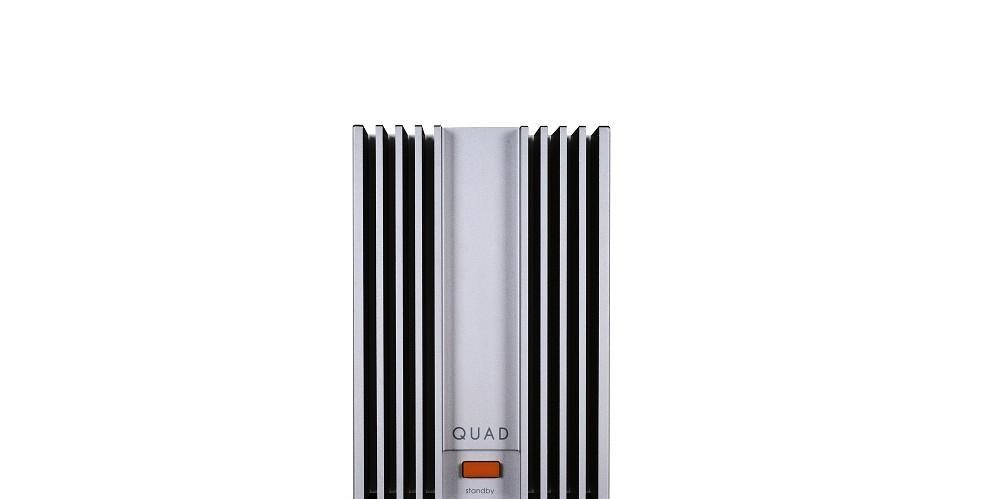
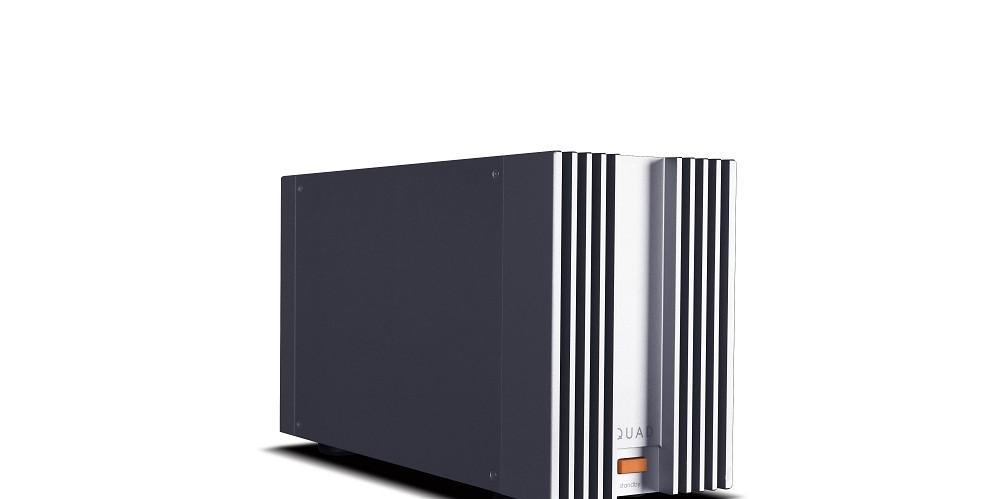
The QUAD 303 is a two-channel power amplifier that can also be bridged for monaural use. The small-signal amplification circuit at the input stage uses components identical to those in the QUAD 33 (including op-amps and passive components). The main power amplifier circuit board is located at the front (as the front panel doubles as a heatsink). This is a Class AB transistor amplifier.
While it retains the original QUAD 303’s famous symmetrical triples output topology, it has evolved from a “quasi-complementary” to a “fully complementary” design.
The old version’s output stage featured a pair of NPN power transistors per channel. The new version replaces this with ONSEMI MJL3281A (NPN) and MJL1302A (PNP) transistors in a push-pull output. This symmetrical complementary arrangement significantly reduces harmonic distortion compared to the old version.
Furthermore, while the old version was a single-supply OTL (Output Transformerless, capacitor-coupled output) design, the new QUAD 303 naturally adheres to modern production standards, employing positive and negative power supplies for an OCL (Output Capacitor-Less) circuit. This certainly results in superior ultra-low frequency extension and sound quality. All active components also possess wideband characteristics, ensuring excellent high-frequency extension.
Authentic Analog Sound
Despite the significant circuit differences between the re-issue and the original, I believe the developers’ exceptional tuning skills have successfully replicated the warm, “analog sound” of the 1967 inaugural model. When listening to old recordings and vinyl records from the 1950s, 60s, and 70s, the rich, flavorful “vintage taste” is utterly captivating.
I must specifically clarify here that the “vintage taste” of these “old recordings” isn’t exclusive to vinyl; music files and online streams converted from master tapes of those eras still exhibit a warm tonal balance. It’s fascinating to note that the original units emerged during the golden age of tube amplifiers, and a key selling point then was their tube-like sound.
Now, though the re-issue employs modern, high-performance semiconductor amplification components, its sound remains remarkably “tubey”!
The high frequencies of this system are remarkably smooth and rounded, ensuring that even anime songs never sound harsh. When using two bridged QUAD 303s (one per channel), the midrange is rich and full, complemented by a substantial, fleshy lower midrange and a stable low end. The sound is mature and powerful, reminiscent of a high-power tube amplifier (like a 6550A push-pull).
In contrast, when the QUAD 33 is paired with a single QUAD 303 driving two loudspeakers, it sounds more like a medium-to-low power tube amplifier (such as a 6L6 push-pull). It’s less weighty and rich than the bridged setup, delivering a younger, more refined, and flowing sound with excellent approachability—a distinctly “literary chic” presentation.
However, I’m aware that many audiophiles associate “tube sound” with a more pronounced high-frequency embellishment. If you prefer that particular tube flavor, please refer to the visual and textual instructions for the “Interesting and Practical Seesaw Tilt” function in this article. The QUAD 33 can indeed be adjusted to achieve such a tube character.
What truly impressed me was that when I compared the sound with and without the tone controls (including tilt and bass adjustments), the sound “quality” with tone controls engaged was almost indistinguishable from direct bypass! This indicates superb engineering, so users can feel confident using these adjustments. Additionally, I recommend turning off the text display’s backlight during critical listening; the sound purity noticeably improves, becoming even more ethereal.
Conclusion: A Rare Gem
I truly didn’t expect this re-issue pre/power amplifier set to not only revive the vintage aesthetic but also transport its sound profile back to the vacuum tube era of 60 years ago. Let me be clear: these are solid-state amplifiers, not tube amplifiers. Precisely because of this, their price is half (or even less) than that of tube amplifiers offering comparable sound quality and driving power.
With excellent musicality and a natural, comfortable analog presentation of modern digital music content, I consider this system a rare and precious find. It undoubtedly deserves our highest recommendation.
Specifications: QUAD 33 Preamplifier
* Type: Analog Preamplifier
* Signal-to-Noise Ratio: > 108dB (A-weighted, Line/XLR), > 82dB (A-weighted, Phono MM), > 74dB (A-weighted, Phono MC)
* Frequency Response: 20Hz – 20kHz (+/-0.2dB)
* Total Harmonic Distortion: <0.0005% (1kHz, Line/XLR), <0.002% (1kHz, Phono MM / MC) * Headphone Output: Total Harmonic Distortion < 0.01% (1kHz, 50mW), Load Impedance 20 to 600 ohms * Input Terminals: 3 x Stereo Analog (RCA), 1 x Stereo Balanced (XLR), 1 x Phono (MM/MC switchable) * Output Terminals: 1 x Stereo Analog (RCA), 1 x Stereo Balanced (XLR), 1 x Headphone, 2 x 12V Trigger Out * Dimensions (W x H x D): 258 × 94 × 165 mm * Weight: 4 kg * Reference Price: ~$1,590 USD
Specifications: QUAD 303 Power Amplifier
* Type: Class AB Power Amplifier
* Gain: +29dB
* Signal-to-Noise Ratio: > 108dB (A-weighted)
* Rated Power: 50 Watts x 2 (8 ohms THD<1%), 70 Watts x 2 (4 ohms THD<1%); Bridged Mono: 140 Watts (8 ohms), 170 Watts (4 ohms), Full-band Harmonic Distortion 0.07% * Maximum Output Current: 10 Amps * Frequency Response: 20Hz – 20kHz (+/-0.3dB) * Total Harmonic Distortion: <0.002% (1kHz) * Input Terminals: 1 x Stereo Unbalanced (RCA), 1 x Stereo Balanced (XLR) * Speaker Outputs: 2 sets, 12V Trigger * Dimensions (W x H x D): 226 × 312 × 462 mm * Weight: 8.5 kg