
realme Buds T200 TWS Buds Review
The question that comes up most often when shopping for true wireless earbuds in the mid-tier: does the advertised noise-cancellation number actually do anything you can feel, or is it a spec-sheet decoration? The realme Buds T200 carries a 32dB active noise cancellation figure on its listing, a number that sits well above what most pairs in the mid-tier advertise. This review tests that headline claim against what owners report after weeks of daily wear, and checks whether the rest of the package, sound, battery, app, and reliability, keeps pace with the ANC promise.
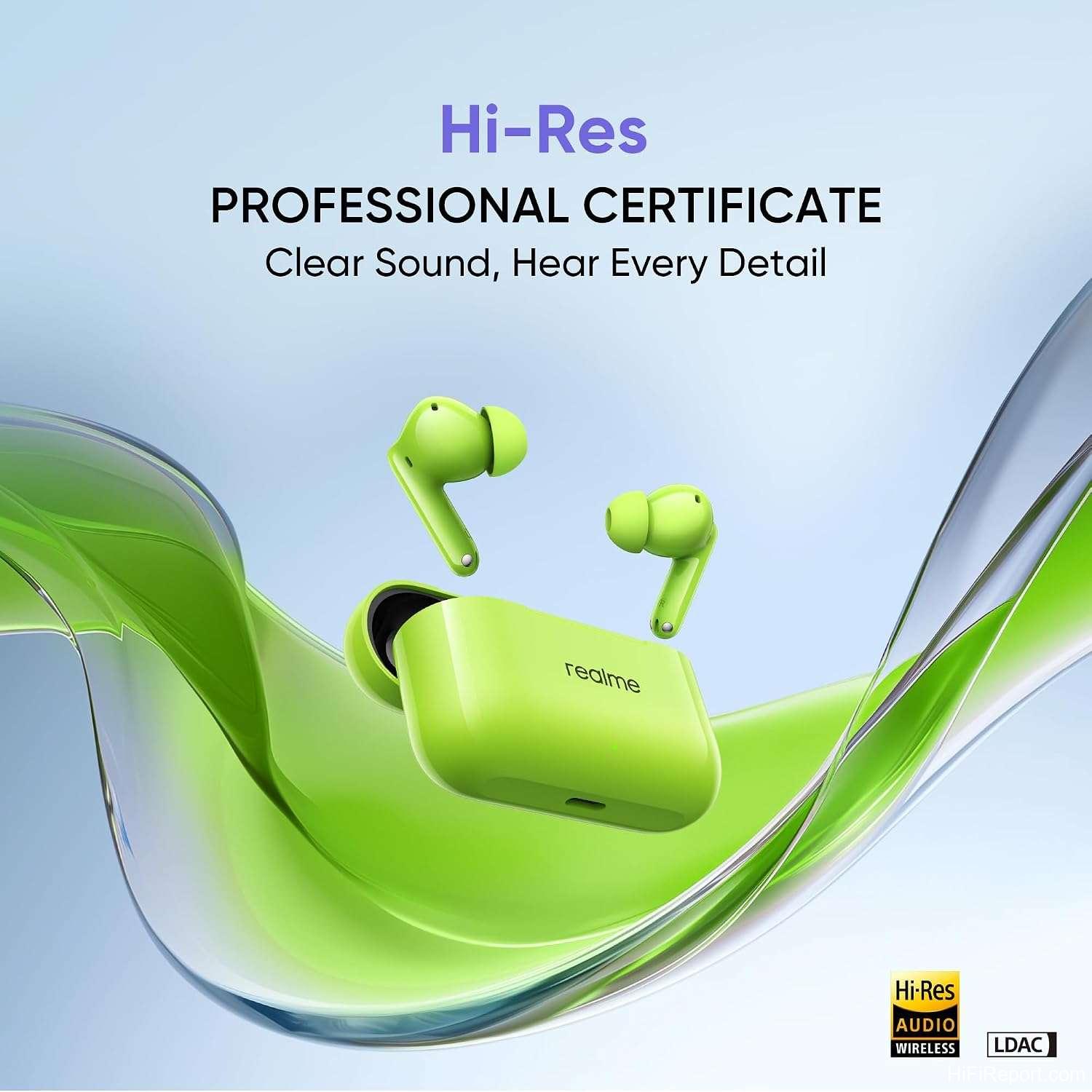
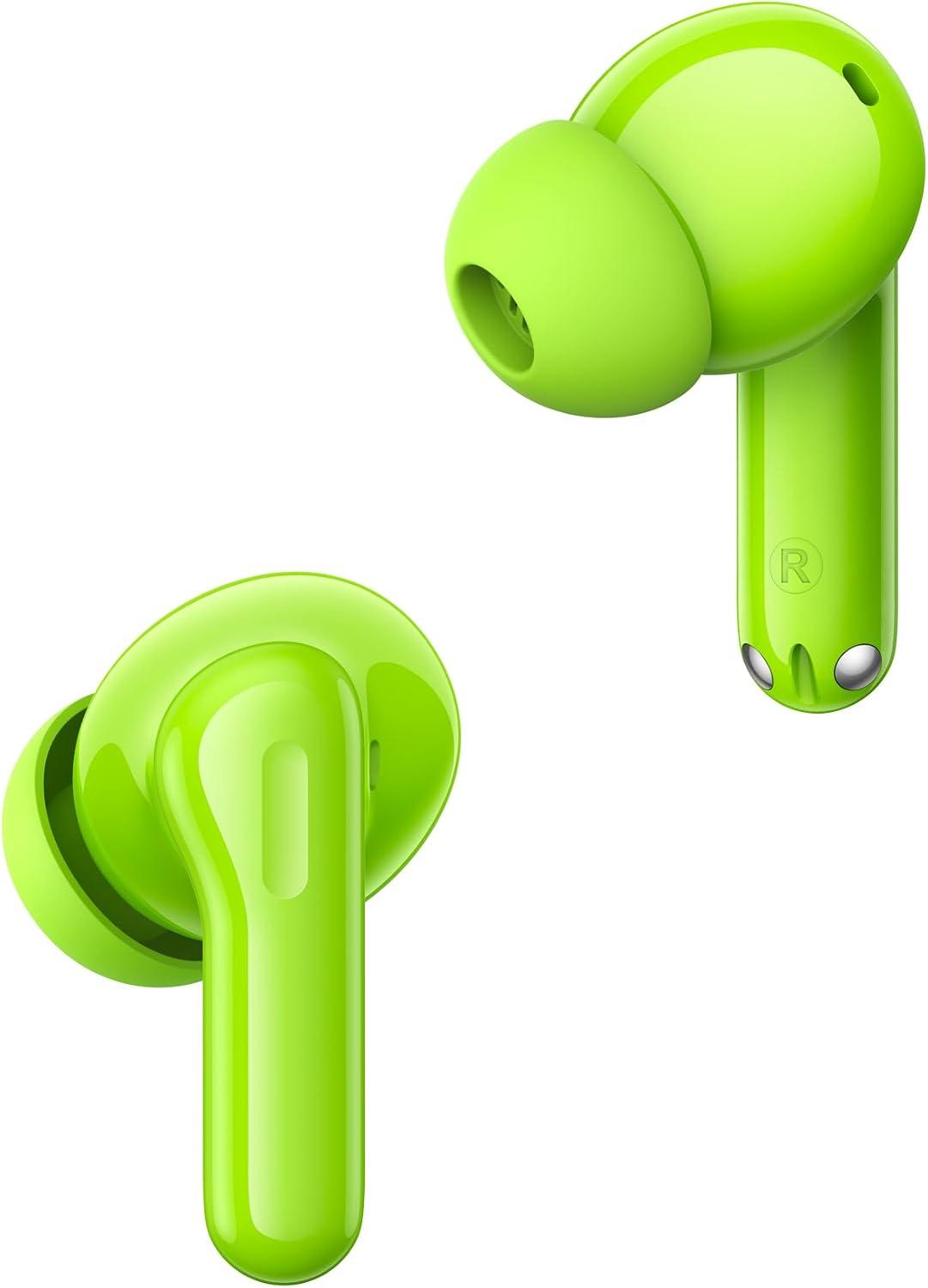
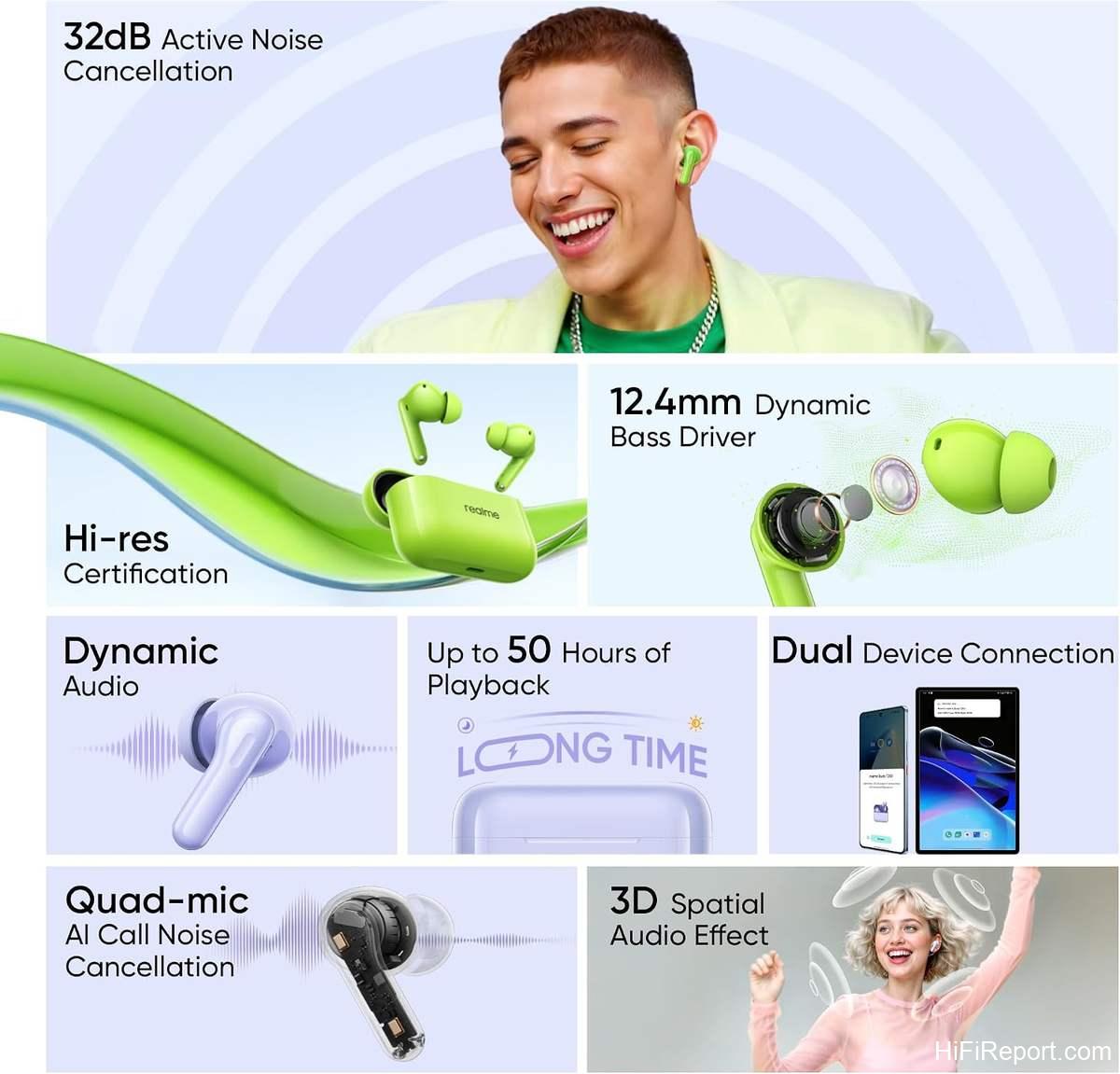
The Buds T200 has pulled a 4.1 out of 5 rating across 927 reviews on Amazon, a solid score the owner comments here unpack. The green finish covered in this review is one of the available colors, and the hardware under the shell includes a 12.4mm dynamic driver, LDAC codec support with Hi-Res Audio certification, Bluetooth 5.3, and an IP55 rating for dust and water.
What Makes It Different
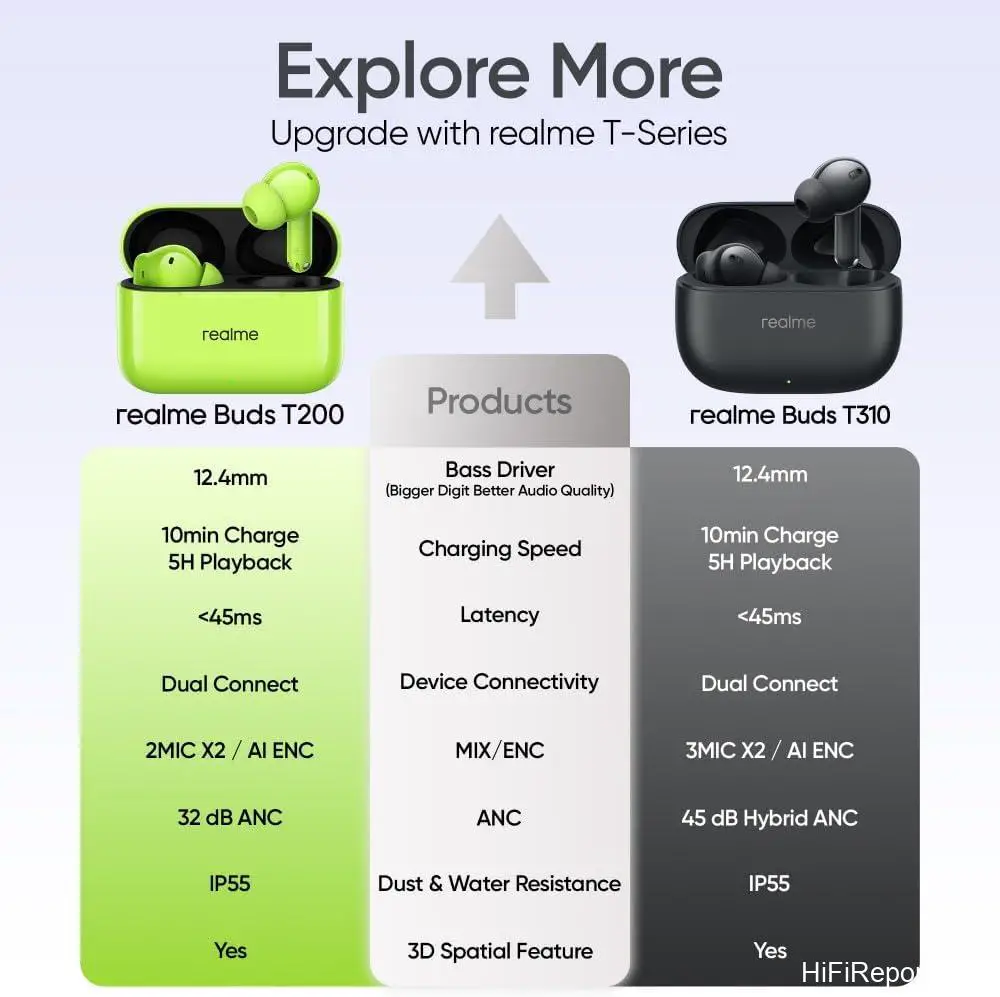
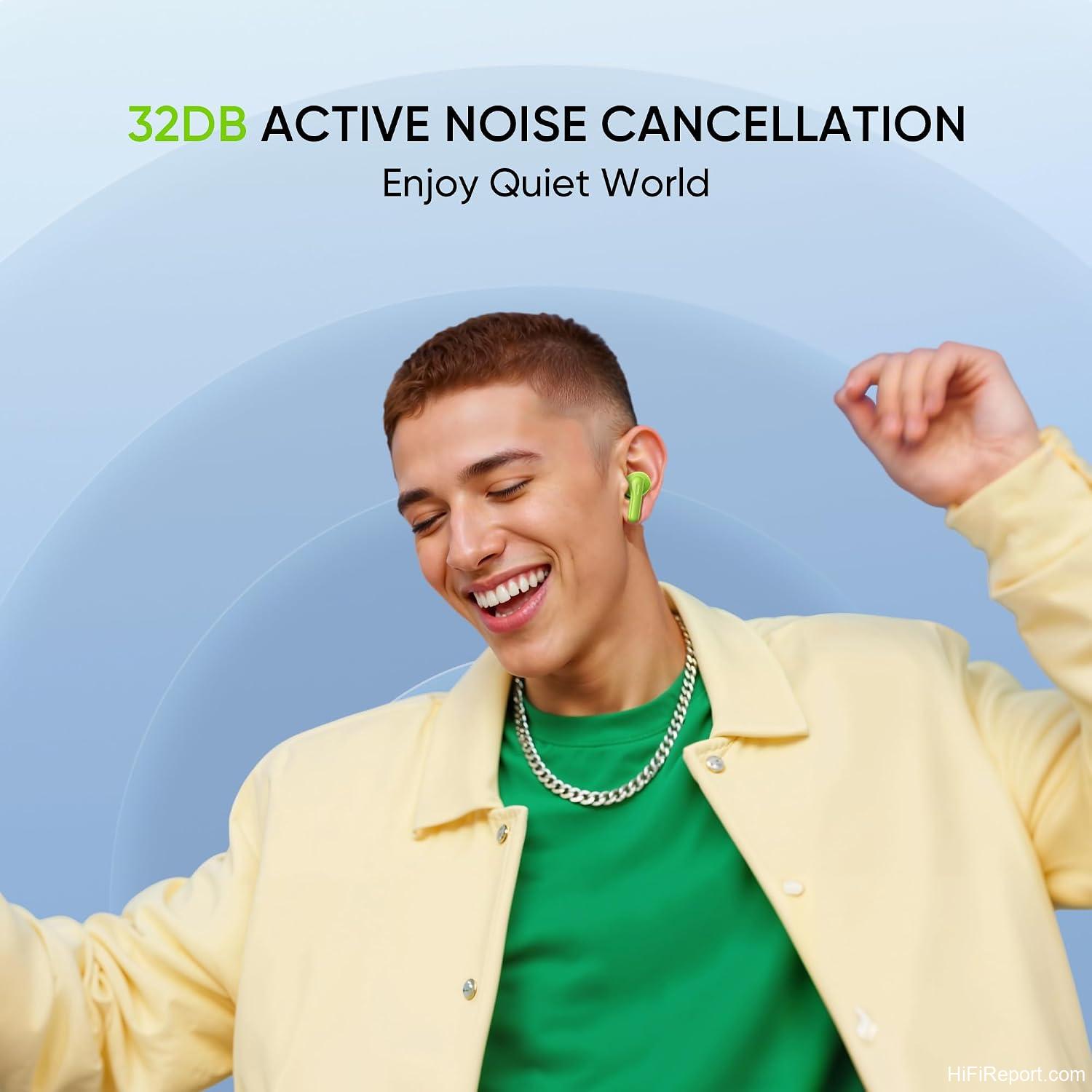
The 32dB active noise cancellation is what separates the Buds T200 from a shelf of non-ANC or low-ANC pairs. Most true wireless options in the mid-tier either skip ANC or advertise a lower cancellation figure. A 32dB reduction targets the low-frequency band where most ambient noise lives: the drone of a highway, the hum of a train car, the steady buzz of an office HVAC unit. In plain terms, the ANC drops that continuous background layer by a substantial margin, which is the difference between music sitting on top of a noisy commute and music sitting in a quiet space.

For a buyer who spends time on public transit, in a shared office, or at a gym with a loud speaker stack, that gap is where the day-to-day experience separates. You do not need cabin-level silence to feel the benefit. The 32dB figure is the reason this bud earns attention against pairs that list a weaker cancellation number or none at all. The ANC is the main event; the driver, the codec, and the battery all support it.
The IP55 dust and water resistance rounds out the practical case: sweat during a workout or a light rain on the walk home will not end the session. But the noise reduction is the feature that changes what you notice the moment the buds seal in your ears.
This content belongs to hifireport.com. Unauthorized reproduction is strictly prohibited.

32dB Active Noise Cancellation Under the Hood
The Buds T200 uses a quad-mic system to drive its ANC, a detail one owner review confirms. Four microphones feed the cancellation processor, which generates an anti-phase signal that cancels incoming low-frequency sound before it reaches the driver. The 32dB figure applies to the frequency range where most ambient noise concentrates: engine rumble, HVAC drone, the low thump of a crowd. Transient, higher-frequency sounds, a person’s voice or a door slamming, do not cancel as cleanly, which is a physics limit shared by any feed-forward or feed-back ANC architecture.
Owners describe the real-world effect in consistent terms. One reviewer calls the ANC “good for normal voice cancellation,” and another says it blocks “background noise” effectively. Both descriptions align with the spec: 32dB is strong for steady, low-frequency hum but will not erase a conversation in a crowded cafe. The ANC does not need to be a clean barrier. It needs to drop the noise floor enough that your music or a podcast sits on top without you raising the volume to compensate. At 32dB, it does that job for the noise categories that matter most on a commute or in a shared office.
The ANC pairs directly with the 12.4mm dynamic driver. With cancellation on, the bass driver plays without fighting a wall of outside sound, so the low end reads more cleanly and the mids stay separated. Turn the ANC off in a quiet room and the driver sounds the same; turn it on in a train and the contrast is immediate. The quad-mic array also feeds the call-processing side, and owners report clear voice pickup on calls, a bonus the ANC hardware provides beyond noise reduction.
One practical caveat: ANC performance depends on the tip seal. The 32dB figure assumes the silicone tip is seated properly in the ear canal. A loose fit in a smaller ear drops the effective cancellation below the spec number. That holds for any true wireless ANC system, but it is worth testing the fit before judging the figure.
Audio Check
The sound out of the Buds T200 is clean, balanced, and forward in the mids, with bass that is present without drowning the rest of the mix. Owners back this up directly: one reviewer describes the output as “cristal clear” and “pure original music,” and another singles out the bass as “good, not unwanted heavy.” The 12.4mm dynamic driver delivers low end that is textured and controlled rather than bloated, which suits a wide range of genres from acoustic to electronic without tilting the tonal balance.
The LDAC codec and Hi-Res Audio certification raise the data ceiling above what standard streaming provides. On a phone or laptop that supports LDAC, the driver receives a higher-bitrate stream, and the upper mids and treble gain detail. One owner flags that battery life drops in LDAC mode, which is expected: a higher-bitrate stream draws more power per hour than a standard codec. The audio gain is real, but it comes with that trade-off on runtime.
This content belongs to hifireport.com. Unauthorized reproduction is strictly prohibited.
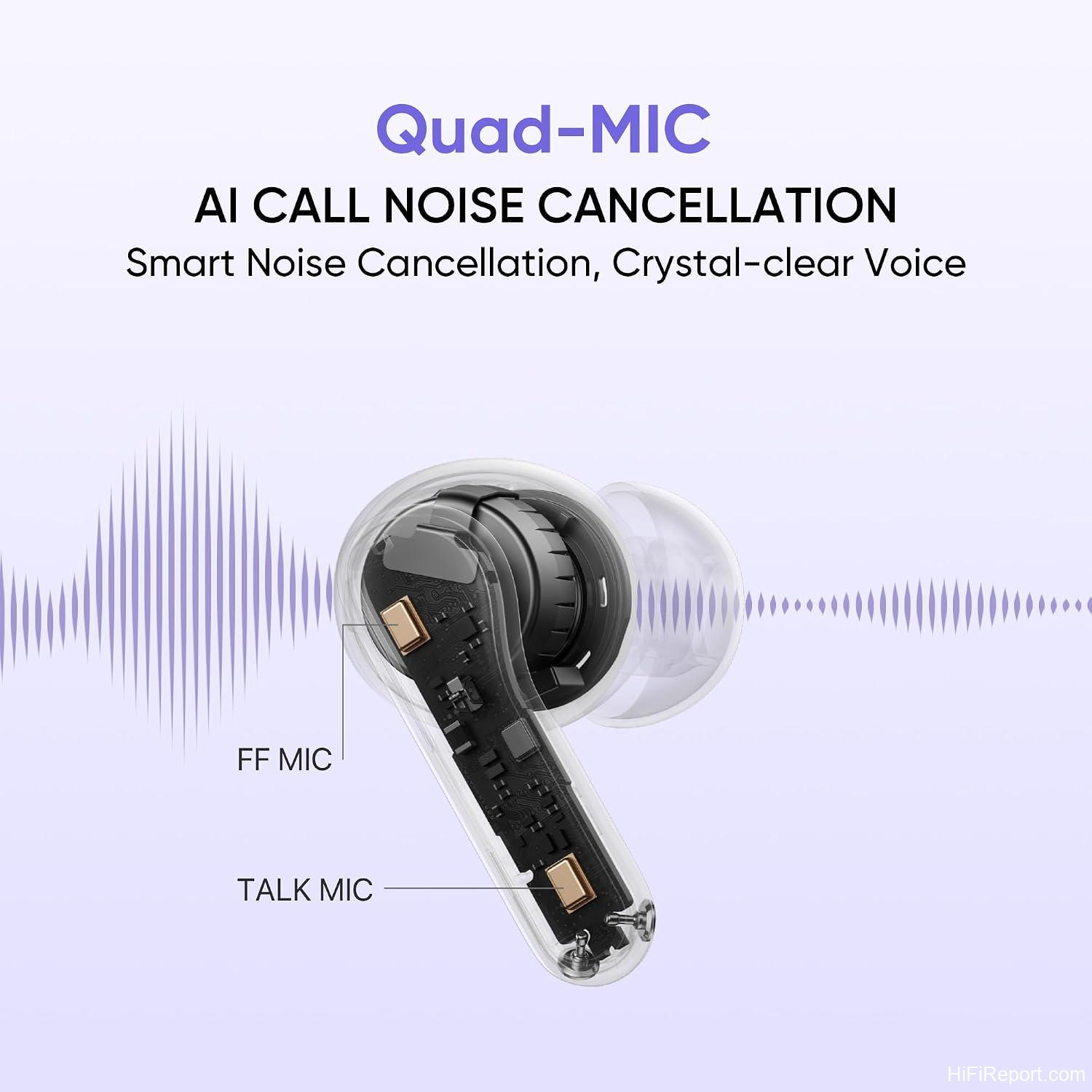
Call quality gets separate praise. The quad-mic array handles voice pickup cleanly, and the ANC mics double as wind and noise filters on the transmit side. The overall audio picture is a bud that does not overhype the bass, keeps vocals and instrument detail intact, and offers a codec option that most pairs in this tier do not list.
Everything Else
Comfort and fit draw consistent positive comments. Multiple owners note the buds stay secure through long listening sessions and gym intervals, and the IP55 rating covers sweat and light rain. The design is a standard in-ear silhouette with silicone tips, and the green finish is called out as a clean colorway by at least one reviewer.
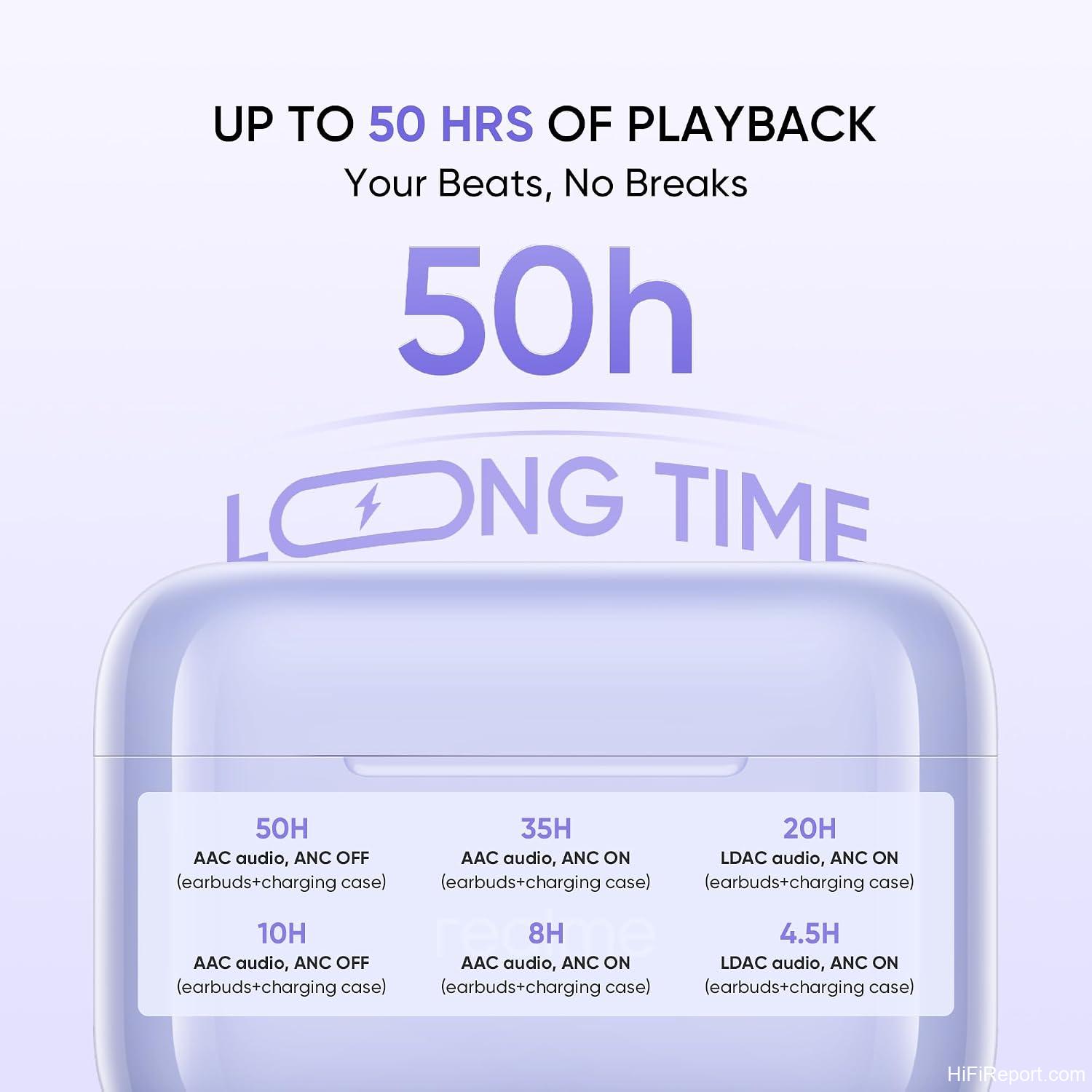
Battery life in standard mode lands at the claimed 50 hours total with the charging case. One reviewer testing in LDAC reports the runtime is “not that good,” which tracks with the higher power draw of a high-bitrate codec. The 50-hour figure assumes a standard codec; plan on a shorter window in LDAC. The case is compact enough to pocket, and the total runtime covers a full work week without topping up.
The app experience is the weakest link in the package. A US-based reviewer states the product does not appear in the realme Link app, which limits firmware updates and EQ tuning for that market. An Indian reviewer, by contrast, says the app “gives a plus” through its settings, pointing to a regional rollout gap. On the connectivity side, Bluetooth 5.3 holds up in most sessions, but one owner reports occasional left-bud connection drops that resolve by disconnecting, seating the bud in the case, and re-pairing. A separate note: after roughly two months, one reviewer found the buds sometimes did not power off after being placed in the case, and closing the lid a second time fixed it.
Real-World Use
On a daily subway commute, the 32dB ANC mutes the rail rumble and station announcements to a low murmur, and the 12.4mm driver fills the space with music that does not fight the residual noise. You still hear a person shouting a warning, but the steady drone drops out of the mix. For a gym session, IP55 handles sweat and a drizzle on the way home, and the secure fit holds through intervals. The ANC cuts the bass thump from the gym speaker stack, letting you hear your own breathing and the cadence of a rep without cranking the volume.
At a desk, the buds handle calls cleanly thanks to the quad-mic array, and background HVAC drone drops under the ANC. A podcast or focus playlist plays at a moderate volume. The 50-hour battery means the case can sit in a drawer for a week. The friction points in a desk environment are the app gap, if your region has not received realme Link support for this model, and the occasional left-bud reconnect that takes a ten-second cycle to clear.

What Owners Say
The praise cluster centers on sound and noise cancellation. Owners describe the audio as clear and well-balanced, with bass that is present without overpowering the mids. The ANC earns consistent nods for blocking background hum, and the quad-mic call quality gets separate mention. Build quality and comfort for long sessions come up repeatedly, and the 50-hour total battery is called out as a convenience that removes mid-week charging.
Complaints fall into three groups. The app: at least one reviewer in the US market reports the Buds T200 does not show up in realme Link, limiting software-side tuning. Reliability: the left-bud connection drop and the case-lid power-off glitch, both noted after several weeks of use, are minor but repeatable. The control scheme: there is no single-tap play or pause, so you must use double or triple taps for basic functions, a habit that takes a day or two to internalize. Battery runtime in LDAC mode also draws more than some owners expected from a 50-hour spec.
The 4.1-star aggregate across 927 reviews tracks with this mix: strong sound and ANC, minor app and reliability niggles, and a control scheme that works but is not the most intuitive in the group.
Pros and Cons
- 32dB ANC cuts low-frequency noise effectively in commutes, offices, and gyms
- 12.4mm driver delivers balanced, clear sound without bass bloat
- LDAC and Hi-Res Audio certification raise the codec ceiling above standard streaming
- 50-hour total battery life with the charging case
- IP55 resistance covers sweat and light rain
- realme Link app support is inconsistent by region
- Occasional left-bud connection drops require a reseat cycle
- No single-tap control for play or pause
- Battery runtime drops in LDAC mode
Verdict
The 32dB ANC is the reason to choose the Buds T200 over a non-ANC pair in the same spec bracket. If your daily listening happens in a noisy environment, a subway, a shared office, a gym with a loud speaker system, that noise reduction is the single upgrade that changes the listening experience. The sound quality holds up alongside it: the 12.4mm driver and LDAC support mean the ANC is not trading tonal accuracy for silence. The 50-hour battery removes the need for weekly charging, and IP55 covers the workouts and weather that would bother a lesser pair.
The product is not the pick if your priority is a polished app ecosystem with full EQ and firmware control available from day one in your region, or if you need single-tap controls that register without thought. The connection and case-lid glitches are small but repeatable, and the LDAC battery drop is a real trade-off for all-day high-bitrate streaming. Right for commuters, gym-goers, and desk workers who want meaningful noise reduction and balanced sound; look elsewhere if a smooth app experience and fuss-free controls matter more to you than the 32dB cancellation.
Specifications
- Drivers: 12.4mm dynamic
- Noise Cancellation: 32dB active
- Codec: LDAC (Hi-Res Audio certified)
- Total Battery: up to 50 hours with charging case
- Bluetooth: 5.3
- Water and Dust Resistance: IP55
- Microphones: quad-mic system
- Color: Green
- Aggregate Rating: 4.1 out of 5 (927 reviews)
Buyer Questions
Does the 32dB ANC actually shut out a loud subway or office?
Yes, for the low-frequency drone that dominates those spaces. Owners report the ANC cuts background hum and traffic noise effectively, though a person’s voice or a loud transient sound will still register. The 32dB figure targets steady, low-frequency noise, which is the category that matters most on a commute.
How long does the battery last when streaming in LDAC?
The 50-hour total figure assumes a standard codec. One owner testing in LDAC reports the runtime drops noticeably, which is expected given the higher data rate. Plan on a shorter window if you stream at the highest codec setting all day.
Can I use a single tap to pause or play?
No. The Buds T200 uses double and triple taps for play, pause, and skip. One reviewer notes this takes a day or two to get used to, but the scheme is consistent and, once learned, does not interrupt the listening flow.
What do I do if the left bud stops connecting?
Disconnect the bud, seat it in the charging case, and take it back out. One owner reports this brief cycle clears the connection drop. A separate issue, after about two months of use, is the buds sometimes not powering off in the case, which closing the lid a second time resolves.

- HI-RES AUDIO: Features LDAC technology and dynamic audio for superior sound quality with a powerful 12.4mm dynamic bass driver for immersive listening
- NOISE CANCELLATION: Advanced 32dB Active Noise Cancellation technology effectively reduces unwanted ambient sounds
- LONG BATTERY LIFE: Enjoy up to 50 hours of total playback time with the charging case for extended listening sessions