
REL Reference No.31 Subwoofer Review
Ever since I had the opportunity to audition the British REL flagship subwoofer, the Reference No.32, at the HiFiReport listening room back in late 2022, the idea of adding a second subwoofer to my setup has been lingering. Following that initial experience, I borrowed the S/812 and Carbon Special for testing at the HiFiReport lab. Now, a year and a half later, the fourth REL subwoofer has finally arrived: the No.31.
Market Growth Explodes
REL subwoofers were introduced in Taiwan around 2014, but for a long time, they weren’t exactly a brand you saw everywhere. It wasn’t until 2020 that REL began experiencing explosive sales growth. Even when I interviewed REL’s Global Sales Director at the 2022 International Audio Show, he mentioned the incredible growth over the past three years, stating it compelled him to visit personally and understand *what exactly* was driving three consecutive years of explosive growth. Keep in mind, REL sells in over sixty countries worldwide, so a sales director wouldn’t travel unless the market performance was truly outstanding.
Why did REL suddenly stand out and become a sales phenomenon in the subwoofer market over the last three to four years? The answer lies in carving out a completely new “Blue Ocean” market.
How many subwoofer brands are available today? Honestly, I don’t know the exact number, but I can guarantee you can’t count them on just your ten fingers. So, with so many options available, why choose REL? Because REL specifically markets itself as a “subwoofer for music.”
“Music Only” Philosophy
How does this approach transform a “Red Ocean” competitive market into a “Blue Ocean”? While other subwoofer brands compete fiercely on specifications and price, REL took a different path, focusing on the “music only” route. They even tell consumers that if your primary use is home theater, a REL might not necessarily be better than other options. Therefore, instead of competing in the crowded multi-channel home theater market, REL cultivated new ground, specializing solely in “subwoofers for music.”
What’s different about a subwoofer designed for music compared to others? If you only look at specifications – driver size, amplifier power, frequency response extension – you likely won’t see the distinction. However, REL’s emphasis on “music only” highlights a critical factor: the subwoofer’s reaction speed.
When talking about reaction speed, some might question why REL is different and thus “music only.” To be honest, before my audition at HiFiReport a year and a half ago, I, like many others, thought the term “subwoofer for music” was just marketing jargon. But after hearing the No.32, my perspective completely shifted, and I gained a new understanding of both two-channel and multi-channel subwoofers.
2.1 Setup Challenges
Let’s talk about multi-channel. The simplest configuration is 5.1, which has been the basic multi-channel standard for three to four decades. Today, with Dolby Atmos, we see configurations like 5.1.2 or 7.1.4. The “.1” still represents the subwoofer channel, meaning multi-channel recordings are encoded with a dedicated subwoofer track. Sending the LFE signal to the subwoofer via an LFE cable makes perfect sense in this context. However, applying the same setup to a two-channel system often leaves the subwoofer feeling like it’s “just sitting there.” Listening to a 5.1 system downmixed to 2.1, the subwoofer often sounds awkward.
Why is this the case? Because PCM (or DSD) is two-channel; there’s no dedicated “.1” subwoofer channel. The signal sent to the subwoofer via LFE is not an independent encoding. Consequently, when setting up a 2.1 system, you often encounter several issues. First, the subwoofer usually sounds most balanced only at specific volume levels. At low volumes, there might be too much bass; at high volumes, the bass might not keep up, or vice versa. In short, the subwoofer’s volume often doesn’t track linearly with the main two-channel speakers. Second, adjusting the subwoofer’s phase seems like a never-ending process. A setting that sounds good for one recording might be excessive for another with more bass.

Despite being involved in audio for many years, I had never felt compelled to buy a subwoofer. I actually tried serious experimentation early in my career, but it was frustrating, requiring constant adjustments instead of simply enjoying the music, so I gave up.
Full Music Signal Input is Key
So, why did REL ignite my desire to explore subwoofers? It’s because their design for “music-only subwoofers” isn’t just theoretical; it’s a philosophy that, through practical application, convinced me that “subwoofers for music” is not marketing jargon. It’s REL’s core principle since its inception: designing specifically for two-channel systems.
Since two-channel doesn’t have a dedicated “.1” encoding, how do you integrate the subwoofer seamlessly with the main speakers? By allowing the subwoofer to receive the full left and right channel signals, just like the main speakers. This is why most people who buy REL subwoofers buy two, setting up a 2.2 system. Some start with one, but after trying two, they can never go back. Why? Because two-channel audio is split into left and right, main speakers are left and right, and now the subwoofers are also left and right. It just makes sense.
High-Level Sync
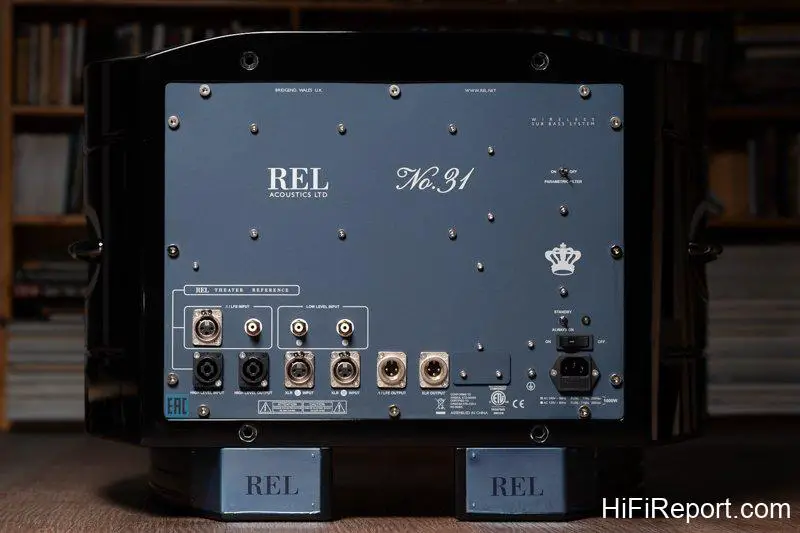
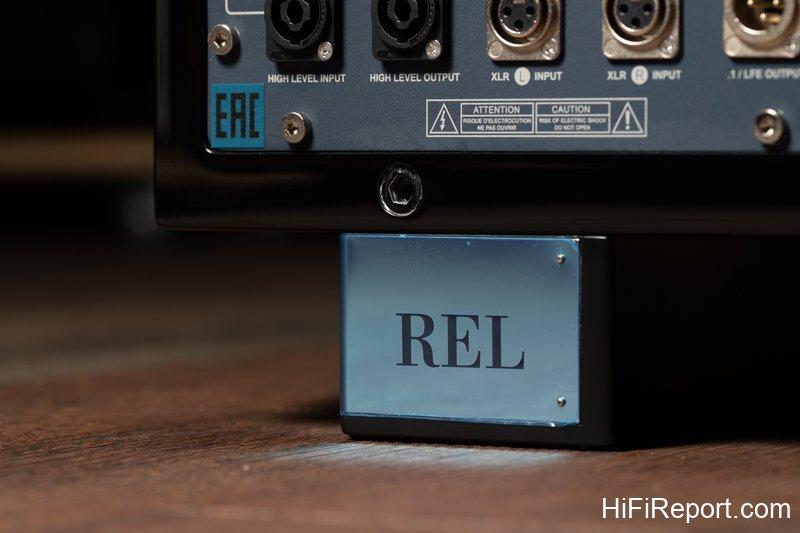
Is it really that simple? If you buy two subwoofers from another brand, will they necessarily be inferior to REL? Ah, that’s underestimating REL! Two things set REL apart. First, REL subwoofers have distinctive curved bar-shaped feet underneath, wider at the front and narrower at the back, designed to direct airflow forward and synchronize with the main speakers. Original content from hifireport.com. Second, in most cases, users are advised to use the Speakon high-level input. This connects the REL subwoofer directly to the amplifier’s speaker terminals, receiving the same signal the main speakers do. This ensures the subwoofer’s volume synchronizes with the main speakers, eliminating the issue of bass being too low at high volumes or too excessive at low volumes. When the power amplifier output increases (for louder volume), the subwoofer output increases proportionally. When the output decreases, the subwoofer follows suit, keeping the volume levels in sync.

No Spikes, Stackable
Because of the unique bottom design, REL subwoofers should not be used with spikes. Elevating the No.31 would negate the effect of the curved base designed to direct airflow. However, the bottom airflow design also allows REL subwoofers to be stacked.
Part of REL’s remarkable success stems from users starting with a pair, then trying four stacked, and eventually six. Some even go as far as eight (ahem, Dr. Tsai, are you hearing me?). You see, the “music-only subwoofer” approach isn’t just enjoyable; it’s also a clever business strategy.
High-Level Speed Key
Some might argue that using Speakon high-level input isn’t unique to REL; other brands do it too. Can’t they achieve the same results? The technical challenge lies here. Many have experimented with Speakon high-level inputs to subwoofers from other brands, but often find the tonal quality becomes coarser. The technical hurdle is the reaction speed of the Speakon input interface. I’ve never seen this specification published by other brands, but REL provides it. Most REL subwoofers have a high-level input reaction speed of 8 ms, while the Reference series No.32 and No.31 cut this in half to just 4 ms, indicating an incredibly short reaction delay.
A reaction speed of 8 ms or 4 ms sounds incredibly fast, but what is its real significance? The human ear’s sensitivity to time-phase differences peaks at 10 ms. This means delays below 10 ms are practically indistinguishable to the human ear. Thus, REL subwoofers’ reaction speed is below the threshold where the human ear can perceive artificiality, allowing them to reproduce the “first (lowest) octaves that approach reality.”

Subwoofer Setup Protocol
Having covered REL’s technical highlights, let’s talk about setup. REL’s strong sales in recent years are not just due to their inherent technical strength but also thanks to DaChee (the distributor) providing a standard operating procedure for setup. This time, I asked them to come in person to HiFiReport to assist with the test setup.
DaChee used a Clio Pocket audio measurement system, complete with its paired microphone, to test the room’s frequency response using pink noise. They first measured the main speakers’ frequency response curve to identify the room’s influence, including any room modes, before setting up the subwoofer.

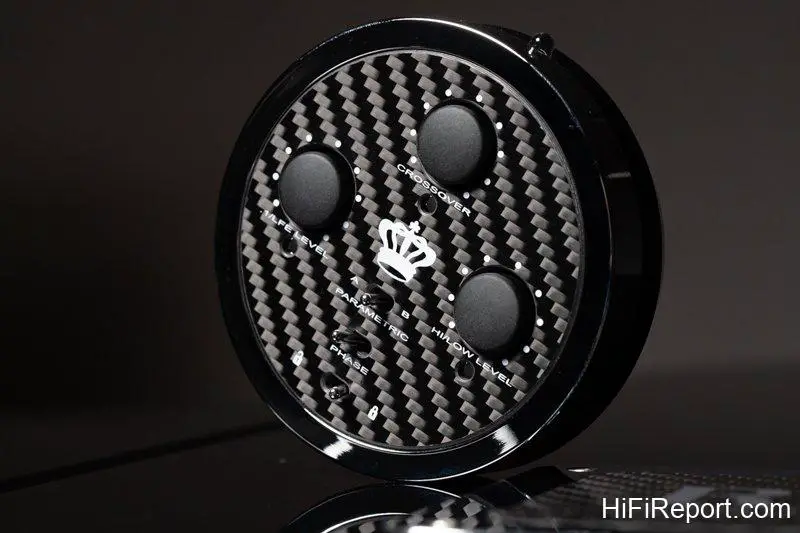
Setting up the subwoofer follows a standard procedure. The first step is phase testing. After a preliminary subwoofer volume setting, they switch the phase between 0 and 180 degrees, listening for which setting results in louder, fuller bass. That is the correct phase.
Once the phase is set, the next step is frequency response crossover integration. The crossover frequency is initially set high (up to 99 Hz for the No.31). Then, a test tone is played, and the frequency response curve is observed. The subwoofer’s crossover point is gradually adjusted downwards. With the Alexia 2 speakers, the crossover point was set around 46 Hz.
Finally, the bass level is set. This is a more subjective step based on personal preference. In my case, I added very little bass. Since the Alexia 2 is a full-range, medium-to-large speaker on its own, adding the No.31 wasn’t about compensating for insufficient bass quantity. It was purely about adding air and scale, so the level was kept modest.
Using the Clio Pocket instrument for setup isn’t about blindly relying on test data. It’s about using the charts as a comparative reference. The actual adjustments still require careful listening. However, with the instrument, you can more clearly see changes in bass quantity and consider potential adjustments based on the frequency response curve. The Clio Pocket isn’t a magic bullet; the final tuning still depends on listening by ear. The key adjustments focus on these three areas: phase, frequency crossover, and subwoofer level.

Organ Air and Scale
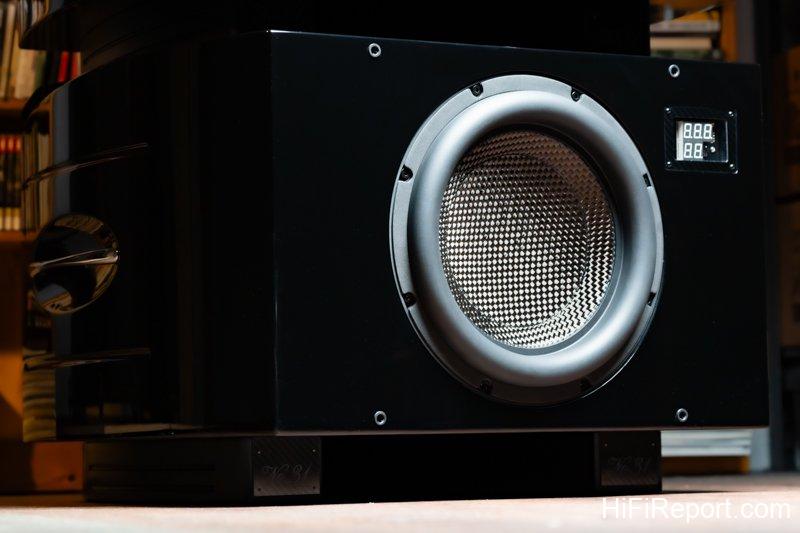
With the left and right channels adjusted independently, it was time for the musical validation. Without hesitation, I put on Telarc’s “EPIC” album, specifically the theme from “2001: A Space Odyssey,” “Also Sprach Zarathustra.” The track opens with a foundational layer of organ. With the addition of the No.31, the Alexia 2 didn’t just gain more bass quantity; it gained a significantly wider and more open soundstage, expanding the height, width, and depth of the 3D soundscape. The speakers completely vanished into the space, creating a vast and expansive stage presence.
The surge of the organ gently builds from the bottom, and you can see the No.31’s driver cone subtly moving. Contrasting with the bright and open tone of the brass section, it’s like a prelude to a rising sun, building immense momentum. Yes, I would say the improvement REL brings to two-channel audio is the beautiful sense of air.
Live Recording Atmosphere
The enhanced sense of air creates an expansive soundstage with increased height, width, and depth, making live recordings even more atmospheric.
Consider Eva Cassidy’s album “Live At Blues House,” specifically the track “Bridge Over Troubled Water.” When listening with just the Alexia 2, the soundstage feels closer, and the image is larger. With the No.31 added, the soundstage opens up significantly, and the image seems slightly smaller, which is a result of the soundstage gaining more depth.

How do you bring the image back? Turn up the volume! With the two No.31 subwoofers, I found myself wanting to push the volume higher. The added sense of air allows the Alexia 2’s dynamics to express themselves with greater ease, making you want to crank up the volume and enjoy the “closer to the recording venue” emotional intensity.
Intimate Recording Detail
What if the recording already features a massive image? Let’s switch to Japan’s Three Blind Mice album, “The Super Extented Resolution Sound of TBM.” TBM recordings are known for their close-mic techniques, resulting in inherently large, palpable images. Listening to “Misty,” for example, they didn’t just use standard microphone placement; they even added a microphone under the piano. Through mixing techniques, they created piano notes that are large yet focused.
With the No.31 added, the piano notes remain large, but the definition of the note shapes becomes even more refined, as if polished, revealing a beautiful piano tone. The accompanying drum brush work is continuously audible, and the double bass’s walking bass line accompanies the piano melody on the left side of the soundstage, outlining a clear jazz trio stage feel.
I must say, listening with just the Alexia 2 is already excellent, but adding the No.31 enriches the piano’s dynamic variations, that feeling of power radiating through the notes. The overall soundstage expansion makes the Alexia 2 completely disappear into the room, and even the No.31 becomes invisible. I was engrossed in the music, imagining the recording session from years ago. A jazz trio likely wasn’t a multi-tracked recording but performed live in the studio. There might have been screens between the piano, drums, and double bass to prevent bleed. Diagrams in the liner notes showing microphone placement offer clues about the recording setup. I found myself envisioning the studio layout from the finished recording. Perhaps the greatest joy in listening to music isn’t just the immediate pleasure but also the boundless imagination it inspires in the brain.
Imagination Fuelled
To let the brain exercise its imaginative listening capabilities, I can recommend the “Les Misérables” movie soundtrack. The vocals were recorded live on set during filming, with the actors wearing earpieces to follow the piano accompaniment and sing along with the story. Original content from hifireport.com. The orchestral score was recorded separately in London over six months. One of my favorite tracks is “On My Own” because it’s sung by Samantha Barks, who was a singer in the actual “Les Misérables” musical, not just a professional actress, giving her a vocal performance edge over other Hollywood stars.
The scene for “On My Own” is set in the rain, so the piano arpeggios are adorned with the sound of light raindrops in the background. Samantha Barks’ voice is rich and beautiful. As she sings the verse, “In the rain…”, the violin section enters, followed by a transition that brings in all the orchestral sections, adding significant musical weight. Returning to the verse, she sings about the sorrow of her lover leaving, surrounded by strangers. It’s at this moment that she can truly sing “I Love Him,” a lifelong pretense. The tension of the string section supports the emotional arc of the music, even though “I Love Him” ultimately represents the unrequited love of being “Only on my own.”
Can you hear that the vocals were recorded on the movie set and then the orchestral score was overlaid six months later? I guarantee you can’t. If you could, how could “Les Misérables” have won the Oscar for Best Sound Mixing? The mastery of the recording and post-production created a nearly seamless and excellent film score recording. Of course, I wasn’t trying to find flaws but to appreciate the masterpiece created by the engineers’ dedicated efforts. The Alexia 2 with the No.31 added makes the musical listening experience more open and natural, significantly enhancing the enjoyment.
Size Matters, Choosing Carbon Special
Alright, after auditioning four REL subwoofers, which one do I plan to choose? Honestly, after hearing the Carbon Special, I was already leaning towards it, but I wondered if the No.31 might be even better, so I waited for it to arrive before deciding. Was the No.31 better? Of course it was. Its performance is comparable to the No.32 (with its 4 ms ultra-low latency), offering even faster response. However, one factor ultimately made us hesitate: the subwoofer’s size. It occupies a significant amount of floor space, which would make it difficult to swap main speakers for pairings in the editorial office, requiring multiple people to move it. Therefore, we reluctantly let go of the No.31 and opted for the slightly smaller Carbon Special.
Nonetheless, if your listening space is large enough, the Reference No.31 or the flagship Reference No.32 are undoubtedly the ultimate goals for a dual subwoofer setup.
Specifications
* **Type:** Active Subwoofer
* **Driver:** 12 inch (300 mm) Long-throw Carbon Fiber Cone Driver x 1
* **Low Frequency Extension:** -6 dB @ 17 Hz
* **Built-in Amplifier:** 900 Watt NextGen 7 Class D
* **Inputs:** High Level Input Neutrik Speakon, Low Level Stereo RCA, LFE XLR, LFE RCA, Optional Airship II Wireless Receiver
* **Dimensions:** 638 × 435 × 720 mm (W × H × D)
* **Weight:** 52 kg