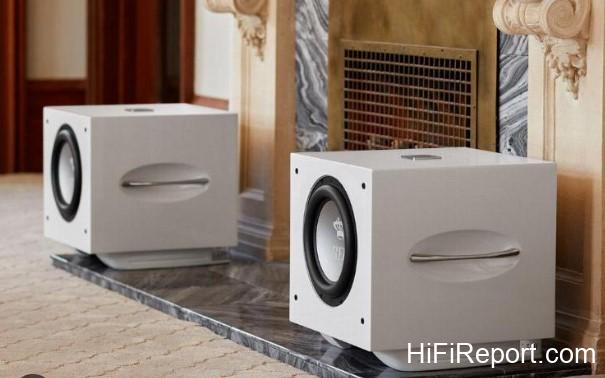
REL S/812 Dual Subwoofers Review
Having experienced the REL No.32 paired with Elac Concentro at HiFiReport, and especially in a dual subwoofer configuration, my interest in subwoofers has grown significantly. Coupled with an interview with REL’s Global Sales Director, the allure of REL subwoofers became even stronger, leading to this “hands-on” pairing session at the HiFiReport editorial office.
The Necessity of Subwoofers: A Rethink
My acquaintance with Mr. Huang of Dachee International spans many years, and he has been a long-term audio mentor. Whenever I encounter audio dilemmas that I can’t resolve, seeking Mr. Huang’s expertise invariably provides professional solutions. This audition of REL subwoofers marks the starting point for HiFiReport’s exploration of dual subwoofer setups. My experiences at HiFiReport, combined with REL’s strong advocacy, have led me to seriously consider adding a pair of REL subwoofers to HiFiReport’s setup. The question then became: which model to choose? REL’s profound impact has been a real education, filling a gap in my decades of audio experience. In the past, I always considered subwoofers as a “necessity” for multi-channel surround sound, but only an “accessory” for two-channel audio. With multi-channel decoding, the “.1” is the subwoofer output; without a subwoofer, multi-channel sound feels incomplete. However, two-channel audio relies on a pair of speakers, lacking a dedicated “.1” signal. Therefore, sending two-channel signals to a subwoofer feels like an “extra” addition. A subwoofer can certainly offer more control over the desired bass quantity, but without it, skillful speaker placement and room tuning can often suffice.
The Allure of REL at HiFiReport
However, listening to the Elac Concentro paired with dual REL No.32 subwoofers at HiFiReport delivered a genuine shock to my system. The impact wasn’t about overwhelming, tidal waves of ultra-low frequency pressure, but rather the expansion of a wide, transparent 3D soundstage. The speakers and subwoofers completely disappeared from the listening space, replaced by a palpable sense of airiness and lifelike realism, transporting me back to the recording venue. It was truly remarkable.
Later, during an interview with Kirill Nerarokomov, REL’s Global Sales Director, I learned about REL’s emphasis on establishing a solid foundation for the “First Octave,” advocating the concept of “music-specific subwoofers.” Using a piano as an example, this refers to the leftmost octave, with the lowest piano note reaching 27 Hz. If an audio system cannot build a solid foundation for the first octave below 35 Hz, it struggles to reproduce the true essence of music.
Subwoofers: Speed and Precision
To meet the demands of “music-specific subwoofers,” REL subwoofers are designed for instantaneous response – “start and stop on a dime.”
How is this achieved? Firstly, by using high-level input signals; secondly, by employing crossover filter networks with ultra-fast response speeds. These two elements are crucial for seamless integration with the main speakers.
These points illuminated the “necessity of subwoofers” for me. In the past, I’ve experimented with various subwoofers, but always found them cumbersome. The three critical variables for subwoofer adjustment are crossover frequency, volume, and phase. Even when all three are optimally adjusted, the balanced state often only holds true at a specific volume level. If the main speaker volume is raised or lowered, the subwoofer’s presence might become insufficient or excessive, requiring further volume adjustments. Consequently, I hadn’t seriously considered the need for adding subwoofers. Moreover, in the context of reviewing audio equipment, adding a subwoofer felt like “cheating.” How could one accurately assess an amplifier’s bass drive or a speaker’s low-frequency extension if a subwoofer was masking any shortcomings?
High-Level Input: Resolving Subwoofer Doubts
However, REL addressed my doubts. When we use an amplifier to drive speakers but utilize the preamp’s Sub Out for an active subwoofer, it’s essentially bi-amping. Bi-amping necessitates volume control on one of the power amplifiers to balance the bass and mid-high frequency levels. Therefore, adding an active subwoofer often requires adjusting its volume relative to the main speakers. In contrast, REL subwoofers connect via the amplifier’s (or integrated amplifier’s) speaker output terminals. This means the subwoofer’s amplifier works in series with the main amplifier, allowing the main amplifier (or integrated amp) to govern the active subwoofer’s operation. The operational linearity of both units becomes synchronized.
What does this imply? When the preamp’s high-level signal is sent to both the power amplifier and the subwoofer, differences in gain and efficiency between the power amplifier and the subwoofer amplifier can lead to inconsistent volume level changes. However, by tapping the signal from the power amplifier’s output for the subwoofer, they operate in tandem. The subwoofer’s amplifier essentially takes cues from the main amplifier. This minimizes the need for constant subwoofer volume adjustments, as the subwoofer tracks the main amplifier’s output, ensuring cohesive volume levels between the main speakers and the subwoofer.
So, does high-level input alone solve all the problems? Not entirely. When the signal from the power amplifier’s output enters the subwoofer, the first critical stage is the crossover filter network, which determines the subwoofer’s operating frequency range. This filter network must possess ultra-fast response speed to ensure seamless integration with the main speakers. Any sluggishness in the subwoofer’s response, failing to keep pace with the main speakers, would result in disjointed sound – highs and lows operating independently, leading to a degraded overall sonic experience.
High-Level Input: 8ms Ultra-Fast Response
Just how “ultra-fast” is the response speed of the high-level input crossover network? For the S/812 (and Series S models), the response speed is a mere 8 milliseconds (ms). Reference series models like No.32 and No.31 double this speed, achieving an astonishing 4 ms.
What do these figures signify? Milliseconds (ms) represent one-thousandth of a second (0.001 seconds). Therefore, the S series filter crossover network exhibits a delay of less than 0.008 seconds, while the Reference series achieves an even quicker 0.004 seconds. These are incredibly rapid response times. But what is the practical significance of these numbers? The human ear’s limit for perceiving time differences in sound waves is approximately 10 ms. Thus, the 8 ms and 4 ms response speeds of REL subwoofers are effectively imperceptible to the human ear, allowing you to perceive the realism of low and ultra-low frequencies as a cohesive whole.
Active subwoofers rarely specify the time delay of their crossover networks. This is because when using LFE or Sub Out connections, time delay is generally not a primary concern. However, with high-level input from speaker terminals, the energy conversion speed of the crossover network becomes crucial. The challenge is that most subwoofers lack high-level speaker terminal inputs, hence this specification is often omitted.
Real-World Testing: Professional Expertise in Action
This time, I borrowed two REL S/812s to conduct a hands-on test of dual subwoofers and to determine the ideal REL model for the HiFiReport editorial office. In fact, REL’s headquarters had already provided a recommendation: for HiFiReport’s Wilson Audio Alexia 2 speakers, the No.31 subwoofer would be the most suitable, with the No.32 considered only for very large spaces.
Impressive – they went straight for the top-tier Reference series recommendation!
However, being an audio reviewer has its perks, allowing for a step-by-step approach to equipment testing. Dachee suggested that to pair with Alexia 2s, a minimum of a 12-inch subwoofer is necessary. So, we skipped the 10-inch models and started with the S/812. Two large S/812 boxes arrived at the editorial office, and unpacking them alone was quite an effort. After roughly positioning the dual S/812s behind the Alexia 2s, we awaited Mr. Huang’s “demonstration setup.” What? Editors can’t handle setup? Indeed, witnessing a professional setup firsthand reveals the value of their expertise. Moving the S/812s is manual labor an editor can manage, but setting them up is a matter of professional skill.
SOP: Instrument-Aided and Auditory Tuning
What constitutes this professional skill? Firstly, connecting high-level signals from the speaker terminals to the subwoofer. Typically, direct connection from the speaker terminals to the S/812 is sufficient. REL includes a generous length of Speakon speaker cable, 10 meters long, more than enough for most setups. However, prior to connection, it’s crucial to assess the amplifier’s output characteristics. Certain BTL amplifiers or Class D power amplifiers may not be suitable for direct speaker terminal output; incorrect wiring can potentially damage equipment, so caution is paramount.
How can you determine if your amplifier is compatible with direct output to REL subwoofers? Simply consult a professional for setup, who will invariably bring a multimeter for measurements.
Secondly, employing instruments in conjunction with auditory testing to identify the optimal subwoofer placement.
After Mr. Huang connected the S/812s to the EAR 509 II power amplifiers, he brought out the CLIO Pocket. Connecting signal cables from the preamp, he conducted mono frequency response and phase measurements. The test results were displayed on a computer screen, revealing the frequency response characteristics of the speakers and the room. Then, with the S/812s added, he adjusted the crossover frequency and volume, again using CLIO to verify the frequency response with the subwoofers integrated.
Before adding subwoofers, CLIO measurements indicated a roll-off below approximately 50 Hz in the HiFiReport editorial office listening space. Consequently, the crossover frequency was initially set around 60 Hz.
Crossover, Phase, and Volume Fine-Tuning
Mr. Huang explained that for speakers of Alexia 2’s size, the crossover frequency could typically be set even lower. However, room mode-induced frequency response variations are unique to each space, making instrument measurements a valuable reference point.
Truthfully, HiFiReport’s editorial office also acquired a CLIO Pocket system, but, to our shame, it’s rarely used. We often feel that our ears are more accurate and prefer not to rely on instruments. However, Mr. Huang pointed out that when setting up audio equipment professionally, the goal isn’t just to achieve good sound, but also to demonstrate to clients the tangible improvements brought about by adding subwoofers. Instrument measurements provide solid evidence, and they also expedite the tuning process.
Once the crossover frequency was roughly established, fine-tuning began. Mr. Huang asked me to sit in the listening position, while he and a Dachee colleague each took charge of an S/812, toggling the phase switch on the back. He conducted a “blind test,” playing music while switching phases and asking me to identify the preferred setting. After about three switches, I made my choice. Then, CLIO measurements were run again. Looking at the frequency response graph, Mr. Huang turned to me and said, “Fortunately, your ears are still good. The subwoofer is correctly set to positive phase, and the instrument measurements corroborate your auditory judgment, proving your hearing is accurate.” Phew, a sigh of relief! Imagine if my hearing had failed the test – how could I face anyone as Editor-in-Chief?
The Nuances of REL Subwoofer Placement
With crossover frequency and phase finalized, the last step was adjusting subwoofer placement. Wait, aren’t subwoofers non-directional? Why placement adjustments? The secret lies in REL’s unique design, specifically in the S/812’s base, which uses two curved boards, wider at the front and narrower at the back, forming a horn-like opening to project low frequencies forward. The S/812 features a front-firing 12-inch carbon fiber cone driver and a downward-firing 12-inch carbon fiber passive radiator. This dual 12-inch configuration delivers bass energy comparable to a 14-inch subwoofer.
Subwoofer placement, again, relies on auditory evaluation. Seated in the listening position, Mr. Huang and his colleague moved the S/812s, adjusting their aiming angles – inward, outward, toe-in, toe-out – all while music played continuously. Once I identified a preferred position, the subwoofers were set down.
This was physically demanding work. Each S/812 weighs 34 kg (75 lbs), not light at all. Thankfully, handles on both sides of the subwoofers made them manageable to move.
Because of the unique low-frequency projection design of REL subwoofers, Mr. Huang mentioned that REL subwoofers can be placed directly on the floor, or on large marble slabs, but should not be used with traditional audio spikes. Elevating a REL subwoofer would negate the effectiveness of its bottom-firing low-frequency dispersion design.
Recreating Authentic Instrument Low Frequencies
This distinctive design contributes to REL subwoofers’ unique sonic character. Mr. Huang explained that traditional home theater subwoofers often employ elevated spikes to disperse bass omnidirectionally. This approach is suited for cinematic sound effects, like booming explosions or underwater submarine implosions, where enveloping low-frequency effects from all directions are desired. However, for music reproduction, this approach can sound unnatural. A real cello, for instance, exhibits directional bass; otherwise, how could we discern the instrument placement in a trio? REL’s specialized curved base is designed to establish the foundational layer of the musical spectrum, accurately reproducing the natural low-frequency characteristics of real instruments.
The final setting is subwoofer volume, entirely a matter of personal preference with no definitive “correct” level. In our setup that day, the S/812’s volume control, with a total of 20 graduations, was set between 4 and 5 – barely 20-25% of its maximum output. The goal was truly just to subtly augment the lowest octave of the Alexia 2s.
S/812’s Airiness: Truly Impressive
With setup complete, the entire HiFiReport editorial team gathered to assess the difference with and without the S/812s.
We listened to just three tracks: Mutter’s “Across the Stars: Rey’s Theme,” “Piazzolla For Two: Histoire du Tango,” and Eva Cassidy’s “Live At Blues Alley: Bridge Over Troubled Water.”
The impact of the dual S/812s was immediately apparent. It wasn’t about artificially boosting bass levels, but rather the expansion of the entire 3D soundstage. Images became more focused and solid, with more refined outlines.
In “Rey’s Theme,” Mutter’s violin became more prominent, and the pizzicato of the double bass in the middle section gained weight and depth. The stage’s height, width, and depth expanded, creating a more imposing presence.
With Piazzolla’s piece for guitar and flute, the seated posture of the guitarist and the standing stance of the flutist became more vividly rendered. Eva Cassidy’s live performance at Blues Alley felt more vibrant, the electric guitar richer and brighter, and the electric bass lines fuller and smoother.
Even with dual S/812 subwoofers in play, the bass volume was kept low. The intention was not to compensate for any perceived bass deficiency in the Alexia 2s. Consistent with my experience at HiFiReport listening to the Concentro speakers, both the Alexia 2 and Concentro possess full-range musical reproduction capabilities; they perform admirably even without subwoofers. However, the S/812s didn’t primarily add bass quantity; their most striking contribution was the expanded airiness of the entire soundstage. This expansion of the 3D soundstage is the most remarkable aspect of REL subwoofers in my experience.
Resist Impulse Buys, Carbon Special Next
Should we keep the S/812s? The temptation is strong, but REL headquarters recommends the No.31 for our Alexia 2s. Even though the S/812’s performance has already deeply impressed me, and the urge to purchase is real, I must resist. While the S/812’s budget aligns better with the editorial office’s resources, we should systematically audition models upwards from the S/812. If, ultimately, the No.31 proves to be the optimal choice, even if it strains the budget, opting for the Reference series is the right path. Regretting a purchase of the S/812 later would be a missed opportunity.
Having released the S/812s back into the wild, what’s next? The Carbon Special. Will the editors opt for the Carbon Special, or continue the upward trajectory towards the Reference series No.31? Stay tuned for the next installment.
Specifications
* **Model:** REL S/812
* **Type:** 12-inch Sealed Active Subwoofer
* **Drivers:** 1 x 12-inch Bass Driver, 1 x 12-inch Passive Radiator
* **Amplifier:** NextGen5 Class D, 800 Watts
* **Low Frequency Extension:** 19Hz (-6dB)
* **Dimensions (W x H x D):** 430 x 455 x 514 mm
* **Weight:** 34 kg (75 lbs)