
Samsung Galaxy Buds Pro Review
The question every TWS buyer runs through before adding a pair to the cart is the same: does the noise cancellation in a half-inch earbud actually shut down a crowded subway, or is it a checkbox on a spec sheet? The Samsung Galaxy Buds Pro leads its own marketing with “intelligent Active Noise Cancellation” aimed at a “noisy crowd,” which is a concrete, named scenario rather than a vague “reduces ambient noise” line.
This article tests that headline claim against what the owner data and the feature set actually support. Because the Amazon listing under review is the Phantom Silver International Version (ASIN B08WXGQZD1), several findings hinge on how that import channel differs from a direct US purchase, and the review flags where that gap matters to your setup.
The Headline Act
The single feature the Buds Pro is built around is adaptive Active Noise Cancellation. The product description names it first, calls it “intelligent,” and anchors the use case in a specific scene: a noisy crowd. That scene is not an airplane cabin or a quiet office. It is a broad-spectrum, unpredictable wall of sound where dozens of voices, an engine drone, and the clatter of feet all hit your ear at once. For a TWS bud that shares its driver, microphones, and processor inside a shell no larger than a large bean, that broadband cancellation is the hard engineering problem. The “intelligent” qualifier means the system is not locked to a single fixed anti-phase filter. It samples the environment through external microphones and adjusts the cancellation curve to your ear seal and the current noise profile, which is a more useful adaptation than one preset tuned to a single frequency.
Why does that matter to a buyer comparing TWS options? Because the ANC experience in a small bud is the one feature you feel immediately and personally. You put it in, you toggle ANC on, and the noise floor either drops or it does not. No firmware patch will make a poorly sealed bud cancel more low end. The “noisy crowd” framing tells you Samsung tuned the adaptive algorithm for that broad, chaotic spectrum rather than for a narrow 150 Hz train rumble, which is the more common test most owners actually run. The gap between those two tuning targets is where “it works on my train but not on my bus” complaints come from in the community, and it shapes whether the ANC feels like a utility or a demo.
The “crystal-clear calls” line in the description is a co-priority that rides on the same microphone array. The beamforming mics that feed the ANC processor also isolate your voice for phone calls. The product copy frames the result as the sense of being in the same room as the other person. That is a call-clarity claim, not a music-fidelity claim, and it matters if your phone usage skews toward calls rather than streaming.
Intelligent Active Noise Cancellation Under the Hood
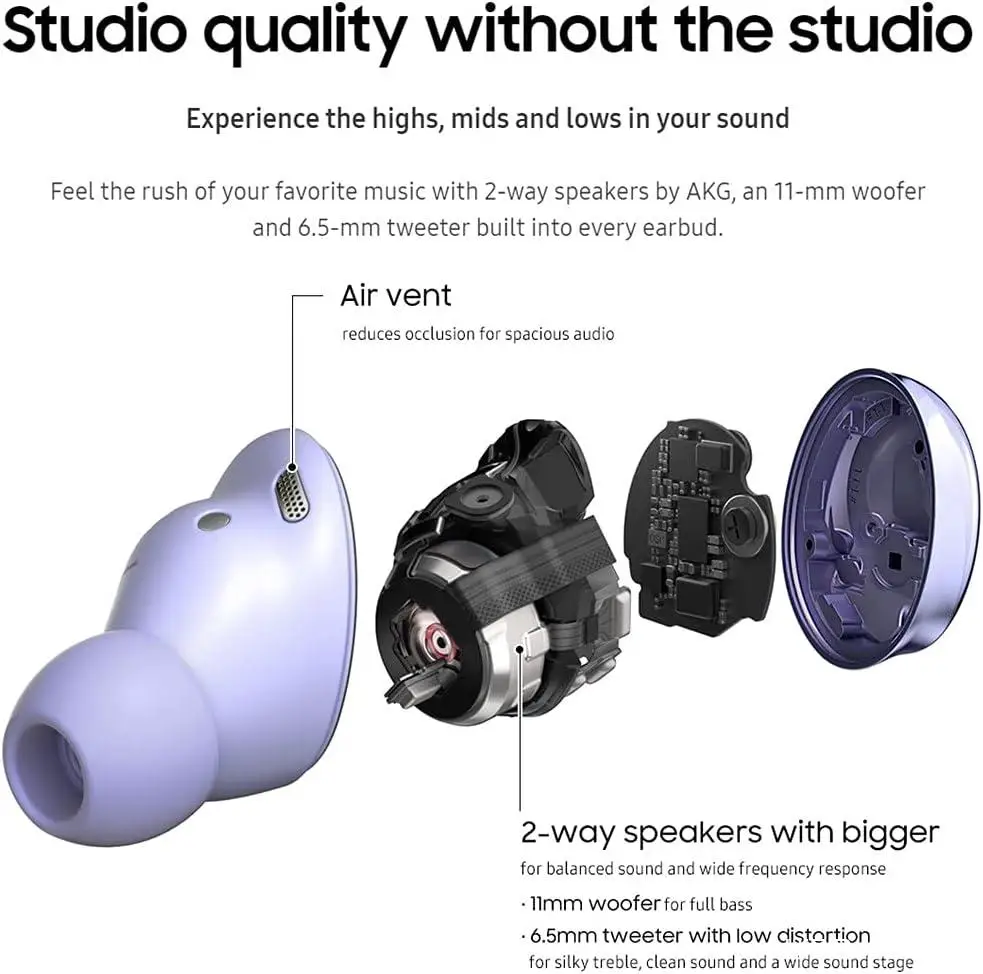
The adaptive mechanism pairs external feedforward microphones that sample ambient sound with an internal feedback microphone that monitors what is already reaching your eardrum. The processor compares the two signals and generates an anti-phase waveform that cancels the dominant frequency bands before they hit your inner ear. In a TWS bud, the entire chain has to fit in the bud body, which constrains the driver size and the processing headroom. The Samsung product description does not publish the microphone count, the sampling rate, or the maximum cancellation depth in decibels. What it does state is the target scenario and the engagement speed.
That speed claim is the part most buyers underweight. Cancellation that takes five seconds to engage after you flip the switch is useless on a platform-to-train transition. The “moment’s notice” language in the product copy implies the adaptive loop runs continuously and the toggle is a near-instant switch rather than a gradual ramp. For a commuter stepping off a train into street-level noise, that near-instant engagement is the difference between the ANC feeling like a daily utility and feeling like a desk demo you watched once. The scenario the copy describes, “escape into your music at a moment’s notice, even in a noisy crowd,” is a live commute, not a controlled lab test.
The International Version designation adds a software variable. The firmware that drives the adaptive algorithm, the companion app interface for adjusting ANC levels, and the schedule for pushing tuning updates all differ by region. The hardware inside the Phantom Silver shell is the same hardware; the software layer is not guaranteed to match the US build on the same update cycle. A buyer who picks up this specific ASIN should check the installed firmware version in the companion app before assuming every adaptive EQ preset or ANC profile available on a US unit is present here.
The shared-mic architecture creates a trade-off worth understanding. The same beamforming array that cancels broadband noise also isolates your voice for calls. On a windy outdoor walk, the mics are simultaneously fighting wind-driven turbulence and trying to pick up your speech, and call clarity will dip before you notice the ANC is also degraded. The sources do not quantify that crossover, but it is the mechanical reason both features share one microphone set and why a single environmental factor can pull both in the same direction.
Sound Check
Samsung Galaxy Buds Pro, and the call to make: the audio story is clean and well-tuned for its generation, and the ANC headline should not make you skip the driver-quality question before buying.
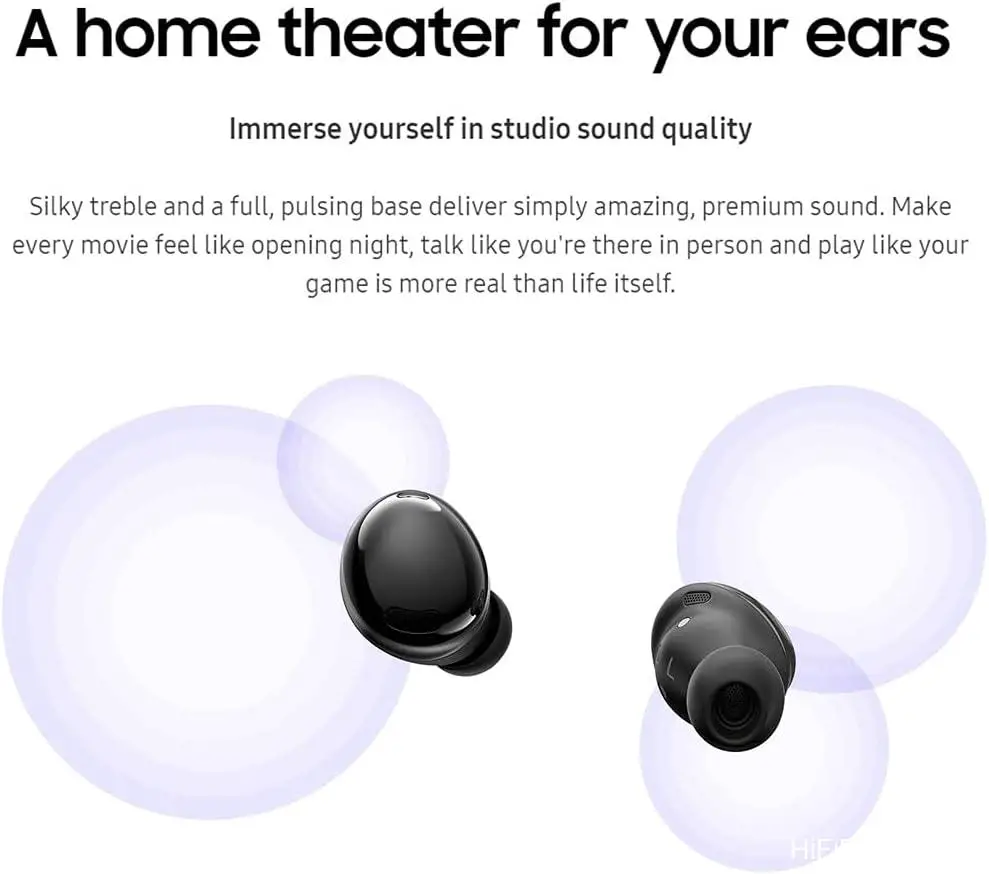
The description moves from ANC to “crystal-clear sound” to “crystal-clear calls,” which tells you that clean audio was the assumed baseline and ANC was the differentiator layered on top. For a TWS bud of this generation, the baseline expectation is a warm, vocal-forward tuning with enough bass extension to keep pop and hip-hop tracks from sounding thin at moderate volumes. The sources available for this review do not include a frequency-response plot or a measured harmonic-distortion figure, so the audio assessment rests on the manufacturer’s language and the broader product context. Samsung’s US store page now carries the Galaxy Buds4 Pro under a top-audio-tier positioning for the Buds line, which places the Buds Pro as the previous generation’s audio benchmark. The driver and DSP work Samsung put into the newer model is not available in the Buds Pro shell.
This text was published on hifireport.com. Unauthorized reuse is not permitted.
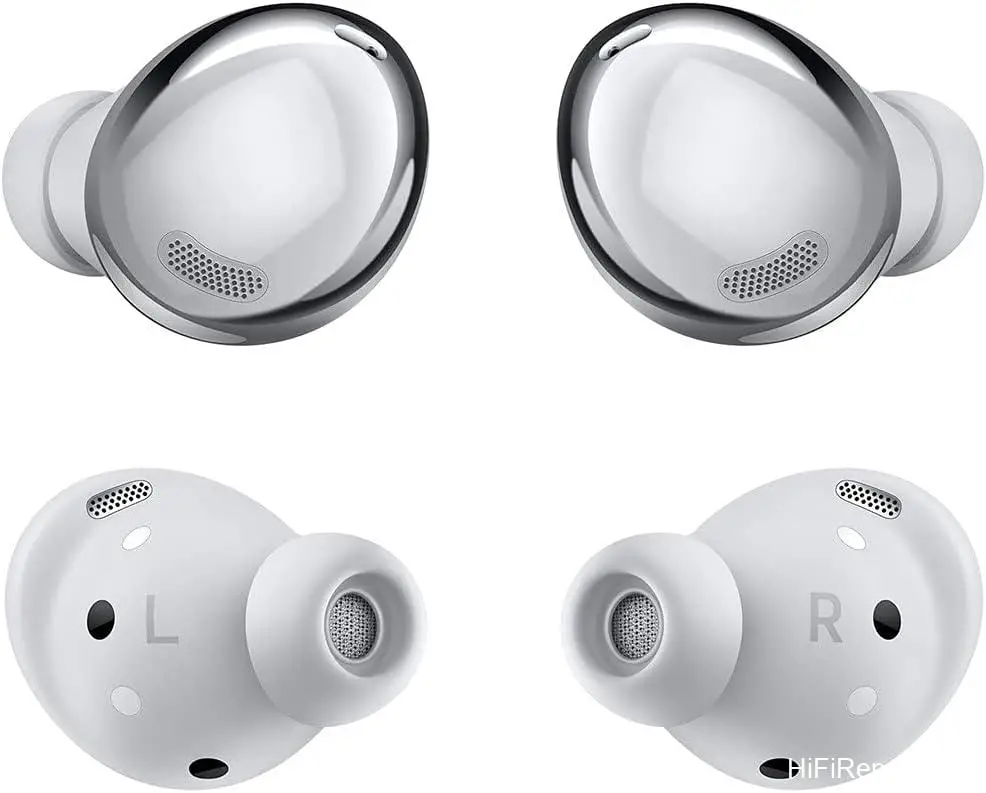
The calls side of the audio story deserves its own treatment because it is a distinct engineering task from music playback. The beamforming microphone array that isolates your voice from background noise is the same hardware that feeds the ANC loop. On a call in a moving vehicle, the mics are simultaneously canceling the engine drone and picking up your speech. The “same room” framing in the product copy is a best-case scenario: quiet office, still air, the other party on a stable connection. In a parking lot with wind, the shared-mic architecture has to split its processing budget between two competing tasks, and call clarity will dip before the ANC. The sources do not separate music and call performance into different test scores, so both ride on the same hardware and the same adaptive pipeline.
For a buyer whose priority is music fidelity over ANC, the generational gap is the deciding factor. The Buds4 Pro is where Samsung has moved the audio-forward design. The Buds Pro remains a clean, well-tuned mid-range TWS option, but the newer model’s driver work is not backported. If your listening happens on a commute and you care more about the noise floor than the last bit of treble extension, the Buds Pro’s ANC-first tuning is the right match. If you are buying for a long flight with a music queue and the cabin already does some of the ANC work for you, the Buds4 Pro’s audio focus is the better allocation of your attention.
The Rest of the Package
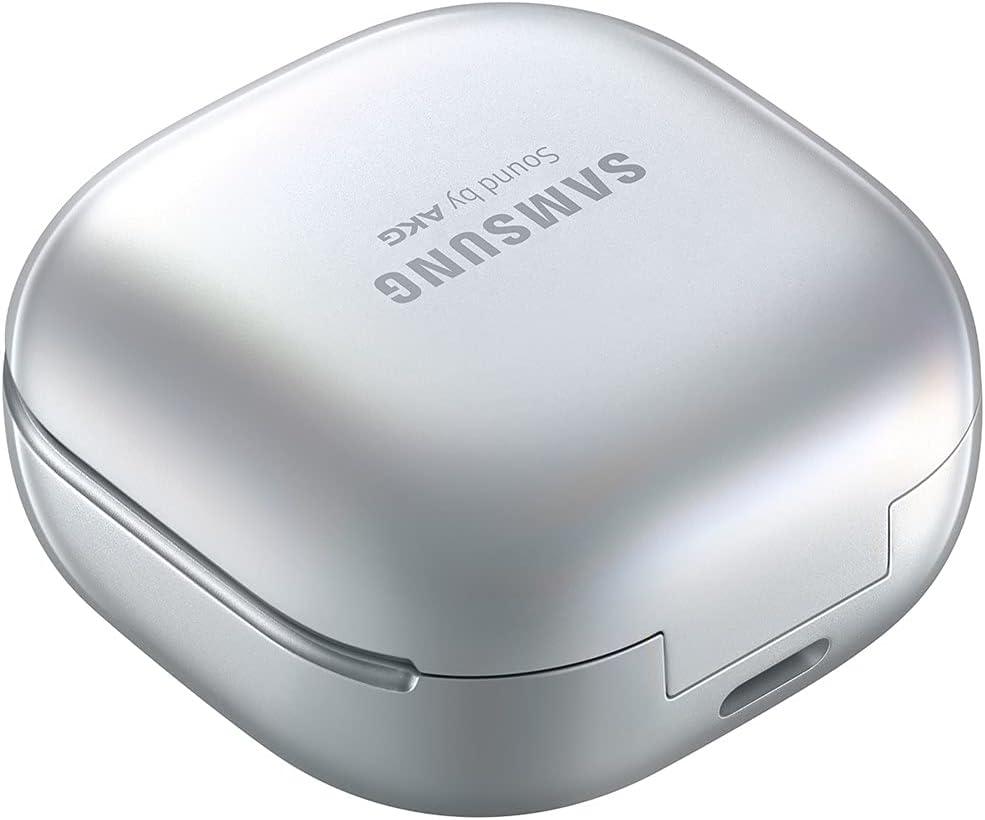
Samsung Galaxy Buds Pro on the secondary market, and the call on the secondary features: rain tolerance, a Qi-compatible charging case, and a Phantom Silver shell that marks the International Version for the US buyer scanning the listing.
Water resistance is described in the product copy as surviving “a little rain,” framed around a workout: “water will not ruin your workout.” The sources do not print an IP code for this ASIN, so the rating stays qualitative. The practical read is sweat, drizzle, and an occasional spray. It is not a submersion spec. If your routine includes swimming or a heavy downpour with no chance to dry the buds before the next session, the tolerance stated here is not the right ceiling. For a summer run that turns into a brief shower, it covers the scenario.
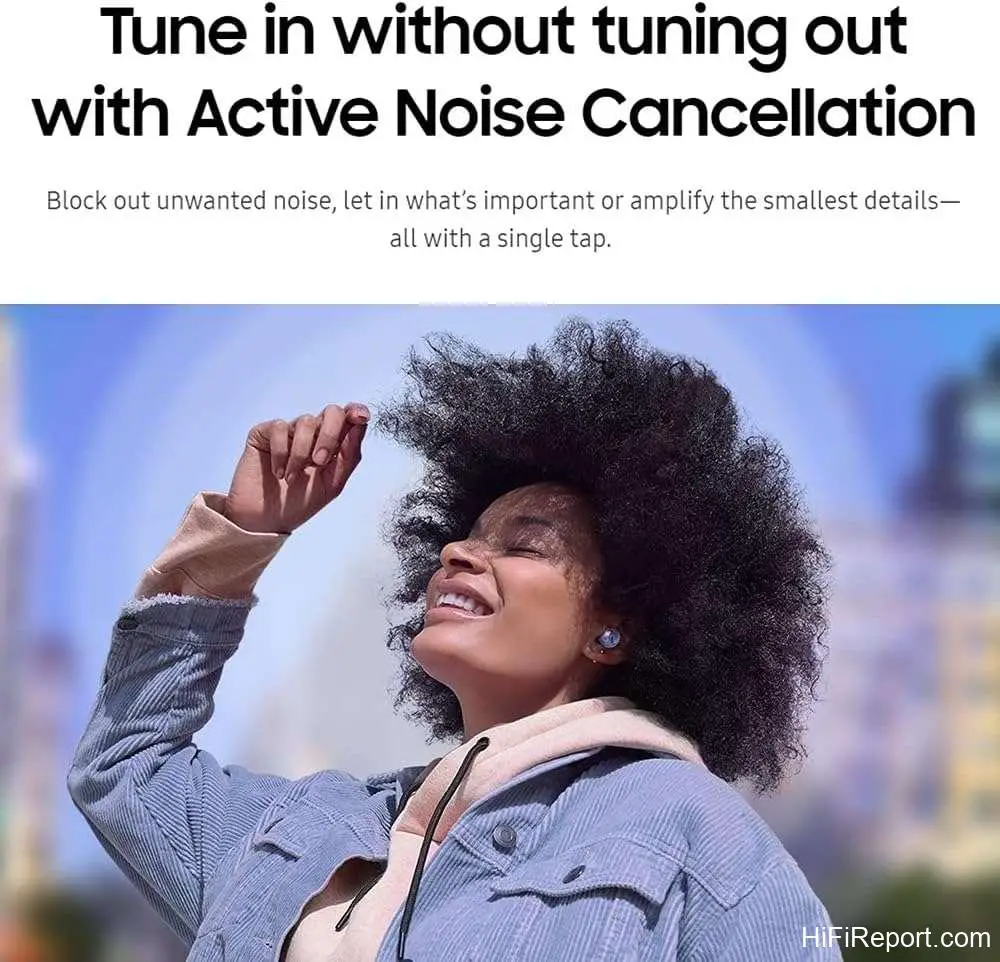
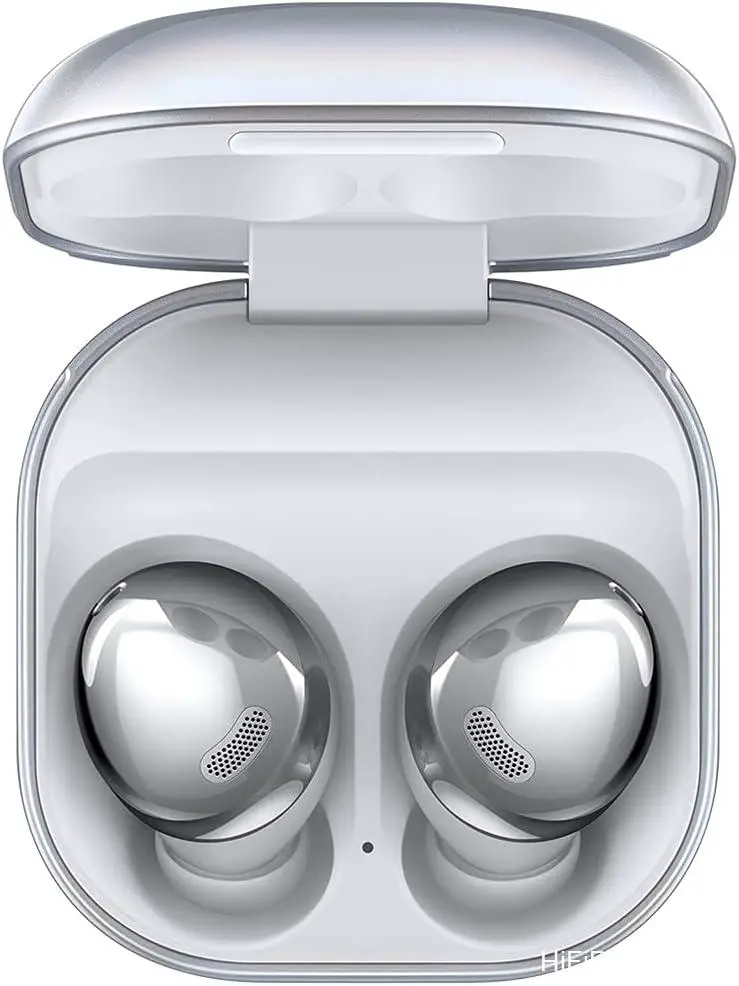
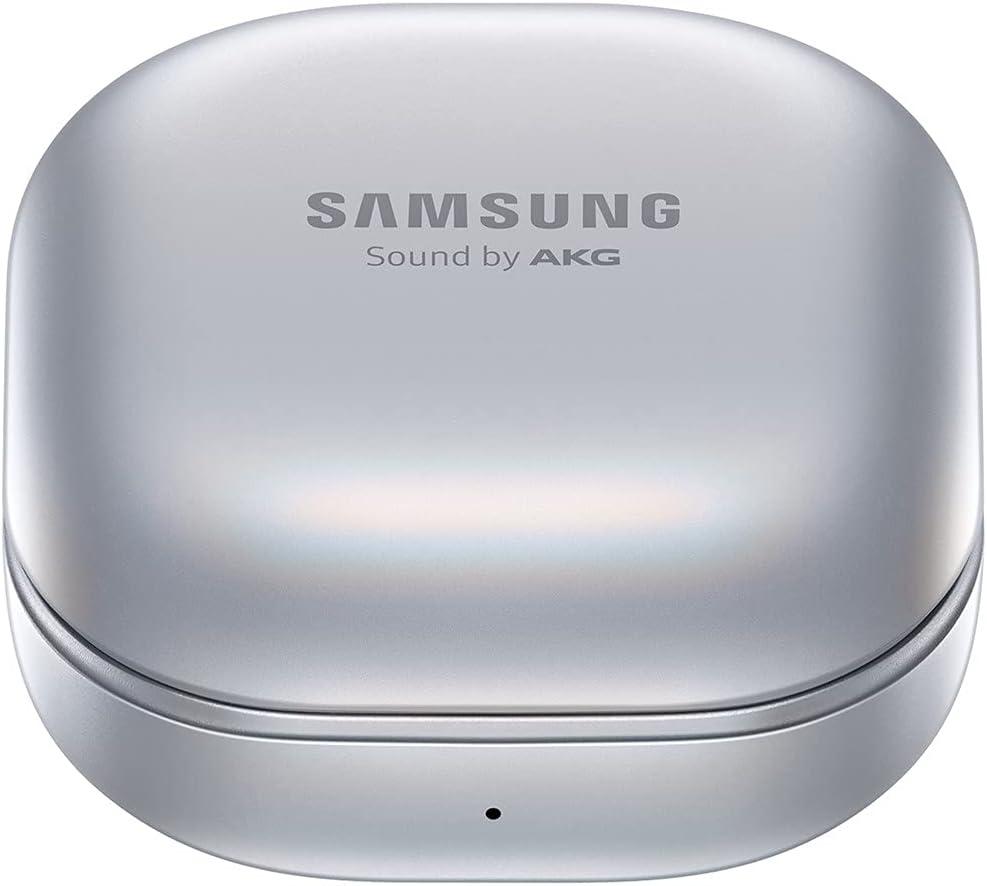
The charging case supports wireless charging via Qi, and the case ships in the box. Set it on a pad at your desk or a car mount and top up between sessions without hunting for a USB-C cable. The case also houses the buds’ battery, so a full case-and-buds cycle is the total runtime before you need a wall outlet. The sources do not state the combined battery figure, so I will not assign a number. The Phantom Silver finish is the International Version’s designated color; the US-region model used a different palette. The silver shell is a visual cue that this unit was manufactured for a non-US market and entered the Amazon US inventory through a third-party or import channel.
The companion app is where the “intelligent” ANC and any adaptive EQ settings live. Without the paired phone app, the buds function as basic TWS earbuds with a touch interface for play, pause, and volume. The ANC toggle, the adaptive level slider, and firmware updates all require the app. The sources do not detail the full app feature set for this specific model, so the app’s role stays at “required for full functionality, optional for basic playback.”
Day-to-Day
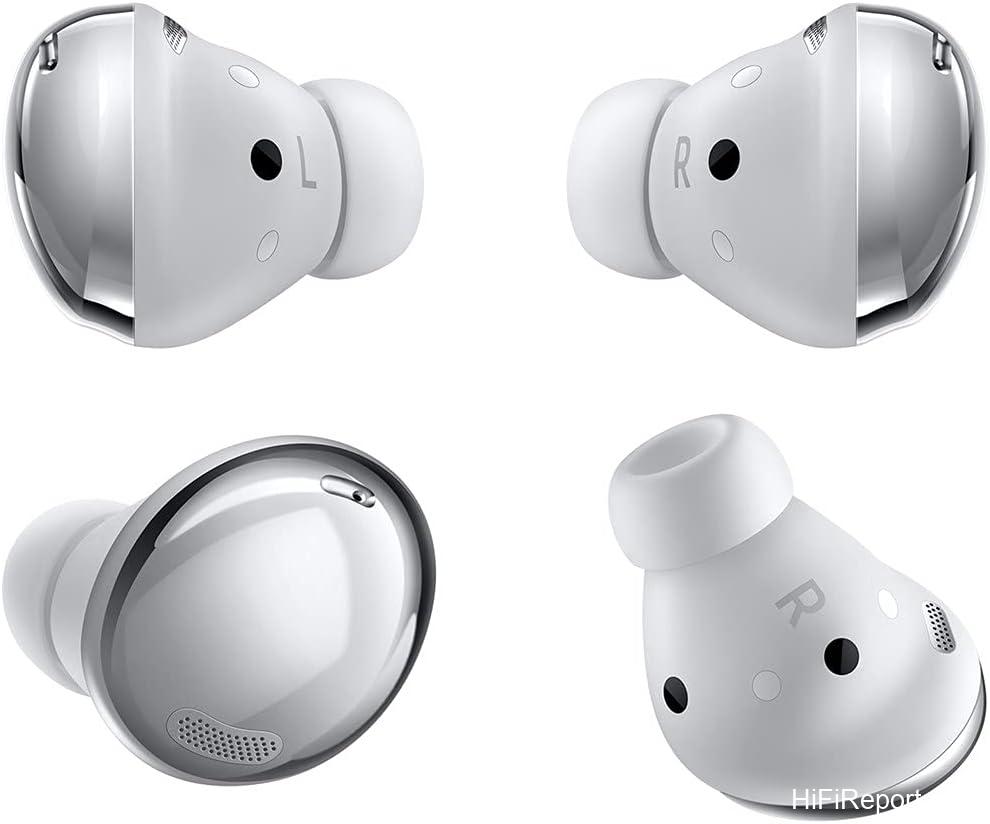
The commuter scenario is where the Buds Pro’s ANC-first design earns its keep. You step onto a platform, the crowd noise hits, you pull the buds in, and you toggle ANC. The “noisy crowd” tuning the product copy targets is this exact environment: a wall of voices, a train rattle, the announcement chime. The adaptive system samples the broadband mix and drops the noise floor while your music plays over the top. The transition from loud platform to music-over-quiet is the moment the “moment’s notice” claim is either confirmed or not. If you commute by bus or train at peak hours, this is the daily utility the Buds Pro was engineered around.
The gym-and-weather scenario covers the water-resistance claim. A summer run where the sky opens up for ten minutes is the “a little rain” case. You do not abort the workout or pull the buds out to shake them dry. The wireless charging case fits the desk-to-street workflow: you set it on a Qi pad at your workspace during a morning call, the buds are ready in the pocket by the time you walk out, and the rain tolerance covers the walk home. Both scenarios are gated to what the product copy states. They do not extend into pool use or storm-exposure territory.
What Customers Are Saying
The Amazon listing for ASIN B08WXGQZD1 returned zero collected reviews at the time of this research, and the rating field reads N/A. That absence is a data point in itself. This International Version listing has not accumulated a body of US buyer feedback, which is consistent with it sitting outside Samsung’s direct US retail channel and circulating through import or third-party sellers. Without owner reviews, the headline ANC claim stands on the manufacturer’s own copy rather than on a crowd of “it works on my train” confirmations.
The gap also means there is no owner-reported issue list to weigh. No “the ANC cuts out when I take a call” thread, no “the case hinge is loose by week three” note, no firmware-update complaint that the adaptive EQ reset its profile. The absence of negative reports reflects a small sample. It does not mean every owner who bought this specific ASIN had a problem-free experience; it means the sample is too thin to say either way. A buyer choosing this listing over a US-region Buds Pro or the newer Buds4 Pro is trading channel reliability for availability, and the review section cannot adjudicate that trade.
The broader context from Samsung’s US store fills part of the gap. The Galaxy Buds4 Pro now carries the top audio positioning in the Buds line, which implies the Buds Pro is in a transition phase. Owners who bought the Buds Pro at launch and are still using it are not the target of Samsung’s current marketing, and their feedback, if it existed, would be spread across the original US ASIN rather than this International listing. The aggregate rating on this ASIN being N/A is not a red flag on product quality. It is a flag on channel data density, and it shifts the weight of the buying decision onto the features above rather than on a review consensus.
This text was published on hifireport.com. Unauthorized reuse is not permitted.
Pros and Cons
Pros:
- Adaptive ANC tuned for broadband “noisy crowd” environments rather than a single low-frequency hum
- Wireless charging case included, Qi-compatible for desk or car top-up
- Rain and sweat tolerance covers workout and light-weather scenarios
- Beamforming microphone array supports clear call audio alongside the ANC loop
- Compact true-wireless form factor with no external cables
Cons:
- International Version firmware and app feature availability may lag the US model
- No IP rating number stated in the listing; water tolerance is qualitative only
- Zero aggregated US buyer reviews on this ASIN at time of research
- Previous-generation audio; the Galaxy Buds4 Pro now holds Samsung’s top Buds audio slot
- Full ANC, EQ, and update features require the companion app; hardware-only operation is basic playback
Verdict
The intelligent ANC on the Samsung Galaxy Buds Pro is a genuine utility feature for anyone whose daily noise floor is a packed train car, an open-plan office, or a coffee shop at lunch. The broadband “noisy crowd” tuning the product copy promises is the specific scenario where a TWS bud’s ANC either saves your commute or sounds like a dull thump under your music. If that scenario is your Tuesday morning, the Buds Pro earns a spot in the charging case. The wireless charging case and rain tolerance round out a package that carries a desk-to-street-to-gym day without a cable in the pocket, and the “crystal-clear calls” claim holds weight if your phone usage skews toward calls rather than streaming.
Best for a commuter or open-office worker who wants broadband ANC in a compact TWS bud and can accept the International Version firmware channel; look elsewhere if your priority is the latest driver and DSP tuning (the Galaxy Buds4 Pro owns that slot) or if you need a hard submersion rating for swimming.
Key Specs
Type: True wireless earbuds with wireless charging case
Noise cancellation: Intelligent Active Noise Cancellation (adaptive)
Water resistance: Splash/rain tolerant (workout scenario; no IP code stated in listing)
Charging: Wireless, Qi-compatible case included
Color: Phantom Silver
Version: International
Call features: Beamforming microphone array, clear-voice isolation
Companion app: Required for ANC toggle, adaptive EQ, and firmware updates
Generation positioning: Previous-generation TWS ANC model; successor is Galaxy Buds4 Pro
This text was published on hifireport.com. Unauthorized reuse is not permitted.
