
Sforzato DSP-05EX Streamer DAC Review
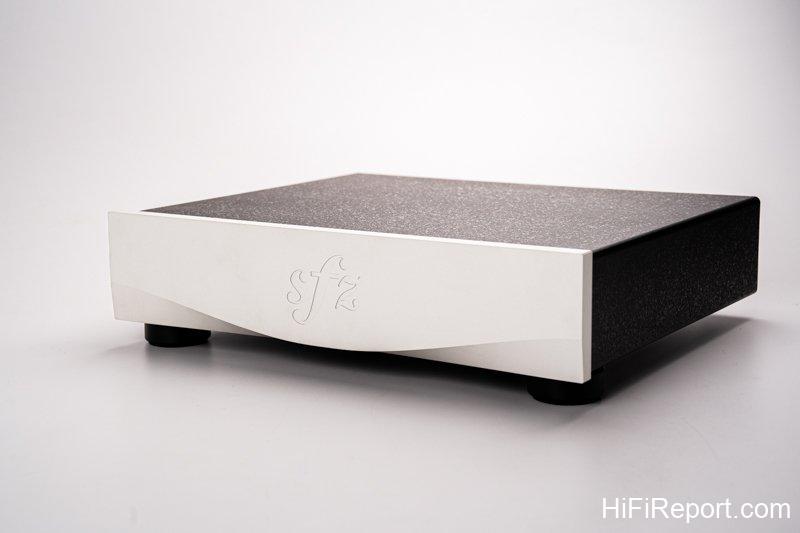
Upon seeing a two-piece streaming player, one might instinctively assume it’s a separate power supply design, right? That was my initial thought too. However, after getting my hands on the DSP-05EX, I realized it wasn’t that simple. It’s not a separate power supply, but rather a meticulously engineered “streamer transport + DAC.” Sforzato has essentially built a single streaming player into a streamer transport and a DAC, connected via their proprietary Zero Link interface. This means the two units must be used together; they cannot be paired with other manufacturers’ equipment.
Why this “exclusivity”? It’s not about being exclusive, but about achieving the best possible sound quality.
This dedication to technical excellence is characteristic of Sforzato as a brand.
Brand Named After Musical Terms
Sforzato hails from Japan and was founded in 2009 by Kyoichi Omata, who also serves as the designer.
Sforzato’s core expertise lies in streaming playback and digital audio technology. In the past, Sforzato’s product line was more complex, divided into streaming players, streamer transports, DACs, and master clocks, with different grades within each category, totaling over a dozen models. Now, the lineup has been streamlined into two main product types: streaming players and external master clocks.
The DSP-05EX reviewed here is their flagship streaming player, alongside a sub-flagship model, the DSP-07EX. They also offer two external clocks, the PMC-05EX and PMC-07EX.
Before founding Sforzato, Kyoichi Omata spent over twenty years in technical research and development, though not in the audio industry, but in digital imaging and wireless communication. Driven by his passion for music and audio, he transitioned to create Sforzato.
Why choose this brand name? Sforzato is a musical term indicating that a specific note or phrase should be played with sudden, strong emphasis to increase musical tension.
Kyoichi Omata’s choice of this emphatic musical term for his brand name gives us a glimpse into the depth of his passion for music.
Unique Vision
To evaluate a streaming player, you typically consider two aspects: streaming functionality and digital audio technology.
In terms of streaming features, the DSP-05EX can only be described as basic. It supports three streaming protocols: UPnP / DLNA, Roon Ready, and Diretta. For remote playback, it works with Sforzato’s recommended Taktina app, allowing you to stream from Tidal, Qobuz, and Amazon Music.
On the surface, the DSP-05EX’s streaming features might seem limited. However, for an audiophile seeking high-quality streaming music, the ability to listen to Tidal and Qobuz and use Roon Ready is often more than sufficient. What other features are truly needed? Furthermore, the DSP-05EX supports the Diretta transmission protocol, which can further enhance sound quality when paired with a Diretta-compatible server.
I’ll elaborate on Diretta shortly.
In terms of digital audio technology, Sforzato demonstrates unique vision and implementation, with two key aspects standing out: Zero Link and Clocking. Let’s start with Zero Link.
Zero Link is a digital audio transmission method co-developed by Sforzato and SoulNote. Its crucial innovation is placing the master clock on the DAC side, with the DAC dictating the transmission rhythm. This differs from the traditional approach where the clock resides on the transport side.
Zero Link Transmission Interface
Why did Sforzato and SoulNote develop the Zero Link transmission method? This stems from how data is transmitted between music servers (or NAS) and streaming players.
The streaming music we listen to comes from our home NAS or the cloud (streaming service servers). When data packets arrive at the player, they are first stored in memory for buffering, then decoded into digital audio, and finally passed sequentially to the DAC for conversion to analog music.
When the data in memory runs out, the next batch of packets is requested from the NAS or cloud and stored in memory.
In this scenario, the player’s CPU workload fluctuates; it’s busy when requesting packet data, but idle once the memory is full. Crucially, the rhythm of playing data is completely unrelated to the rhythm of requesting data. Sforzato believes this significantly impacts the precision of DAC conversion and is detrimental to sound quality.
The solution is to let the DAC determine the pace at which data packets are transmitted from the front-end. This is the key to Zero Link’s operation.
The “Zero” here refers to the extra workload on the DAC – zero.
The DAC operates at an extremely stable pace according to the music playback time, without fluctuations, thus having no extra workload.
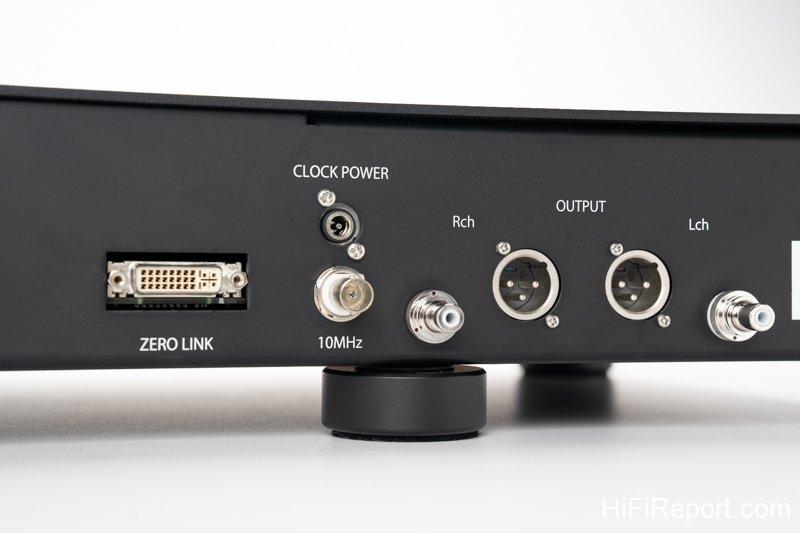
The Zero Link cable connects the DSP-05EX’s streamer transport and DAC, utilizing a DVI interface form factor. The cable transmits two types of data: one is I2S, which is the music signal carrying timing information (the DAC converts this signal to analog and outputs it), and the other is I2C, which is the communication signal between the front-end and back-end ICs.
As mentioned earlier, the DSP-05EX’s master clock is on the DAC side. The DAC uses this clock for D/A conversion and simultaneously transmits the clock signal for the currently playing track to the streamer transport, instructing the transport to transmit signals sequentially at this clock rate. Even if the transport’s memory is full of data packets from the NAS or is busy requesting data from the NAS, the transport will not alter the pace of sending information to the DAC, because the rhythm is dictated by the DAC.
However, there’s a situation: some tracks are 44.1kHz, some are 192kHz, and some might be DSD. The DAC won’t know the clock rate of the next track. How can the clock rate of the next track be transmitted to the transport in time for it to be prepared? This is where the I2C signal within Zero Link comes into play. When the current track is nearing its end, I2C transmits the format and clock rate information of the next track to the DAC, so the DAC knows the correct clock format to transmit for the upcoming track.
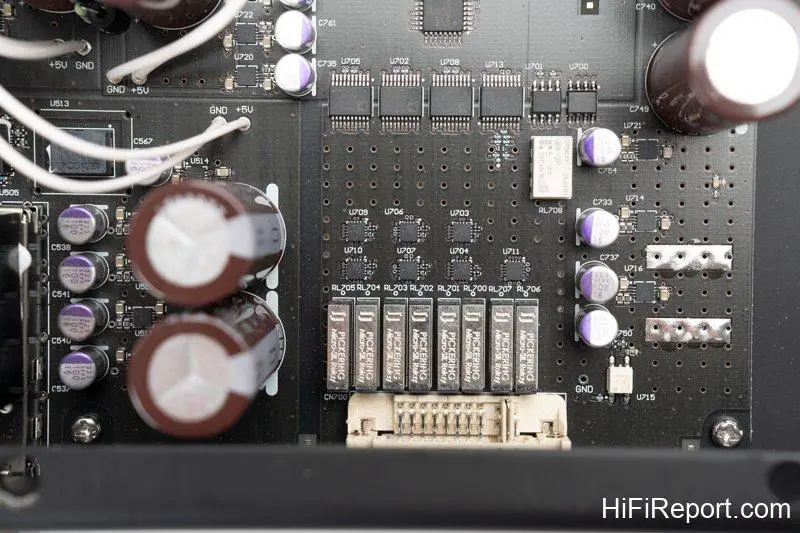
The essence of Zero Link is to help the DAC eliminate all factors that could disrupt the D/A conversion rhythm, allowing the DAC to work with extreme precision and ease.
Sforzato believes this is the key to the DSP-05EX’s excellent sound.
The Key to Master Clock Isn’t Absolute Precision
I just discussed the location of the DSP-05EX’s master clock (clock generator); now let’s talk about the type of clock the DSP-05EX uses.
Sforzato believes that the clock plays a crucial role in digital sources, and clock quality greatly impacts playback sound quality. However, Sforzato’s focus is not on the clock’s absolute precision (clock frequency) but on phase noise.
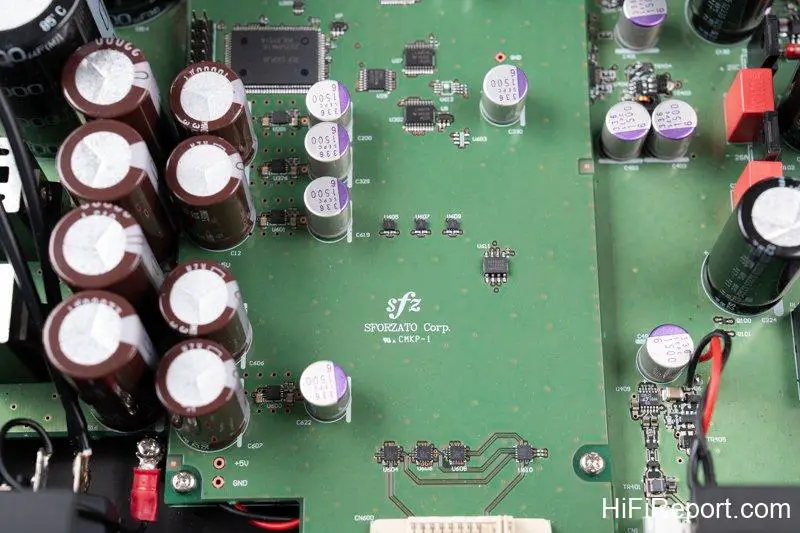
Sforzato believes that the frequency of standard crystal oscillators (e.g., 10MHz) is sufficient for digital music playback, and higher frequencies don’t necessarily yield better results. However, phase noise must be low, especially neighborhood phase noise close to the generated frequency, otherwise, it will cause jitter. Therefore, Sforzato exclusively uses clock generators with low neighborhood phase noise.
Furthermore, Sforzato has a unique setting regarding clocks: they are always external.
External clocking is straightforward – instead of using the internal clock of the equipment, you connect a separate, standalone clock unit using a digital cable.
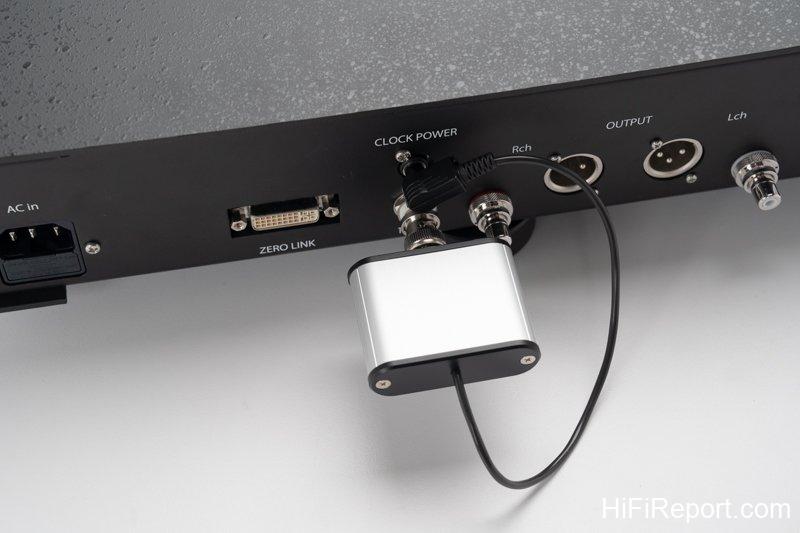
Many digital source brands offer external clocks, and they are often not inexpensive. Sforzato is no exception. For example, the DSP-05EX can be paired with their flagship PMC-05EX clock or the sub-flagship PMC-07EX. Interestingly, even when using the DSP-05EX’s standard included clock, it’s also external! The standard clock looks like a Dupont lighter, with a BNC plug at one end and a short DC power cable at the other. You plug the BNC connector directly into the BNC socket on the back of the DSP-05EX and insert the DC power cable into the adjacent power supply port.
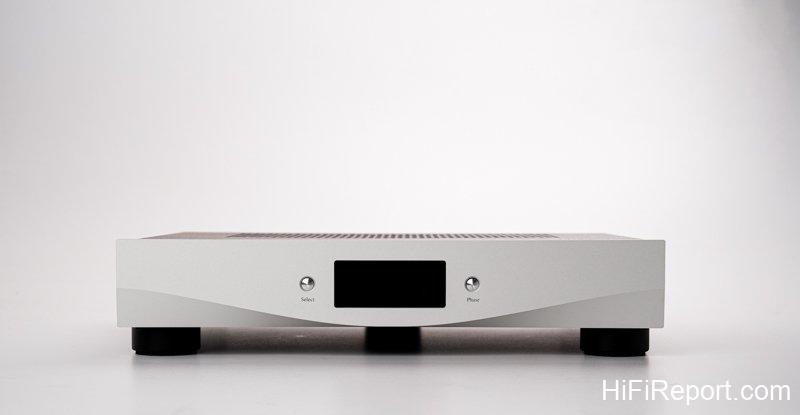
If you want to use their external PMC-05EX or PMC-07EX clock, simply remove the standard clock and connect the external clock with a BNC cable.
High Importance Placed on Power Supply
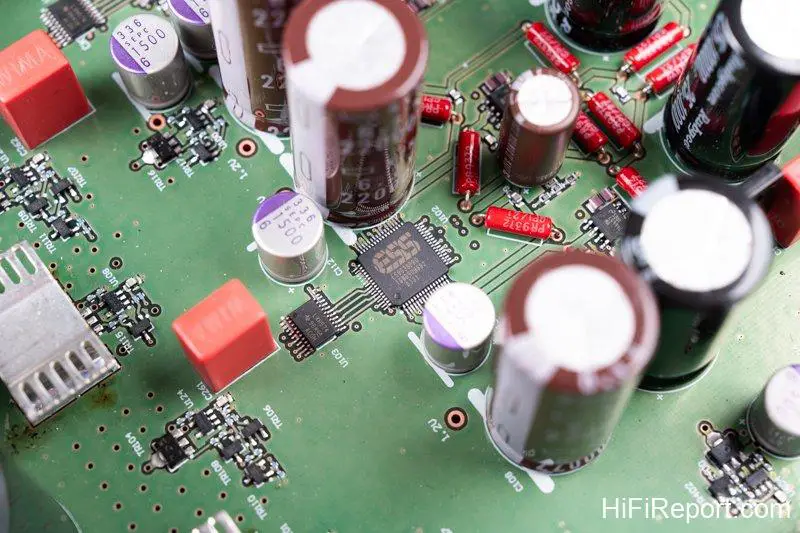
Regarding the DAC section, the DSP-05EX employs ESS’s ES9038Pro chip, one per channel. By using their custom-designed FPGA to control the ESS chip, they claim superior performance.
Sforzato applies NOS (Non-OverSampling) without upsampling or resampling to incoming digital signals. It doesn’t offer any upsampling features, meaning it absolutely does not alter the original state of the signal or add any information, allowing the sound to be presented in the most natural way.
Backed by powerful performance, the DSP-05EX supports formats up to 32bit / 768kHz PCM and Native DSD512, fully compatible with high-resolution playback.
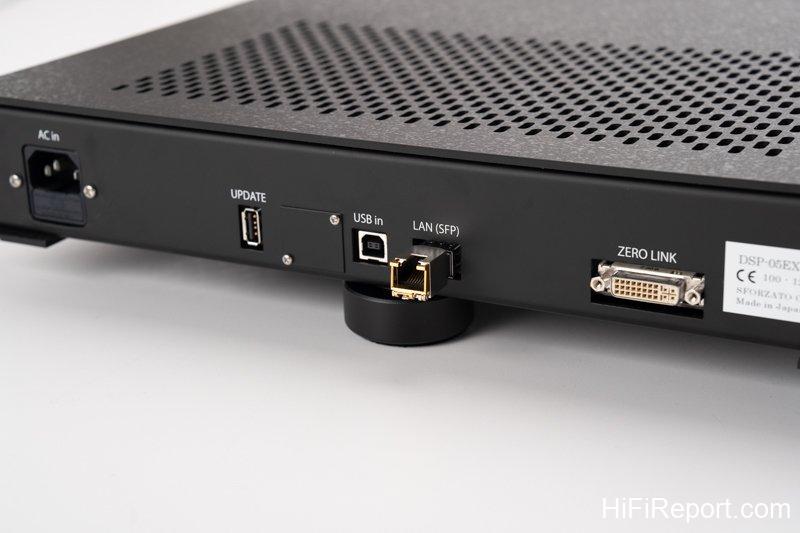
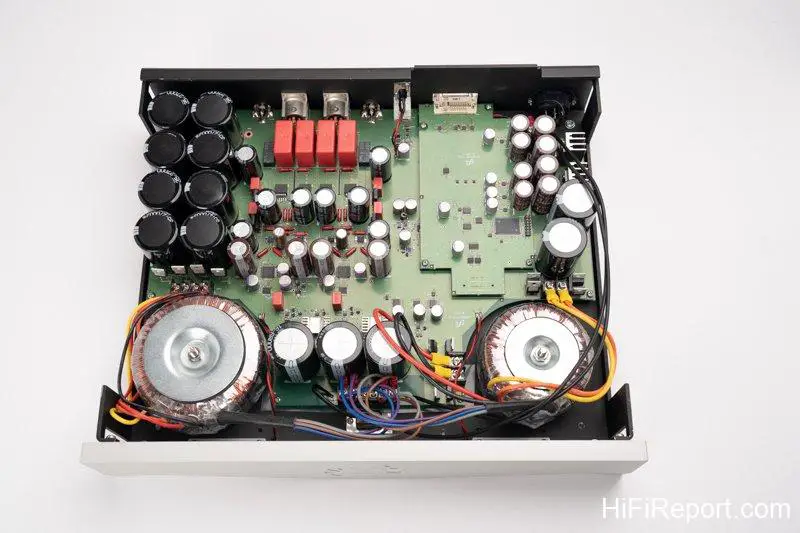
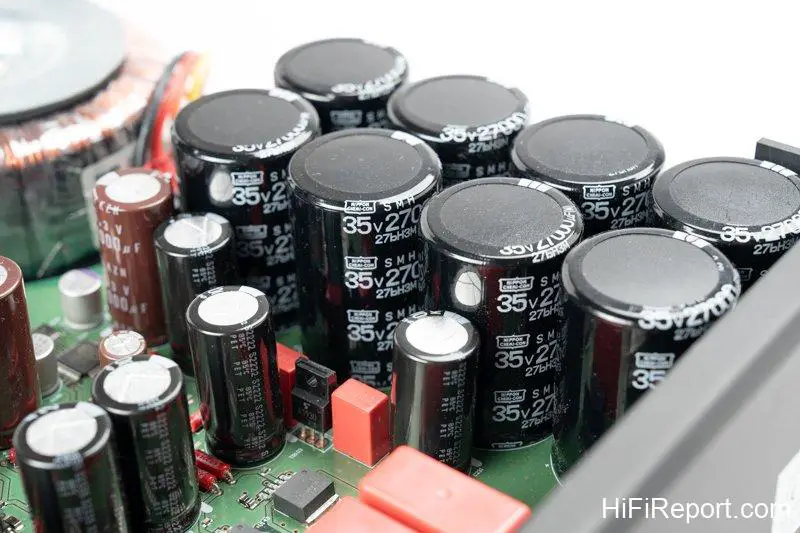
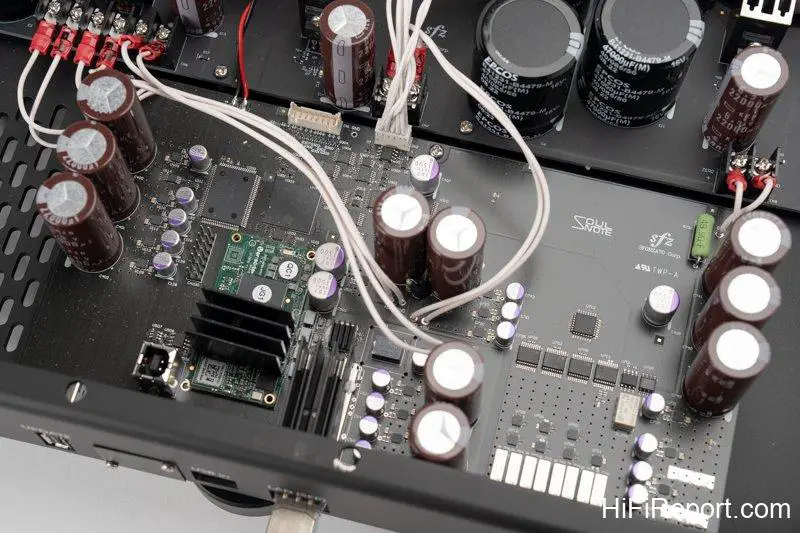
Sforzato also places great emphasis on the power supply. Both the DAC and the transport sections of the DSP-05EX have extremely ample power. The DAC has two transformers, and the transport has even more, three in total. Each transformer is unusually large, coupled with numerous large filter capacitors, ensuring each section receives sufficient and clean power independently.
Supports Diretta Transmission Protocol
Let’s spend some space discussing Diretta.
This is a network transmission protocol developed by MegaTech Electronics LLC in Japan. Its purpose is similar to UPnP / DLNA or Roon, allowing multimedia information to be transmitted and played between different devices.
The difference is that Diretta was developed specifically to improve streaming sound quality. It uses software to make each transmission batch small but frequent, instead of the original method of fewer batches but larger amounts. This means continuous, stable, and light work, which reduces noise and power consumption fluctuations during transmission and equalizes the player’s CPU workload, thereby improving sound quality.
However, to enjoy the good sound quality brought by Diretta technology, in addition to the DSP-05EX, you need to pair it with a music server that also has Diretta software, or install Diretta software on a Windows PC to use this function.
Can Also Use SFP Fiber Optic Transmission
For the listening test, I used a Roon system. Since my Roon Core is an Intel NUC small computer running Roon ROCK, I couldn’t install Diretta software and thus couldn’t experience the benefits of Diretta. But honestly, listening to the DSP-05EX using the Roon Ready function was already captivating! I connected the transport and DAC with the included Zero Link cable. This cable is quite long from the factory, about 2 meters. It seems this distance doesn’t affect transmission, allowing users more flexibility in placement without needing to stack the units.
The small screen on the transport doesn’t display track information during playback, so the transport doesn’t need to be placed in a prominent location; it can be kept closer to the network switch.
The network port on the back of the transport is compatible with both RJ45 and SFP. If your switch supports SFP, you can use a fiber optic cable for galvanic isolation.
Additionally, there is a USB B port on the back of the transport because the DSP-05EX can also function as a USB DAC. To use it, press the Select button on the left side of the front panel to switch from LAN to USB.
The equipment paired during the test included a Linear Acoustic LA V5 preamplifier, a Linear Acoustic A200 stereo power amplifier, and Dynaudio Contour 60 loudspeakers. The reference source for comparison was a YBA CDT450 CD transport paired with a Merging NADAC.
Rich Texture and Detail
First, I listened to the 2017 Audio Show Commemorative CD, which features a selection of works from the Steinway & Sons record label. I often use tracks 3 through 7, solo piano pieces, to judge the sonic character of equipment. The moment the sound emerged, I was suddenly stunned. This familiar melody had a timbre quite different from what I had heard before. How so? It had richer texture and detail, simply exquisite! Previously, I heard a piano sound with great transparency and crystalline clarity, good high-frequency luster and moisture, which was certainly beautiful and very pleasant to listen to.
Through the DSP-05EX, that crystal-clear, translucent quality seemed less pronounced. In its place was a clearer texture that is difficult to describe in words, perhaps best characterized as a “woody” quality – more like the sound of a real piano. Each note was more defined, stable, and the key strikes felt more solid.
Listening to this recording before was beautiful; now it became exquisite. And even using studio-grade Canare cables for signal and speaker connections, I still heard a sense of nobility. This DSP-05EX indeed possesses a unique quality. Similarly, with the Accademia Bizantina and violinist Giuliano Carmignola performing Vivaldi’s “The Four Seasons,” I immediately perceived the DSP-05EX’s excellent resolution. The amount of information was incredibly rich; reverberation, decay, and air were all distinctly clear.
Again, the ample detail directly translated into timbre and texture. The string sound didn’t just have a crystalline luster; it also carried a slightly dry, sticky sensation – the texture that should be present when bow meets string. You could feel the friction between bow and string, rather than it just gliding over smoothly.
The DSP-05EX’s tonal density is just right, balancing lightness and gravitas appropriately. The contrasts are vivid but not overly aggressive. Listening to “Spring” with it was truly comfortable, pleasant, and exhilarating.
Moving to the Allegro in “Summer,” the atmosphere completely changed. The music immediately became impassioned, the force of the bow vigorously rubbing against the strings was clearly rendered, and the dynamics and light-dark contrasts became intense, making the music feel more realistic.
Another characteristic of the DSP-05EX is the tangible quality of the sound. The violin lines were very concrete and three-dimensional, and coupled with the appropriate image scale, each instrument’s shape felt very real. Furthermore, the separation was excellent.
Additionally, the DSP-05EX effortlessly reproduced the reverberation and decay present in the recording and accurately conveyed the spatial characteristics – height and width were clear, and depth and layering front-to-back were exceptionally good. Simply put, the music had a very vivid sense of imagery.
Jiang Hui Sounds So Good!
Next, I tried vocals, starting with Jiang Hui’s “Yi Jie Ren Sheng” (Life in the Entertainment World) compilation album, which includes some of her hits from her years with Point Music, such as “Jiu Hou De Xin Sheng” (Voice After Drunkenness), “Shang Xin Jiu Dian” (Sad Hotel), “Yi Jie Ren Sheng” (Life in the Entertainment World), “Deng Dai Wu Ban” (Waiting for a Dance Partner), etc.
The moment the music started, I immediately noticed the clean and transparent soundstage, excellent soundstage perspective, and clean, crystalline sound quality with appropriate moisture and density – both real and beautiful, almost like listening to vinyl.
Listening to Jiang Hui sing high notes is a pleasure; listening to her sing high notes through the DSP-05EX is an absolute delight. This is arguably the best I’ve ever heard Jiang Hui sound. I believe the DSP-05EX doesn’t add anything extra to the sound but faithfully conveys the information in the recording. The sound is very natural, authentic, with excellent extension both up and down, and effortless. Moreover, Jiang Hui’s vocal line is very distinct and clear. The soft parts are vivid, and when she sings high, it’s not constricted at all; she lets go beautifully.
The overall sound is very clear, with excellent resolution, but definitely not dry.
Switching to a male voice, I chose Li Zongsheng’s “Rational and Sentimental” album, a live concert recording. Played through the DSP-05EX, the soundstage scale was not small or timid. The sound wasn’t just detailed and realistic; the proportion of each frequency band was just right, and the scale of the mid and low frequencies was ideal, making this live recording feel both full and substantial.
Furthermore, the downward trajectory of the kick drum and bass was very clear and naturally deep. The “thump” of the kick drum was very distinct, short, powerful, and precisely located.
The key point is that the entire musical atmosphere felt very warm. I initially thought the DSP-05EX leaned towards a noble and cool character, like a cool beauty, but it’s actually quite passionate.
Excellent Bass Resolution and Layering
What about the performance with large orchestral pieces? Taking Pierre Boulez conducting the Vienna Philharmonic’s performance of Mahler’s Symphony No. 5, Second Movement as an example, what impressed me most about the DSP-05EX was not only the excellent bass resolution but also the superb separation and layering when many sections played together.
Mahler’s symphonies are highly complex in instrumentation, and this one is no exception. In certain passages, there are low string sections, low brass sections, timpani, and bass drum. Sometimes they play together weakly, sometimes they erupt powerfully. Sometimes there are sustained lines, sometimes very tight or sudden loud accents. It’s extremely complex, highly variable, and the sound is incredibly rich. Through the DSP-05EX, I could clearly hear this intricate interplay of overlapping parts and dynamic changes. Whether it was high, low, or mid frequencies, the listening experience was incredibly enjoyable.
The important thing is that these different sections were not isolated or separate; they remained integrated, dense. This allowed me not only to hear a full sound and lively music but also to feel profound emotion and immense tension. It was magnificent! At this point, it suddenly occurred to me that I was only using the standard lighter-sized clock. What would the performance be like if I switched to the PMC-05EX clock, which is the same size as the DAC? That is truly intriguing.
A New Choice for Top-Tier Streamer Sources
Intriguing as it is, I believe the DSP-05EX, even with the standard clock, is already excellent and fully justifies its price. It possesses sufficient performance and capabilities to compete with other high-end streaming sources on the market.
What I find most appealing about the DSP-05EX is that alongside its core characteristics of neutrality, balance, precision, resolution, and realism, it also possesses a delicate and refined quality. This allowed me not only to hear the original form, content, and emotion of the music but also to gain rich listening enjoyment, making it unforgettable.
After listening to the DSP-05EX, I want to say loudly: there is a new choice for top-tier streaming sources.
Specifications
* Type: Streaming Player DAC
* Supported Formats: Up to PCM 32bit / 768 kHz, Native DSD512
* Compatible Streaming Functions: UPnP / DLNA, Roon Ready, Diretta
* Compatible Streaming Services: Tidal, Qobuz, Amazon Music
* Inputs: LAN (supports SFP), USB B
* Outputs: RCA, XLR (up to 2 Vrms)
* DAC Chip: ESS ES9038Pro x 2
* Dimensions: DAC / 390 × 103 × 327 mm (W×H×D), Streamer Transport / 390 × 85 × 328 mm (W×H×D)
* Accessories: AC Power Cable × 1, Zero Link Cable × 1, External Clock × 1