
Shure SE425 PRO Sound Isolating Wired Earbuds Review
Most people approach in-ear monitors with the assumption that a pricier pair should sound warmer, punchier, and more exciting than a budget set. The SE425 immediately challenges that expectation. Shure tunes these dual-driver earbuds for neutral accuracy, which means well-produced tracks sound strikingly detailed and poorly mixed recordings expose their flaws. The result is a set that works as a monitoring tool first and a music-listening device second, a trade-off that rewards musicians and discerning listeners while it can frustrate bass-driven buyers.
The SE425 PRO sits in Shure’s mid-tier in-ear line, above the single-driver SE215 and below the SE535 and SE846. At 4.4 out of 5 across roughly 1,020 Amazon ratings, the product carries a strong but not universal reputation. The clear housings, over-ear wireform, and detachable MMCX-cable design make it look less like a consumer earbud and more like a piece of stage equipment you happen to keep in your pocket.
Design, Materials and Feel
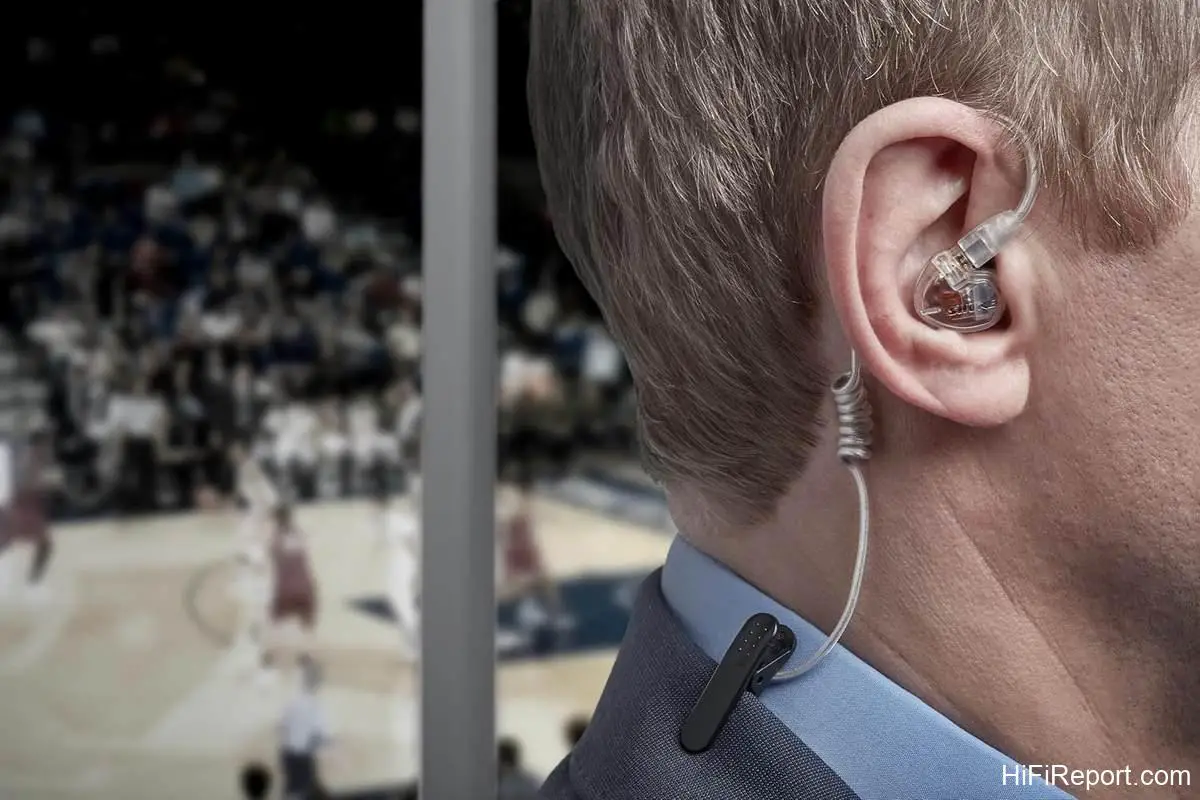
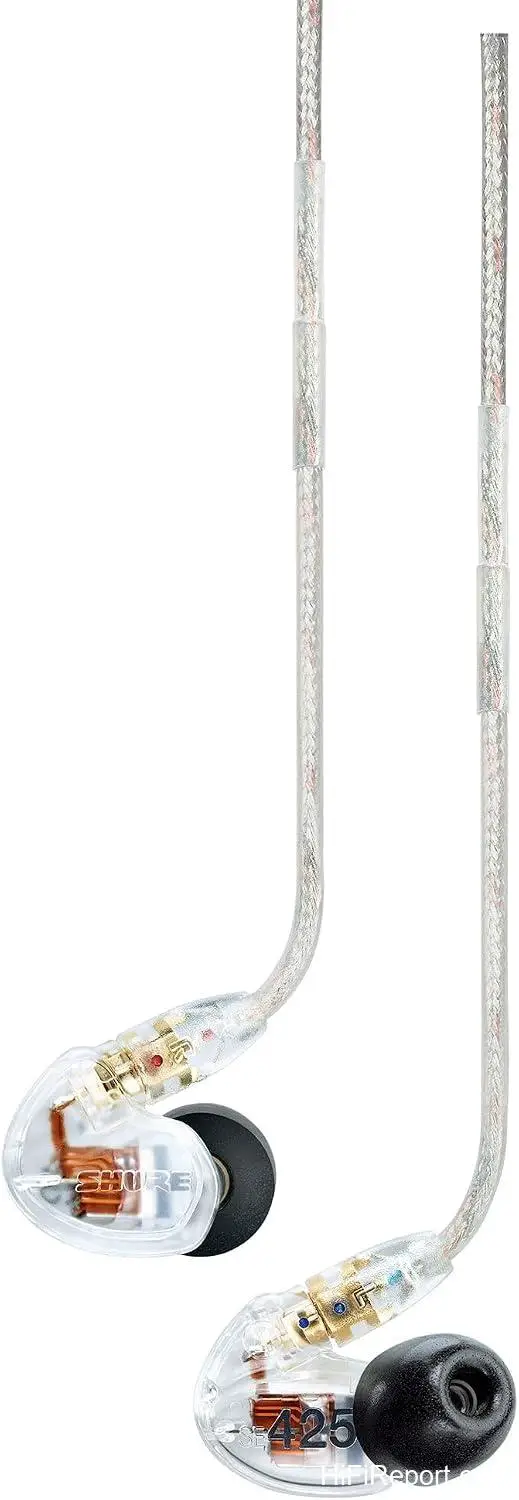
The earbud housings are transparent clear plastic, which Shure lists under the “Clear” color option. The over-ear wireform is a thin, memory-metal stem that hooks behind the upper ear and routes the cable behind the ear instead of under the chin. This keeps the cable out of the way and prevents the bud from being yanked free by a snag on your sleeve. The housing itself is compact and sits deep in the ear canal once the wireform is seated correctly.
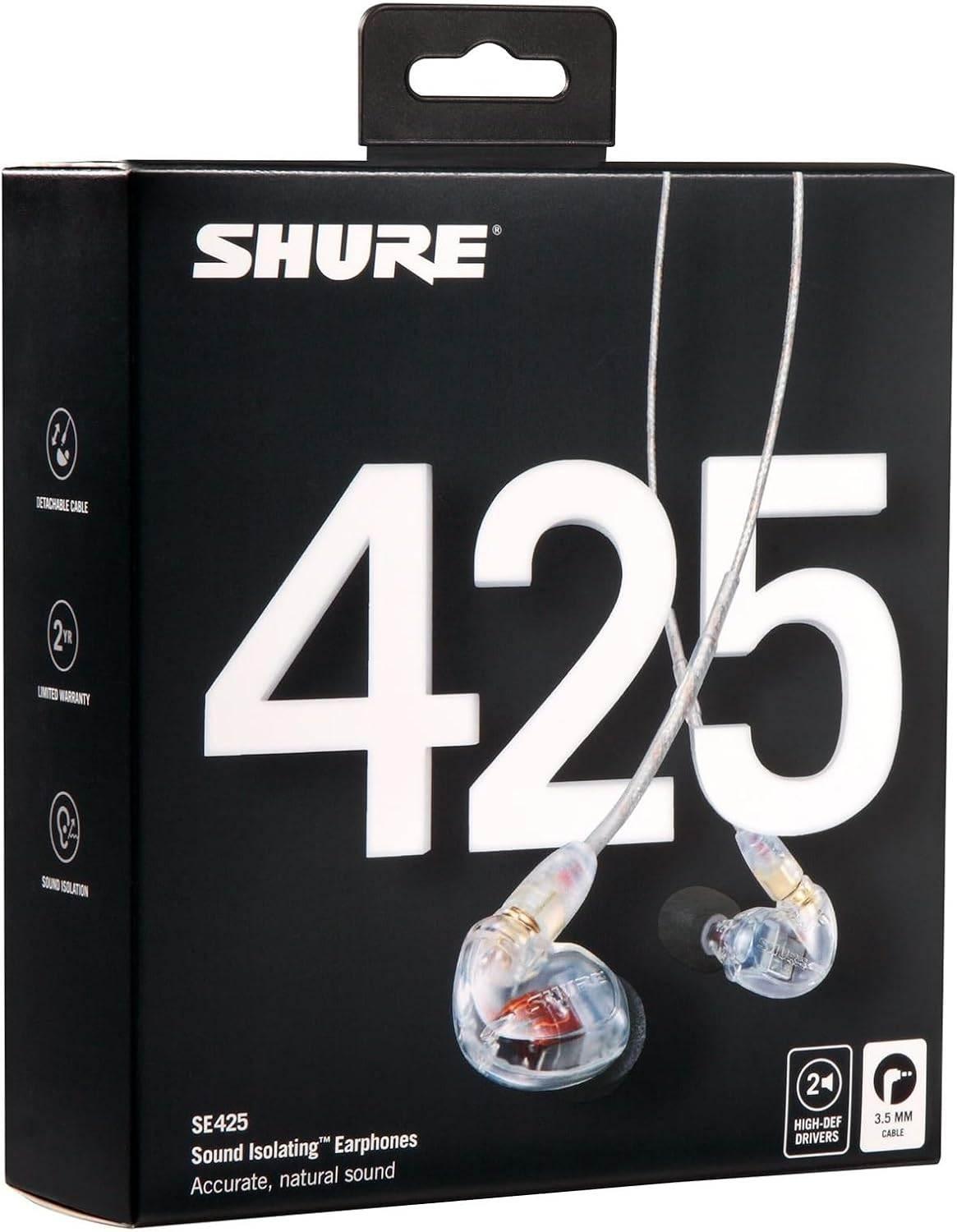
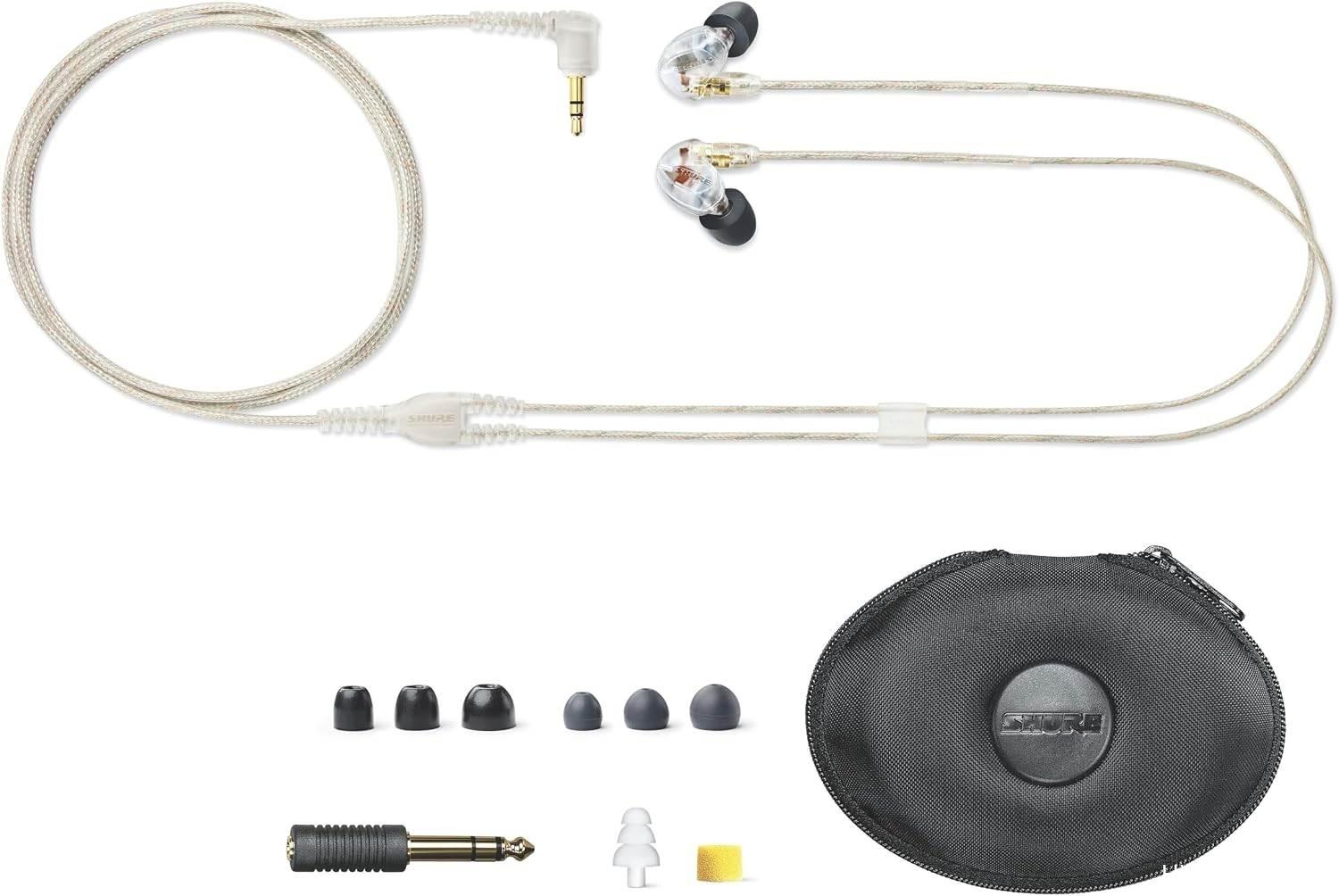
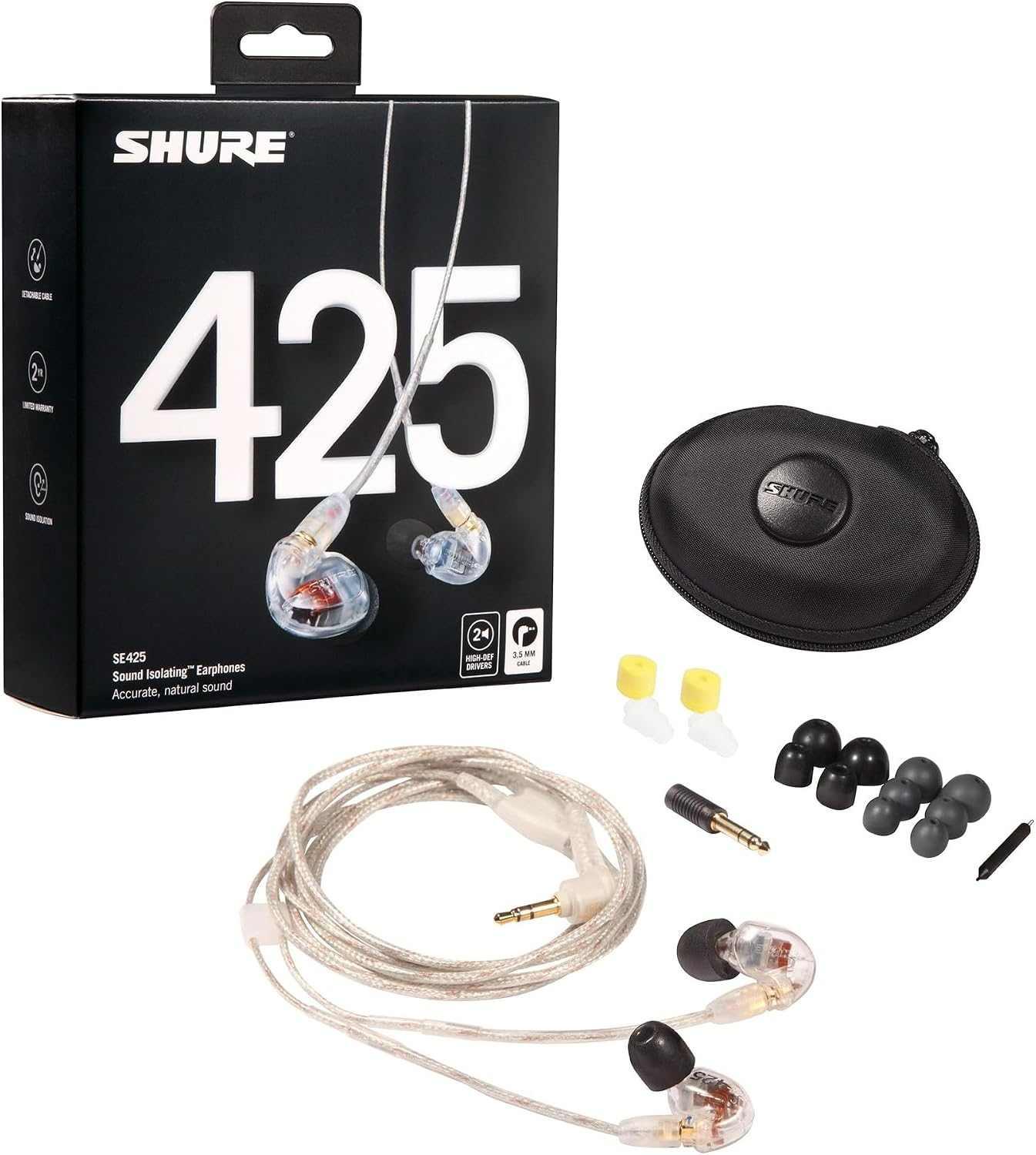
The gold-plated MMCX connector uses a lock-snap mechanism that allows 360-degree rotation between the cable and the earbud body. That rotation means the cable can swing freely without twisting the driver unit, which reduces wear at the joint. The included 3.5mm cable is a reinforced, detachable design that resists fraying in daily use. A 1/4-inch adapter is in the box for connecting to older gear with larger jack inputs. The whole set ships with a compact carrying case and a two-year warranty.
Owners who have handled the units consistently describe the build as solid. One long-time Shure user noted that the speaker units, tips, and cable are all individually replaceable, so a snapped cable or a worn tip does not mean discarding the entire product. At least one reviewer called the reinforced cable effectively indestructible in daily gym use, and the detachable design means the driver units can outlive the cable by years.
Comfort and Fit
The wireform design creates a secure, locked-in fit that reviewers describe as nearly impossible to dislodge accidentally. One owner who uses the SE425 on airplanes said the seal is so tight that wearing them while jogging or cycling would be genuinely dangerous, a useful warning for anyone planning to move at speed with them in. The trade-off for that security is insertion. Getting the wireform hooked behind the ear and the driver seated deep enough for a proper seal is a two-hand task that takes a visible learning curve. Several owners reported being ready to return the pair before figuring out the technique, which involves bending the rubbery tip portion significantly before pushing the driver home.
Shure includes three sizes (S, M, L) of both flexible silicone sleeves and black foam sleeves, plus a yellow memory-foam option. Finding the right combination matters as much as the seal itself. One reviewer noted a dramatic jump in bass response after landing on the correct tip size that created a tight seal. For long sessions, the flexible tips are generally more comfortable than the foam. One owner who wore the foam inserts for a few hours reported mild ear strain, while another found the foam so comfortable they forgot they were wearing them after a few minutes. The semi-rigid wire cover adjacent to the bud, while excellent for keeping the earphone in place, slows down the initial insertion compared to a simple pull-and-place bud.
Audio Performance
The SE425 produces a neutral, detail-rich sound that mirrors the recording with high fidelity, and the clearest evidence comes from owners who compared them directly against the SE215 and the Etymotic ER-4PT in controlled listening sessions. After switching between the two Shure models, one reviewer described the 215 as sounding like a light blanket had been thrown over the speaker, with muddier separation and less individual instrument clarity, while the 425 pulled the layers apart. The Etymotics were even more clinical, but the 425 retained a warmth that that reviewer preferred, particularly in the lower mids and bass.
Midrange and Treble
The midrange is where the SE425 earns most of its praise. Vocals sit forward and distinct, and one owner listening to a Boston Pops recording could separate the bass drum, kettle drum, and tuba in “76 Trombones,” three instruments that bled together on his older Shure E3C and on his Bose noise-cancelling buds. Treble extends cleanly without the tinny or brittle quality that some single-driver buds develop. One reviewer listening to rock and metal noted that distorted guitars became more pleasurable because the mids carried textural detail that budget buds smear. The dual-driver configuration dedicates one MicroDriver to the lower band and a second to the upper band, which owners report keeps cymbals and hi-hats crisp without sacrificing the body of a kick drum.
Bass
This is the most consistently raised concern. The SE425 does not lack bass, but it does not emphasize it the way a V-shaped tuning or a bass-heavy consumer earbud would. One owner listening to hip-hop and R&B found the low end tight and properly balanced, and noted that a dedicated bass-head might prefer the SE215 or the SE535, which reviewers described as having noticeably stronger low-end output. A motorcycle rider using the SE425 under a helmet reported the bass felt adequate but the mids took priority. The practical effect is that the 425 reads as a monitoring tool: it shows you what the bass does rather than making you feel it. Several owners confirmed that an equalizer adjustment or an external amplifier can push the low end further, but the stock tuning stays flat.
Written for and first published on hifireport.com. Republishing requires permission.
Soundstage
For an in-ear product, the SE425 opens up a wider sense of space than most competitors. One owner playing electric drums reported that the stereo image was crisp and wide, so much so that it was disorienting the first time he compared them to his Sony 7506 over-ear headphones. Another reviewer noted that the 425 allowed him to place individual orchestra instruments in space in a way his home surround system did more precisely, but the IEM still delivered the full depth expected from a well-recorded stereo mix. The separation between layers that the SE215 blurs becomes distinct on the 425, which is the single most repeated praise across the review set.
Noise Cancelling
The SE425 uses passive sound isolation only; there is no active noise cancellation circuitry in the housing. What it does well is block ambient noise through the seal of the tips against the ear canal, and in that role it performs at a level that owners compare favorably to dedicated ANC products. One owner who flies weekly found that with music playing at a low volume, there was effectively no ambient noise intruding, a result he said his Bose QC15 buds did not match for the human-speech band (babies, rude adults) that active cancellation handles poorly. Without music playing, nearby conversations are still audible but heavily muffled. A motorcycle rider wearing the SE425 under a full helmet at highway speed found the isolation close to his old Etymotic ER6i, though the triple-flange tips he fitted outperformed the stock foam tips by a wide margin. The consistent caveat from multiple owners: if you can clearly hear the person next to you, your seal is not tight enough, and the bass will feel weak as a result.
Written for and first published on hifireport.com. Republishing requires permission.
Battery Life
The SE425 is a wired product with no battery, no charging cycle, and no firmware to update. The 3.5mm detachable cable carries the signal from whatever source you plug into it, and the MMCX connectors let you swap that cable for a different one without touching the driver units. This means there is no degradation from repeated charge cycles, no range anxiety, and no pairing step between the earbuds and a source device. The two-year warranty that ships with the box covers the driver units, the cable, and the tips, and because each component is replaceable individually, a frayed cable or a torn tip does not retire the entire set.
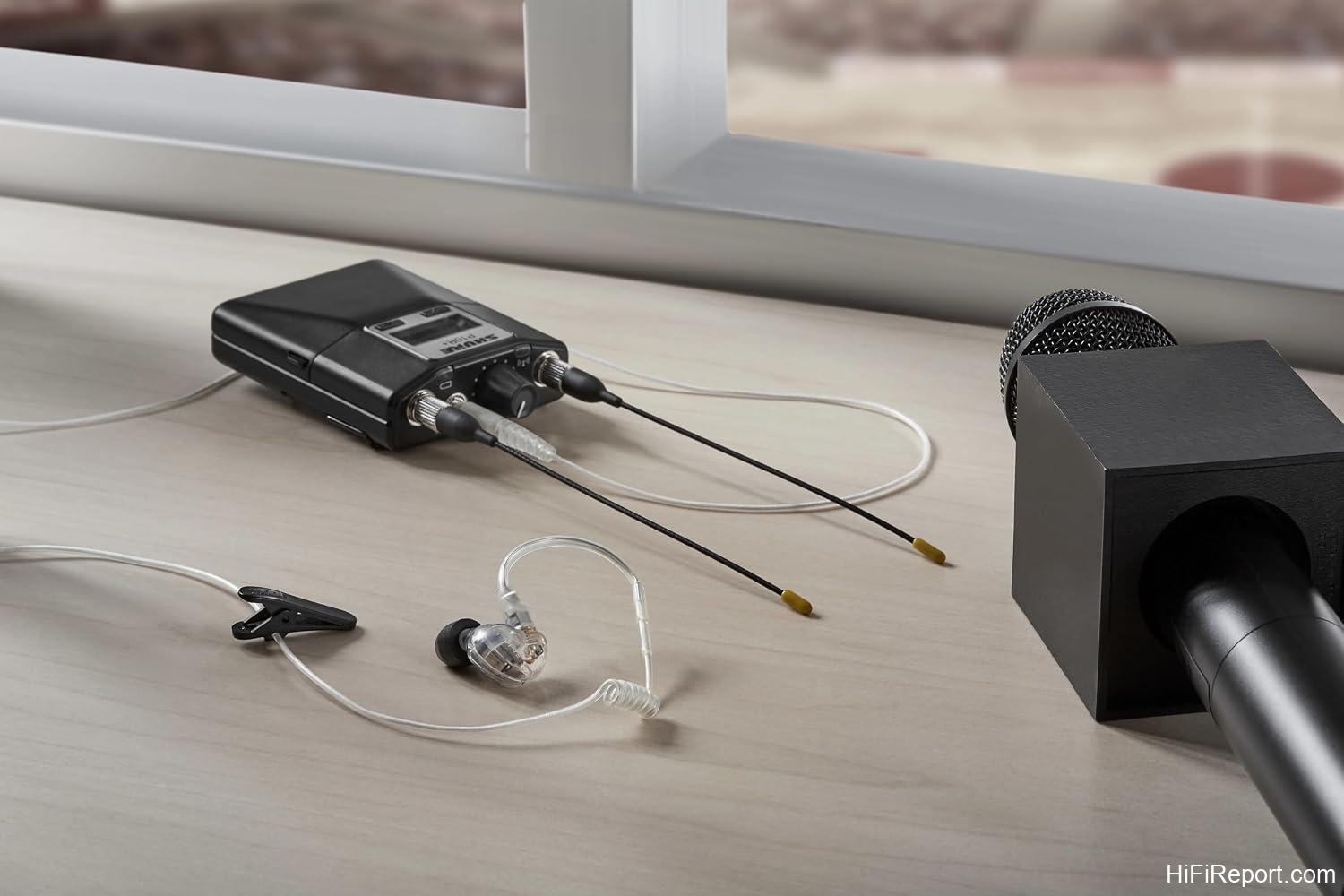
The practical implication is that the SE425 works indefinitely as long as the cable and tips are in serviceable condition. Owners who have used Shure in-ear models for years, one of them citing nearly seven years of service on a previous pair, report that the replaceable-cable design is the main factor keeping the earbuds in rotation. There is no battery percentage to watch, no charging case to remember, and no firmware update to apply. For anyone who has grown tired of wireless buds that die mid-flight, the wired approach removes that entire class of failure.
Microphone and Calls
The stock 3.5mm cable included with the SE425 does not carry an inline microphone or remote. Shure does manufacture a detachable MMCX cable that adds an inline mic, and the lock-snap connector allows that cable to be attached to the SE425 driver units without modification, so a basic phone call is possible if you swap the cable. No owner in the review set reported using the SE425 as a primary calling device, and the passive isolation that blocks outside sound in also muffs your own voice to anyone listening on the far end. The product is designed for monitoring and listening, which is where its strengths lie.
Written for and first published on hifireport.com. Republishing requires permission.
What Owners Say
The most repeated praise across the 4.4-star rating pool centers on two ideas: clarity and isolation. Owners who A/B tested the SE425 against the SE215 consistently described the 425 as pulling apart the layers of a mix that the 215 blurred, with individual instruments becoming distinguishable. The noise isolation drew separate mention, with several owners reporting that the seal is tight enough to use on airplanes, at gun ranges, and under motorcycle helmets, performing at or near the level of Etymotic Research’s ER-series. Build quality and the detachable-cable design earned repeated thanks; one owner called the reinforced cable effectively indestructible in daily gym use, and the ability to replace a single component rather than the whole set drew a second wave of appreciation.
The complaint themes are more specific. Bass response is the top concern: multiple owners, including one who ultimately traded in the SE425 for the SE215, described the low end as underwhelming for genres that lean on sub-bass. Insertion difficulty appears in nearly every critical review. The wireform design, while excellent for retention, makes putting the buds in a slow, two-hand process that one owner compared to fiddling with the Etymotics usually. The foam tips that ship pre-installed are extremely difficult to remove without risk to the stem underneath, a quibble one owner spent nearly 15 minutes wrestling with. Finally, the tight seal that makes the isolation work so well means the SE425 is unsafe for cycling or running, a point raised by at least two owners.
Pros and Cons
Pros:
- Neutral, detail-focused tuning that separates instruments and exposes mix flaws
- Passive noise isolation that matches or exceeds dedicated ANC buds in a sealed environment
- Detachable MMCX cable and individually replaceable tips keep the earbuds in service for years
- Wide stereo image for an in-ear design, praised by musicians monitoring drums and orchestras
- Over-ear wireform locks the buds in place through vigorous head movement
Cons:
- Bass response stays flat and can feel thin to listeners who want low-end impact
- Insertion is a two-hand process that takes practice and slows down on-the-go use
- The over-ear wireform makes the buds unsafe for cycling or running
- Pre-installed foam tips are extremely difficult to remove without risk to the stem
- The stock cable has no inline microphone, so phone calls require a cable swap
The Verdict
The SE425 PRO is a monitoring-grade in-ear monitor that trades bass excitement for accuracy, and that trade-off defines who will love it and who will return it. It suits musicians who need to hear their mix cleanly on stage or in the studio, classical and jazz listeners who value instrument separation, and anyone on long commutes or flights who wants a sealed, quiet listening environment without the battery anxiety of wireless buds. It is a strong choice for A/B comparing recordings or checking a mix at low volume. Look elsewhere if your priority is low-end slam for hip-hop or EDM, if you need a set that slips on in two seconds while walking, or if you plan to use the earbuds while cycling or running. The SE215 covers those use cases with a similar Shure seal, and the SE535 adds the extra bass the SE425 leaves on the table.
Spec Sheet
- Driver type: Dual high-definition MicroDrivers
- Frequency range: Full-range
- Connector: Gold-plated MMCX, lock-snap, 360-degree rotation
- Cable: 3.5mm detachable, reinforced
- Adapter included: 1/4-inch
- Ear tips: S, M, L flexible silicone; S, M, L black foam; yellow memory foam
- Warranty: Two years
- Color: Clear
- In the box: SE425 earbuds, 3.5mm cable, fit kit, 1/4-inch adapter, compact carrying case
Frequently Asked Questions
Are the Shure SE425 safe to use while running or cycling?
No. The over-ear wireform locks the buds so tightly that two owners independently warned the design is dangerous at speed. The secure fit that makes them great on a plane becomes a liability if a cable snag pulls the bud while you are moving.
Can I replace just the cable if it breaks?
Yes. The gold-plated MMCX connector with its lock-snap mechanism is designed for cable swaps. Shure sells replacement cables, including versions with an inline microphone, that plug directly into the driver units without opening the housing.
Do the SE425 need a special amplifier or DAC to sound good?
They do not require one. Owners listening from phones, laptops, and streaming services report the full benefit of the dual-driver clarity without an external amp. One reviewer noted the SE425 plays noticeably louder at low volume settings than the SE215, so a standard phone or laptop headphone output is sufficient.
How do the SE425 compare to the SE215 in noise isolation?
The 425 generally seals tighter in most owners’ ears because of the wireform design and the wider range of tip options, but both sets rely entirely on passive isolation. One motorcycle rider found the 425’s isolation close to the Etymotic ER6i, while the same owner found the SE215’s isolation weaker with the standard tips, though third-party triple-flange tips closed most of that gap.
No products found.