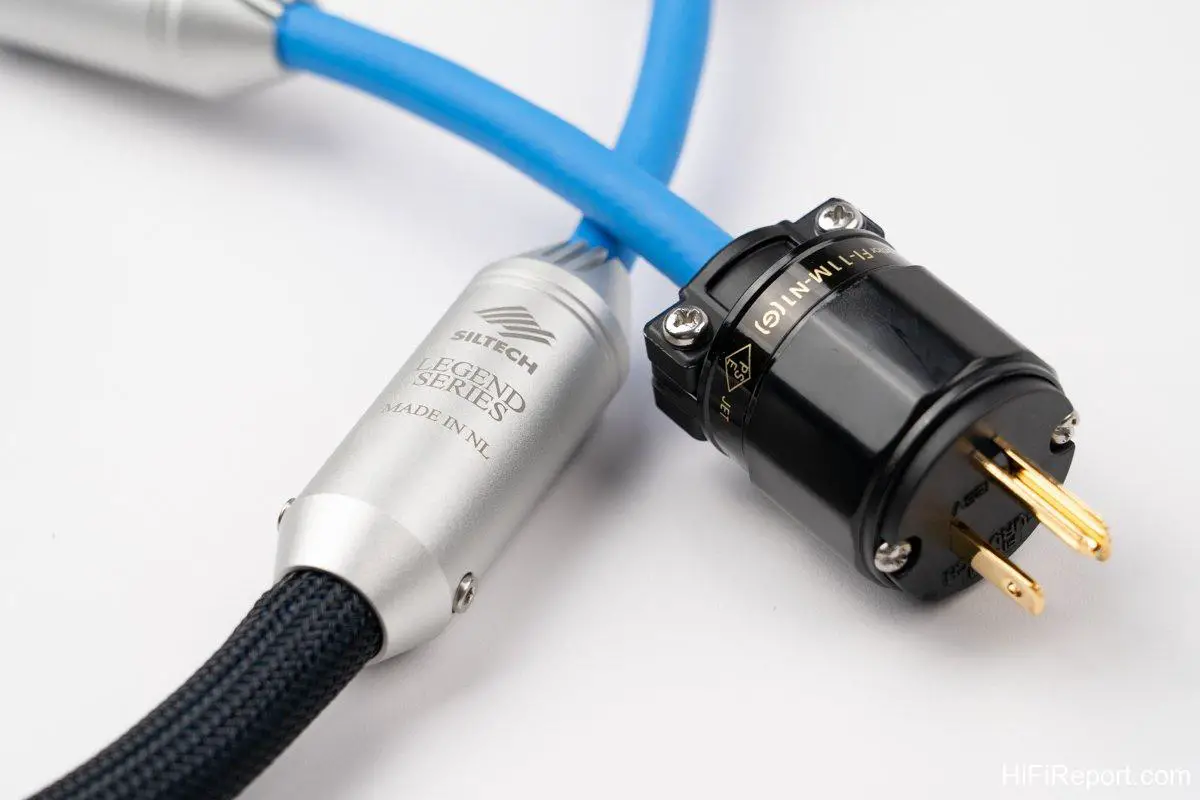
Siltech Classic Legend 880P Power Cable Review Review
Not long ago, I had the chance to audition Siltech’s newly launched Classic Legend 680P power cable from the Netherlands. I was so impressed that I almost impulsively bought one on the spot. However, knowing that the higher-tier 880P model in the same series existed, I held back. To my surprise, just two months later, the 880P power cable arrived at the HiFiReport editorial office.
Siltech’s Best Value Proposition
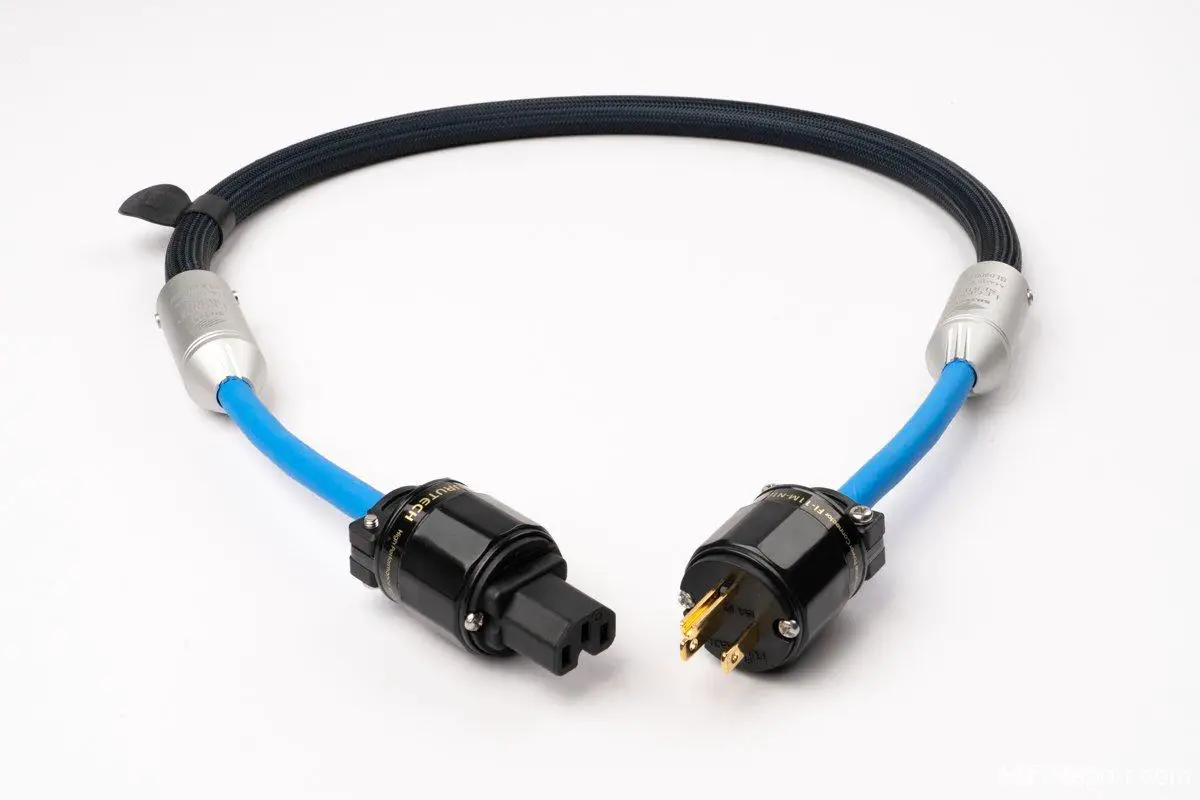
Why was I so excited about the 680P power cable that I almost made an impulsive purchase? Because the upgrade in performance was remarkably significant. Moreover, the aesthetics of the new generation Classic Legend series are even more refined and sophisticated. At first glance, one might mistake them for the high-end Royal Signature series. Yet, the Classic Legend series is priced much more affordably than the Royal Signature, making it no wonder that Siltech themselves tout Classic Legend as their product line with the highest performance-to-price ratio.
The Siltech story is inseparable from “Silver” and “Technology,” the brand name itself being a portmanteau of these two words. Since its inception in 1983, Siltech has focused on refining metallurgy technology. Over nearly four decades, they have continuously advanced their technical expertise. With the Classic Legend series, they have reached the G9 conductor technology, representing the ninth generation of silver-gold alloy.
Exclusive Silver-Gold Alloy Conductor
As the name suggests, a silver-gold alloy conductor combines silver and gold. Gold is used to fill the crystalline gaps in silver, reducing impedance during electrical or signal conduction. Imagine a river flowing naturally; rocks in the river create resistance. Removing the rocks allows smoother flow. Similarly, the crystalline gaps in silver act like rocks, and gold fills these gaps, effectively removing resistance and facilitating smoother current flow.
Siltech’s conductor generations are designated by “G.” The first generation, G1, was not a silver-gold alloy but a high-purity silver wire with a 4N specification, meaning 99.99% pure silver. Silver’s advantage over copper is its superior conductivity.
In 1988, Siltech began researching methods to increase the length of silver crystals and reduce crystalline gaps to minimize internal resistance. In 1993, they introduced 24K gold wires, specifying the gold content. This was G2 technology, marketed as “real gold and pure silver.”
Interestingly, if you had purchased Siltech cables between 1988 and 1996 and extracted the gold content, you might have profited handsomely given current gold prices.
G3 Marks the Silver-Gold Alloy Era
In 1997, Siltech launched the SQ Classic series, the first to employ silver-gold alloy conductors. Through metallurgy, gold was introduced into the crystalline gaps of silver, reducing these gaps to 20% of their original size, and further processing reduced them to just 10%. This was G3 conductor technology and remains the core technology of the Classic Legend series.
In 2000, Siltech introduced G5 with the Signature series. While the technology remained the same, the crystalline gap error was reduced to 1% of the original. In 2003, with the application of SATT technology, the gap error was further reduced to 0.1%, marking the G6 conductor, used in the flagship Royal Signature series.
G9: Crystal Gaps Reduced to a Mere 0.01%
What about G7? It arrived in 2008. The core technology remained consistent, but the silver crystalline gap error was further decreased to 0.03%. This was already an incredibly smooth metallic crystalline structure, making further improvements exceptionally challenging. Siltech invested over twelve years in research to push the technical specifications higher. The G9 silver-gold conductor achieved a silver crystalline gap error of only 0.01%, debuting in the Classic Legend series in May 2021.
Over thirty years of research, all dedicated to minimizing and smoothing the crystalline gaps in silver-gold alloys, from 10% in G3 to 0.01% in G9. Can they improve further? I’m uncertain. However, the twelve-year span from G7’s 0.03% to G9’s 0.01% demonstrates the immense effort involved. Breaking the 0.01% barrier will undoubtedly require even more time. Classic Legend represents Siltech’s “state-of-the-art” achievement in silver-gold alloy technology at this stage.
PEEK, Teflon Insulation & Super Shielding
The brand-new G9 silver-gold alloy conductor is arguably the most significant selling point of the Classic Legend series. Other features, such as PEEK and Teflon insulation, along with “Super Shielding” and a coaxial, twisted-pair structure, are consistent with Siltech’s established design principles.
The Classic Legend power cable series includes three models: 380P, 680P, and 880P, each at a different price point. However, all models utilize the same G9 silver-gold alloy conductor. When I auditioned the 680P, a question arose: if the G9 silver-gold alloy is the technological highlight of Classic Legend, wouldn’t the entry-level 380P be the most economical choice? Are the 680P and 880P simply costing more for the same core benefit?
Power Handling Differentiates Models
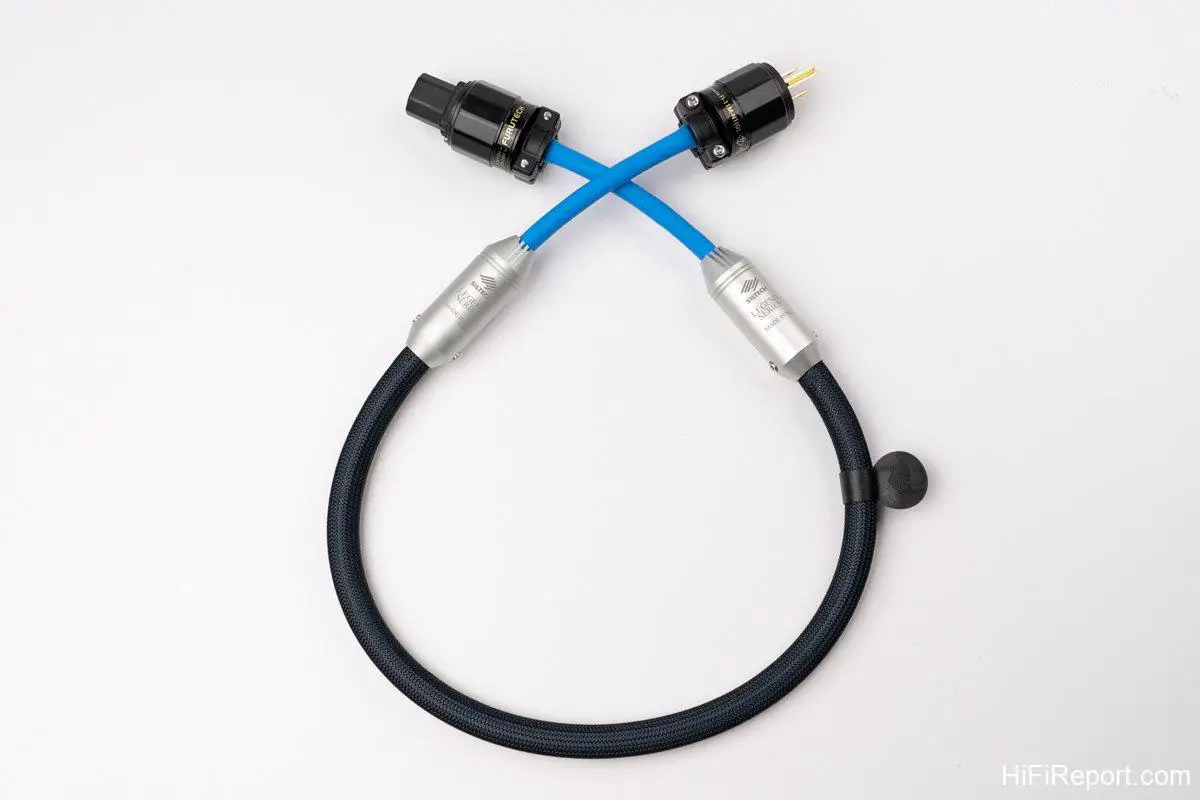
Rest assured, Siltech differentiates the three models in meaningful ways. While the basic design architecture is consistent across the range – G9 conductors, coaxial winding, PEEK and Teflon insulation, and Super Shielding – the 380P has the lowest power handling capacity and a single-layer Super Shielding structure. The 680P, on the other hand, offers four times the power handling of the 380P, approximately 600 watts, and features a double-layer Super Shielding. The top-of-the-line 880P also employs double-layer Super Shielding, with even more refined details and double the power handling capacity of the 680P, reaching 1,200 watts.
So, have you grasped the key factor in choosing within the Classic Legend series? It’s power handling. If you own a high-power amplifier that might momentarily draw over 600 watts, the 880P is a must. However, for preamps or source components, which typically draw far less than 600 watts, the 380P or 680P would suffice. The 680P, with its double shielding, offers superior noise isolation, potentially resulting in an even quieter musical background than the 380P.
Of course, if budget is no concern, opting for the 880P across the board is the simplest approach. But from a value perspective, I believe the 680P is the most worthwhile investment in the Classic Legend series, as its 600-watt power handling is already ample for most systems.
Approaching Royal Signature Performance
The G9 silver-gold alloy conductor used in the Classic Legend series was a 12-year wait for audiophiles, representing the evolution from G7 to G9. My first experience with the 680P was a truly significant upgrade. It even created the illusion that the 680P could “punch above its weight,” with sound performance nearly rivaling the Royal Signature series. Auditioning the 880P evoked the same impression. The transparent, natural, and effortless musicality was captivating, yet the price is considerably more approachable than the Royal Signature series.
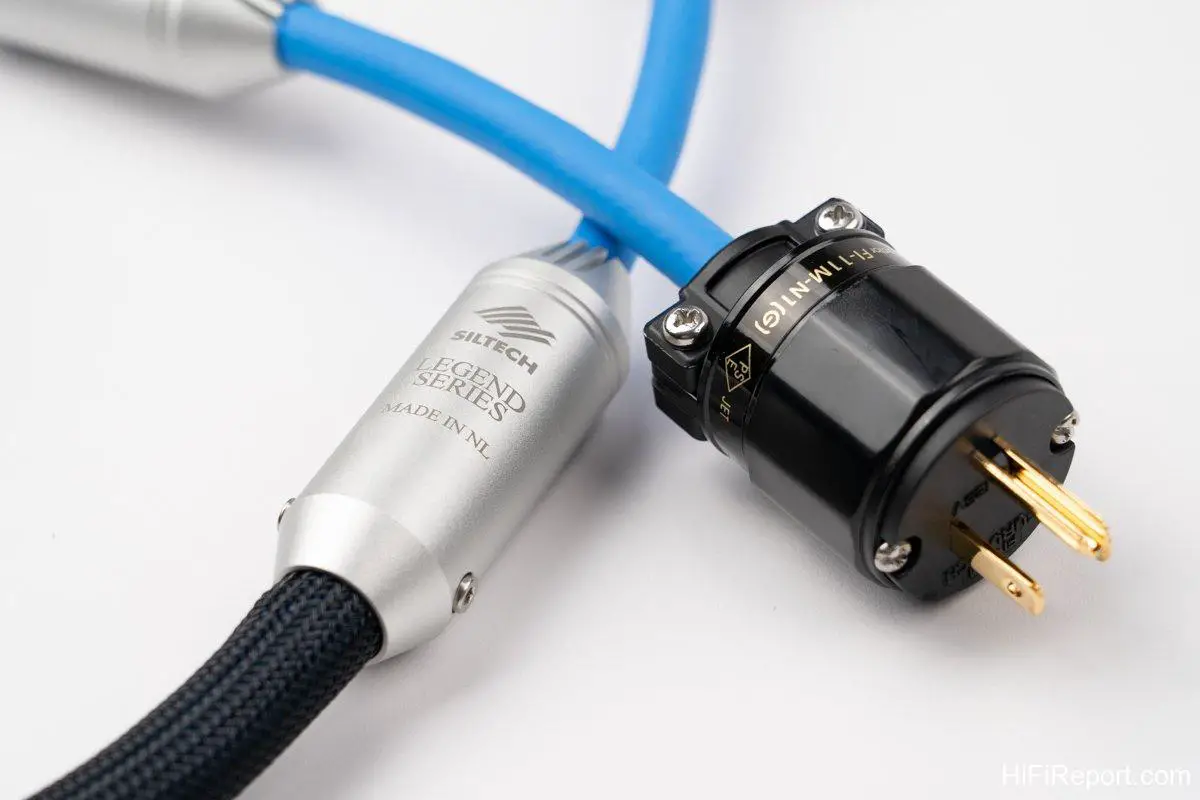
However, even with Classic Legend’s exceptional value, it’s unlikely to impact the sales of Royal Signature or Triple Crown. These top-tier Siltech series maintain their prestigious status. Customers investing in those series are undoubtedly steadfast believers. Classic Legend, instead, is Siltech’s new series aimed at broader market penetration. Previously, the Classic Anniversary series served this purpose, attracting users to experience Siltech’s unique silver-gold alloy conductors. Now, Classic Legend has taken over this role.
Minimal Difference on Low-Power Devices
During the 880P audition, the 680P was still at HiFiReport, allowing for direct comparison. When used with preamps or DACs, the difference between the two was minimal. The 880P seemed to have a slight edge in musical background quietness. However, I found the 680P to be excellent as well. For budget-conscious buyers, the 680P is already highly satisfying. But when used with power-hungry integrated amplifiers or power amplifiers, the 880P’s superior stability in the low-frequency range became more apparent.
I started by pairing the 880P with the EAR 868P preamp. The warm musical tonality of the tube preamp, combined with the 880P power cable, added a pleasant richness to the mid and high frequencies, particularly noticeable with violins. Listening to “Itzhak Perlman Plays the Movies,” specifically the theme from “Scent of a Woman,” the passionate tango music, Perlman’s playing was both forceful and tender, showcasing the violin’s glossy sheen. Paired with the 509 MK 2 power amplifier driving Wilson Audio Alexia 2 speakers, the music was already beautiful even before adding the 880P. However, with the 880P, the violin’s intensity became more focused and dense, yet the high-frequency extension felt more relaxed and effortless. Corresponding to the violin’s passionate expressions, the double bass pizzicato was full-bodied and rounded.
The 880P also significantly enhanced the alluring quality of female vocals. Listening to Adele’s “25,” specifically “Send My Love (To Your New Lover),” the opening features Adele speaking softly away from the microphone and orchestra, followed by a powerful percussion rhythm, introducing Adele’s vibrant and bright vocals. The 880P made Adele’s voice sweeter and more unrestrained. The emotional portrayal in the music became more intense, and the soundstage expanded in height, width, and depth. The powerful impact of the low frequencies contrasted beautifully with Adele’s soaring vocals, and the backing vocals in the chorus were delivered with great energy.
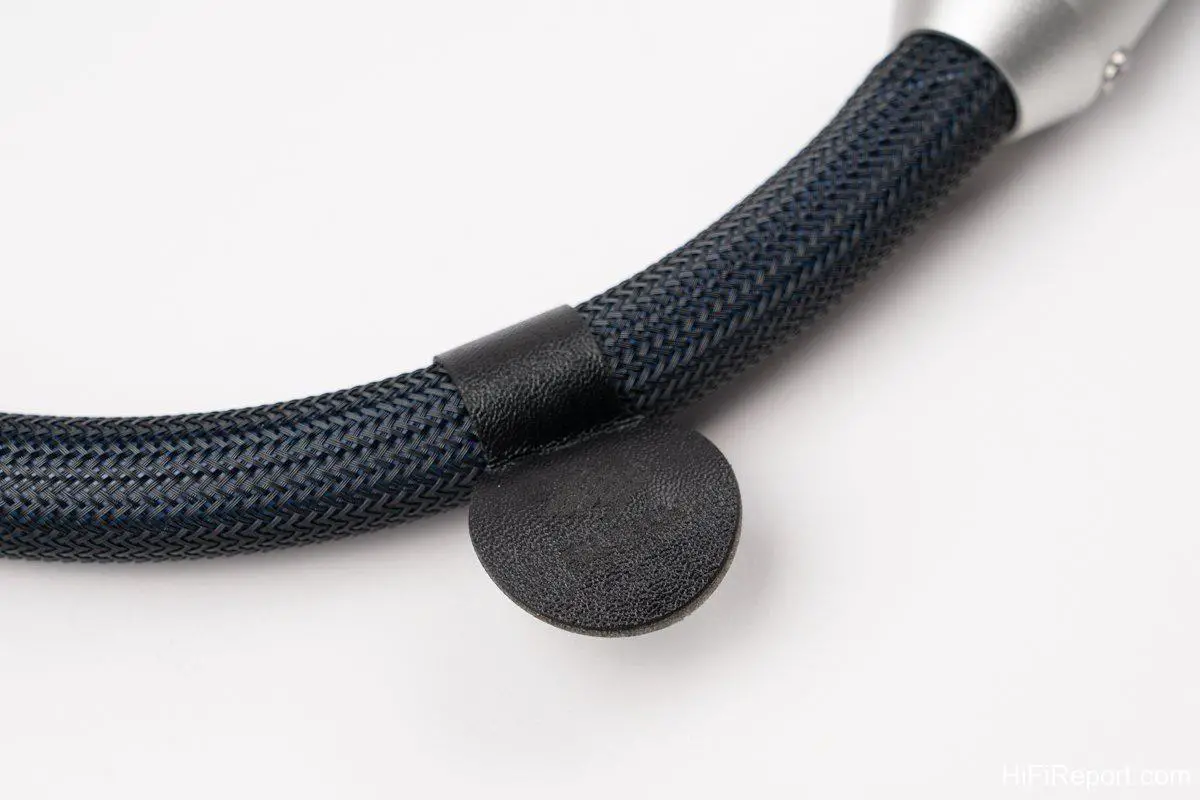
Since the 680P was still available, I swapped it in for comparison. Using the 868P preamp as a reference, I felt the 680P was also excellent. The tonal characteristics were consistent, delivering a healthy, balanced, and full-bodied sonic image, along with rich and naturally extended mid and high frequencies. If used only with low-power consumption components like digital sources or preamps, the 880P seemed to offer only marginal advantages. After several comparisons, I subtly sensed that the 880P perhaps offered slightly more focused imaging, more relaxed high frequencies, and a slightly greater dynamic contrast. But it could have been psychological, as the 880P is more expensive, so better sound is expected. Yet, the 680P felt like it conceded very little, making it seem exceptionally good value for money.
High-Power Amplifier Reveals the Difference
It’s peculiar; the editor-in-chief knew that the 880P was designed to be paired with power-hungry equipment, so why wasn’t it tested with a power amplifier initially? Well, over the years, HiFiReport has invested in a considerable amount of audio equipment for review purposes. We’ve acquired both solid-state and tube pre/power amp sets. However, all our power amplifiers are monoblocks, aiming for maximum channel separation. This presented a dilemma: no stereo power amplifier was readily available. I couldn’t simply plug the 880P and 680P into the left and right monoblock power amps for comparison. Asking the manufacturer for another set of 880P and 680P to make a stereo pair would be inconvenient, requiring them to disassemble more cables for review samples. The simplest solution was to borrow a stereo power amplifier, preferably a high-power one, to truly discern the differences between the 880P and 680P.
After a week’s wait, the mbl C11 preamp and N21 power amplifier arrived. The N21 power amp is no ordinary amplifier, delivering 380 watts per channel into 4 ohms. But its most impressive specification is its maximum output current, a staggering 28A. This is a true high-current amplifier, and using it to drive the Alexia 2 speakers promised to be interesting. However, my primary focus remained on evaluating the Siltech cables.
Improved Bass Stability Confirmed
Listening to Adele’s “25” again, starting with the 680P, it sounded good. The N21, as expected, is a high-power, high-current solid-state power amplifier, driving the Alexia 2 speakers with composure. The bass impact was full and powerful, and Adele’s vocals remained captivating. However, upon switching to the 880P and listening again, the difference was striking. Unlike my previous experience with the 868P preamp, where the difference was subtle, with the high-power amplifier, the 880P’s relaxed ease and effortless control immediately outclassed the 680P.
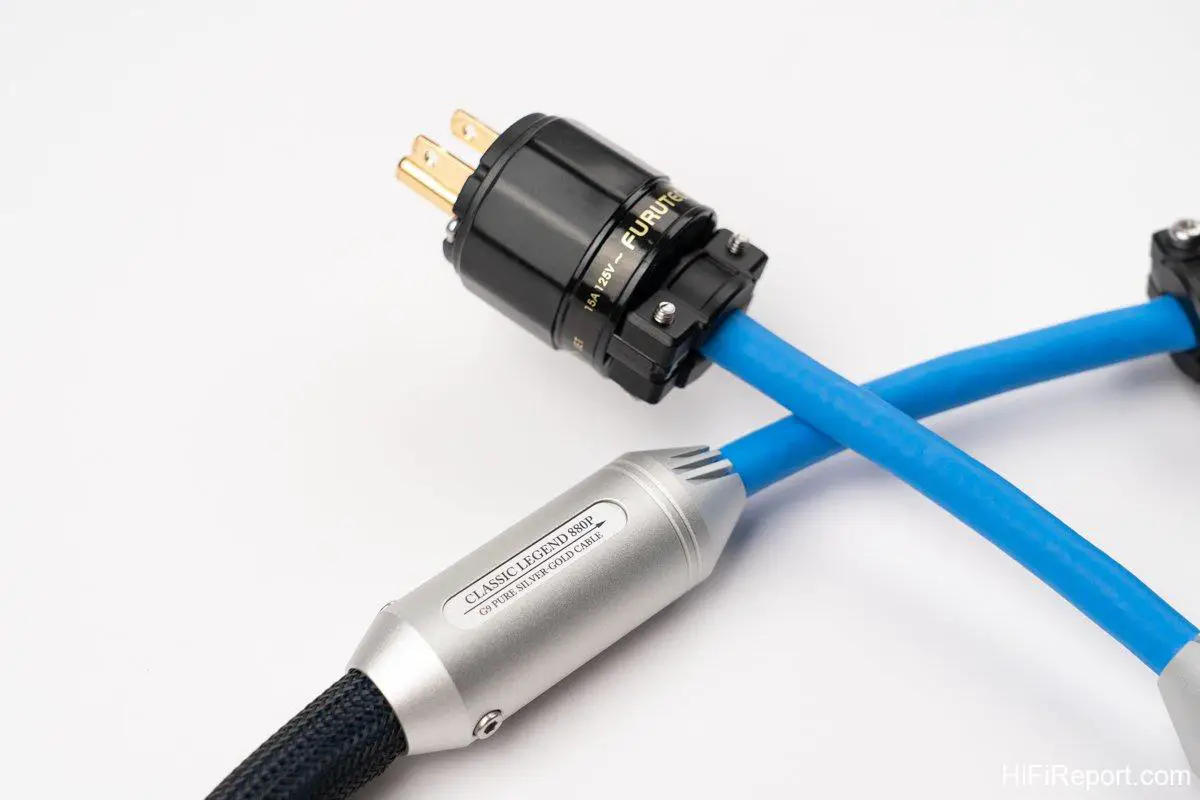
With everything in place, I used the mbl C21/N21 and Alexia 2 to seriously evaluate the 880P. The 880P, with its high current handling capability, paired synergistically with the high-power N21. For example, listening to Rimsky-Korsakov’s “Dance of the Tumblers” from RR’s “Tutti” album, the lively dance begins with the crisp chime of the triangle, followed by layers of orchestral instruments building up and receding into a quieter passage, where the woodwinds playfully play the melody, leading to the second orchestral climax. The 880P brought out the triangle’s crisp and bright sound, making the music lively and vibrant. The 3D soundstage was expansive and deep, and with the solid and grounded bass foundation, I was aware I was listening to the 880P, a Classic Legend series product, but it felt like I was experiencing the higher-tier Royal Signature series.
Moving to another large-scale recording, RR’s “Horns for the Holidays,” starting with “Festival Fanfare” (Wasson). If you listen at low volume, compounded by RR recordings typically being 6 dB lower in level than standard, the recording might seem ordinary. However, if you can crank up the volume, the sense of scale and dynamic contrast becomes a true test for any audio system. The 880P rendered the brass section’s tone with richness, fullness, and brilliance. As the brass instruments intertwined, the timpani forcefully punctuated the rhythm, while the celesta added delicate embellishments. The 880P clearly delineated the orchestral sections. The music flowed seamlessly during softer passages and became powerfully majestic during crescendos. Listening at high volume, the expansive soundstage felt truly immersive, as if surrounded by the brass band.
Bass: The Most Expensive Audio Investment
Switching to classic rock, I listened to Pink Floyd’s “Dark Side of the Moon.” “Money” begins with the sounds of cash registers, coins, and receipt printers, alternating between the left and right channels. This multi-track recording effect was a classic of its time in the analog era, and achieving such complex mixing was a testament to the recording engineers’ artistry. Listening with the 880P not only vividly reproduced the recording but also accentuated its vintage character. Electric guitars of that era often used tremolo effects, and many effects units were purely analog modulation. The entire album has a distinct analog flavor, and the 880P enhanced this vintage analog warmth. I’m not suggesting the 880P colored the recording; on the contrary, its clarity, transparency, and purity allowed it to more faithfully reproduce the original atmosphere and nuances of the recording, allowing us to appreciate its vintage feel.
Finally, here’s another compelling reason to consider the 880P: its bass stability and power. I often say that bass is the most expensive aspect of audio investment, and the 880P exemplifies this. If comparing only the mid and high frequencies in terms of timbre and brilliance, the 680P is already excellent. However, when it comes to bass performance, the 880P clearly surpasses it. Listening to Marcus Miller’s “Free” album, “Blast” begins with a soft electric bass intro, followed by powerful electronic drum rhythms, leading into Miller’s brilliant funky bass playing. The 880P’s bass stability and power are undeniable. The deep, resonant drum sounds are overlaid with intricate funky bass lines, sometimes plucked, sometimes slapped, even incorporating two-hand tapping techniques – masterful playing. However, to fully appreciate Miller and his band’s virtuosity, the audio system must clearly reproduce the layers and resolution of the bass frequencies. Otherwise, fast, technically demanding bass lines can become a muddy mess if the system’s low-frequency resolution is inadequate. But with the 880P, rest assured, the bass is solid and controlled, even the subtle ghost notes and fills are clearly audible.
Truly the Best Value Siltech Cable
This audition of the 880P, with the 680P available for direct comparison, was a valuable experience. If used only with digital sources or preamps, the 680P is already fantastic. However, if you intend to use it with power-hungry power amplifiers, the 880P will perform even better. Furthermore, if you typically listen at low volumes, the 680P is sufficient. The benefits of the 880P become apparent when driven hard. It’s like comparing a 300-horsepower car to a 100-horsepower car; in city traffic, the difference is negligible, but on the highway, the 300-horsepower car’s power becomes evident.
The 880P is similar. Paired with a high-power amplifier and played at higher volumes, the expansive soundstage, powerful and realistic dynamic contrast, and refined tonal presentation are truly impressive. Frankly, I’m hesitant to request a Royal Signature for direct comparison. After listening to the 880P, it already evokes a Royal Signature-like experience. If a direct comparison reveals the 880P to be even better, how should I write my review? No wonder Siltech claims Classic Legend is their series with the highest performance-to-price ratio. They are absolutely right.
Specifications
* Type: Power Cable
* Conductor: G9 Silver-Gold Alloy
* Insulation Material: PEEK, Teflon