
SIMOLIO Manyshare Kid Headphones with Microphone, Wired Headset for School Review
Overview
The SIMOLIO Manyshare Kid Headphones with Microphone are a wired, 3.5mm headset designed for children who need something tougher and safer than a repurposed pair of adult earbuds. They sit in Simolio’s Manyshare family, a line the company describes as covering “both wired and wireless options” built around the same idea: letting more than one person listen to the same source without juggling splitters and adapters.
That shared-listening theme shows up twice here. First, a three-level volume limiter is meant to keep young ears from creeping toward damaging loudness. Second, a sharing jack on the left earcup lets a second pair of headphones plug straight in, so two kids can watch the same tablet or listen to the same audiobook from one device.
The wired approach is deliberate. There is no pairing, no charging, and no battery to die halfway through a school day or a long flight. You plug in and you listen. For a classroom tablet, a family Switch session, or a Chromebook cart at school, that simplicity is the whole point.
At the time this review was compiled, the listing carried a 4.4-out-of-5 average across 386 ratings, which puts it in solidly positive territory for a kids’ headset. Detailed written customer feedback was not available when this article was assembled, so the analysis below leans on the manufacturer’s published feature set and on how the broader Simolio Manyshare line has been positioned and reviewed elsewhere.
Design and Build
The frame is the first place Simolio has clearly thought about children rather than adults. The adjustable headband uses memory stainless steel strips, which is a meaningful choice: steel strips flex with a stretch and spring back, where an all-plastic band tends to snap at the hinge after enough rough handling. The adjustability also means the headset can grow with a child instead of being replaced every school year.
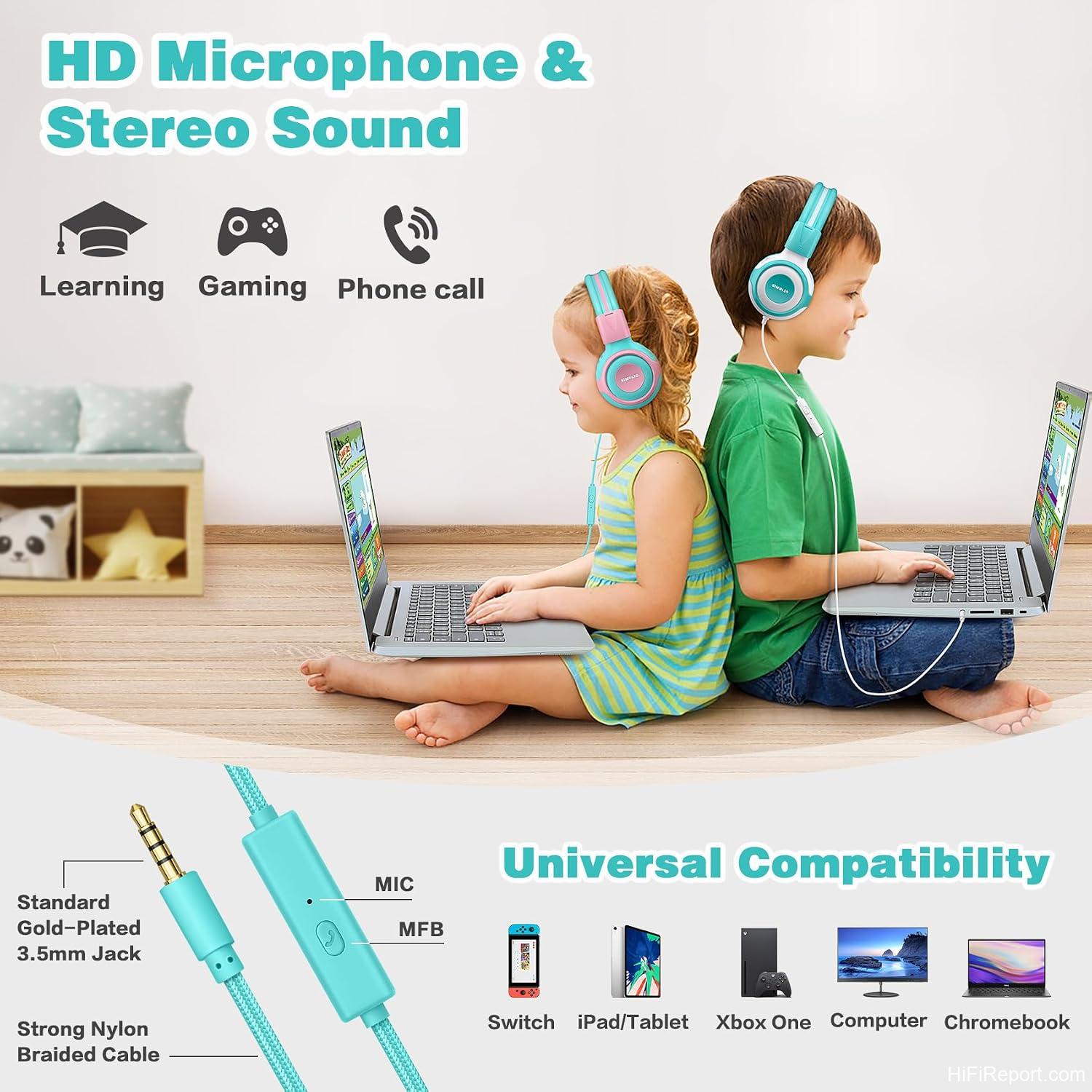
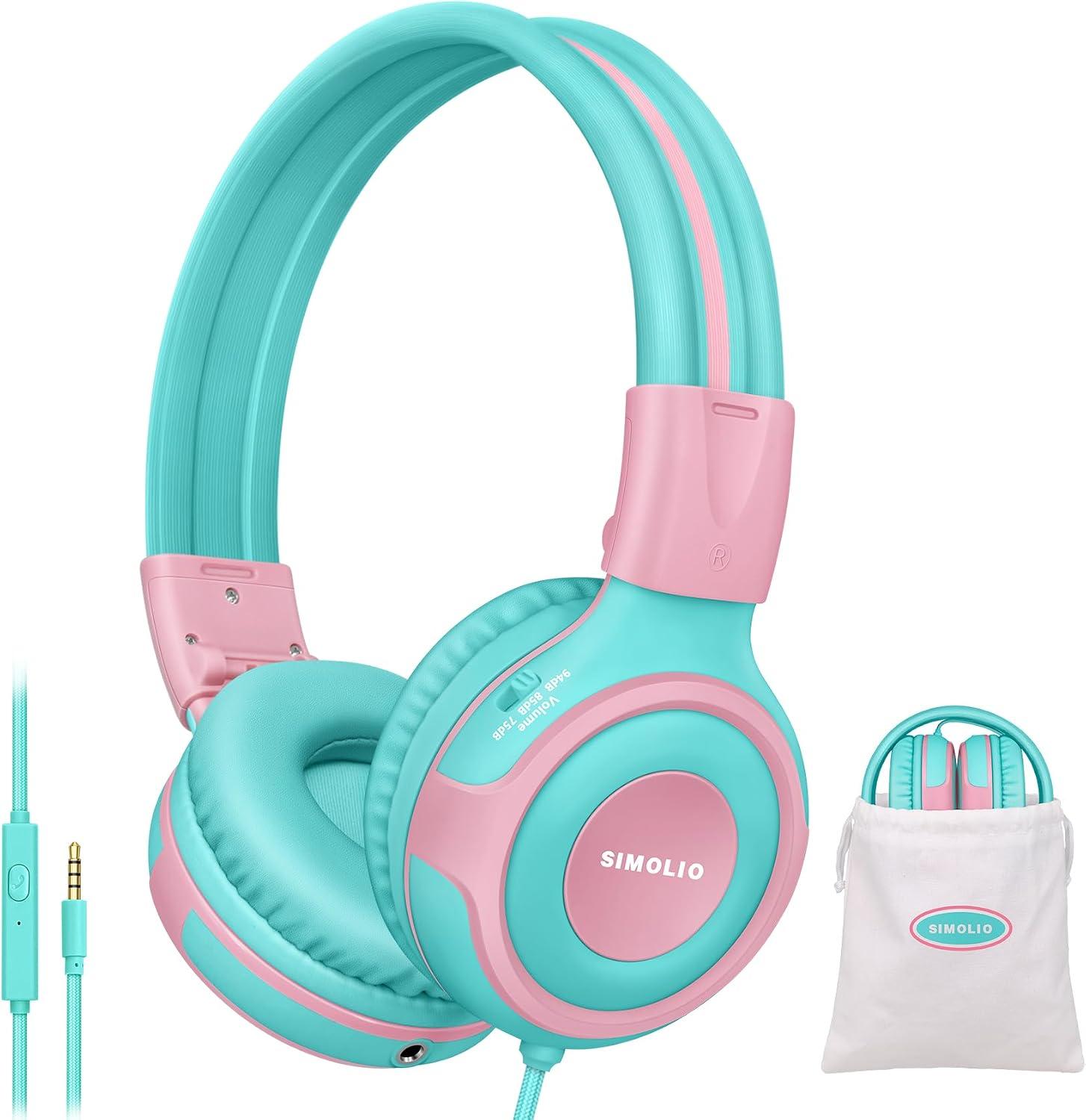
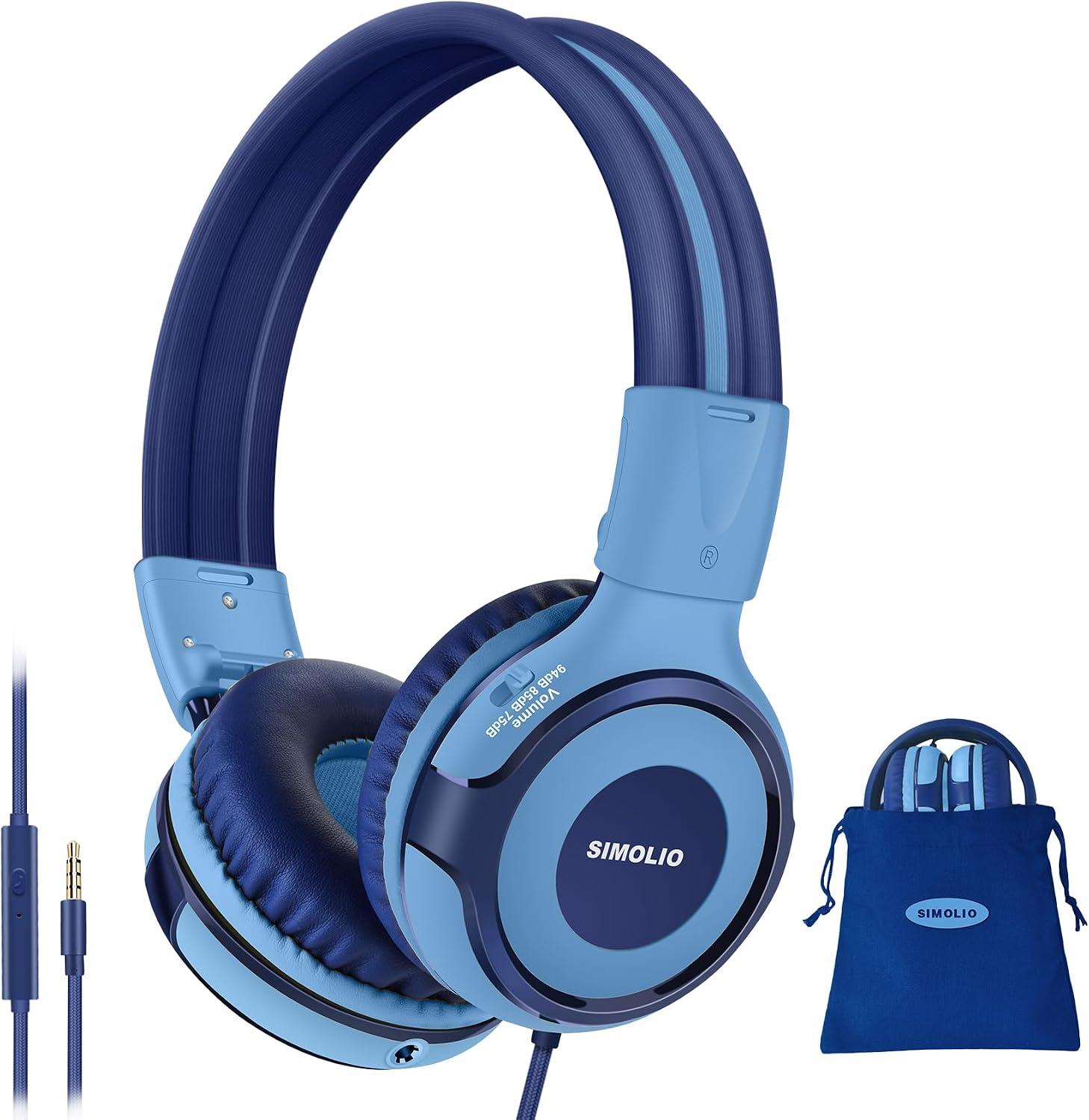
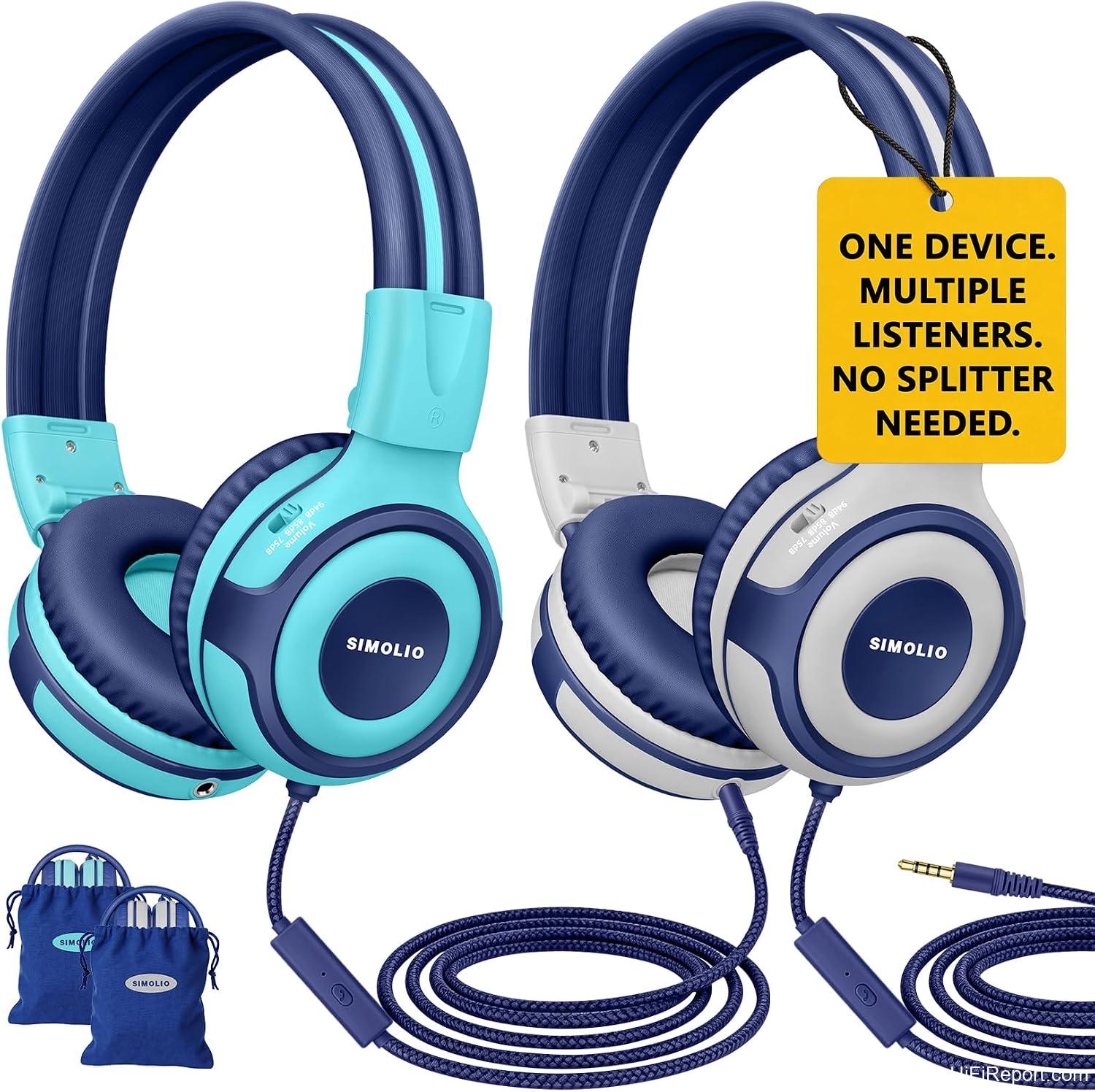
Physical flexibility shows up elsewhere. The headphones fold, which matters more than it sounds. Kids’ headphones spend a lot of their life in a backpack or a desk cubby, and a headset that folds flat is far less likely to be crushed or to have its earcups twisted the wrong way. Simolio includes a carrying pouch, so the folded headset has somewhere to live between uses rather than rattling loose in a bag with water bottles and lunch boxes.
The cable is a braided nylon affair measuring 4.9 feet, or 1.5 meters. Two things are worth calling out here. Braided nylon resists the fraying and kinking that kills ordinary rubber-jacketed cables, and it does so right where kids stress cables most — near the plug and near the earcup. The 4.9-foot length gives enough slack to set a tablet on a lap or a tray table without yanking the plug sideways out of the port.
There is no indication in the listing that this model uses metal earcup housings or premium finishes, and Simolio does not claim a specific earcup style or material. What the sources do support is a hinge-and-strap design philosophy: flexible where kids pull, and reinforced where kids tug. The result is a headset that reads as practical rather than precious, which is the correct instinct for something that will ride in a backpack five days a week.
Volume Limiting and Hearing Protection
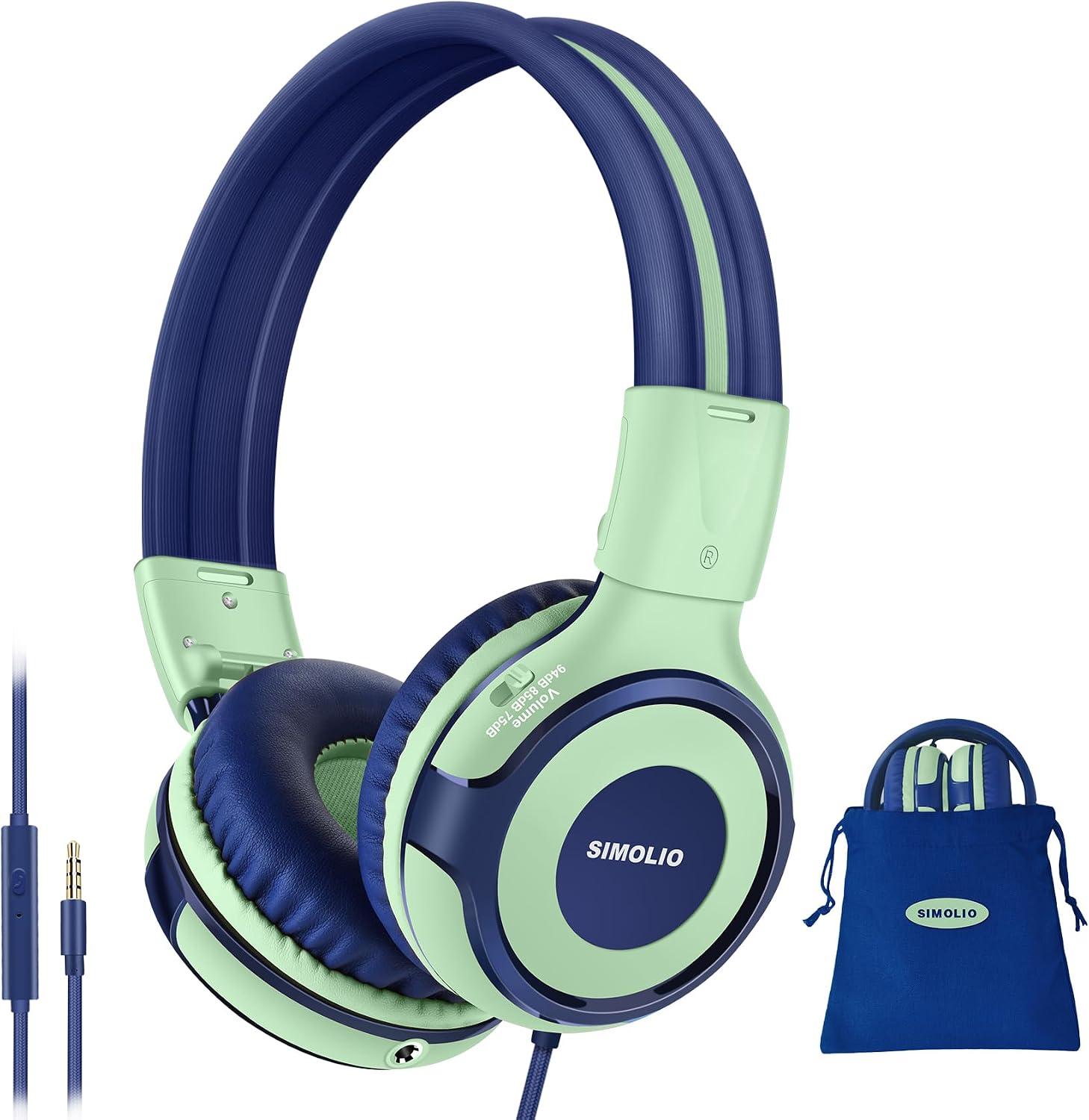
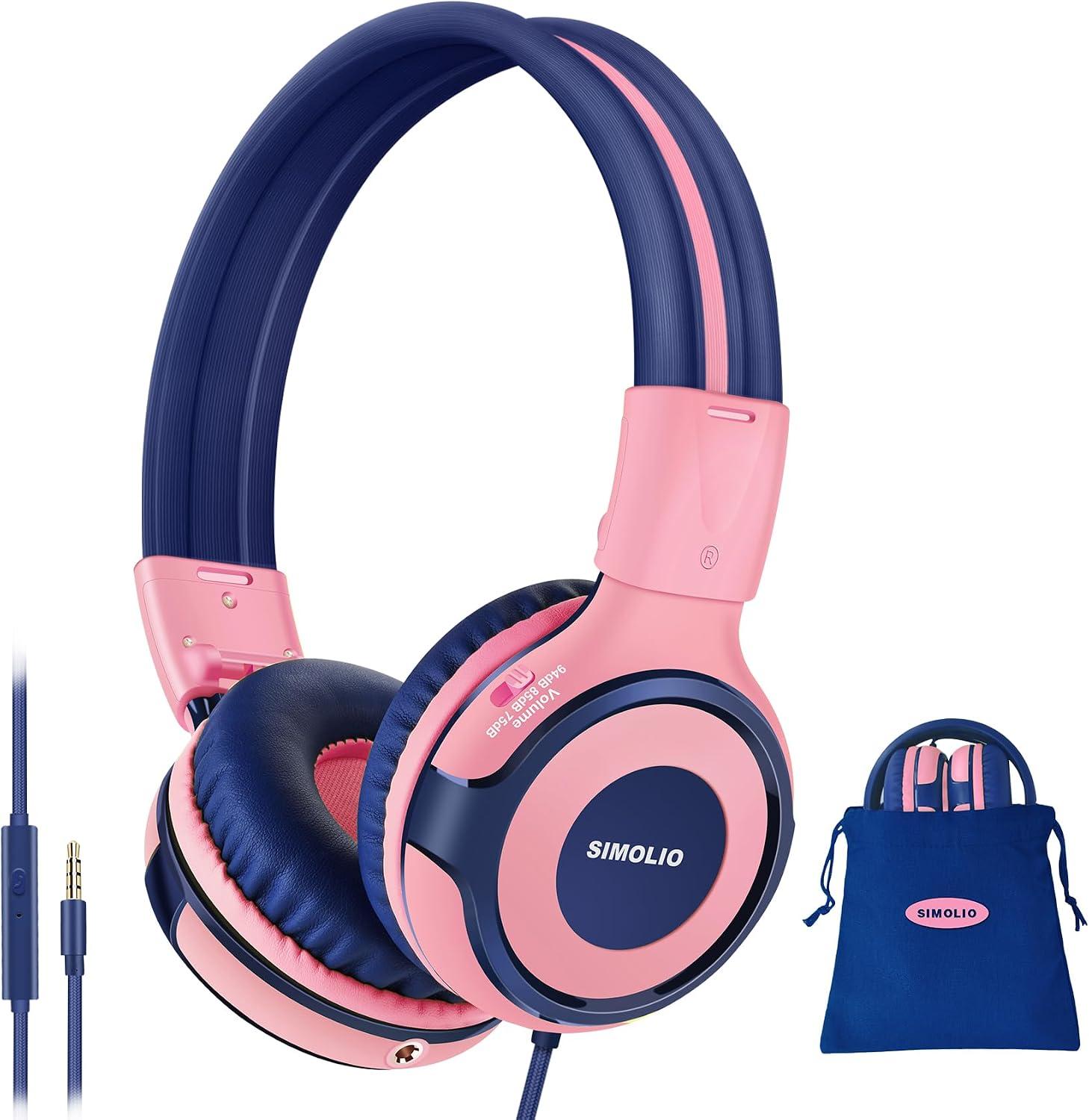
The headline safety feature is a proprietary three-level volume limiter with settings of 75 dB, 85 dB, and 94 dB. Simolio frames the ladder as protecting children of different ages from progressive hearing loss, with the 75 dB and 85 dB settings intended for quiet places and 94 dB intended for noisy surroundings.

That logic is sound, and it is worth walking through. A fixed cap that is comfortable in a quiet bedroom is often too quiet on a school bus or in a cafeteria, and kids respond to “too quiet” by trying to find a workaround or by simply not using the headphones. By offering a louder ceiling for genuinely noisy environments, Simolio gives parents a reason to leave the limiter engaged rather than defeating it. The two lower settings remain the right choice for the majority of everyday listening.
One detail worth flagging for shoppers: Simolio’s newer wired Manyshare model, the USB-C and 3.5mm version, lists a different ladder entirely — 85 dB, 94 dB, and 104 dB. Same brand, same series name, different numbers. That is not a contradiction so much as a reminder to check the specific product page for the model you are buying rather than assuming every Manyshare headset limits identically. If the 75 dB floor matters to you, confirm it on the listing before ordering.
The limiter is described as exclusive and proprietary, and there is no independent laboratory verification of the dB figures in the sources reviewed here. Parents should treat the published numbers as the manufacturer’s specification rather than a measured result.
Sound and the Built-In Microphone
Simolio states that two speakers provide crystal clear sound. There is no independent frequency-response measurement, driver size, or impedance figure published for this particular model, so any claim about how it handles bass extension or treble detail would be guesswork.
What can be said is that the tuning priority is obvious from the design brief. This is a headset for speech, video lessons, audiobooks, and games played at kid-appropriate volume, not a critical-listening tool. The limiter caps how much dynamic range and impact you can extract anyway, and that is the intent.
The built-in microphone handles the other half of the school equation. Simolio describes it as enabling hands-free talking, letting kids pick up calls and skip between tracks in a playlist without reaching for the device. For a child in an online class or on a video call with a grandparent, a headset-mounted mic is a practical upgrade over shouting at a tablet across a table, and it keeps the microphone at a consistent distance from the mouth.
© hifireport.com – Original review content by hifireport.com. Reprinting without written permission is not allowed.
It is worth being clear about what is not here. The sources do not mention active noise cancellation, ambient mode, or any transparency feature. There is no companion app, no equalizer, and no firmware to update, because there is no battery and no wireless radio. That is a shorter feature list, but it is also a shorter list of things that can break or confuse a seven-year-old.
The Sharing Jack
The sharing jack is the feature that gives the Manyshare name its meaning, and it is the one most likely to change how a household actually uses these headphones. On the left earcup there is a second 3.5mm port. A friend or sibling plugs their own headphones into it, and both listeners hear the same audio from the same tablet. No splitter cable is required.
Anyone who has managed two children and one iPad on a long trip understands the value immediately. Splitter dongles are small, easy to lose, and prone to being pulled out at the worst moment. Building the split into the headset removes an entire category of travel friction and lets the sharing happen at the earcup, where the cable is less likely to be yanked.
It is worth noting that Simolio has invested heavily in the wireless version of this idea. The company’s Auracast-enabled Manyshare models broadcast audio to multiple compatible headsets with no transmitter and no dongle, and Simolio positions that technology as the future of family listening. This wired model represents the low-tech version of the same concept — one cable, one jack, two listeners — and it works with any 3.5mm headset a guest happens to own.
Connectivity and Device Compatibility
Because this is a wired 3.5mm headset, compatibility is broad by default. Simolio lists Chromebook, Amazon Fire Tablet, Nintendo Switch, smartphone, laptop, and essentially any device with a 3.5mm audio jack. That list covers the overwhelming majority of school-issued hardware and family tablets.
The trade-off is the flip side of the same coin. There is no Bluetooth here, which means no pairing fights, no charging routine, and no latency issues during games or video. Plug it into a Switch and the audio is in sync instantly. Hand it to a child and there is no “is it connected?” troubleshooting step. For younger kids especially, that reliability is worth more than wireless convenience.
Copyright protected. First published on hifireport.com; any unauthorized copy violates the intellectual property rights of hifireport.com.
The one thing to verify before buying is the port situation on your child’s primary device. The listing does not mention a bundled adapter, so if the tablet or laptop in question has no headphone jack, you will want to confirm what is in the box or plan accordingly. School-issued Chromebooks and Fire tablets, which Simolio explicitly names, generally do have 3.5mm ports, so this is mostly a concern for newer slim tablets and phones.
Simolio also notes that buyers are entitled to 24-hour customer-friendly support service, with a stated invitation to contact the company with questions.
Comfort and Everyday Durability
Comfort is where a kids’ headset either earns its place in the backpack or gets left at home. The adjustable headband with memory stainless steel strips is the main comfort mechanism documented here: it spreads clamping force and lets the fit be reset as a child grows. A headband that can be widened slightly is also easier to tolerate over a full school day than one that clamps from the first minute.
Simolio does not publish weight figures, earcup dimensions, or cushion material for this model, so it would be unfair to make claims about long-session comfort beyond what the design implies. What the sources do emphasize is durability: the stainless steel strips, the braided nylon cable, and the foldable hinge all point to a headset engineered against the specific failure modes that end the life of cheap kids’ headphones.
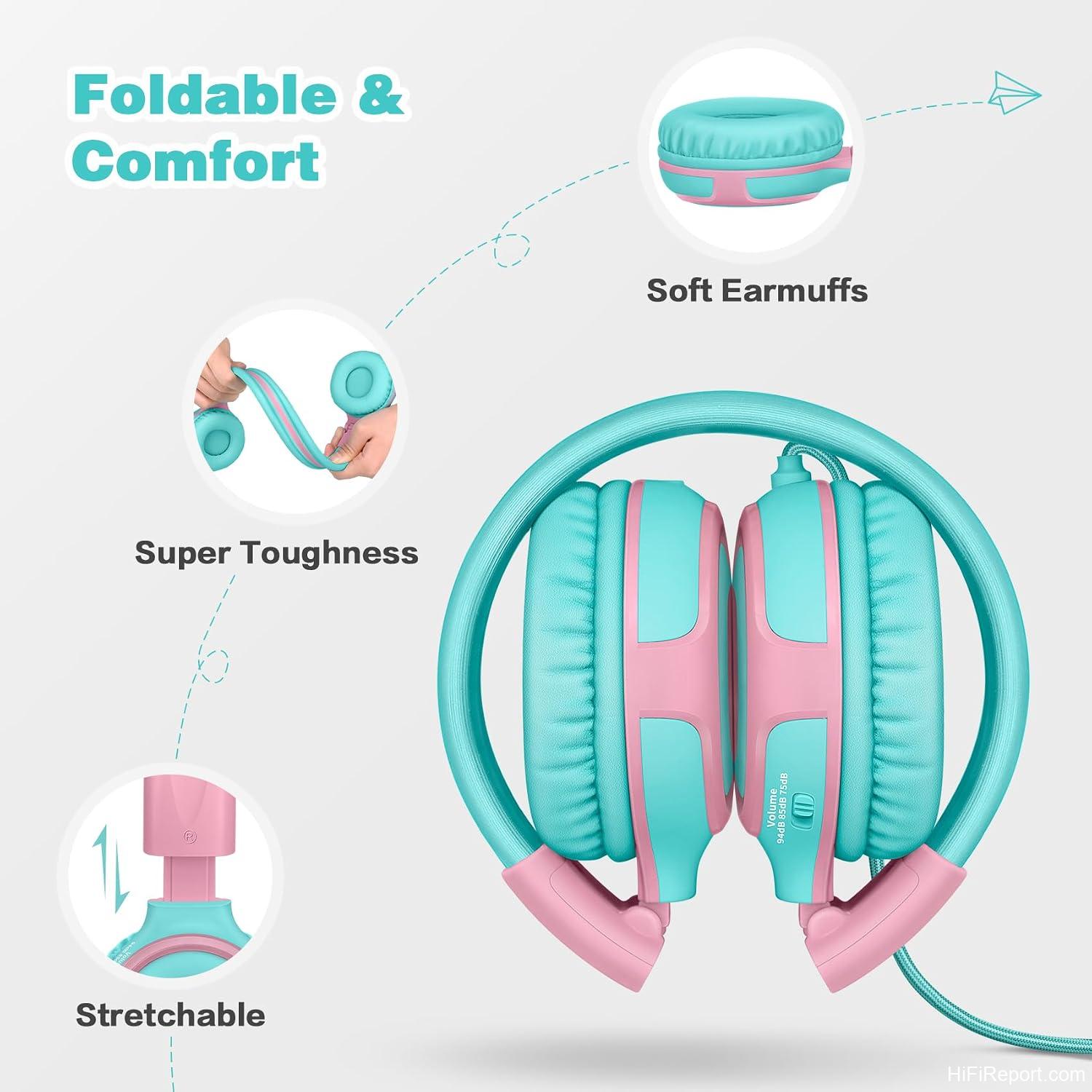
Practical durability also means survivability during storage and transport. The carrying pouch solves the bag problem, and folding solves the desk-drawer problem. Those two habits, more than any single material choice, determine whether a headset survives a school year intact. Simolio has clearly designed around them.
The Puro Sound Labs BT2200, a frequent comparison point in kids’ headphone coverage, takes the opposite approach with aluminum construction and a more adult, premium look. That is appealing for pre-teens who want to feel grown-up, while the Simolio’s flexible, fabric-and-steel build is aimed at a younger, rougher user. Different design bets for different ages.
Real-World Performance: School, Travel and Daily Use
The clearest use case is a school day. A wired headset with a limiter and a mic plugs into a Chromebook or tablet, stays plugged in, and works. There is no battery state to check before a lesson, and no pairing step for a substitute teacher to fumble. The microphone covers remote lessons and recorded assignments, and the 4.9-foot cable gives a child room to shift in a chair without dragging the device off the desk.
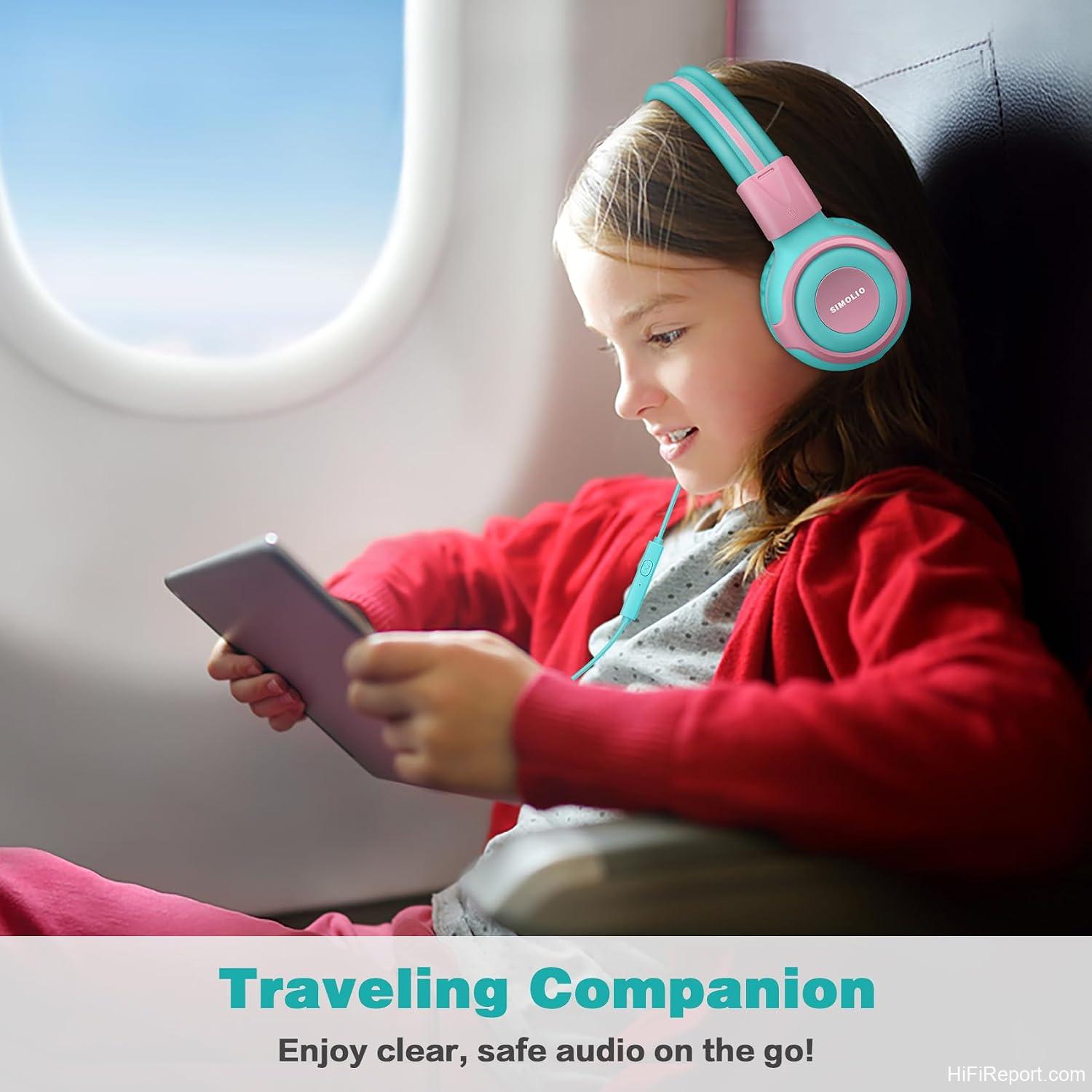
Travel is the second obvious fit. Flights, road trips, and waiting rooms are exactly where the 94 dB setting earns its place, since cabin noise and highway drone eat into perceived volume. Meanwhile the sharing jack handles the classic two-kids-one-screen scenario that Simolio built the Manyshare line around in the first place, and the foldable frame plus pouch keep the headset manageable in a carry-on.
Games are a quieter win. The Switch is named in Simolio’s compatibility list, and wired audio avoids the timing mismatch that can make wireless audio feel slightly off during fast games. For a child using a handheld console in the back seat, the wired connection is the more forgiving option.
The honest limitations are equally clear. There is no noise cancellation, so a noisy bus will still be noisy. There is no wireless mode, so a device without a headphone jack is out of reach without an adapter. And the limiter, by design, means the headset will never be loud enough to satisfy an older kid who wants to feel the bass. Buyers who need those things should look at Simolio’s wireless Manyshare models or a different brand entirely.
This article is the original property of hifireport.com. All rights reserved. Unauthorized reproduction is strictly prohibited.
Inside the Manyshare Family
Simolio has built a fairly wide lineup under the Manyshare banner, and understanding where this wired model sits helps set expectations. The wireless side of the family centers on Auracast, the Bluetooth audio broadcasting standard from the Bluetooth Special Interest Group that lets one device stream to many compatible headsets at once without a transmitter or dongle. Simolio’s JH-714B, also called the KidyCast, is the children’s flagship of that effort, and the company notes it can pair with the JH-721 adult model so parents and kids can share the same audio.
Simolio’s own editorial coverage names the JH-714 as its top pick for families with multiple children, praising the wireless sharing, the stretchable headband, and the built-in microphone. Elsewhere, the Newegg listing for a wired USB-C and 3.5mm Manyshare model documents a dual-connection design, an inline HD microphone, a built-in 3.5mm share port, dual 40mm drivers, and a three-level limiter at 85/94/104 dB.
None of that changes what this specific model is. It is the straightforward 3.5mm member of the family: same sharing philosophy, same limiter concept, no radio and no battery.
What Customers Are Saying
The customer review text for this listing could not be retrieved when this article was assembled, so there are no individual comments to quote or paraphrase. What is available is the aggregate: a 4.4-out-of-5 average across 386 ratings on the product page.
That number is worth interpreting carefully. A 4.4 average on a few hundred ratings is a strong result for any accessory, and it is particularly strong for kids’ products, where reviews tend to be blunt about broken hinges, frayed cables, and comfort complaints. An average in this range generally indicates that the majority of buyers got what they expected, that the durability claims held up in at least the first stretch of ownership, and that the volume limiter did not frustrate parents into returning the headset.
Equally, an average below a perfect score implies a minority of unsatisfied buyers. Without the written reviews, it is not possible to say what drove those lower ratings — fit, cable length, device compatibility, or simple unit-to-unit variance are all plausible. Readers weighing a purchase should check the current review section on the product page for the most recent, detailed feedback.
Pros and Cons
Pros
- Three-level volume limiter at 75 dB, 85 dB, and 94 dB gives parents a safe default and a louder option for noisy settings.
- Built-in microphone supports calls, online classes, and playlist control without touching the device.
- Sharing jack on the left earcup lets a second headset join the same source with no splitter.
- Adjustable headband with memory stainless steel strips adds flex and durability.
- Braided nylon cable at 4.9 feet resists the fraying that typically ends a kids’ headset’s life.
- Foldable design and included carrying pouch make storage and travel easy.
- Broad 3.5mm compatibility covers Chromebook, Fire Tablet, Switch, smartphones, and laptops.
- No battery, no pairing, and no charging routine.
- Strong aggregate rating of 4.4 out of 5 across 386 ratings.
Cons
- Wired-only design rules out devices without a 3.5mm jack unless you supply your own adapter.
- No active noise cancellation or ambient mode is mentioned in the sources.
- No published driver size, frequency response, or weight figures for this specific model.
- The 94 dB top setting may still feel limited for older kids who want more volume.
- Detailed written customer reviews were not available for this review, limiting insight into long-term reliability.
Verdict
The SIMOLIO Manyshare Kid Headphones with Microphone solve a specific problem well. They are a wired, no-nonsense kids’ headset with a three-level volume limiter, a built-in mic for school and calls, and a sharing jack that lets two children listen from one device without a splitter. The stainless steel headband strips, braided cable, folding hinge, and carrying pouch all address the ways kids’ headphones actually fail.
They are not the right choice for every household. If your child’s tablet has no headphone jack, or if you want noise cancellation and wireless freedom, Simolio’s own Auracast-enabled Manyshare models — or a premium alternative like the Puro Sound Labs BT2200 — are the better fit. But if you want a headset that survives a backpack, plugs into a school Chromebook, and keeps the volume within a range you can live with, this is a coherent, well-considered answer.
The 4.4-out-of-5 average across 386 ratings supports the case without overselling it, and buyers should check the product page for current pricing, since that changes frequently.
Specifications
- Brand: SIMOLIO
- Product: Manyshare Kid Headphones with Microphone, Wired Headset for School
- ASIN: B08HD7MTJ5
- Connection: Wired, 3.5mm audio jack
- Cable: 4.9 ft / 1.5 m braided nylon
- Volume limiter: Three levels, 75 dB / 85 dB / 94 dB
- Microphone: Built-in
- Sharing: 3.5mm sharing jack on the left earcup, no splitter required
- Speakers: Two
- Headband: Adjustable with memory stainless steel strips
- Design: Foldable
- Included: Carrying pouch
- Compatibility: Chromebook, Amazon Fire Tablet, Switch, smartphone, laptop, and any 3.5mm audio jack device
- Support: 24-hour customer support service
- Aggregate rating: 4.4 out of 5 across 386 ratings
- Availability: In stock
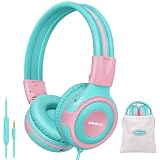
- √ 3-LEVEL VOLUME LIMITER FOR HEARING PROTECTION WITH SAFE VOLUME: Adopt exclusive proprietary 3-level volume limiter(75dB/85dB/94dB) to protect vulnerable and sensitive ears of kids while give parents a piece of mind, not having to constantly monitor the volume. It can effectively protect children of different ages from progressive hearing loss in different environments. (75/85dB in quiet places or 94dB in noisy surroundings). Two superior speakers provide crystal clear sound.
- √ BUILT IN MIC: Kids headset with microphone for hands free talking,let you pick up calls and skip between tracks in playlist without missing a beat.
- √ FOLDABLE AND STURDY DESIGN: The adjustable headband with memory stainless steel strips gives this headphone some impressive flexibility and durability. Premium braided nylon fabric,4.9ft/1.5m audio cable is sturdy enough to withstand rough play for kids.