
Siniffo HS1 Bone Conduction Headphones Review
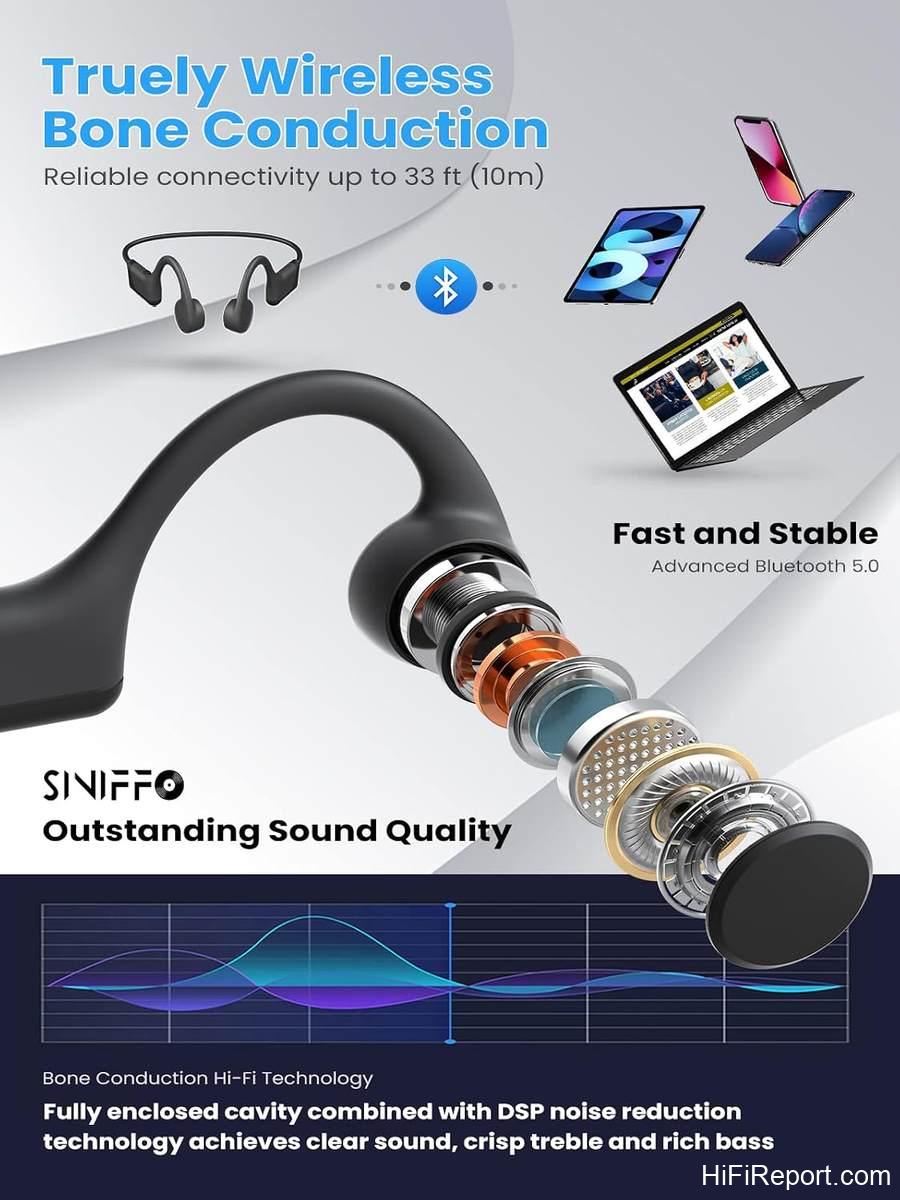
The Siniffo HS1 is a titanium-framed, bone conduction, Bluetooth 5.0 wireless band built for open-ear listening during sport, work, and travel.
Answer First
The Siniffo HS1 is a practical bone conduction option for runners, cyclists, and desk workers who need to stay aware of their surroundings. Sound quality trails a premium Shokz on bass and upper treble, but the 29g fit, IP55 rating, and 8-hour battery make it a strong pick for active and passive listening.
Buy or Skip
Buy if:
- You need open-ear audio for running, cycling, or outdoor work and want to hear traffic, wind, or a toddler calling your name without pulling out an ear cup.
- You want a lightweight, IP55-rated titanium band that stays seated through sprints and sweat, and the 29g frame suits a long workout or a full workday at a desk.
- Your use case is passive: podcasts, audiobooks, phone calls, or background music, where a slight bass shortfall is acceptable and full-range reproduction is not the priority.
Skip if:
- You listen critically to music and expect full-range, audiophile-grade output from a bone conduction driver; the HS1 will not reproduce deep bass or sparkling upper treble.
- You have a smaller or flatter skull, because the rigid band can sit on top of the hairline instead of pressing against the mastoid, which degrades sound transfer.
- You cycle on an e-bike at speed or work in open, windy terrain; owners report that wind noise masks the output even at maximum volume.
How Do They Sound, Really?
The HS1 handles voice, podcasts, and casual music clearly, with a predictable dip in bass and upper treble that comes standard with bone conduction at this tier.
Bass and Midrange
A reviewer who compared the HS1 directly to a premium Shokz unit described the Shokz as dramatically better on dynamic range and low-end weight. The same owner noted that the snare drum effectively becomes the “bass” drum on the HS1, a well-known quirk of the open-ear form factor. For audiobooks, phone calls, and background music, the gap narrows to something most listeners will not notice. A long-time Shokz user who bought the HS1 as a backup said the only audible difference showed up when she wanted “beautiful music” or full-range reproduction; for everything else, the two pairs performed close to parity. The HS1’s voice clarity is a standout, which matters more for calls and podcasts than for a vinyl-curious music listener. An audiobook listener who uses the HS1 for two to three hours a day reported being genuinely surprised to hear bass lines clearly, something she did not expect from an open-ear design. She noted the included sponge earplugs are optional for quieter mornings but become necessary in noisy environments, and she connected the pair to both a phone and a laptop simultaneously, though only one source plays at a time.
Leakage and Volume
The Amazon listing states the fully enclosed cavity reduces sound leakage by up to 50 percent compared to earlier open-ear designs. One owner with a smaller head reported that at maximum volume she could barely hear the HS1 from a short distance, and at normal listening levels the bleed was inaudible. The faint buzz or vibration some users notice at high volume is a side effect of the transducer pressing against the cheekbone and is expected in this form factor. The two sponge earplugs in the box can be inserted to block external noise when isolation is needed, though that step shifts the experience from open-ear toward sealed and defeats the open-ear purpose for most buyers. A second owner confirmed she could walk a room away from her phone with the HS1 and still maintain a connection, though stepping outside or to the far side of a house required grabbing the phone closer.
How Good Is the Noise Cancelling?
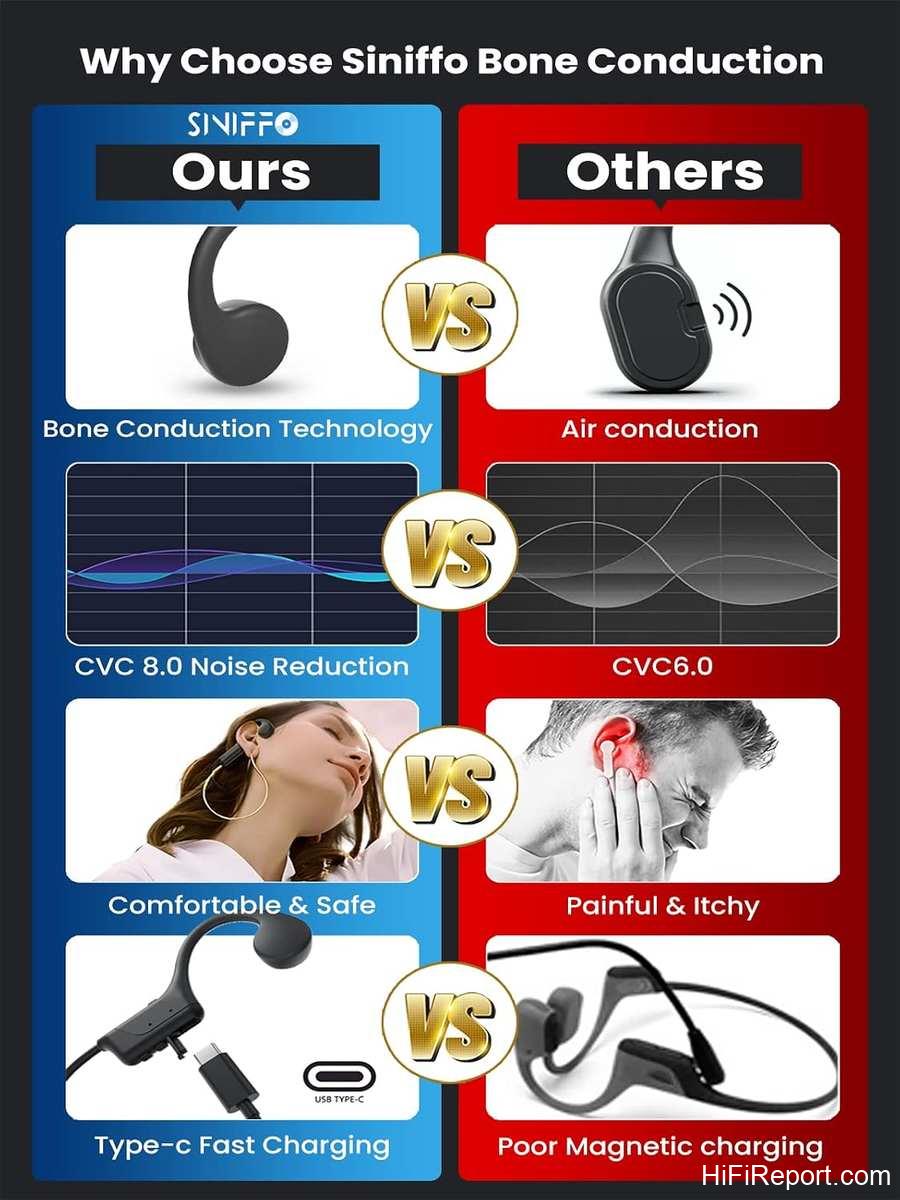
The HS1 has no active noise cancelling. The “noise-cancelling” language in the product listing refers to the built-in microphone filtering background noise during calls, not to any ANC circuitry in the driver or the titanium band.
What the HS1 does offer is passive situational awareness by design. Because the ear canal stays open, ambient sound passes straight through, which is the entire reason to choose bone conduction over an in-ear bud. A runner can hear a car pulling up behind her; a cyclist can hear a crosswalk warning; a desk worker can hear a colleague’s question without turning the volume down. The trade-off is that the same open path lets wind, traffic, and HVAC hum bleed into the audio channel. One e-bike rider found wind noise a significant sound killer even at maximum volume, making the HS1 better suited to office or light-industrial settings than to construction sites or open highway cycling. The included sponge earplugs close the canal when the user wants to cut external noise, but that conversion turns the HS1 into a sealed listener and undoes the open-ear advantage the product exists to provide. For a parent navigating a house with a toddler, the open canal means the headphones stay on while a “Mom!” call still registers, eliminating the constant need to pull a cup off and reattach it.
Do They Handle Sweat and Weather?
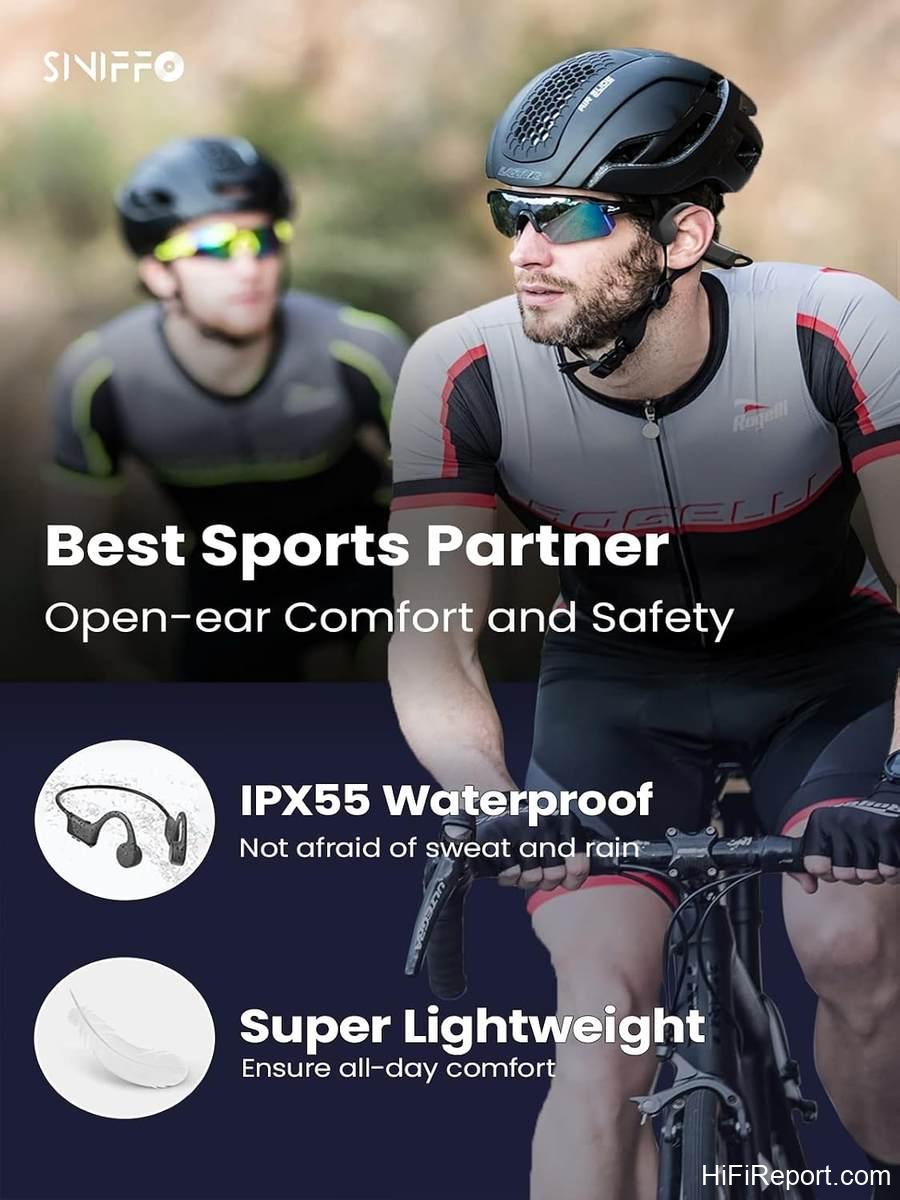
The HS1 carries an IP55 rating, which means the enclosure resists water jets from any direction up to a defined pressure, covering heavy sweat, rain, and splash exposure during sport. The titanium frame weighs 29g and, according to the manufacturer, has withstood stretching and bending without deformation.
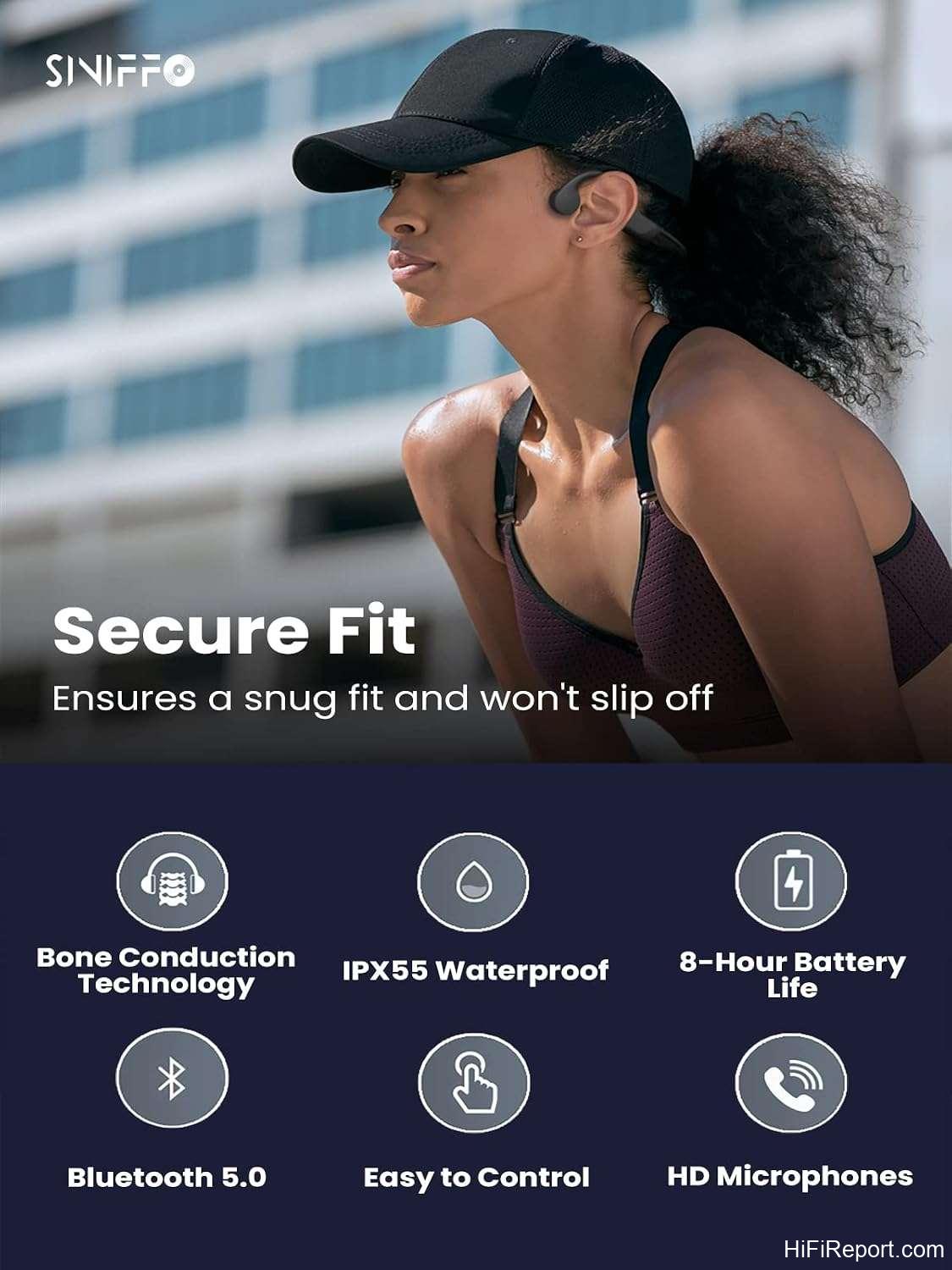
Owner reports back up the spec in practice. One runner logged 9- to 11-minute-mile efforts and shorter sprints and did not have to adjust or readjust the band a single time; it stayed seated on the skull where the ear attaches to the top of the head, just above the jaw joint. A second reviewer bent and twisted the titanium band repeatedly and reported no permanent deformation. The plastic coating on the frame is not slick, giving a firm grip when the user adjusts the band mid-activity. The IP55 rating does not cover submersion, so shower use or pool swimming is outside the spec. For a rainy outdoor run, a sweaty gym session, or a cycling commute in drizzle, the rating holds up. One cyclist confirmed the band sits comfortably beneath a standard bike helmet without shifting, though the reviewer noted that helmet compatibility is model-dependent. The same owner used the HS1 to follow Google Maps directions while riding, gaining both visual and audible cues without removing the band.
What Is Battery Life Like in Practice?
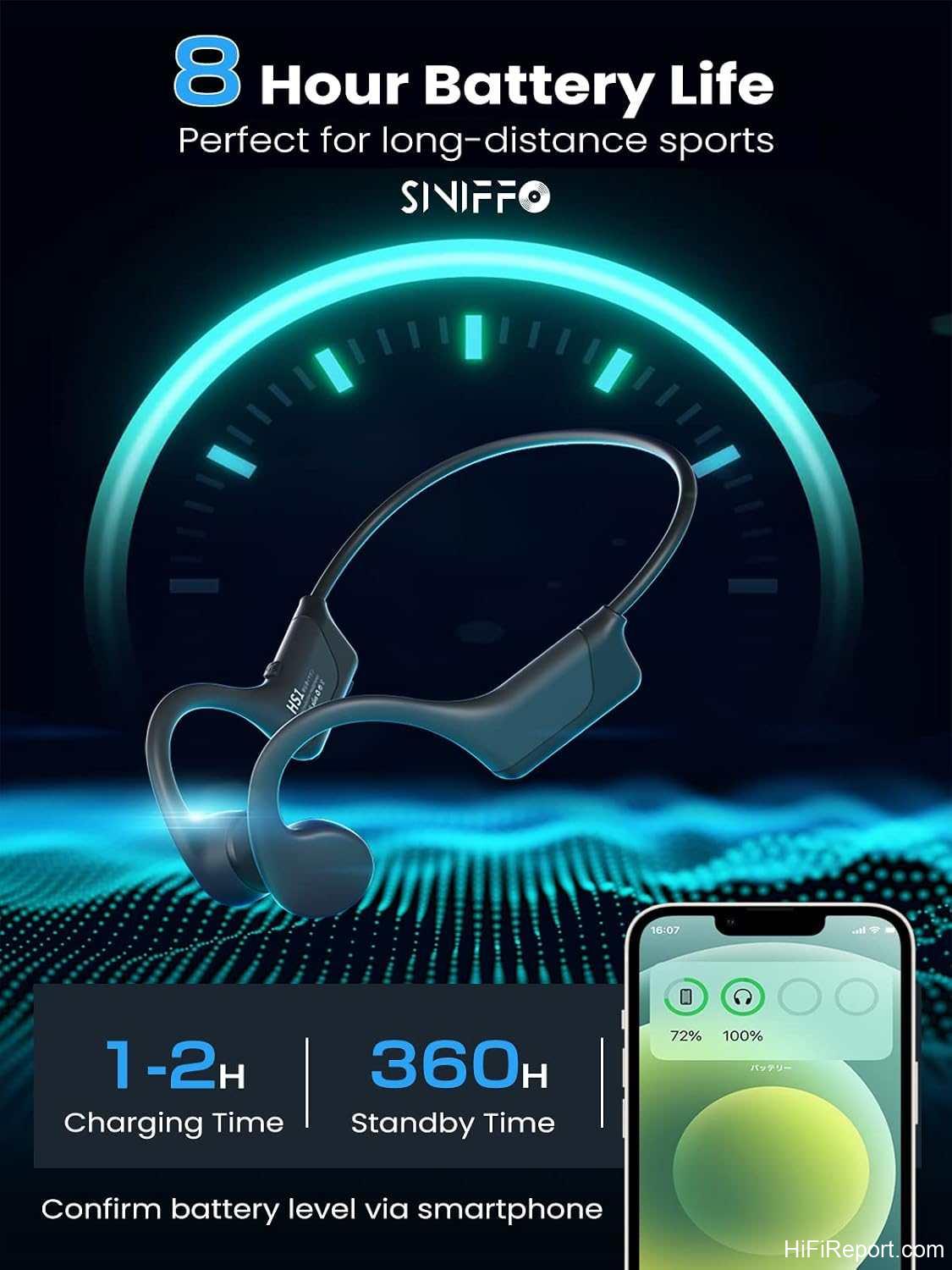
The manufacturer claims 8 hours of continuous playback or calls on a full charge, and a 10-minute Type-C quick charge that returns 1.5 hours of playtime.
© hifireport.com – Original review content by hifireport.com. Reprinting without written permission is not allowed.
In owner hands, the figure lands closer to 6 hours. A runner who cycled and ran on a regular schedule reported getting at least 6 hours before recharging, though she noted she topped up the battery before draining it completely, so the true end-of-life number may run a little higher. A work-audio user called battery life “quite good” without pinning down a precise figure. The gap between the 8-hour spec and the roughly 6-hour owner report is typical across the category: the spec likely assumes mid-range volume in a quiet room, while real use involves variable volume, Bluetooth handoff between a phone and a laptop, and call sessions that draw slightly more power. The 10-minute-to-1.5-hour quick charge is a practical safety net for a short morning workout or a commute when the battery is low. The Type-C connector means the same cable that charges a phone can top up the HS1, so a dedicated wall adapter is not required.
Can People Hear You Fine?
Call quality is the HS1’s most consistently praised feature. Owners report clear, hands-free audio good enough for video conferences and longer business meetings, and one user stated she could hear the other party better on the HS1 than through her phone speaker during a call.
The built-in microphone uses a small-element solid-state design, which means voice is intelligible and steady but not studio-grade. A desk worker described the workflow as straightforward: talk to a colleague or take a call without pulling off an ear cup or reaching for a phone. Bluetooth 5.0 connectivity held without dropouts in a home environment for most reviewers. One owner with a 2020 Motorola G Stylus experienced button-pairing hiccups at first that resolved after a short period of use, and a later update from the same household reported progressive Bluetooth pairing failures with a newer phone, prompting a switch back to a premium Shokz unit. That pairing reliability issue is the main caveat on the call quality otherwise owners describe as solid and dependable. A Mexican-market reviewer summarized the call and conference experience as ideal for phone calls and meetings, and the built-in mic handles the standard hands-free scenario without the user needing to hold a device to their face.
What Are Owners Saying?
Praise centers on three themes. Fit and weight: the 29g titanium band is light enough that a first-time bone conduction user described the sensation as “almost feeling like you’re not wearing it,” and a work user confirmed comfort over long desk sessions without pressure points at the temples or ear. One owner with small ears that ache in standard earbuds found the HS1’s open-ear design a relief from that constant pressure. Open-ear safety: multiple buyers highlighted the ability to hear a child calling, traffic on a bike ride, or a coworker in a lab without removing the headphones, which the group saw as the core reason to choose bone conduction over an in-ear bud. Practical utility: several reviewers noted the HS1 does the job of an open-ear sport band well enough that a premium alternative is overkill for passive listening, and the included sponge earplugs and Type-C cable round out a complete package. One traveler purchased the pair after watching a fellow passenger wear bone conduction on a flight and realizing the volume-no-longer-cruising-to-maximum benefit applied to flights as much as to runs.
Complaints fall into two groups. Sound quality: the bass and upper-treble gap is the most consistent note, and one reviewer who compared the HS1 side-by-side with a Shokz called the Shokz “dramatically” better on dynamic range and low-end weight. Build and fit: one unit had the right-side tympanic diaphragm fall off, a problem fixed with a custom-cut ring of double-sided tape; the adhesive bond is the weakest link in the assembly. The rigid band also sticks out under hoods, thick collared jackets, or when leaning back against a chair, making it a poor match for bed use or a hooded-jacket commute. A smaller or flatter skull can leave the driver resting on the hairline instead of pressing against the mastoid, which degrades sound transfer and can trigger headaches in sensitive users. One household reported that the HS1’s Bluetooth pairing degraded over time on both an older and a newer phone, and they ultimately returned to a Shokz for reliability.
Should You Buy Them?
The HS1 earns its place as the do-everything open-ear band for people whose primary use is active or ambient listening. If you run, cycle, walk a dog, or sit at a desk where a toddler keeps calling your name, the combination of IP55 waterproofing, 29g weight, 6-to-8-hour battery, and clear call audio covers a full day without needing a second pair. The sound will not satisfy a music critic, the rigid band is not ideal under a hood or in a reclined bed position, and Bluetooth pairing can waver on some phone models, but for the use case the product targets, the owner consensus is broadly positive. The 4-out-of-5 rating across 1,132 reviews reflects a product that delivers on its core promise even when it does not match a premium Shokz on every axis.
One point the opening answer skips: the 50 percent reduction in sound leakage from the enclosed cavity matters more in a shared room than the spec sheet suggests. In an open-plan office or a quiet gym, that reduction means the person next to you hears less bleed than with an older open-ear design, which changes whether you can wear the HS1 at a desk without drawing a “what are you listening to?” from a coworker. The 30-day refund window and 2-year warranty also lower the risk of a trial period if the fit or pairing behavior does not suit a particular user.
© hifireport.com – Original review content by hifireport.com. Reprinting without written permission is not allowed.
Best for: runners, cyclists, desk workers, and parents who need open-ear audio that stays on through sweat and keeps the world audible.
Specifications
- Driver type: Bone conduction, titanium frame
- Weight: 29g
- Water resistance: IP55
- Battery life (claimed): 8 hours playback / calls
- Quick charge: 10 minutes yields 1.5 hours
- Charging port: USB Type-C
- Bluetooth version: 5.0
- Microphone: Built-in, solid-state
- In the box: 1 pair of HS1 headphones, 1 Type-C cable, 2 sponge earplugs, 1 user manual
- Warranty: 2-year, 30-day refund window
No products found.