
solodate lab 2-Pack USB-C Earphones Review
These are basic wired earbuds for anyone who lost their phone’s stock earbuds and needs a USB-C plug that takes two minutes to set up. The solodate lab 2-Pack USB-C Earphones deliver an inline-mic experience with a built-in DAC chip, and they ship two sets in one package so you have a spare. The single takeaway from the 2.2-out-of-5 rating across 10 Amazon reviews is straightforward: when the hardware works, the sound is fine, but the odds of drawing a unit with a channel fault or a dead driver are high enough to plan on a return.
Build Quality and Design
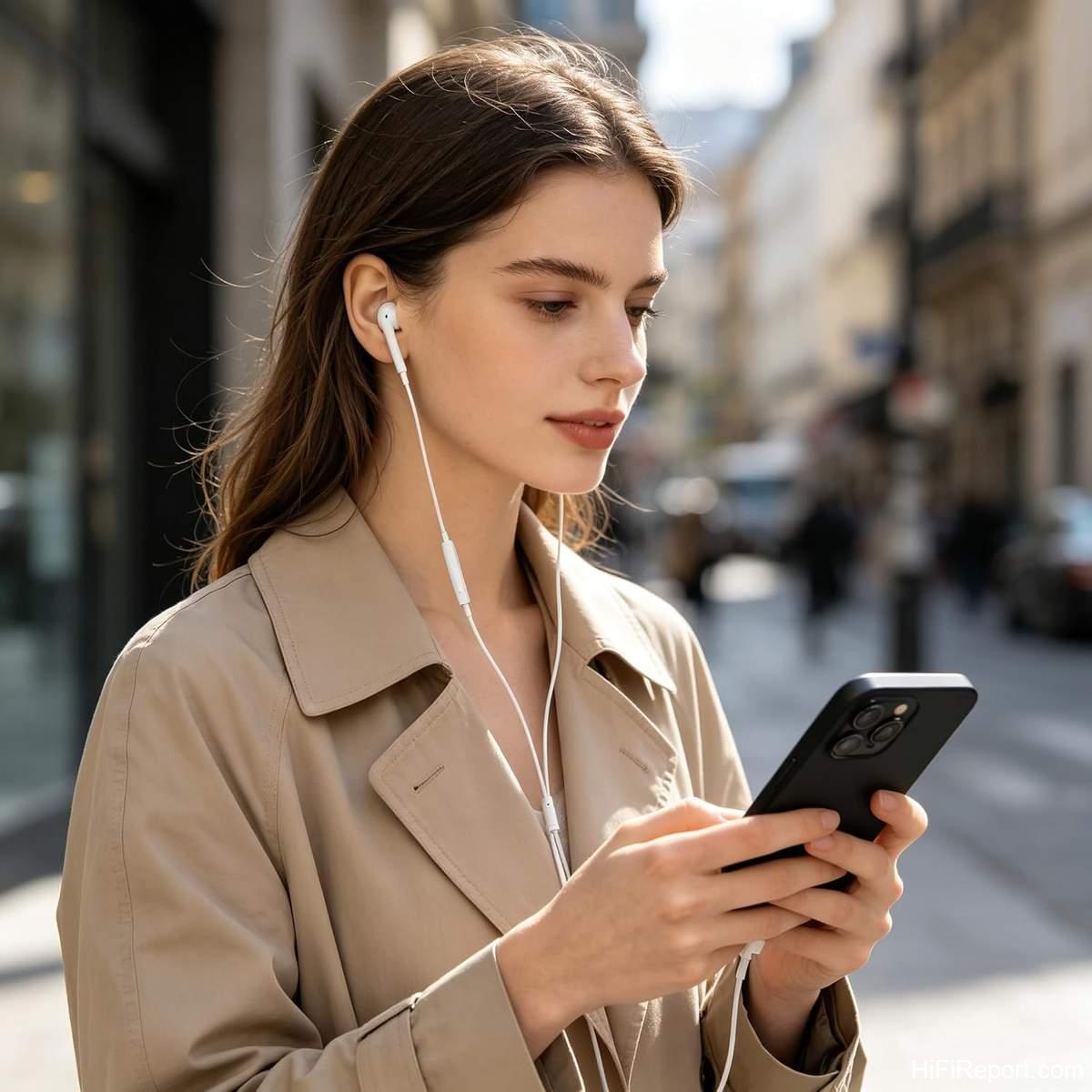
The earbuds use metal-plated USB-C connectors, a detail the brand says reduces the poor-contact wear that plagues cheaper plugs over time. The 1-meter cable is described as stretch-resistant, and the inline remote sits on the left-side cord. That remote covers volume up and down, last and next track, pause, and call answer, end, and reject. The button layout is standard for a wired set, and the manufacturer positions the whole assembly as plug-and-play: connect the USB-C end to your phone, tablet, or laptop, and audio should start without a driver, app, or pairing step.
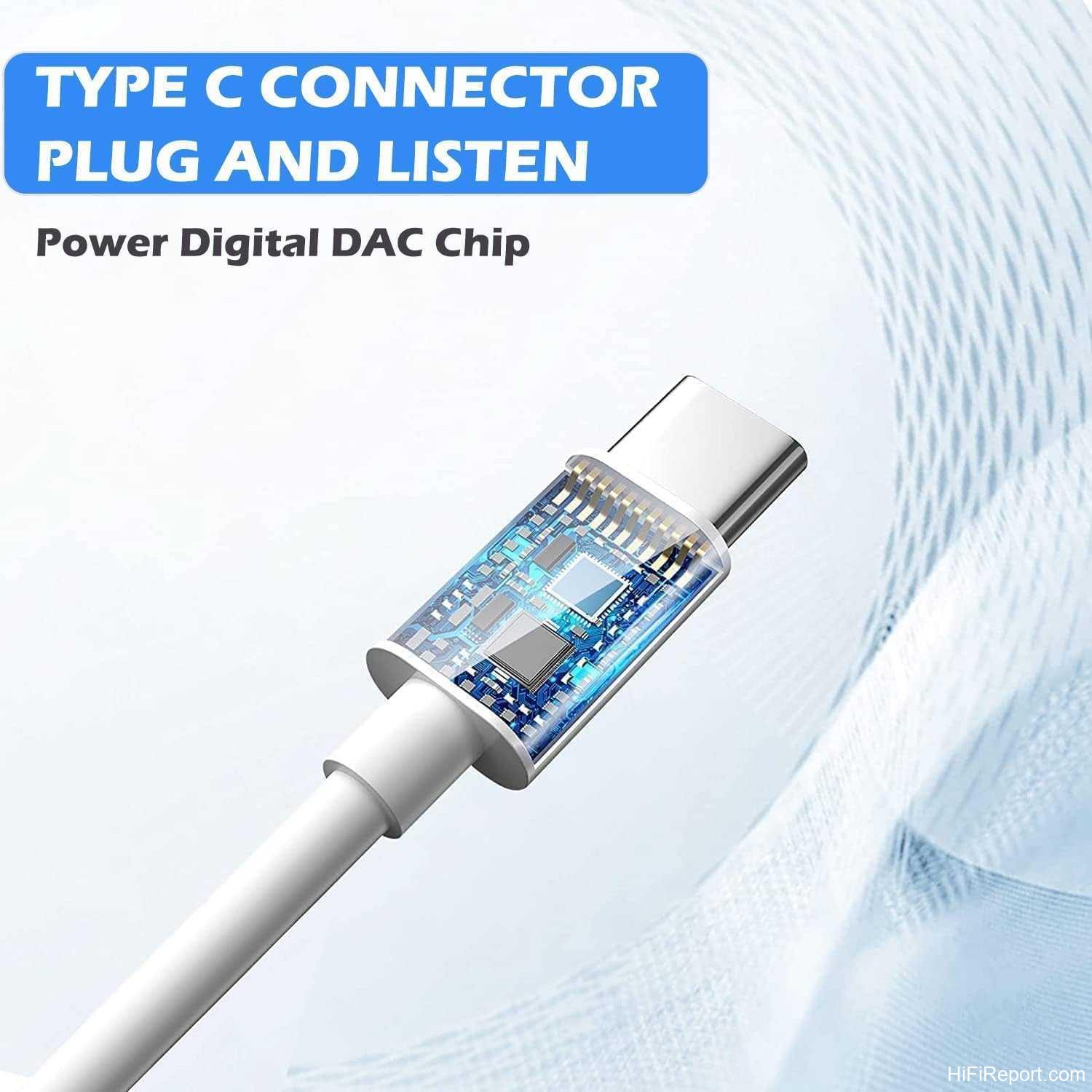
An inline DAC chip lives in the cord between the plug and the earbuds. The brand frames this as the reason the set preserves “high resolution acoustics” from the source device and avoids buzzing or popping. No measurement of that chip’s signal-to-noise ratio, sample-rate support, or distortion floor appears in the listing or in any available third-party review, so the claim stays at the manufacturer’s word. The signal path runs entirely through the USB-C connector; there is no analog jack, no pairing, and no separate audio module to manage.
The listing ships two complete earbud sets in one package. Each set includes the two in-ear drivers, the inline remote, and the USB-C plug. Beyond that, the sources do not specify ear-tip size options, color variants, or any additional accessories in the box.
Originally published on hifireport.com. Unauthorized scraping or republishing is prohibited.
Wearing Comfort
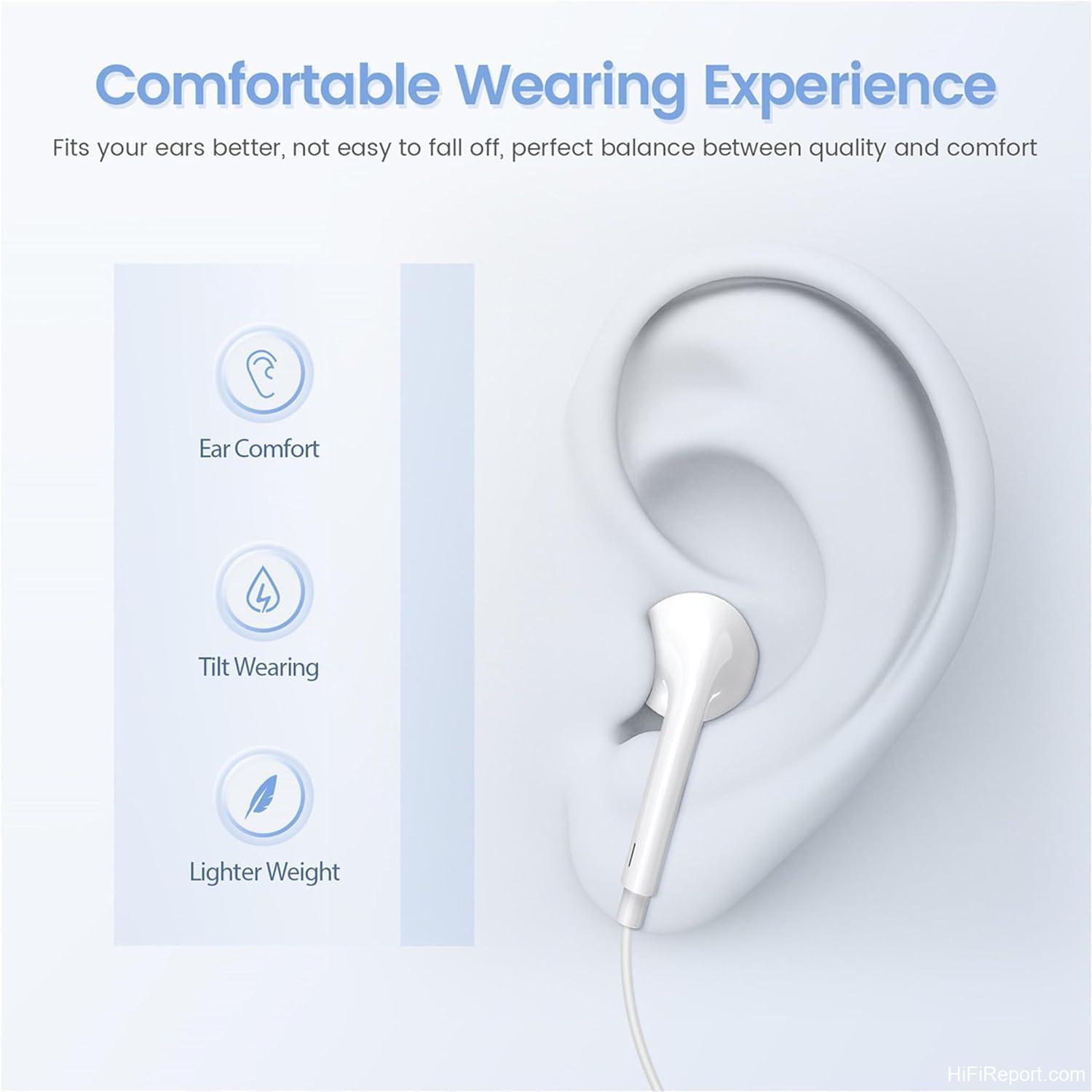
The earbuds use an in-ear fit with what the brand calls an ergonomic shape. The tips seal inside the ear canal, and the manufacturer states that the design keeps ears comfortable during extended sessions covering work, study, and light exercise. None of the seven available reviews singles out comfort or discomfort as a primary point, so the wear picture rests on the manufacturer’s claim and the general in-ear geometry.

The sources do not publish a gram weight, a tip material, or a set of interchangeable tip sizes. The 1-meter cord length means the remote and cable tail hang at chest level in typical use, which is the same drape you get from most stock phone earbuds. Because the cable is described as stretch-resistant, the main physical stress point is the strain on the connector when you tug the cord. For long listening sessions the limiting factor is how snugly the tip seal sits, a variable the buyer controls by choosing the included tip size.
Audio Performance
The solodate lab USB-C earphones sound acceptable when every component is working, but a cluster of reviews reporting channel imbalance, a background drone, and call noise pulled the aggregate to 2.2 out of 5. The listening picture is as much about which unit you drew from the pack as it is about the design.
The inline DAC chip is the only audio-circuit detail the sources provide. The manufacturer claims it preserves high-resolution audio from the source device and keeps the signal free of buzzing or popping. One five-star review simply reads “Buen sonido” (good sound), which tells you the basic frequency balance and volume level worked for that buyer. No measured frequency response, total harmonic distortion figure, or codec detail appears in the listing or in any available third-party review, so the sound-quality baseline is built from those short owner impressions.
Channel and volume consistency is where the complaints concentrate. One reviewer reported the left earbud playing at one-quarter the volume of the right, an imbalance that makes stereo separation unreliable and forces the user to crank the master volume to compensate. A second buyer described one of the two sets in the pack producing a constant helicopter-like drone in the background while the other set functioned normally. A third buyer said one earbud went completely silent within 15 days of light use. Three separate failure modes across two units in a single package point to uneven unit-to-unit quality control rather than a single design flaw.
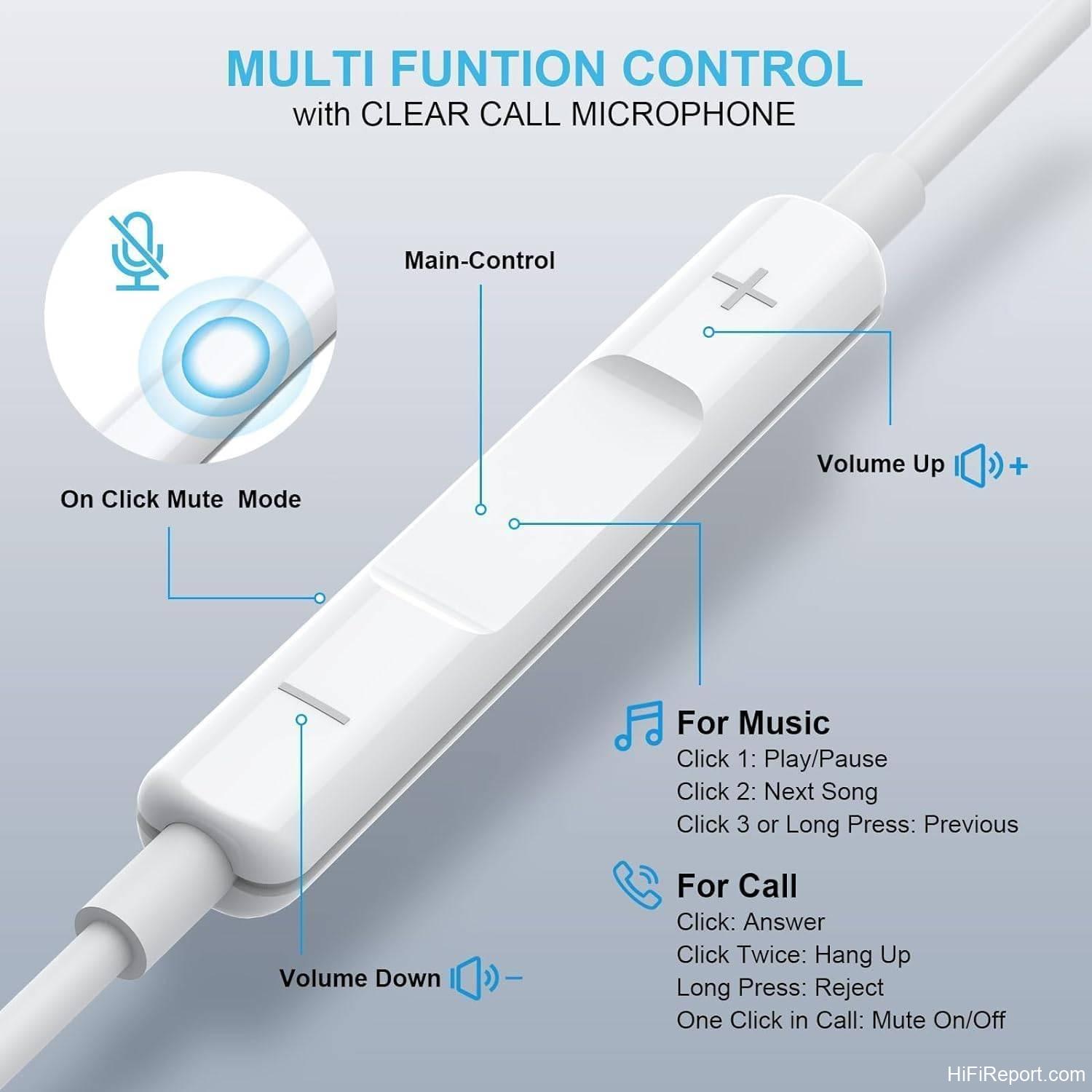
Call audio drew its own set of complaints. One reviewer described terrible noise on the voice channel during a phone call. Another said that adjusting the mic volume through the inline remote caused the active call to disconnect. The remote does carry a dedicated call button, but the microphone and the volume control appear to share a signal path that can drop the connection when the user cycles through volume steps mid-call.
The DAC chip, in a USB-C audio link, handles digital-to-analog conversion inside the cable. Whether it adds a meaningful filtering stage or implements a straightforward converter is not disclosed. The listening reports above suggest the chip does not rescue a unit whose driver, volume pot, or solder joint is defective. In other words, the chip sets a ceiling on the audio path, but the floor is determined by the build quality of the individual earbud, and that floor is where most buyers in the review set hit.
Keeping the World Out
The solodate lab USB-C earphones rely on a passive in-ear tip seal for noise reduction; there is no active noise-cancellation circuit in the product.
The brand describes the in-ear tips as “ergonomic noise reduction” hardware. In practice that means the tip creates a physical seal in the ear canal, blocking ambient sound the way any well-fitting in-ear bud does. The level of isolation depends on how snugly the seal sits and on the tip size, neither of which the sources specify. No decibel rating, no ANC mode, and no microphone array for active cancellation appears anywhere in the listing or in the available reviews.
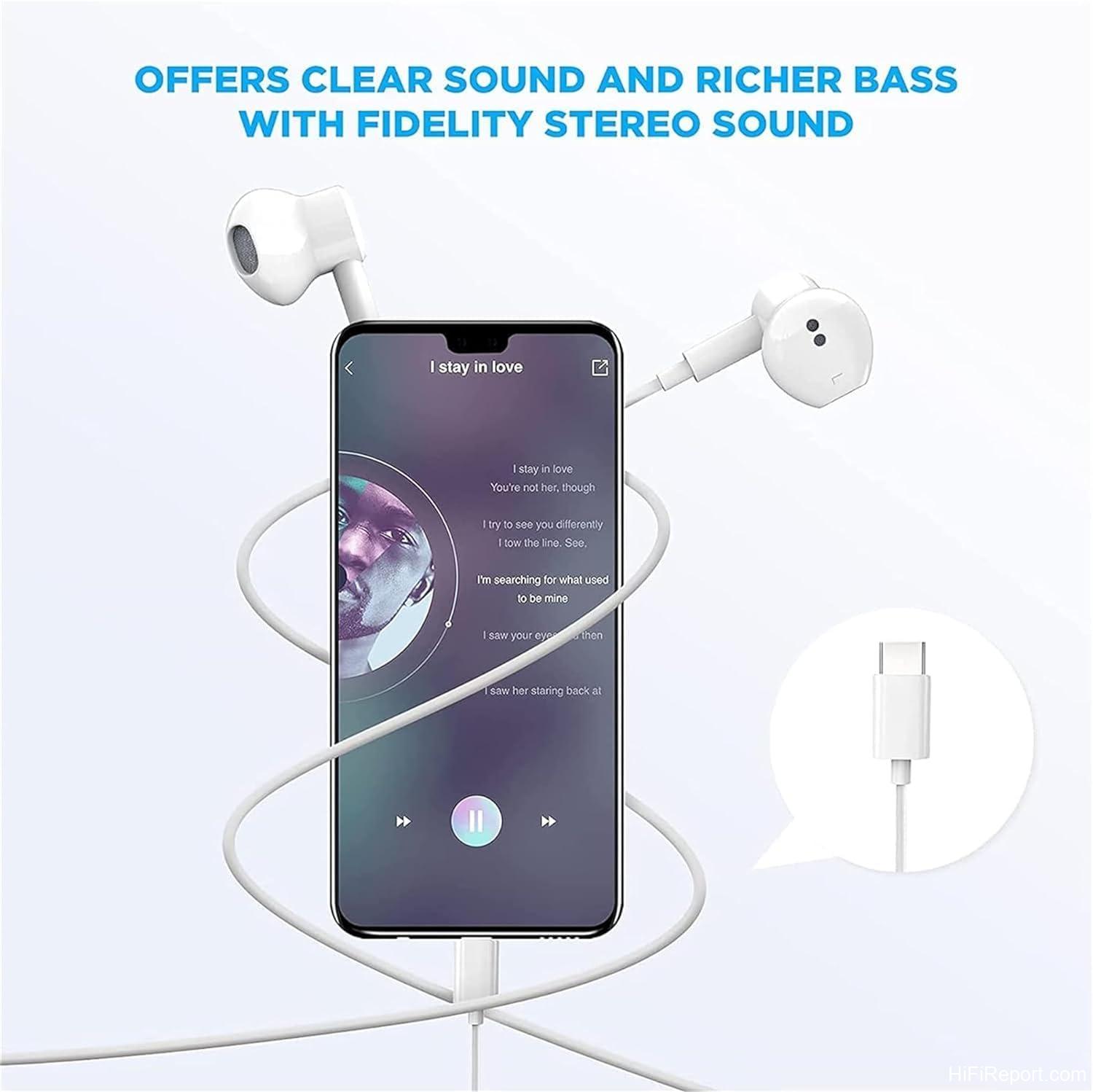
The product title includes the phrase “Noise Cancelling,” which in this context refers to the passive isolation from the tip seal, not a microphone-based ANC system. Buyers expecting a low-frequency rumble filter, an external-mic cancellation loop, or a toggle for an active mode will not find one. The isolation is the same class you get from any standard in-ear tip, and its effectiveness tracks the seal quality and the ambient noise level of the room.
Battery and Charging
The solodate lab USB-C earphones have no battery, no charging cycle, and no charge time to track; they draw power directly from the USB-C port of the connected phone, tablet, or laptop.
Because the set is wired, the 1-meter cable carries both the audio signal and the small current the inline DAC chip needs to run. There is no battery gauge, no charge indicator, and no case to top up. The trade-off is that the earbuds stop working the moment the cable disconnects, and there is no wireless fallback. For a commuter, a gym session, or desk work, the cable constraint is the main practical limitation: the earbuds are tethered to whatever device is plugged in, and a short or a yank on the cord cuts the audio immediately.
Customer Feedback Highlights
The single five-star review in the available set is brief: the buyer wrote “Buen sonido” and stopped there. One two-star buyer noted that one of the two sets “worked ok,” which implies a baseline of acceptable audio when the unit is functional. No reviewer specifically praised build durability, long-session comfort, or the remote button layout.
Quality-control failures dominate the remaining reviews. Six of the seven available reviews carry one- or two-star ratings. One buyer received a set whose volume control was defective from the start, lowering the connected device’s overall volume; a second set in the same package had one earbud go silent within 15 days of light use. Another buyer described a constant helicopter-like background drone on one set. A different buyer reported the left channel running at one-quarter the volume of the right. A separate reviewer said the headphones did not work with the iPhone 17 at all.
Call-audio problems and listing accuracy round out the complaint themes. Two reviewers flagged persistent noise on the voice channel during calls, and one said adjusting mic volume dropped the active call. A buyer also noted that the review section on the listing contained entries for an unrelated product (craft beads), which raised questions about whether the listing was properly managed. The 2.2-out-of-5 score across 10 reviews reflects how frequently the negative experiences outweighed the positive ones.
Pros and Cons
Pros:
- Two complete earbud sets ship in one package, giving you a spare
- Metal-plated USB-C connector and 1-meter stretch-resistant cable
- Inline remote covers volume, track skip, pause, and call handling
- Plug-and-play setup with no app, driver, or battery to charge
- Inline DAC chip handles basic USB-C audio conversion
Cons:
- 2.2-out-of-5 aggregate rating signals widespread quality-control issues
- Multiple reviewers report one channel at reduced volume or complete silence
- Helicopter-like background drone reported on at least one unit
- Mic volume adjustment can disconnect an active call
- No published frequency measurements, tip-size options, or third-party audio reviews
Bottom Line
The solodate lab 2-Pack USB-C Earphones fit a narrow slot: you need a basic wired replacement for a phone or tablet with a USB-C port, you want two sets so one can live in a gym bag, and you are comfortable returning a defective unit. If that is the entire brief, the plug-and-play DAC design and the inline remote do the job when both units are functional. The catch is that the review record shows the majority of available buyers received a set with a channel fault, a dead driver, or a defective volume pot, and the 2.2-out-of-5 score sits well below the threshold most buyers use before committing to a purchase.
For anyone who wants a dependable pair of wired earbuds for daily calls, commuting, or long listening sessions, the risk of drawing a faulty unit is high enough to steer toward a brand with a larger quality-control track record. The solodate lab set makes sense as a short-term stopgap or a “test the fit” buy, with the expectation that you will return or replace one of the two sets if the channel balance or the call audio does not check out on first use.
Spec Sheet
- Connection: USB-C
- Pack contents: 2 pairs of in-ear earbuds with inline mic/remote
- Cable length: 1 meter
- Inline chip: DAC (manufacturer-stated)
- Remote functions: Volume up/down, last/next track, pause, call answer/end/reject
- Fit style: In-ear
- Noise management: Passive isolation via tip seal
- Battery: None (wired, device-powered)
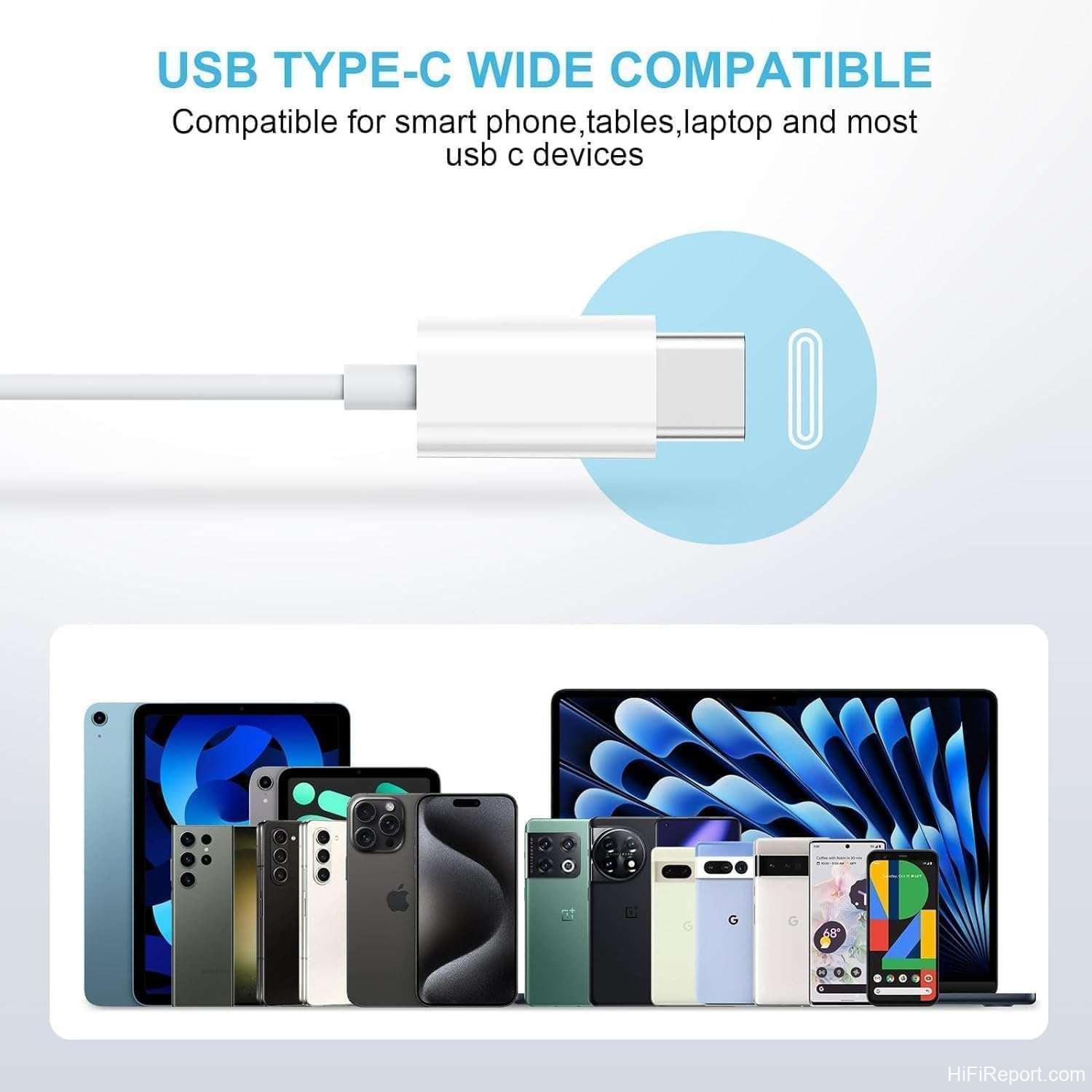
- Compatibility: iPhone 17/16/15 series, iPad Pro/Air/Mini, MacBook, Samsung Galaxy S25/S24/S23 series, other USB-C audio devices
- Rating (Amazon): 2.2 out of 5 (10 reviews)
FAQ
Do these earphones work with the iPhone 17?
Yes, the USB-C plug connects directly to the iPhone 17’s audio port and should work out of the box. One reviewer, however, reported that a set did not work with the iPhone 17, so if you receive a non-functional unit the issue is likely a faulty connector rather than a compatibility mismatch.
Are there two pairs in the box?
Yes. The listing ships two complete earbud sets with inline remotes in one package. Several reviewers noted that the two units in a single pack can behave differently, with one functioning normally and the other showing a channel fault or background drone.
Is there active noise cancellation?
No. The in-ear tips provide passive isolation through a physical seal in the ear canal. There is no ANC circuit, no external microphone for cancellation, and no toggle for an active mode. The “noise cancelling” language in the product title refers to the passive tip seal only.
Originally published on hifireport.com. Unauthorized scraping or republishing is prohibited.
What do I do if one earbud sounds quieter than the other?
The available reviews show this is a reported quality-control issue, not a user setting. One buyer noted the left channel running at one-quarter the volume of the right. If the imbalance persists after cleaning the tips and reseating the connector, the unit is likely defective and should be returned or replaced through the seller.

- 【Headphones Excellent Compatibility】USB C Earphone for iPhone18/18 Pro/18 Pro Max,iPhone17/17 Air/17 Pro/17 Pro Max,iPhone16/16 plus/16 pro/16 pro max, iPhone15/15 plus/15 pro/15 pro max, for iPad Pro 2020 2021 2022 2023 2024 2025, for iPad Air 4th,5th, M2,M3, for iPad Mini 6th,7th, for MacBook/MacBook Pro, for Samsung Galaxy S25,S25+,S25 Ultra,S25 Edge,S24/S24+/S24 Ultra,S23/S23+/S23 Ultra,,other devices with USB C audio port.
- 【Quality Material USB C Earphone】: Metal-plated connectors greatly reduce the phenomenon of poor contact, Stretch resistant, long-lasting; 1 meters length, built-in powerful DAC chip to maintain the high resolution acoustics of your devices, no buzzing, popping, or any bad audio issues, just plug and play to enjoy your favorite music.
- 【Ergonomic Design】: Ergonomic noise reduction in-ear headphones, using high-quality materials, minimize the noise in the surrounding environment, and bring you a better music experience. It is suitable for your daily work, study, and sports use. Wearing it for a long time will not make you feel uncomfortable in your ears.