
Solodate Lab 2 Packs USB C Headphones for iPhone 17/16/15 Review
The solodate lab USB-C earbuds earn a Disappointing overall mark, and the single biggest reason is quality control. The Amazon aggregate sits at 2.2 out of 5 across 10 reviews, and the pattern behind that number is consistent: channel-imbalance defects, background drone, a remote that drops calls, and at least one unit that produced no audio on the very phone model the listing leads with. Two pairs ship in the box, which sounds like value, but when one pair in your unit is dead on arrival and the other is a dud, the “two packs” framing becomes a liability.
First, the Verdict
These earbuds do not clear the bar for a wired USB-C accessory you would keep in your pocket. Design and Build land at Fair: the in-ear shape and 1-meter cable are sensible, but the metal-plated connector and inline remote have failed in owner hands. Audio Performance is Disappointing, driven by a left channel playing at a fraction of the right’s volume and a helicopter-like artifact on one of the two included sets. Silencing the Room is Fair: the passive seal does its basic job, yet the same internal artifacts it is meant to mask make quiet listening unreliable. Battery and Charging is a Fair non-issue, because the product has no battery. Compatibility is Disappointing, since a verified owner confirmed zero audio on an iPhone 17. The buy answer is skip.
Report Card
- Design, Build and Fit: Fair — the shape and 1-meter cable are conventional, but a remote that disconnected calls out of the box and an earbud that died within 15 days undercut the build claims.
- Audio Performance: Disappointing — a left channel at roughly one-quarter the right’s volume plus a background drone means the two ears do not produce a consistent, listenable signal.
- Silencing the Room: Fair — the in-ear seal provides basic passive isolation, but internal audio artifacts negate that benefit in quiet environments.
- Battery and Charging: Fair — as a wired, host-powered product, there is no battery to drain, charge, or fail; power flows directly from the connected device.
- Compatibility: Disappointing — despite a long device list, at least one verified owner reported the earbuds produced no audio on an iPhone 17.
Design, Build and Fit
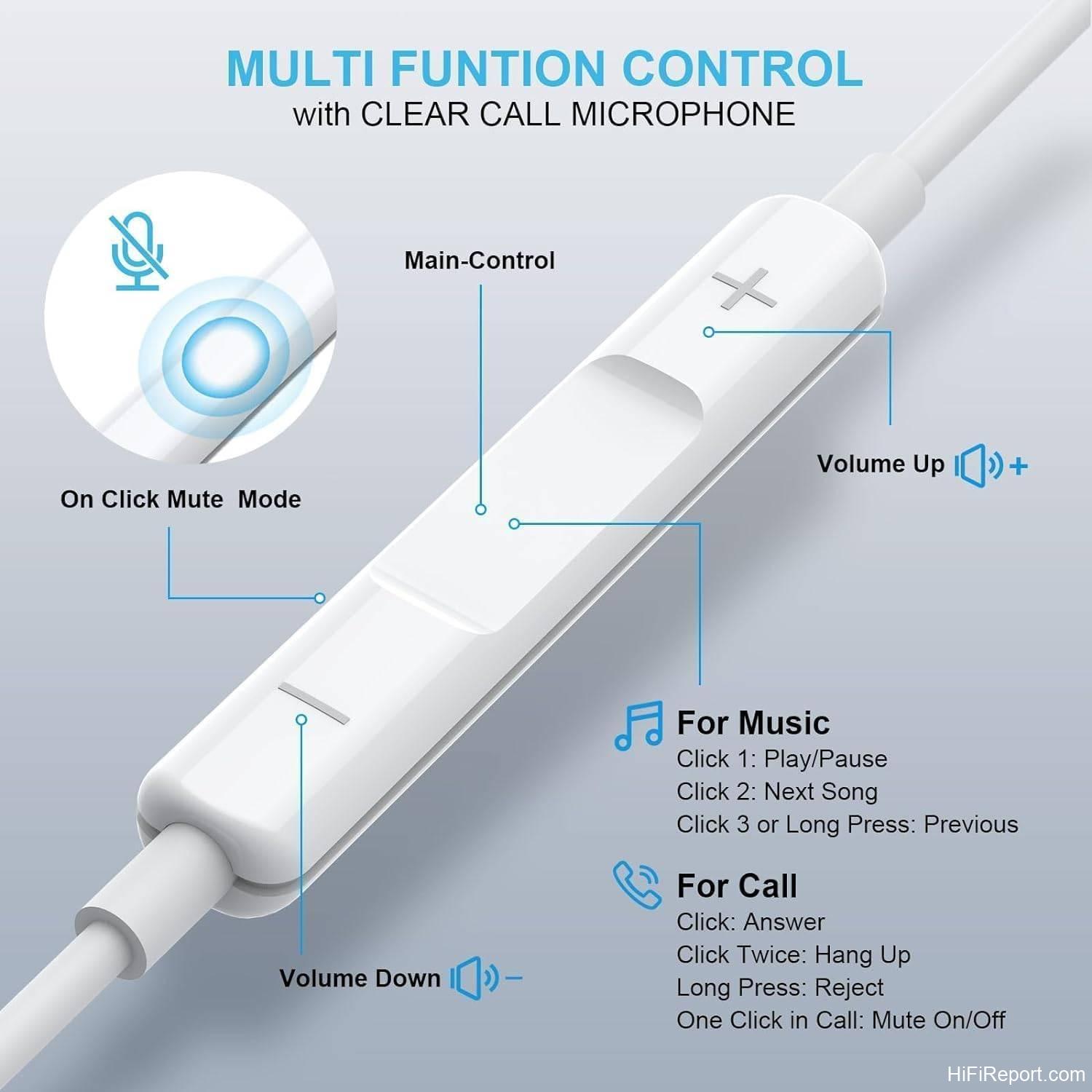
The solodate lab earbuds use a standard in-ear geometry with silicone tips, and the 1-meter cable keeps the connection short enough to avoid the tangling problems of longer wired sets. The listing specifies metal-plated connectors on the USB-C plug end, which the brand says reduces poor-contact issues and improves long-term durability. The inline remote sits mid-cable and carries buttons for volume up, volume down, last/next track, pause, and call answer/end/reject. The layout mirrors the familiar control scheme Apple used in its own wired earbuds, so there is a learning curve of zero if you have used that type before.
Originally published on hifireport.com. Unauthorized scraping or republishing is prohibited.
In practice, the connector and remote have not held up under owner scrutiny. One verified review describes the volume controller as defective from the first use: trying to adjust mic volume during a call caused the call to disconnect entirely. A separate owner reports that one of the two included sets developed a completely silent earbud after fewer than 15 days of light use. The cord is described as “strengthened for longer durability” and the cable material is called “stretch resistant,” which is a reasonable engineering choice for a pair you will yank out of a pocket or bag daily, but a component failing in two weeks undermines whatever wire gauge was supposed to protect.
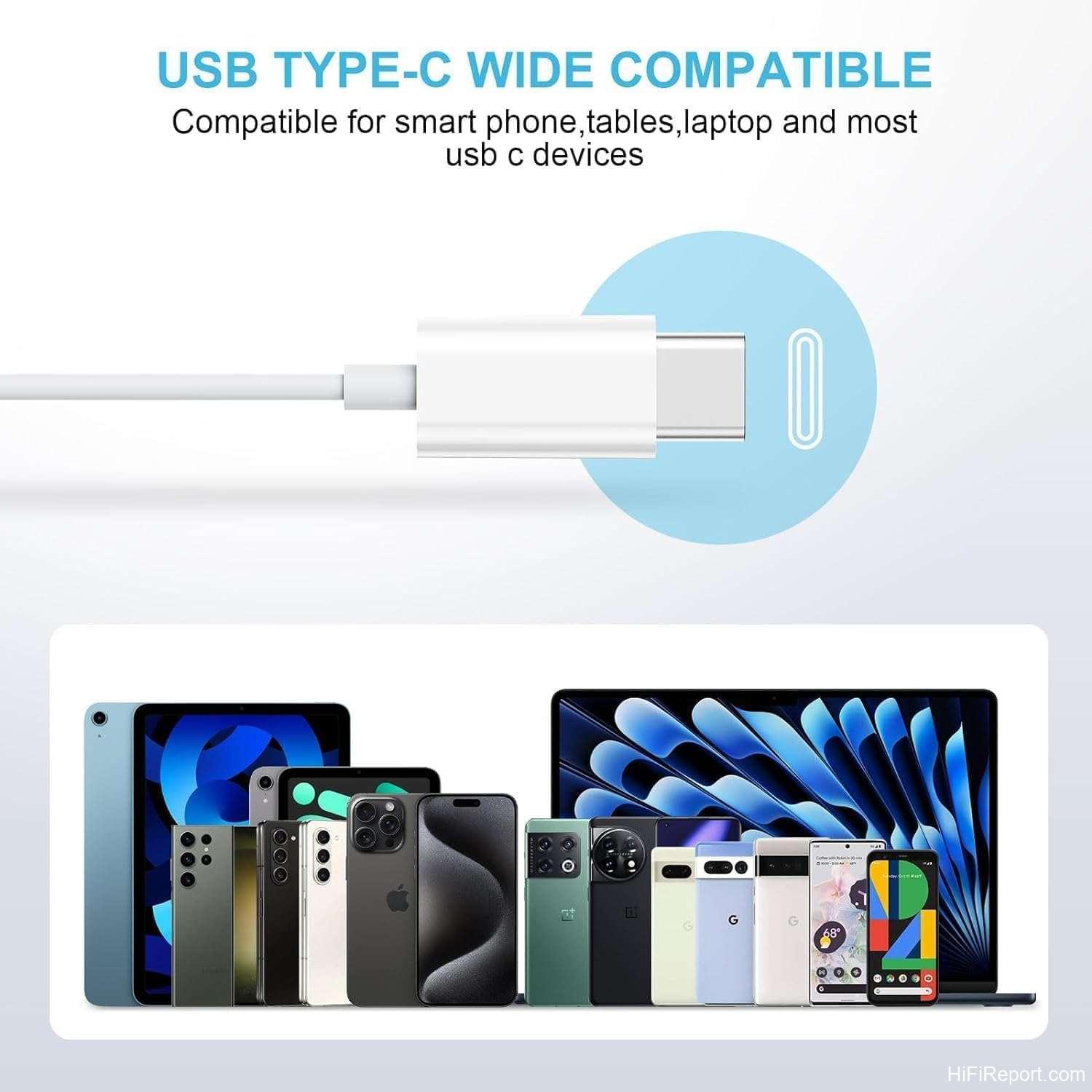
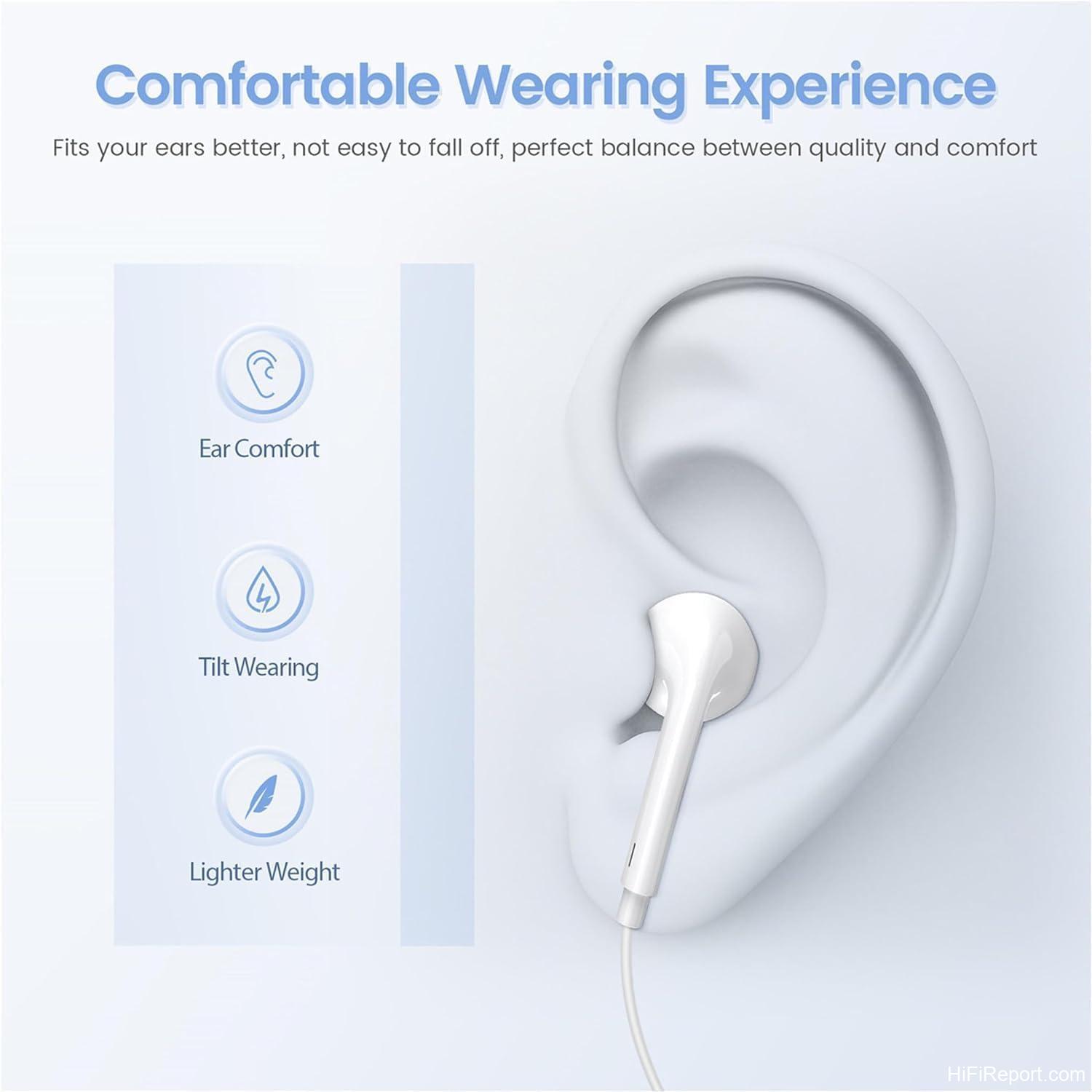
For everyday fit, the silicone in-ear tips conform to the ear canal, and the listing claims that “wearing it for a long time will not make you feel uncomfortable in your ears.” The remote’s bulk sits near the tragus, which is standard for this form factor and does not interfere with the seal. The 1-meter length is short enough that you can reach a backpack pocket without dragging the whole cable behind you, but long enough to stretch across a bed while you scroll a tablet.
Grade: Fair — the shape, cable length, and remote layout are conventional and workable, but a remote that failed out of the box and an earbud that died in two weeks undercut the build-quality claims.
Audio Performance
The solodate lab USB-C earbuds deliver inconsistent audio, and that inconsistency is the bottom line. Owners report a left driver at roughly one-quarter the volume of the right, and a separate reviewer hears a helicopter-like drone in the background on one of the two included pairs. The built-in DAC chip that the listing says “maintains the high resolution acoustics of your devices” does not appear to do so in the units that reached buyers.
Channel Balance and Artifact Noise
The most common audio complaint across the seven collected reviews is asymmetric volume: one side playing at a fraction of the other’s output. That is not a tuning preference or a volume-mixing choice; it is a manufacturing defect in the driver or the DAC pairing. Pair that with the reported background drone and you have two distinct failure modes in what should be a simple, passive signal path. A USB-C audio cable with an inline DAC should produce a clean, symmetrical signal at the standard sampling rate the host device provides; instead, the evidence points to unit-to-unit variance that a buyer cannot screen out before opening the box. The “no buzzing, popping, or any bad audio issues” line in the listing is contradicted by the “terrible noise” and “helicopter landing” language in the reviews.
Call and Mic Performance
The inline remote is supposed to handle volume, track control, and call management. One owner found that adjusting mic volume during an active call caused the call to disconnect. A second owner described “terrible noise” specifically while on a phone call, which the listing’s “noise cancelling” marketing does not cover, because there is no active cancellation circuit to attribute the artifact to. The mic element in the remote appears to be the weakest link in the signal chain: it introduces a noise floor during a call that the passive seal cannot hide, and the volume-adjust button interferes with call state in a way that drops the connection.
Grade: Disappointing — channel imbalance, a background drone, and mic-disconnect failures mean the audio path is unreliable even before you weigh the “high resolution” DAC claim.

Silencing the Room
The solodate lab earbuds rely on passive in-ear sealing for what the listing calls “noise reduction,” not active noise cancelling. There is no microphone array, no dedicated processing chip for ambient sound, and no cancel mode to toggle. The “noise cancelling” language in the product title is a marketing stretch for what is really a tight silicone seal around the ear canal. That seal does attenuate office hum, traffic, and keyboard noise by a few decibels, which is the baseline expectation for any in-ear monitor.
Originally published on hifireport.com. Unauthorized scraping or republishing is prohibited.
The complication is that the same seal that blocks the outside world also makes internal artifacts more noticeable. When the DAC or driver produces a low-level drone, a quiet room amplifies it relative to the muted environment, and the “helicopter landing” one owner describes is exactly that phenomenon: the outside is blocked, so the inside noise has nowhere to hide. “Noise reduction” on the spec sheet and “helicopter noise” in the review page are two ends of the same signal chain. For someone who needs true ambient isolation for a commute or a loud café, these earbuds fall short; for a desk-bound user who mostly wants the world to dim a little, the passive seal is adequate.
Grade: Fair — the passive seal does its basic job of dimming ambient noise, but internal audio artifacts negate the isolation benefit in quiet listening.
Battery and Charging
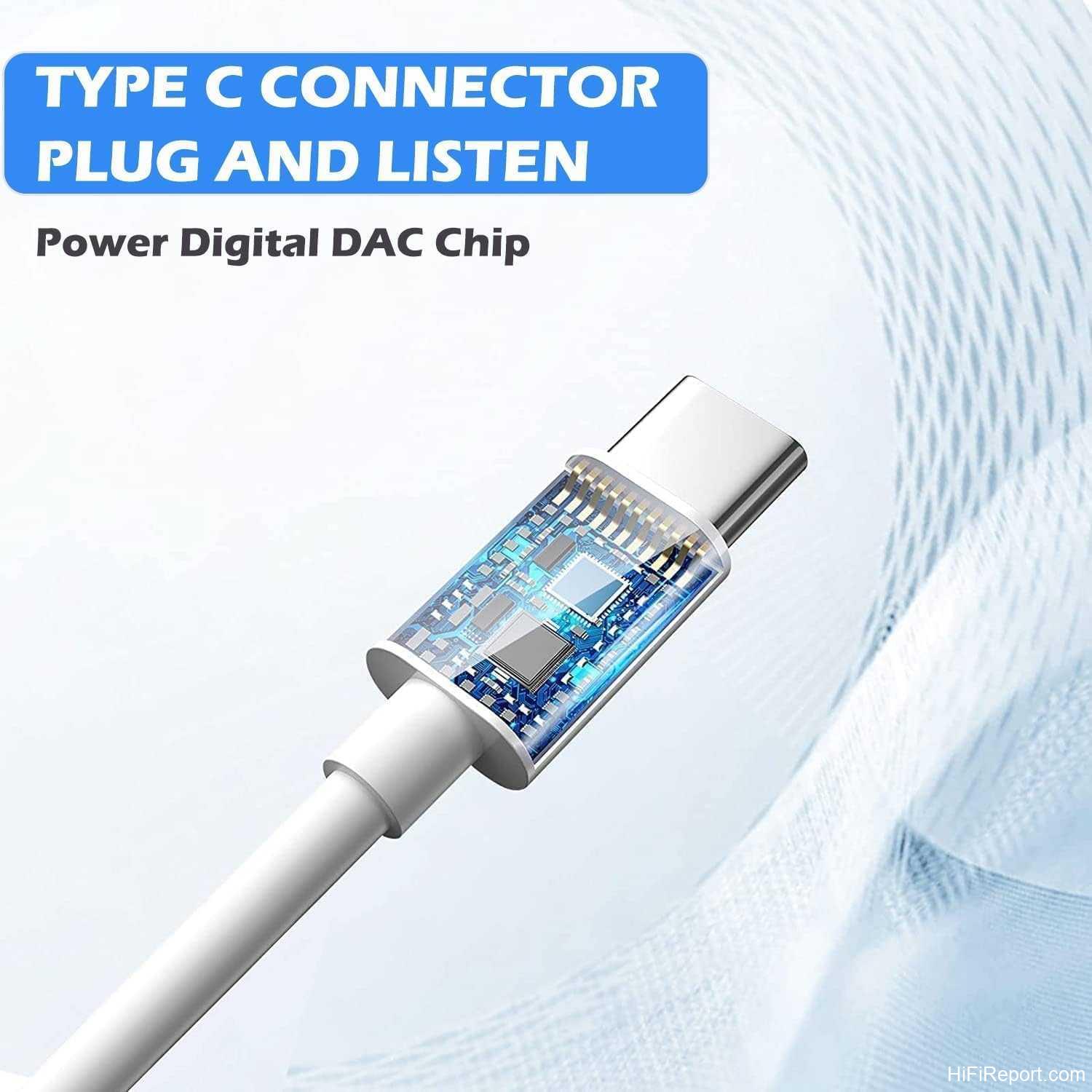
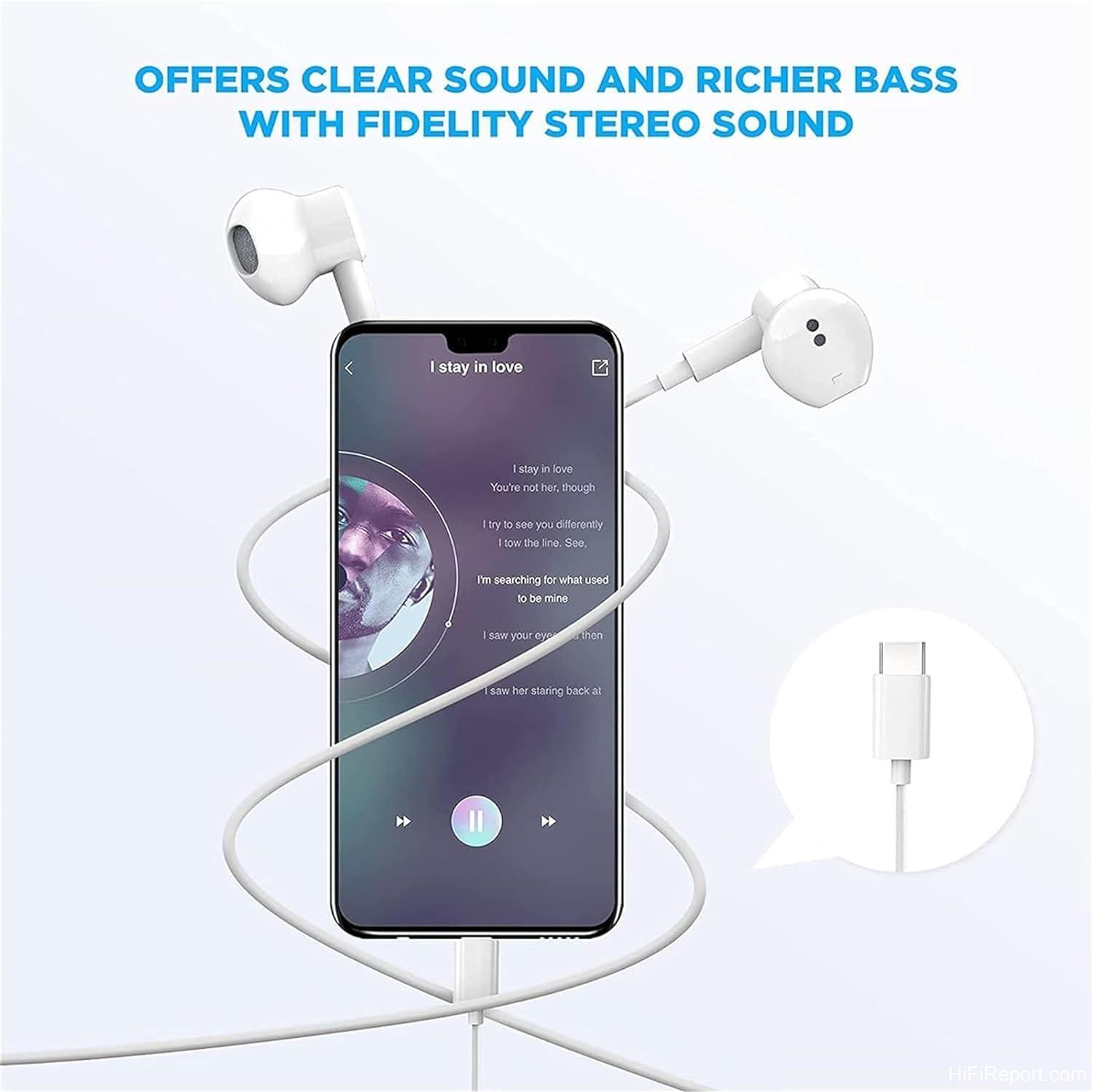
These are wired, host-powered earbuds, so there is no battery to charge, no capacity figure to evaluate, and no charge cycle to worry about. The USB-C plug draws power and audio data directly from the connected device, whether that is an iPhone 17, an iPad Pro, a Galaxy S25, or a MacBook. The 1-meter cable is short enough that you will not be yanked out of your seat the way a longer wired set can pull you, and the inline DAC chip handles digital-to-analog conversion locally so the phone is not doing that work.
Because there is no onboard energy storage, the battery-life question reduces to a single condition: does the device have a USB-C port and is it powered on? If yes, the earbuds work for as long as the device is awake. There are no fast-charging standards to meet, no wireless case to top up, no firmware update that might alter the audio path, and no battery-swelling risk after a year or two of use. The simplicity is a genuine advantage for a budget wired pair: nothing to forget on a charger, nothing to lose in a washing machine, nothing to replace when a cell degrades.
Grade: Fair — a non-issue by design; the product draws power directly from the host and has no battery to drain, charge, or fail.
How It Compares
The collected web research in Source 3 contains no review, measurement, or head-to-head comparison of the solodate lab USB-C earbuds. The material covers the Microsoft Surface Laptop Ultra and Suno’s AI music-generation platform, neither of which intersects with a budget wired earbud in terms of specs, use case, or audience. There is no side-by-side frequency-response graph, no “versus” article, and no editor’s-pick list that positions these earbuds against a named competitor.
What can be drawn from the product listing itself is that the compatibility list overlaps with the devices Apple and Samsung ship: iPhone 17 through 15, iPad Pro 2020 through 2025, iPad Air and Mini, MacBook and MacBook Pro, Galaxy S25/S24/S23 families, and “other devices with a USB-C audio port.” In the absence of third-party comparative data, the only reference point is the device’s own DAC and codec, and the owner reviews suggest that is operating below the baseline a first-party wired pair from the past two phone generations was delivering. No external source in the collected material validates or challenges that inference.
Owner Ratings Explained
The aggregate Amazon rating sits at 2.2 out of 5 across 10 reviews, which places the product firmly in the bottom tier for a consumer accessory. The seven collected reviews break down as one five-star, one two-star, and five one-star, with a single unverified review in Spanish that translates to “zero stars, terrible product.” The five-star review is two words: “Buen sonido.” The two-star review is the most useful data point: one of the two included pairs functioned normally, while the other produced a helicopter-like background noise and a mic that disconnected calls when the user adjusted volume.
The themes behind the low score map directly onto the Report Card grades. The channel-imbalance complaint and the one-ear-dying-in-15-days complaint track the Disappointing Audio Performance grade. The “did not work for my iPhone 17” report and the note that some reviews on the listing appear to belong to a craft-beads product track the Disappointing Compatibility grade. The “terrible noise on a call” comment and the helicopter artifact track the Fair Silencing the Room grade, because the seal is working but the internal signal is broken. Nothing in the review set contradicts the Fair marks for Design/Build or Battery/Charging, because those are structural properties of a wired USB-C cable and there is little to praise or fault beyond the quality-control signal already captured in the other categories.
Pros and Cons
Pros:
- Two pairs included, so one functioning set is a usable fallback if the other is defective
- 1-meter cable length keeps the connection short and reduces tangle risk
- Inline DAC chip offloads audio conversion from the host device
- Remote covers volume, track skip, pause, and call answer/end/reject
- Compatibility list spans a long range of Apple, Samsung, and PC USB-C devices
Cons:
- Left channel at roughly one-quarter the volume of the right, reported by an owner
- Background drone or “helicopter” noise in at least one of the two included pairs
- Mic volume adjustment can disconnect an active call
- At least one verified owner confirmed no audio output on an iPhone 17
- One earbud failed completely within 15 days of light use
- One reviewer flagged that some reviews on the listing appear to belong to an unrelated craft-beads product
Bottom Line
Walking the Report Card in order: Design and Build land at Fair because the shape, cable length, and remote layout are conventional, but the remote failed out of the box for one owner and a second owner lost an earbud in two weeks. Audio Performance is Disappointing, driven by a channel imbalance, an internal drone, and a mic that drops calls. Silencing the Room is Fair: the passive seal does its basic job, yet internal artifacts undercut the isolation in quiet rooms. Battery and Charging is a Fair non-issue; the earbuds have no battery. Compatibility is Disappointing because a verified buyer got zero audio on the flagship phone the listing leads with.
The buy answer is skip. A 2.2-out-of-5 aggregate, five one-star reviews out of seven collected, and a documented non-function on the primary target device make this a product you walk away from. If you need a wired USB-C pair for a phone, tablet, or laptop, the first-party earbuds that shipped with Apple and Samsung devices over the past two generations are a safer bet, and the used-market supply of those remains deep. The two-pair packaging here is a hedge against one bad unit, not a reason to buy two.
Spec Sheet
- Brand: solodate lab
- Connector: USB-C, metal-plated
- Cable length: 1 meter
- Form factor: In-ear (IEM) with silicone tips
- Inline remote: Volume +/-, Last/Next Track, Pause, Answer/End/Reject Call
- Audio processing: Built-in DAC chip
- Noise treatment: Passive in-ear seal (no active noise cancelling)
- Power: Host-device powered, no onboard battery
- Quantity: 2 pairs per package
- Compatible devices: iPhone 17/16/15 series, iPad Pro 2020–2025, iPad Air 4/5/M2/M3, iPad Mini 6/7, MacBook/MacBook Pro, Samsung Galaxy S25/S24/S23 families, other USB-C audio devices
Frequently Asked Questions
Do these earbuds work with the iPhone 17?
The listing names the iPhone 17, 17 Air, 17 Pro, and 17 Pro Max as compatible devices, but one verified owner reported getting no audio output on an iPhone 17. If you are buying specifically for that phone, the risk of receiving a non-functional unit is documented in the review set.
Why are there two pairs in the package?
The product ships as “2 Packs,” giving you two separate sets in one order. The practical effect is that if one pair has a channel imbalance or a dead driver, you still have a second pair to use. The trade-off is that both pairs come from the same manufacturing run, so a systemic defect can affect both simultaneously.
Is there active noise cancelling?
No. The “noise cancelling” language in the title refers to passive isolation from the in-ear silicone seal. There is no microphone array, no dedicated processing chip for ambient sound, and no cancel mode to switch on or off. What you get is the basic attenuation any tight in-ear seal provides.
Can the remote handle phone calls reliably?
The remote includes Answer, End, and Reject buttons, and the listing lists “having phone calls while driving, walking, exercising” as a use case. However, at least one owner found that adjusting mic volume mid-call caused the connection to drop, so the call feature works in principle but carries a documented reliability problem.

- 【Headphones Excellent Compatibility】USB C Earphone for iPhone18/18 Pro/18 Pro Max,iPhone17/17 Air/17 Pro/17 Pro Max,iPhone16/16 plus/16 pro/16 pro max, iPhone15/15 plus/15 pro/15 pro max, for iPad Pro 2020 2021 2022 2023 2024 2025, for iPad Air 4th,5th, M2,M3, for iPad Mini 6th,7th, for MacBook/MacBook Pro, for Samsung Galaxy S25,S25+,S25 Ultra,S25 Edge,S24/S24+/S24 Ultra,S23/S23+/S23 Ultra,,other devices with USB C audio port.
- 【Quality Material USB C Earphone】: Metal-plated connectors greatly reduce the phenomenon of poor contact, Stretch resistant, long-lasting; 1 meters length, built-in powerful DAC chip to maintain the high resolution acoustics of your devices, no buzzing, popping, or any bad audio issues, just plug and play to enjoy your favorite music.
- 【Ergonomic Design】: Ergonomic noise reduction in-ear headphones, using high-quality materials, minimize the noise in the surrounding environment, and bring you a better music experience. It is suitable for your daily work, study, and sports use. Wearing it for a long time will not make you feel uncomfortable in your ears.